


 Ecommerce Intelligence
How To Get Traffic To Amazon Listings From Google Search

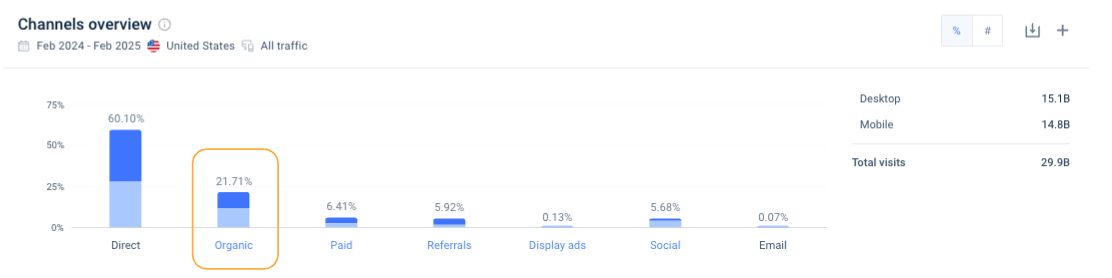
If your focus is mastering Amazon on-site search, your head’s in the right place. With 60.1% of all Amazon US traffic being direct (according to Similarweb data), most of your audience is already there.
But what about the remaining 39.9%?
If you’re serious about scaling on Amazon, you can’t just optimize for what happens after shoppers arrive. You need to optimize for their entire journey which, more often than not, starts before they even set foot on Amazon. Understanding your user journey and accompanying them from the research to decision-making stages gives you an advantage over your competitors.
Let’s take a look at why external traffic to Amazon from Google matters and how you can turn it into your secret weapon to increase product views, unit sales, and market share.
Why drive traffic from Google to Amazon?
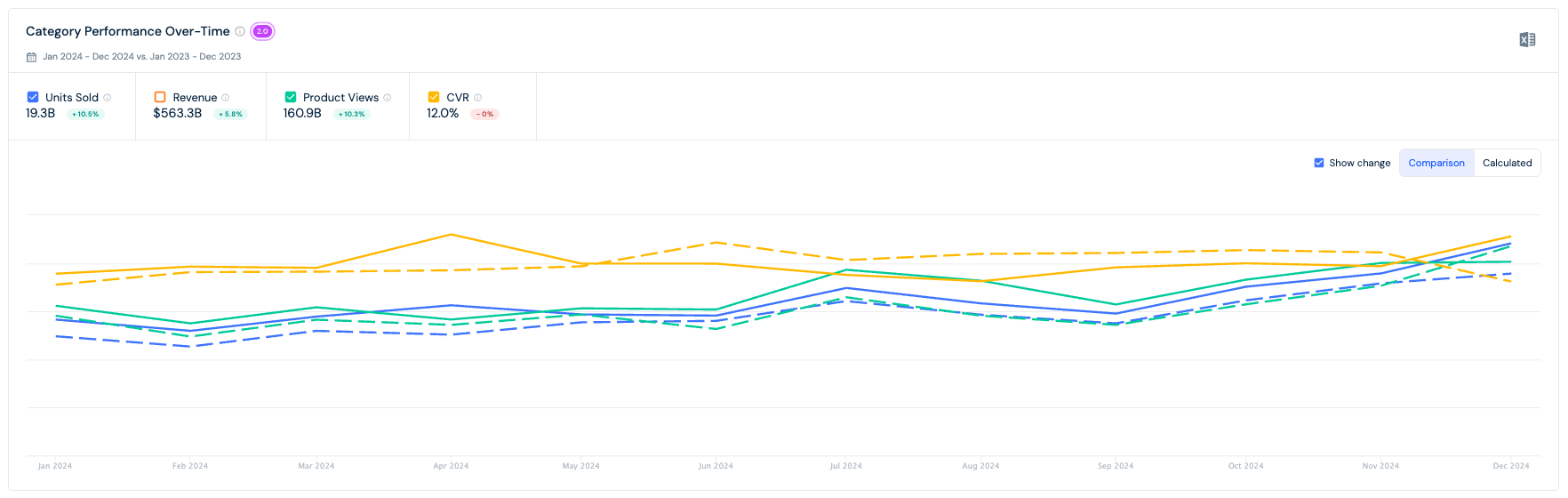
Here’s the thing: a total of $563.3 billion was spent on Amazon US in 2024 (Similarweb). People are spending on Amazon, and there is no sign of slowing down.
If you can bring more traffic to your Amazon listings, you’re setting yourself up to capture a bigger portion of that spend. But that’s not the only reason for analyzing external traffic to Amazon.
Here’s why Google traffic is especially valuable:
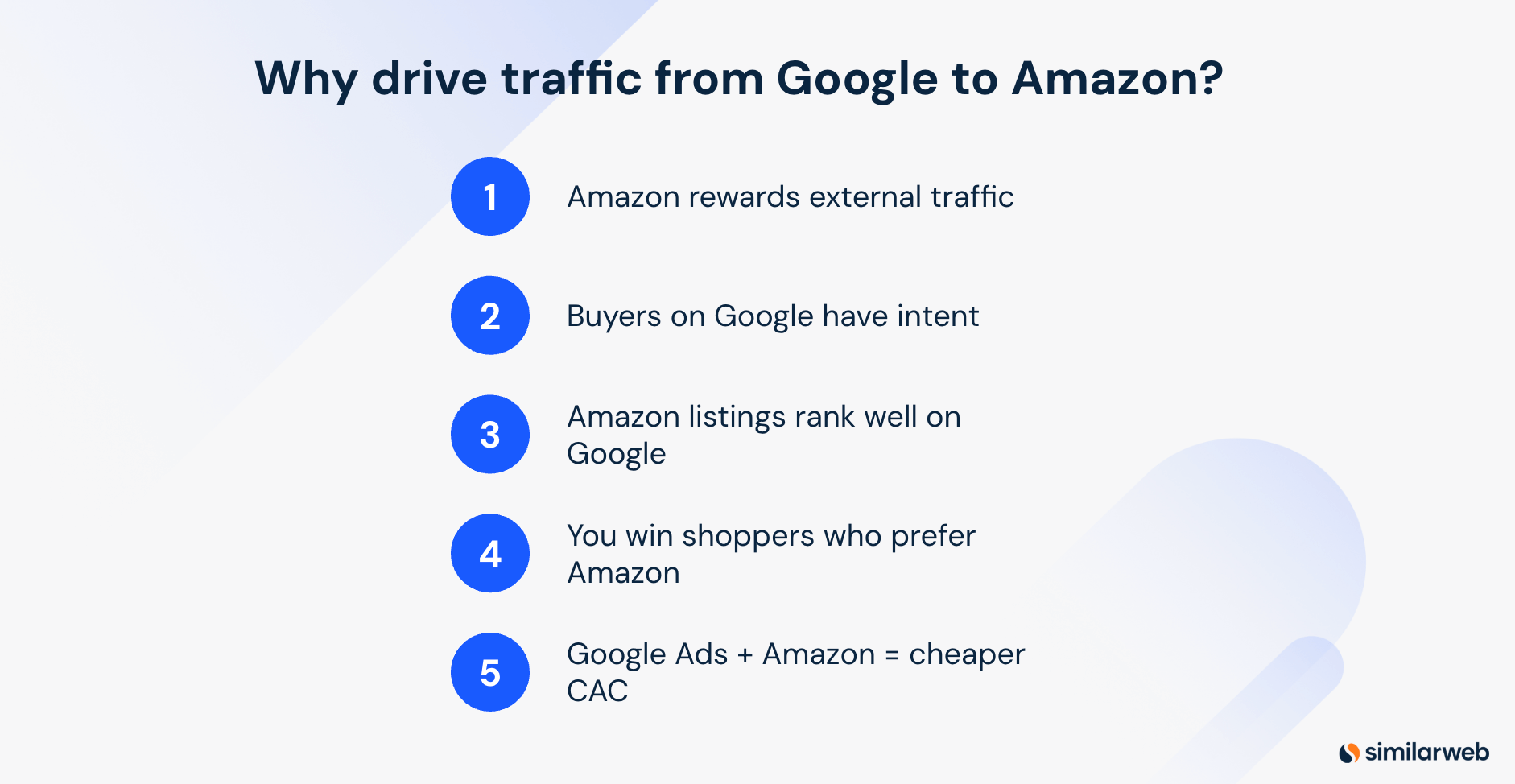
1. Amazon rewards external traffic
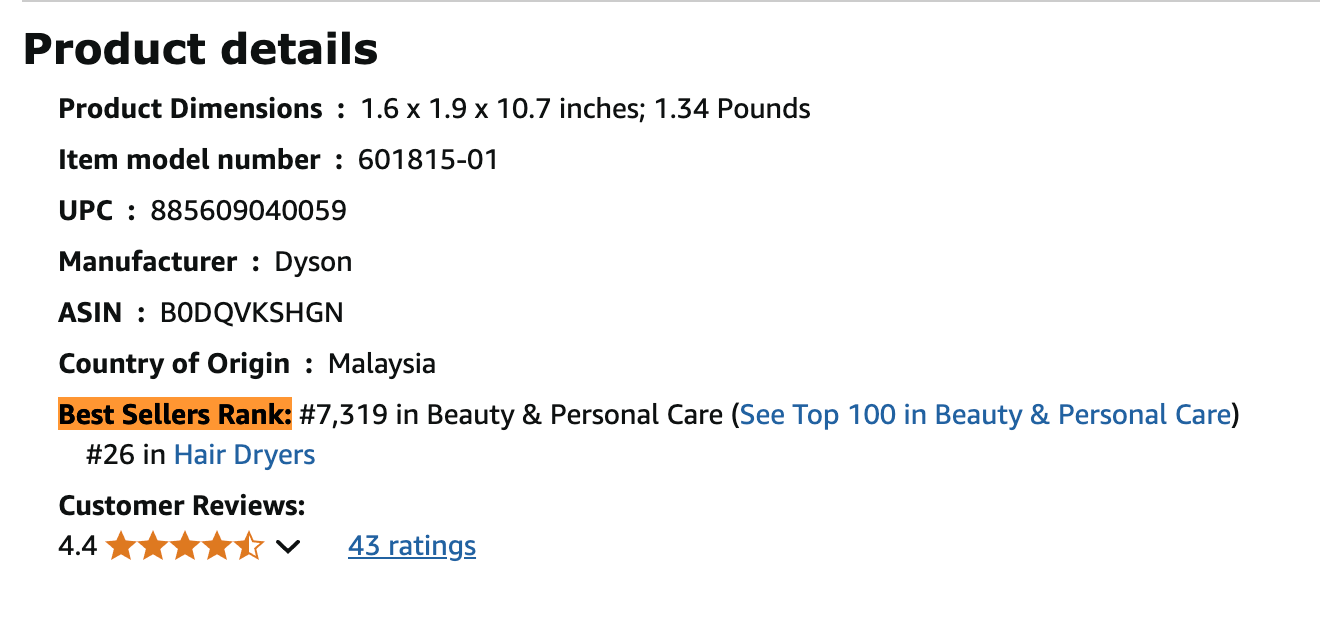
When you bring outside shoppers (say, from Instagram, Google, or email lists) to Amazon, you’re doing the “heavy-lifting” marketing for them. As a result, Amazon rewards sellers by boosting their organic rankings and improving their Best Seller Rank (BSR).
2. Buyers on Google have intent
When someone types into Google things like: “Best wireless headphones under $100”, “Buy yoga mats online”, or “Reviews for portable blenders”, they’re ready to buy or compare products.
If you show up with a link to your Amazon listing (or a blog post that links to it), you’re catching people already in shopping mode.
Intent + Amazon’s trust = Higher conversion rate.
3. Amazon listings rank well on Google
Amazon has massive domain authority. That means your Amazon product pages can actually rank pretty high on Google. Faster than your own website would.
Driving traffic there gives you a shortcut to be “on Page 1” without having to do months of SEO.
4. You win shoppers who prefer Amazon
Most people trust Amazon more than a random website because of:
- Easy checkout
- Prime shipping
- Easy returns
- Brand loyalty and trust
If you drive them directly to Amazon from Google, they feel safer buying and you get the sale. (If you drive them to your unknown Shopify site, they might hesitate or bounce.)
5. Google Ads + Amazon = cheaper CAC
Running Google Ads to your own website can get expensive fast (because you need to convince someone to trust you + to buy your product).
If you run Google Ads that send people directly to Amazon, often the trust gap is smaller, and you get cheaper customer acquisition costs (CAC).
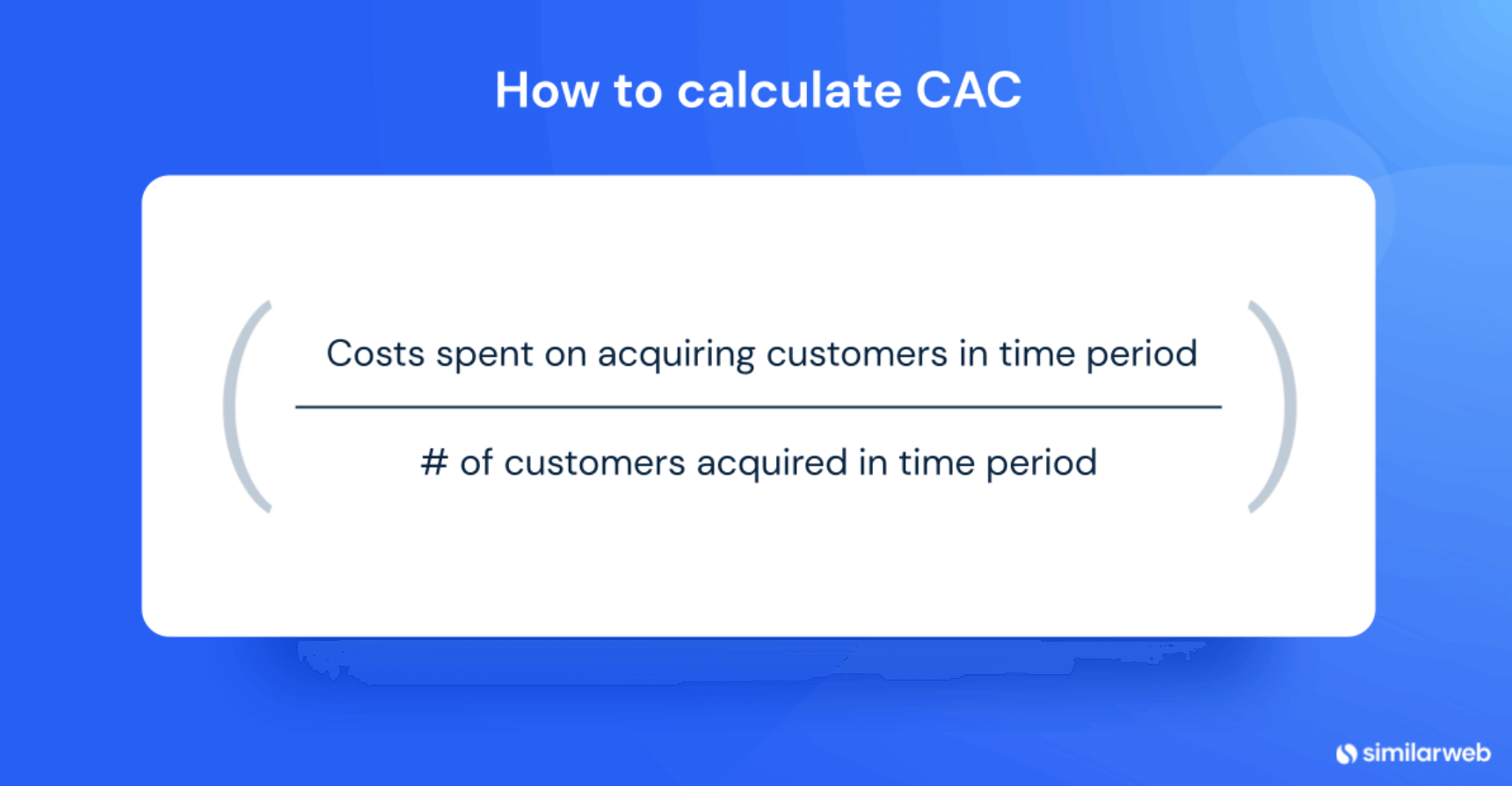
A business’ CAC is calculated by dividing all sales and marketing costs by the number of New Customers gained within a specific timeframe.
To sum up, getting discovered on Google leads to more qualified traffic to Amazon, which ultimately leads to more sales. Amazon seller tools will help you optimize your strategy and stay ahead of your competitors.
The buyer’s journey: From search to sale
The typical Amazon shopper doesn’t always start on Amazon. Many begin with a simple Google search.
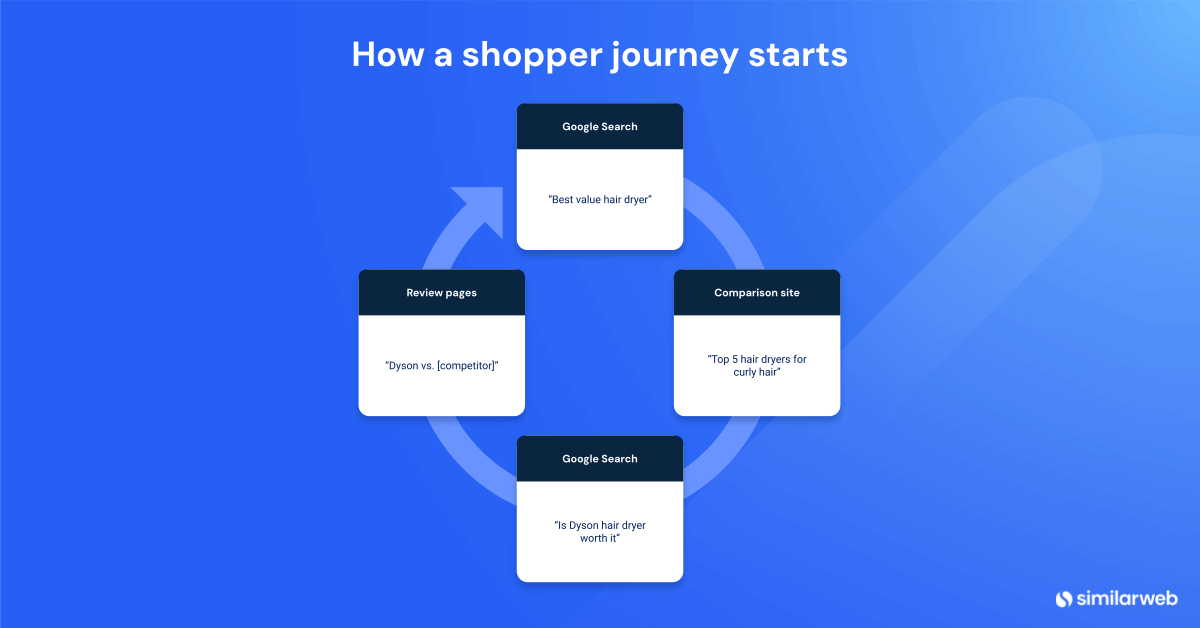
And the type of search matters:
- Research & Discovery Stage:
“is the dyson airwrap worth it?” → They’re comparing brands, and weighing options. - High-Intent Purchase Stage:
“dyson airwrap best price” → They know what they want and are ready to buy.
💡 Pro Tip: Brand campaigns like influencer partnerships, social ads, or TV placements often drive spikes in branded search on Google, which then leads to increased Amazon traffic. Mastering this connection can turn brand-building efforts into real revenue.
That’s why typical Amazon on-site search optimization tools simply aren’t showing you the full picture.
For example, for Dyson, 21% of all Amazon traffic comes from external sources.
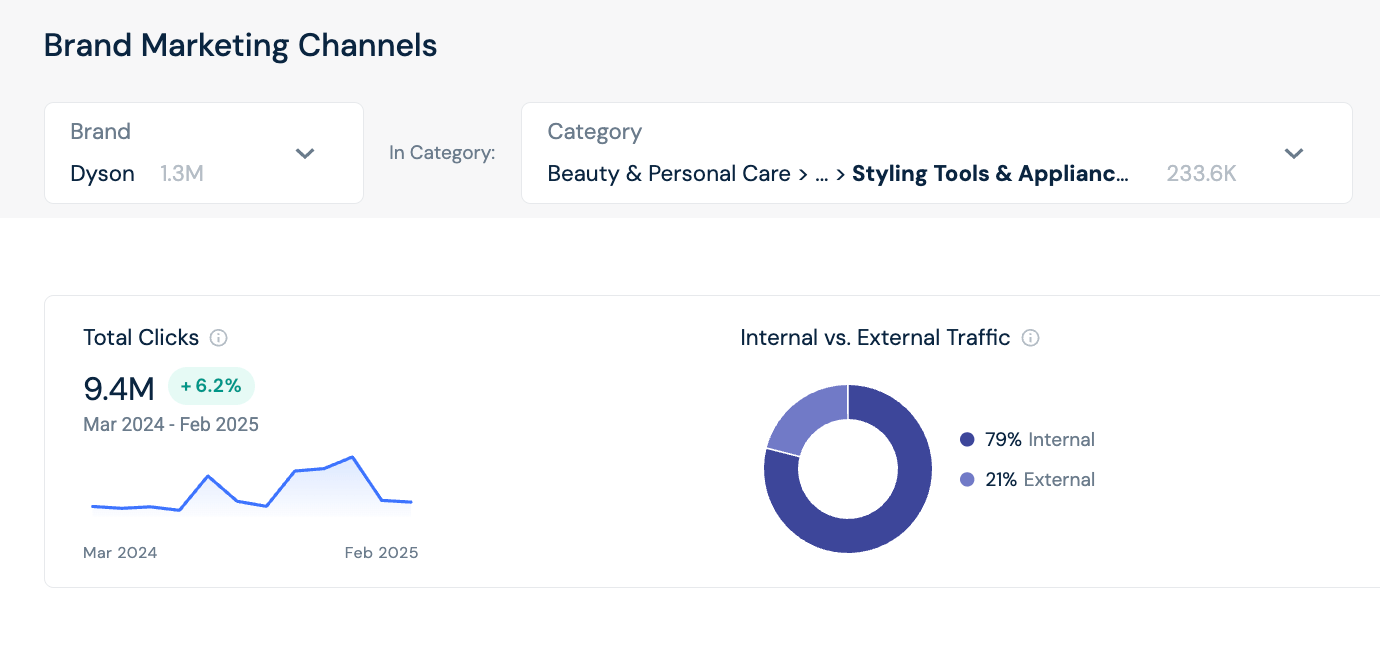
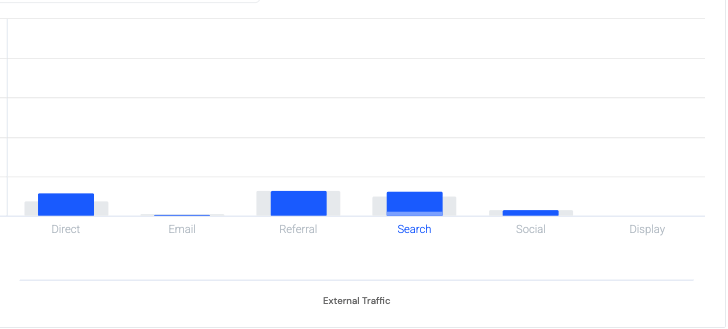
In Dyson’s external traffic breakdown below, we can see that paid and organic search are major contributors to external traffic.
They are two of the primary ways shoppers discover products outside of Amazon — particularly through Google.
Get the full picture with Similarweb Shopper Intelligence
Similarweb’s Shopper Intelligence now gives you access to the Google Search Report, showing exactly how Google keywords drive traffic to Amazon product listings.
In the report you’ll find:
Keyword Click Contribution → Find out which search terms are sending the most clicks to Amazon.
Brand Traffic Share → See which brands dominate traffic for each keyword.
Organic vs. Paid Traffic → Know if competitors are winning organically or paying for clicks.
Top Brand Benefiting → Identify who’s capturing the lion’s share of search interest (and how you can steal it).
The report below shows the top keywords drawing traffic to Dyson from Google searches.
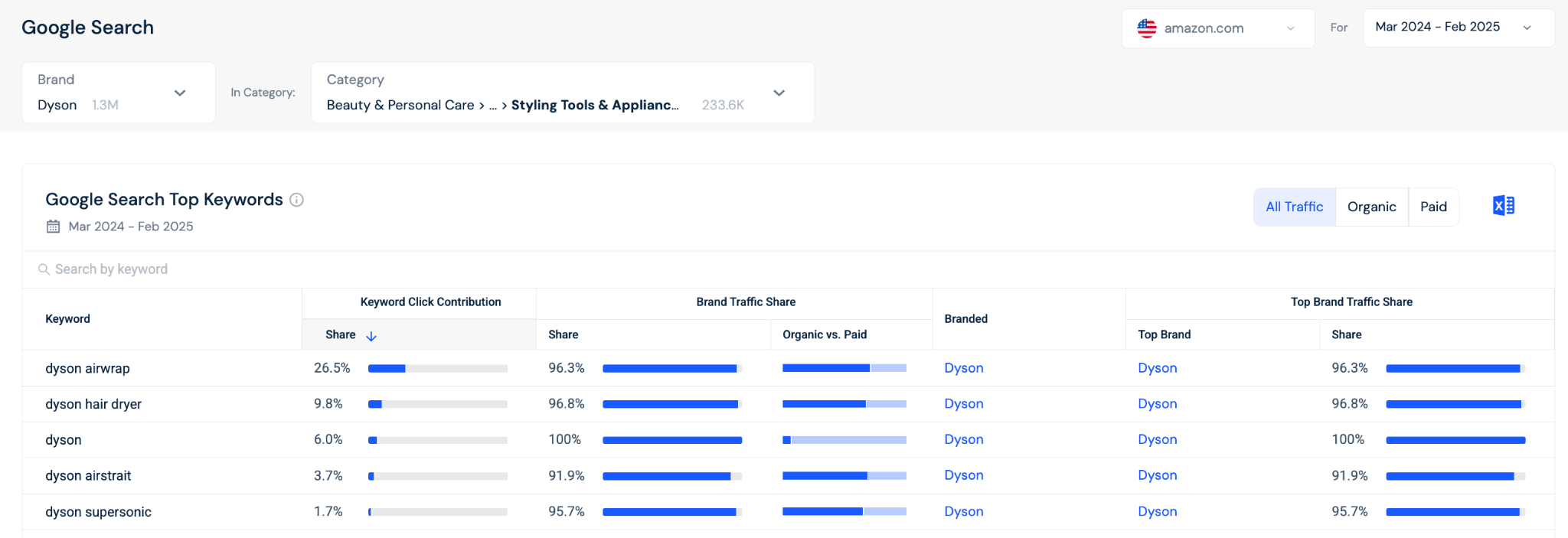
💡 Pro tip: Action this data by tailoring your SEO and ad spend to draw a larger share of high-intent searches.
How to turn Google insights into more Amazon sales
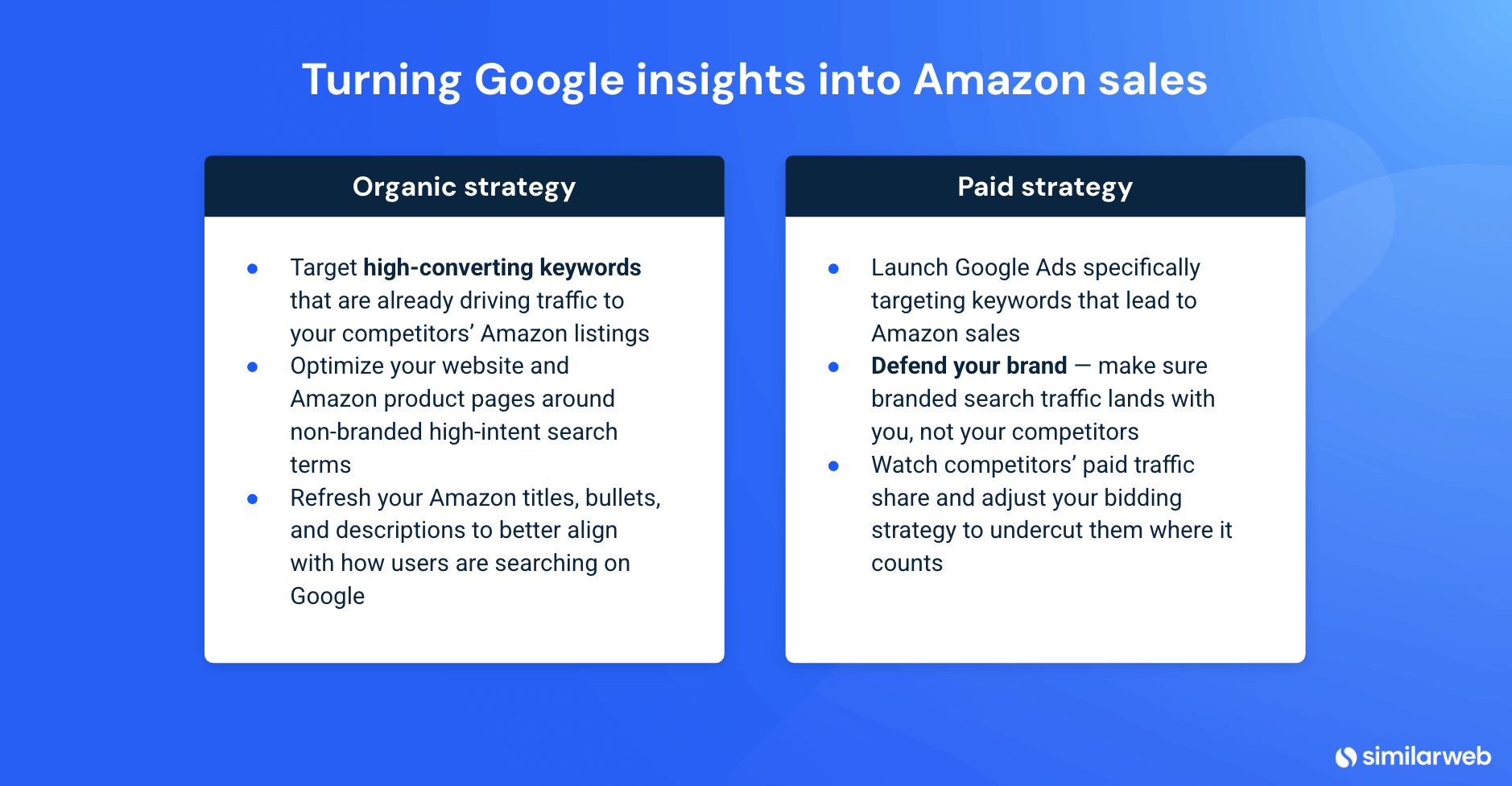
1. Organic strategy
- Target high-converting keywords that are already driving traffic to your competitors’ Amazon listings
- Optimize your Amazon product pages around non-branded high-intent search terms (e.g., “best hairdryer for styling”)

- Refresh your Amazon titles, bullets, and descriptions to better align with how users are searching on Google
2. Paid strategy
- Launch Google ads specifically targeting keywords that lead to Amazon sales
- Defend your brand — make sure branded search traffic lands with you, not your competitors
- Watch competitors’ paid traffic share and cost per click, and adjust your bidding strategy to undercut them where it counts
Understanding competitor strategies with Google search data
What if you could see behind the curtain of your competitors’ external traffic strategy?
With Shopper Intelligence, you can analyze your Amazon competitors to:
- Spot if competitors are running Google ads to Amazon product listings
- See which brands are winning the organic Google search race
- Find non-branded keywords driving their success and move in fast
Taking a closer look at paid traffic from Google search, we can see that the keyword “dyson hair dryer and curler” actually drives more traffic to Dyson’s competitor, Shark, than it does to Dyson itself.
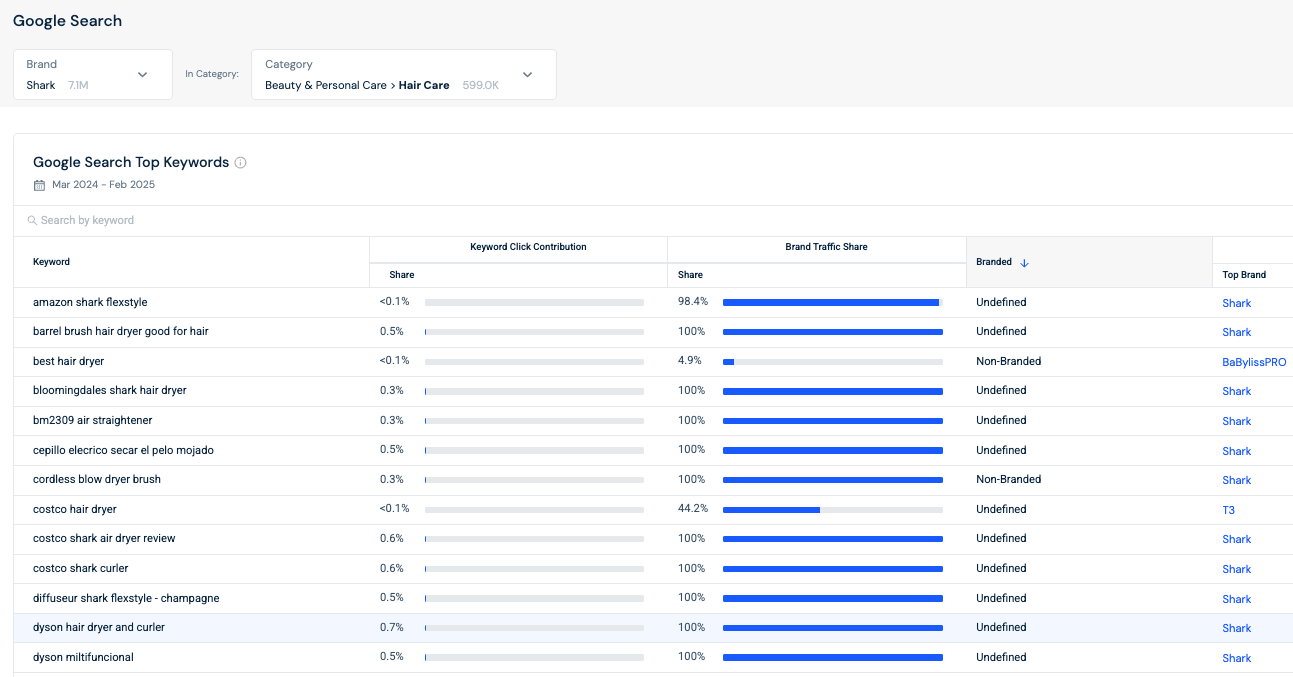
Losing high-intent, branded search terms like this are a major missed opportunity. Analyzing Google’s traffic to Amazon not only helps you spot these gaps but also keeps you ahead of trends — and three steps ahead of the competition.
Future-proof your Amazon strategy with external traffic insights
Focusing solely on Amazon’s internal search may have worked in the past, but today, it means leaving significant opportunities on the table.
As competition intensifies, brands that succeed are those that understand the entire customer journey, and that journey often begins long before a shopper lands on Amazon.
By tapping into search behavior on Google, sellers can boost visibility, increase conversions, and strengthen their overall Amazon performance.
With the Google Search report inside Similarweb’s Shopper Intelligence, you have the tools to analyze the entire journey of the buyer, find new keyword opportunities, understand competitor strategies, and drive more high-intent traffic directly to your listings.
FAQs
How does driving external traffic to Amazon help my sales?
Driving external traffic, especially from Google, helps boost your product’s visibility and conversion rates on Amazon. Amazon rewards listings that bring in outside traffic by improving their organic rankings and Best Seller Rank (BSR), making it easier for more shoppers to find and purchase your products.
Can I use Google Ads to promote my Amazon listings?
Yes, you can run Google Ads that send shoppers directly to your Amazon product pages. This strategy can lower your customer acquisition costs (CAC) because of Amazon’s strong brand trust, which eliminates fear at checkout.
What is the benefit of analyzing Google traffic to Amazon listings?
Analyzing Google traffic shows you which keywords drive shoppers to Amazon, whether competitors are winning organically or through paid search, and where there are opportunities to capture market share. Tools like Similarweb’s Shopper Intelligence provide these insights so you can optimize your SEO and advertising strategies.
Why is external traffic important for Amazon SEO?
External traffic signals to Amazon that your product is popular and in demand, which can boost your organic search rankings within the marketplace. A strong flow of visitors from Google or other external sources can help improve your listing’s visibility, leading to higher sales and a better competitive position.

Related Posts

8 Things You Can Do for Free With Similarweb Shopper Intelligence

Nike Returns to Amazon: A Lesson For D2C Brands and Retailers?
Amazon SEO: 14 Ranking Factors and 10 Pro Tips Every Seller Needs in 2026


Prime Day 2025: Retail Winners, Losers, and Key Insights for Q4


The ultimate edge in retail insight
Put the full picture at your fingertips to drive product views and sales