
3 of the Sharpest Minds Weigh in on the State of Gen AI in 2026
by Darrell Mordecai3 Min.
Aug 26, 2026
 Insights
When ChatGPT and its competitors get questions about depression or where to find a therapist, Psychology Today, Verywell Mind, and 7Cups are among the sites where they funnel traffic.
While the use of general-purpose AI chatbots such as ChatGPT for mental health support remains a subject of debate, it is nonetheless an emerging trend. While other AI tools have been more specifically optimized for therapeutic conversations, ChatGPT is the chatbot people are most likely to turn to with their mental health related questions and concerns simply because it is so well known.
As individuals increasingly turn to ChatGPT for guidance on personal decision-making, the platform has faced criticism for inadequately addressing unhealthy or potentially harmful conversations. In response to this, OpenAI recently announced new mental health guardrails for ChatGPT to mitigate these risks.
AI platforms can also provide useful answers to questions like “where can I find a therapist?” or “what is a good online counseling service?” That is when these services are most likely to provide links to external resources.
We analyzed traffic to the top 100 mental health websites using Similarweb’s GenAI Intelligence Toolkit to understand which sites are receiving that traffic and the questions people are asking that lead them to click on an external link for more information.
Among the top recipients of that traffic are the publications Psychology Today and Verywell Mind and the online counseling services BetterHelp and 7Cups, according to Similarweb estimates.
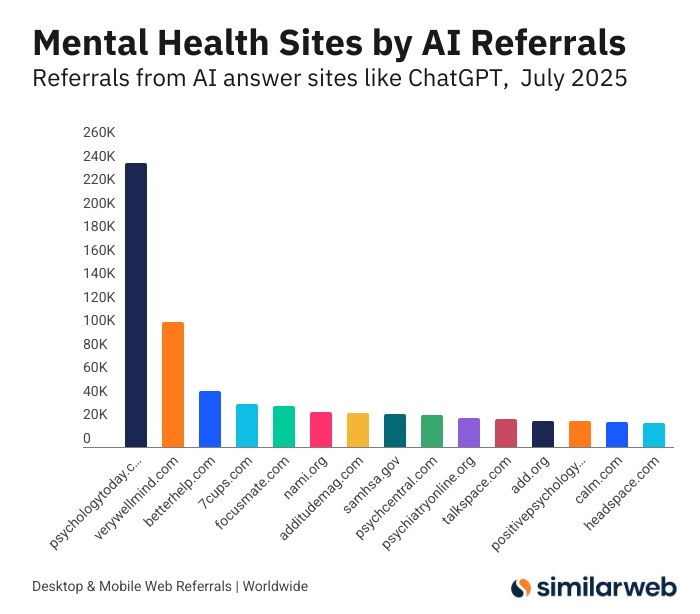
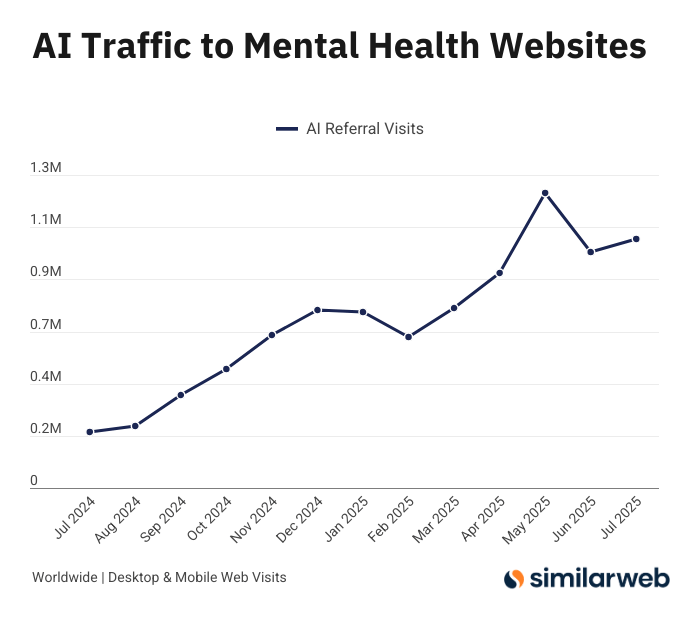
Referrals from AI platforms have been rising over the past year, and that’s a trend mirrored in the mental health category.
Which prompts produce traffic, as opposed to continuing a conversation with the chatbot? The exact answer depends on the type of website, but essentially, they are answers that prompt the chatbot user to want to learn more or take action.
Psychology Today is a 57-year-old magazine and now an online digital platform that features articles and resources from psychologists and academics. Referrals to the website are distributed across a broad range of articles on specific topics, but its most popular pages include ones for a directory of therapists and for attention testing tools related to Attention Deficit Hyperactivity Disorder (ADHD).
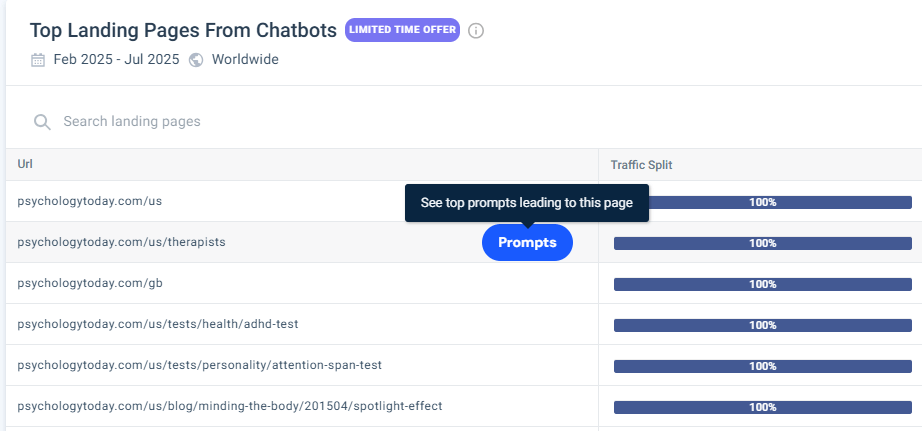
Psychology Today, Verywell Mind, and other publications in this category also attract links to articles where readers can get more in-depth information on psychological principles or theories, including social comparison theory, Piaget’s theory of the stages of growth, the benefits of “brain dump” journaling,
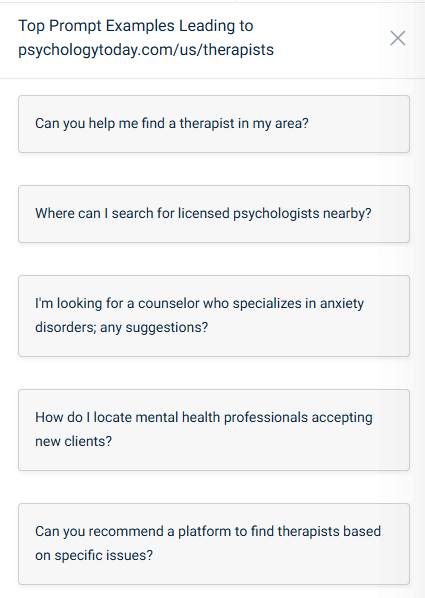
While AI prompts are longer and more complex than search keywords, Similarweb’s AI Traffic tool can show examples of the types of prompts driving traffic to a given landing page. For Psychology Today, we can drill down to see the types of questions leading people to the directory of therapists.
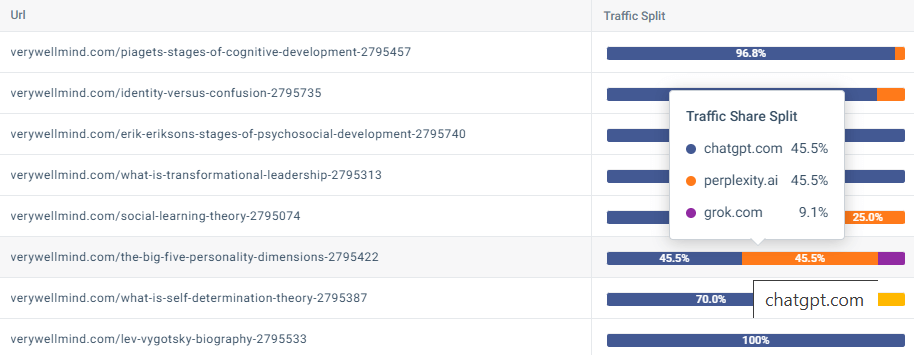
In many cases, the referrals we’re able to track come entirely or almost entirely from ChatGPT, but here’s an example of a Verywell Mind article on personality types that also gets the attention of Perplexity and Grok.
If we look at what drives traffic to the Verywell Mind home page, we see a variety of prompts on topics where the website has what the chatbots consider to be authoritative articles, like:
In some cases, traffic to a page reflects the fact that people are telling ChatGPT and other chatbots their personal problems. For example, traffic to a 7Cups forum thread on worries about infidelity is associated with prompts like:
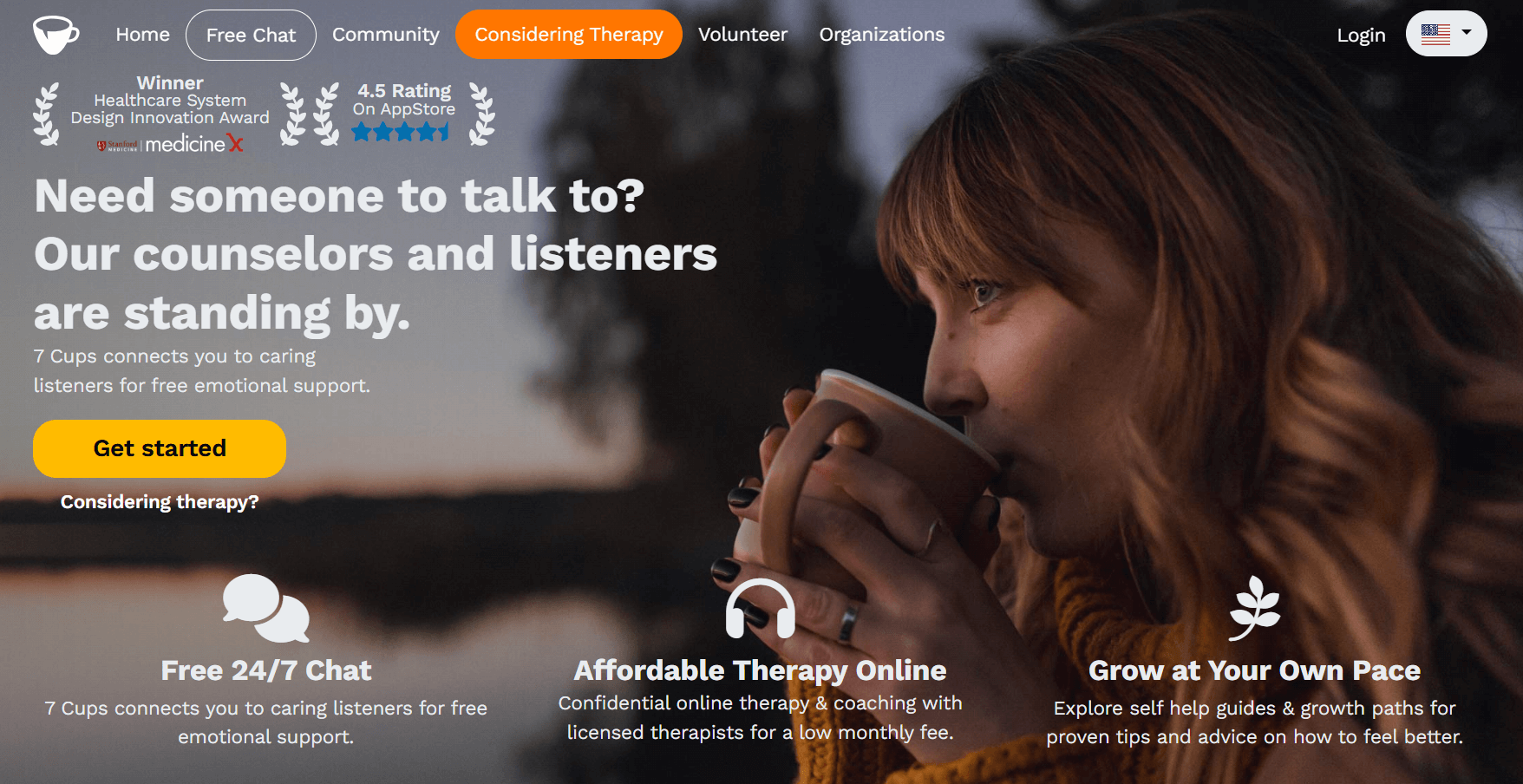
The 7Cups service promises to connect its users to human counselors who will talk with them about their problems, so traffic to the website suggests many AI users are looking for more than counseling delivered by AI alone.
The Similarweb Press Office can pull additional or updated data on request for the news media (write to press@similarweb.com). When citing our data, please reference Similarweb as the source and link back to the most relevant blog post or similarweb.com/blog/insights/.
Disclaimer: All names, brands, trademarks, and registered trademarks are the property of their respective owners. The data, reports, and other materials provided or made available by Similarweb consist of or include estimated metrics and digital insights generated by Similarweb using its proprietary algorithms, based on information collected by Similarweb from multiple sources using its advanced data methodologies. Similarweb shall not be responsible for the accuracy of such data, reports, and materials and shall have no liability for any decision by any third party based in whole or in part on such data, reports, and materials.

David covers social media, digital advertising, and generative AI. With a background in web trends since the 1990s, he’s also the author of "Social Collaboration for Dummies".
Give it a try or talk to our insights team — don’t worry, it’s free!