
Prime Day 2025: Retail Winners, Losers, and Key Insights for Q4
by James Quilter4 Min.
Jul 31, 2025

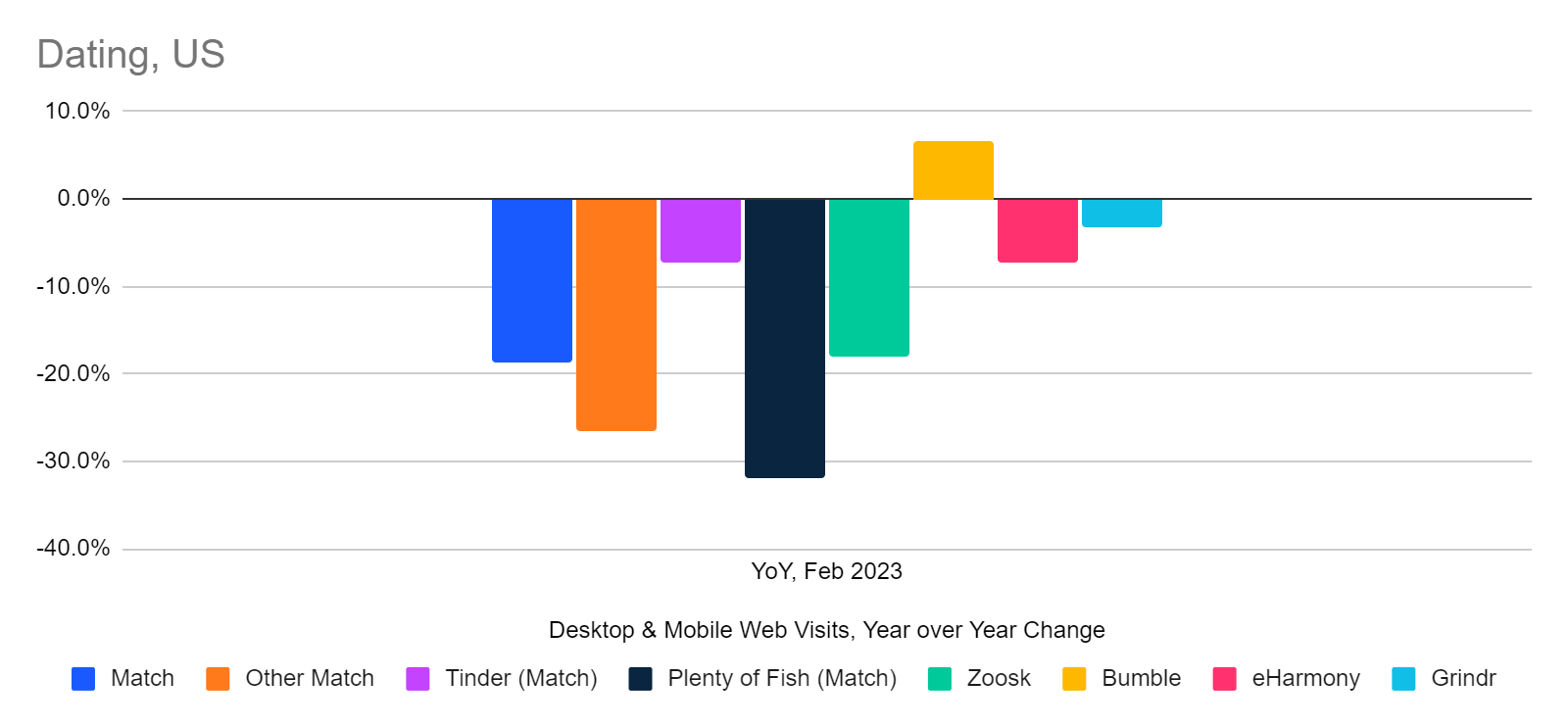
Engagement with dating apps was down significantly in February despite (or maybe because of?) the impact of Valentine’s Day. Match, the dominant player in online dating, saw nearly unrelenting decreases across its many brands.
On a year-over-year basis, traffic was down for all the players we studied, with the exception of Bumble (+6.7%).
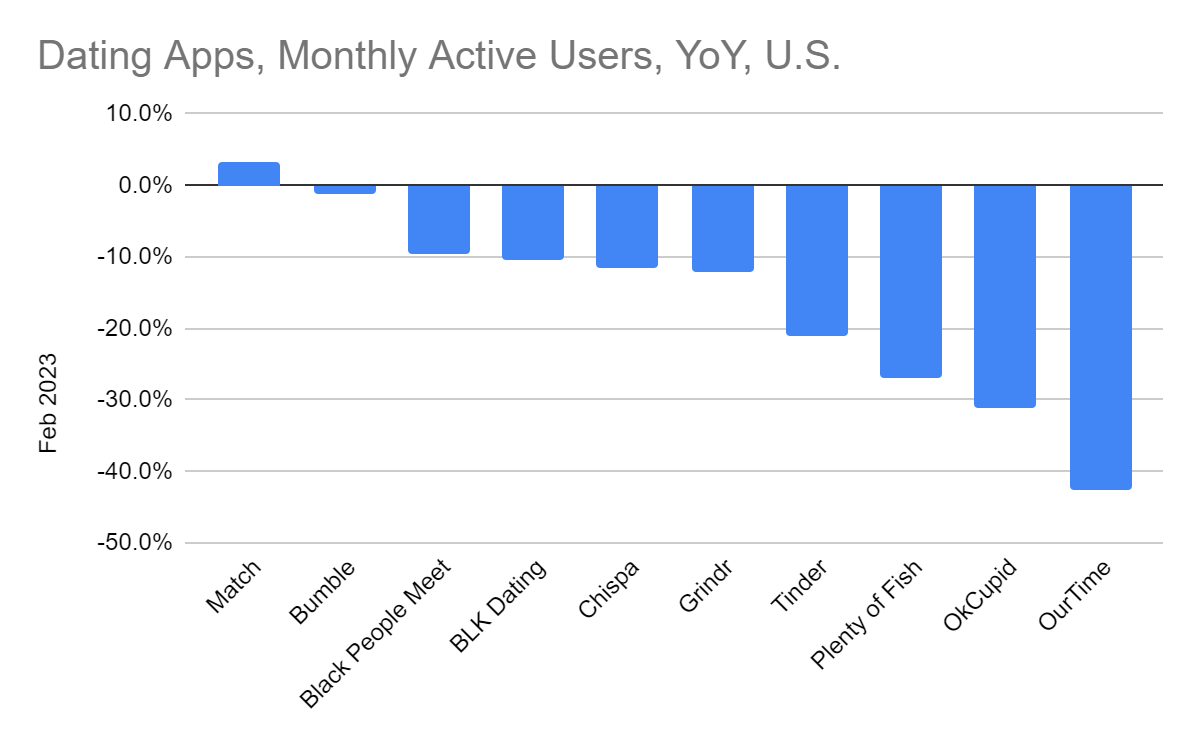
We saw a similar pattern looking at engagement with mobile apps for dating. In this case, Match was the one exception with a small gain (up 3.2%, year-over-year).
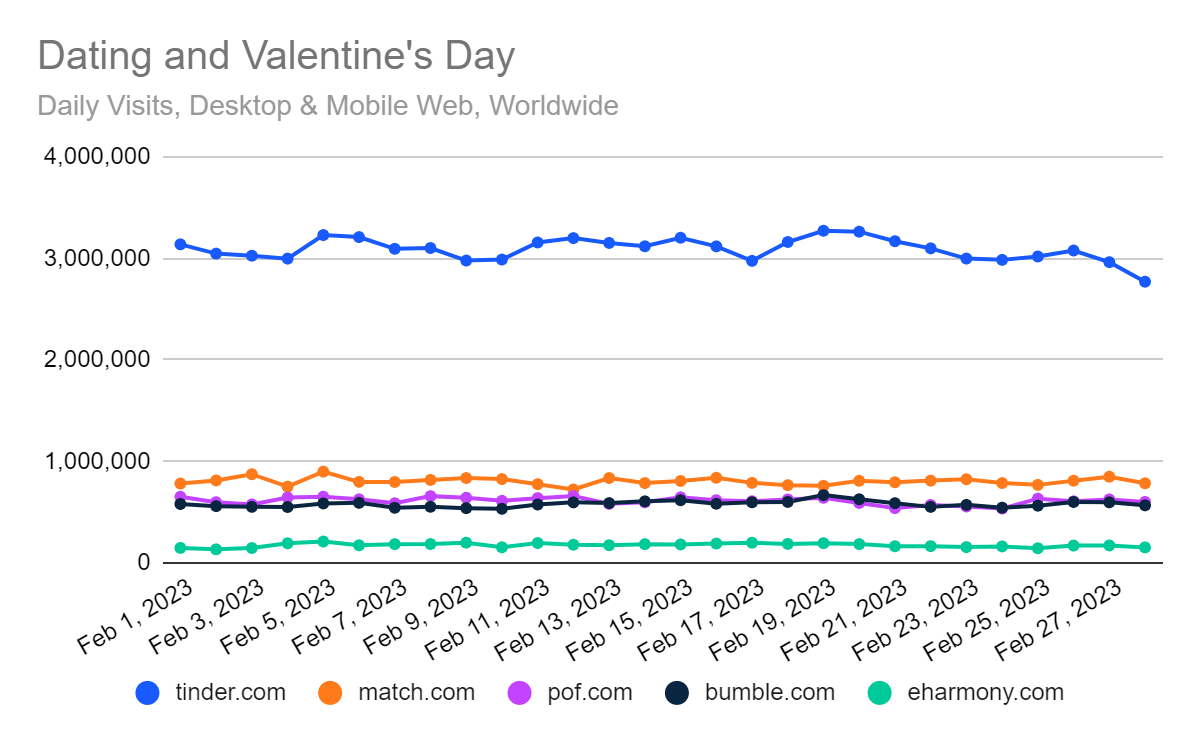
In the context of dating websites, we can see there is no particular surge in traffic around February 14 – maybe because it’s more of a holiday for those who already have a steady date than for those wanting to find one.
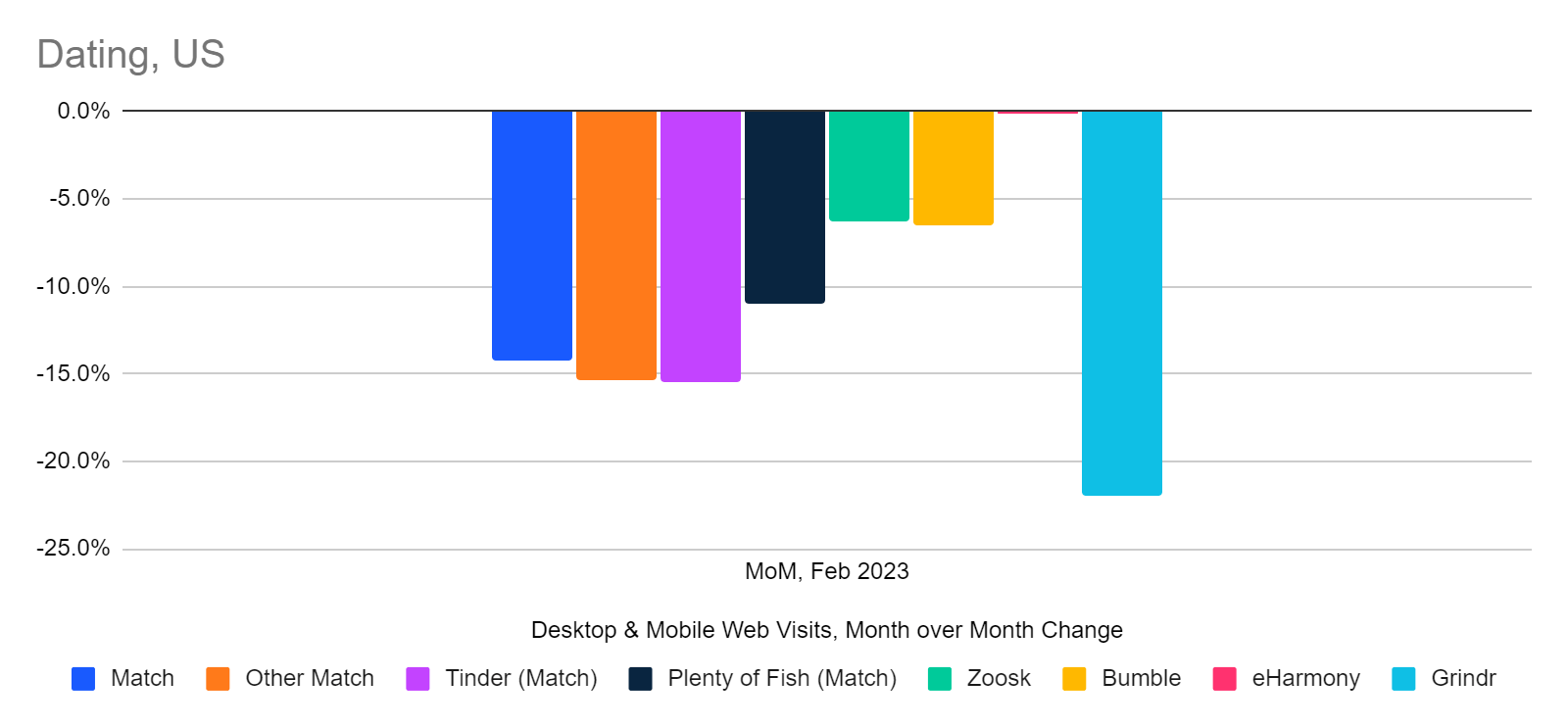
Not only was traffic to dating sites down from a year ago, but it was weaker than it was in January – uniformly so.
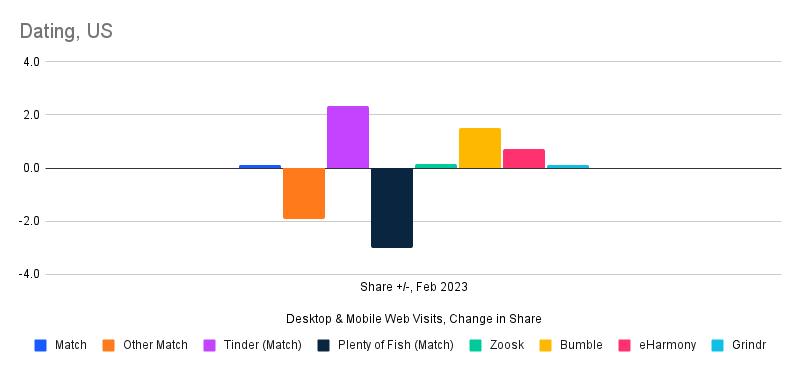
Match’s Tinder brand gained more than 2.3 percentage points of the share of traffic within this competitive set, and Bumble gained 1.5. At the same time, most other Match brands were down, with Plenty of Fish losing 3 points of share.
As of February, Match was attracting 23.6% of the traffic within this competitive set, with Tinder netting another 18.4% and other Match brands collectively attracting 18.6%.
The market for online dating seems to be receding overall, and an event like Valentine’s Day is no help.
Public companies referenced in this report include Match Group Inc. (NASDAQ: MTCH), Grindr Inc. (NYSE: GRND), and Bumble Inc. (NASDAQ: BMBL). Also Zoosk owner Spark Networks SE (NASDAQ: LOV).
The Similarweb Insights & Communications team is available to pull additional or updated data on request for the news media (journalists are invited to write to press@similarweb.com). When citing our data, please reference Similarweb as the source and link back to the most relevant blog post or similarweb.com/blog/insights/.
Disclaimer: All names, brands, trademarks, and registered trademarks are the property of their respective owners. The data, reports, and other materials provided or made available by Similarweb consist of or include estimated metrics and digital insights generated by Similarweb using its proprietary algorithms, based on information collected by Similarweb from multiple sources using its advanced data methodologies. Similarweb shall not be responsible for the accuracy of such data, reports, and materials and shall have no liability for any decision by any third party based in whole or in part on such data, reports, and materials.

David covers social media, digital advertising, and generative AI. With a background in web trends since the 1990s, he’s also the author of "Social Collaboration for Dummies".
Give it a try or talk to our insights team — don’t worry, it’s free!