





Top Ecommerce Companies in the USA: The 100 Brands Winning the Traffic Race in 2026
by Inbar Eytan6 Min.
Aug 30, 2026
 Marketing Intelligence
It’s been proven time and time again: consumers are more likely to believe a third party than a brand itself – “one online study found that a majority of consumers aged 18-34 (63%) are more trusting of influencers than a brand’s advertising.” When others wax poetic about your product or service, they’re more credible to the shopper.
So why not reward them for it? In a nutshell, that’s what affiliate marketing programs are all about.
If you’re tired of sorting through the noise and ready to invest in an affiliate program, this article helps you better understand the affiliate market’s diversity, what’s in it for you and how to attract the right affiliates. Familiarize yourself with the different types, programs, and possibilities affiliate marketing holds for your brand and get tools you need to build a sought-after program.
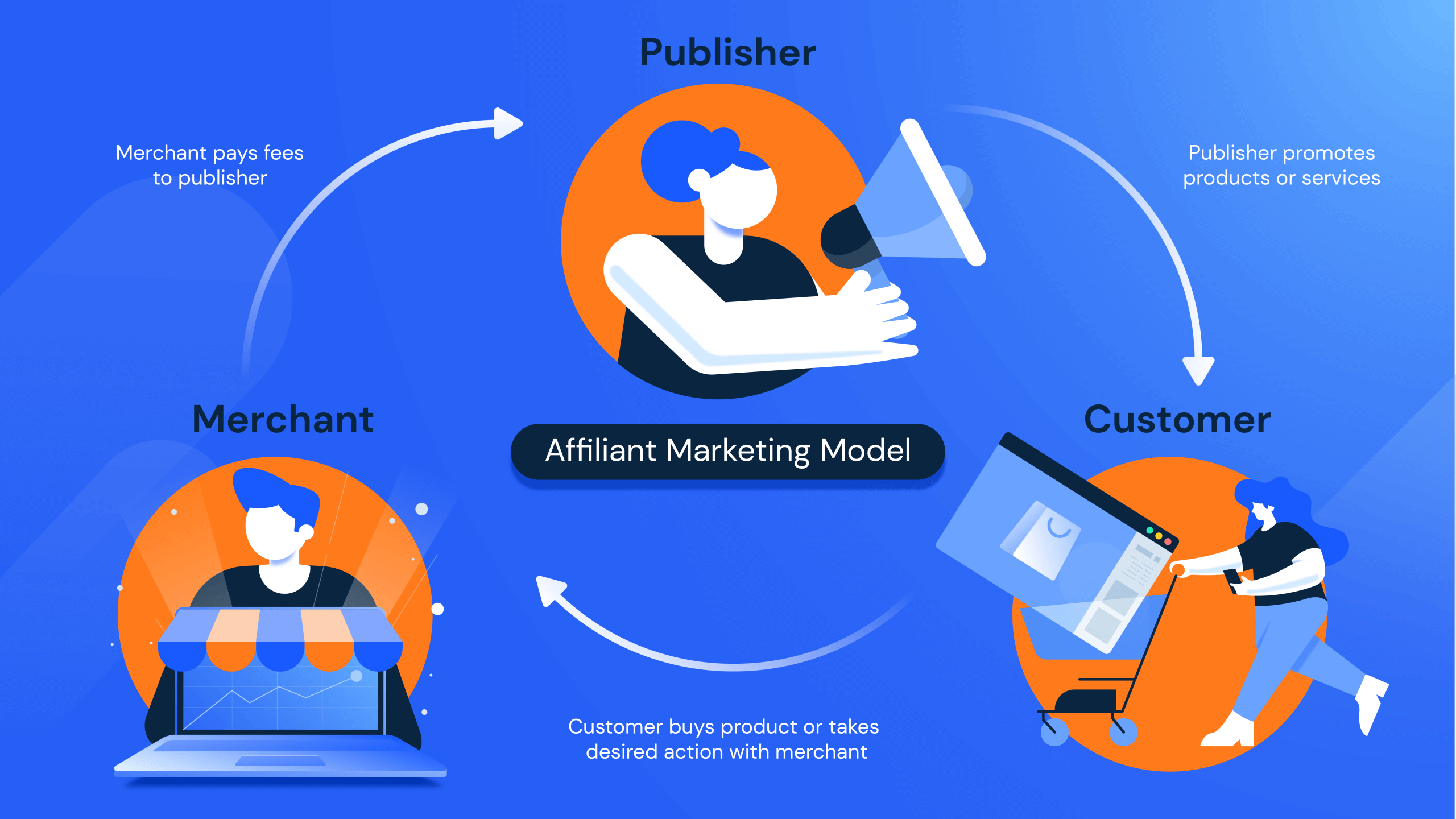
There’s no better place to start than at the beginning. An affiliate program is the relationship between the seller and the “others” advertising any given product. Simply put, it’s the agreement between the product owner and the product reseller, or affiliate.
The seller or retailer lets other parties, or resellers, advertise its merchandise and pays them a commission on each successful referral. It’s an effective method for both parties. The seller increases traffic and sales with a guaranteed return on ad spend while the affiliate makes passive income – the higher the commission, the higher the income.
When William J. Tobin filed his patent for online affiliate marketing after generating impressive revenue from advertising his flowers through the first online network services in 1989, he probably didn’t dream it would spur such variety.
The following is a comprehensive list of current affiliate marketing types:
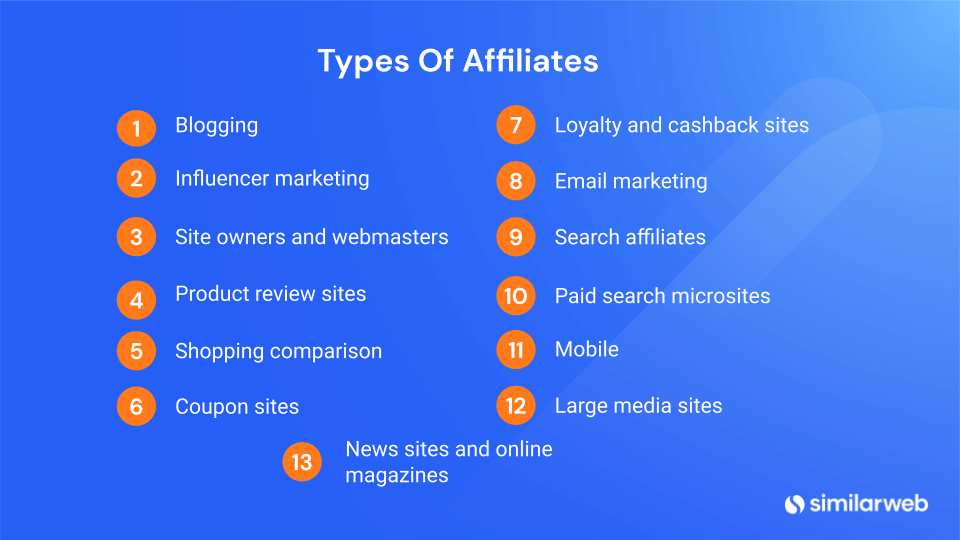
Clearly, you’ve got options. To figure out the right path for your marketing, investigate your competition and consider your audience’s behavior.
Ask yourself the following questions:
At Similarweb, we’ve compared some of the best affiliate marketing programs in various industries. Let’s take a look at the top dogs, what makes them interesting, and which type of affiliate marketers they’re for.

The leading CRM and marketing automation platform owes its reputation largely to its content marketing strategy. Its straightforward affiliate program is also aimed at content sites. Such sites have a 90-day window from the initial click to convince their referrals with relevant content to make a purchase and collect a generous commission.

Leadpages also offers co-hosting options for webinars and exclusive deals to successful affiliates. Leadpages provides page-building and lead-generation tools. Its affiliate program is available only to customers with the intention to create real two-way partnerships with those who are ready to put in a little extra effort – and get rewarded for their success. The webinar option is especially interesting for small online businesses, which is exactly Leadpages’ target audience, so it’s a win-win situation for all.
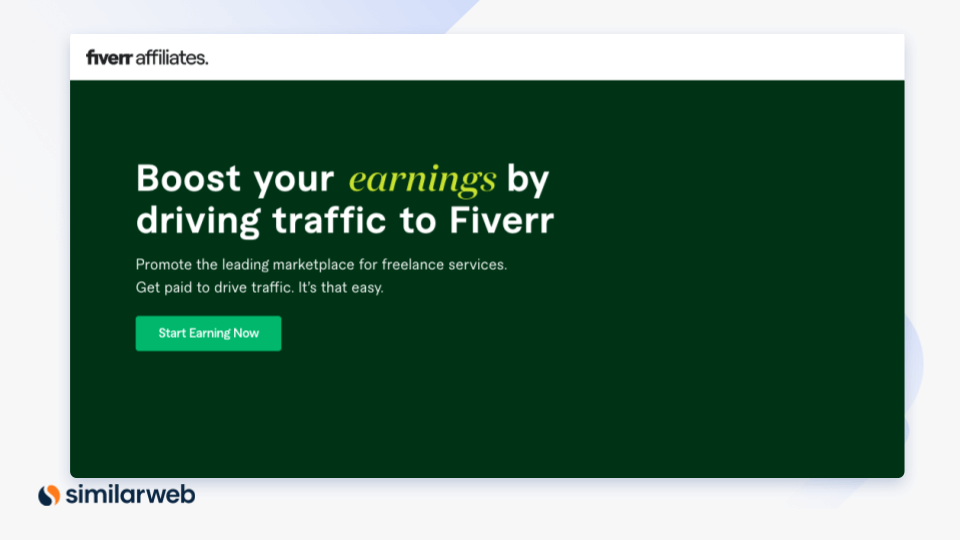
Interestingly, the company presents most of its information up-front (apart from the cookie lifetime, which we had to dig up in the FAQ section). Fiverr is a freelance marketplace, and its clients are not limited to any specific type of industry. The affiliate program addresses large affiliates, such as review sites, search affiliates, and other website owners with similar target audiences and business interests as Fiverr.

This unique platform provides individuals and organizations with tools to create and teach online courses. Teachable is very specific as to what type of affiliate marketing they aim at. Affiliates can choose from several email funnels to send to their followers or audience – a clear-cut structure with a relatively long cookie life.

One of the biggest players in the affiliate marketing game, Shopify is a platform where people can create their own online shops. The whopping 200% payout makes its program hard to pass up for any affiliate. Affiliates earn, on average, $58 per user who signs up. How is such a rate possible? Shopify’s customers are expected to be lifetime customers. The platform hopes to collect enough income from them over time to cover the hefty one-time commission. Being powerful and sought after, Shopify can be selective of its affiliates and as such, requires them to fill out an application form and have a proven track record. The one-time payment makes it great for app builders and webmasters.
Further Reading: Amazon vs. Shopify: Which Is Better in 2022?

This one-of-a-kind platform is a dedicated WordPress solution that makes having a webpage easy. Flywheel provides all of its affiliates with creative assets and works with them to create custom assets as needed. The best part of this program? There’s no minimum threshold limit to receive a payment.

This dropshipping supplier, wholesaler, and distributor is known across the United States and Europe for high-quality products. It allows entrepreneurs to choose products to sell from thousands of dropshipping suppliers worldwide. Spocket’s impressive affiliate program empowers its members to earn up to $450 per customer. More importantly, its affiliates continue to collect commission off referrals as long as they remain a customer.

Nicknamed the “world’s largest travel site“, Tripadvisor crowdsources advice from travelers to help people decide where to stay, how to fly, and what to do and eat. This affiliate program pays a solid 50% commission off the revenue generated from user clicks on links and/or ads. Unlike other affiliate programs, you don’t have to wait for your referral to make a purchase to earn your commission on Tripadvisor. As soon as a searcher from your website clicks on a link that directs them to Tripadvisor’s website, you get paid. Woohoo!

One of the biggest draws to joining GetResponse’s affiliate program (besides that it’s pretty high paying) is that the affiliates are armed with templates for email marketing, landing pages, opt-in forms, webinar hosting, a CRM tool, and plenty of other marketing automation tools. This company is actually home to two affiliate programs – join one or both.
Most companies work with several different types of affiliates. To attract what’s most suitable for your business, consider what affiliates might be looking for as well as what your business needs. A small business or startup probably needs a very different type of affiliate than a large company.
Your affiliate marketing program is only as strong as your weakest affiliate, so take the time to think about who you want to recruit to your referral program.
Here are some factors that affiliates evaluate:
The HTTP cookie, a small piece of data that’s stored on a user’s computer via a web browser, is placed on the potential customer’s computer with their initial click on the affiliate link, and then expires after some time. If a purchase is made during that window of time, then an affiliate is eligible for commission. The longer the cookie lifetime, the more time affiliates have to earn a profit from any purchase the user makes.
Depending on the type of industry, the window may be shorter or longer, but is usually around 60-90 days. Affiliates obviously prefer a longer cookie lifetime because it gives them time to increase their conversion rates, and of course, payout.
The type of product dictates a few factors about your affiliate program, and most affiliates stick to one category.
Most companies offer a percentage of the purchase, but flat rates are also not uncommon. Some companies offer a combination of both.
Some sites offer a gradual increase in commission with increasing referrals or purchases while others may offer something extra for first purchases. Hard-to-sell items may pay higher than frequently sold items.
Affiliates usually receive a monthly payout. Most affiliate programs require the affiliate to accumulate a minimum earning before the money becomes available – no petty cash, please.
Though it’s not very common, some sites require affiliates to apply and meet certain criteria to be accepted to the program, but the majority of sellers are happy to partner with anyone relevant to their industry.
Your turn!
So, what are the best affiliate marketing programs for you? Don’t cast the die; get the data. Analyze where your traffic comes from and understand your customer journey and behavior.
You also want to know what works for your competition. How successful are the programs they employ? Which affiliates provide them with high-quality traffic? Similarweb can help you get to the bottom of both these questions.
Similarweb marketing strategy tools lets you find your competitors’ affiliates and compare competitors’ referral traffic stats per category. Get a sense of their scale, variance, and traffic quality. See which keywords drive traffic and where. Are you considering reviews, coupons, or comparison sites? Check their performance stats and use what you learn about your competitors to create your own unique affiliate mix and translate market changes in real-time.
Not only does Similarweb Web Intelligence allow you to see which of your current affiliates are performing well, it also helps you understand how your affiliate partners might be performing for your competitors.
Pro Tip – Use Similarweb insights to see which affiliates drive a large share of traffic to your competitors so you can strengthen those partnerships, renegotiate your commission agreements, and increase your referral traffic share. It’s also key to finding new strategic partnerships and growth opportunities, whether that’s by a specific niche or keyword, industry, or website
Don’t treat your affiliate program as extra income or a “nice-to-have” extra – it’s a crucial component in your digital marketing strategy and if you don’t constantly analyze, optimize, and iterate your website, you can’t expect it to thrive.
What is an affiliate program?
An affiliate program refers to the relationship between the seller and the affiliate, who is marketing the product. The seller pays the affiliate commission for each successful referral.
What are different affiliate marketing types?
There are many different marketing types, including, blogging, influencer marketing, email marketing, coupon sites, and product review sites.
What factors do affiliate programs evaluate?
Affiliate programs evaluate several factors, including, referral cookie lifetime, affiliate payment systems, and acceptance criteria.

Sr. Marketing Intelligence Specialist
Sarah creates engaging content with over 5 years of experience. She enjoys traveling, family time, baking, and Netflix. Sarah holds a psychology degree from Clark University and lives in Israel.
Top Ecommerce Companies in the USA: The 100 Brands Winning the Traffic Race in 2026

3 of the Sharpest Minds Weigh in on the State of Gen AI in 2026

Give it a try or talk to our marketing team — don’t worry, it’s free!
