by Darrell Mordecai4 Min.
Oct 21, 2026
 Insights
We recently hosted a webinar, Future of Search, to unpack Similarweb’s 2026 Generative AI Landscape report with three of the sharpest voices in AI search:
Here are some of the key points raised during the discussion, mapped back to the numbers in the report.
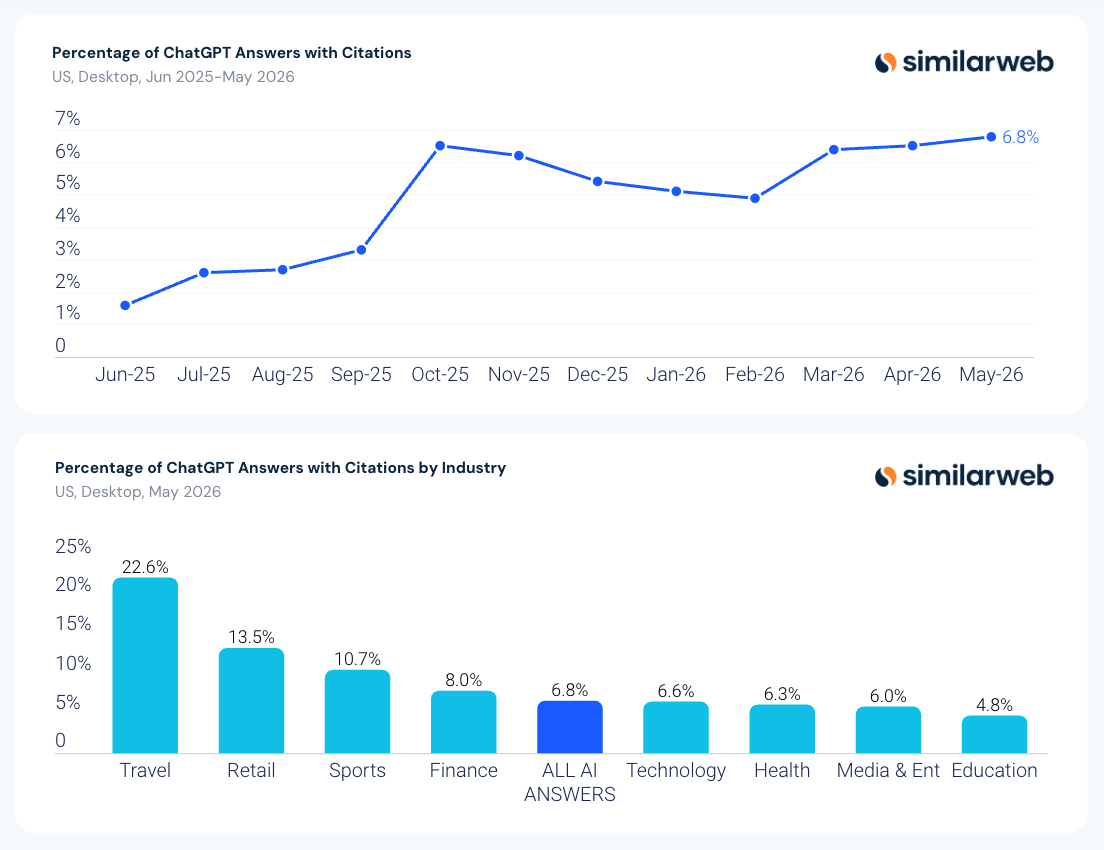
Ethan Smith’s biggest flag from the report was that roughly 93% of AI answers carry no citation and involve no live search at all, meaning the model’s own training data, not retrieval, is driving most responses. “Many answers are driven by the core model and not from the RAG response,” he said, which shifts the optimization target from crawlable pages to being present in what the model already knows.
Beyond that, his advice was to run one consistent strategy across platforms rather than building a separate playbook for each one. Even though ChatGPT, Gemini, and Claude produce different results, he argued the underlying mechanisms are similar enough that the same strategy should hold “unless you find something unique and interesting” through testing. The testing isn’t there to invent a different approach per platform, it’s there to confirm that the one strategy is actually working, since “I don’t think we have most of the answers… even if you read something online, you should still experiment with it.”
Lily Ray’s core caution was against chasing individual LLM hacks at Google’s expense. Google still powers AI Overviews, AI Mode, and Gemini’s retrieval, so tactics that hurt organic search performance can undercut visibility everywhere else, too.
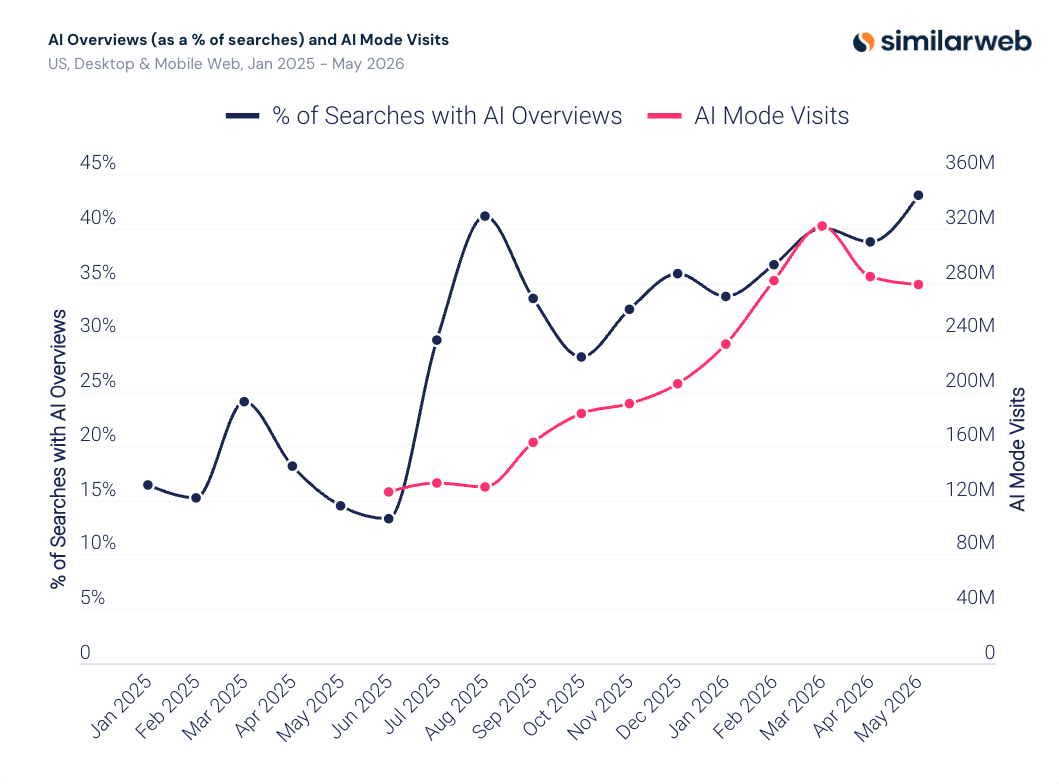
Her recommendation was to lean into original research and authentic, named expertise rather than easily replicated “commodity” content. That’s the same E-E-A-T foundation that’s driven search visibility for years, and it’s what continues to separate brands that stand out from those that blend in, across both search and AI platforms.
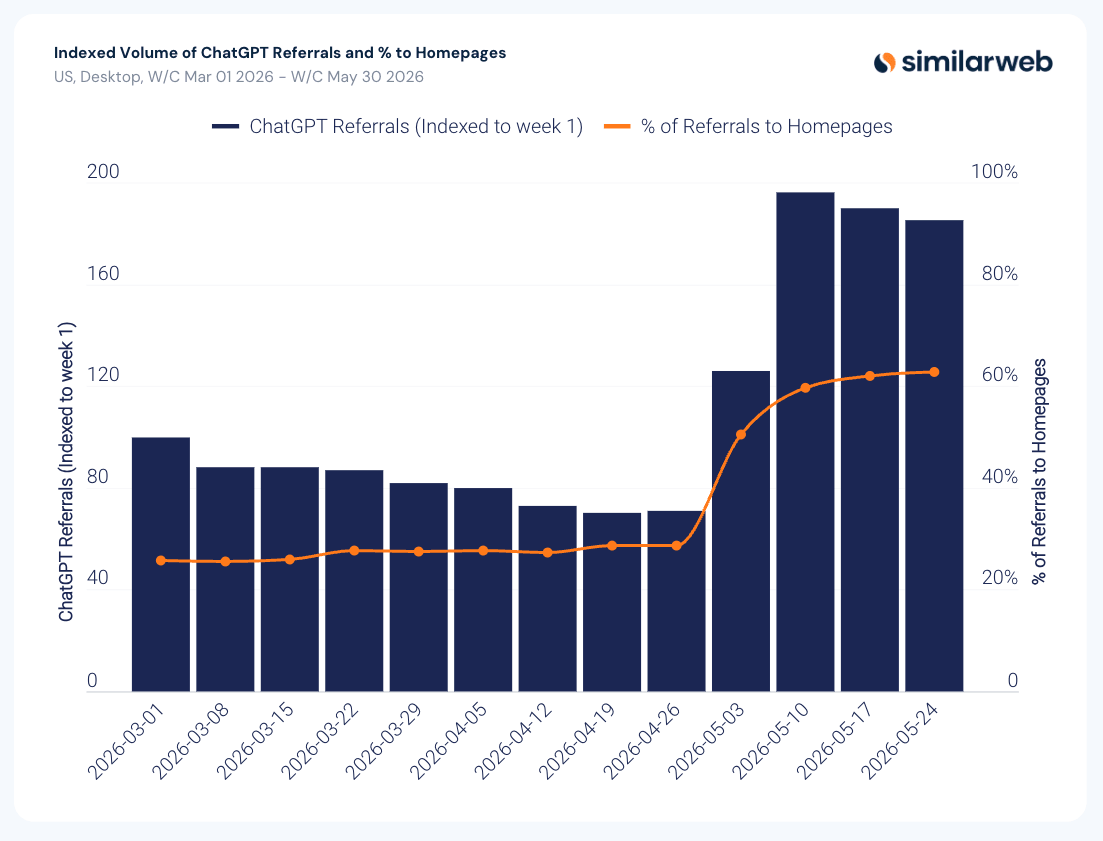
Kevin Indig’s central point was that visibility, being mentioned and recommended in an AI answer, matters far more than citation volume. Citing his own user research, he noted that roughly 75% of users pick the first-ranked item on an AI shortlist and rarely click through to a citation at all. That lines up with the report’s data showing nearly 59% of ChatGPT referral traffic lands on homepages, even though citations skew toward deeper pages. Users see a recommendation, then navigate straight to the brand, which makes share of voice a far more meaningful KPI than being cited.
His closing recommendation tied directly back to that gap.
Since AI referral traffic is hard to trace and traditional measurement is getting less reliable, brands should reinvest in direct customer research. Even talking to ten customers a month, he said, can surface the language and intent that determines whether a brand earns that top spot on the shortlist in the first place.
One strategy, real content, and real customers: the fundamentals aren’t changing. What’s changing is how closely AI platforms are watching whether brands actually have them.
For the full data behind these takeaways, see the 2026 Generative AI Landscape report.

Darrell creates SEO content for Similarweb, drawing on his deep understanding of SEO and Google patents.
Give it a try or talk to our insights team — don’t worry, it’s free!