


 Marketing Intelligence
AI Prompt Analysis: How to Do It in 3 Steps

Lately, I’ve been obsessed with understanding how AI decides which brands to recommend. People ask ChatGPT, Gemini, and Perplexity everything, from what tools to buy to which home décor stores they should trust, and GEO tools are quickly becoming part of how brands analyze these interactions. So I wanted to break down the process and actually see how AI answers are formed.
To do that, I used Similarweb’s AI Brand Visibility tool and walked through real prompts, topics, citations, and answers. Everything you’ll read here is based on what I did and what I found along the way.
What Is AI Prompt Analysis?
AI prompt analysis is the process of understanding what people ask AI tools, how AI interprets those questions, and how it builds the answers it gives back.
When you analyze prompts, you look at the language of the question, the prompt’s intent behind it, the structure of the AI’s response, and the sources or brands the AI chooses to reference.
At its core, prompt analysis helps reveal what the AI sees as relevant or trustworthy. It shows you why certain brands or insights appear in answers while others don’t, similar to AI competitive analysis.
Once you understand how AI makes those decisions, it becomes much clearer how AI influences user choices, and how brands can position themselves to show up more effectively in future responses.
The Importance of Analyzing AI Prompts
AI prompt analysis reveals which brands show up in AI answers and which ones don’t. When a brand is missing from an answer, it’s usually not because the topic isn’t relevant, but because the AI couldn’t find sources it trusts and content that’s detailed or updated enough to justify mentioning it.
In this article, I analyzed Home Depot’s prompts and discovered why this kind of analysis matters. It clearly shows where a brand is performing well and where competitors are starting to take the lead.
And the need for this kind of visibility is only growing. Our Generative AI Landscape report shows that AI sessions are becoming far more conversational and personalized than traditional search. ChatGPT prompts now average around 60 words, compared to Google’s 3.4, as users add context and preferences for more tailored answers. And while AI Mode sessions currently involve fewer queries, they’re steadily rising as people grow more comfortable with generative interfaces. All of this signals a shift from quick searches to more detailed conversations, so each prompt becomes a bigger opportunity for brands to appear.
The sooner you catch these types of shifts, the better your chances are of staying ahead, and that’s why prompt analysis can give you a real advantage.
Let’s start diving in.
How to Analyze AI Prompts
Step 1: Find the main topics
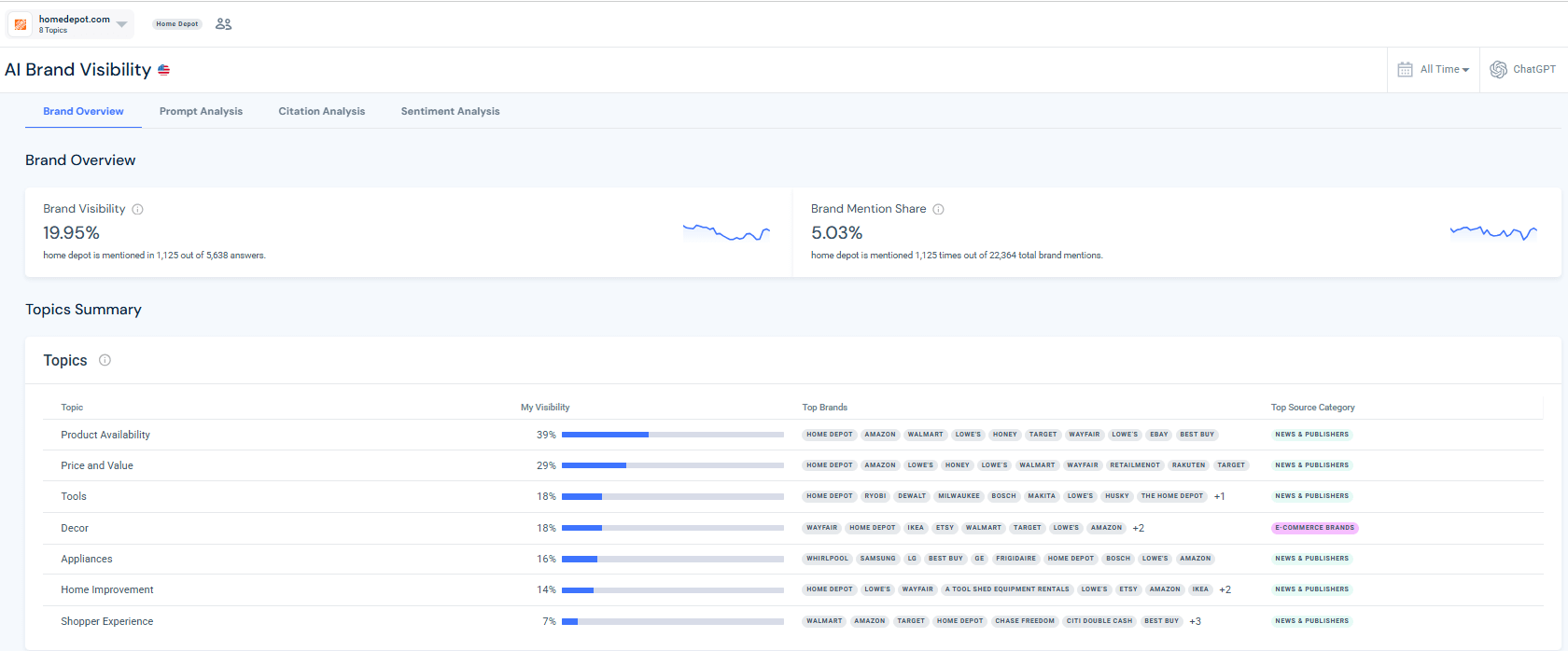
I began by opening the AI Prompt Analysis tool and selecting Home Depot. Then I chose the brand topics I wanted to explore: tools, décor, and appliances.
Once I made the selection, the tool showed me Home Depot’s overall AI visibility and how often the brand appears across these specific topics. Product Availability, Price, and Value were Home Depot’s strongest areas, followed by Tools and Décor.
These are the categories where AI already “recognizes” the brand and mentions it the most. Other topics, like Shopper Experience, had much lower visibility.
This quick overview gave me an understanding of where Home Depot is already visible in AI answers and where there’s room to grow.
Step 2: Analyze the prompt list
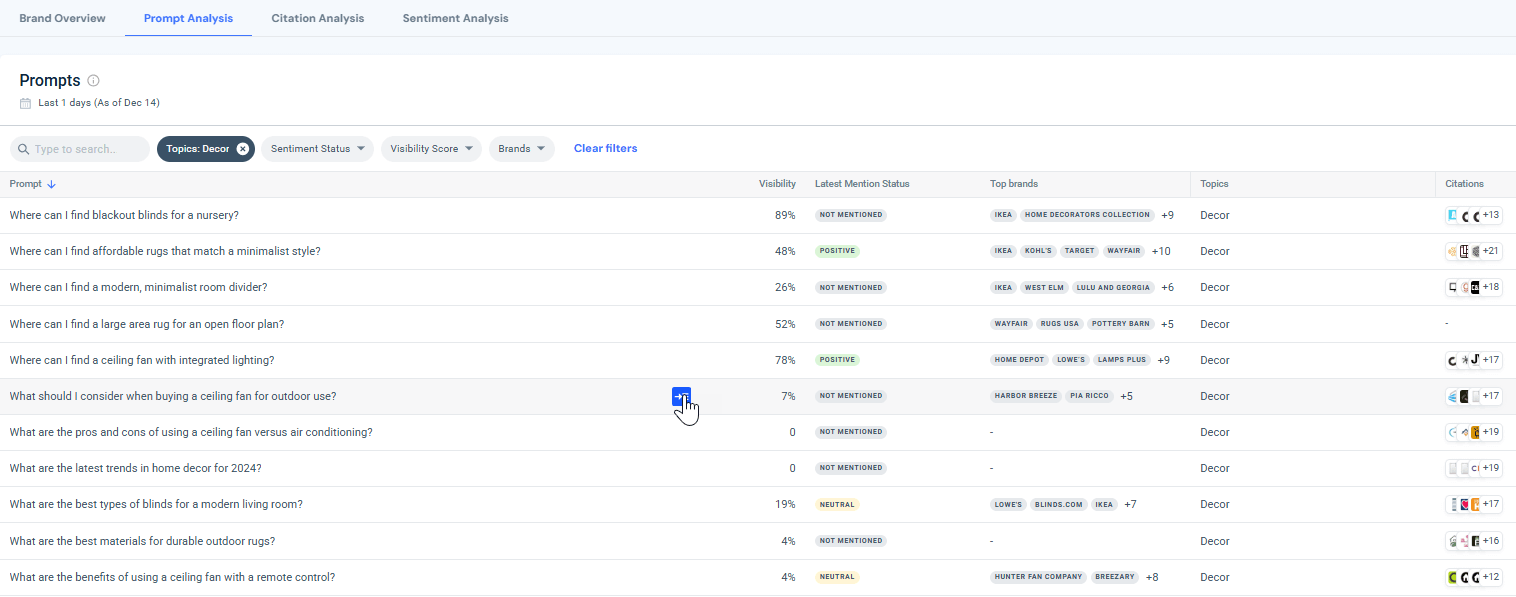
Once I understood Home Depot’s topical strengths and weaknesses, I wanted to get closer to the actual questions people are asking AI. I filtered the prompts under the “Decor” category.
This immediately gave me a full list of real user prompts along with their visibility scores, sentiment, top brands mentioned, and the citations behind each answer.
The list itself was interesting. Some prompts had exceptionally high visibility, like “Where can I find blackout blinds for a nursery?” at 89%, where brands like IKEA and Home Decorators Collection dominated. Others had moderate visibility with clear competitive clusters around brands like Wayfair, West Elm, Target, and Kohl’s.
But what stood out most were the prompts where Home Depot should have been relevant but wasn’t appearing at all.
That’s when one specific prompt caught my eye:
“What should I consider when buying a ceiling fan for outdoor use?”
Even before clicking in, a few things were immediately noticeable from the data:
- Visibility was only 7%: unusually low for a product that Home Depot clearly sells.
- Home Depot wasn’t listed among the top brands mentioned in the response. Instead, smaller or more niche competitors like Harbor Breeze and Pia Ricco appeared.
- The prompt shows strong buying intent, yet Home Depot isn’t mentioned as a relevant option. This is a sign that AI isn’t associating the brand with pre-purchase guidance for this category.
Seeing a category-relevant prompt with strong buying intent and almost no Home Depot visibility suggested a deeper issue, likely with content availability, authority, or how AI models interpret the topic.
That’s why I clicked into this prompt specifically.
It wasn’t just low visibility: it was an opportunity gap.
This kind of mismatch often reveals where a brand is missing content, losing ground to competitors, or simply not being recognized by AI as a trusted source on that topic.
Step 3: Check the citations and responses
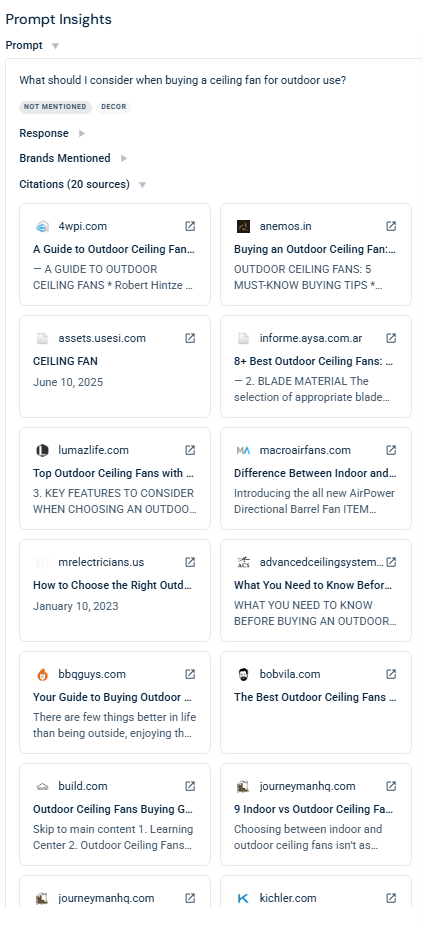
Inside the prompt, I could see exactly where the AI pulled its information from. More than twenty sources appeared, mostly expert blogs, niche home improvement sites, and detailed buying guides. This was essentially AI citation analysis: identifying which websites the AI actually trusts and draws on when answering this question.
When I read the AI-generated response, I noticed how structured and technical it was. The answer went into how well the fan cools, how big the blades are, how tough it is, whether it’s made for outdoor weather, and how easy it is to set up.
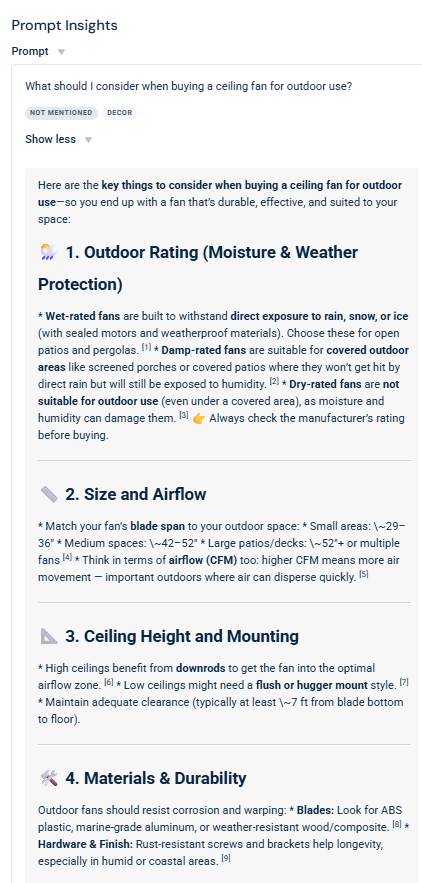
AI barely cited Home Depot. It didn’t come up often as a trusted source for this type of technical, educational content.
That explained the low visibility. The brand wasn’t lacking relevance; it was lacking authoritative content that AI could confidently use.
From Insights to Impact: Building a Prompt Optimization Strategy
After walking through the entire analysis process, I didn’t want to stop at simply understanding what AI was doing. I wanted to turn those insights into something actionable.
Once I realized where Home Depot appeared, where it didn’t, and (most importantly) why, a strategy almost wrote itself. Here’s how I would turn these insights into a prompt optimization strategy:
1. Address the content gap first
When I looked at the outdoor ceiling fan prompt, it became clear that the AI leaned heavily on detailed, expert-style resources. Home Depot wasn’t missing because it lacked the product, it was missing because it didn’t have the depth of content AI trusts. So the first step would be to create or improve content that answers these high-intent prompts directly, following Answer Engine Optimization principles.
2. Place this content where AI already looks
It’s not enough to publish only on a brand’s blog. AI tends to pull from structured buying guides, expert reviews, how-to articles, and authoritative third-party websites. So I’d make sure this new content also appears across the broader knowledge ecosystem where AI gathers information.
3. Build a list of “opportunity prompts”
Next, I’d identify prompts where Home Depot should appear but currently doesn’t. These are high-intent questions with clear brand relevance but low visibility. Each of these prompts becomes a strong content brief and a priority area for optimization.
4. Treat prompt analysis as an ongoing loop
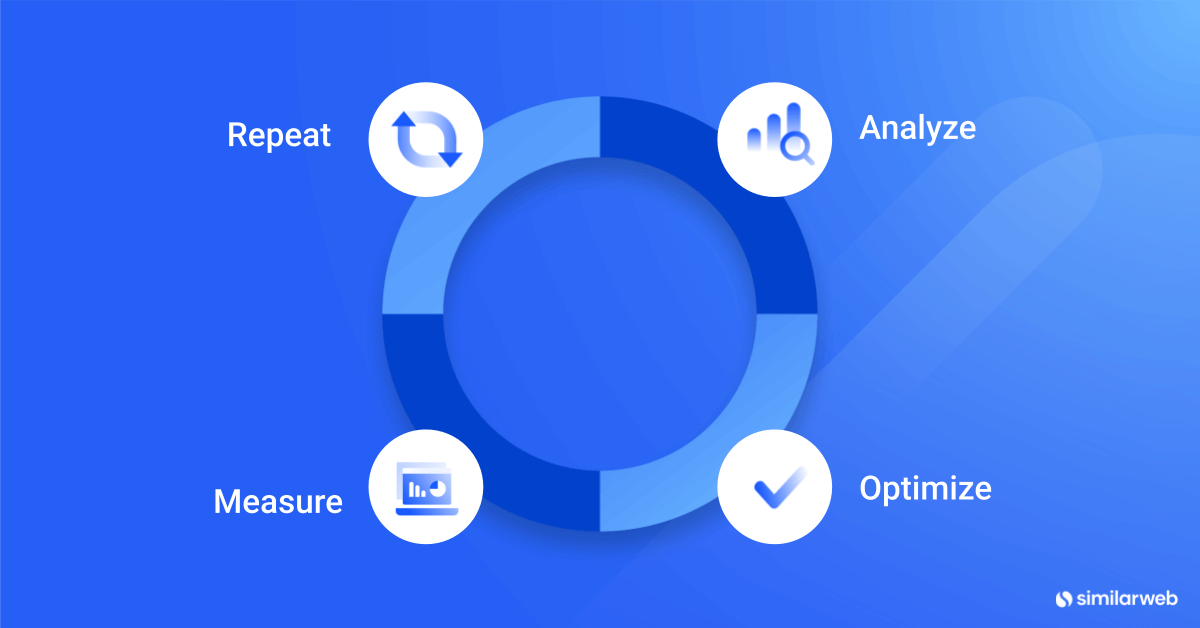
AI constantly changes. Competitors update content, new prompts appear, and user behavior shifts with seasons and trends. I’d revisit this analysis regularly and treat it as a cycle: analyze ? optimize ? measure ? repeat.
Once you recognize these patterns, you can build a strategy that consistently improves brand visibility in the places where AI influences user decisions the most.
What Surprised Me Most During the Analysis
As I went through the prompts, a few things genuinely surprised me. AI doesn’t automatically favor the biggest retailers, but favors the most precise and complete explanations. Sometimes, small home décor blogs outranked major brands simply because they offered better guidance.
I also noticed how consistent this behavior was across different prompts and platforms. No matter the model, AI leaned toward content that truly helps the user make a decision, practical details, clear logic, and answers that feel complete.
That’s when I realized that showing up online isn’t enough: brands need to provide genuine expertise that AI can trust.
What really stood out, though, was how much the small details matter. Even a tiny gap, a missing explanation, an unanswered question, or a weak buying guide can cause a brand to disappear from an AI response entirely.
Seeing that made prompt analysis feel much more actionable, because improving visibility often starts with refining the content behind these high-intent prompts.
Completing the Prompt Analysis Picture
This analysis showed me that AI becomes much easier to understand once you start breaking down the prompts behind its answers.
By looking at the types of questions users ask, and how the AI responds to each one, I could clearly see when a brand was aligned with the user’s intent, and when it wasn’t.
Patterns started to emerge: the kinds of prompts where a brand consistently appeared, the ones where it struggled, and the gaps that competitors were filling instead.
If you’re trying to understand your own brand’s position inside AI answers, prompt analysis is the best place to start, which is also becoming a key part of Generative Engine Optimization. Once you begin examining the prompts themselves, the path forward becomes much clearer.
FAQs
What tool did I use for this analysis?
Similarweb’s AI Prompt Analysis features (within the AI Brand Visibility tool).
How often should brands check prompt visibility?
Weekly or monthly, depending on how dynamic the category is.
Why do some brands appear more than others?
Usually, because they have stronger authoritative content in the areas AI cares about most.
How do I know which prompts I should optimize first?
Start with prompts where the brand is highly relevant but barely visible. These represent the biggest opportunity because the intent already aligns with what the brand offers, but the content just isn’t strong enough yet.
Can prompt visibility improve quickly?
It depends on the topic and its competitiveness. Creating a single, well-structured piece of content can significantly increase visibility in a short time. Other times, it requires building a broader content ecosystem.
Is prompt optimization only relevant for big brands?
Not at all. Smaller expert blogs often outrank big retailers simply because they offer deeper explanations. Prompt optimization is about authority and clarity, not size.
How often do AI prompts change?
More often than you’d think. New prompts appear as trends, seasons, and user behaviors evolve. That’s why prompt analysis is an ongoing process, not a one-time project.

Related Posts



Why AI Engines Cite UGC Over Brand Content And How To Leverage It For AEO

AI Mentions vs. AI Citations: What’s the Difference and Why It Matters for GEO


Wondering what Similarweb can do for your business?
Give it a try or talk to our insights team — don’t worry, it’s free!