




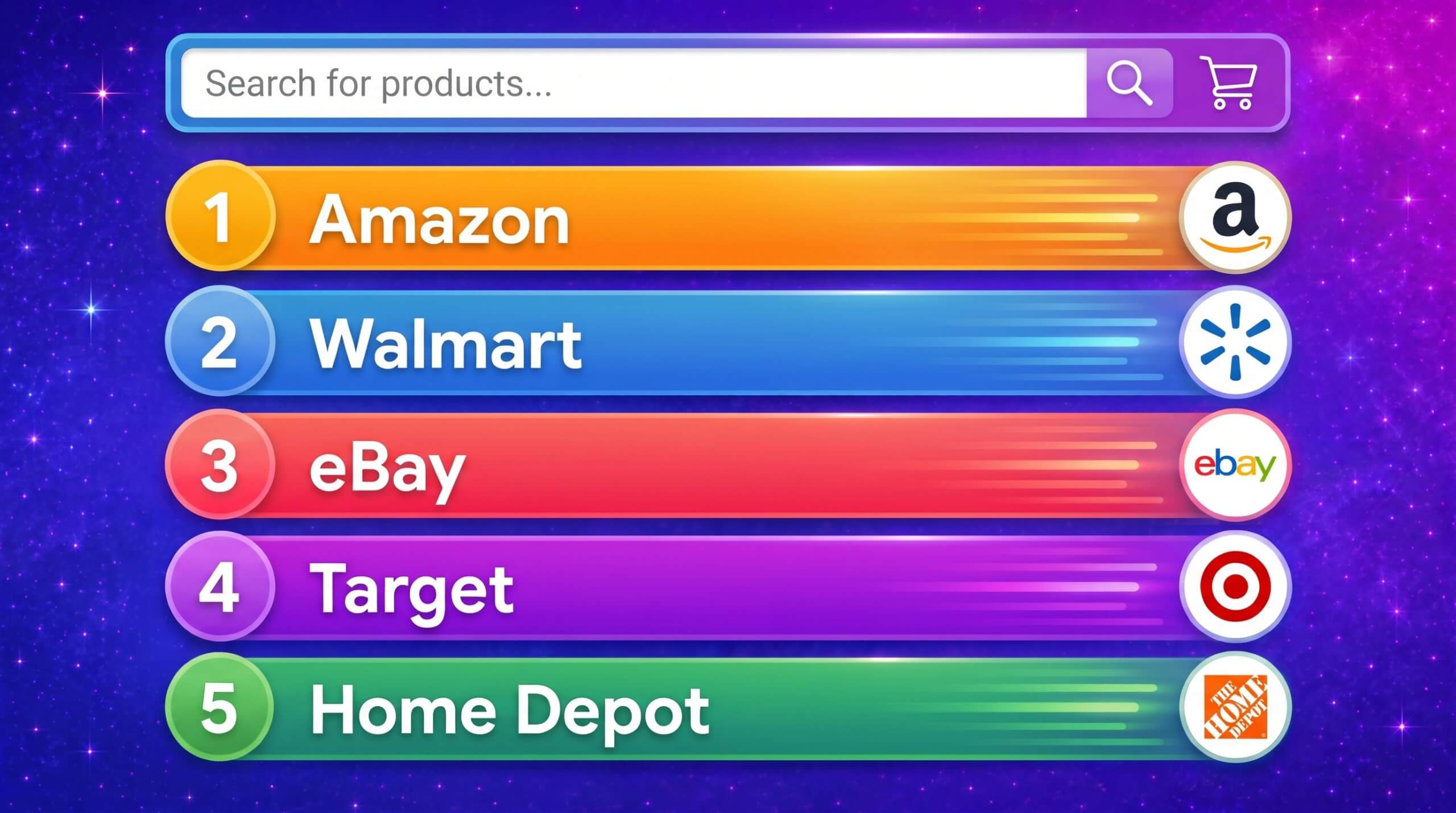

Top Ecommerce Companies in the USA: The 100 Brands Winning the Traffic Race in 2026
by Inbar Eytan6 Min.
Aug 30, 2026
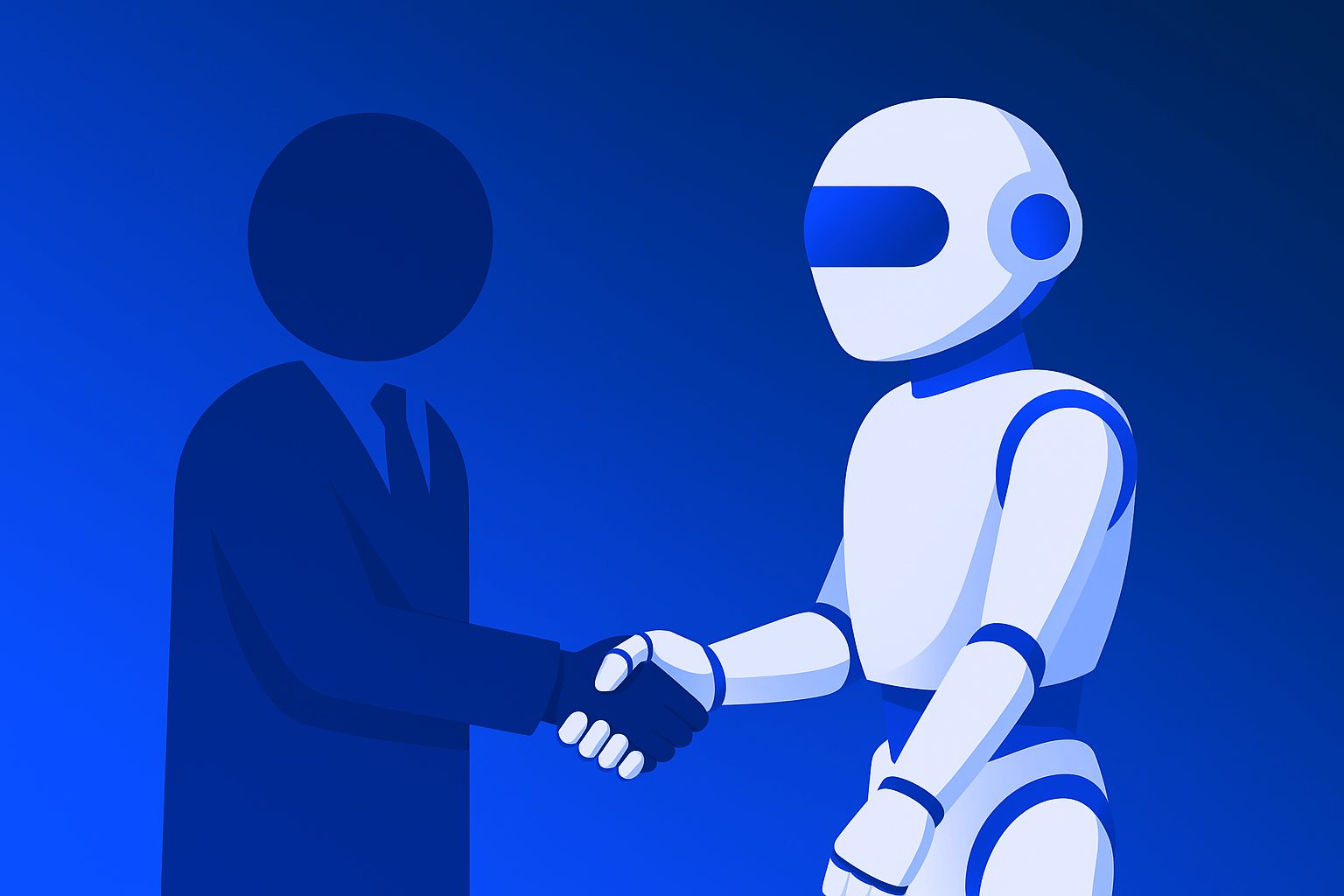
AI teammates go beyond simple automation, acting as true collaborators. They work alongside humans to handle tasks like analyzing data, writing content, and coding, dramatically improving human productivity. Learn how AI teammates work, their possible roles across functions like marketing, research, engineering, and HR, and the challenges you must address to use them effectively.
AI teammates are tools designed to work alongside humans to improve productivity. They perform tasks such as writing, coding, or analyzing data by drawing on large-scale knowledge bases, advanced cognitive abilities, multi-step automation, and tool use.
This new automation paradigm enables humans to think strategically and creatively, while offloading routine tasks and complex analysis to AI. With AI support, one person can produce the output of several team members, providing exceptional productivity gains for individuals and organizations.
AI teammates and AI agents differ primarily in how they integrate into workflows.
AI agents perform tasks autonomously, receiving goals and constraints from humans and carrying out multi-step workflows to achieve a desired outcome.
AI teammates are built to collaborate with humans, improving team performance by providing assistance that complements human creativity, decision-making, and problem-solving.
While AI agents focus on automation, AI teammates aim to amplify human capabilities by providing support where human effort is best utilized, such as offering data-driven insights or managing routine tasks.
Modern AI teammates are based on large language models (LLMs), but might also incorporate other AI technologies such as traditional natural language processing (NLP) or predictive analytics algorithms. They work by integrating into the workflow of human collaborators, helping them carry out tasks that are repetitive, time-consuming, or require large-scale data analysis.
AI teammates learn and evolve by analyzing interactions, data, and outcomes. Unlike previous generations of automation, they require only simple natural-language instructions, not detailed programming. Their continuous learning process allows them to anticipate needs, offer tailored solutions, and automate repetitive processes.
These solutions can manage and execute tasks ranging from scheduling to complex data analysis, and perform creative brainstorming with its human partners, while learning how to align with the human user’s preferences and objectives.
A critical capability of AI teammates is integration into existing tools and platforms, creating a seamless flow of information and reducing the time spent on manual coordination. They typically use a shared memory across teams, allowing them to remember past interactions, track progress on ongoing projects, and provide contextually relevant recommendations to workflows.
When applied to marketing and sales use cases, AI teammates analyze vast amounts of digital data, including web traffic patterns, search behavior, and competitive analysis, to identify emerging trends, high-impact SEO opportunities, and sales strategies. They can also gather competitive intelligence by continuously scanning the digital landscape.
For example, marketing-oriented AI teammates can help marketing and research teams understand why certain trends are emerging, track seasonal fluctuations, and connect those patterns to global events or shifts in demand.
AI tools can simplify the lead outreach process by generating personalized, data-driven messages at scale. These agents analyze customer data and interactions to craft tailored sales emails and messages for a range of channels, including email and LinkedIn.
Research applications are a tight fit for AI teammate capabilities. They can dramatically speed up and deepen research by automatically collecting, filtering, and summarizing information from a wide range of internal and external sources. They monitor industry trends, compile insights from scientific literature, and scan news feeds or databases for relevant developments.
In planning and strategy, AI tools can model business scenarios by simulating variables like customer behavior, market growth, or supply chain dynamics. They support SWOT analysis, risk assessment, and resource allocation by identifying patterns in historical data and making probabilistic forecasts.
AI can also suggest goals, metrics, and benchmarks based on organizational priorities or competitor performance. These insights make strategic discussions more grounded in data and help leadership teams make timely, evidence-based decisions.
In software development, AI teammates offer real-time support throughout the coding lifecycle. They autocomplete functions, suggest better algorithms, and flag vulnerabilities as code is written. These tools can understand code context, providing more relevant suggestions and even helping developers understand and learn new codebases.
During code review, AI highlights bugs, inefficiencies, and stylistic issues, helping maintain code quality even in large or fast-moving projects. In DevOps, AI automates infrastructure management, including provisioning, scaling, and monitoring. It detects system anomalies, predicts outages based on usage patterns, and recommends fixes before failures occur.
Deployment pipelines benefit from AI-driven automation in testing and integration, reducing the chances of regression bugs reaching production. By acting as a 24/7 virtual operations assistant, AI helps teams maintain system uptime and reliability.
AI-powered assistants handle a range of customer-facing tasks, from live chat responses to email drafting. They understand natural language inputs, allowing them to resolve routine inquiries, like account access, billing, or product information, all of this without human intervention. They also route complex issues to the right team members.
Beyond external communication, AI helps internally by summarizing meetings, writing documentation, and creating reports. It extracts key points from discussions or long documents, enabling better knowledge sharing across teams.
In multilingual environments, AI translation tools break down language barriers, supporting consistent messaging across regions. These capabilities reduce bottlenecks in communication and allow both customers and internal teams to interact more efficiently.
In HR and people operations, AI teammates simplify administrative work and improve decision-making. During recruitment, AI screens resumes at scale, ranks applicants by match quality, and detects potential bias in job descriptions or selection criteria. During onboarding, AI systems guide new hires through paperwork, training schedules, and policy documents, ensuring a consistent and welcoming experience.
Post-hire, AI continues to assist by analyzing employee engagement data like survey results, productivity metrics, and communication patterns to identify potential retention issues. It recommends training programs based on skill gaps and helps match employees to projects based on strengths and availability. For workforce planning, AI provides forecasts on team capacity and hiring needs.
AI teammates function autonomously without the need for constant supervision or detailed instructions. They are capable of identifying opportunities to take initiative based on context and available data.
For example, if an AI teammate notices a delay in a project or an issue with task progress, it can take steps to address the situation, such as re-assigning tasks, suggesting alternative approaches, or providing reminders to keep the team on track.
This autonomy allows human team members to focus on higher-level responsibilities. AI teammates can also adapt to feedback from users and can refine their work over time and better align with user needs.
AI teammates excel in both understanding and execution, acting as a bridge between planning and action. When tasked with a project, AI teammates process the full scope of the project, interpret goals, and understand underlying objectives. They can break down complex projects into smaller, actionable tasks, organize them by priority, and create a timeline for execution.
During this phase, they can identify potential risks, provide recommendations on how to mitigate them, and generate strategies to optimize workflows. Once the plan is in place, AI teammates follow through by managing the execution of tasks, monitoring progress, and ensuring deadlines are met.
AI teammates can analyze vast amounts of data quickly and efficiently, turning complex datasets into meaningful insights. They go beyond simple number crunching by identifying correlations, trends, and actionable patterns that may not be immediately obvious.
For example, an AI teammate can analyze sales data over time, segment it by region or demographic, and then offer insights about customer behavior or product performance. This level of analysis saves teams time and provides recommendations that are actionable, helping teams make informed decisions.
AI teammates help maintain a deep understanding of ongoing projects and team dynamics, ensuring that their actions are always aligned with the needs of the team. By storing and recalling context from previous interactions, AI teammates can provide continuity in the collaboration process.
For example, if a task has been updated or a priority has shifted, the AI teammate can adjust its recommendations or actions to reflect these changes, ensuring that everyone stays on the same page. AI teammates can also recognize when a team member might need additional information or support, offering data or reminders based on previous conversations or tasks.
Similarweb offers a suite of AI teammates for sales and marketing teams
The AI Trend Analyzer Agent detects real-time shifts in consumer behavior and market demand, allowing companies to stay ahead of their competitors. It can identify search spikes and provide insights into the reasons behind these trends. By examining clusters of rising keywords, the AI uncovers high-impact terms and helps understand what is driving spikes.
For example, imagine you are running a marketing campaign targeting foldable laptops. In Demand Analysis, the Search Trends report automatically clusters search terms related to this concept. Combined, foldable laptop keywords had 1.1 million searches in the past year.
The report shows there was a huge growth in search volume in the month of May. The Analyze button lets you analyze this trend with the AI Trend Analyzer Agent.

Once the button is clicked, the AI Agent processes data and provides an analysis of the trend. It seems that most of the increase is due to searches for Huawei foldable laptops.

When you click the Huawei Foldable Laptop topic to drill down, the AI Trend Analyzer performs deeper research and provides more context. It shows that this brand launched its first foldable laptops recently, causing a spike in demand.

The AI SEO Strategist is a game-changer for businesses looking to improve their SEO performance quickly and effectively. By transforming a simple keyword list into a full SEO strategy, it offers a detailed analysis of relevant content across the web, helping organizations understand their competitive landscape.
For example, let’s say we are responsible for SEO strategy at Best Buy and are tasked with growing traffic for the laptops category. The Similarweb AI SEO Strategist Agent discovers related keywords, analyzes competitor pages, related pages on bestbuy.com, and discovers gaps. Based on this, it provides a full content strategy report.

The report shows the most important topics in the market with an analysis of keywords, competition, and Best Buy’s current competitive position.

Based on this, it suggests ideas for new content, with keywords, suggested format, and examples of successful content from competitors.

The agent also suggests ideas for optimizing existing content to improve SEO results:

In addition, it suggests an off-site SEO strategy and provides additional insights, all of which can be downloaded as a PDF report.
The AI Meeting Prep agent generates detailed sales meeting briefs by analyzing real-time company performance data, digital signals, technographics, firmographics, and market trends. With this rich, data-driven context, sales teams arrive at meetings fully prepared to understand the prospect’s current business challenges, goals, and needs.

The AI-powered brief goes beyond generic insights by embedding talking points that demonstrate how the company’s products or services can address the prospect’s business issues. It ties the solution’s benefits to the prospect’s unique situation, ensuring that the sales discussion is relevant and impactful. It also offers growth suggestions and competitor insights.

The AI Sales Outreach agent takes the guesswork out of sales communication by generating personalized, account-specific outreach messages based on buyer intent signals and other relevant data. This ensures that every message resonates with prospects by addressing their unique pain points and offering tailored solutions.

The AI analyzes millions of accounts to provide sales teams with relevant insights and ready-to-use message copy that aligns with each prospect’s needs and use cases, dramatically increasing the chances of engagement. In addition to crafting outreach messages, the AI also performs in-depth account research in seconds, helping sales teams to quickly understand their prospects’ business context and needs.

By integrating with popular sales tools like Salesloft, Outreach, HubSpot, Gmail, and Google Calendar, AI Sales Outreach fits smoothly into existing workflows.
Despite their strengths, AI teammates present several challenges and limitations that teams must understand and plan for.
Understanding these challenges is essential for effective AI adoption. By recognizing their scope and planning accordingly, teams can set realistic expectations and get the most value from AI teammates.
Similarweb’s AI teammates are designed to give go-to-market teams a decisive edge by transforming raw digital signals into clear, actionable insights. Whether it’s uncovering rising trends with the AI Trend Analyzer, pinpointing SEO opportunities with the AI SEO Strategist, or crafting high-impact sales outreach, these agents operate with real-time intelligence and precision that manual research simply can’t match.
What sets Similarweb’s AI agents apart is that they are grounded in the world’s most extensive and accurate competitive business dataset. Similarweb agents draw on our data and interpret, prioritize, and recommend, helping teams act with confidence and speed in dynamic markets.
By embedding directly into sales and marketing workflows, Similarweb’s AI agents reduce the time spent on prep and planning, so teams can focus on execution and growth. They enable deeper prospect understanding, sharper messaging, and smarter strategic choices, all powered by world-class digital intelligence.
What is an AI teammate?
An AI teammate is a software system designed to collaborate with human teams by assisting with tasks like analyzing data, generating insights, and automating routine processes, all while adapting to team workflows.
How are AI teammates different from AI agents?
AI agents typically operate independently to complete tasks, while AI teammates are designed to work alongside humans. AI teammates enhance human creativity and decision-making, focusing on collaboration rather than full automation.
Where can AI teammates be used?
AI teammates are used in marketing, sales, software development, customer support, and HR. They help teams research, plan, analyze, and execute tasks more efficiently across various industries.
What are the main benefits of AI teammates?
AI teammates reduce time spent on repetitive work, offer real-time insights, keep teams organized, and improve overall productivity by aligning with human workflows and preferences.
What challenges come with using AI teammates?
Challenges include integration with existing systems, data quality requirements, upfront costs, and the need for team training. Human oversight is also critical to managing errors and providing creative input.
Can AI teammates fully replace human workers?
No. AI teammates excel at handling structured, data-driven tasks but lack human creativity, intuition, and judgment. They are designed to complement human work, not replace it.

Pavel leads Product Marketing for Similarweb's Data-as-a-Service, bringing over a decade of experience in Adtech and Marketing to the role. Outside of work, Pavel enjoys long walks and mountain biking.
Top Ecommerce Companies in the USA: The 100 Brands Winning the Traffic Race in 2026

3 of the Sharpest Minds Weigh in on the State of Gen AI in 2026

Harness the power of data with Similarweb’s APIs to drive smarter business decisions
