





The Top 100 Most Visited Websites in the USA (August 2026)
by Shai Belinsky10 Min.
Sep 29, 2026
 Research Intelligence
Markets don’t stand still. Consumer preferences change, competitors improve, and external forces—like technology and regulations—reshape the competitive landscape. You need to pay attention to avoid risking falling behind.
Enter market dynamics, ie the forces that drive market changes. They influence everything from pricing and demand to competitive positioning.
Leading businesses use data-driven insights to keep on top of them.
Companies need to make informed strategic decisions, spot opportunities before the competition, and minimize potential risks. They can do this by analyzing patterns, tracking emerging trends, and evaluating external pressures. But first…
Market dynamics refer to the ever-changing forces that shape industries, from economic shifts and competitive moves to evolving consumer behavior. They influence everything from pricing trends to overall market growth.
At their core, market dynamics revolve around supply and demand, but the full picture is more complex.
Innovations, regulations, and shifting consumer preferences create ripple effects that impact businesses of all sizes. In dynamic markets—where change happens fast—new technologies, economic fluctuations, and unexpected trends can reshape industries overnight.
Why does this matter?
Companies that track market dynamics can anticipate trends before they take off, adjust strategies in real-time, and stay ahead of the competition. The key to success in a dynamic market is staying agile, analyzing data, and moving quickly to capitalize on new opportunities.
To stay ahead, you need to understand what’s actually moving the needle. Here are the core factors shaping today’s market:
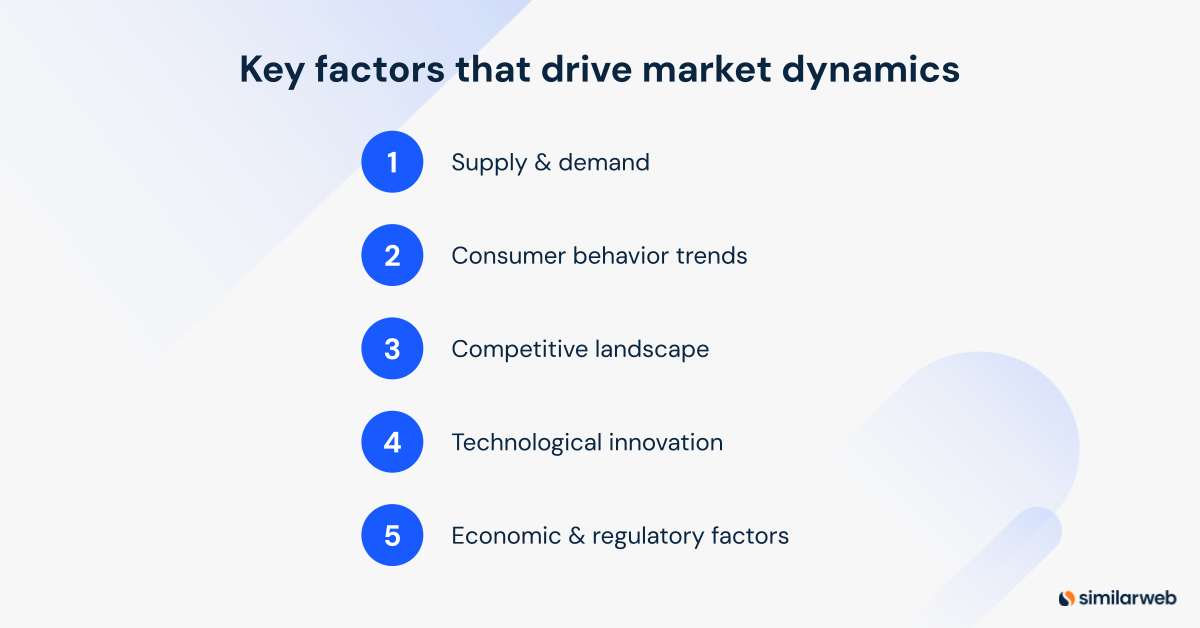
Every market runs on supply and demand. When demand spikes, prices climb. When supply floods the market, prices drop.
Simple? Not quite.
Take the surge in sustainable products. Let’s say a growing consumer push for eco-friendly alternatives forces companies to ramp up production. But if supply outpaces demand, expect price cuts and shrinking margins. The solution is balance—predict the shifts before they happen and adjust accordingly.
Trends reshape industries. Consumer behavior is constantly changing, and it’s influenced by culture, economy, and technology. One minute, traditional retail thrives; the next, direct-to-consumer brands dominate.
Companies that track these shifts and adapt their offerings stay relevant. Increased environmental awareness is driving brands to prioritize sustainable materials.
Established giants face pressure from startups introducing fresh ideas, while market leaders continuously tweak their strategies to maintain dominance.
Challenger companies often enter the scene with a sharper focus, niche appeal, or advanced tech. Their presence forces industry leaders to respond—sometimes with aggressive pricing, sometimes by launching their competing products. Either way, competitive markets are in constant motion, pushing businesses to improve.
Technological advancements, from automation to AI-driven analytics, are reshaping entire industries. Businesses that use data, machine learning, and digital transformation gain a competitive edge by reducing costs and improving customer experiences.
Companies that integrate emerging technologies into their strategy are the ones to reinvent their markets.
Interest rate fluctuations, tax policies, and trade agreements can alter entire industries overnight. Regulatory changes, from data privacy laws to environmental standards, create new compliance challenges—but also open doors for those who know how to maneuver them.
Businesses that proactively adjust their strategies in response to economic and regulatory changes capitalize the most.
Similarweb helps you track the current demand fluctuations and make data-based decisions. Whether it’s spotting emerging trends or identifying where consumer interest is heading, Similarweb gives you the data you need to act fast.
Demand Analysis helps businesses detect changes in consumer interest by analyzing search trends at scale. Say a SaaS company notices searches for “CRM software” are dropping, while “AI-powered CRM” is rising. That’s a signal that customers are moving toward automation, and competitors will follow.
With Similarweb’s Demand Analysis tool, companies can quickly adjust their strategy. It provides important data points to guide decision-making:
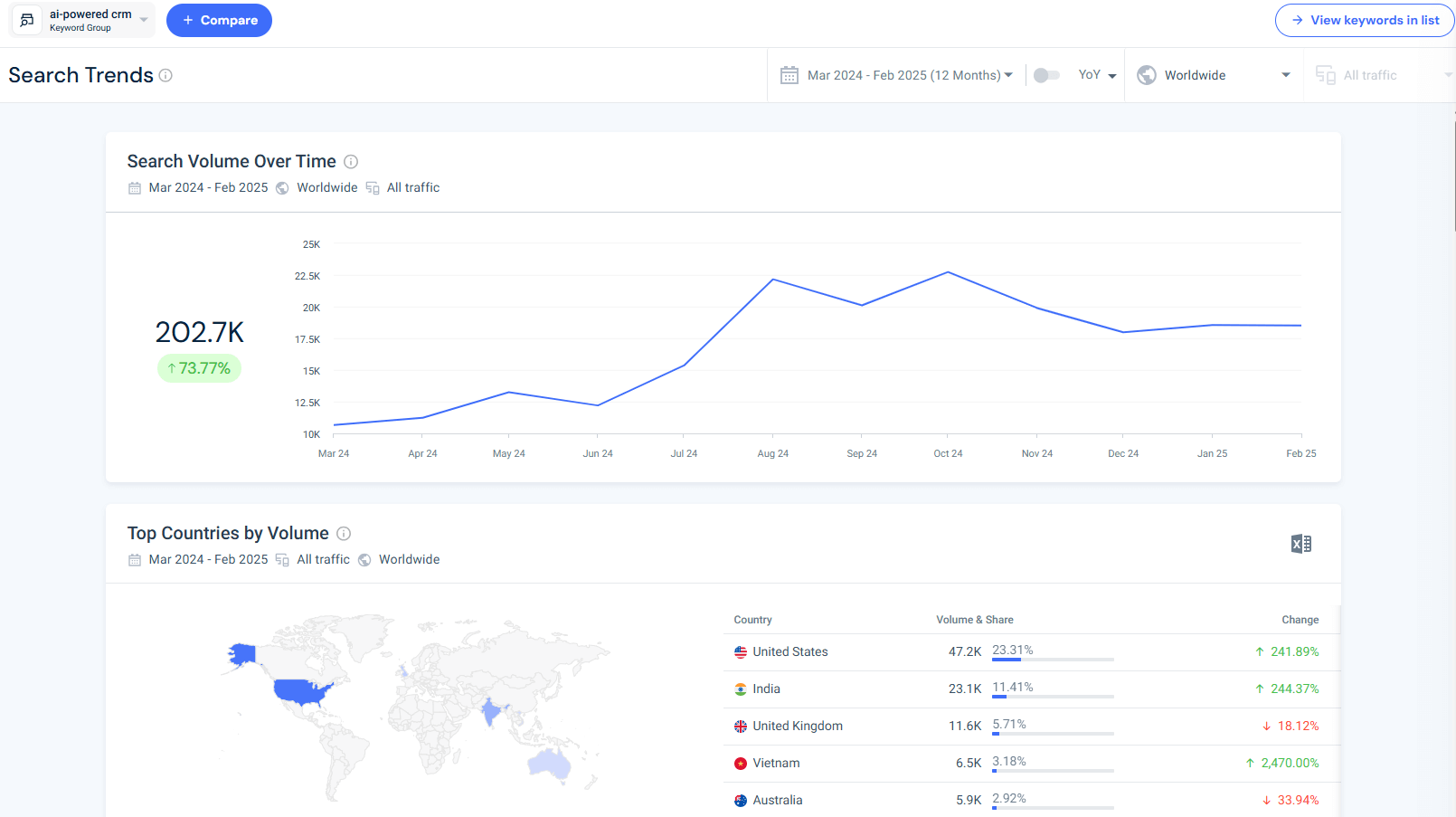
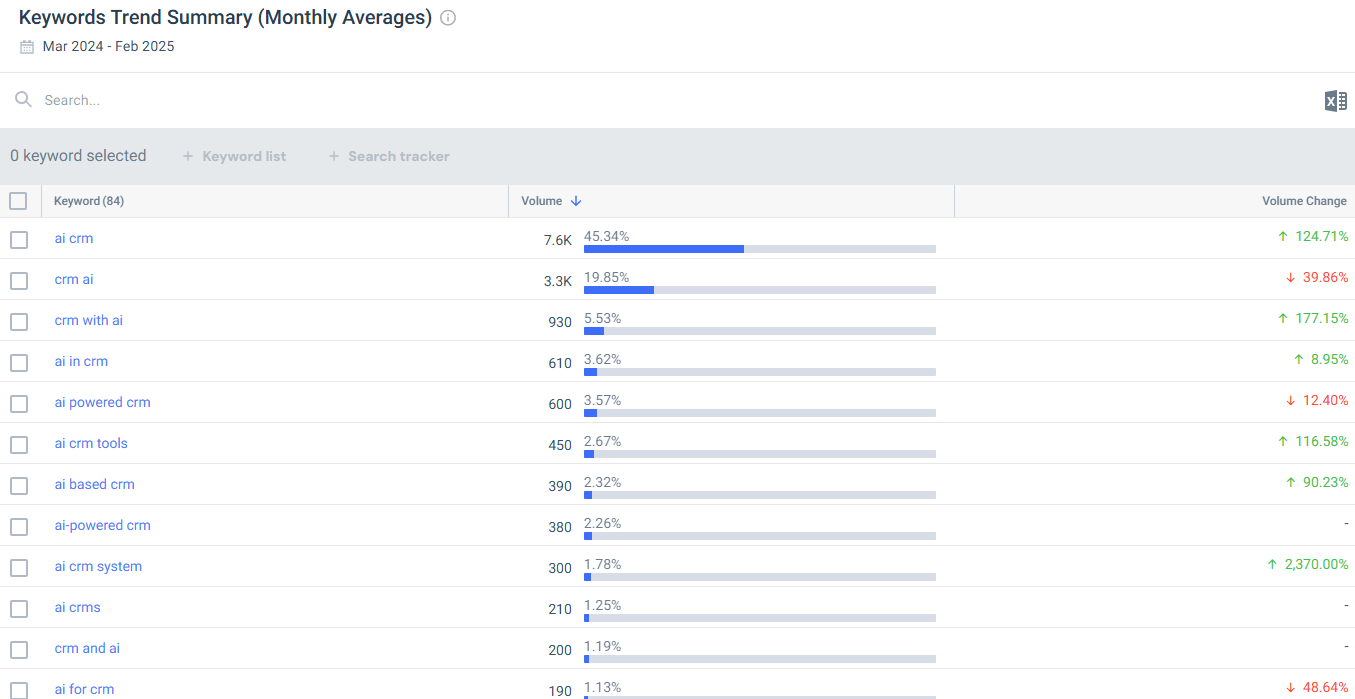
To go even deeper, the Keywords Trend Summary (Monthly Averages) feature breaks down which keywords fuel the trend. This gives you a roadmap to refine content, SEO, and product positioning based on consumer behavior.
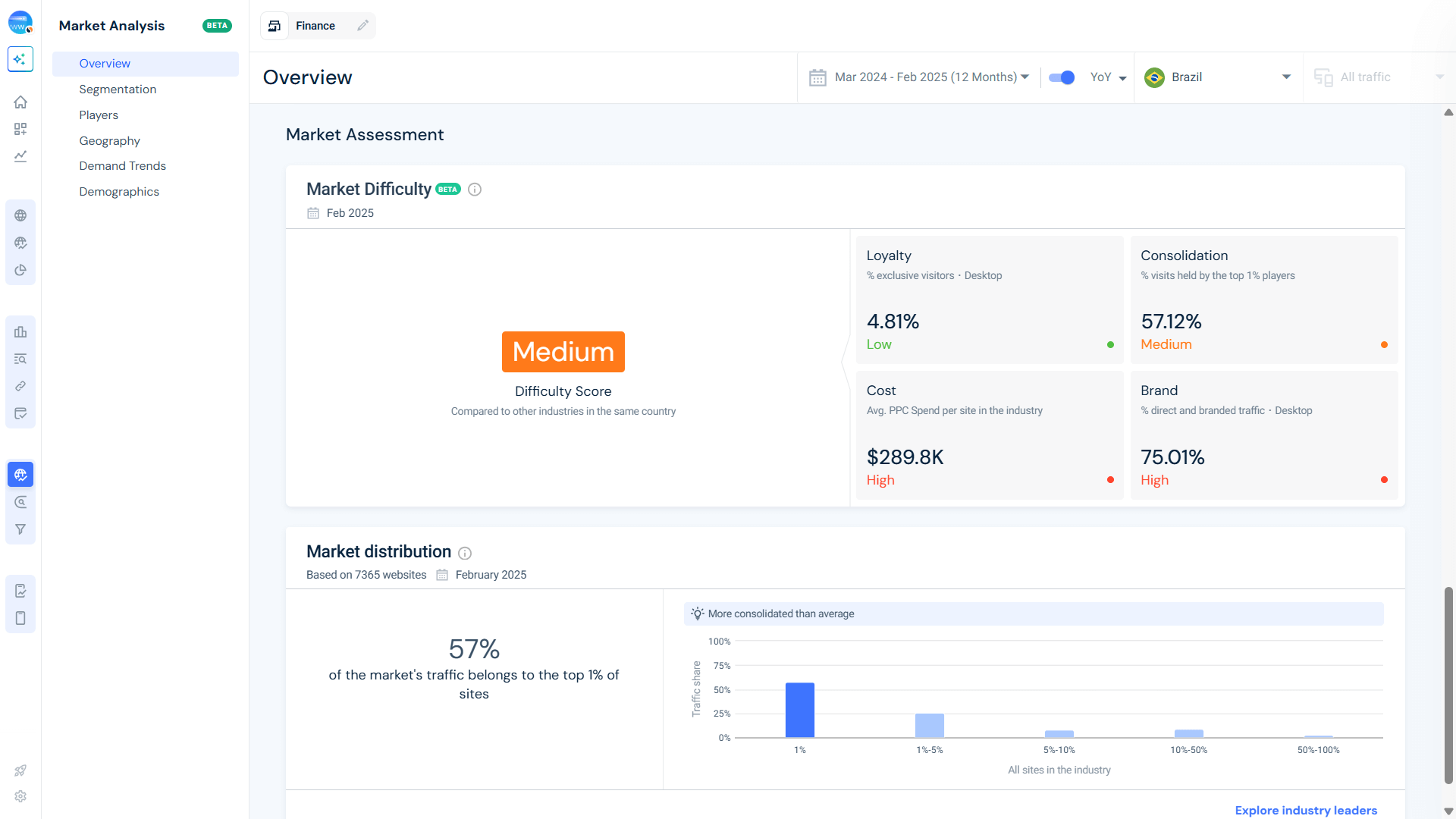
You need real data. That’s where the Market Analysis tool becomes useful. It offers a deep look into market size, competitive levels, and potential roadblocks before you make a serious investment.
Take a fintech company eyeing Latin America. Before entering this market, it uses Similarweb’s Market Analysis to gauge the region’s potential and competitive intensity. With the right data, it can spot opportunities and avoid costly missteps.
From the Market Size section, you can get primary data points, including:
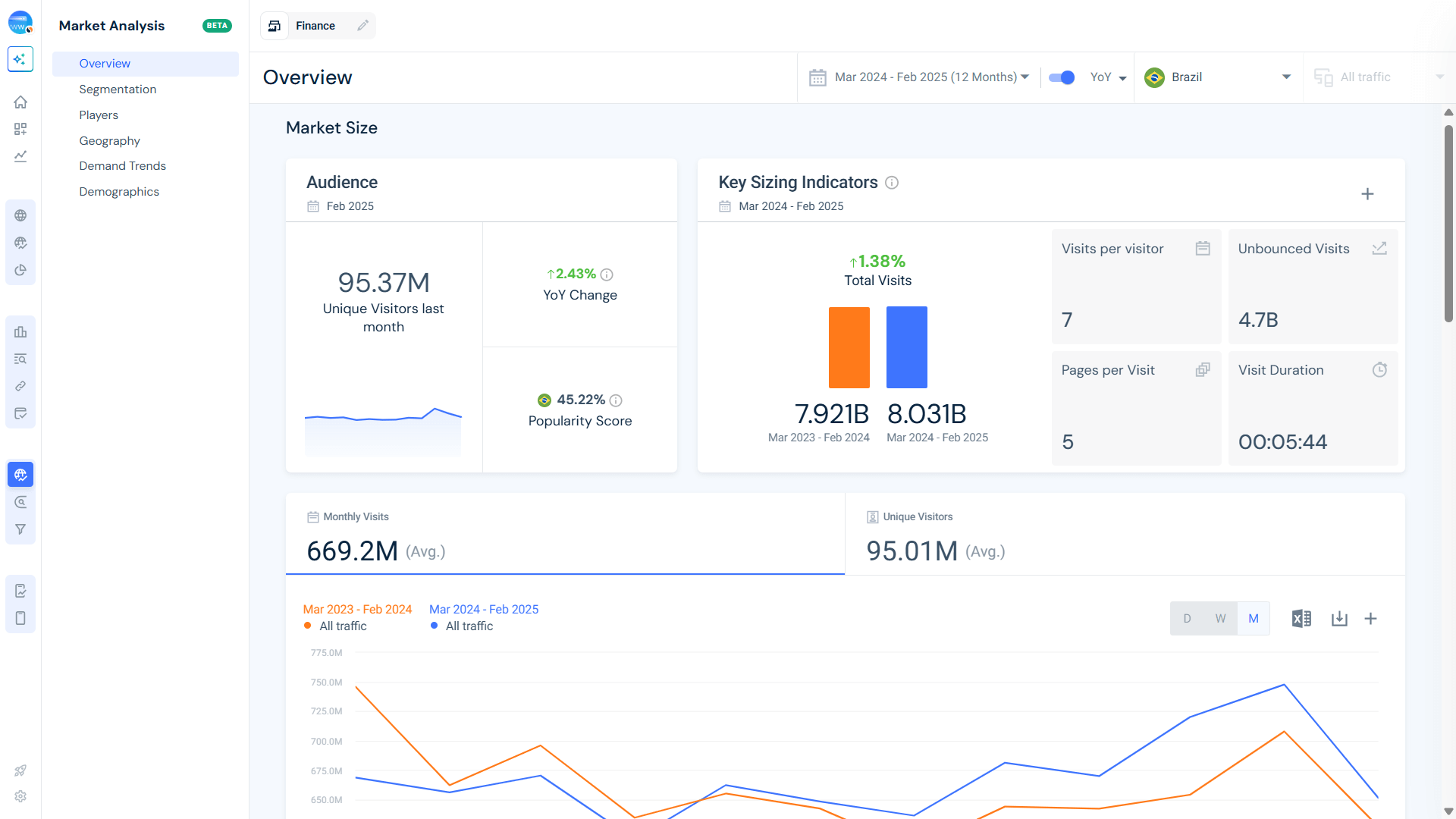
Moving into the Market Assessment section, you can get the following information:
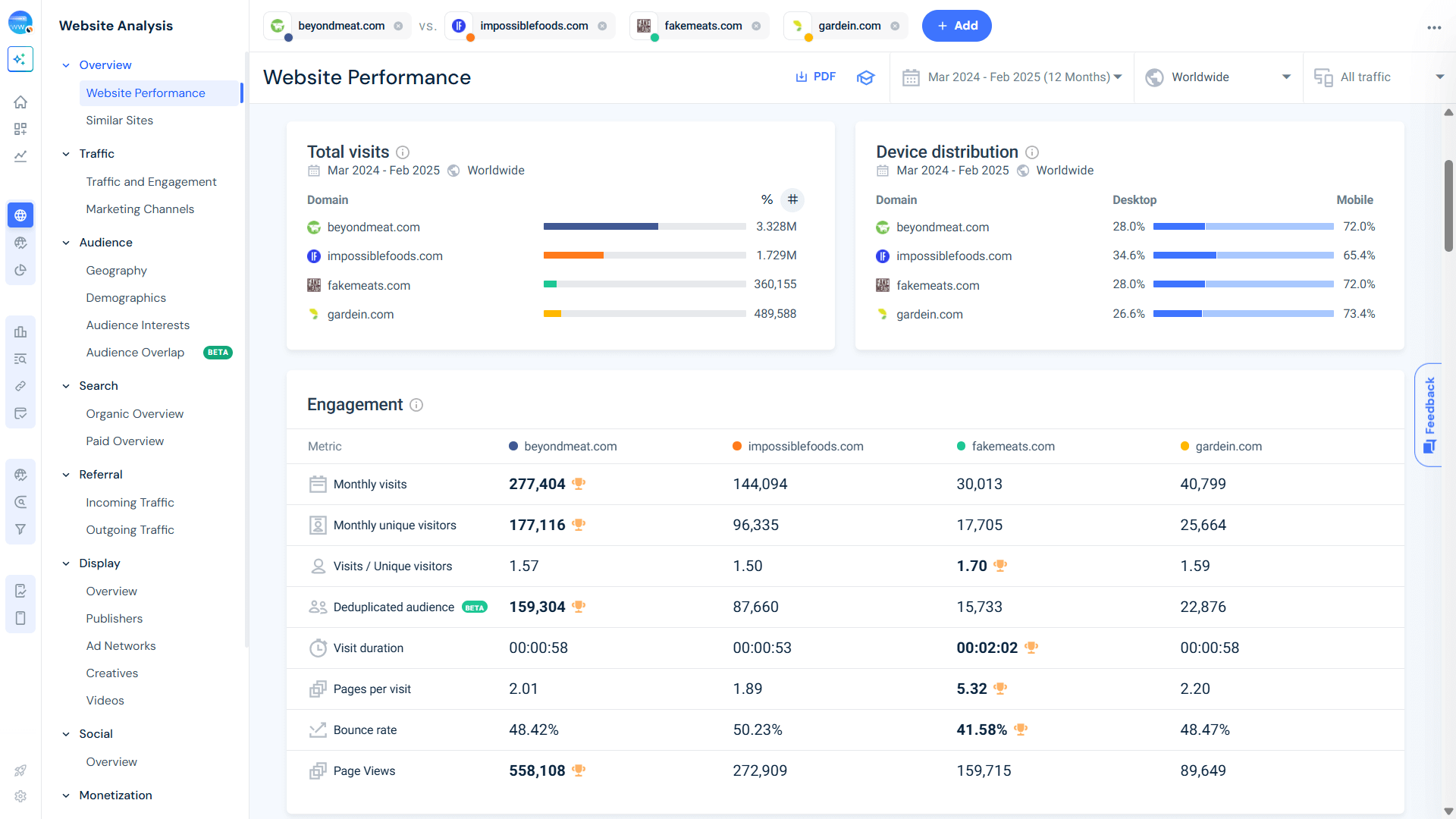
Want to know how your company stacks up against the competition? Website Analysis provides insights about traffic trends and this helps you to benchmark your performance against top industry players.
Take a plant-based protein brand as a market dynamics example. To understand its digital footprint, it might compare itself to industry leaders like beyondmeat.com, impossiblefoods.com, fakemeats.com, and gardein.com. The report offers a clear view of:
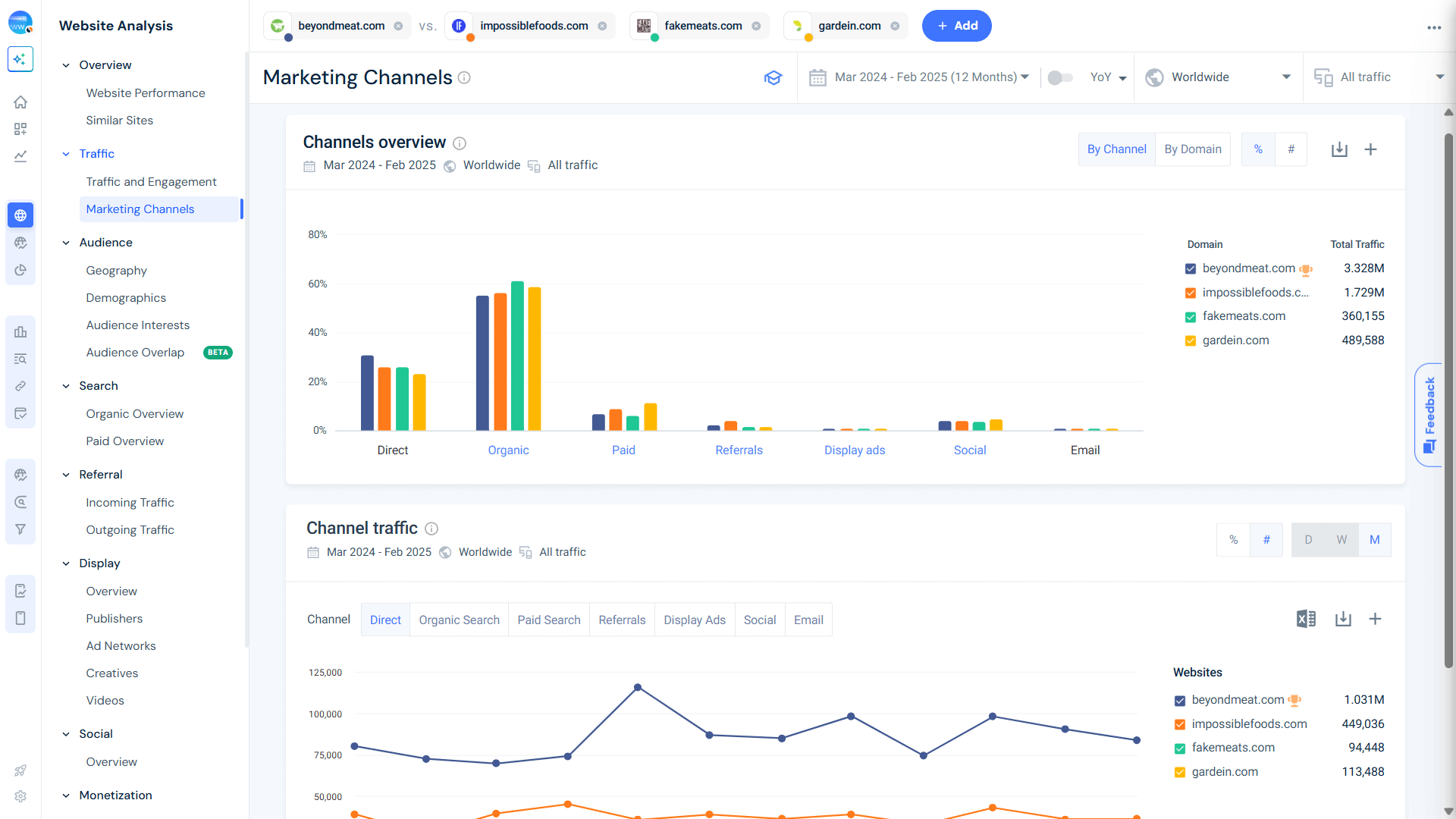
But there’s more. The Marketing Channels report reveals how much traffic has driven you and your competitors, be it organic search, PPC, direct, and more. With information about traffic sources and monthly trends, you can pinpoint where growth is happening—or where adjustments are needed.
Staying ahead means keeping a close eye on market shifts. Companies that assess consumer behavior, monitor competitor strategies, and adopt emerging technologies have a clear edge. Insights allow businesses to forecast trends, refine their offerings, and make changes when needed.
With Similarweb data, your businesses can benchmark performance and adjust strategies precisely. Whether tracking consumer demand or responding to competitive pressure, having the right data at your fingertips makes all the difference.
Ready to gain a competitive edge? Check out Similarweb’s market analysis tools and learn how they can uncover your business potential today.
How can companies effectively monitor consumer behavior?
Businesses need to combine market research, customer surveys, and analytics tools to track changing consumer preferences. Reviewing these findings regularly helps identify trends, measure satisfaction, and match product offerings with current customer needs.
What part does technology play in shaping market trends?
Technology fuels market trends by enabling faster innovation, smooth communication, and reliable data collection. It allows businesses to analyze large datasets instantly to reveal behavioral patterns and emerging opportunities. More importantly, it accelerates product development to make companies more responsive to change.
How can businesses adjust their strategies in rapidly changing markets?
Success in a dynamic market requires an agile mindset. Companies should continuously monitor data, track competitors, and refine strategies based on accurate information. Businesses that prioritize innovation, adopt flexibility, and plan proactively are best positioned to handle market volatility and seize new opportunities.

Team Manager, Content Marketing
James is an former journalist & content strategist in B2B tech, who has previously created content for companies like EDF and X (Twitter). He also has a journalism post-grad from LCC.
The Top 100 Most Visited Websites in the USA (August 2026)
Similarweb Named in Forrester's Answer Engine Optimization Technologies Landscape, Q3 2026

Anthropic IPO: What Claude's Web and App Data Show
Contact us to set up a call with a market research specialist
