




by Darrell Mordecai4 Min.
Oct 21, 2026
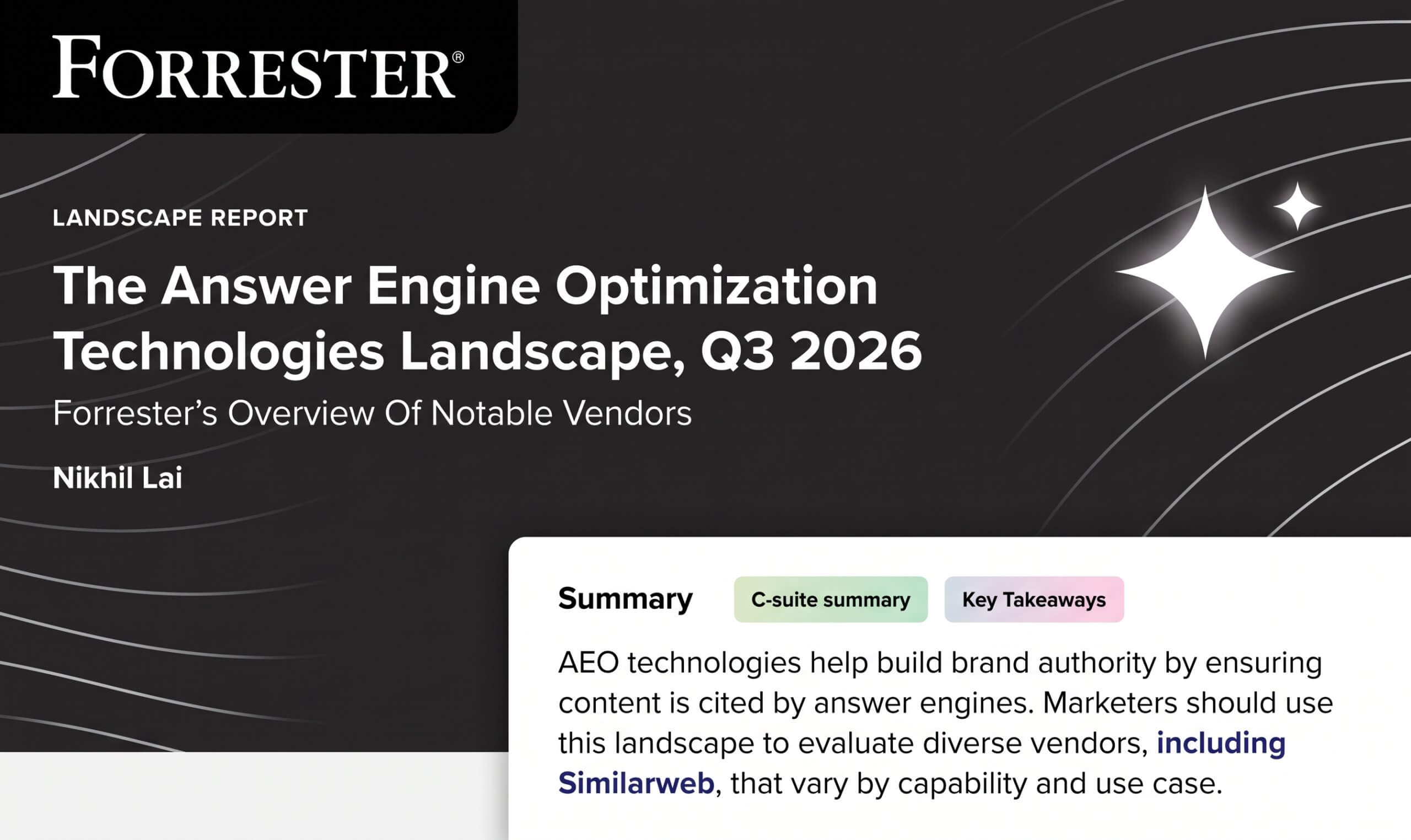
The first Forrester AEO landscape report defines AEO technologies, catalogs the vendors competing in the space, and explains how marketers should evaluate them, including where the market is headed next.
This report matters because the AEO vendor market got crowded fast. But more vendors don’t mean the market has matured. However, there are more options to sort through. This report helps you tell the difference, so you can judge vendors on substance instead of assuming more choices means more certainty.
Similarweb is positioned to lead in AEO for one reason: we start from real data, not modeled estimates. And we don’t stop at AI answer engines. We track a brand’s full picture, including traditional search, AI search, and everything around it, so brands can see what’s actually moving the needle on growth, not just what’s getting mentioned.
Being named in Forrester’s report confirms something we believed early. AEO needs to be measured well, not just measured. Getting the metrics right is the hard part, and it’s the part we are committed to.
Many AEO tools don’t actually see what people actually type into AI chatbots. They estimate it from indirect signals like search terms or modeled samples. Similarweb’s real-user data panel captures actual prompts and conversations directly. There’s no estimation.
That matters because a metric is only as good as the data behind it. If the input is a guess, everything built on top of it inherits that guess.
We are not happy with mere surface-level counts, like mentions, visibility scores, or sentiment badges. Although those numbers look useful, they don’t hold up once you try to act on them.
We judge every AEO metric against three tests.
We hold our own AI Search Intelligence product to that standard. A number you can’t break down to the page or prompt level isn’t actionable.
It’s a scoreboard.
That standard is also why we don’t treat AEO as something to measure or buy on its own. Within Similarweb, AI Search Intelligence sits alongside web, SEO, retail, and app data in one connected view.
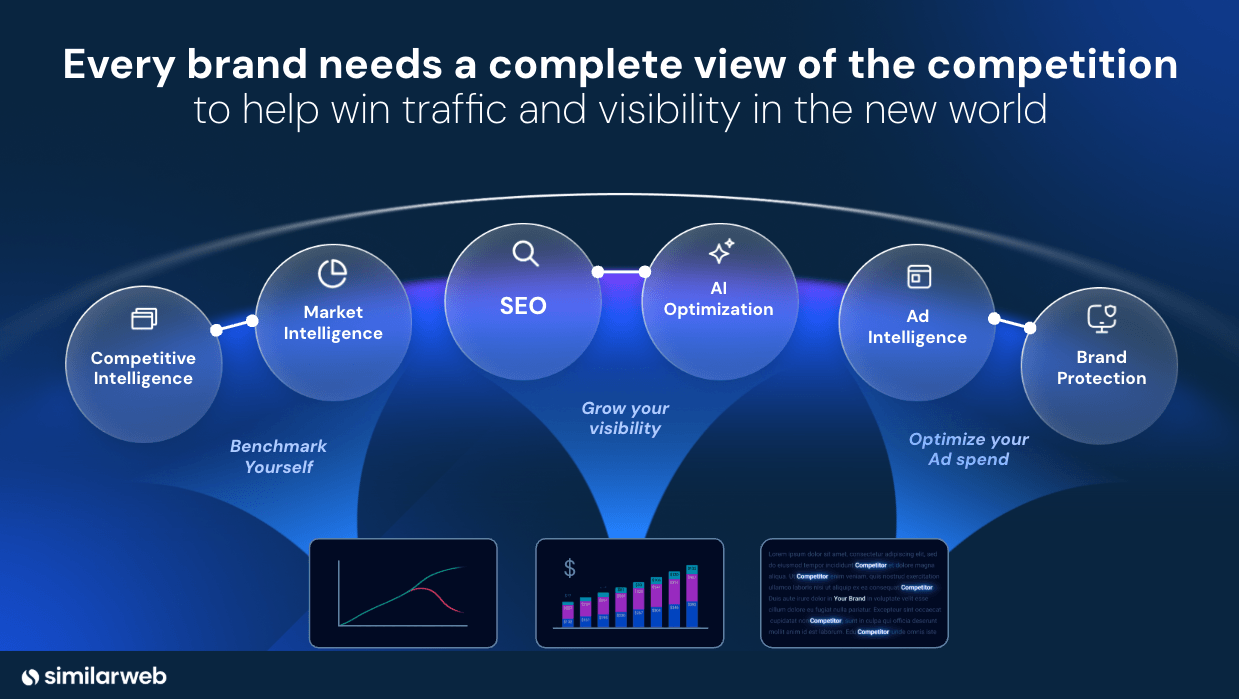
AI is just one piece of how a brand fits into the bigger market. Similarweb benchmarks your AI brand visibility against the same competitors and industry context as the rest of your digital footprint, organic traffic, paid media, social, and more. That gives you the full context behind your AI visibility numbers, not just a score sitting on its own.
Forrester naming us in this category tells us the market is starting to expect exactly this. AEO should be measured as part of the whole, not bolted on beside it.
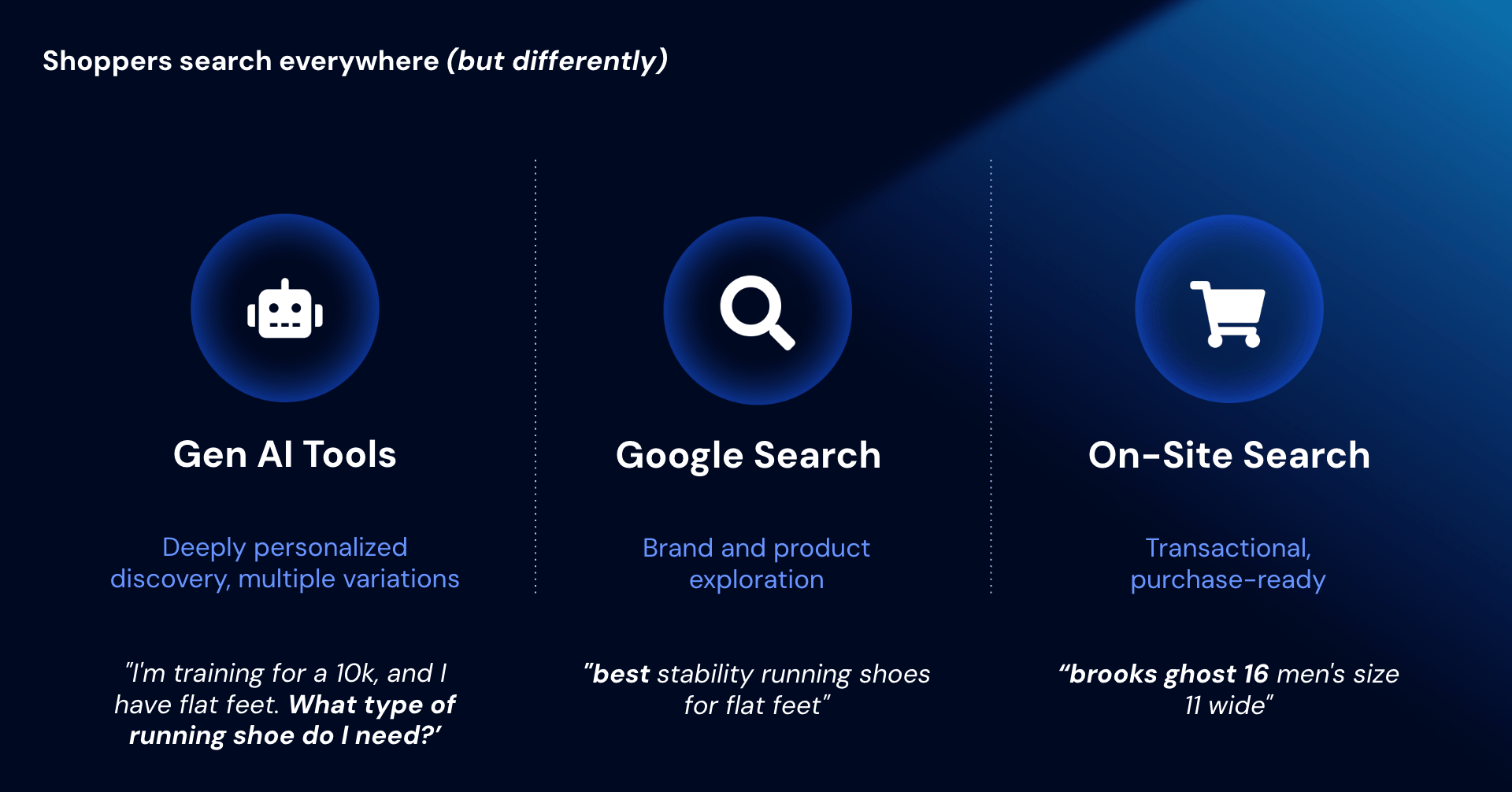
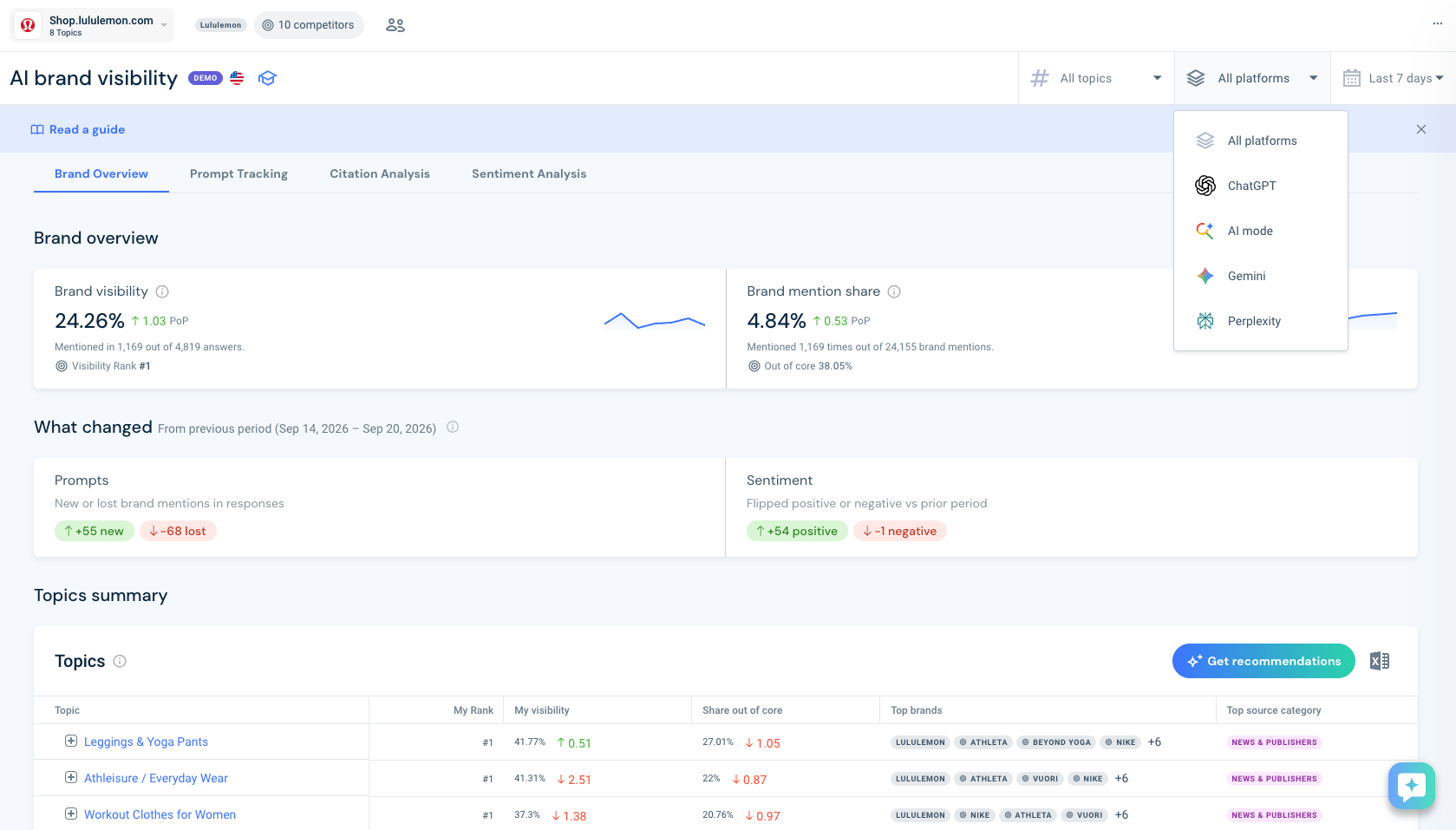
Similarweb’s AEO measurement, including our AI Search Intelligence module, works across four layers.
Layer 1: Real user prompts and interest trends
Trend and demand data, voice-of-customer signals, and cross-channel intent come from Similarweb’s own AI research and real-user data panel. There’s nothing to install to see it, as it doesn’t depend on tags, pixels, or any instrumentation on a client’s site.
Layer 2: Brand visibility inside AI chatbots
We collect this directly from AI chatbot interfaces, daily and at a granular level. It tracks the exact brands, topics, and prompts a marketing team cares about with enough detail to trend it over time and tie it back to specific pages.
Layer 3: Downstream impact
We track AI referral traffic and how it ripples into other channels, like search and retail. So instead of an isolated visibility score, you see how AI answer-engine activity actually moves the rest of the business. This is the holistic view.
Layer 4: Recommendations and next steps
The AI Optimization Recommendations tool turns the first three layers into action, telling you what to fix, what to double down on, and where to prioritize next.
Data is accessible through Similarweb’s inbuilt AI chatbot and via MCP, so teams can pull this measurement directly into their own workflows rather than working around a dashboard.
“We’re watching Answer Engine Optimization find its feet in real-time, moving beyond traditional keywords toward entity coverage, agent-led workflows, and hybrid paid-and-organic AI strategies. But the biggest hurdle buyers face today isn’t speed, it’s ownership and ROI. Because AEO spans brand, technical SEO, and offsite reputation, it demands a single source of truth. That’s where Similarweb comes in: giving brands the full-funnel clarity needed to replace disconnected guesswork with trusted performance
Baruch Toledano, VP, GM Digital Marketing Solutions
One of the biggest questions our industry faces right now is how to define the value of AI search. The rise of zero-click search has moved the goalposts, and most teams don’t have a clear way to answer that question yet.
Forrester’s own commentary on the category points toward the same gap. The market is booming, but marketers are being pitched visibility and sentiment scores without a clear line to sales.
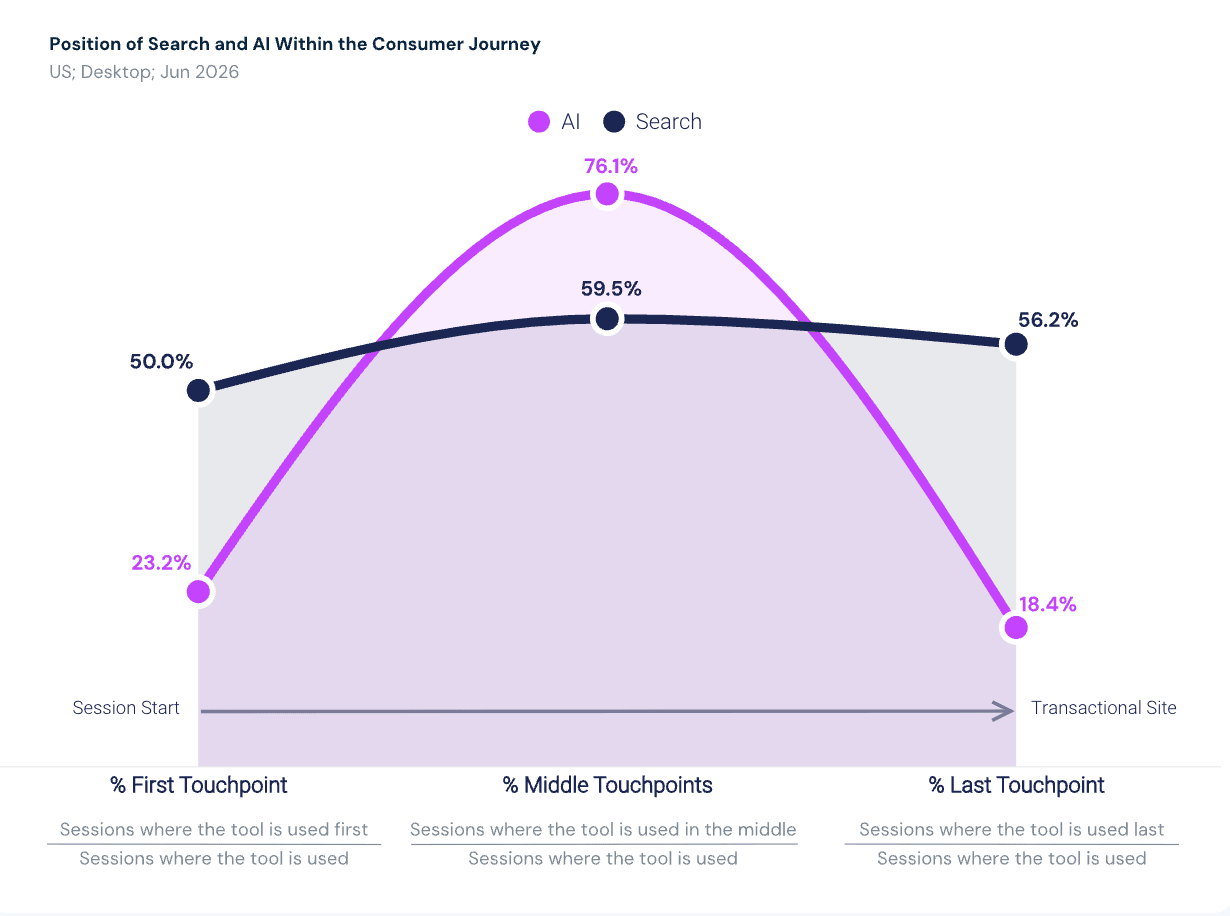
That gap becomes obvious once you look at where AI actually sits in the journey.
In sessions where AI is used, it shows up as a middle touchpoint 76.1% of the time, compared with just 23.2% as the first touchpoint and 18.4% as the last. People aren’t yet in the habit of starting their research in AI, and AI rarely closes the sale directly. Today, its role is concentrated in research and consideration.
Traditional search works differently. It’s spread far more evenly, appearing as the first, middle, or last touchpoint in at least half of its sessions. It’s the connective tissue running through the whole journey, while AI adds a new layer in the middle of it.
That’s exactly why last-click or first-click attribution can’t answer the ROI question. If AI’s real contribution happens mid-journey, you have to trace the full path to purchase, and not just credit whichever channel happened to be active at the end.
Closing that gap is the reason Similarweb built out downstream attribution, instead of stopping at a mention count.
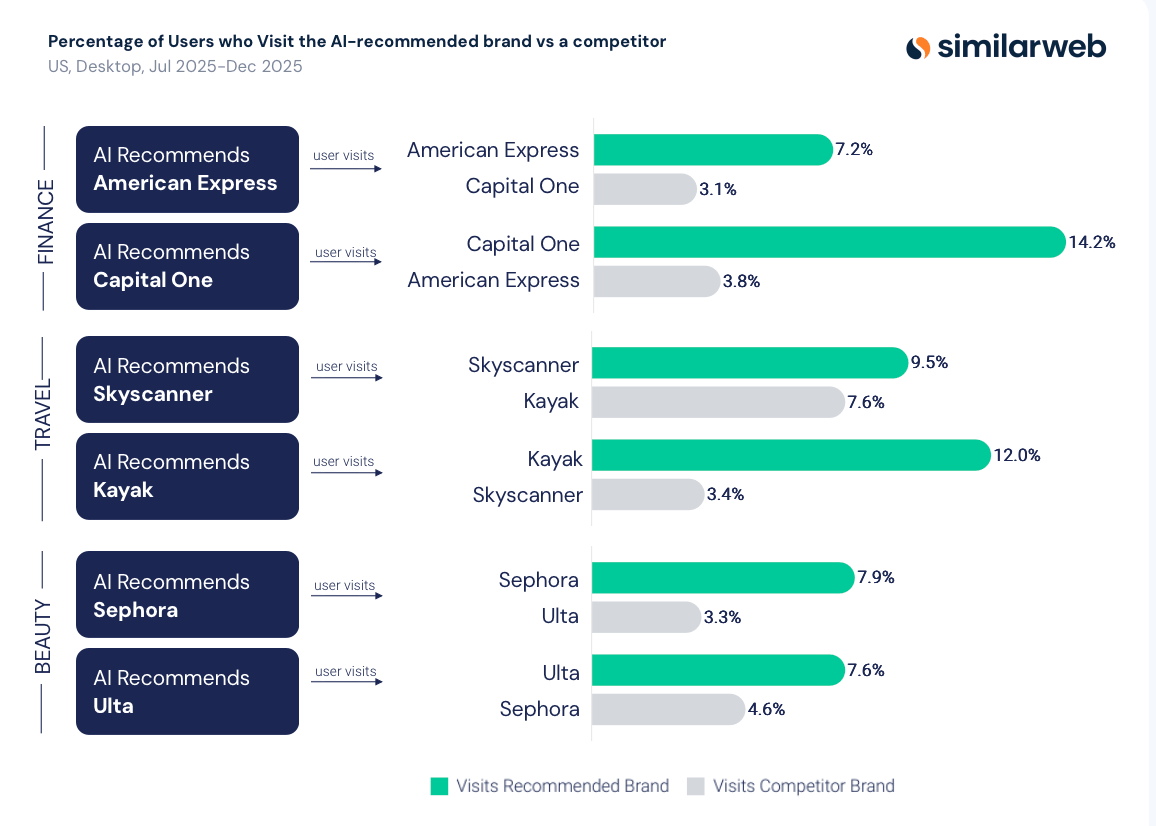
Our Downstream Impact of AI Visibility study, based on US desktop clickstream data collected between July and December 2025, demonstrates that brands recommended by ChatGPT were 2.5 times more likely to receive a site visit within seven days than a competitor that wasn’t recommended in the same category, and that 55.9% of that downstream traffic arrived through branded search rather than through a visible AI referral.
That second number matters as much as the first. It’s why a brand that only measures AI-referral traffic in its analytics will systematically undercount the channel’s real effect.
It’s also why citation reputation, not just citation count, matters. Answer engines tend to keep citing sources they’ve already cited. Early, consistent technical and entity signals compound instead of resetting every quarter. That’s exactly the kind of claim you need a page-level, prompt-level breakdown to act on, not a single visibility score.
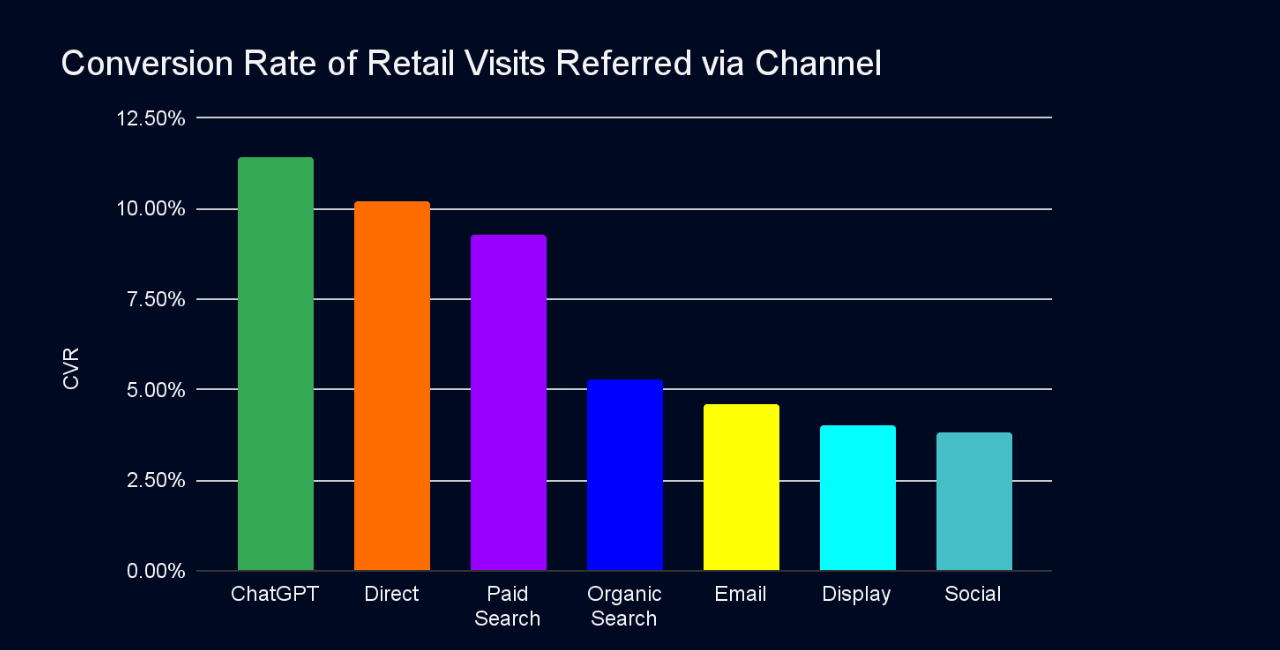
And traffic volume is only part of the picture. According to Similarweb data, people who come from ChatGPT don’t just arrive in greater numbers. They’re more engaged once they land, and they convert at a higher rate than other traffic. That means Gen AI traffic isn’t just growing. It’s bringing higher ROI.
Being named in Forrester’s landscape report confirms something. Similarweb built its AI measurement tools the right way from the start. One connected view, across global markets, broken down to the page and prompt level.
That’s the standard we’ll keep holding ourselves to as this category matures. To see what that looks like for your brand, start with Similarweb’s AI Search Intelligence.

by Rice Tong
Product Marketing Manager
Rice is a Product Marketing Manager at Similarweb, focused on the evolution of search and AI. She loves shaping stories that make complex ideas feel human and relatable.

What Is Retail Intelligence? How It Works and Why It's Essential to Digital Commerce
Most Searched Things on Google in 2026
The ultimate solution to help you build the best digital strategy

