






The Top 100 Most Visited Websites in the USA (August 2026)
by Shai Belinsky10 Min.
Sep 29, 2026
 Marketing Intelligence
Every SEO and marketing team wants to attract more, and higher quality, visitors. Understanding keyword search volume is a key element to get you there.
Think of it like this: within your research process keyword search volume is right up there with intent, difficulty, and relevancy.
Using keyword research to inform your search engine optimization (SEO) strategy is not optional – it’s fundamental. Here we’ll map out what you need to know about search volume and how you can use it to drive more impact from your marketing campaigns.
In essence, keyword search volume tells you the popularity of a search term or query. Keyword search volume is the estimated number of searches for any particular keyword within a selected period of time (usually a month).
If a specific keyword has a high average monthly search volume, you know for sure that a high volume of people are typing it in search engines and you can expect the competition for ranking for that specific keyword or phrase will be higher. If you’re looking to build a low-competition keyword list, you’ll need terms with lower search volumes.
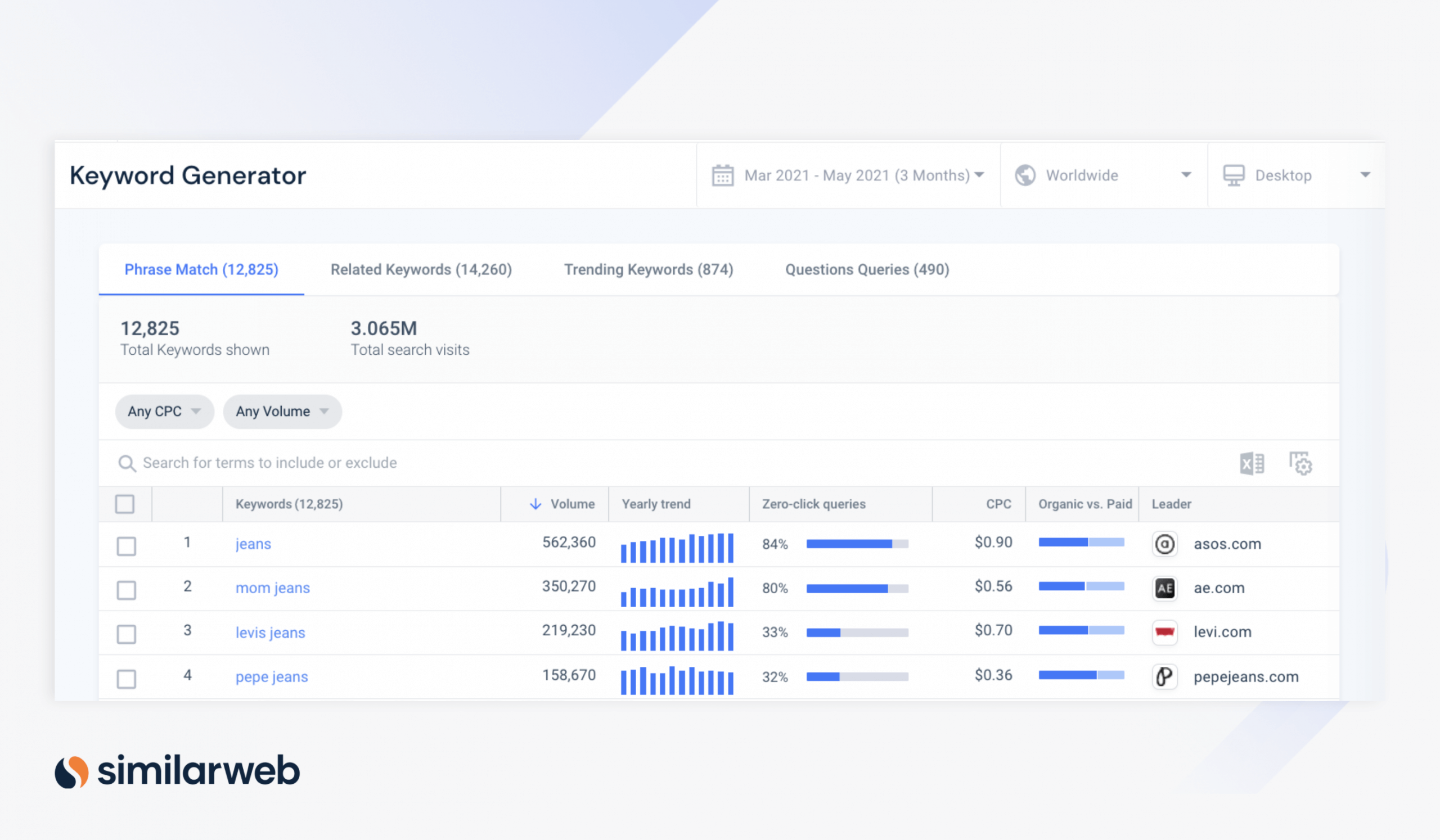
Most keyword research tools and free keyword tools give the number of searches as an average of the last 12 months.
Putting your data in context within specific timeframes lets you see clearly how keywords attract interest and drive traffic over time.
Some keyword phrases and terms drive organic traffic all year. For example, if you are researching a new keyword like “business attire”, this is a topic that comes up all year long – what to wear to work.
For other relevant keywords, though, seasonality can play a huge role in the keyword search volume.
Case in point:
While a few bargain hunters might begin searching for “Christmas gift ideas” in the summer months, the majority of people only start their search in October. The peak months for this search phrase is actually October to December according to Similarweb’s Keyword Seasonality feature:
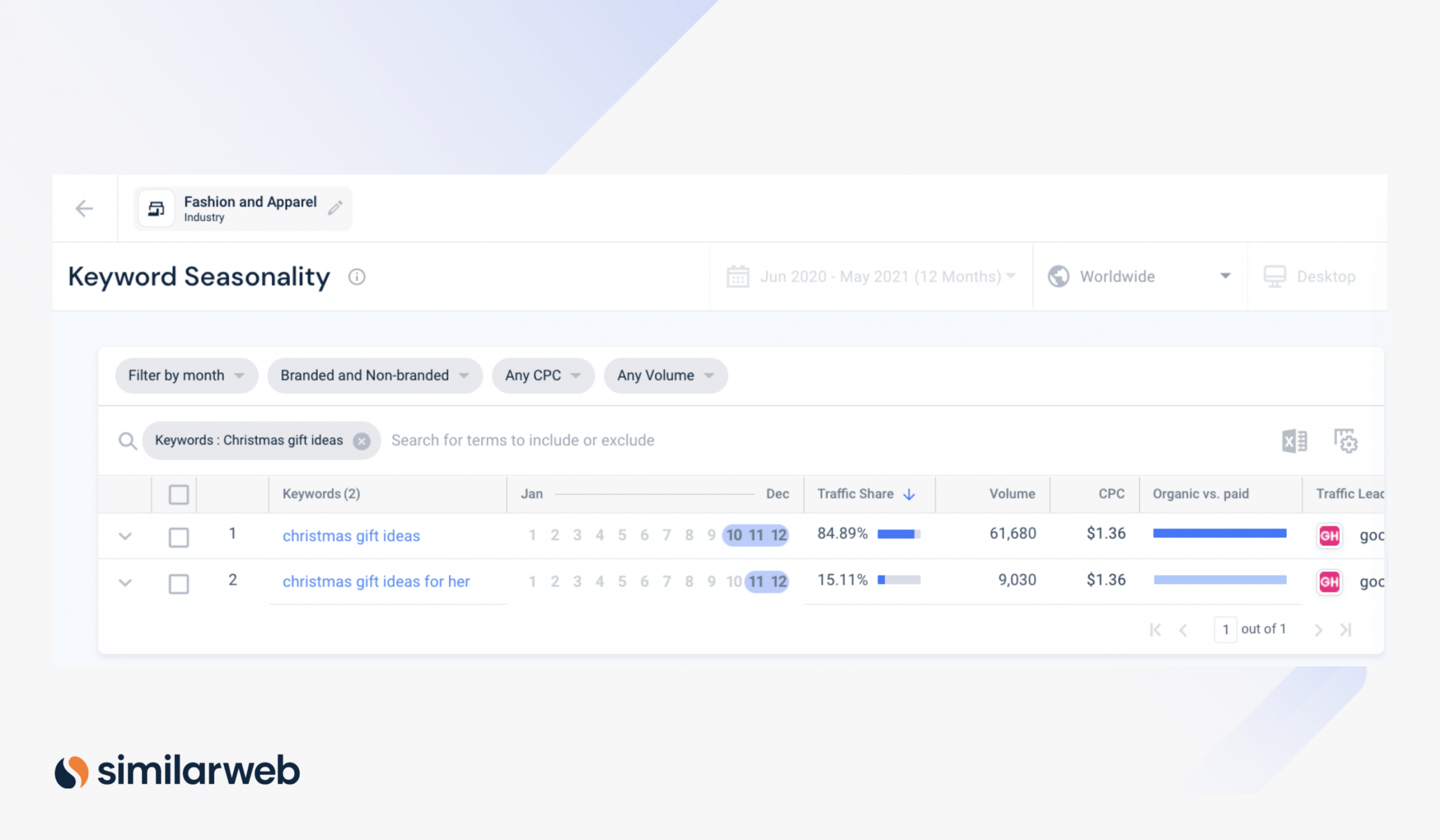
With this feature, you can actually monitor which times of year keywords peak in popularity for desktop searches.
Understanding seasonal demand vs. evergreen demand when running your keyword analysis tool will help you uncover a keyword’s digital market share potential for you at any time.
Search volume allows you to dig deeper in your keyword research and understand search trends associated with any particular keyword.
This allows you to:
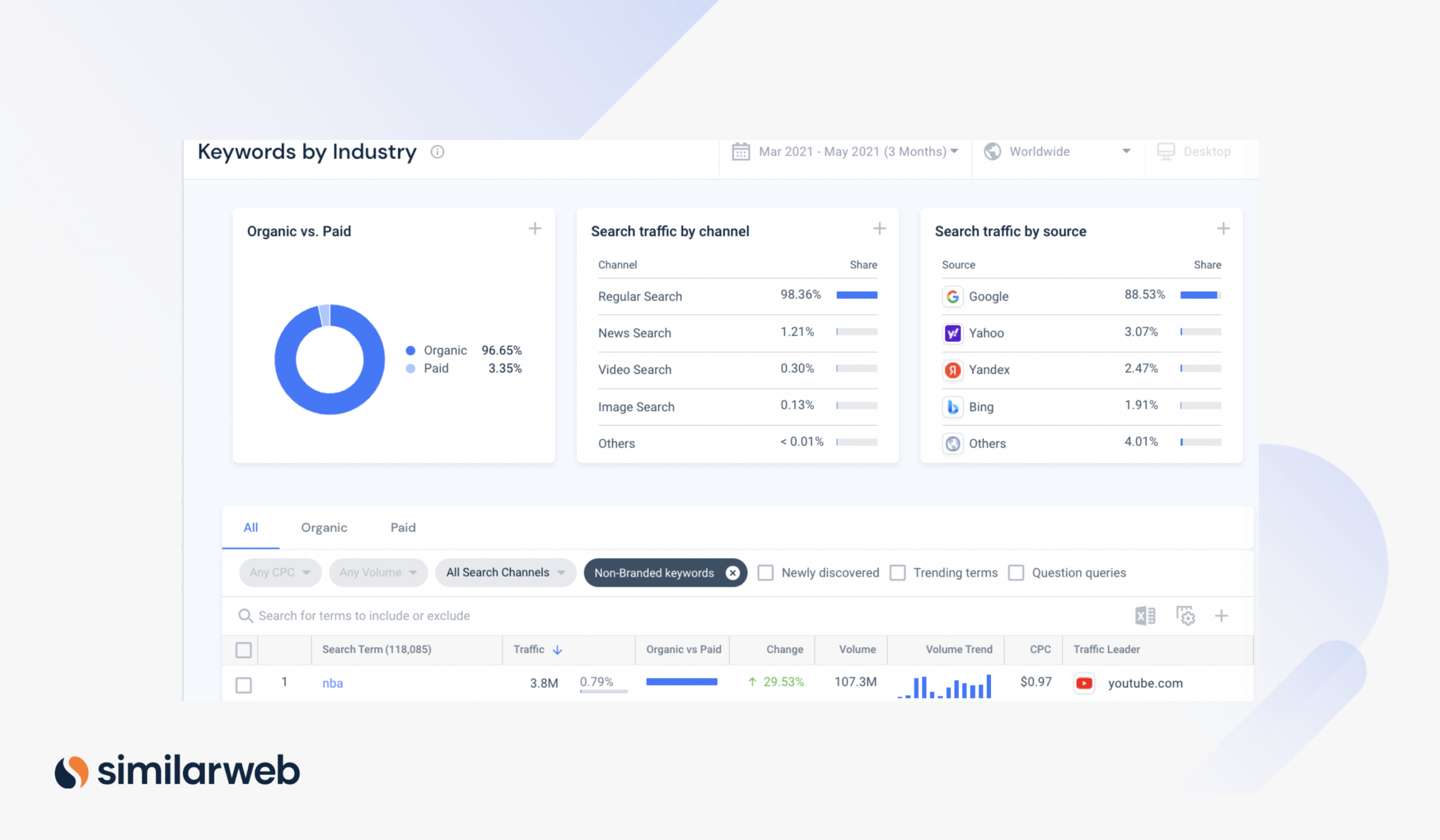
While the search volume metric shows how popular a keyword is, you can compare it to search visits to figure out the real values of those keywords for destination websites.
Search visits are the monthly average of completed visits where the user clicks through to a non-search engine page from the search result.
Another helpful metric: CPC. CPC (cost-per-click) is the estimated price (per click) paid by advertisers to buy a search word in Google Ads from the past 30 days in the selected country. You can also note the CPC price estimation to help you assess the demand for any particular keyword.
Comparing these metrics across different tools can be misleading. Most platforms are providing estimates, so to get a clear picture of the trend, it’s important you are comparing metrics from the same platform.
Another factor that impacts your campaigns: clicked vs. non-click queries. A clicked search is where the user clicks through to a website from the SERP (search engine results page). On the other hand, a non-clicked search is one where the queries are answered directly on the search results page, which means the user doesn’t have to click through to a website.
The results of these types of searches will show as a percentage of clicked vs. non-clicked searches. This helps you allocate your resources to keywords that are going to have the most impact.
Different types of keywords have different search volumes and intent. Targeting keywords with the right volume as part of your SEO strategy can also help you identify the most relevant content for your audience.
While long-tail keywords can have lower search volume, they also mean that you will likely attract more relevant traffic. Why? Long-tail keywords tell you more about your audiences’ search intent. When you use long-tail keywords to write specific content, more relevant for searchers’ intent, you will have a higher chance of converting your readers. Other benefits:
Including lower volume keywords in your strategy means you will likely rank for a wide range of keywords at one time, thereby multiplying your website’s traffic potential.
You can identify strong keywords on your own website. An example of a good keyword can be found on my own site. I’ve created a post focused on explaining what the best online course platforms are. While the volume isn’t significant, it’s extremely relevant to my domain (OneHourProfessor.com), has commercial intent, and brings the right people into my ecosystem.
But, does all this mean that you should only be targeting low-volume keywords? Not exactly.
In general, the higher the search volume, the better, since it means more potential searches that lead people to your content. So long as the keyword is relevant to your brand and would be beneficial to rank for.
For instance, if you had a site focused on selling PLR courses, you may want to try to optimize for that team because it’s so relevant to your brand, and winning the term in the SERP would be lucrative, even though it’s not a high-volume keyword.
However, if you can rank for a high-volume keyword, you can expect tons of traffic to your website from search engines.
But, a high search volume also means that the keyword is popular, which means there’s a lot of competition to rank for it.
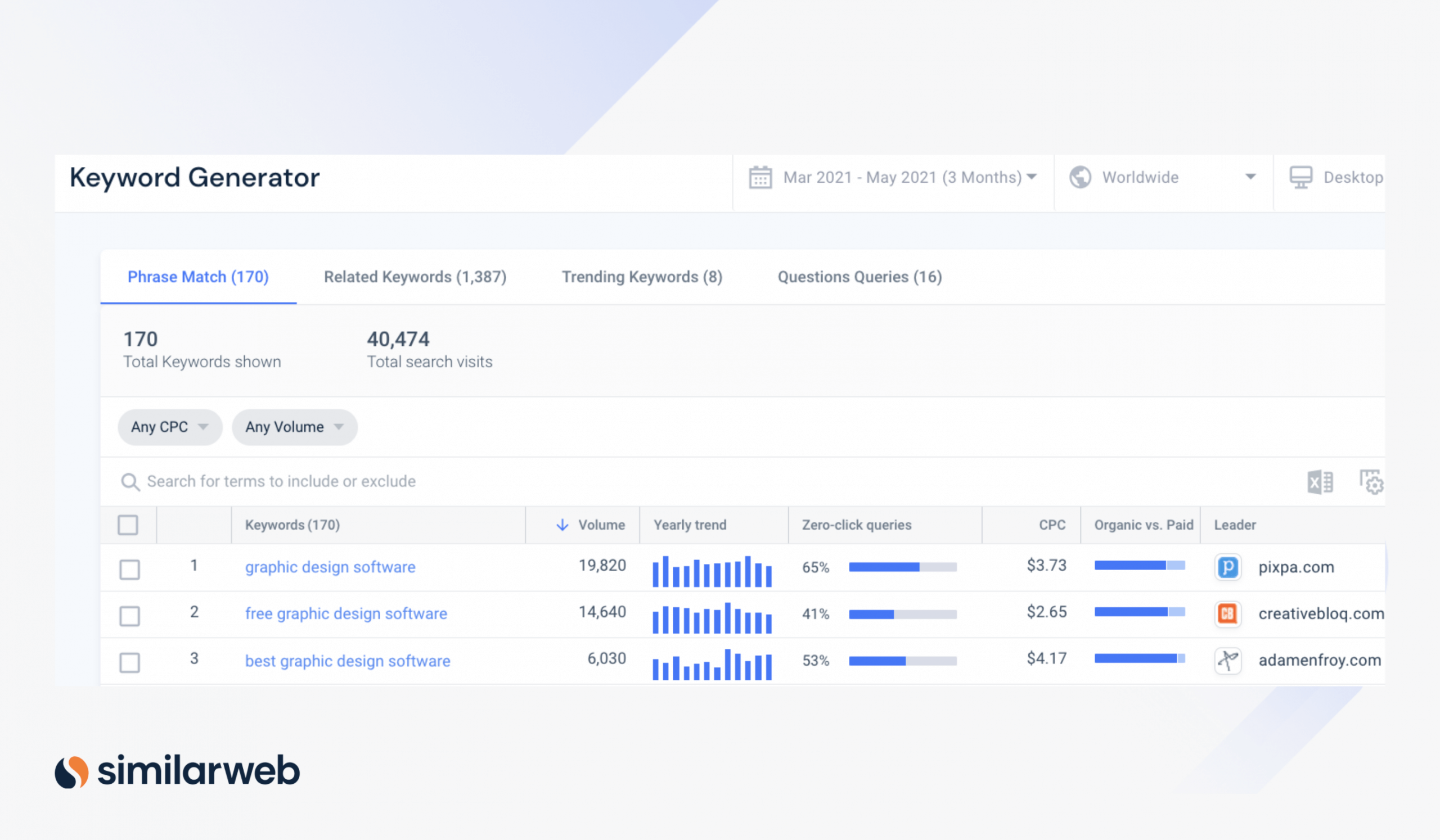
An example of this is the term “graphic design software.” It has roughly 19,820 searches monthly, but it’s also extremely competitive.
There are other factors to consider besides the popularity of the keyword when choosing the right keyword search volume to target.
Other factors to consider:
All of this goes to show that it’s always a good idea to look at the volume of the keyword from a wider perspective – including search trends, potential seasonality, and historical data.
So, the question remains:
There is no single number that you can go by, but the important thing is that you strike a delicate balance.
In other words, the keyword volume you choose should be high enough without overly competitive rates.
You also need to consider your website size and budget.
For example, if you run a corporate website with a huge budget for content marketing, you may be better off spending more money to target highly competitive keywords so that you can maintain your brand’s competitive edge.
On the other hand, a small business might be better off targeting long-tail keywords with higher levels of engagement and conversions. As marketers, we tend to forget that Google isn’t the only search engine with keyword search volumes.
YouTube is a platform that can give unexpected search traffic for long-tail keywords as well as seed keywords. While search volumes for a keyword might be low on Google Search, the same keyword might have a rising trend on YouTube.
To capture this untapped market, creators can leverage videos to increase their organic search visibility as well as reach intended searches.
In order to get the search volume of a particular keyword, you need to use a high-quality keyword research tool like Similarweb, Google Trends, Google’s Keyword Planner, or KWFinder.
There are some free keyword research tools and keyword planners on the market with search volume data, but they are typically limited in their use.
For instance, Google Keyword Planner only shows ranges, such as “10,000 to 100,000.” The problem with this is that the number could actually be 10,001 but it also might be 99,999.
With Similarweb, you can access accurate and almost real-time data.
Similarweb offers keyword data based on actual search queries and clicks from users with analytics on over a trillion keywords, you can develop a more targeted keyword strategy.
If you already have a list of keywords that you want to find out the search volume for, you can simply import them to the tool, either by typing in the keywords individually or by adding an entire list. You can see the search volume for each keyword.
Keyword research volume can help you direct your strategy effectively to maximize your resources and grow your brand’s influence. However, this is an area that varies from business to business. Don’t be afraid to experiment and find out what works best for you.
What is keyword search volume?
Keyword search volume refers to the number of searches for a keyword in a certain time period.
Why is keyword search volume important?
Keyword search volume is important as it reveals the search trends for a key term, allowing you to estimate traffic potential, boost your PPC campaigns, and prioritize content topics.
Should I use high-volume keywords?
Generally, high-volume keywords result in more potential leads to your content, especially if you rank high for it. However, high-volume keywords are also popular, meaning there is a lot of competition to rank for them on search engines. There are several other factors to consider, such as keyword difficulty, when choosing the right keyword to target.

Senior SEO Specialist at Similarweb
Maayan is a senior SEO specialist with 7+ years of experience in SEO. She loves complex research projects, creating SEO strategies and performing technical audits.
The Top 100 Most Visited Websites in the USA (August 2026)

Similarweb Named in Forrester's Answer Engine Optimization Technologies Landscape, Q3 2026

Anthropic IPO: What Claude's Web and App Data Show
Give it a try or talk to our marketing team - it’s free!
