






The Top 100 Most Visited Websites in the USA (August 2026)
by Shai Belinsky10 Min.
Sep 29, 2026
 Marketing Intelligence
Did you know that there are 15 types of keywords that every SEO needs to know? Each keyword type has its own strategic purpose and should, therefore, be targeted in its own specific way. Wondering how?
The first step is to understand what they are.
These keywords can be sorted into four groups:
In this post, we’ll provide you with a list of the 15 main keyword types that fall under those four groups, and discuss how to use them in your SEO strategy.
Foundational keywords are used to build out keyword lists.
Seed keywords are broadly focused keywords that represent and summarize an entire topic area. They are used as a starting point in keyword research to uncover more specific long-tail keyword variations related to that core topic.
Since you are looking for a keyword that represents your topic as a whole, your process starts with a little brainstorming. Here are some steps to identify a seed keyword:
1. Identify your niche or main topic: Clearly define the focus of your business or the primary subject of your topic. Is your business related to:
2. Brainstorm a term that represents your niche: Make sure not to go too broad. For instance, for a site dedicated to dog training, a keyword like ‘dogs’ is too broad and will bring you thousands of keywords unrelated to your business.
A good seed keyword, on the other hand, is ‘dog training,’ which will bring you a solid list of keywords related to the primary function of your business that you can filter and build out the content for all stages of your sales funnels.
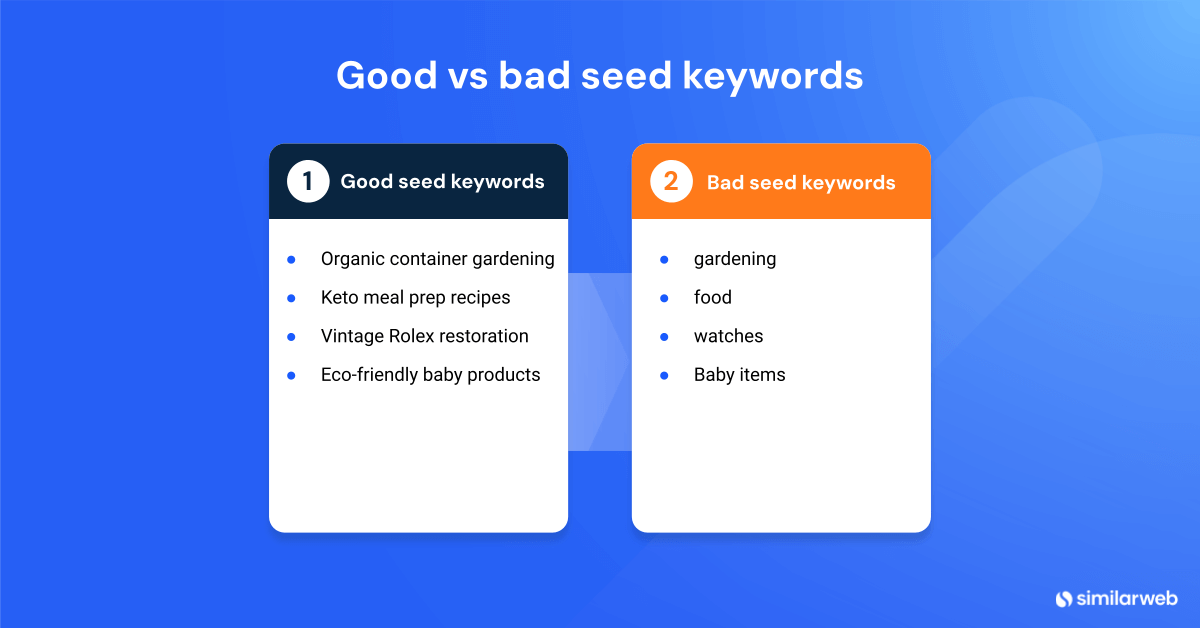
Below is a list of good and bad seed keyword ideas:
Although match types are used in PPC, they have made their way into SEO. Match types refer to how closely a target keyword matches the user query.
Exact-match keywords are used strategically to rank for specific, often longer-tail keyword phrases by exactly matching the users’ search query.
When the users’ search term contains the target keyword in the same order as it appears on a page but may include additional words before or after, it’s called a phrase-match keyword. This allows for more flexibility in targeting compared to exact match, potentially capturing a wider range of relevant searches.
A search query that includes the target keyword or its close variations, regardless of word order or additional terms, is called a broad match keyword. This approach allows for the widest reach, potentially targeting a diverse range of user intents related to the core topic.
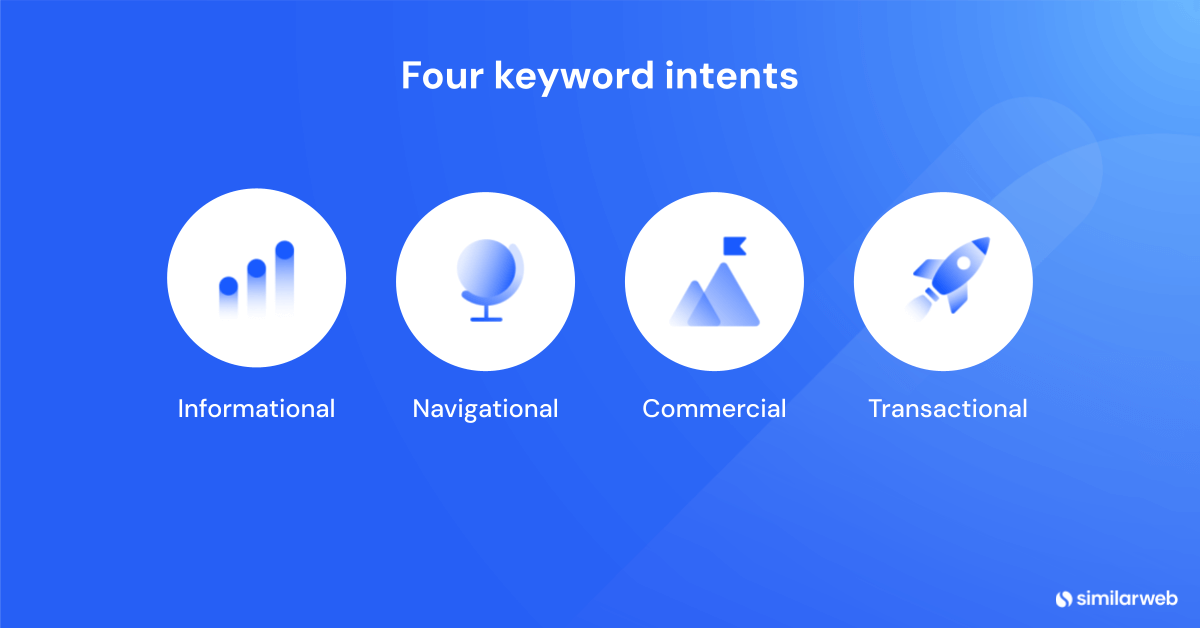
In SEO, user intent, also known as search intent, refers to understanding the underlying goal or purpose behind a user’s search query. Understanding these intents will help you map out your user journeys and build out SEO-driven sales funnels. In general, SEOs categorize keywords into four intents:
When a user is looking for information about a topic, their search has an informational intent. With these queries, the user is not looking to make a transaction or take an action but simply wants to find facts, instructions, or explanations to understand something.
For example:
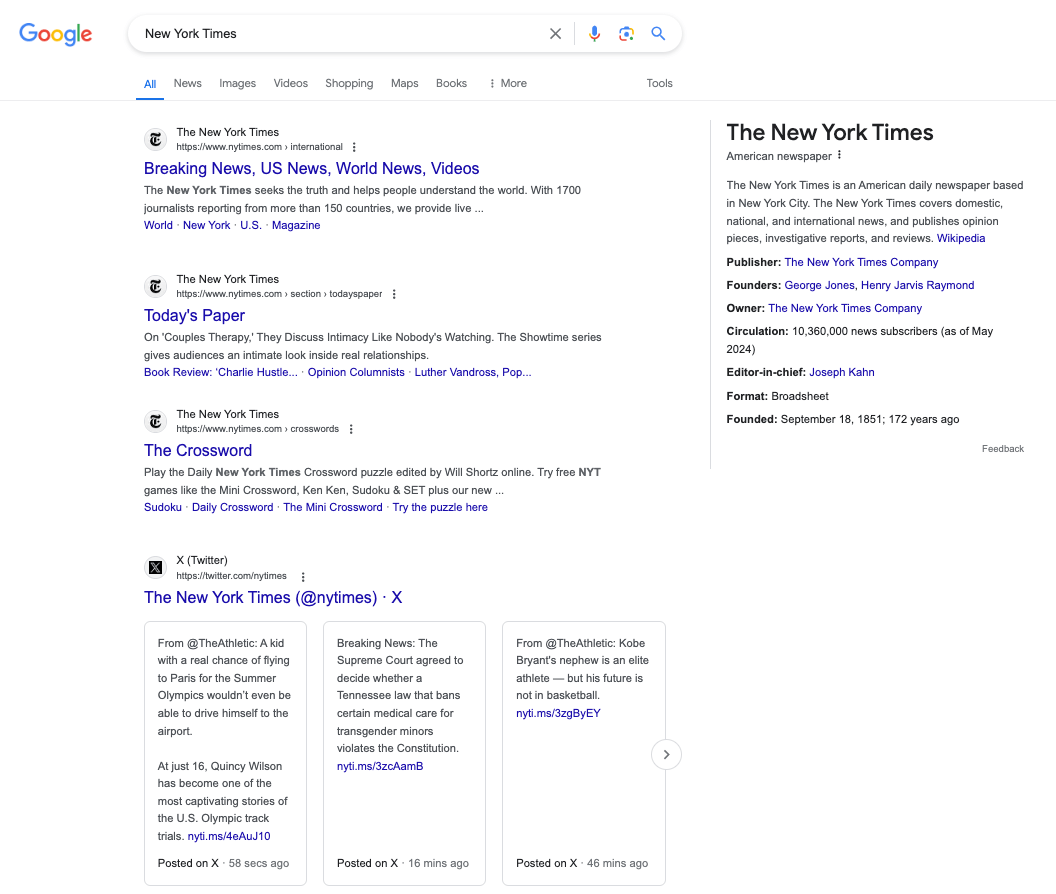
Navigational intent occurs when a user is searching for a specific website or online destination. They most likely already know about a particular website and want to quickly navigate to it directly. Examples include searches for brand names or website names.
For example:
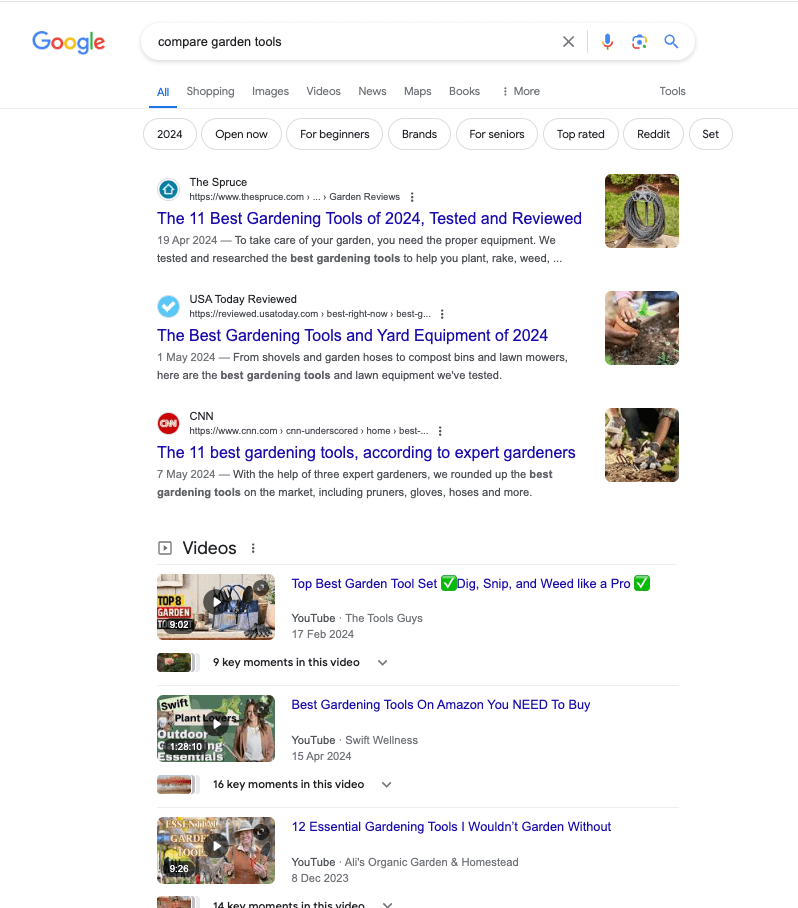
When a user is a step or two away from making a purchase and is researching the best products or services, they have commercial intent. Examples include searches for product names, pricing information, reviews, and comparisons between offerings.
For example:
If a user is ready to perform an action, they have transactional intent. Despite the name ‘transactional intent,’ this user intent is not limited to making purchases. Transactional intent includes other actions, including:
Common example keywords include:
There are two ways to find intent-based keywords:
1. Keyword modifiers
Keyword modifiers are words or phrases that, when added to a root keyword, make the query more specific. There are many keyword modifiers that have a clear user intent, and knowing what those modifiers are makes finding specific keyword intents easy.
Here are lists of keyword modifiers for each intent type, presented in a table:
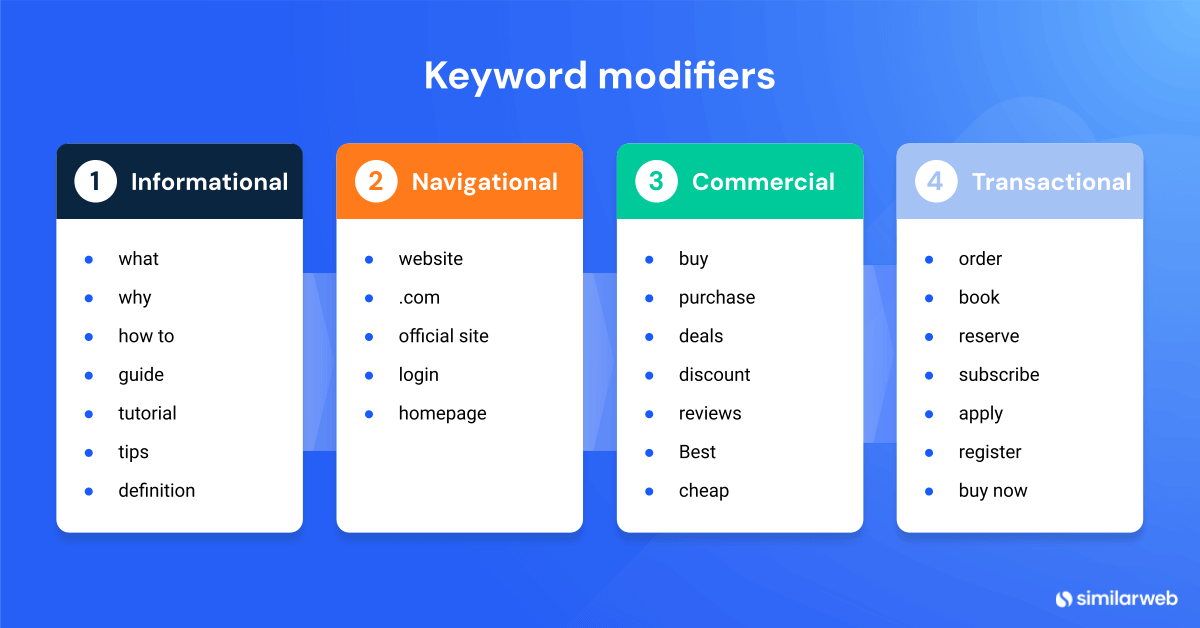
Use this to your advantage by:
For example, adding modifiers like “buy” or “prices” can surface commercial intent keywords, while modifiers such as “guide” or “tutorial” can reveal informational intent keywords.
2. Intent filters
If your keyword research tool has intent filters, you can easily find thousands of intent-focused keywords for almost any topic. For instance, using the Similarweb Keyword Generator, we’ve searched for the seed keyword, ‘dog training’ and added a transactional keyword filter below:
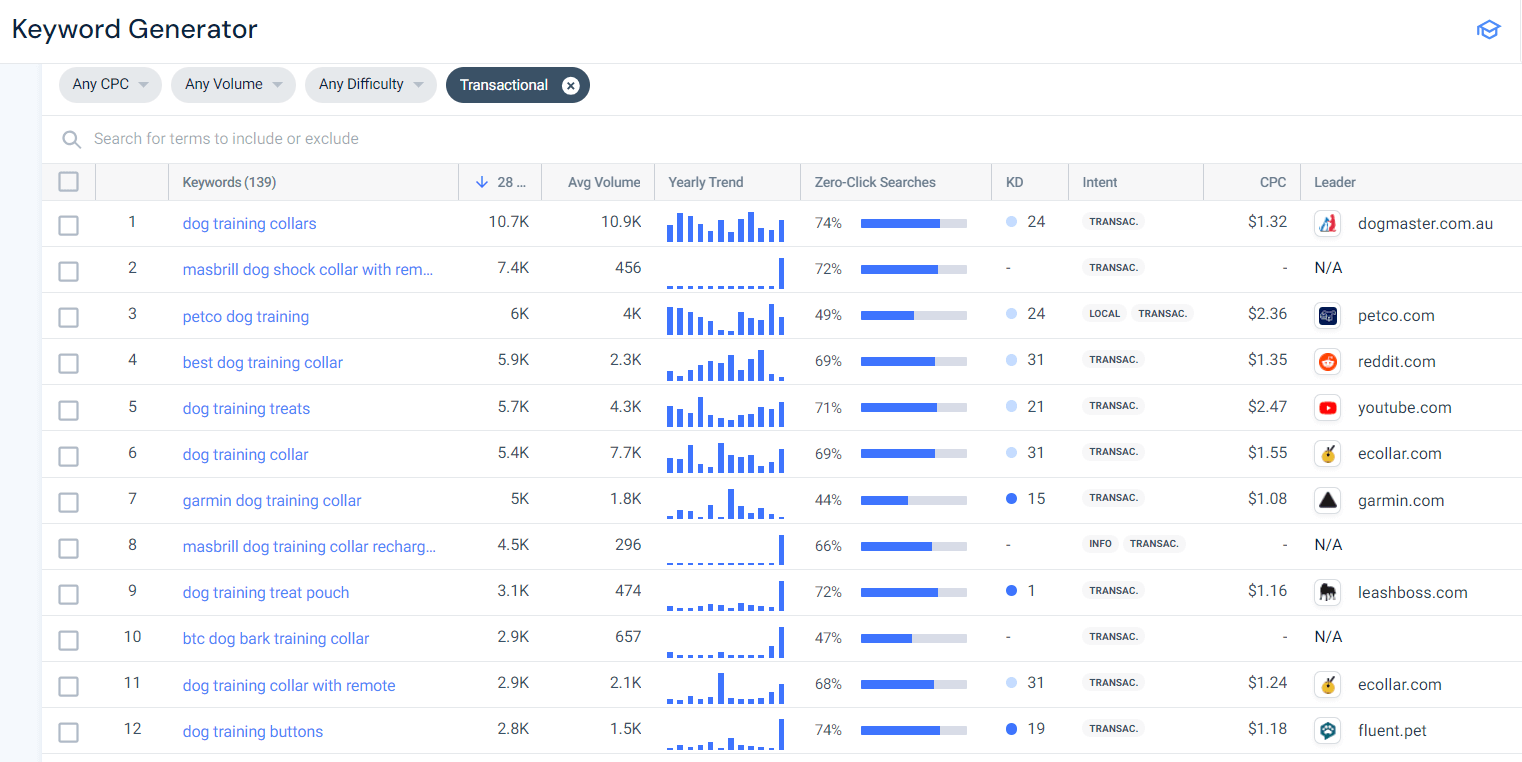
As you can see, we are seeing high-intent transactional keywords, including:
Now you might have noticed that ‘petco dog training’ has both local and transactional intent. This is an important insight as many keywords have multiple search intents.
Keyword lengths generally affect how targeted the keyword is. Shorter keywords are known as “head” or “short-tail” terms, while longer phrases are called “long-tail” keywords.
Due to their competitive nature, it’s difficult to rank for head keywords without first building authority around the topic by targeting a large body of short-tail-focused content.
Short-tail keywords are keywords that contain just 1-3 words and have a very broad search intent. They tend to have higher search volumes, which generally results in them being highly competitive.
Long-tail keywords are more specific keyword phrases that generally tend to contain 4 or more words. They are typically more targeted and have a narrower search intent than short-tail keywords, they are less competitive and will include intent modifiers.
See more of our data: The Most-Asked Questions on Google
Here are some examples:
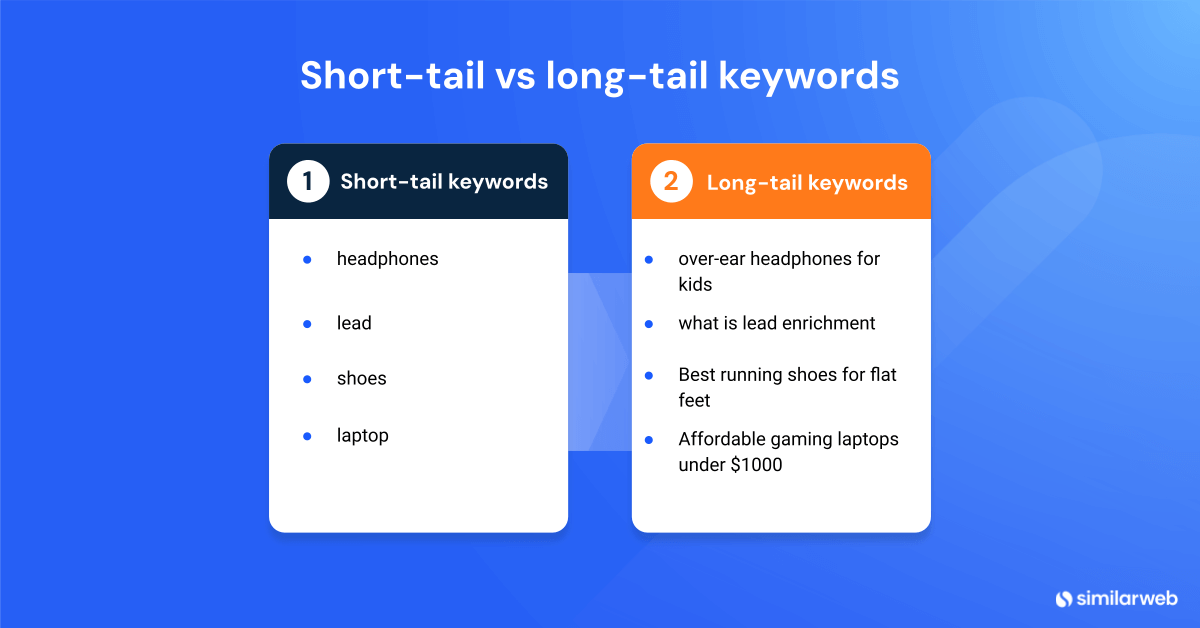
In general, you can find these keywords based on search volume.
Short-tail or head keywords
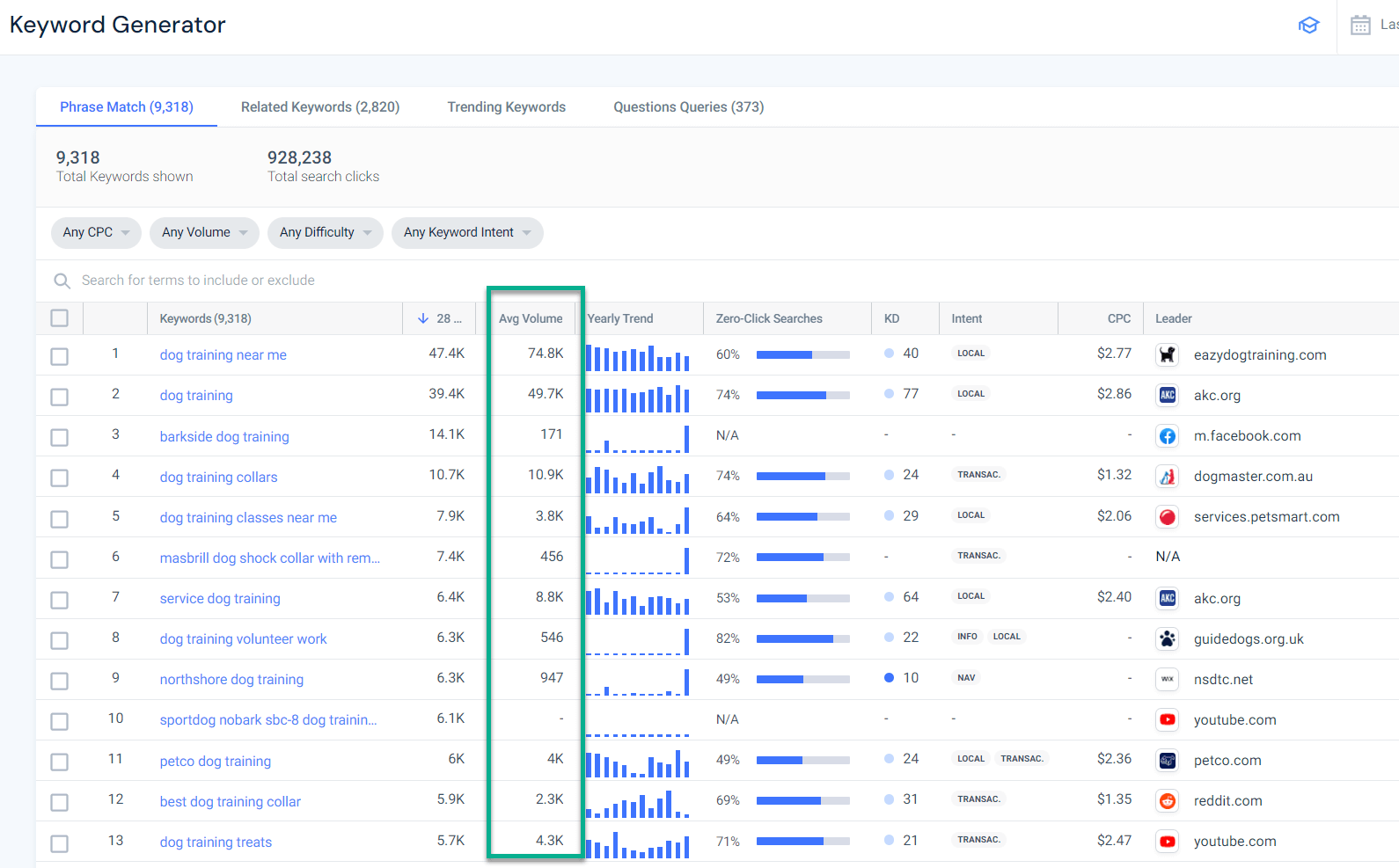
You can find short-tail keywords by entering your seed keyword into your keyword research tool and then sorting the keywords, making sure the ones with the largest search volumes appear at the top.
Long-tail keywords
You can find long-tail keywords by using filters to find keywords with lower search volumes. For instance, below, we have filtered the tool to show keywords with a search volume of 300 monthly searches or less.
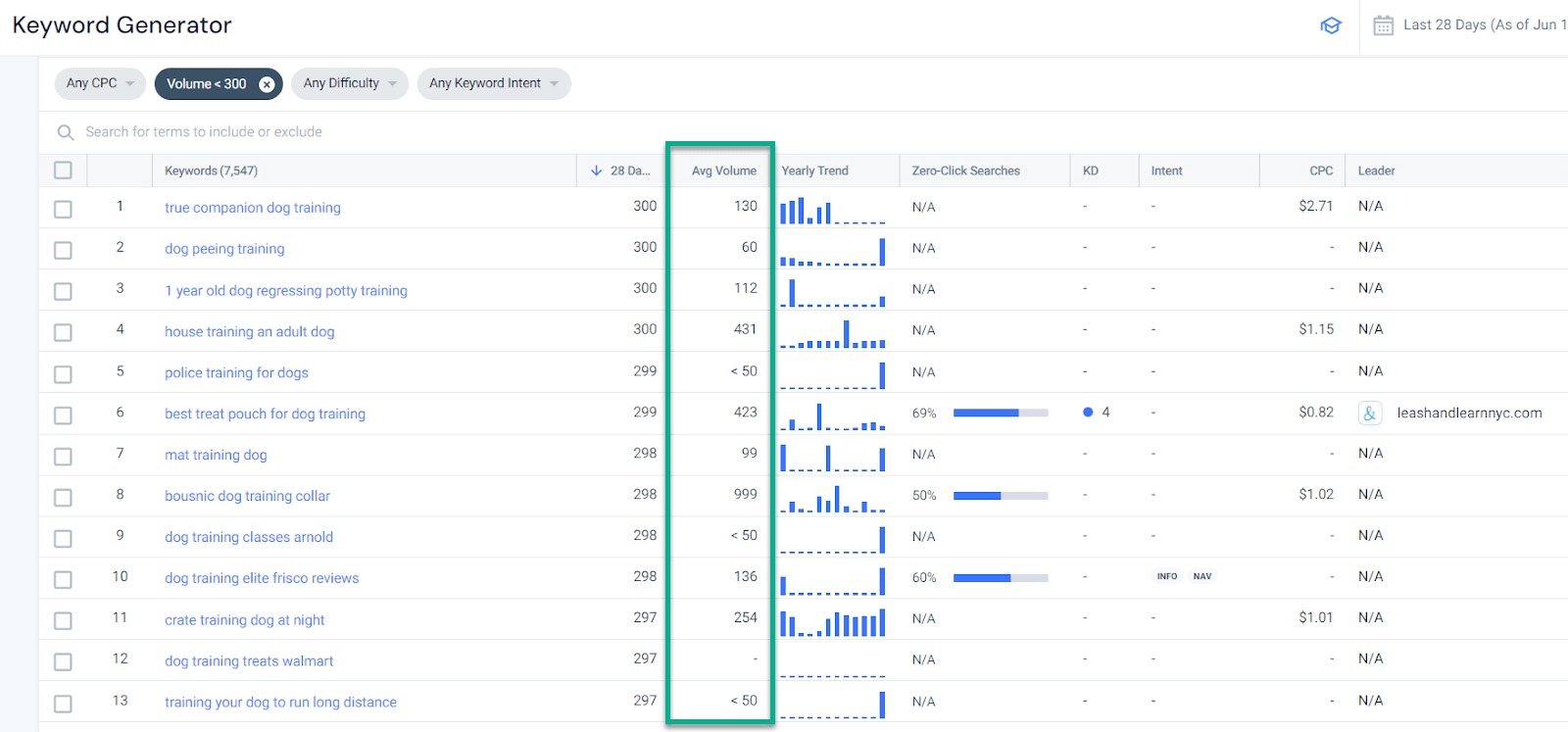
As you can see, there are some highly targeted keywords in the list, including:
Based on their nature, SEO methods differ dramatically on branded and non-branded keywords.
Branded keywords are search terms that include the name of your company, product, or service, indicating that users are specifically looking for your brand. Optimization for these keywords aims to:
Examples might include:
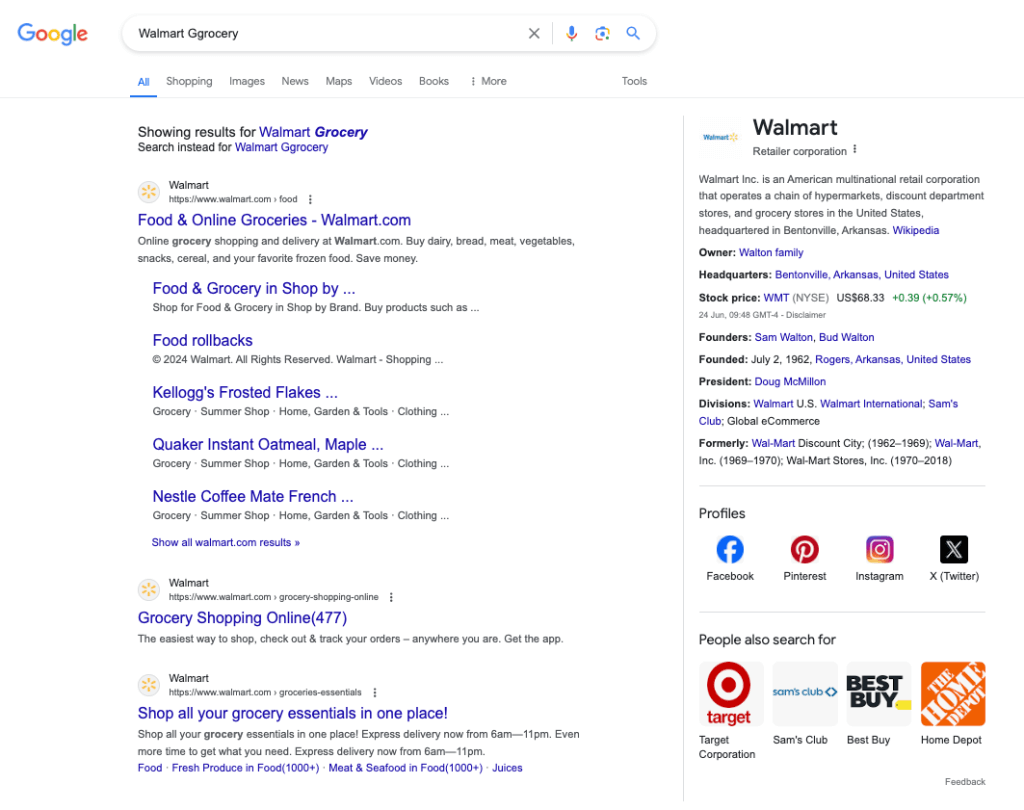
Non-branded keywords are search terms that are relevant to your business, products, or services but do not contain your actual brand name. They target people who are searching for solutions, information, or products related to your industry. These keywords can appear at all stages of your sales funnels and should be mapped to different stages of your customer journeys.
For example:
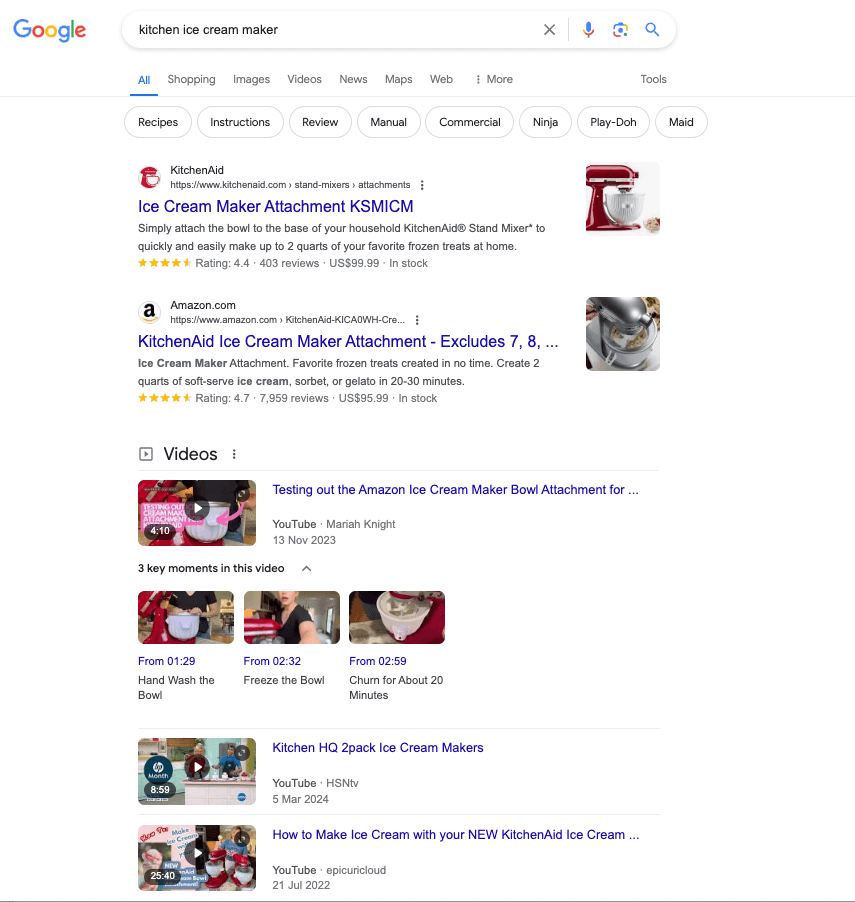
The vast majority of keywords you’ll find in your keyword research will be non-branded. Branded keywords are a different story. There are two ways to find them:
1. Use keyword research tools
Drop the brand name you are researching into your keyword research tool, and you’ll find a large number of branded keywords. It’s likely that your brand already ranks for most, if not all, of these keywords. If it doesn’t, or if it doesn’t dominate these terms, since your brand is by far the most relevant result for these queries, with a little effort you can easily increase your visibility for these terms.
Using the Similarweb Keyword Generator we searched for the brand name ‘Greenies’. By looking at the Leader column, you can quickly see all the sites that outrank the brand.
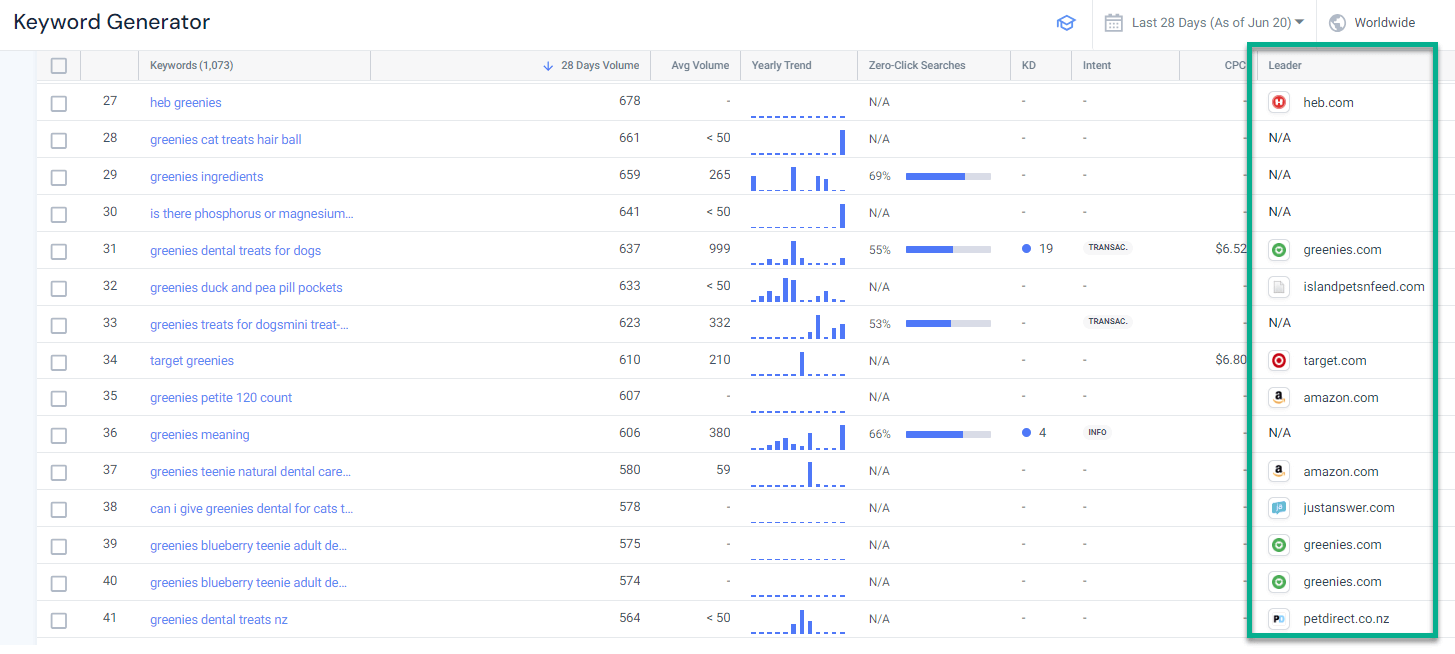
As you can see, there are sites outranking greenies.com on their branded keywords, including:
2. Use competitor research tools
Using a competitor research tool, you can find a long list of branded keywords. For instance, we dropped greenies.com into the Similarweb Website Keywords report and used the filters to see only branded keywords.
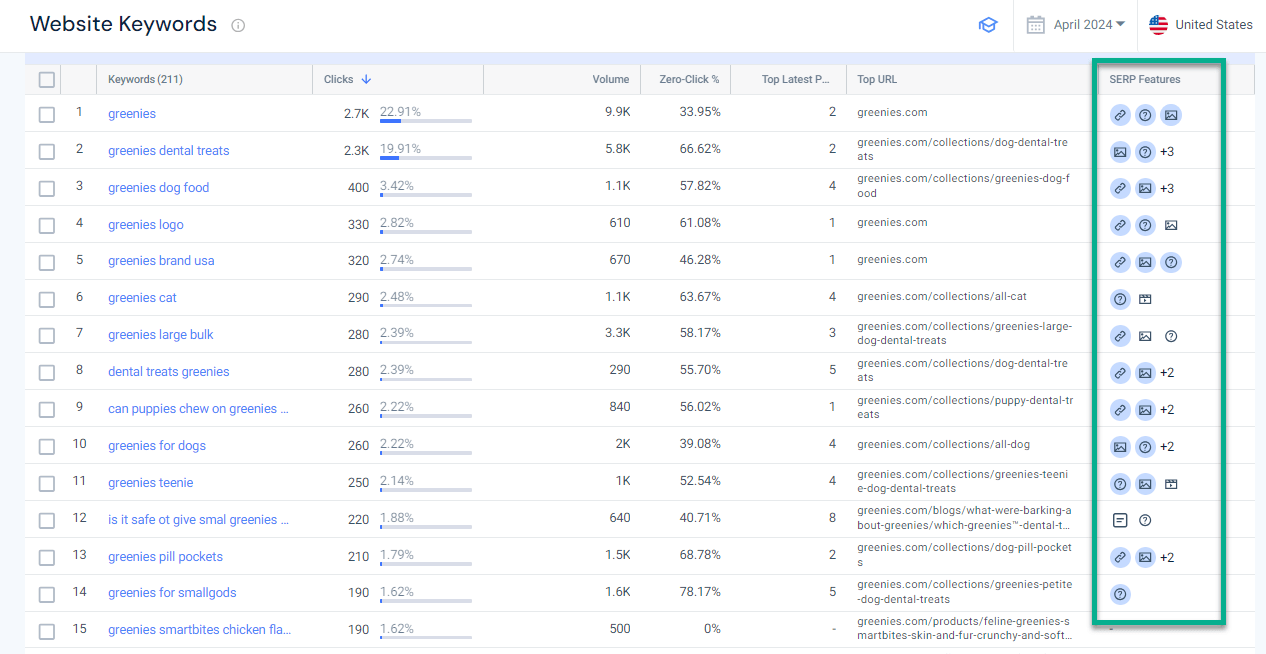
Looking at the SERP features column above, you can see a list of SERP feature opportunities where the brand can increase its SERP visibility.
A primary keyword is the target keyword for a piece of content. This keyword should appear in important places within the content: your H1 heading (one of the top on-page SEO factors), title tag, and in the first paragraph of your content.
Some SEOs target a single primary keyword per page, while others target up to five keywords that have the same user intent. Both strategies work – you just need to pick what suits you.
For example, for an article about home workout plans, a cluster of primary keywords might be:
The best way to find primary keywords is to enter a seed keyword into your keyword research tool and then filter your keyword list. Use filters to find keywords that:
For example, below we are filtering our dog training keywords to find informational keywords designed to answer users’ queries and drive awareness at the top of the funnel.
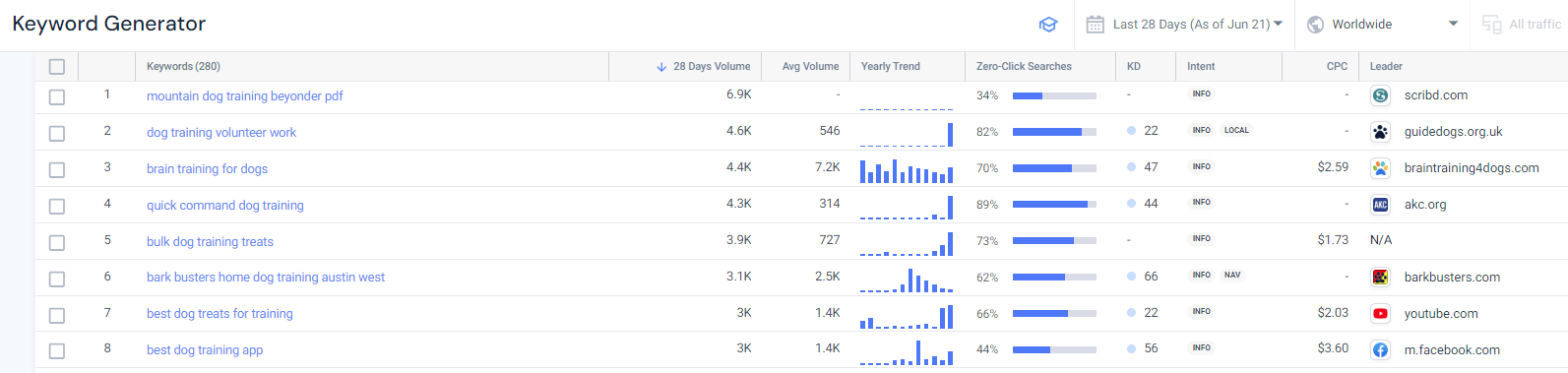
We have found two keywords that have an obvious user intent:
Furthermore, the Keyword Difficulty (KD) column indicates that these keywords are not too competitive, meaning you are able to create content on these keywords that can rank highly.
Secondary keywords are used to support your content by including synonyms and subtopics. You should include synonyms in your headers as well as in your body content and subtopics to build out your content structure. This further tells Google you’re semantically covering the topic.
Find secondary keywords by dropping your primary target keyword into your keyword research tool and looking at the Phrase Match report.
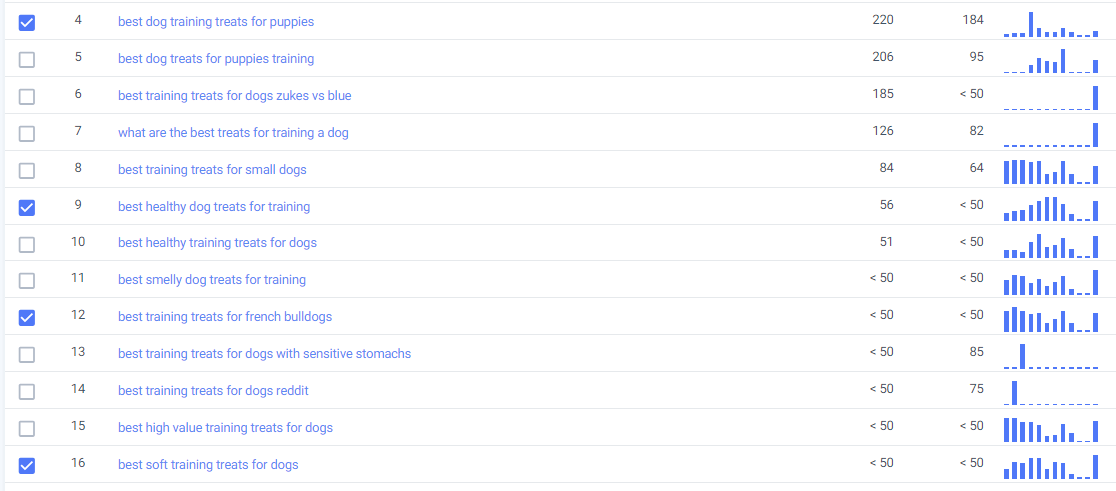
In the screenshot below we are looking at phrase match keywords for the query ‘best dog treats for dog training’.

There are some obvious synonyms, including:
There are also numerous keywords that could become sub-topics in your piece of content, including:
Each one of these could be used to create a subsection within the ‘Best dog treats for training’ content cluster.
Semantically related keywords are words or phrases that are topically connected to your primary keywords, but may not contain the exact same terms. Search engines use semantic relationships between words to better understand the context and intent behind searches as well as content. Incorporating semantically related keywords into your content can help reinforce relevance and improve your chances of ranking for your target terms.
There are two ways to find semantically related keywords:
1. The mystery word game
This is a method that was created by Laurent Bourelly. When creating content designed to rank for a specific keyword:
If you can understand the subject matter through context alone, it likely means:
This method helps ensure your content is comprehensive and topically relevant rather than overly focused on keyword placement.
2. The Related Keywords report
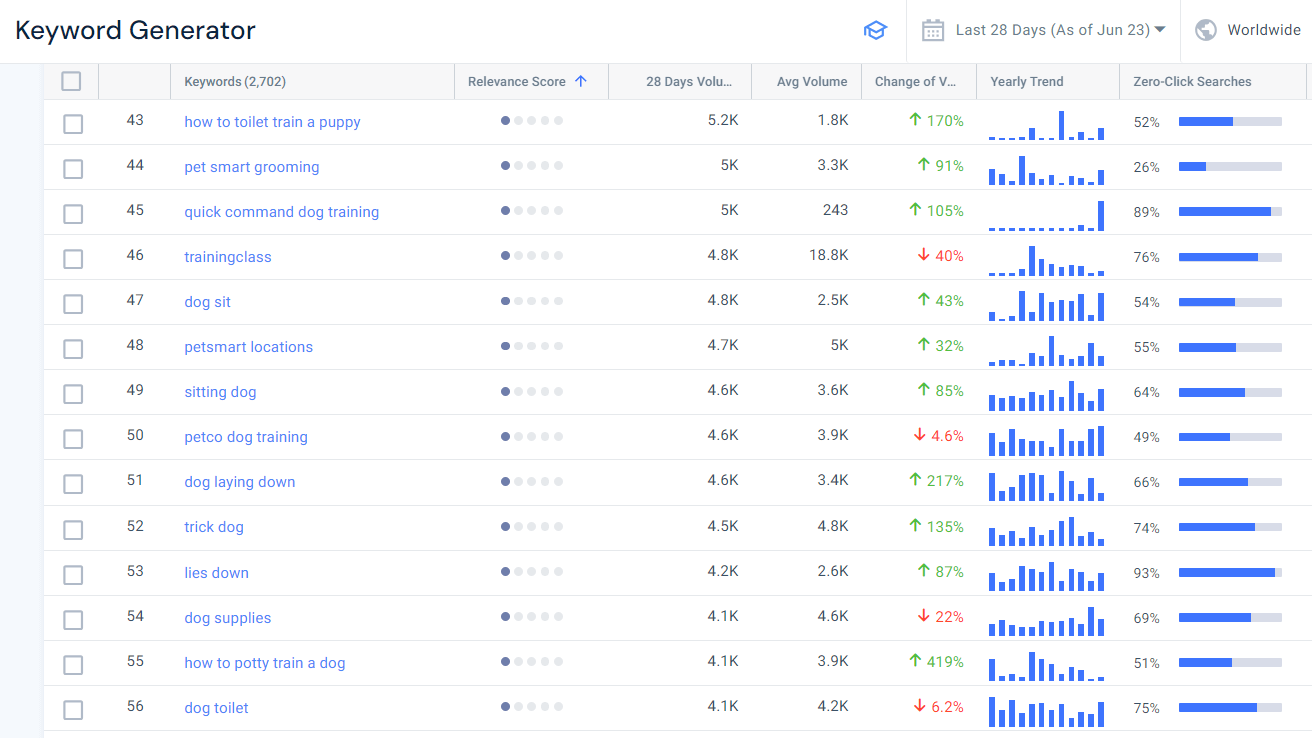
The Similarweb Related Keywords report provides a data-driven method for finding semantically related keywords. It works by comparing the search results of different keywords and assigning them a Relevance score based on how similar their SERPs are.
The magic of this report is that you can find lists of keywords with varying semantic relevance. Discover keywords with nearly the same meaning by looking at those with high relevance scores. If you’re seeking semantically related keywords with tangentially related meanings, focus on keywords with lower relevance scores.
For instance, below we are looking at the Related Keywords tab for terms that are related to the seed keyword ‘dog training’.
SEO tactics and strategies are composed of many elements, each requiring its own keyword strategy. This makes understanding these types of keywords the essential first step in understanding how to use them for your SEO.
But, just knowing the types of keywords in SEO is not enough to create a winning SEO strategy. You must have the right keyword data to find the right keywords.
What are the four types of search intent?
The four types of search intent are:
These categories describe the main purposes behind user searches.
What are SEO keywords?
SEO keywords are words and phrases that SEOs focus on when optimizing content. These keywords correspond to words and phrases that search engine users commonly use to search for content online.

Darrell creates SEO content for Similarweb, drawing on his deep understanding of SEO and Google patents.
The Top 100 Most Visited Websites in the USA (August 2026)

Similarweb Named in Forrester's Answer Engine Optimization Technologies Landscape, Q3 2026

Anthropic IPO: What Claude's Web and App Data Show
Give it a try or talk to our marketing team - it’s free!
