





Australia's Favorite Automotive Brands Revealed
by Similarweb3 Min.
May 26, 2023
 Insights
Early 2025 delivered a trade policy whirlwind with the US government announcing tariff increases country-by-country.
Automotive was particularly hit. +25% on vehicles from Canada and Mexico, and another 10% on imports from China. Steel, aluminum, auto parts, entire cars – nothing escaped unscathed.
And as we’ll show, consumers reacted instantly.
Here we’ll lift the hood on the auto market with Similarweb data, and show how these tariff shocks disrupted customer intent. Plus, we’ll highlight some key lessons about timing, trust, and pricing power in the sector.
But first, let’s have a quick recap of the events around the tariff announcement…
The automotive industry’s turbulent ride began with a sequence of tariff announcements in early 2025. Each move intensified pressure on brands, suppliers, and consumers alike.
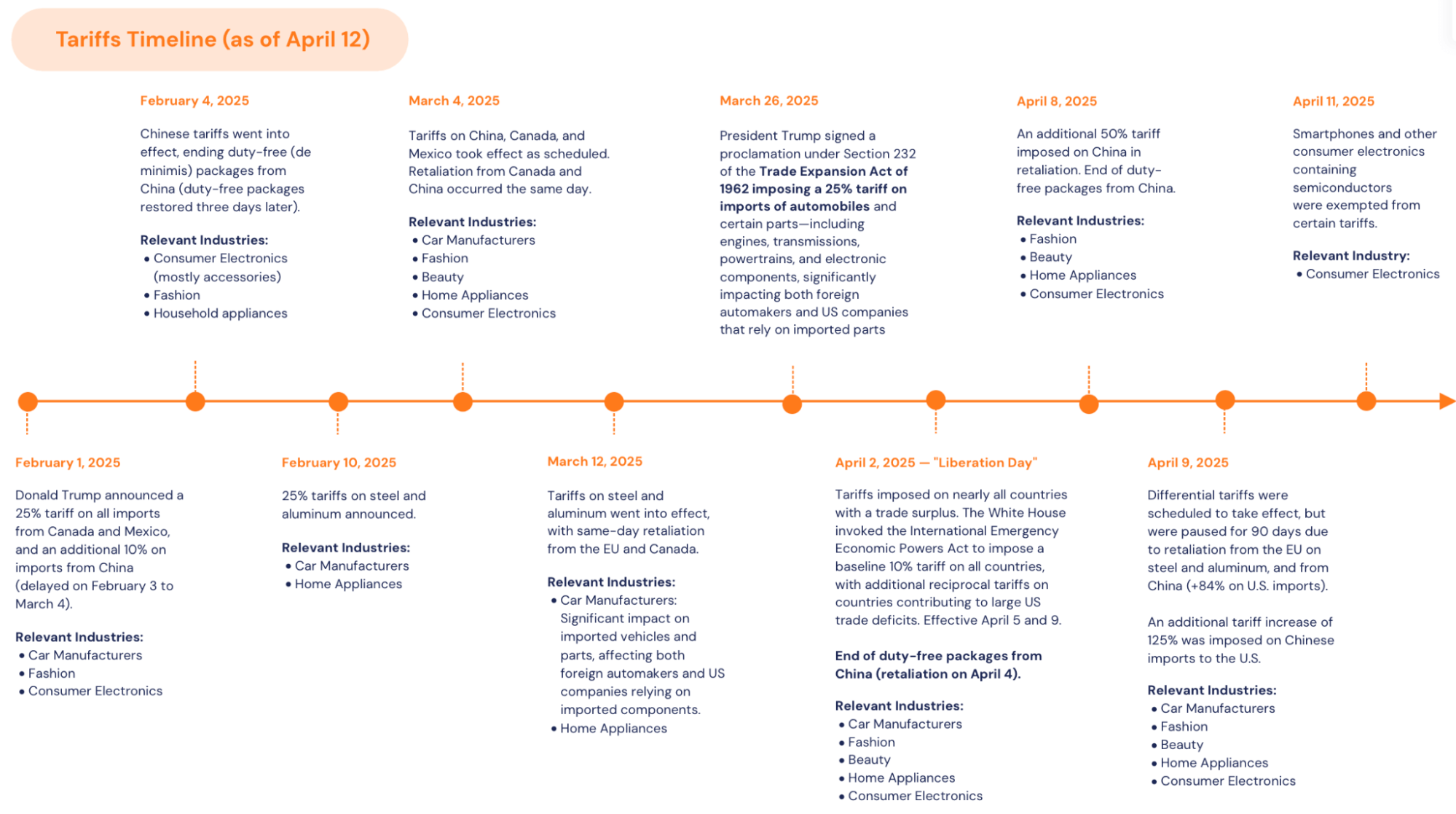
Consumer reaction to the tariffs was swift – and dramatic.
In late February and March, website traffic surged as consumers rushed to automotive brand sites. The goal was clear: buy before prices rose. However, this urgency-driven demand was short-lived.
By early April, after the imposition of the sweeping 25% tariff on all foreign auto imports, the surge turned into a sharp crash. Traffic didn’t just slow down – it plunged, quickly falling below January levels and deviating sharply from typical seasonal trends.
Similarweb data reveals a clear story:
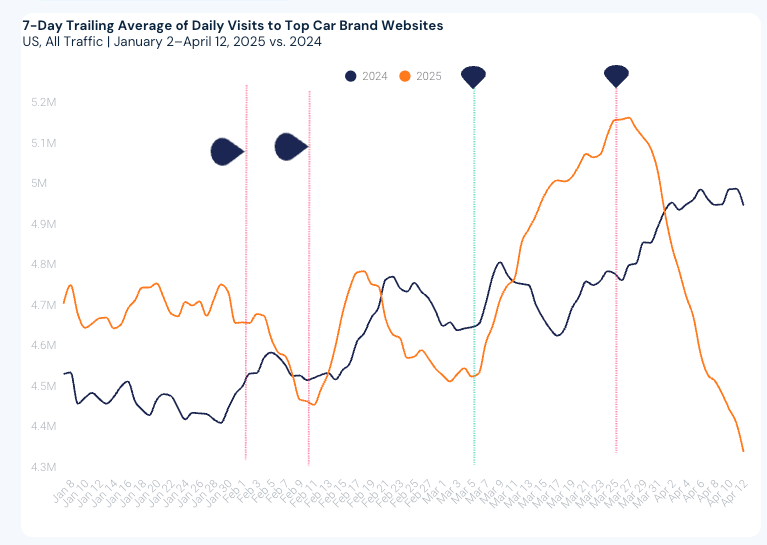
A March spike was driven by consumers attempting to beat anticipated price increases.
An April collapse immediately following tariff implementation, breaking dramatically from past seasonal patterns.
Brands misinterpreting the March surge as sustained momentum overlooked a critical insight: This wasn’t excitement. It was panic buying, and panic is fleeting.
The takeaway? Urgency can drive rapid sales, but price shocks burn quickly and leave lasting scars on consumer intent. March 26 marked a critical turning point. The new 25% tariff on foreign automotive imports reshuffled consumer attention, setting the stage for structural shifts in brand preference.
Not all brands felt the shocks equally. Some automakers briefly thrived on urgency-driven demand, while others faltered despite strong reputations. Here’s who seized the moment, who stumbled, and why timing, trust, and perceived value matter more than brand origin alone.
How U.S. brands captured the moment:
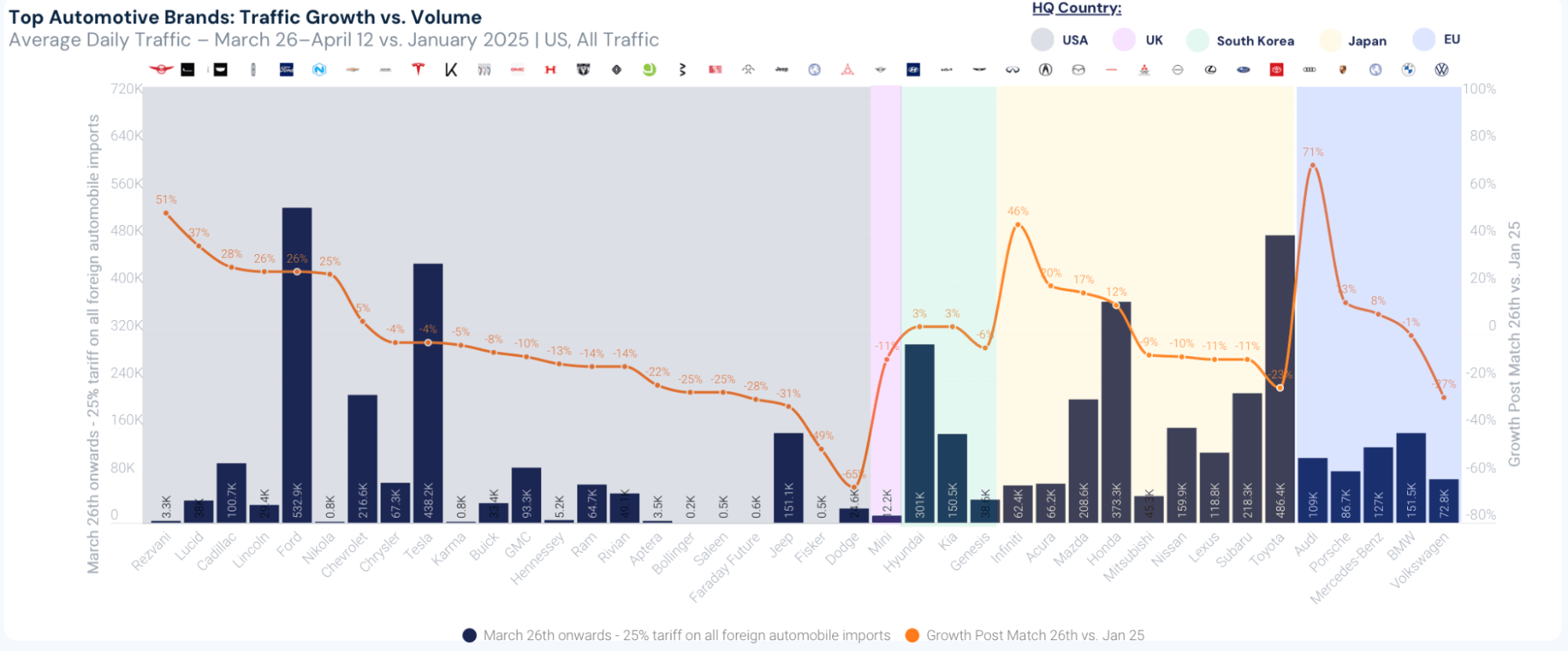
Their gains came from timing. These brands benefited from a narrow window where U.S.-based production and patriotic sentiment aligned with urgency buying. But the lift wasn’t consistent.
Others faltered despite home-field advantage:
Their declines suggest that being a U.S. brand wasn’t enough. Consumers differentiated between legacy loyalty and actual value under price pressure.
Foreign brands – especially German and British – were hit hardest:
The severe impact on European brands (BMW, Volkswagen, Mercedes-Benz, Mini) is directly tied to their dependence on imported vehicles and components. The tariff impact was direct and steep, compounding existing price sensitivity in the mid- and premium segments.
Japanese and Korean brands were the outliers:
They gained share as “value-stable” options – trusted, reliable, and less exposed to volatility in both price and perception. There was a method to their relative success: consistent quality, clear pricing, perceived reliability, and lesser reliance on affected supply chains.
Insight: Tariffs acted as a forced stress test. Consumers gravitated to brands with pricing power, consistent quality, and clear domestic supply chains. National origin mattered less than perceived resilience and affordability.
The winners weren’t the cheapest or the flashiest. But often they were the most predictable.
Consumer behavior in the automotive sector during early 2025 wasn’t shaped by gradual trends – it was jolted by rapid reactions to tariff announcements. Yet beneath these short-term spikes lie deeper shifts with potentially lasting consequences.
Following the March 26 announcement of a 25% tariff on all foreign auto imports, European and premium U.S. brands saw sustained declines in web traffic.
Crucially, these brands did not recover quickly, indicating more than a fleeting reaction.
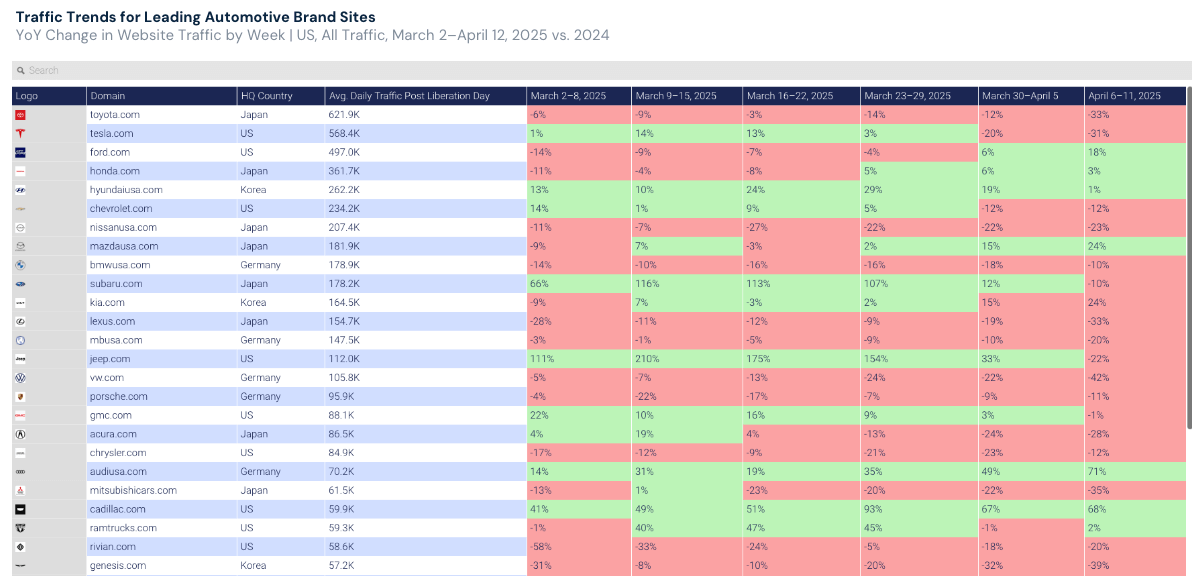
Consumers seem to have fundamentally changed their evaluation criteria, increasingly wary of brands heavily exposed to external cost pressures.
In contrast, Japanese and Korean automakers either maintained or grew their share of consumer interest. Buyers are clearly associating these brands with price stability and operational reliability – qualities that have become paramount amid trade volatility.
The key takeaway: Consumers are adapting to uncertainty by favoring brands that offer consistent pricing, reliable availability, and clear operational advantages. Even if tariffs are eased, this preference toward predictable, value-oriented brands may remain firmly entrenched.
The tariff environment of 2025 injected new structural risks into the automotive market. Navigating these disruptions demands more than reactive tactics – it requires proactive, scenario-based planning:
Tariffs were disruptive in the extreme. They reshaped consumer behavior, rewrote competitive dynamics, and redefined what it takes to succeed in the automotive market.
It illustrated why brands need to strategically anticipate future shifts and integrate flexibility into their core operations.
Want deeper insights?
This blog provided just a snapshot. The complete report, The State of Digital Consumers: Tariffs Edition, goes beyond automotive, delivering comprehensive analysis across key industries, including fashion, electronics, beauty, and home appliances.
To explore the full findings, including beauty, fashion, electronics, and more, download the full report.

Team Manager, Content Marketing
James is an former journalist & content strategist in B2B tech, who has previously created content for companies like EDF and X (Twitter). He also has a journalism post-grad from LCC.
Australia's Favorite Automotive Brands Revealed
Carvana Sees 50% Web Traffic Decline in March; Down 42% in Q1 While Most Peers Grow

Carvana Sees 41% Web Traffic Decline; CarGurus Leads with 39 Million Website Visits
Give it a try or talk to our insights team — don’t worry, it’s free!