


 Marketing Intelligence
5 Gen AI Data Points That Will Shape 2026 and Beyond
Recently, I sat down with Baruch Toledano, our VP of Digital Marketing Solutions, to chat about a talk he gave in our New York office on the evolution of AI search. The event was attended by leading industry professionals, including Ethan Smith, CEO at Graphite.
While I can’t share the entire presentation, I wanted to highlight a big takeaway that could change how you think about SEO and GEO moving forward.
1. ChatGPT’s dramatic rise to stardom
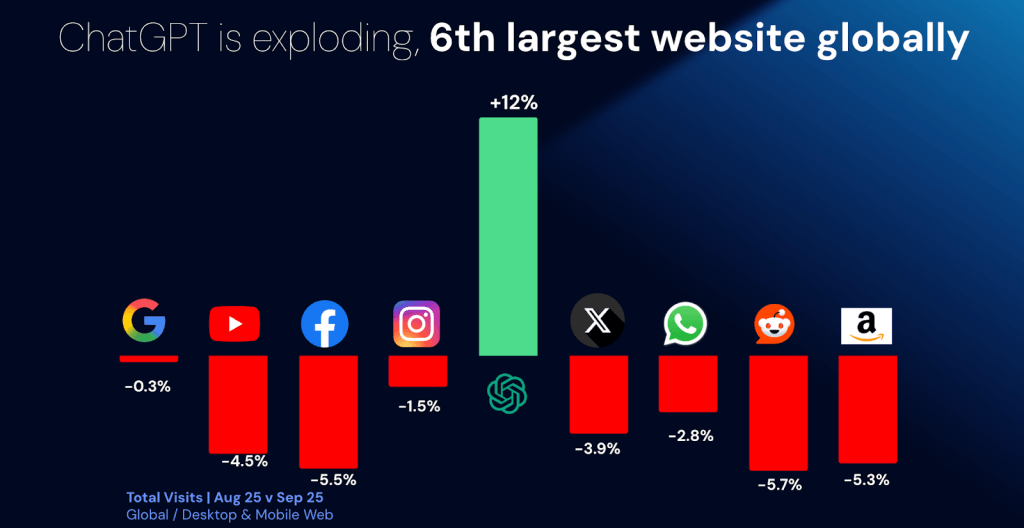
We all know that ChatGPT’s rise has been nothing short of staggering. Over the past two months, it’s become the sixth most-visited website in the world, overtaking some long-established digital giants. Data shows that as other giants have shown negative growth, ChatGPT is in the driver’s seat, growing 12% MoM.
It’s a clear indication that consumers are now incorporating GenAI tools into their everyday information-seeking and problem-solving routines.
So why are people flocking to GenAI tools like ChatGPT? It’s because they feel human. ChatGPT is conversational by design, letting anyone ask almost anything and get a clear, organized answer in seconds. It turns the world’s collective knowledge into something instantly usable and personal.
Instead of digging through endless blog posts or links, users get exactly what they’re looking for right away. That simplicity and immediacy make the experience addictive. It’s like having an always-on assistant with broad knowledge and also knows how to explain it.
For search marketers who create content around user journeys, this raises a question…
How has the user experience changed and what does that mean for digital marketing in general?
Let’s explore that.
2. Users are engaging in new, richer ways
If you look at how people are using ChatGPT today, it’s clear that behavior is evolving fast. Our data shows that nearly half of all files uploaded to ChatGPT are images, showing that users are blending text and visuals in their prompts.
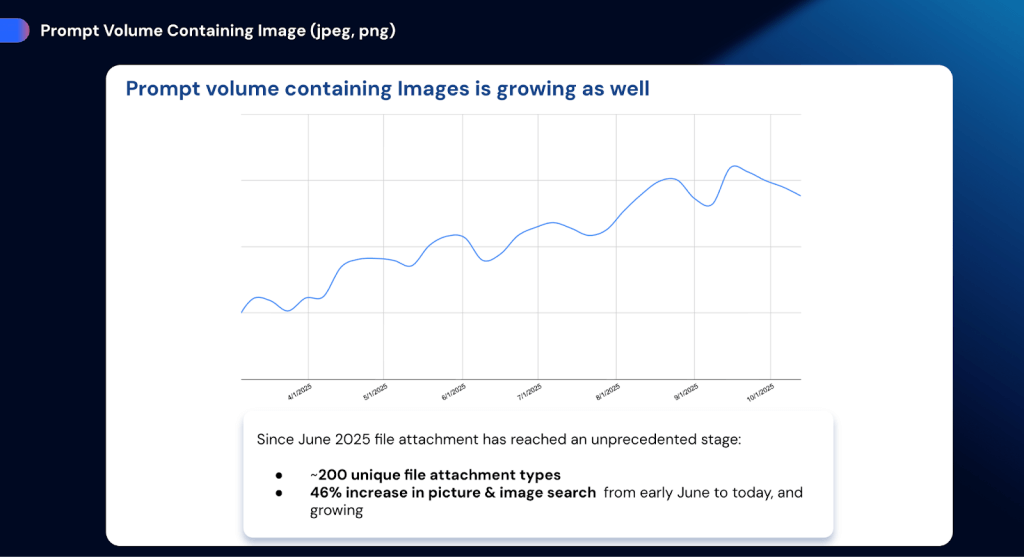
This is a big shift from how we’ve traditionally used search engines. Search engines help you find information in documents. Gen AI, on the other hand, does so much more. People now ask it to brainstorm ideas, edit copy, summarize PDFs, plan vacations, or analyze images. It’s interactive, conversational, and visual.
As the user journey changes, perhaps we should rethink some of our KPIs.
Now, let’s jump into where referral traffic is going.
3. Citations are shifting, and referral traffic is shifting with them
Similarweb data shows that ChatGPT’s citation patterns are changing rapidly. A few months ago, Wikipedia and Reddit dominated the sources it referenced. Today, our AI Brand Visibility tracker shows their share is shrinking as ChatGPT starts pulling from a wider variety of content types.
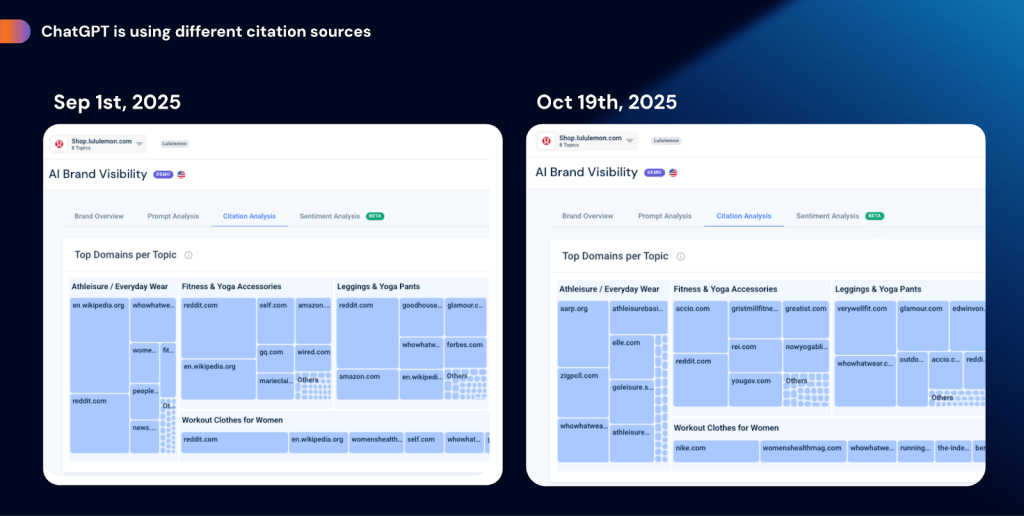
And that’s having a measurable impact on traffic. Reddit, for instance, saw a 23% drop in traffic from ChatGPT in just one month.
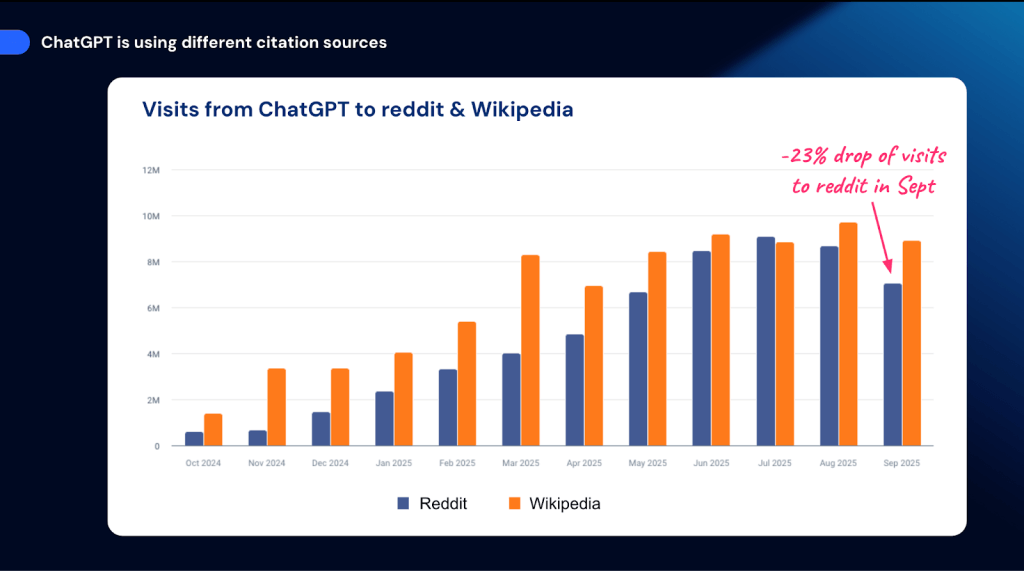
More than a technical shift, it’s a sign that AI-driven discovery is rewiring how people reach websites. Content that earns citations from AI systems is quickly becoming a new visibility metric.
The bigger story? Users are interacting with GenAI platforms in ways we’ve never seen before, and where they end up is currently unpredictable. More than just searching for information, they’re conversing with their search engine. And that opens a whole new chapter for search marketing.
If you’re a search marketer, this might sound alarming. If users are asking AI for answers directly, and we don’t know where traffic is ending up, where does that leave us?
The most interesting piece of data shows that ties everything together is that search isn’t disappearing, it’s expanding.
4. The pie is growing. ChatGPT users still rely on Google
Despite ChatGPT’s explosive growth, it hasn’t replaced traditional search. In fact, 99.6% of ChatGPT users still use Google.
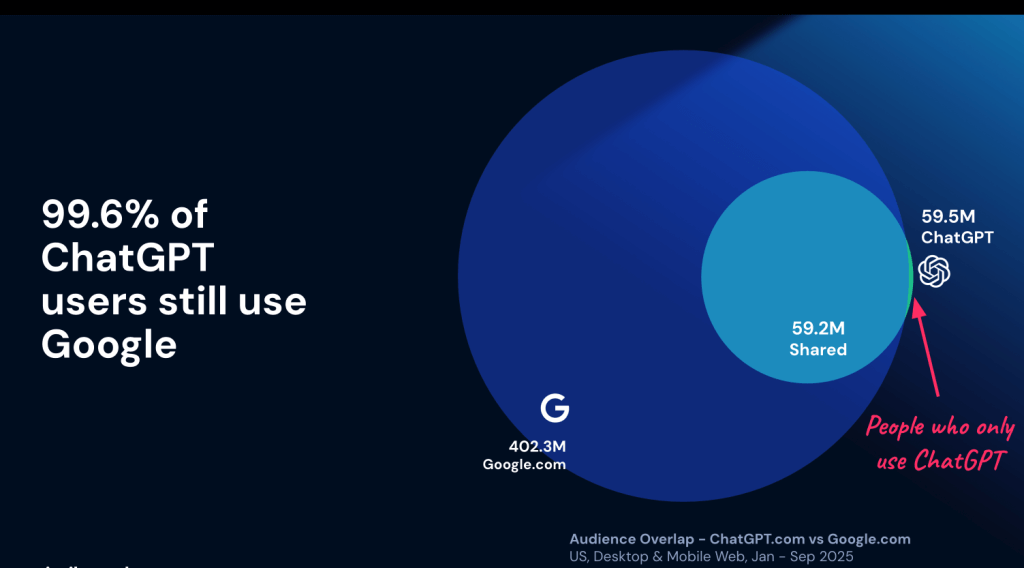
So rather than thinking of AI chat and search as competitors, we should see them as complementary. Together, they’ve created a bigger, more complex discovery ecosystem. The pie isn’t shrinking, it’s growing.
“People aren’t choosing between ChatGPT and Google. They’re using both, and often in the same session.” — Baruch Toledano
What’s more, even if you take AI Overviews into account, transactional searches are still available on Google.
5. AI Overviews dominate informational searches, but ecommerce remains open territory
Google’s AI Overviews have changed how people find information, especially for topics like travel, health, and education. For these informational queries, zero-click searches have skyrocketed because users are getting everything they need right on the results page. For instance, ‘things to do’ searches hit a staggering 80% zero click rate.
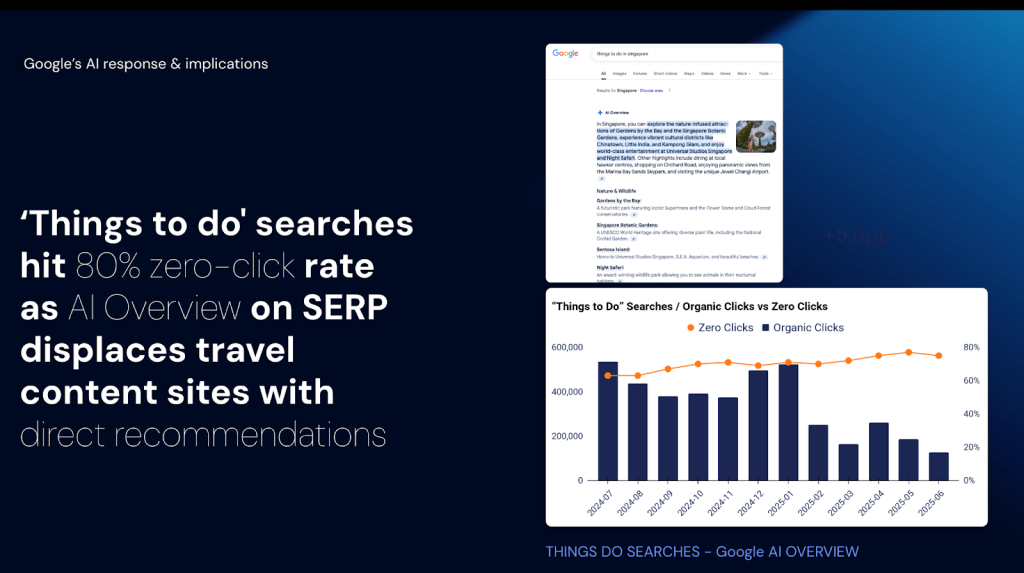
But when it comes to transactional or ecommerce searches, it’s a different story. AI Overviews rarely appear there, meaning people still click through to brand and product pages to make decisions. That’s an opportunity for SEOs. The lower funnel remains clickable territory.
In other words, users are treating AI and non-AI results differently. They use AI to explore ideas and clarify information, but traditional search engines are still where the transactions happen.
In other words, each step is part of the same journey and both demand unique content strategies.
What does that mean for marketing? Be everywhere in the journey
As user behavior evolves, it’s natural for marketers to wonder what this means for the role of search. As people chat with AI tools, upload images, and explore in new ways, it may feel like traditional SEO is being rewritten. But rather than shrinking, the opportunity is simply expanding.
Baruch summed it up perfectly. The pie is growing. People use different platforms for various purposes. Some start with ChatGPT for inspiration, hop over to Google for validation or comparisons, and then land on a brand’s website to make a purchase. The path is no longer linear. It’s fluid, looping, and multimodal.
So what does that mean for marketers? It means we can’t think channel-by-channel anymore. Visibility now has to span the entire discovery journey.
How to Adapt
- Understand intent. Figure out which moments of your audience’s journey start in GenAI and which live in traditional search. Tailor your strategy to meet them where they are.
- Optimize for multiple platforms. Structure your content so it can appear naturally in AI-generated responses and in Google’s SERPs. Machines and humans both reward clarity and credibility.
- Build authority everywhere. Invest in high-quality content, strong E-E-A-T signals, and off-site SEO. Citations and mentions now act as votes of trust across platforms.
- Think multimodal. Add visuals, charts, and data tables that AI systems can understand and reuse. Rich, structured visuals help your content “speak” to GenAI.
“Winning in the AI era means showing up where your customers are, whether they’re typing, talking, or uploading a photo.” — Baruch Toledano
The big takeaway? Generative AI isn’t replacing search. It’s expanding what discovery means. The brands that thrive will be the ones meeting users wherever they explore, verify, and decide.
Want to dive deeper into the evolving world of AI-driven discovery? Stay tuned for future Similarweb events featuring more insights from industry experts.

Related Posts

Wondering what Similarweb can do for your business?
Give it a try or talk to our insights team — don’t worry, it’s free!