


 Marketing Intelligence
What The Decline In Gen AI Traffic Really Tells Us About the Future of GEO
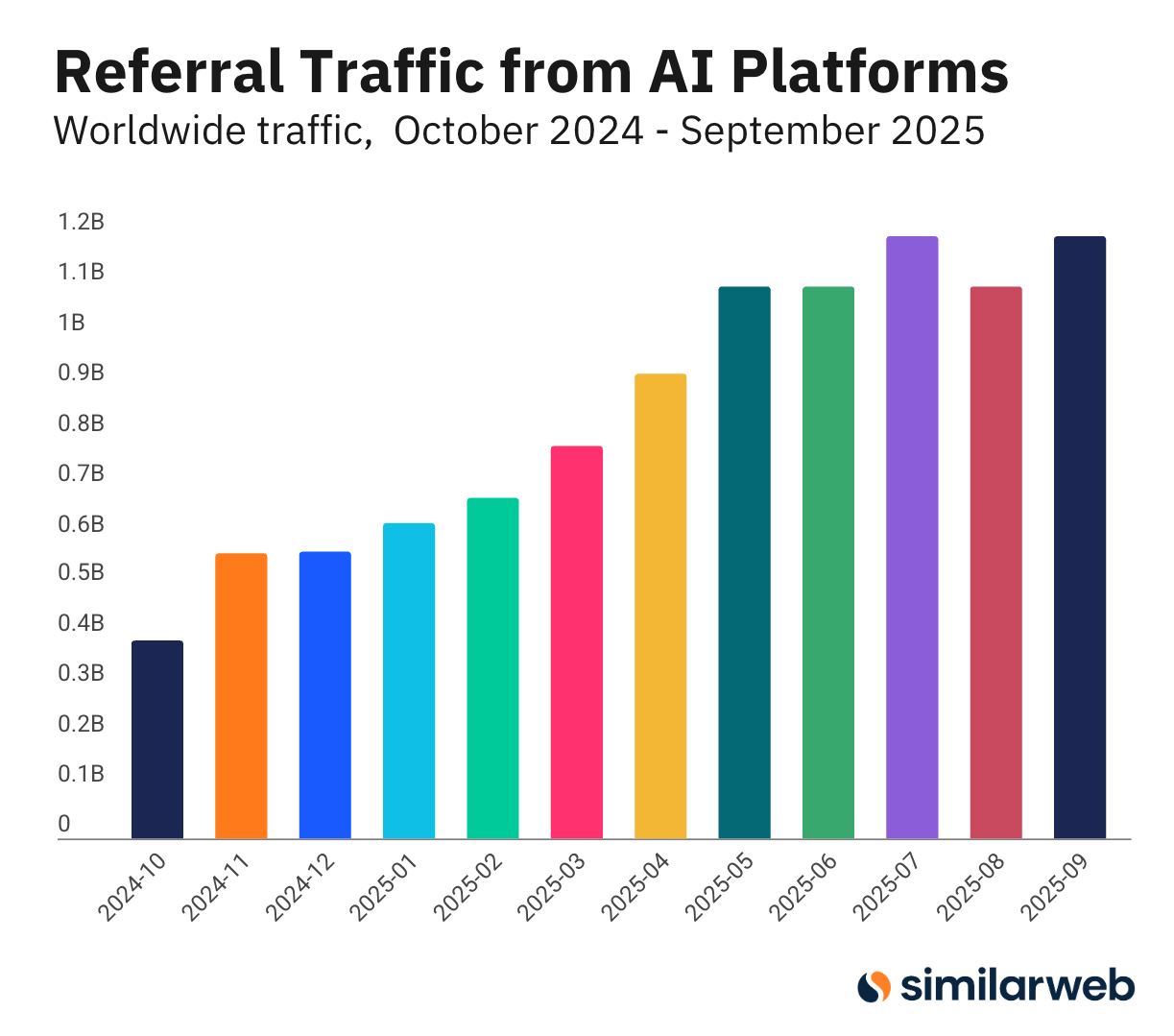
In a recent article, Kevin Indig shared new data showing that Gen AI referral traffic is dropping fast. Intrigued, I decided to see what Similarweb data had to say.
From what we’re seeing, traffic isn’t collapsing, but growth has clearly plateaued since May.
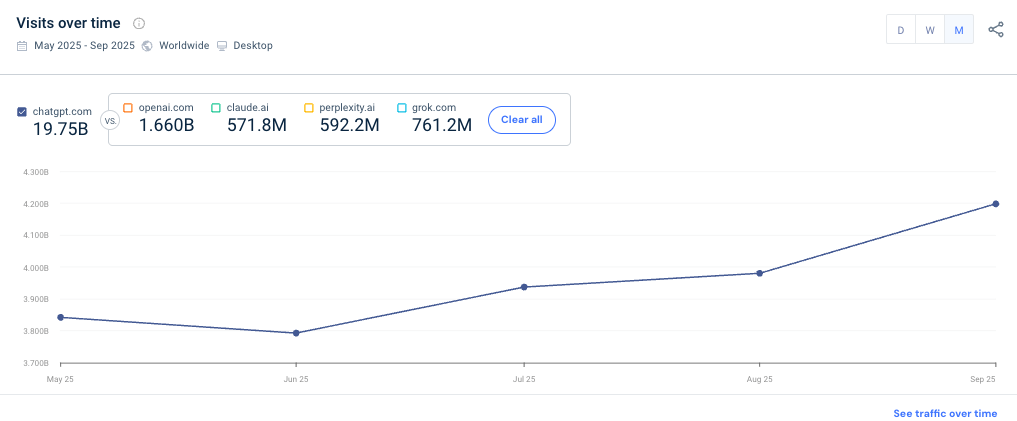
Comparing this to ChatGPT’s visits over time since May, we find something interesting. Usage continues to climb, even as referral traffic levels off.
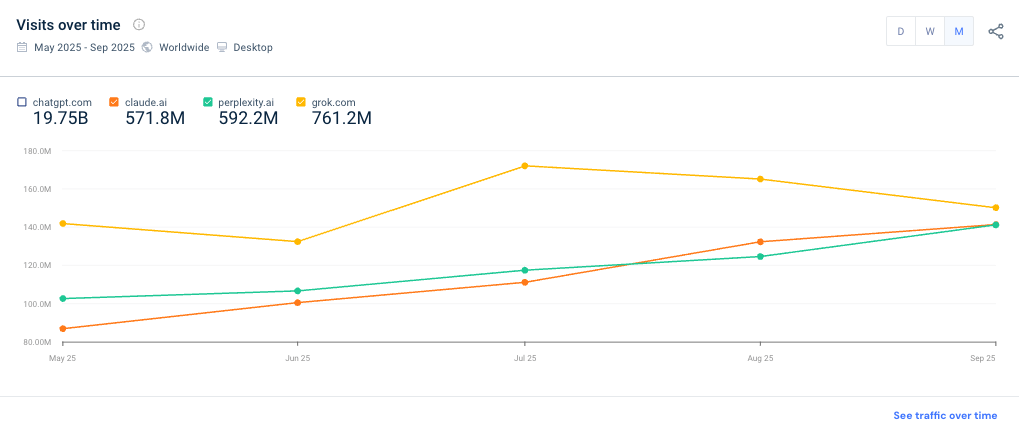
And it’s not just ChatGPT. Competing Gen AI platforms are also seeing steady growth in visits month over month.
So if user adoption is still rising, why isn’t referral traffic following?
This plateau doesn’t disprove Kevin’s insight. In fact, it confirms it in a more subtle way. The data points to a deeper shift: Users are spending more time inside Gen AI platforms, but fewer of those interactions lead to outbound clicks.
In other words, engagement is growing, visibility is expanding, but the measurable traffic isn’t.
This means, as SEOs and GEOs, we need to rethink how we measure success.
Because traffic metrics only measure what happens after a click. But most brand exposure in Gen AI happens before the click, inside the answer itself.
The old paradigm: Clicks, rankings, and the linear funnel
For nearly two decades, organic search marketing ran on a simple assumption.
The user journey started with traffic.
Since the click was the bridge between attention and action, we built most of our strategies and KPIs around this.
Search traffic translated neatly into measurable outcomes. Ranking higher meant more visits, more leads, and more conversions. If you wanted organic traffic, you earned it through keyword research, content optimization, backlinks, and technical SEO, all pointing toward one outcome: a user clicking through to your site.
That model worked because the user journey was linear.
Discovery → Click → Visit → Convert.
Searchers typed queries, evaluated results, and chose which site to visit. Every step was observable, trackable, and attributable.
Bottom line: Website traffic was the main KPI.
The new reality: Visibility as the currency
If the old paradigm primarily rewarded clicks, the new one should also reward visibility. This pattern is not new. Social media platforms, which were once a source of organic traffic, have been discouraging clicks for the longest time.
This means, as it stands today, who sees you, references you, and recalls you matters more than ever.
Add Gen AI platforms into the mix. They summarize and synthesize content. Often, that traffic stays on the platform, but it shapes perception, and that’s arguably just as powerful.
The data highlights this shift perfectly. Even as LLM usage grows, referral traffic plateaus. The disconnect between visibility and clicks is a signal you can’t ignore. These platforms are consuming and rewriting brand content, but the engagement loop stops before the click.
This isn’t the first time we’ve seen this kind of shift.
- Social media replaced CTRs with impressions and engagement rates
- Streaming replaced purchases with plays and watch time
The winners in this visibility economy will be the brands that understand two things early:
- Visibility drives trust, even without traffic: Users remember the names they see repeatedly, whether or not they click them.
- Visibility can be measured: Mentions, citations, and share of presence across AI and search platforms form the new performance layer, the new KPIs of the rising zero-click era.
The rise of brand visibility tracking
In the days of blue links, when traffic was the focus, rank tracking was the most effective way to understand your performance.
But when the main KPI is brand visibility, there are no rankings. What’s more, since user prompts are getting longer and more nuanced, there are no keywords to track. Only user intents matter.
Instead of tracking where you appear, you need to know whether you appear at all and in what context.
The challenge, of course, is figuring out what to measure.
For a long time, this kind of measurement wasn’t possible. But that’s changing fast.
New Gen AI optimization and analytics tools now make it possible to measure brand visibility across Gen AI, revealing how often your brand is mentioned, cited, or surfaced.
And Similarweb is no exception.
Let me show you.
1. Tracking brand presence across the topics that matter to you
The first step in brand visibility tracking is to understand how your brand performs across the key topics that matter to your brand.
For example, looking at Lululemon, the brand is interested in showing up for things like:
- Leggings and yoga pants
- Athleisure/everyday wear
- Men’s activewear
- Running gear
- etc.
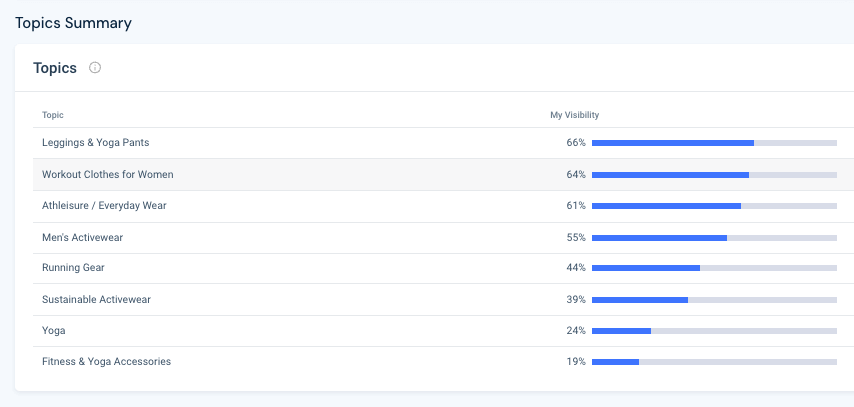
This simple shift from rank to topical visibility helps you answer a new kind of question:
Is my brand appearing in the conversations that matter most?
With this metric, you can quickly see where you’re winning and where your visibility gaps represent opportunities for content, partnerships, or awareness campaigns.
For instance, above you can see that Lululemon’s brand visibility for Fitness & Yoga Accessories is only 19%. Since this is a topic the brand cares about, we‘ve uncovered an opportunity.
Let’s see how we can improve Lululemon’s brand visibility on this topic.
2. Analyzing citations to understand which sources Gen AI uses the most
When Gen AI answers a prompt, it finds a number of relevant sources to generate a response. Each answer is a reflection of the content the model trusts and references most often.
If a brand appears in those cited sources, its chances of being mentioned or surfaced in Gen AI outputs rise dramatically. That’s why performing citation analysis is one of the most powerful ways to improve brand visibility and is considered one of the more useful tactics for Generative Engine Optimization.
In the example above, Similarweb identified Fitness & Yoga Accessories as an opportunity for Lululemon to increase its visibility.
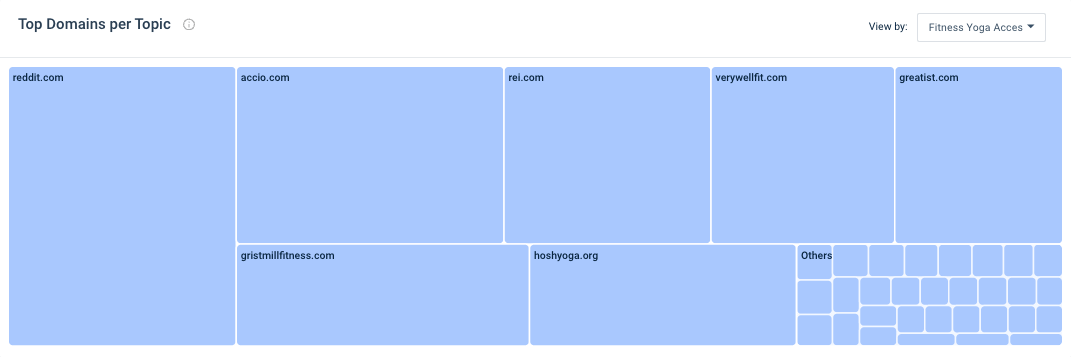
To explore this, we can use the Top Domains feature.
By filtering for this topic, Similarweb reveals exactly which domains Gen AI relies on when generating its answers. The list includes a mix of:
- User-generated content platforms
- News and publisher sites
- Competitor domains
If Lululemon earns citations from these domains, it dramatically improves the likelihood that Gen AI will surface its brand in relevant responses.
Using this insight, Lululemon can develop a focused strategy to strengthen the authority and trustworthiness of its Fitness & Yoga Accessories content.
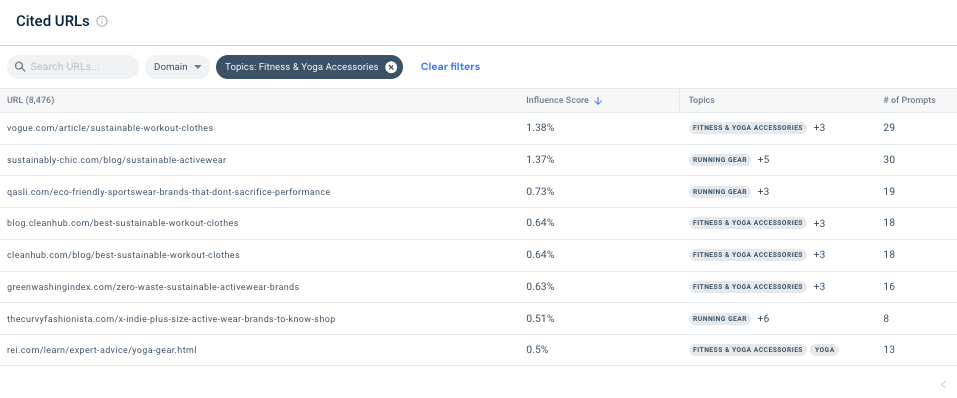
Going a level deeper, the Cited URLs table shows the exact pages Gen AI references when creating its answers. This gives Lululemon a precise list of URLs to analyze and target, including a roadmap for earning the citations that drive higher brand visibility across Gen AI platforms.
3. Analyzing prompts to find the right questions to answer
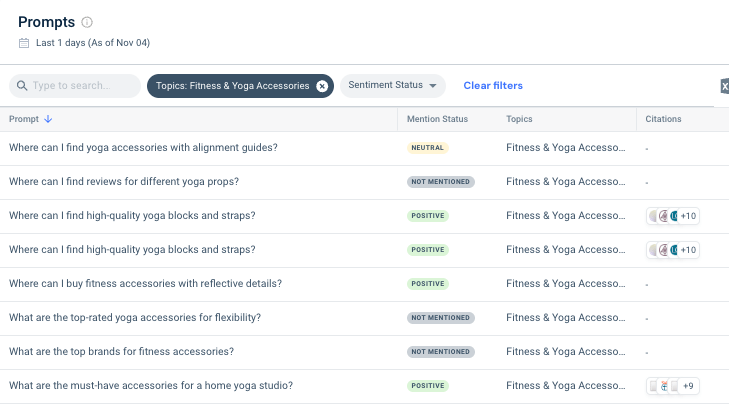
Another way to increase your visibility is to understand search intent by analyzing user prompts. The Prompt Analysis tool helps you see which user questions trigger answers that could involve your brand and whether your content is being represented there.
With this data, Lululemon can use the topic filter to see a list of user prompts in the Fitness & Yoga Accessories topic. To make this analysis effective, the brand should also analyze the prompt intents of its users, so they can fully understand how ChatGPT understands them. This will help them to create a content plan.
Now, just being visible is not enough. You also need to understand how you are being perceived. Because not every mention is positive.
4. Analyzing sentiment to understand context and audience perception
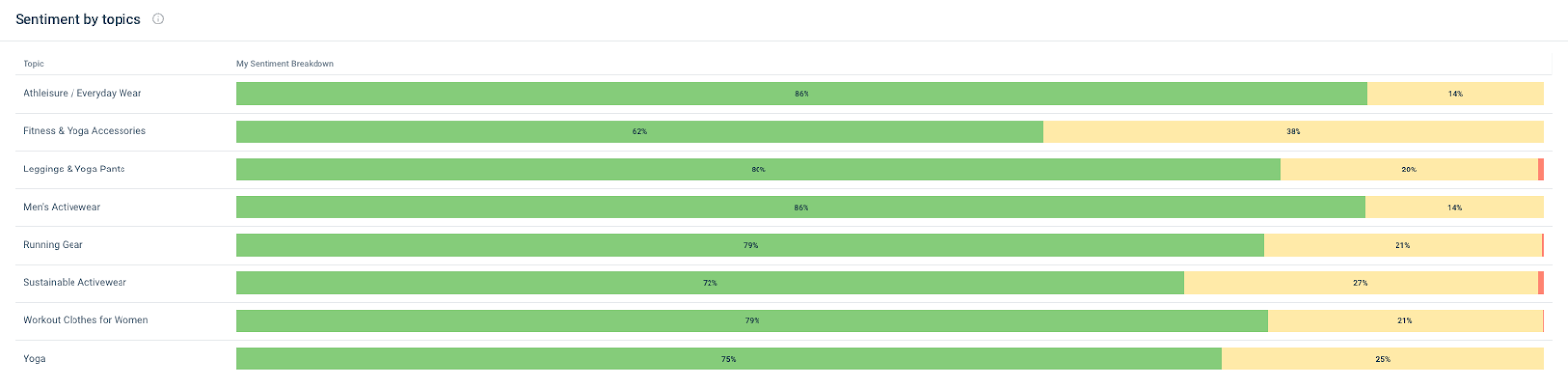
Tracking how your brand is being discussed, positively, negatively, or neutrally, helps you gauge not just how visible you are, but how you’re perceived.
The bottom line
The data tells us a clear story. As Gen AI reshapes how people discover, evaluate, and decide, we must add visibility metrics to how we track success.
The brands that adapt how they measure success from earning traffic to earning visibility across the topics, platforms, and conversations will thrive.
That’s why we built Similarweb’s AI Brand Visibility. It turns this new reality into something measurable.
FAQ
Why are GenAI referrals plateauing if usage is rising?
AI chatbots are increasingly answering in-line, reducing the need for users to click for further information, thus reducing outbound clicks (classic “zero-click” behavior).
Do Google’s AI Overviews reduce clicks?
Multiple analyses indicate that AI Overviews materially decrease outbound clicks, contributing to more zero-click sessions. Plan for lower CTR and shift KPIs toward presence and recall.
How do I measure brand visibility inside AI answers?
Use tools that scan GenAI answers for mentions, citations, and surfacing rate by topic and intent (plus sentiment over time). Similarweb’s AI Brand Visibility provides topic visibility, top domains, cited URLs, prompts, and sentiment to pinpoint gaps and actions.
What should replace “traffic” as a north-star KPI?
Track Share of Visibility (topic-level appearance rate in AI answers), AI Citations (by domain/URL), Prompt Coverage, and Sentiment. These will tell you whether you’re seen, trusted, and positively represented where users decide.

Related Posts


LLMs Comparison: How Different LLMs Contribute to Category Visibility
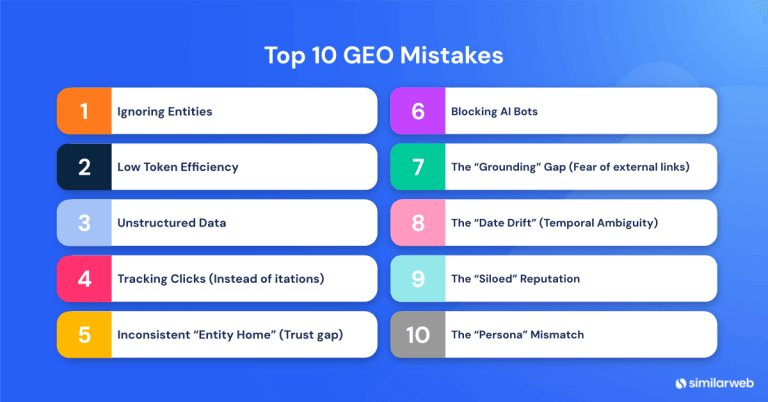
The 10 Biggest GEO Mistakes That Keep You Invisible to AI (+ One You May Be Doing Without Knowing)


The UCP Era: Why Visibility Matters More Than Ever In Agentic Commerce


Wondering what Similarweb can do for your business?
Give it a try or talk to our insights team — don’t worry, it’s free!