


 Marketing Intelligence
How to Track Brand Mentions in AI Search
In today’s digital landscape, visibility isn’t just about appearing on page one of traditional search results. I’ve noticed that with the rise of Generative-AI tools and assistants, your brand can be mentioned or recommended inside answers, often without a click or clear link back to your site. This shift makes tracking brand mentions not just nice to have, but essential for any marketing or reputation strategy.
I’ve found that the old idea of a “brand mention” as a simple blog post or article mentioning your name doesn’t capture what’s happening today. Now, your brand might be quoted by a chatbot, suggested by a virtual assistant, or cited as an example in a quick summary. These moments still shape awareness and trust, even if no one clicks through to your website.
That’s what marketers are starting to call generative engine optimization, or GEO, figuring out how to make sure your brand shows up when people ask AI tools for answers.
Keeping track of when and how your brand is mentioned has become a must for staying visible and relevant in this new kind of search.
What Are Brand Mentions in AI Search?
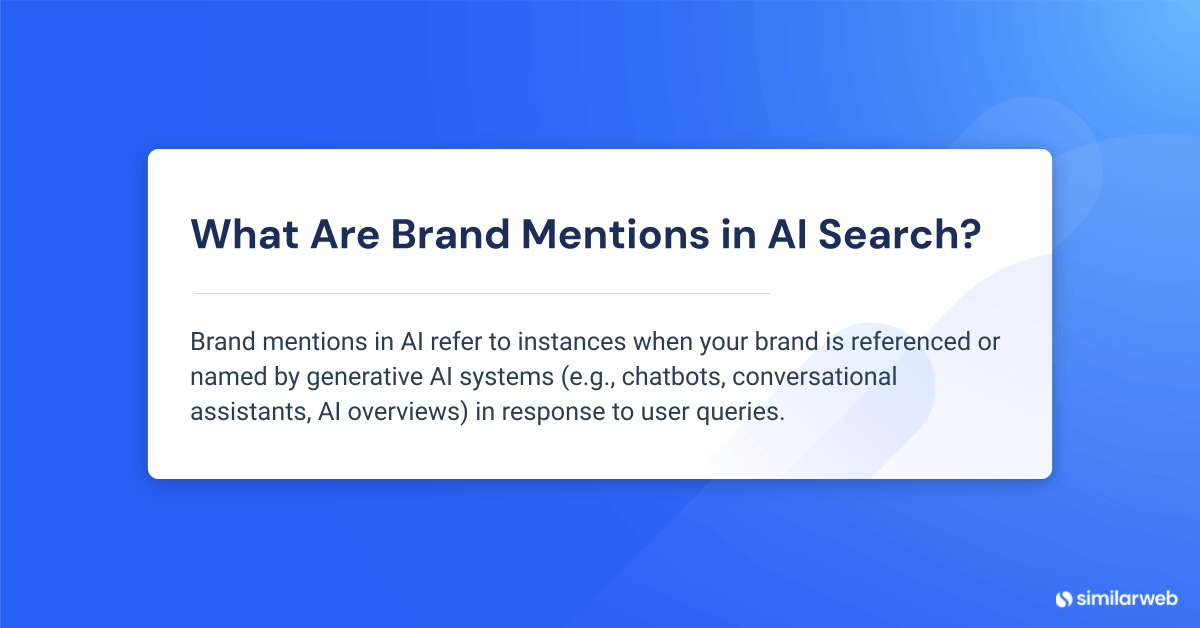
Brand mentions in AI refer to instances when your brand is referenced or named by generative AI systems (e.g., chatbots, conversational assistants, AI overviews) in response to user queries. These mentions can be explicit (your brand name appears) or implicit (your brand is described without being named, or your brand’s content is used as a source).
Importantly, there are two related concepts:
- Mentions: Your brand name appears in the answer.
- Citations: Your website or content is used as a trusted source, or the model relies on your content in its responses.
Why Do They Matter to Your Brand?
As generative AI platforms become the new gateways to information, being mentioned by AI is becoming very critical. These mentions don’t just reflect visibility; they signal trust, authority, and cultural relevance. When AI tools include your brand in answers, suggestions, or summaries, they shape how people discover and think about your business. That is why it is important to understand what drives those mentions and how to build on them.
Here is why they matter:
- Visibility in a new channel: As more users turn to AI assistants rather than traditional search, being included in responses means your brand is present at the moment of discovery.
- Trust & Authority: When an AI model cites your content or brand, it signals to the user that you’re a credible source. This can build your brand’s reputation even before a user visits your site.
- Competitive differentiation: If your competitors are being mentioned in AI responses and you’re not, you risk losing share of voice in a space many brands haven’t even begun to monitor yet.
- Content strategy signal: Which topics lead to your brand being mentioned? What prompts trigger your brand’s visibility? Tracking these gives you insight into how AI sees your brand and what you need to optimize.
How to Track Brand Mentions in AI Search with Similarweb?
Generative-AI chatbots often answer questions without sending users to your site. To stay visible, you need to know whether those models mention your brand at all, and if not, why.
Our AI Brand Visibility tool lets you set up campaigns that track how often (and in what context) AI assistants reference your brand.
I used terminix.com as an example. Let’s start reviewing my analysis.
First, I set up the campaign:
- Open the AI Brand Visibility tool: From the Web Intelligence suite in Similarweb, I headed to the Gen-AI Intelligence section and select the AI Brand Visibility tool. Here, I saw my existing campaigns and a field to create a new one.
- Enter a domain: In the “Create a new campaign” box, I typed the website I want to monitor (e.g., terminix.com) in order to get started.
- Set your parameters: I set up the brand name, target region to the US, and chose the related topics I want to track, such as Pest Control, Mosquito Prevention, and Termite Solutions.
- Launch and wait: Once I clicked “Create Now to start tracking”, it began gathering data from generative-AI tools.
Now I can analyze the data based on the Brand Visibility dashboard:
- Brand Overview: The main topics & competitors’ visibility
- Prompt Analysis: Which prompts triggered mentions
- Citation Analysis: What websites AI models relied on
- Sentiment Analysis: Tone of mentions
Brand Overview
The dashboard will open up and present metrics such as:
- Brand Visibility%: how often your brand appears in AI responses for your chosen topics.
- Brand Mention Share%: your share of AI mentions compared with all brands mentioned in those answers.
Below that, I saw the Topics Summary showing which competitors dominate specific topics and which sources AI engines cite.
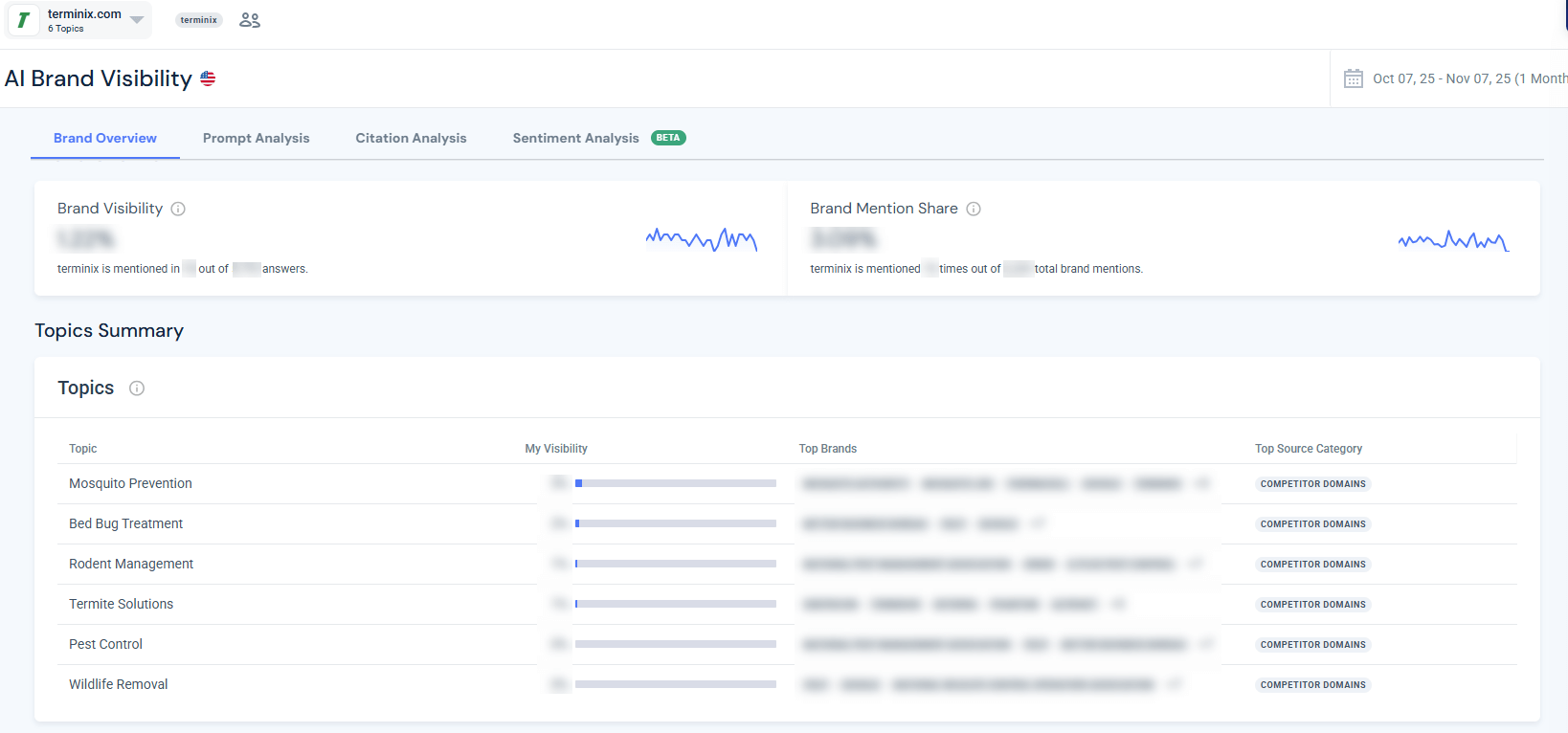
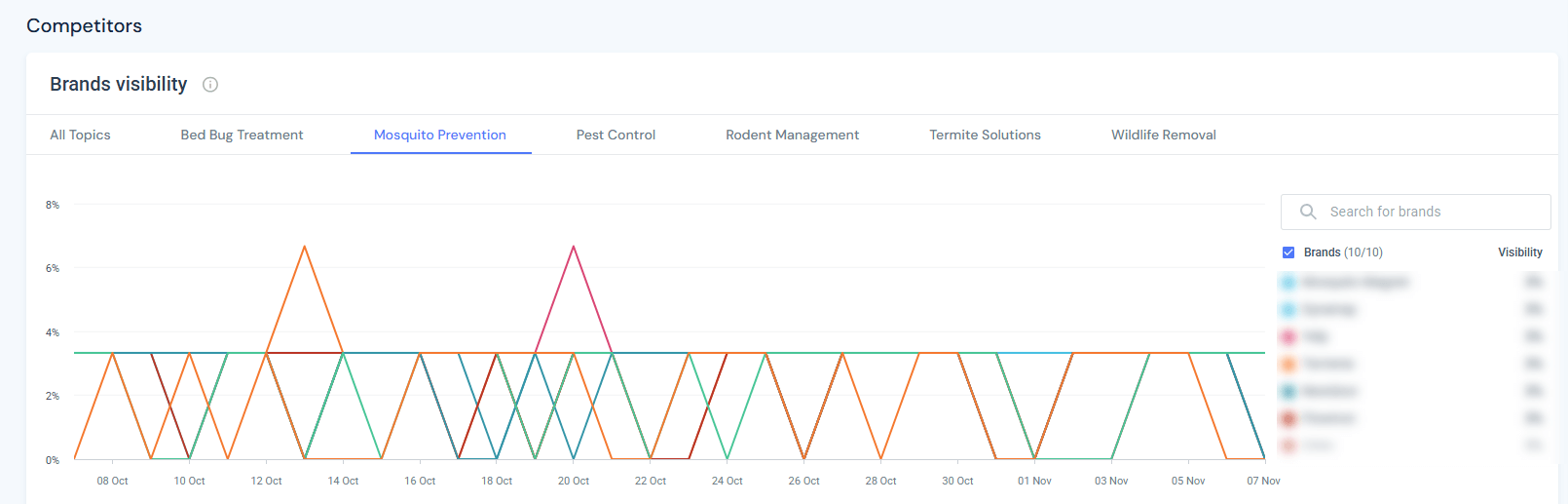
I found that the Mosquito Prevention topic is leading. Next, I checked the competitor’s brand visibility for this topic to get inspired by their brand awareness activity.
Prompt Analysis
After opening the Prompt Analysis tool, I saw a detailed list of the actual questions people ask, AKA prompts, and whether the brand I’m tracking appears in AI-generated answers. Each row shows a prompt, the related topic, the current mention status, and any citations the AI system used when creating its response.
Most prompts were questions about pest control, termite activity, and bed bug treatment. For example, users often ask things like “What should I do if I suspect termite activity in my home?” or “What is the cost of professional bed bug treatment?”
In the Mention Status column, I found that the brand is currently “Not Mentioned” for most prompts. This means that while these are relevant queries for the pest control industry, Terminix isn’t yet appearing in AI-generated answers for them.
The Citations column helped me see which other sources or competitors are being referenced instead. Some topics, such as Mosquito Prevention and Wildlife Removal, already show multiple citations from other brands.
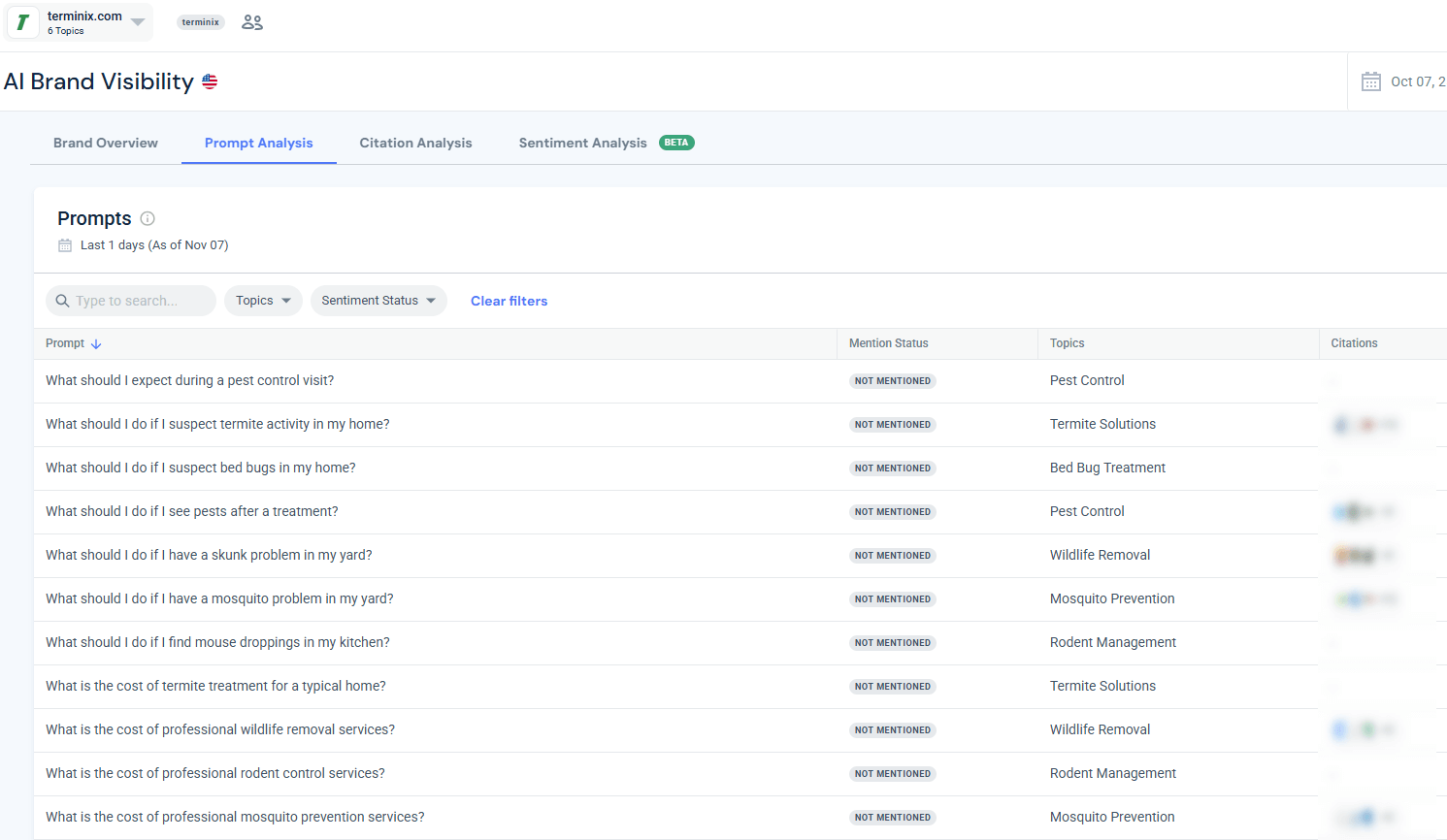
By analyzing this dashboard, I can identify which prompts matter most, spot visibility gaps, and plan new content or partnerships around the questions that AI tools are already answering for competitors.
Citation Analysis
In the Citation Analysis tool, I could immediately see which websites AI systems rely on most when generating answers for each topic. The Top Domains per Topic, showing which sources have the greatest impact on visibility.
I found that government and authoritative sites like epa.gov and cdc.gov lead across topics such as mosquito prevention and termite solutions, while commercial brands like orkin.com, rednational.com, and angi.com also appear frequently. This helps reveal which domains currently influence AI-generated answers the most.
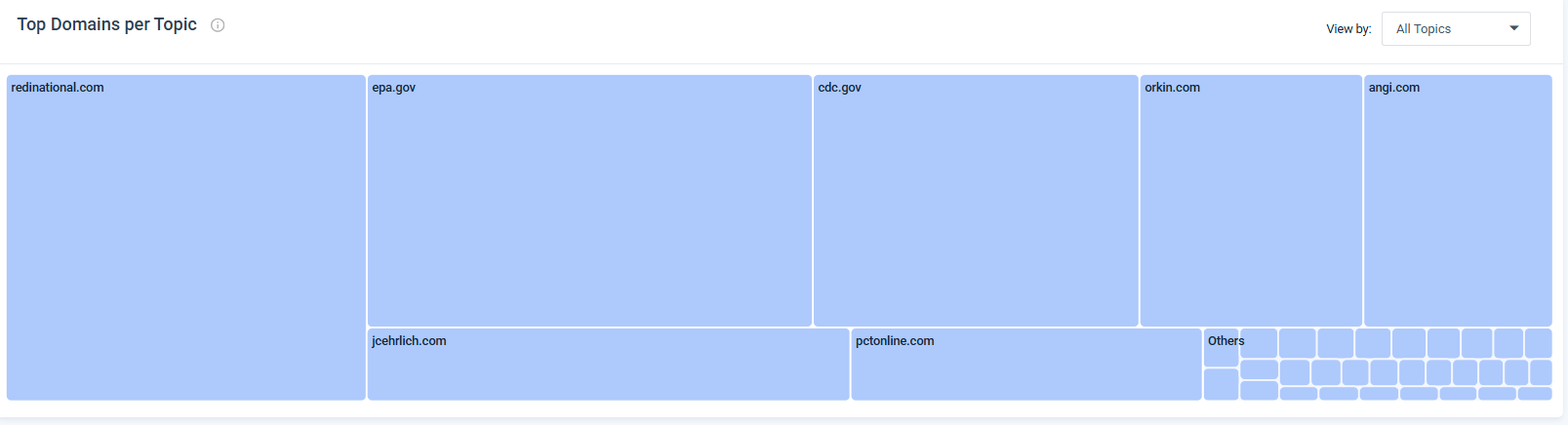
Below the chart, the Cited URLs table lists the exact pages referenced by AI tools, along with each page’s influence score, topic, and number of prompts it appears in. For example, I noticed that several EPA and CDC pages rank among the most cited for mosquito prevention and pest control topics.
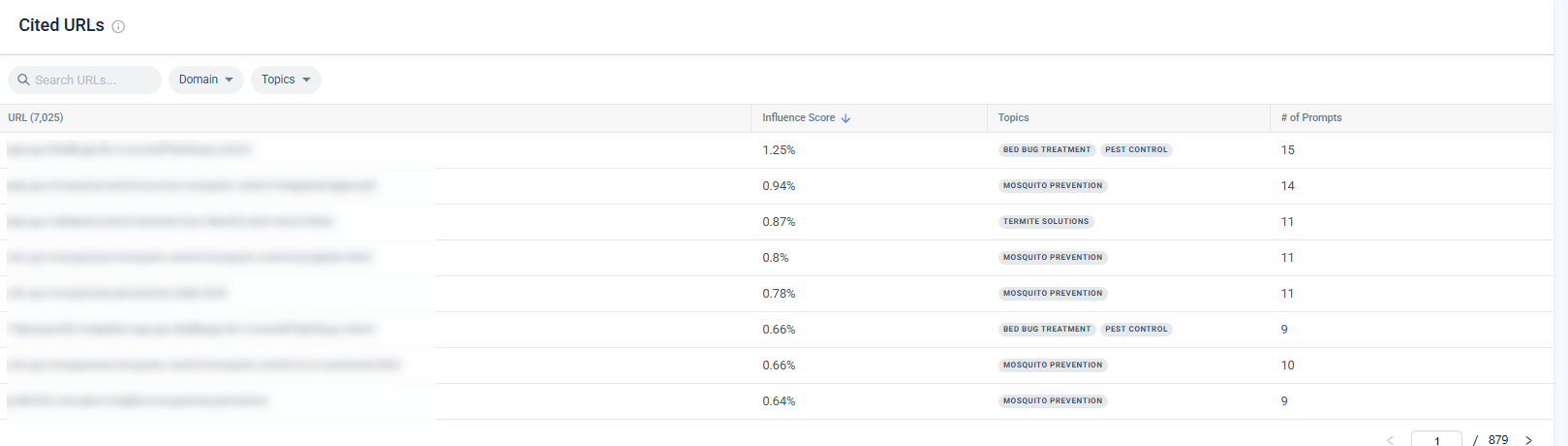
This dashboard makes it easy to see which sources dominate the conversation and where your brand has opportunities to build authority or earn citations from trusted sites.
Want to know more? Read out full guide on how to perform AI citation analysis, and you’ll get some real-life examples and a free template
Sentiment Analysis
Finally, I opened the Sentiment Analysis tab, and I saw an overview of how AI-generated answers describe the brand, whether positively, negatively, or neutrally. This helps measure not just visibility, but how the brand is being reflected.
I found that 93% of mentions are neutral and 7% are positive, with no negative mentions at all. That means most AI responses present the brand in a factual or balanced way, while a small portion highlight it in a positive context.

The Sentiment by Topics section shows this breakdown by category. I noticed that Termite Solutions and Rodent Management have the highest share of positive mentions: at 33% and 18%.
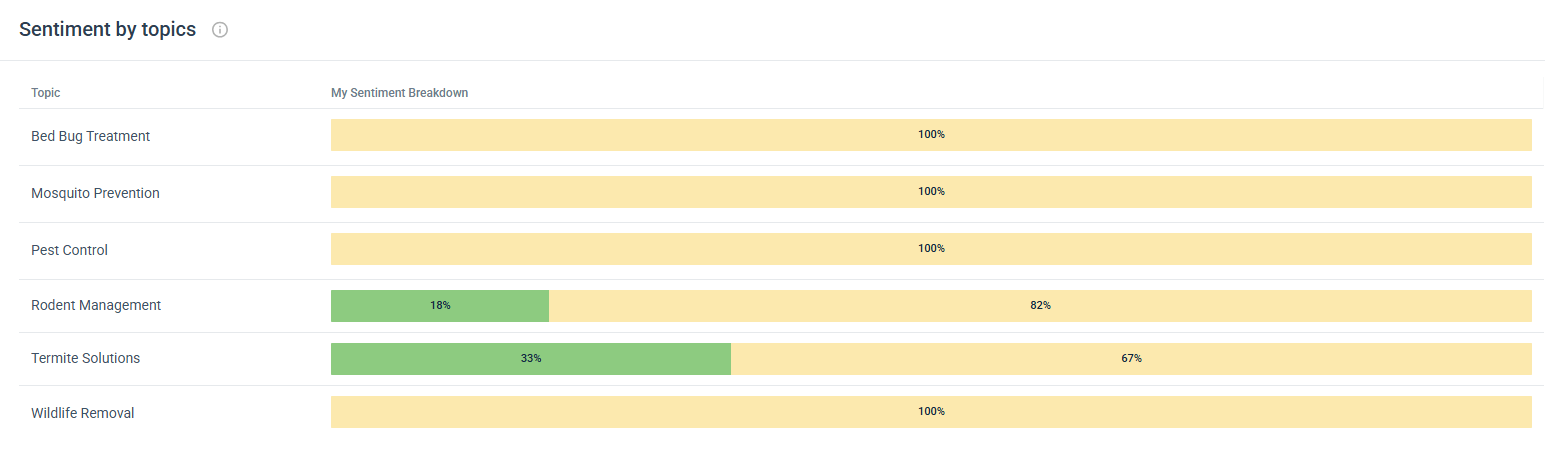
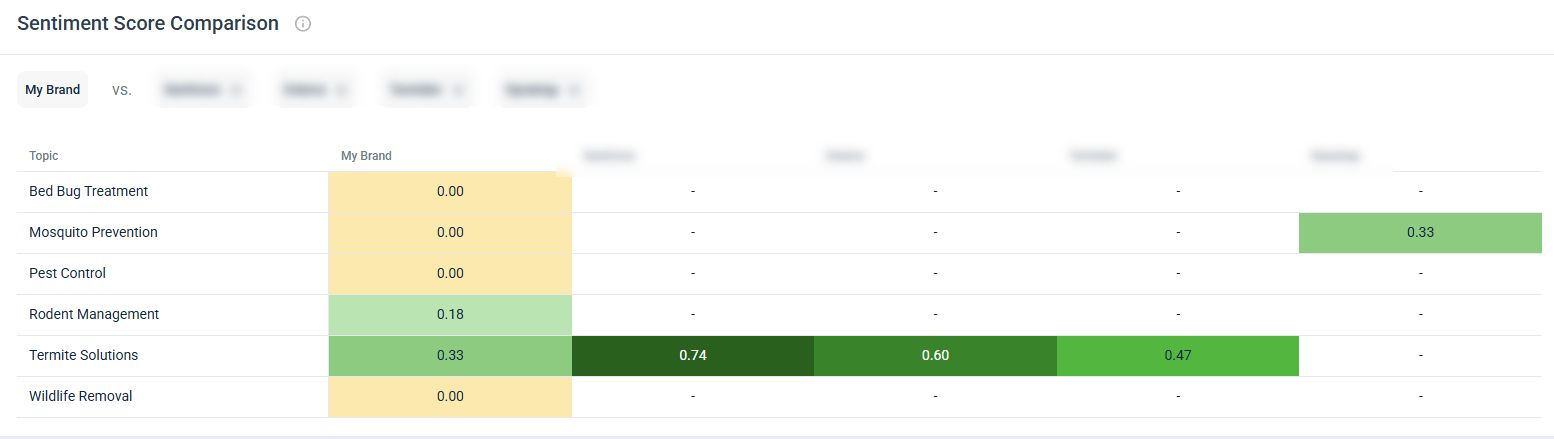
At the bottom, the Sentiment Score Comparison chart lets me compare my brand’s tone of mentions against competitors. For example, while the brand’s sentiment score for Termite Solutions is 0.33, other competitors score higher, showing opportunities to strengthen brand awareness in that area.
Why use this tool?
By setting up an AI Brand Visibility campaign, marketers and content strategists gain a clear, data-driven view of their brand’s share of voice mentions in generative-AI tools. This example shows the entire process from entering a domain and selecting topics to waiting for the first insights. With these insights, you can refine your content strategy, strengthen your brand’s authority across trusted sources, and increase visibility in AI search.
5 Strategies to Increase Brand Mentions in AI Search
Now that you understand what AI mentions are and how to track them, here are strategic levers to proactively boost them.
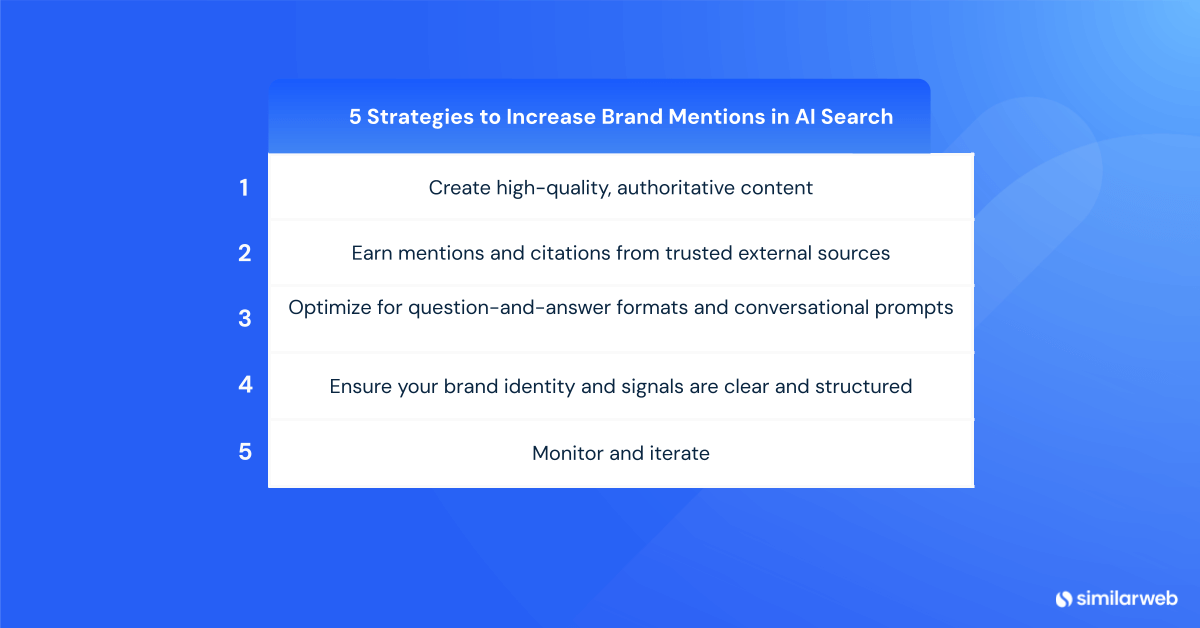
1. Create high-quality, authoritative content
- The brands mentioned most often are the ones that answer real questions clearly and completely. Focus on creating content that directly helps your audience find solutions.
- Add useful elements like FAQs, how-to guides, and simple lists, because they make your content easier to understand and more likely to be referenced. For example, one article suggested adding clear page structure and simple schema markup so your best pages are easier to find.
- Make sure your content lives on your main domain and is linked from other trusted sources. That helps your brand look more credible and consistent.
2. Earn mentions and citations from trusted external sources
- When I looked at brands with strong visibility, I found they often appear in other websites’ content, not just their own. Try to earn coverage, guest posts, reviews, or interviews on trusted sites in your field.
- Building partnerships and sharing your expertise in industry publications can get your brand referenced naturally.
3. Optimize for question-and-answer formats and conversational prompts
- Think about how people ask about your brand or industry in everyday language, and create content that answers those questions directly.
- Use headings like “What is [your brand]?”, “Alternatives to [your brand]”, “Why choose [your brand]?” – because AI chatbots often summarise content from FAQs sources.
- Keep an eye on the topics or phrases that trigger mentions of your brand and build more content around those ideas.
4. Ensure your brand identity and signals are clear and structured
- Make sure your brand identity is clear and consistent everywhere. Use the same name, spelling, and tone across your site and social channels.
- Keep your key web pages well organized, easy to access, and optimized with simple titles and headings. This helps your brand show up correctly when your content is quoted or summarized.
5. Monitor and iterate
- Track regularly to see which mentions are rising or dropping.
- If a competitor seems to appear more often, look at what they are doing differently and learn from it. Maybe they publish fresher content, or they are getting cited on more credible sites.
- Update your content, fill topic gaps, and double down on what is working. Keeping your brand active and up to date helps it stay visible over time.
The Future of Brand Visibility Starts with AI Mentions
As AI becomes a regular part of how people search and discover information, brand visibility is now defined by how often your brand name appears in those conversations. It includes assistants, chat tools, and smart answer platforms.
Once you understand what brand mentions are, why they matter, and how to track and improve them, you can make sure your brand stays visible and trusted wherever people are asking questions.
Tracking brand mentions in AI is no longer optional. It’s a key part of staying competitive. Start building it into your marketing strategy using the Similarweb AI Brand Visibility tool, and stay ahead instead of trying to catch up later.
FAQs
What counts as an AI brand mention exactly?
An AI brand mention occurs when a generative AI system names your brand in a response to a user query. That might be a direct recommendation/ when your content is cited or used as a source, even if your brand isn’t named explicitly.
Does every AI mention lead to website traffic?
No. One of the shifts with AI-driven discovery is that users may get their answer directly in the chat interface and never click through to your site. That’s why linking mentions to traffic and actions is important, but visibility alone still builds awareness and trust.
How often should I check for AI brand mentions?
At a minimum, quarterly, but ideally monthly for high-visibility brands or sectors where AI discovery is critical. Frequency depends on how fast your industry changes, how dynamic AI tools are in your niche, and how much competitive pressure there is.
Will optimizing for AI mentions undermine SEO or content quality?
Not if it’s done properly. Good content strategies already focus on quality, authoritativeness, clarity, and user intent – all of which help both SEO and AI inclusion. The key is to think about conversational prompts, structured answers, and brand-entity clarity alongside your normal content.
How can I find out if my brand is mentioned in AI tools?
You can use platforms like Similarweb’s AI Brand Visibility to track when and where your brand appears in AI-generated answers. These tools show which prompts trigger mentions, how often you’re cited, and what sources AI systems rely on.
Why is it important to monitor competitors’ AI mentions?
AI visibility isn’t just about your own performance; it’s about share of voice. Tracking how often competitors are mentioned helps you understand which topics or prompts they dominate and where you can improve or differentiate your content.
Can small brands benefit from tracking AI mentions?
Absolutely. Smaller brands can gain early insights into how they’re represented (or missing) in AI responses and use that data to close visibility gaps faster. Being proactive now can help smaller players compete with larger ones later.
What should I do if my brand isn’t mentioned at all?
Start by reviewing which topics or questions are most relevant to your audience. Create helpful, trustworthy content that directly answers those queries, and get cited by reputable sources in your industry. Over time, this helps your brand become more visible in AI-generated results.

Related Posts
LLMs Comparison: How Different LLMs Contribute to Category Visibility
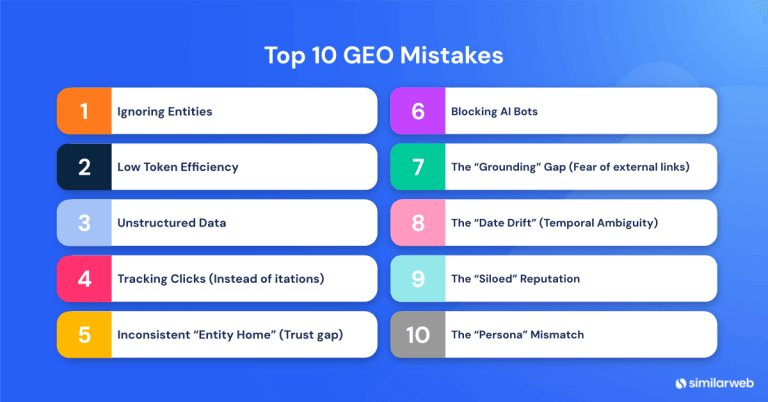
The 10 Biggest GEO Mistakes That Keep You Invisible to AI (+ One You May Be Doing Without Knowing)


The UCP Era: Why Visibility Matters More Than Ever In Agentic Commerce

Wondering what Similarweb can do for your business?
Give it a try or talk to our insights team — don’t worry, it’s free!