


 Marketing Intelligence
Traffic Attribution: Understanding Marketing Attribution Models

Running campaigns can feel like throwing darts blindfolded, hoping something hits the target.
You know you need to be on multiple platforms, but because today’s marketing funnel involves so many touchpoints, it’s hard to know which channels are actually working and which are a waste of time.
That’s why savvy marketers turn to traffic attribution.
Think of traffic attribution as a map that helps you see where customers come from and how they move through your funnel.
By tracking where your visitors come from—whether it’s social media, email, search engines, or other sources—you can understand which channels are most effective at driving purchases and subscriptions.
In other words, every click, view, or conversion is a data point. When analyzed correctly, these data points help you identify which marketing tactics drive engagement and conversion. Therefore, you can build campaigns tailored to your target audience–using messaging that resonates most with them, advertising when they’re typically online, and reaching them on their favorite platforms. The result? Confidence that every dollar of your ad spend is working its hardest.
What is traffic attribution?
Traffic attribution is the process of tracking and assigning credit to the marketing channels that bring visitors to a website and drive meaningful actions like purchases or sign-ups. Analyzing the customer journey systematically reveals how each channel contributes to the final conversion.
How does this work?
Traffic attribution maps out customer interactions, tracking user journeys from the first click to the final conversion and identifying key moments that most influence the final decision. Ultimately, this visibility helps marketers allocate resources more effectively, refine their strategies, and maximize ROI.
What are traffic attribution models?
Traffic attribution models help companies accurately assign credit for conversions across different channels. In other words, these frameworks highlight which engagements most influence consumer decisions, giving marketers important insights into customer behavior.
Each approach has its merits, and the right choice depends on your team’s goals. For example, do you want more visibility into which channels are driving brand awareness, or do you want to understand which channels best drive final sales? By understanding how each model works, you can select the one that best suits your needs.
Why are traffic attribution models important?
Traffic attribution models are essential because they help businesses understand what’s working in their marketing strategies and what’s not. By revealing the touchpoints that drive customer actions, these models allow marketers to optimize their efforts and stay competitive.
Here are the key benefits of using attribution models:
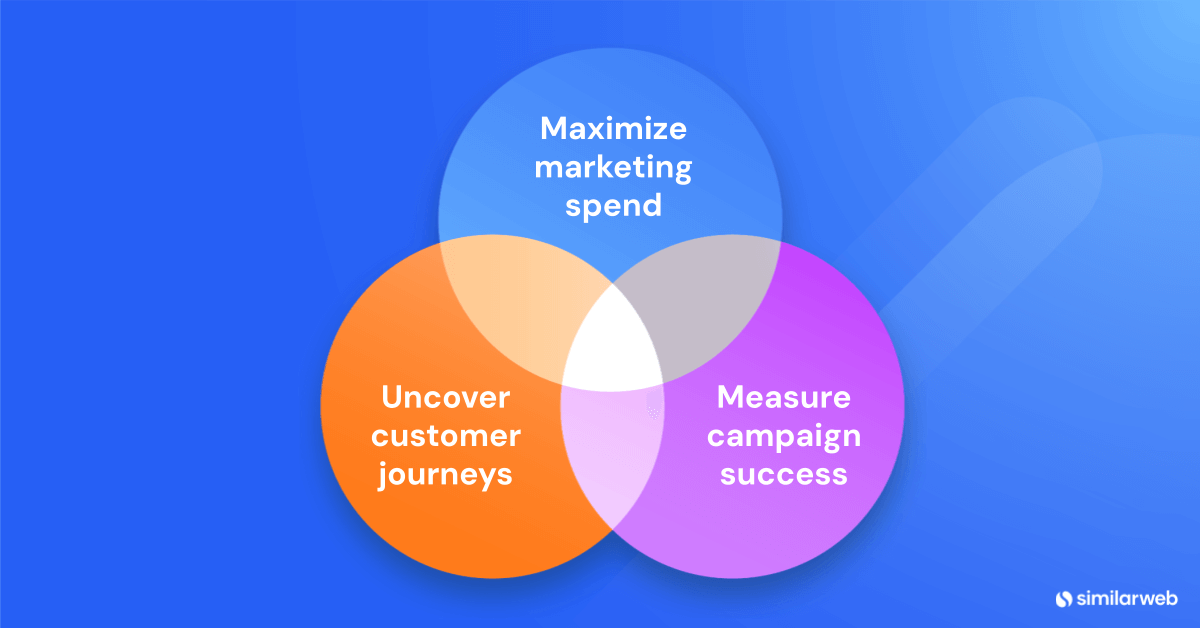
Maximize marketing spend
Accurately identifying effective channels helps businesses allocate their budget more efficiently.
Uncover customer journeys
By analyzing consumer paths, marketers can discover how people evolve from first-time visitors into customers and ultimately loyal fans. Armed with insights into this journey, marketers can tailor their messaging to match each user’s awareness level at every stage.
Measure campaign effectiveness
By understanding how different touchpoints drive success, marketers can evaluate a campaign’s success based on data-driven insights rather than guesswork.
Single-touch vs. multi-touch attribution
Single-touch models, like first-touch and last-touch, give all credit for a conversion to one interaction. While easy to use, they often miss the bigger picture by ignoring the combined efforts that lead to success. On the other hand, multi-touch attribution models consider multiple interactions, offering a more detailed view of customer interactions.
Choosing the right attribution model can shape your marketing strategies significantly. Single-touch models are straightforward but limited, while multi-touch models are complex but provide deeper insights. With the guide below, you’ll have all the information you need to make those important decisions for your team.
Single-touch traffic attribution models
Single-touch models focus on individual user interactions, providing a straightforward way to attribute credit to specific moments in the customer journey. These models are particularly helpful for identifying key touchpoints in simpler marketing strategies. For example, first-touch attribution highlights which channels are most effective at driving initial awareness, while last-touch attribution pinpoints the interactions that directly lead to conversions. This clarity can help marketers quickly identify the most impactful channels for specific goals, such as acquisition or final sales. While they may not capture the complexity of multi-touch journeys, single-touch models are ideal for businesses seeking clear, actionable insights into individual stages of the customer path.
First-touch attribution
This model credits all conversions to the customer’s first interaction with the brand. It highlights the initial touchpoint that captured their interest and set the journey in motion.
Pros and cons
- Highlights early-stage customer engagement and builds brand awareness
- Helps evaluate which marketing channels attract first-time visitors
- Overlooks the influence of later interactions that may be critical to the final decision
- Does not provide a complete view of the customer journey
Example of first-touch attribution
If a customer discovers a product through an Instagram ad and later purchases after reading a detailed blog post, this model credits only Instagram, ignoring the blog’s role in the decision.
Last-touch attribution
This model gives full credit for a conversion to the last touchpoint the customer interacted with before completing their purchase.
Pros and cons
- Focuses on the interactions that directly result in sales
- Works well for measuring actions like final clicks that close the deal
- Potentially undervalues nurturing efforts that influenced the purchase decision
Example of last-touch attribution
When a customer views display ads, reads educational content, and then engages on social media before clicking a promotional email to complete a purchase, this model credits only the email. It shows which touchpoint sealed the deal, but overlooks the influence of earlier interactions that contributed to the decision.
Multi-touch traffic attribution models
Multi-touch models reflect the complex, non-linear nature of user behavior, where multiple interactions influence the path to conversion. By distributing credit across touchpoints, these models offer a comprehensive view of how users engage with various channels throughout their journey. This helps marketers identify the role each touchpoint plays in driving conversions, from initial awareness to final decision-making. With these insights, businesses can better understand how channels work together, optimize their marketing mix, and allocate resources more effectively to maximize their impact. While their complexity requires robust tools and expertise, the deeper insights they provide make them invaluable for creating more effective, data-driven marketing strategies.
Linear attribution
This model evenly distributes credit across all touchpoints in the customer’s journey, treating each interaction equally in driving the final conversion.
Pros and cons
- Recognizes every engagement in the customer journey, providing balanced insights
- Credits all touchpoints equally, offering a clear view of the full journey
- Potentially overlooks the varying importance of individual interactions
Example of linear attribution
When a customer engages with a mobile ad, reads blog posts, and then interacts on social media before making a purchase, this model gives equal credit to all interactions, regardless of their actual influence on the final decision.
Time decay attribution
This model assigns more credit to touchpoints closer to the purchase, highlighting the impact of recent interactions over earlier ones.
Pros and cons
- Focuses on recent interactions that directly impact the purchase decision
- Highlights the factors driving conversions in the later stages of the customer journey
- Reduces credit for earlier touchpoints that generated initial interest
Example of time decay attribution
A customer begins their journey by signing up for a newsletter. Then, they watch a product demo video on the website, and finally, they complete their purchase after receiving a discounted email offer. This model gives the most credit to the email, overlooking the role of the newsletter and demo in shaping the customer’s decision.
How to choose a traffic attribution model
Choosing the right traffic attribution model requires a clear understanding of your marketing goals and customer journey. By defining your objectives, evaluating your sales cycle, and assessing your data needs, you can find a model that aligns with your strategy. The steps below will guide you through the process to ensure you select an approach that delivers actionable insights and supports your business goals.
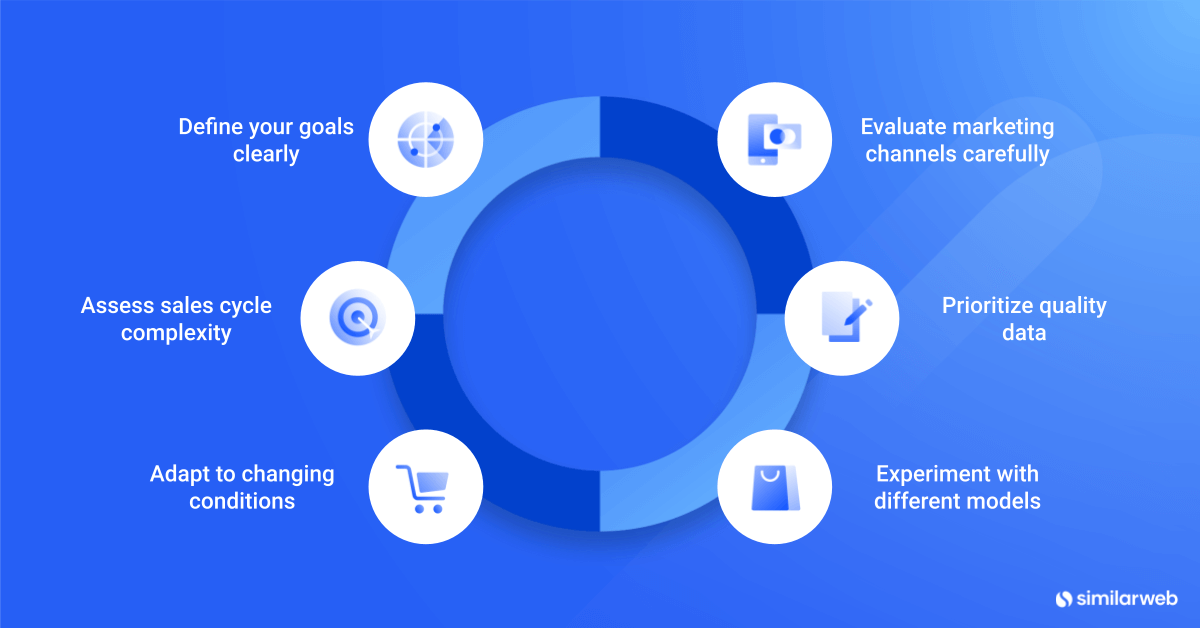
1. Define your goals clearly
The first step is to define your goals. Whether you want to boost brand awareness or increase conversion rates, your objectives will guide your choice of attribution model. Clear goals ensure that the insights you gain align with your overall marketing strategy, enabling informed decisions that lead to meaningful results.
2. Assess sales cycle complexity
Evaluate the complexity of your marketing funnel. For simpler, lower-cost products, straightforward models like last-click attribution can effectively highlight the final step that drives conversions. However, for more complex or expensive products, multi-touch attribution is often necessary to capture the full range of touchpoints that influence customer decisions. Understanding the nuances of your funnel ensures you choose a model that accurately represents customer behavior and provides meaningful insights.
3. Evaluate marketing channels carefully
Consider the unique characteristics of each marketing channel when choosing a model. Channels like Google Ads integrate seamlessly with many attribution models, while social media, with its diverse touchpoints, may require more advanced approaches. Understanding your channel mix allows you to refine your strategy and make more effective decisions.
4. Prioritize quality data
The accuracy of your insights depends on the quality of your data. Collecting precise and comprehensive information is essential for generating reliable results. Robust data collection methods enhance your model’s effectiveness, while poor-quality data can lead to misleading conclusions, even with the best attribution models.
5. Experiment with different models
Testing models such as linear, time decay, and position-based is key to finding the best fit for your conversion dynamics. Experimenting with different models helps you better understand their strengths and weaknesses and identify which is best suited to your team’s needs.
6. Adapt to changing conditions
Regularly updating your attribution model ensures it reflects the latest shifts in consumer behavior and market trends. For example, as new marketing channels emerge or customer preferences change, your model may need adjustments to account for different touchpoints or updated buying patterns. By revisiting your model periodically, you can identify gaps, refine credit assignments, and ensure your strategy remains aligned with current performance metrics.
Implement & track your conversions
Tracking conversions is critical to evaluating your marketing performance. It reveals what drives results and highlights areas for improvement. By setting up an efficient conversion tracking system, you can pinpoint weaknesses and make informed decisions to optimize your strategy.
Here’s how to implement and track conversions effectively.
Identify KPIs clearly
Clear KPIs are essential for effective conversion tracking. These metrics should align with your business goals, whether they focus on lead generation or sales conversions. KPIs serve as benchmarks, allowing you to measure how well your marketing efforts drive the desired outcomes.
Use UTM parameters
UTMs are vital for tracking the source of web traffic. They collect accurate data and differentiate between channels, helping you better understand performance metrics. Create UTM codes that are relevant and easy to analyze across channels.
Integrate advanced analytics tools
Leverage top-tier website analytics tools like Similarweb and GA4 to gain valuable insights into your website traffic. These tools provide a detailed view of where your traffic is coming from, which pages receive the most traffic, and which partnerships are most valuable, helping you refine strategies and achieve better results.
For example, here you can see foodinsight.org’s top landing pages in the last 28 days, taken from Similarweb. From here you can drill down into each page’s click trend, traffic breakdown, and top-ranked keywords.
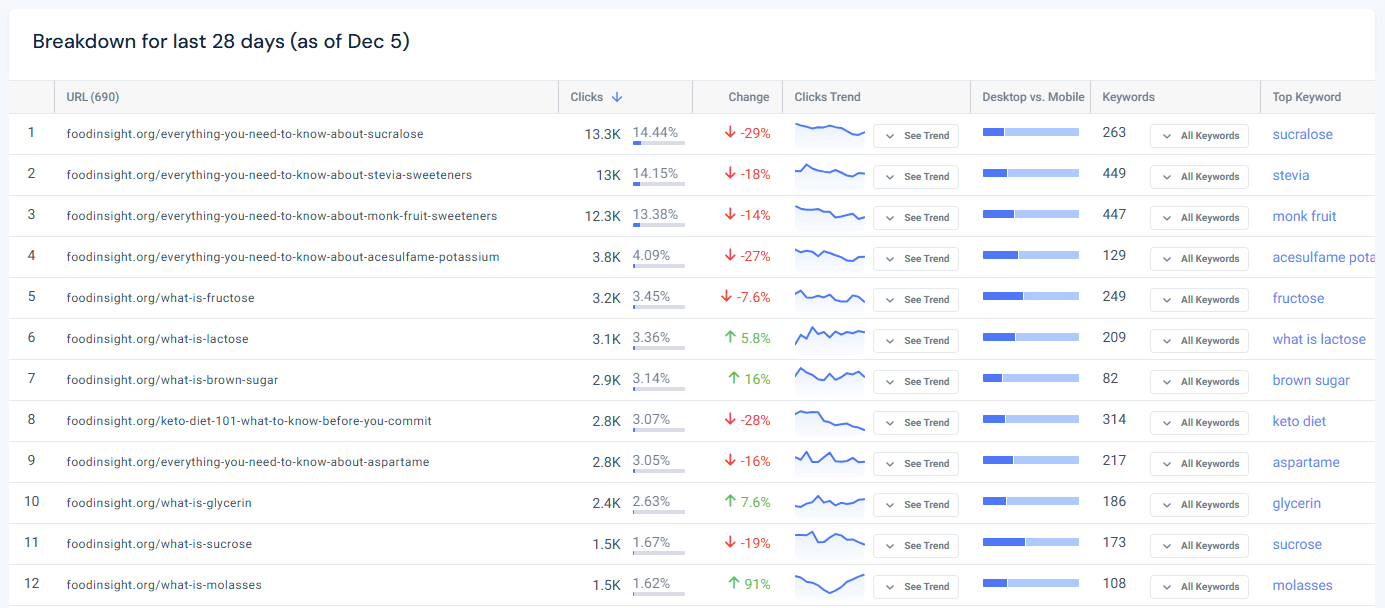
Pro Tip: you can see all of that information for each of your competitors, so you can quickly pinpoint opportunities to grow.
Install conversion pixels
Conversion pixels are small codes added to digital platforms to track user actions. They provide detailed insights that help refine and improve your marketing strategy.
Conduct A/B testing
Running A/B tests is a powerful way to identify the most effective marketing elements. By comparing different campaign versions, you can pinpoint strategies that drive higher conversions and make strategic adjustments to improve results.
See how our insights can support your data-driven marketing approach
Accurate data is the cornerstone of successful marketing campaigns. With Similarweb, you gain access to the most up-to-date and precise data. These detailed insights empower businesses to make smarter choices and drive impactful results.
Whether you’re just starting or are an experienced marketer, leveraging high-quality data is essential for sustained success. Explore the benefits of Similarweb and discover how our insights can transform your marketing strategies and help you scale confidently.
FAQs
What do different attribution models mean for my marketing efforts?
The attribution model you choose determines how credit is assigned for conversions, which, in turn, influences budget allocation and guides your overall marketing strategy. By selecting the right model, you can focus on building a marketing strategy aligned with your goals.
What should I consider when selecting an attribution model?
Consider your business objectives, sales cycles, and customer journey when choosing a model. These factors help you tailor the model to track and analyze the elements that matter most to your business.
How often do I need to re-evaluate my attribution model?
Revising your model is crucial as markets and customer behaviors constantly change. Regular updates help align it with shifts in your business environment, ensuring your model remains relevant and accurate.
Do you need any special conversion tracking tools?
While not essential, dedicated tools can significantly improve your ability to track and analyze conversions. These tools often provide detailed metrics and insights, enabling you to tailor your marketing strategies effectively.
What do tracking integrations do for my marketing analytics?
Integration tracking reveals users’ paths, offering valuable insights into their behavior. This data helps you refine and optimize your marketing strategies to align more closely with your customers’ actual journeys.

Related Posts

How to Do A Competitive Analysis: Complete Guide & Free Templates

How to Build an AI Search Intelligence Dashboard for Client Presentations Using Claude and Similarweb MCP

AI Visibility Momentum: The VAMP Framework For Tracking What Visibility Scores Miss

The Dark Funnel Paradox: Why Your Best B2B Leads Are Invisible (And How to Find Them Anyway)

![GEO Framework For Growth Leaders [+Free Template]](https://www.similarweb.com/blog/wp-content/uploads/2026/02/attachment-growth-leader-geo-decision-framework-768x429.png)
Your full marketing toolkit for a winning strategy
The ultimate solution to help you build the best digital strategy