





Top Ecommerce Companies in the USA: The 100 Brands Winning the Traffic Race in 2026
by Inbar Eytan6 Min.
Aug 30, 2026
 Research Intelligence
How can you keep people glued to your website for longer?
If you aren’t sure, don’t worry, we have you covered. We rounded up some proven – and out-of-the-box – ways to keep your internet users stuck to your website for longer and converting easier. Keep reading to find out everything you need to know about website stickiness and how to increase yours with digital intelligence analysis.

Website stickiness is the degree to which your website visitors stay on your site, engage, and return on average over a given period. When your website is super sticky you can expect:
Let’s go deeper…
Website stickiness reveals a lot about the user experience you are providing and how much value your website visitors find on your site. The more sticky your web pages, the longer people are browsing and interacting.
Tracking your website stickiness is one thing, but understanding how yours compares to your industry gives you more actionable information.
For example, say you discover you have a higher bounce rate than average in your industry. You explore specific web pages with the highest bounce rates and examine the other key engagement metrics to understand why and improve your overall site stickiness – in context.
On the flip side, you might pinpoint another website in your industry that is highly sticky across all metrics, including bounce rate. This is your opportunity to explore how you can optimize your own site and learn from what your competitors got right. Let’s say you are asos.com. You discover that zara.com is winning for visit duration, pages per visit, and lowest bounce rate.
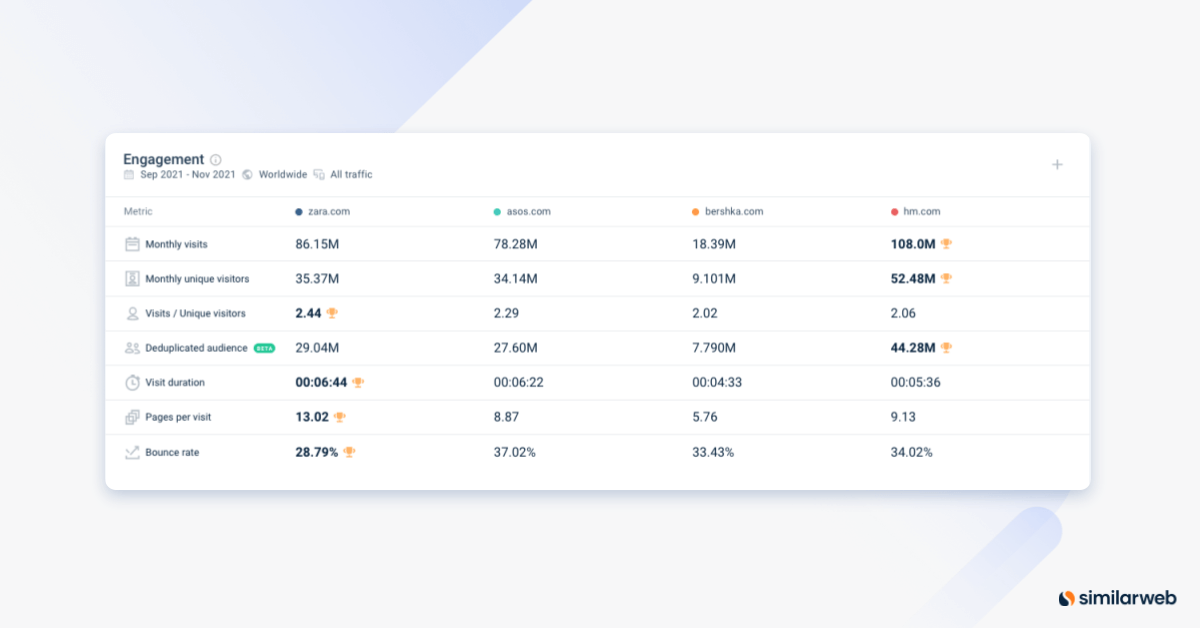
Dig a little deeper and you might find that zara.com’s top-performing page is the homepage because its simple navigation and clean web design make it easy for visitors to find helpful and relevant content.
This type of analysis helps you identify key optimization opportunities. When you understand your audience you can offer them better ways to engage and improve their overall experience.
A “sticky” website is one that “sticks with” the customer or at least in the customer’s memory and makes it more likely they’ll return.
Different types of websites can have a radically different level of website stickiness. As a news app, for example, you want readers to access your app at least once a day and not just when there’s sensational or scandalous news. But how common is that? To find out, you benchmark website stickiness against the industry average in your category or against your closest competitors.
Some tools measure this loyalty as the number of returning visitors and time spent per visit in a given month. Similarweb takes this a step further, calculating the stickiness of converted visitors with Daily Active Users (DAU) and Monthly Active Users (MAU) in the mix.
By dividing the two (DAU/MAU), you can track how many days in a given month converted users are active on average. This tells you much more about your customer’s loyalty than just time spent on the page.
Turning back to our example, when we analyze the U.S. audience, asos.com wins for stickiness for converted visitors. There is something asos.com is doing to keep converted customers coming back. Asos.com might want to zoom into its competitors’ metrics further to see why they are winning in this arena and keep their edge. Benchmarking your website stickiness is a powerful first step.
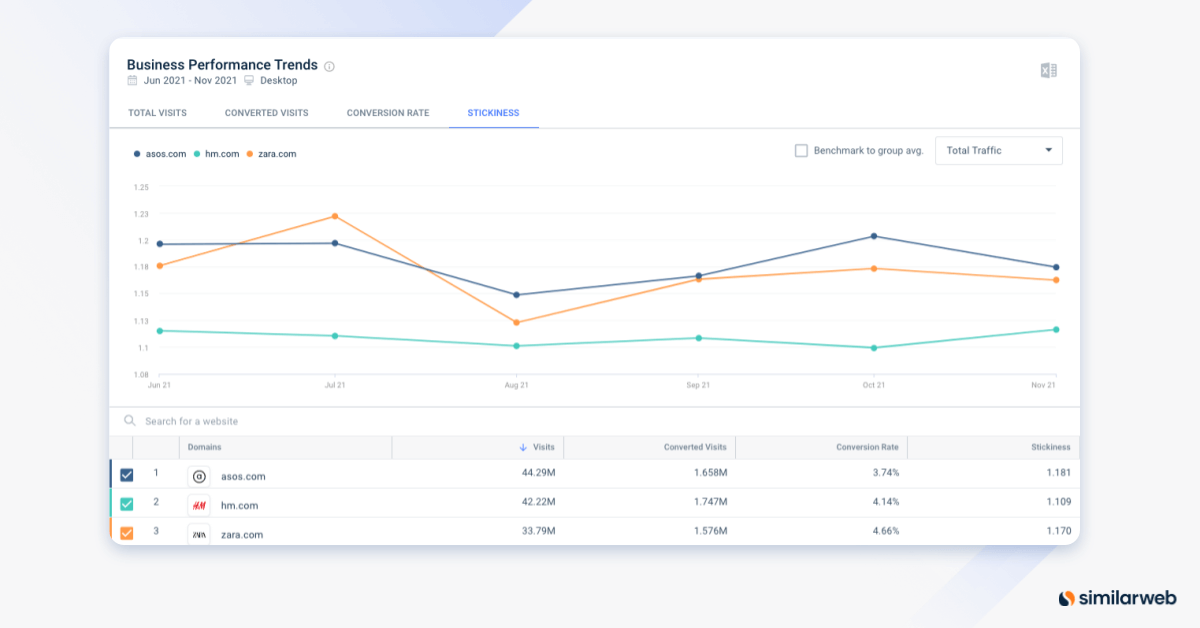
Beyond benchmarking your website performance, you need to understand your data in context to find opportunities to improve your results. This requires honing into the data for winning websites in your industry.
Similarweb provides the data to analyze websites:
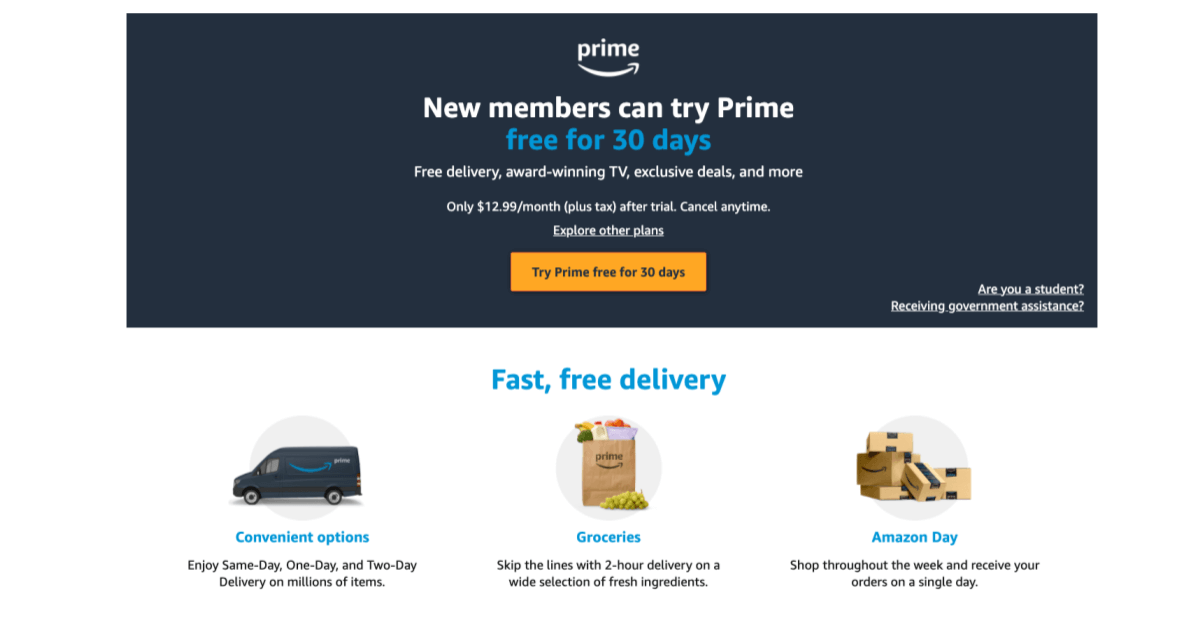
The first rule in creating content: be informative and relevant to your target audience. Use various content formats, such as text (i.e. blogs, videos, downloadable assets, case studies, white papers, infographics, tables, etc).
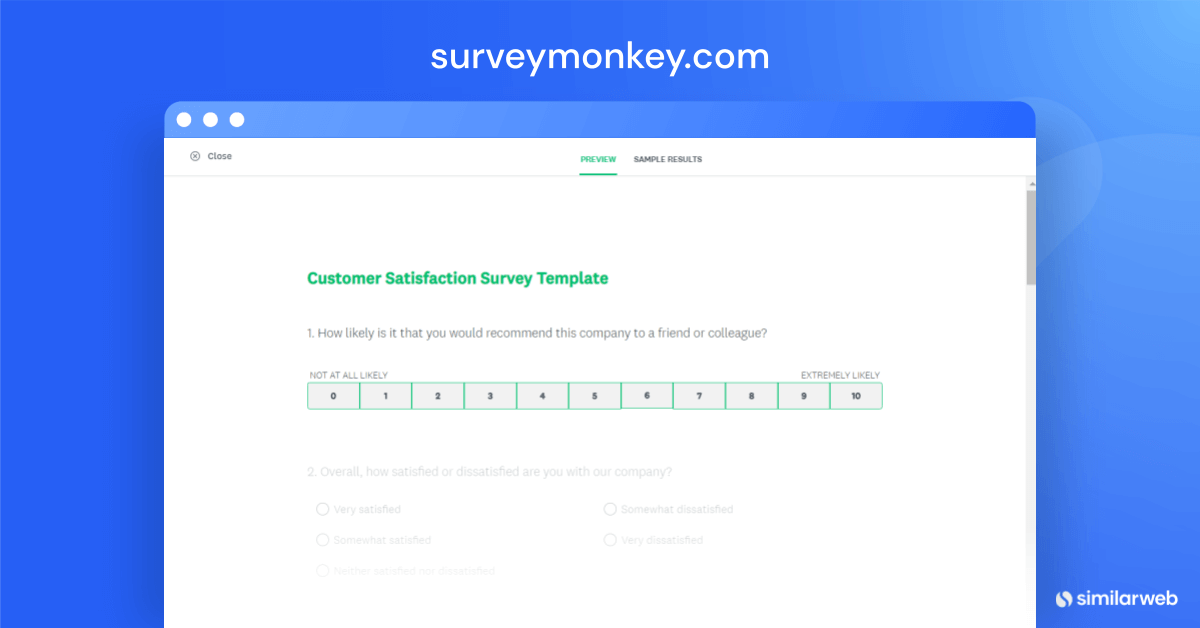
Get creative and offer visitors interactive content. You could add a survey, a quiz, a small game, a simulator tool, a calculator, or anything that drives your audience to action. Interactive content is also highly shareable and might encourage visitors to return to your website.
Clearly define niche audiences based on buyer personas. Customize your content to meet the specific needs of each group.
Depending on the type of business, you may want to create a personal area where the user can view browsing history, save pages or items, and so on. This also allows you to provide users with tailored news, ads, and offers.
Everyone likes to feel they are part of something bigger. That’s why social networking online communities and forums like Reddit, Facebook, and LinkedIn are so popular. They are built to be sticky. Think about Facebook’s scroll feature, which holds users attention for an extended period of time, or the notifications that keep you returning to the platform again and again.
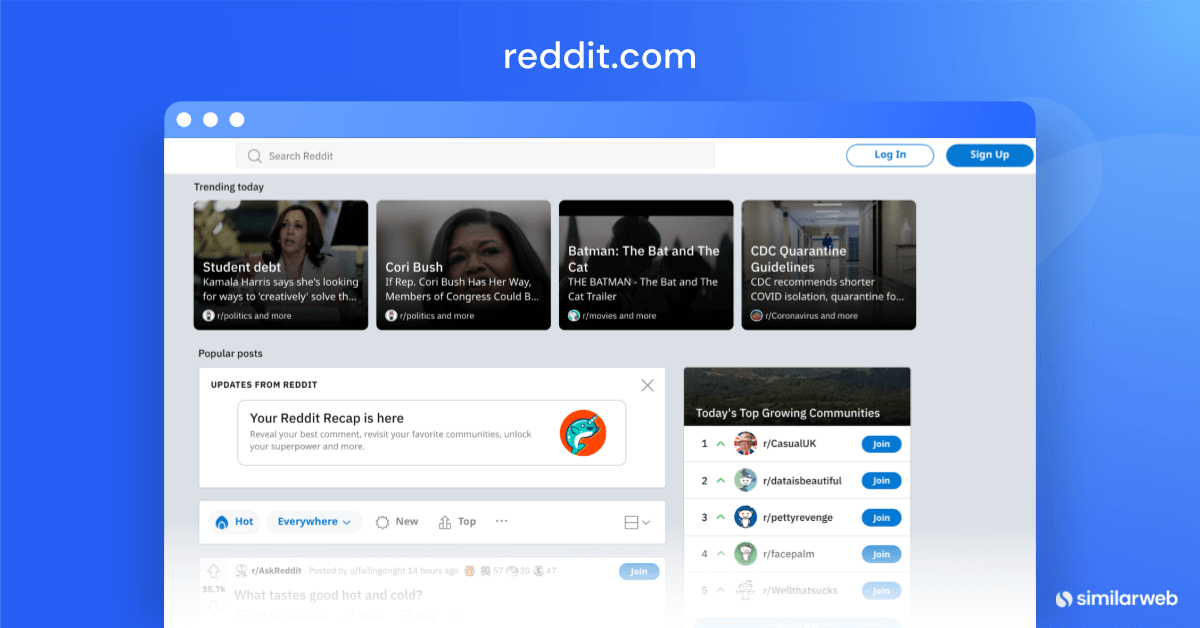
Sites that manage to create a sense of community and belonging tend to be more sticky. Offer an overarching value or a personal characteristic that your audience can identify with. You can also create community chats or online activities and keep your audience engaged and enthusiastic.
In order to attract visitors to your site again and again, you need the most powerful data available on the market. Being able to benchmark your website stickiness vs. your top industry competitors reveals powerful opportunities in terms of website stickiness and boosting your conversion rate.
Try Similarweb for free to see how it helps you understand your competitive ranking. Use metrics such as website stickiness in the market context and all your other relevant measures, and use your entire website analytics more effectively.
What is website stickiness?
Website stickiness is the degree to which your website visitors stay on your site, engage, and return on average over a given period. When your website is super sticky you can expect strong brand loyalty, higher conversions, longer time spent on-page, and more.
Why should you measure your website’s stickiness?
Website stickiness is a measure of your user experience, so it’s an important metric to determine how much value your site provides to its visitors or if they are enjoying your content. If you have a sticky webpage, people will be browsing for longer and interacting with your site more. You can also see how your website compares to competitors in your industry by comparing stickiness over time.
How can I improve my website’s stickiness?
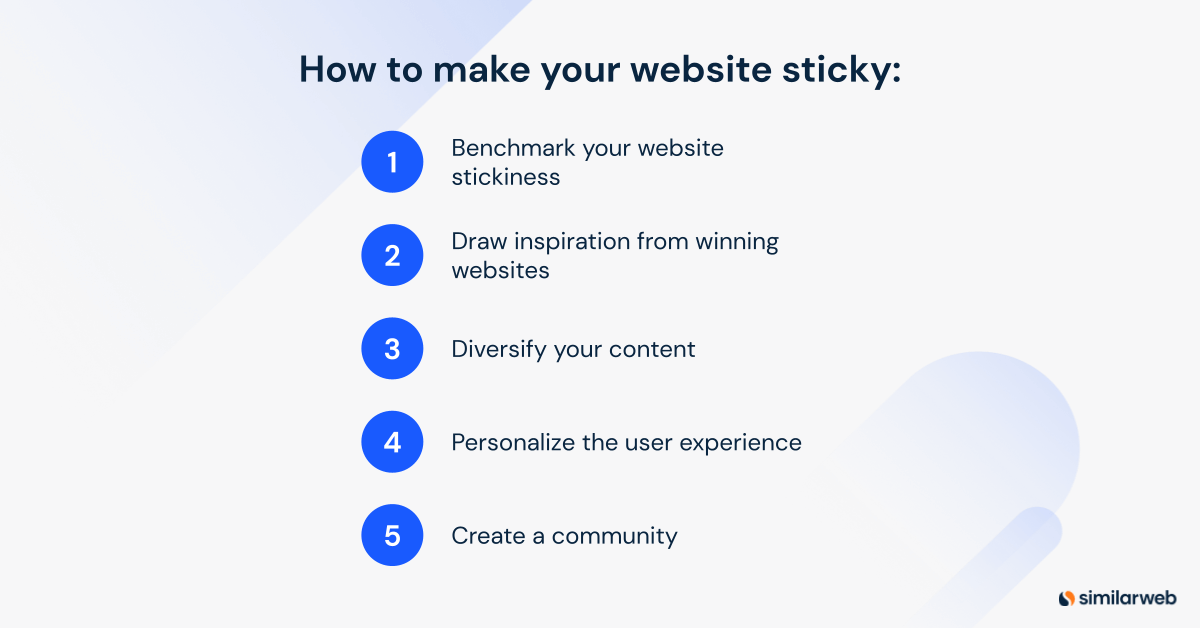
There are a variety of steps you can take to improve the stickiness of your website:

by Molly Winik
Senior Content Marketing Manager
Molly has 8+ years of experience in marketing, content creation, and PR. Her work has been featured on Mention, The Times of Israel, and Culture Trip.
Top Ecommerce Companies in the USA: The 100 Brands Winning the Traffic Race in 2026

3 of the Sharpest Minds Weigh in on the State of Gen AI in 2026

Contact us to set up a call with a market research specialist
