
3 of the Sharpest Minds Weigh in on the State of Gen AI in 2026
by Darrell Mordecai3 Min.
Aug 26, 2026
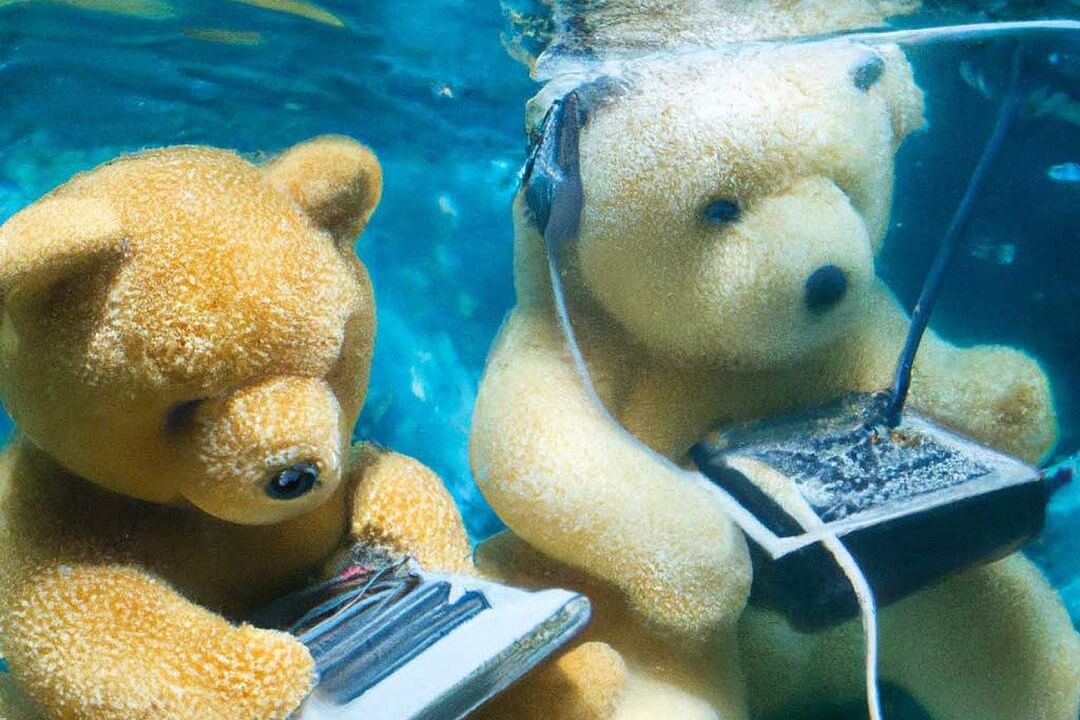
The surprise and delight generated by OpenAI’s DALL-E 2, the text-to-image translator that recently transitioned from a research project to public beta, has catapulted the company from industry insider secret to much broader notice.
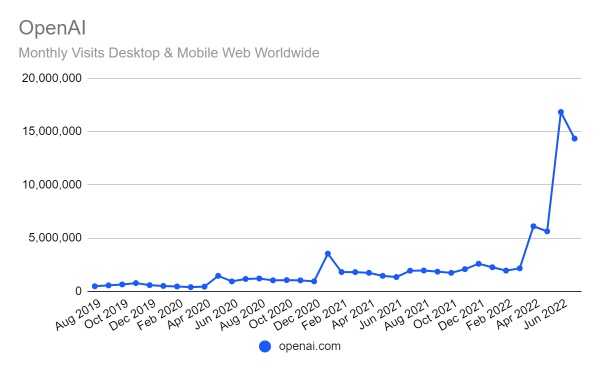
DALL-E, named after Salvador Dali and Pixar’s WALL-E robot hero, is exciting because it allows non-artists to create artwork just by providing a descriptive phrase like “monkey astronaut.” Variations can be produced by adding phrases like “digital artwork” (if you want the image to look like digital art) or “in the style of Claude Monet (if you want it to look like an Impressionist painting).
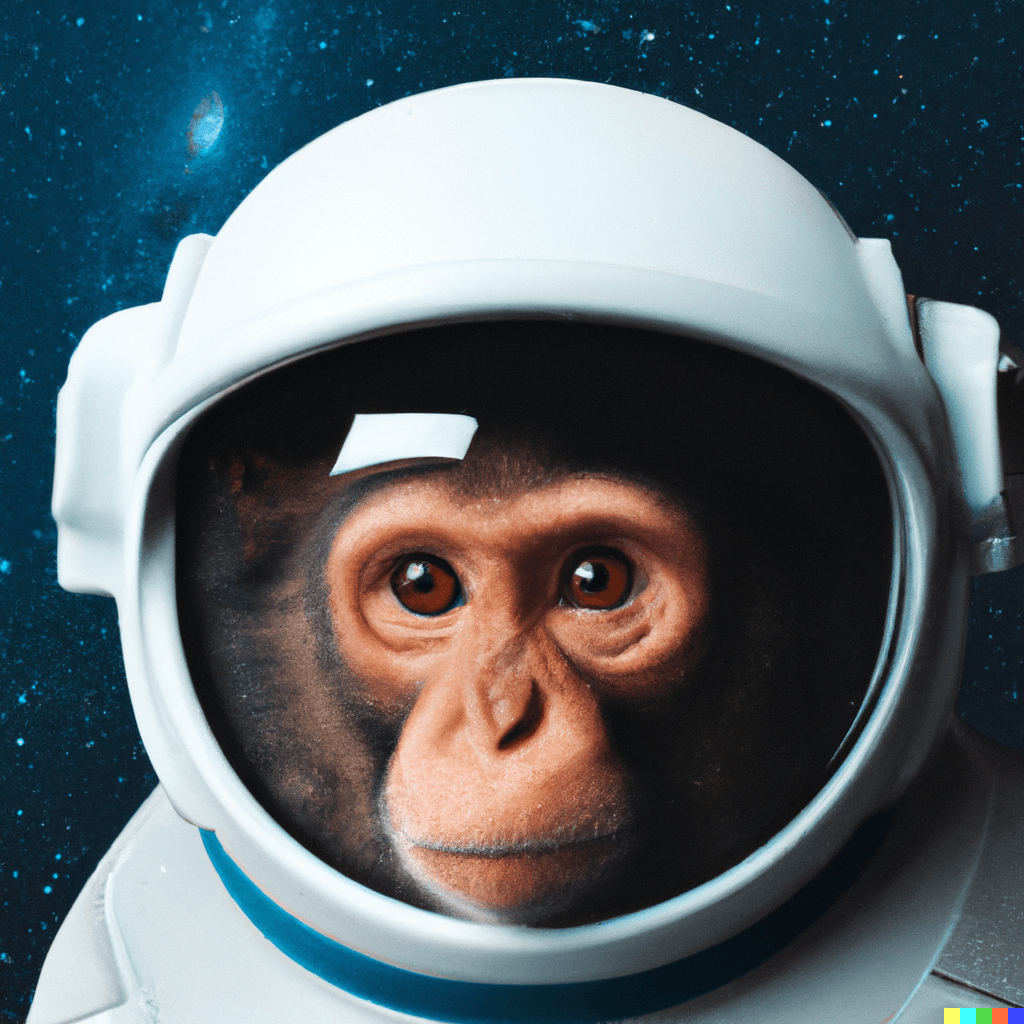
Here is how traffic to the DALL-E beta signup site has grown following press attention and the announcement of the public beta.
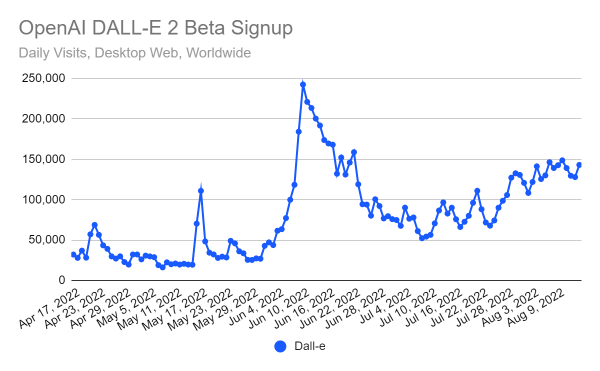
Meanwhile, the broader openai.com website – which until recently was mostly of interest to data scientists and AI technologists – has seen a huge influx of visitors interested in the artistic and commercial purposes of DALL-E.
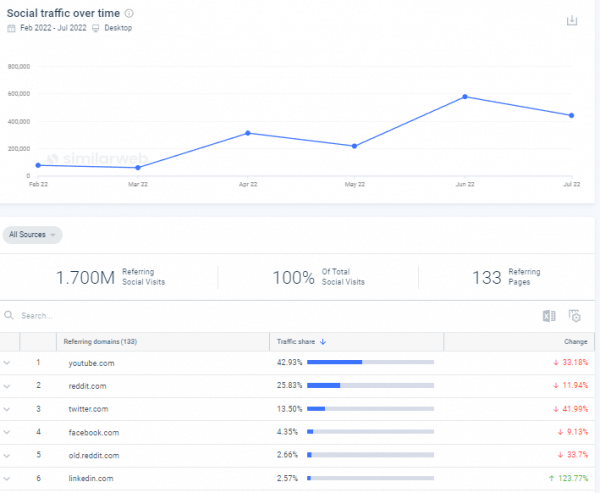
Even when access to DALL-E was limited to AI researchers, sharing of DALL-E-generated images exploded on social media, driving traffic to the OpenAI website. YouTube, Reddit, and Twitter have all been big drivers of referrals.
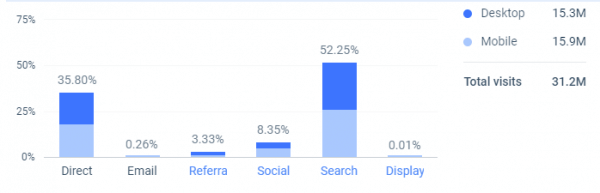
In June, openai.com got more than 52% of its traffic from search and 8.35% from social.
OpenAI is best known for its work on the GPT-3 large language model, and computer understanding of human language is one of the areas where computer science has been making the greatest progress in recent years. With DALL-E, OpenAI is teaching computers how a picture can be worth a thousand words. Plus, it’s a lot of fun.
As Similarweb Director of Product Management Roey Shafir wrote on our company’s internal social network, using our tools to look at the “enormous buzz” OpenAI has created by opening the DALL-E public beta to 1 million people on its wait list left him with only one question: “Now – How do I get an invite?”
The Similarweb Insights & Communications team is available to pull additional or updated data on request for the news media (journalists are invited to write to press@similarweb.com). When citing our data, please reference Similarweb as the source and link back to the most relevant blog post or similarweb.com/blog/insights/.
Contact: For more information, please contact Richard Krueger at richard.krueger@similarweb.com.
Citation: Please refer to Similarweb as a digital intelligence platform. If online, please link back to www.similarweb.com or the most relevant blog post.
Report By: David F. Carr, Senior Insights Manager
Disclaimer: All data, reports and other materials provided or made available by Similarweb are based on data obtained from third parties, including estimations and extrapolations based on such data. Similarweb shall not be responsible for the accuracy of the materials and shall have no liability for any decision by any third party based in whole or in part on the materials.
Teddy bear image By DALL-E, Public Domain, Creative Commons
Monkey astronaut image: Icygyrosi, CC BY-SA 4.0, via Wikimedia Commons

David covers social media, digital advertising, and generative AI. With a background in web trends since the 1990s, he’s also the author of "Social Collaboration for Dummies".
Give it a try or talk to our insights team — don’t worry, it’s free!