
Siloed Data Builds Fragmented Strategies: Why Enterprise Growth Needs a Unified View
by Guy Armoni3 Min.
Nov 01, 2026
 Insights

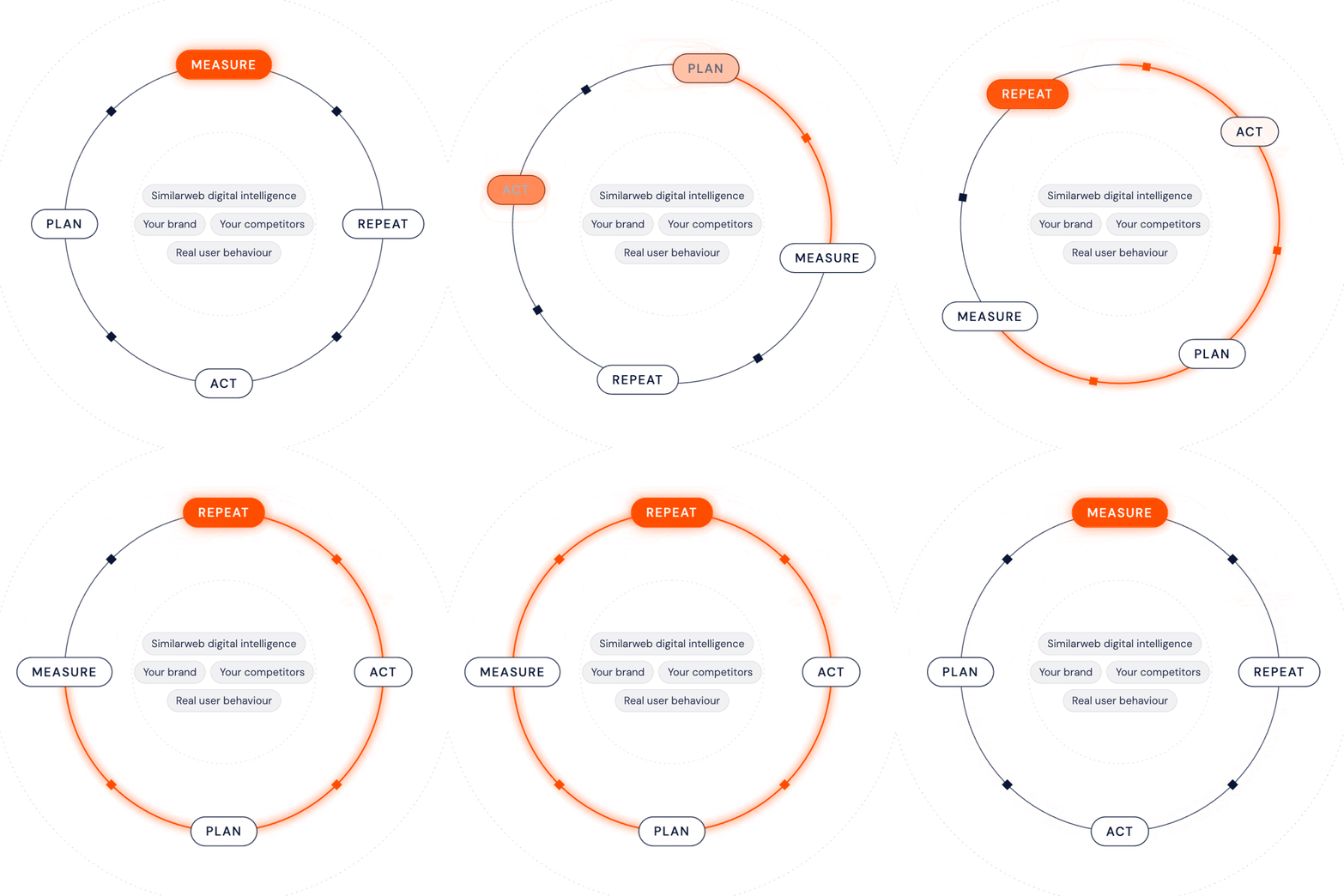
Every strategic decision can be broken down into three stages:
Planning and acting depend on having accurate, current measurements.
This means every decision you make hinges on the data you have at your fingertips. Everything downstream depends on that foundation.
That’s why your data should give you a clear view of what’s happening now. If your data lags, you’ll see demand shifts only after they’ve peaked, and your decisions will rest on a limited view of the market.
For example, imagine a travel company heading into the Christmas holiday booking season. Its insights team tracks demand trends, and its marketing team plans campaigns around the latest monthly report.
Then a new holiday movie set in a Swiss Chalet town the company rarely promotes becomes a hit. Within days, travelers are asking AI assistants about trips there and searching for places to stay. But because the company’s data updates monthly, it might wait up to four weeks before the trend shows up in a report.
The result will be that the insights team keeps sharing outdated trends, leading the marketing team to continue promoting last month’s top destinations, because that’s what the report shows.
When the next report flags the region, demand has peaked and the best-priced rooms are gone. The cost of a late decision is lost bookings, lost share, and missed growth opportunities.
Most discussion of always-on marketing focuses on how quickly teams act. The weaker point is usually how quickly they find out about a change in your market.
On standard weekly monitoring cycles, a surge in AI assistant questions or search interest can begin on Monday while your reporting only compares it against last week’s snapshot. The signal exists, but it sits idle for days before triggering an alert. Because nothing looks broken, that blind spot is easy to miss, and at enterprise scale, a stale decision repeats across regions before anyone realizes that demand moved.
Keeping up with the market takes two things:
Most setups measure on one clock and act on another, so teams often act before the measurement has caught up, and each cycle ignores what the last one did. A two-week delay in a steady market costs a little. During a booking window, it can cost most of the season.
If the answer to the first question is “we’d have to check,” start there.
In fast-moving markets, the advantage goes to whoever notices first and acts while the demand is still there.
Keep reading:
More teams are getting the opportunity to put Similarweb cue to work. Sign up for the waitlist now to be considered for early access.
Give it a try or talk to our marketing team — don’t worry, it’s free!