Siloed Data Builds Fragmented Strategies: Why Enterprise Growth Needs a Unified View
by Guy Armoni3 Min.
Nov 01, 2026
 Insights

An agent with access to your ad account can move budget between campaigns in seconds. Whether that move grows the business depends on what’s happening outside the account, and an agent working from the account alone sees only a slice of it.
I lead product for Similarweb’s data API’s, MCP, and our client-facing AI platform. Much of what we build ends up underneath someone else’s growth decisions, so the question I care about is what that decision is made from.
AI has made execution in marketing fast. An agent can pause a bid, rewrite an ad, brief a piece of content, or shift budget without waiting on anyone. Turning that into growth is harder: McKinsey found that nearly 90% of CMOs are experimenting with AI use cases across the marketing process, and fewer than 10% have captured value across end-to-end workflows.
Speed only pays off when the strategy behind it is right: the right goal, the right business context, the right audience, the right message, the right product. If the decision rests on an incomplete picture of your customers and market, the agent makes a flawed decision, just faster and at greater scale than your team could.
Take a sportswear retailer whose paid search agent works from its own ad accounts and site analytics. Shoppers researching running shoes for flat feet have started asking AI assistants for recommendations, and the answers name a competitor. The same competitor is winning the searches shoppers now run directly on the marketplace. The agent sees the symptom, cost per acquisition creeping up, but not the cause.
So it does what it was built to do and spends more to hold conversions in the channel it manages. Every extra dollar there is a dollar that didn’t go into the content those AI answers draw on, or into the marketplace where the sale now closes. The longer that runs, the more ground the competitor gains as the default recommendation, and winning that position back costs more than holding it would have.
The agent isn’t broken. It’s doing its job well, inside a boundary so limited it hides exactly what’s costing the business share.
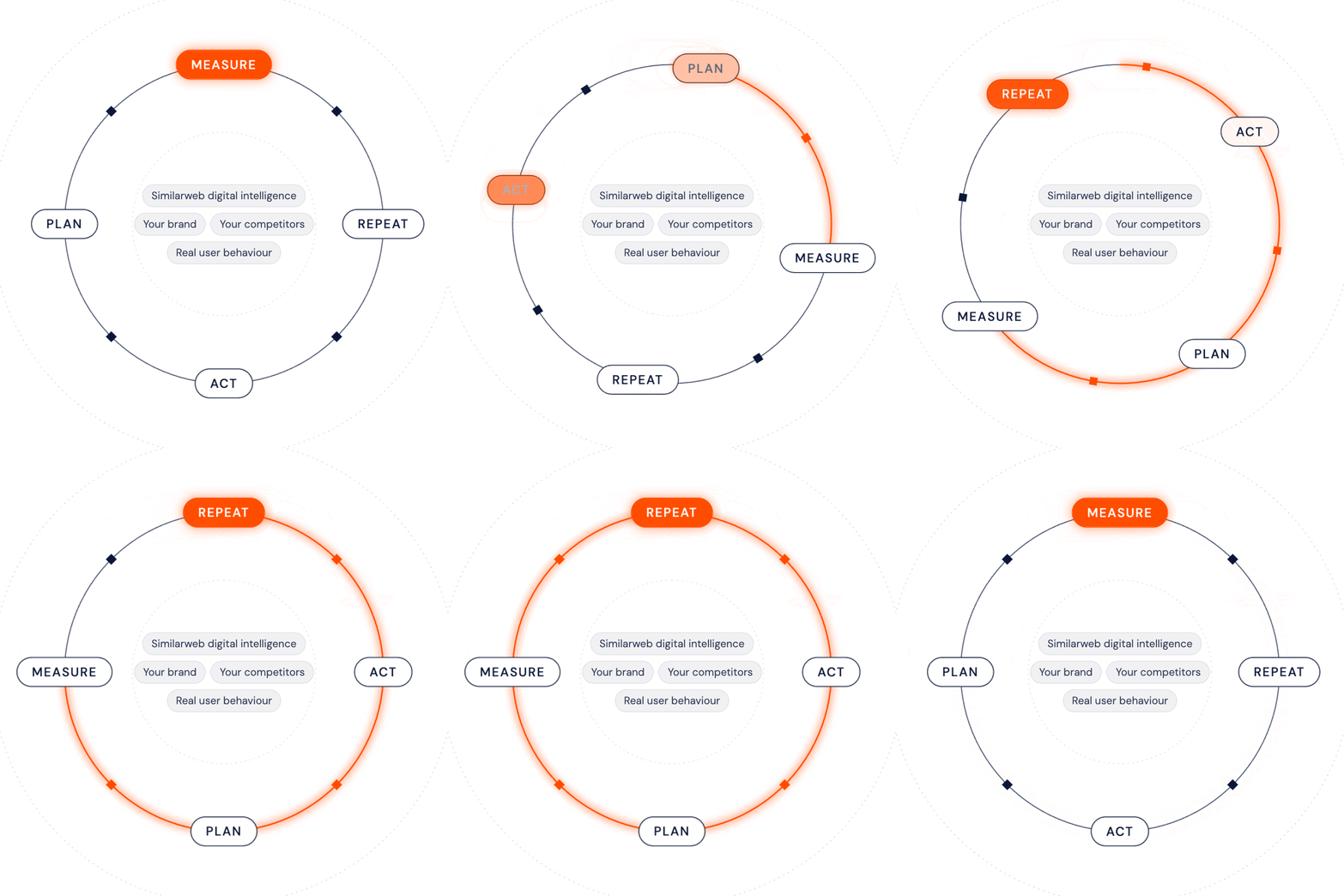
At Gartner’s Marketing Symposium in May, Gartner described most marketing AI as still focused on productivity: time saved, cost efficiency, speed of delivery. That helps with cost pressure, but it “doesn’t improve the decisions that drive growth.”
So the test for an agent is whether its decisions grew market share, drove more efficient customer acquisition, or increased revenue.
Passing that test takes data on the market around your business: competitors, demand shifts, and the channels you don’t own, for each business line, in each market you sell in.
We started Similarweb cue from the data, not the automation. As the market leader in digital intelligence for two decades, our proprietary datasets give you a complete view of the entire market, across every channel. The result is a workspace that starts with your brand, website, market, context, competitors, and the use cases you care about. From there, Similarweb cue works across our data on websites, search, AI assistants, apps, large marketplaces, and retailer sites, and can break the business into its lines to show demand and competition for each.
That’s what makes the decision smarter. Similarweb cue’s reports do the heavy analysis. They dive into every business line, segment, and channel and give you an analysis ready to base your next decision on. From a finished report or dashboard, Similarweb cue provides recommended actions, each with a rationale tied to the figures behind it. Running an action drafts the asset, such as ad copy, a content brief, or a product listing fix, or builds a dashboard to track it.
With that asset in hand, someone on your team reviews the draft and decides what goes live. That’s deliberate. The analysis is complex, and the output carries your brand, so the final call belongs with someone who knows the budget and what’s already in flight.
Three questions to ask about your growth engine
If any answer is vague, fix that before you give it more room to act.
Agents will keep getting faster. The ones that grow the business will be the ones making smarter and faster decisions because they see the market around your brand.
Keep reading:
More teams are getting the opportunity to put Similarweb cue to work. Sign up for the waitlist now to be considered for early access.
by Idan Yaron
Give it a try or talk to our marketing team — don’t worry, it’s free!