


 Marketing Intelligence
Getting Traffic From AI: The 6 Best Ways to Do It [+Free Template]
![Getting Traffic From AI: The 6 Best Ways to Do It [+Free Template]](https://www.similarweb.com/blog/wp-content/uploads/2025/11/attachment-ChatGPT-Image-Nov-27-2025-12_35_16-PM-768x512.png)
You may have noticed your website traffic has decreased since AI entered the picture.
But here’s the good news: if AI can take traffic away, it can also send traffic your way.
Instead of fighting this change, the smarter move is to understand how these new answer experiences work and position your brand to be included in the responses people see every day. When you do that, AI becomes less of a threat and more of a new discovery channel.
In this guide, I’ll walk you step-by-step through how you can use Similarweb to understand where AI-driven traffic comes from, what prompts your audience uses, and how to create content that gets citations.
What’s Changing in Search?
Search behavior is changing. Instead of typing “best streaming service” and scrolling through a list of links, people now ask direct questions like:
- “Which streaming service offers the best value for families?”
- “Where can I watch Twin Peaks online?”
- “What’s the best platform for documentaries?”
AI Assistants respond with ready-made answers, and they choose which websites to cite as sources. This is why many companies have started focusing on Generative Engine Optimization (GEO), making sure their content is structured and clear enough to be pulled into AI-generated answers.
If your content helps shape that answer, you earn traffic. If not, you’re simply not part of the conversation.
However, you can absolutely show up in these answers; you just need a process for finding the right prompt answers that get cited and the content angles that AI prefers.
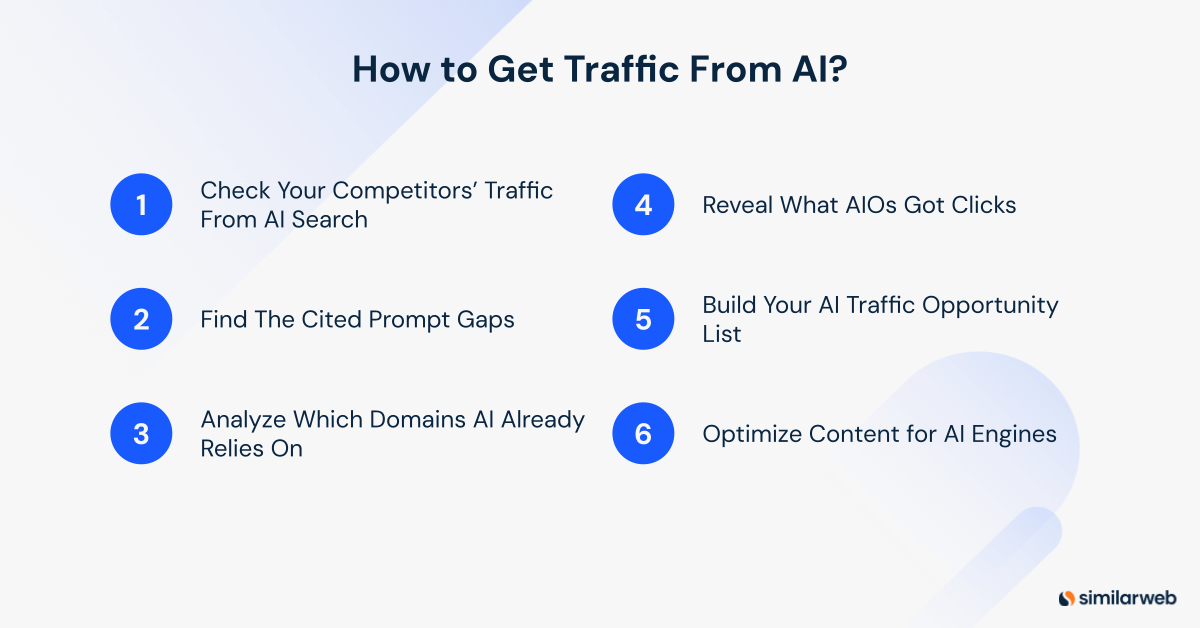
Here are the 6 best ways to get traffic from AI. I’ll break each of them into a step-by-step guide, using Netflix as an example
How to Get Traffic From AI?
1. Check Your Competitors’ Traffic From AI Search
The goal is simple: increase the number of times my site is cited, because more citations mean more chances to earn clicks.
The first step was to identify the topics I should focus on. I began analyzing my competitive landscape using Similarweb’s AI Traffic Tracker.
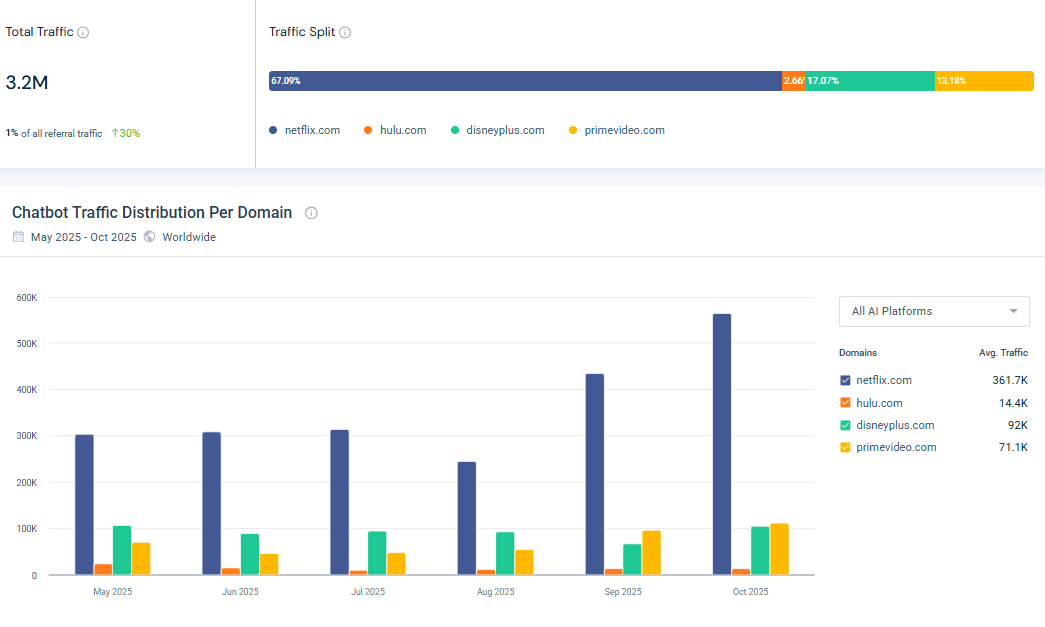
I started looking at the Chatbot Traffic Distribution chart that shows the month-by-month volume of traffic AI chatbots send to each domain.
In Netflix’s case, Netflix consistently dominates, but in months where Disney+ or Prime Video spikes, that signals topics they might be missing.
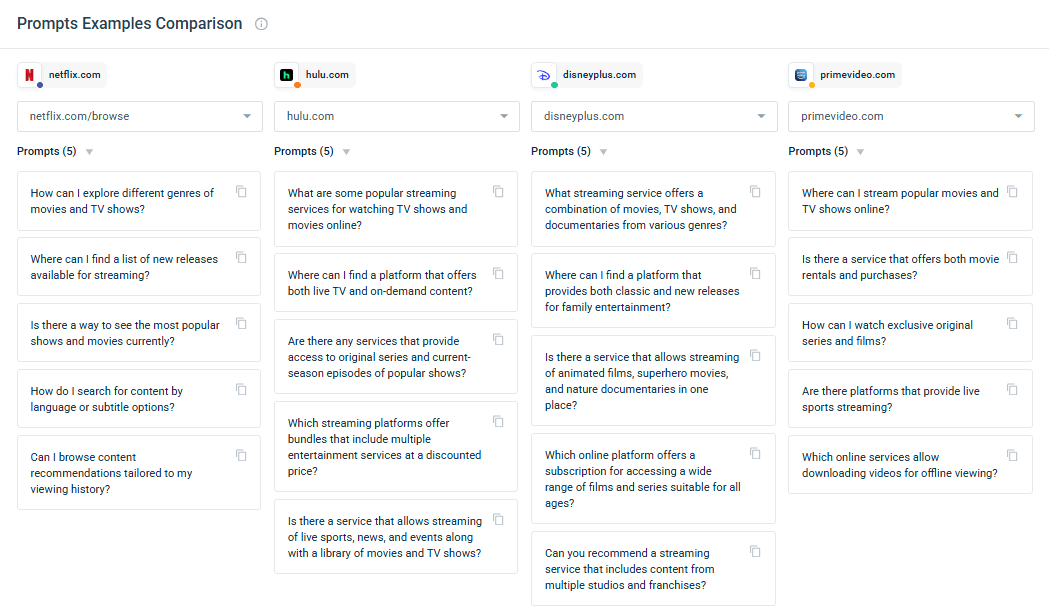
Then I looked at the Prompts Examples Comparison dashboard.
For Netflix vs. Hulu vs. Disney+ vs. Prime Video, I found:
- What kinds of questions does each brand appear for
- What AI engines think each platform specializes in
- Where my competitors are capturing demand that I don’t
For example:
Netflix prompts include:
- “How can I explore different genres of movies and shows?”
- “Where can I find a list of new releases?”
Disney+ prompts include:
- “Is there a platform for family entertainment?”
- “Which service offers animated films and superhero movies?”
Prime Video prompts include:
- “Where can I stream popular movies and TV shows online?”
- “Which services allow downloading videos for offline viewing?”
These aren’t keywords; they’re questions people ask (AKA prompts), and their answers lead users to Netflix and its competitors’ pages.
This step helps me understand the main topics that drive clicks, so I know exactly where demand already exists.
2. Find The Cited Prompt Gaps
Next, I used Similarweb’s AI Brand Visibility tool and checked the Prompt Analysis feature to see:
- Prompts where Netflix is not mentioned
- Prompts where Netflix appears but competitors don’t
- Who gets cited for these answers
For Netflix, prompts like:
- “Which streaming service offers the best value for families?”
- “Who stars in the new Unknown Number series?”
- “Which streaming service has the best horror selection?”
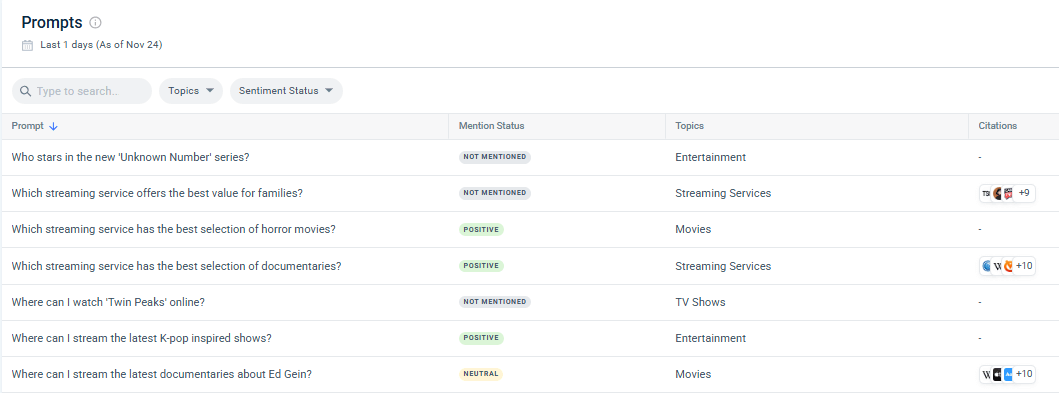
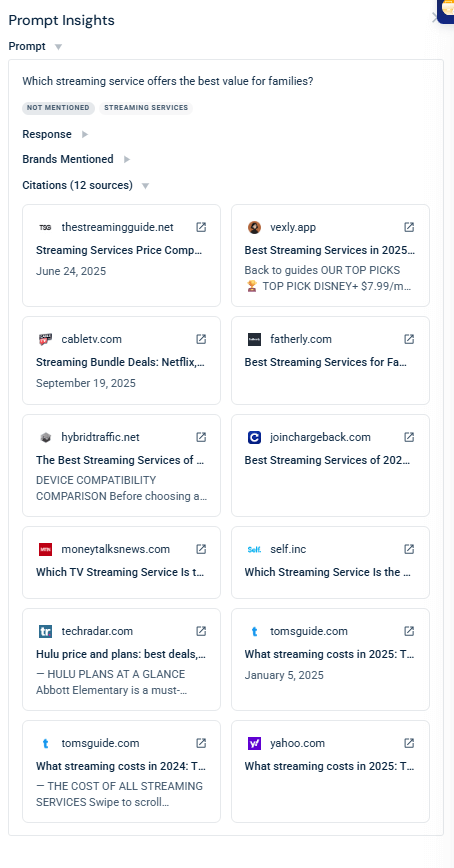
When I clicked into any prompt, I got to the Prompt Insights, where I saw the list of citations AI assistants pull from.
These are the sites driving traffic from these answers.
For example, the prompt “Which streaming service offers the best value for families?” pulls citations from:
- thestreamingguide.net
- vexly.app
- cabletv.com
- fatherly.com
- techradar.com
- tomsguide.com
- yahoo.com
These sites tend to publish:
- Price comparisons across all major streaming services
- Bundle reviews (Disney+, Hulu, ESPN+, etc.)
- Cost breakdowns with updated plan pricing
- Pros and cons for each platform
If you want to appear in this prompt’s answer, your content must match the informational format AI prefers and offer the missing angle.
3. Analyze Which Domains AI Already Relies On
I also looked at Similarweb’s AI Citation Analysis tool to understand which domains AI trusts currently and pulls information from.
This view shows me exactly which websites dominate citations in responses that mention my brand and which sites appear most often in responses that don’t mention me at all.
For Netflix, the top cited domains include sites like:
- Wikipedia
- Hulu
- Tom’s Guide
- MakeUseOf
- Collider
- Apple’s app pages
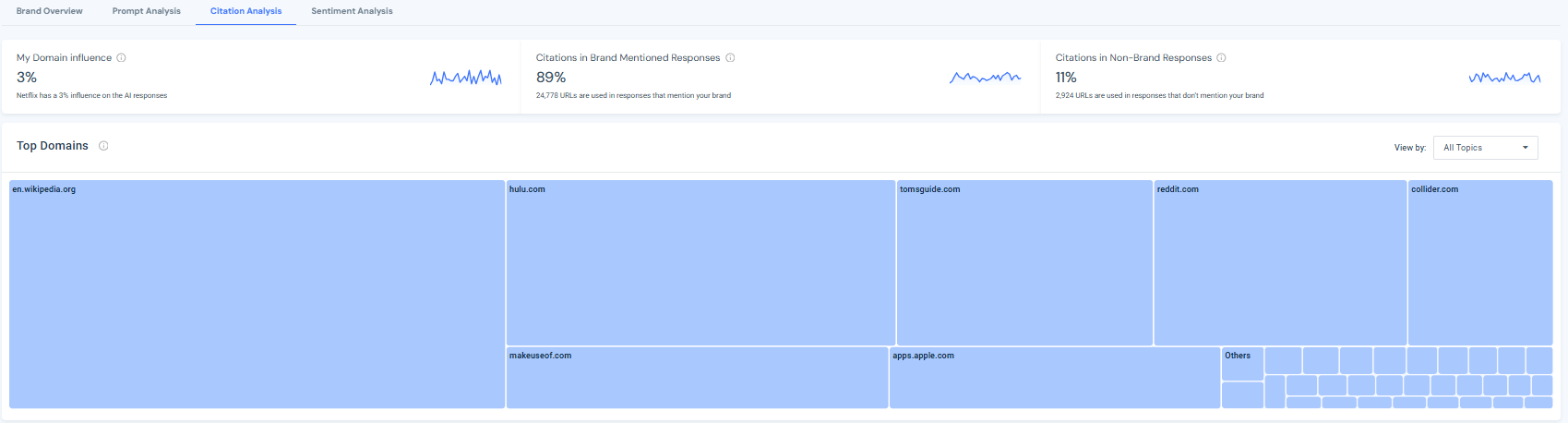
This tells me two important things:First, AI frequently draws from large, authoritative sources, especially those with clear factual information or strong editorial coverage. Second, competitor pages (like Hulu) can appear in answers even when queries relate to Netflix’s category. That means competitors can shape the narrative in responses that should include Netflix.
When I scrolled down to the Cited URLs table, I could see which individual pages were consistently used as sources, how influential they were, and which topics they covered. Many of the top cited URLs relate to best streaming services, subscription plan comparisons, entertainment guides, and documentary recommendations.
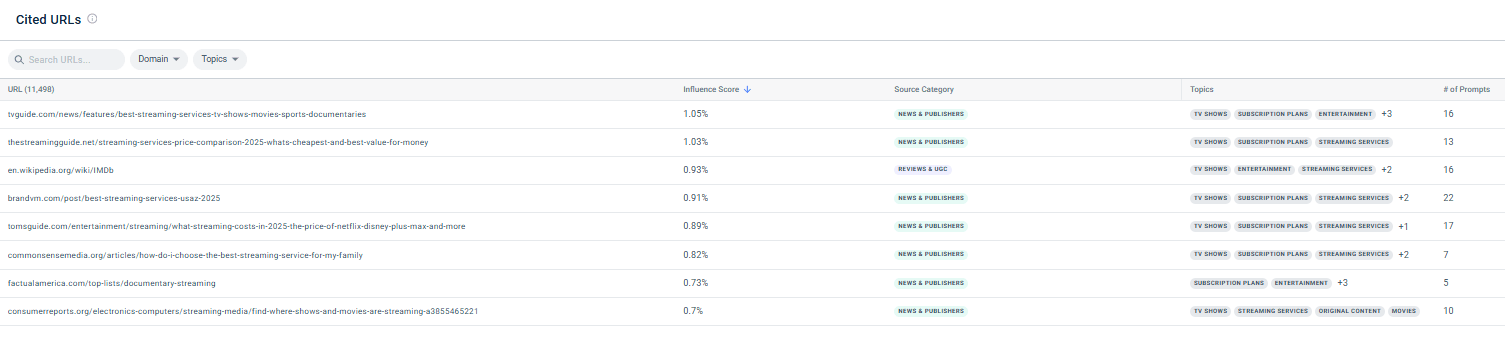
One powerful feature here is the ability to click on any cited URL and immediately see every prompt where that page is mentioned, along with the prompts where your brand is not mentioned.
This makes it incredibly easy to understand why a competitor’s page keeps getting cited and exactly which prompts you’re losing visibility on.
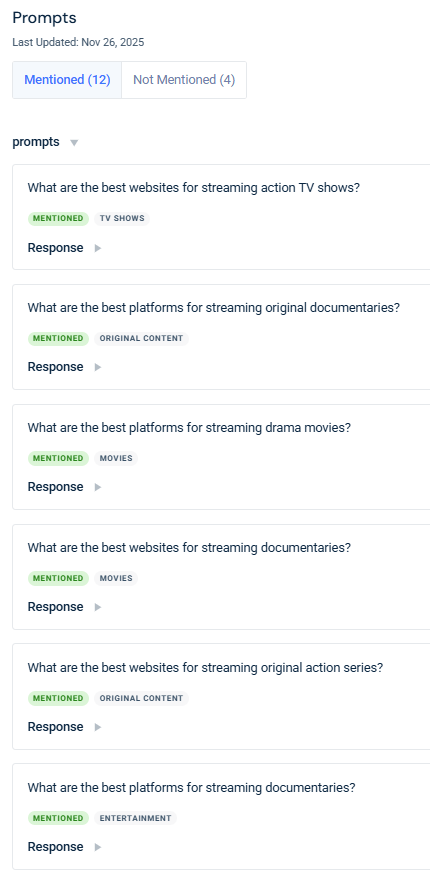
In the example below, I noticed that Netflix wasn’t mentioned in the prompt “What are the best platforms for streaming original family series?” for the cited URL – tvguide.com/news/features/best-streaming-services-tv-shows-movies-sports-documentaries.
This signals an opportunity to create similar content, such as FAQs that cover this topic, so I can compete for that and increase my chances of earning a citation.
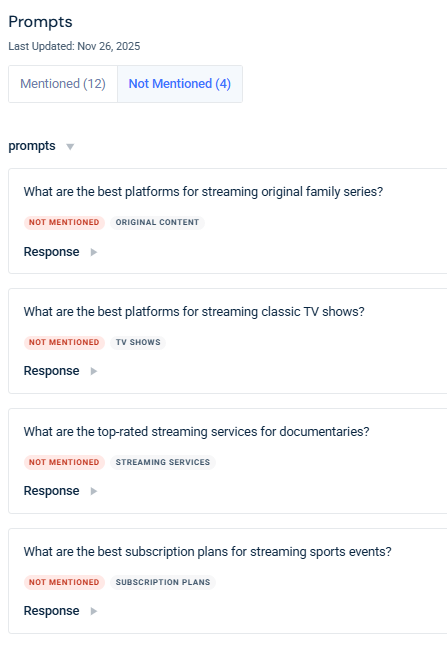
By performing AI citation analysis, I now know not only which prompts matter and who gets cited for them, but also exactly which competitor pages appear in those answers and where my brand is missing.
4. Reveal What AIOs Got Clicks
After reviewing prompts and citations, the next step is to understand which keywords actually generate clicks from AI Overviews (AIOs) and how your competitors benefit from them.
Using Similarweb’s Rank Tracker set to “AI Overview ? Clicks,” I can see exactly where Netflix, Hulu, Prime Video, and others gain traffic from AIO results.
In the Netflix example:
- For keywords like “thriller movies” Hulu and Prime Video got the highest clicks from AIOs, compared to other terms.
- Some queries show New click opportunities for Hulu and Prime Video.
- Netflix is losing click share on high-intent categories like thriller movies and comedy movies.
AI Overviews don’t show links for every search, but when they do, they often highlight only a few domains.
This makes the clicks incredibly competitive and incredibly valuable.
If I want to earn clicks from AIOs, I need to focus on the keywords and topics my competitors are winning on.
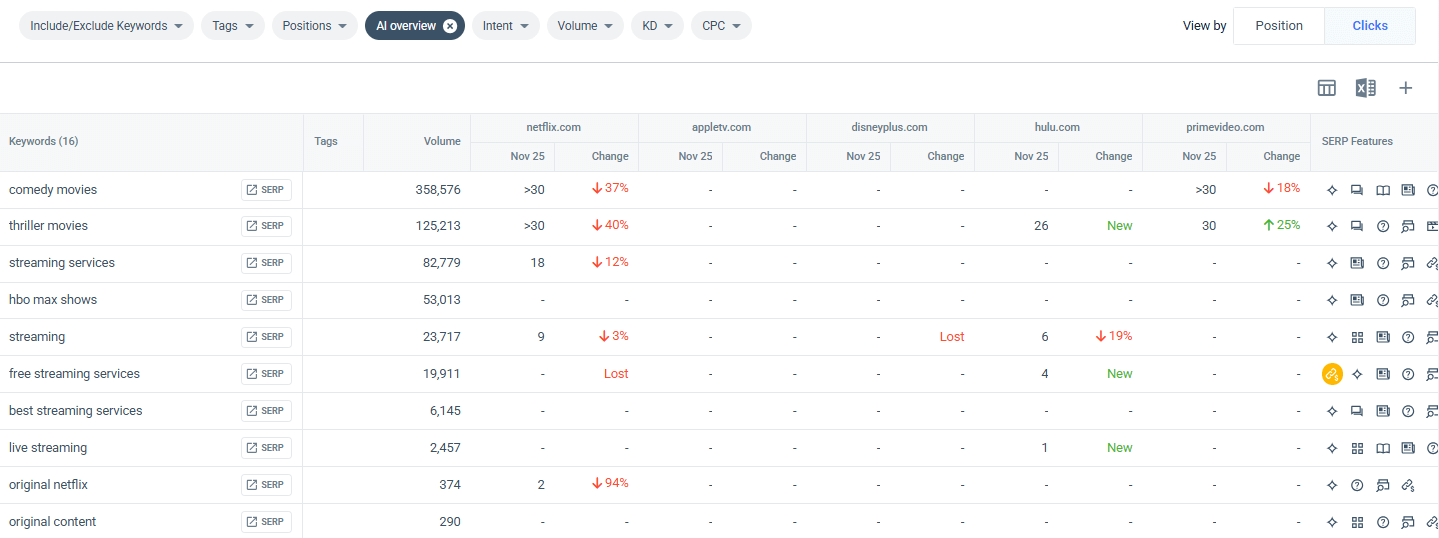
5. Build Your AI Traffic Opportunity List [+ Free Template]
Once I understood which prompt answers drive clicks from citations and which keywords generate AI Overview traffic, the next step was to turn all of these insights into a single, focused opportunity list. This list becomes my roadmap, the exact topics, prompts, and AIO keywords I need to focus on.
To build it, I combined everything I learned from the earlier steps:
- Competitors prompt answers that get AI traffic on
- Prompt answers that consistently generate citations
- Keywords that drive AIO clicks for competitors
This list shows me exactly where competitors are already earning citations and clicks. It’s the foundation for planning content that has a real chance of being included in AI citations.
To make this process easier, I also created a template you can use to build your own AI Traffic Opportunity List – download it here: all you have to do is copy it and start using!
6. Optimize Content for AI Engines
After building my list of topics, prompts, and AIO keywords to focus on, the next step is turning those insights into content that can actually earn citations and clicks. To do that, I need to create and refine pages that address these questions directly, match the formats AI prefers, and offer clear, reliable information. Here’s how I approach it:
Keep my Content Clean and Organized
AI relies on clarity. Pages organized with strong headings, short sections, comparison tables, and quick answer blocks are far easier for them to interpret. A well-structured page helps AI pull the exact information needed to support their answers.
When structuring my content, I make sure to create a clear outline, a solid storyline, and make sure I provide clear answers to questions that were asked in prompts that I target for my brand.
Strengthen my FAQ Sections
FAQs are one of the most powerful tools for earning citations. I used the prompts I identified earlier and answered them directly on the page.
For example, if people frequently ask “Which streaming service has the best value for families?”, I included an FAQ that addresses this question specifically, with details on pricing, bundles, and the unique perspective your brand can offer.
Answer my targeted Prompts & AIO Queries Directly In the Content
The list of prompts and AIO queries I created before shouldn’t just sit in a spreadsheet. This list should guide the way I write. I used these exact questions in my content wherever they naturally fit: blog post headlines, product page FAQs, report page FAQs, and more.
When AI recognizes that the content directly responds to the questions people ask, it increases my chances of being cited and ultimately clicked.
Back Up my Claims With Real data & trusted Information
High-quality citations tend to come from pages that include real examples, data points, updated prices, case studies, new releases, or trusted external sources.
AI tends to prefer content that feels reliable, current, and well-supported, which is why I make sure to include real Similarweb data and refer to authoritative sources in the topics I want to be cited for.
Optimize my Structured Data
Adding schema markup, especially FAQ, product, breadcrumb, how-to, or review schemas, helps AI read the page and understand what each section represents. This increases the chances of being included in AI answers.
Keep my Content Fresh
AI strongly prefers up-to-date information. Updating content regularly, especially pages about new shows or movies, pricing changes, bundles, trends, or annual roundups, signals that the content is accurate and worth citing. Freshness often becomes the deciding factor between being included or overlooked.
From my own experience, some pages simply need ongoing updates to stay fresh and relevant. Our monthly Top Keywords article, for example, pulls new data from the Similarweb platform every month, so I update it as soon as the latest numbers are available.
My best tip is to set a monthly reminder to refresh these kinds of pages. It’s a small action that keeps your content current and far more likely to be cited.
Turning Insights Into AI Traffic With Similarweb
It’s a point worth repeating: search is shifting from simple queries to conversations. The winners will be the brands that understand what people ask, why they ask it, and what information AI chooses to cite.
By using Similarweb’s AI Traffic Tracker, Brand Visibility tool, and Rank Tracker, you can discover:
- Where are you appearing today
- Where you’re missing opportunities
- Which competitors get cited
- Which prompts already drive traffic
And once you align your content with these real user questions, you can increase your traffic from AI over time.
FAQs
How do I know which prompts matter for my brand?
Use Similarweb’s Prompt Insights to see real user questions, visibility scores, and missing opportunities.
How do I get included in AI answers?
Create content that directly answers the prompts you want to appear for, in structured formats that AI prefers.
Which content formats perform best?
Headlines that mirror prompts, comparison tables, FAQs, listicles, pricing guides, and updated review-style pages.
Do citations ensure clicks?
Not always. AI sometimes cites multiple sources, and not every user clicks through. But appearing in citations is the only pathway to earning clicks from these answers, so increasing your citation rate directly improves your chances.
How can I tell which competitor pages AI trusts most?
Use Similarweb’s Citation Analysis to see which URLs appear most often in responses. This reveals the exact formats, angles, and information AI relies on, giving you a blueprint for what to create or improve.
How do I know which pages on my site to optimize first?
Start with the pages that are closest to earning visibility, the ones already getting impressions, partial mentions, or appearing in related prompts. These pages usually require lighter updates and can earn citations faster than creating something entirely new.
Should I track changes in competitor visibility over time?
Yes. Monitoring how often competitors appear in prompts, citations, and AIO clicks helps you spot new trends early. If a competitor suddenly starts gaining visibility for a topic you care about, it’s a signal to review what changed on their page and adjust your content strategy accordingly.

Related Posts



Why AI Engines Cite UGC Over Brand Content And How To Leverage It For AEO

AI Mentions vs. AI Citations: What’s the Difference and Why It Matters for GEO


Wondering what Similarweb can do for your business?
Give it a try or talk to our insights team — don’t worry, it’s free!