
Top Ecommerce Companies in the USA: The 100 Brands Winning the Traffic Race in 2026
by Inbar Eytan6 Min.
Aug 30, 2026

Artificial intelligence is reshaping how marketers approach pay-per-click advertising. From paid keyword research to bidding and ad creative optimization, AI tools help advertisers make faster, smarter decisions at every stage of the campaign lifecycle.
AI is used in PPC advertising to automate and optimize campaign elements like keyword research, bidding strategies, ad copy creation, and audience targeting. AI tools analyze historical and real-time data to identify trends, predict user behavior, and recommend actions that improve campaign performance.
For example, AI can automatically adjust bids based on device type, location, or time of day to improve conversion. Additionally, AI can significantly impact content generation and optimization. Marketers can use generative AI tools to quickly produce multiple ad copy variations tailored to different audience segments.
AI also supports landing page testing and optimization by analyzing user behavior metrics like bounce rate and conversion paths. This allows advertisers to make real-time adjustments to creative assets and targeting parameters.
In this article:
Automating PPC campaigns helps businesses improve performance with low effort. Here are the key benefits:
AI tools have transformed keyword research by making it faster and more data-driven. Marketers can use AI to identify high-performing keywords, discover search trends, and predict which terms are most likely to drive conversions. AI systems analyze search data, competitor activity, and historical campaign performance to recommend keyword opportunities that represent user intent.
These tools also help prioritize keywords by estimating search volume, competition level, and potential ROI. Additionally, AI can suggest long-tail keywords and variations that might not appear in traditional keyword planners.
Practical example: AI-driven keyword research with Similarweb
We provide an AI Trend Analyzer Agent which can help you figure out what is driving specific trends in demand, discover opportunities and target more relevant keywords.
For example, let’s say our PPC advertising campaign is targeting foldable laptops. Our Search Trends report automatically clusters search terms related to this concept. Combined, foldable laptop keywords had 1.1 million searches in the past year.
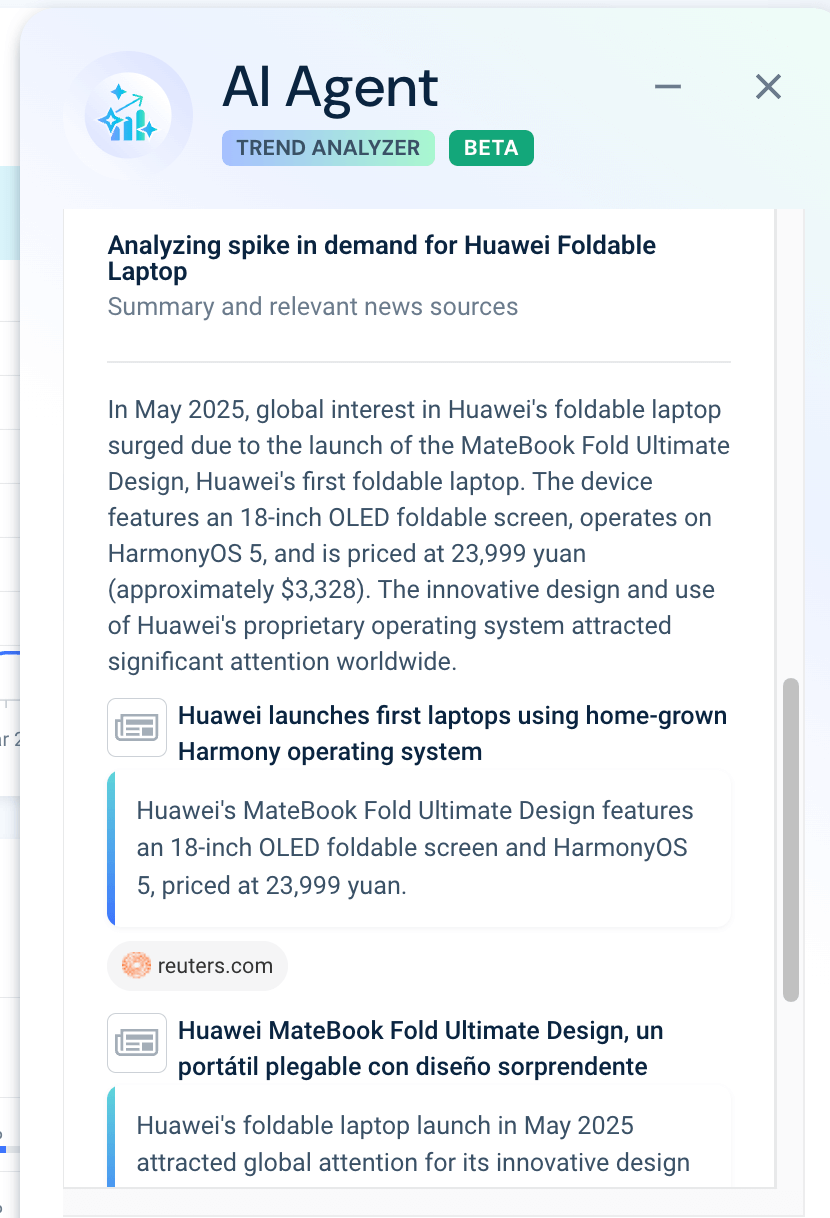
Interestingly, there was a major spike in search volume in the month of May. The ‘Analyze’ button lets you analyze this trend with the AI Trend Analyzer Agent.
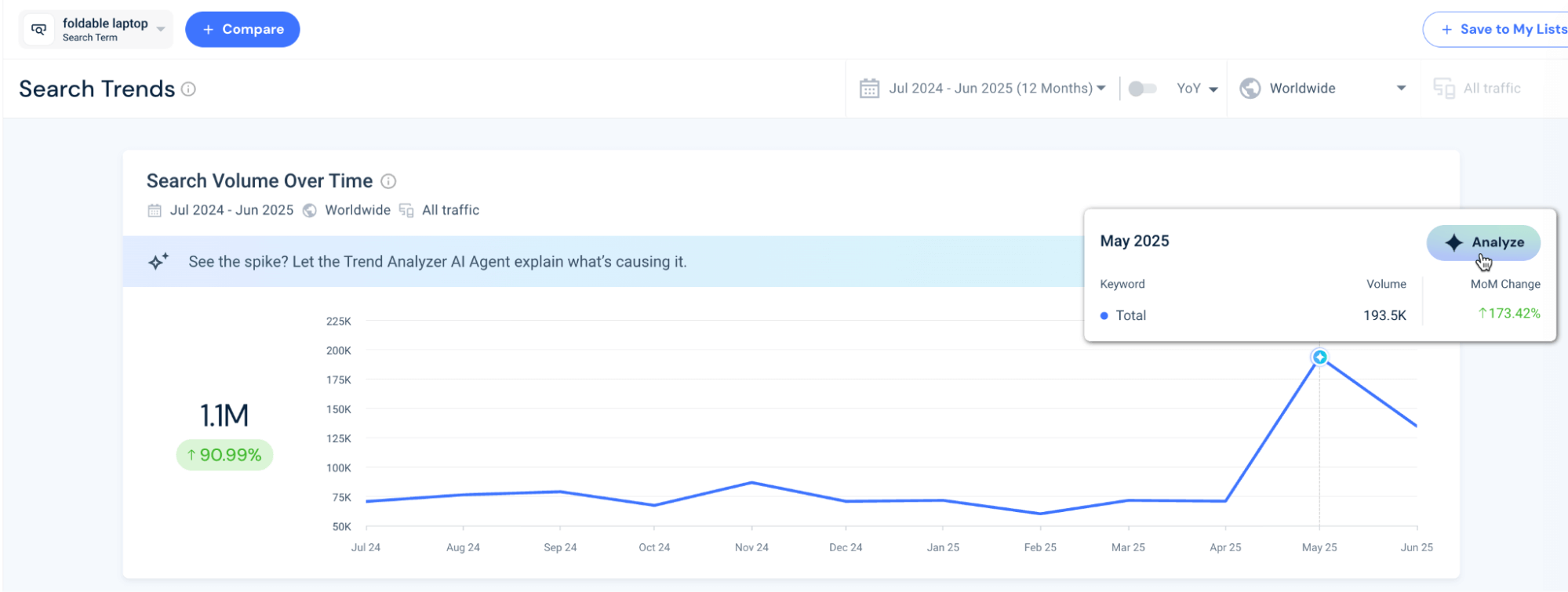
When you click the button, the AI Agent thinks for a few minutes and provides an analysis of the trend. Apparently, most of the increase is due to searches for Huawei foldable laptops.
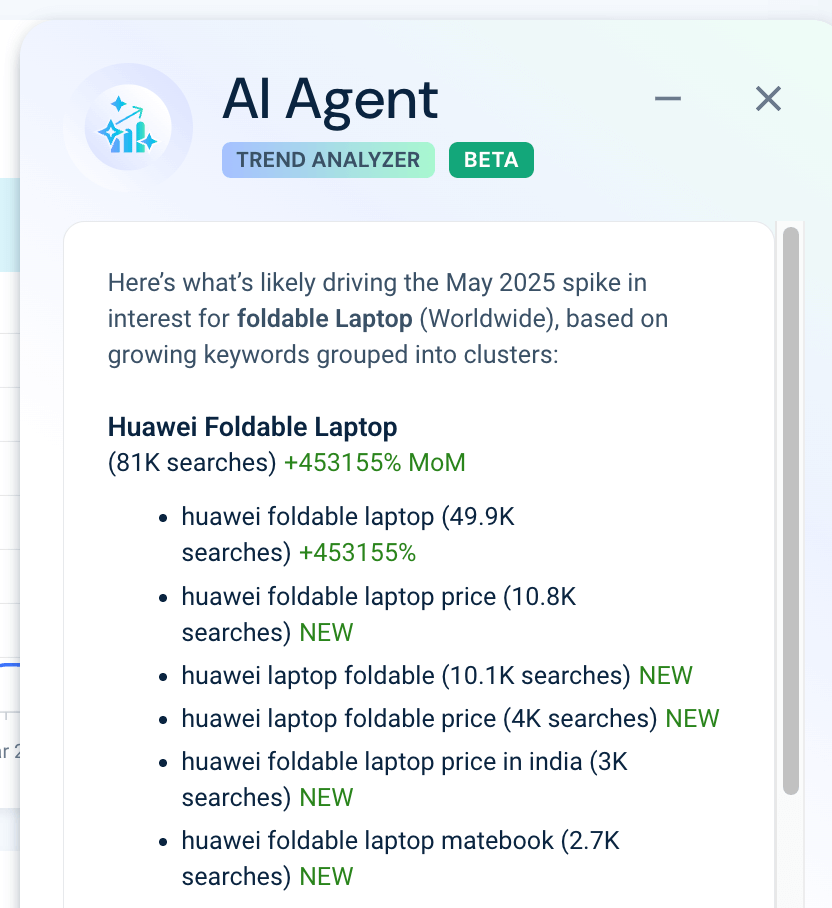
The AI Trend Analyzer lets you drill down into specific topics to learn more. You can click the Huawei topic to get more context, this brand launched its first foldable laptops, causing a surge in demand. If your website sells this brand, this is a great idea to expand your PPC campaign.
Want to know what your rivals are up to? Spying on competitors’ ads isn’t shady, it’s smart. AI-infused tools pull back the curtain so you can tailor your PPC strategy with surgical precision.
Incorporate AI ad-spy into your PPC workflow to reverse-engineer what’s working and dodge what’s not. Done right, it’s your shortcut to smarter spending and more conversions.
AI-driven landing page optimization focuses on improving user experience and conversion rates by analyzing visitor behavior in real time. AI tools track metrics like bounce rate, time on page, and conversion paths to identify friction points that cause users to drop off. By analyzing these patterns, AI recommends layout changes, content adjustments, or even design tweaks that better meet audience preferences and boost engagement.
For A/B testing, AI accelerates the testing cycle by predicting which variations are likely to perform best based on historical performance and user behavior. Instead of waiting weeks for statistically significant results, AI can quickly identify winning combinations of headlines, images, CTAs, and page structures.
Practical example: AI-driven landing page optimization with Swipe Pages
Swipe Pages integrates AI to help marketers improve landing page performance without guesswork. The platform uses AI to analyze user behavior, identify conversion barriers, and suggest design or content changes that can improve results.
For example, it can recommend altering button placements, rewriting headlines for clarity, or simplifying page layouts to reduce bounce rates. This data-driven approach allows advertisers to run more effective A/B tests and quickly deploy high-converting landing page variants.
Generative AI tools like ChatGPT are making PPC ad copywriting faster and more targeted. These tools analyze your campaign goals, audience insights, and even competitor ads to generate tailored headlines, descriptions, and CTAs. By feeding the AI prompts, such as your target audience, product benefits, or desired tone, you can produce multiple ad variations.
AI also helps optimize copy length, keyword usage, and emotional tone to improve click-through rates. For example, you can ask the AI to rewrite a headline to emphasize urgency or highlight a specific offer. Some advertisers use prompts like “Write a Google Ads headline that emphasizes free shipping” or “Generate three ad descriptions targeting budget-conscious shoppers.”
Practical example: Creating PPC copy with ChatGPT
Advertisers are using ChatGPT to simplify PPC ad creation by generating copy ideas quickly. By using targeted prompts, marketers can produce a range of headlines and descriptions tailored to their audience and goals.
For example, prompts like “Write three Google Ads headlines for a budget hotel promoting weekend deals” or “Generate ad descriptions that highlight free shipping for an online shoe store” help produce actionable copy fast. ChatGPT can also help rewrite existing ads to focus on different selling points like urgency, value, or emotional appeal.
AI can automate bidding strategies by analyzing real-time data and adjusting bids to maximize performance. Tools like Google Ads’ Smart Bidding use machine learning models to predict the likelihood of a conversion for each auction. They factor in variables like device type, time of day, location, and user behavior signals. This helps advertisers automatically set the right bid for each impression without constant manual oversight.
For audience targeting, AI segments users based on behavior patterns, search history, and engagement data. This allows advertisers to create highly focused audience lists, such as users who are most likely to click or convert. AI also supports dynamic audience targeting, where campaigns adjust targeting parameters in real time based on performance trends.
Practical example: Using AI-driven bidding strategies in Google Ads
Advertisers using Google’s AI-based bidding tools, like Maximize Conversions or Target ROAS, have seen improvements in efficiency and performance. According to case studies, using these strategies allows campaigns to automatically adjust bids based on real-time signals like device, location, and time of day.
AI simplifies campaign optimization by continuously monitoring performance metrics and making real-time adjustments. Tools like Optmyzr analyze large sets of campaign data to identify underperforming keywords, ad groups, and placements. They can automatically pause poor performers, adjust budgets, and recommend bid changes.
For analysis, AI tools help uncover patterns and insights that manual reporting might miss. They can highlight performance anomalies, suggest budget reallocations, and even forecast future results based on historical data.
Practical example: AI-driven optimization for a PPC campaign with Optimyzr
Optmyzr helps advertisers optimize PPC campaigns by automating routine tasks and providing AI-powered recommendations. Users can set optimization rules that trigger when certain performance thresholds are met, like pausing underperforming keywords or moving budgets to better-performing campaigns.
The platform also offers tools for responsive search ad optimization, allowing marketers to test and implement winning ad combinations more efficiently. This automation reduces the time spent on manual analysis while improving campaign performance.
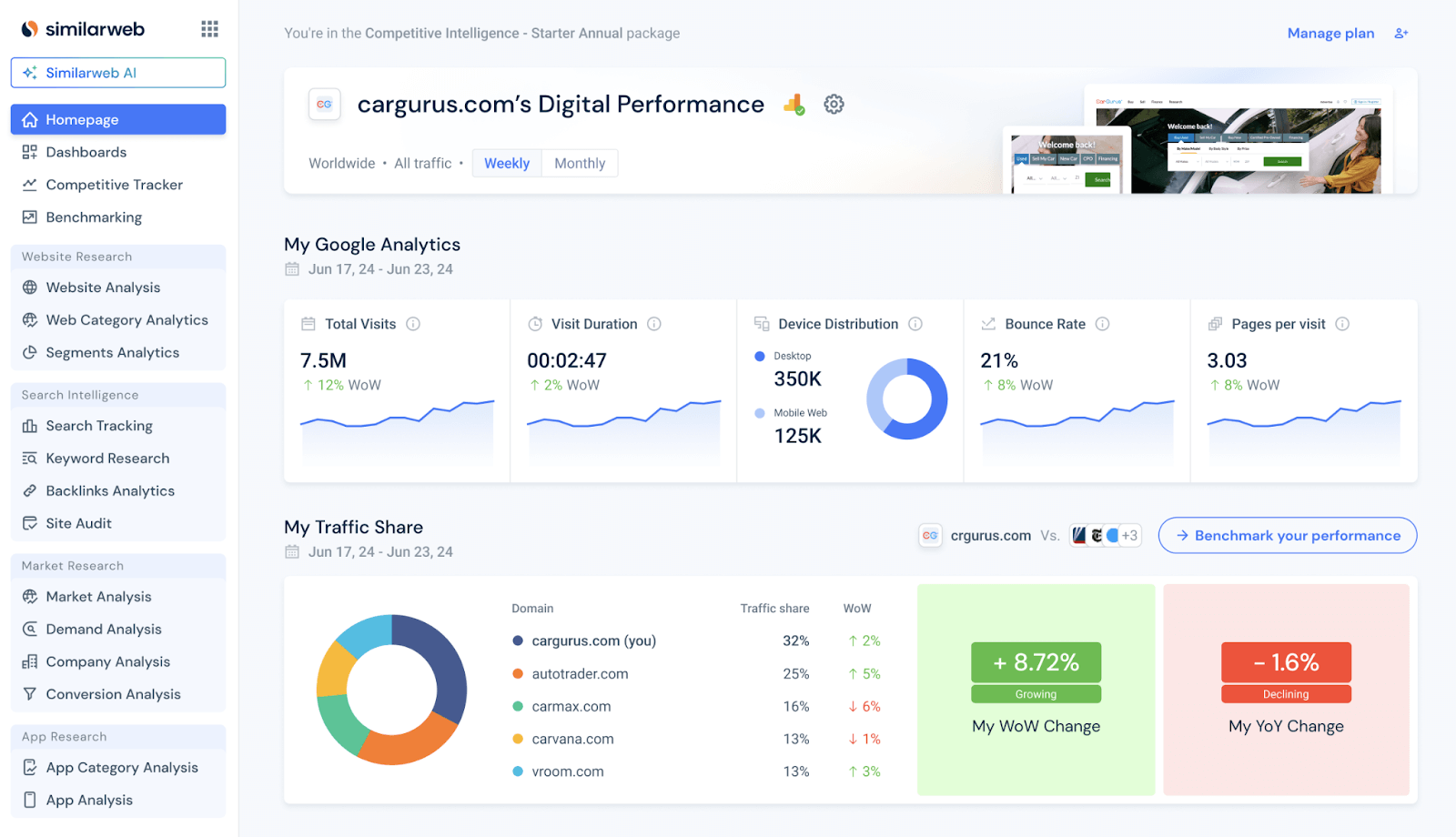
The Similarweb AI Trend Analyzer Agent uses AI to detect and explain sudden changes in search demand, helping advertisers spot opportunities before competitors. It clusters related keywords, tracks rising search terms, and connects spikes in search activity to real-world events or market changes.
Key features include:
Optmyzr applies AI to help advertisers automate PPC campaign management across Google Ads, Microsoft Ads, Amazon Ads, and Meta. Its AI-powered solutions enable decision-making, optimization, and automated workflows that reduce manual effort.
Key features include:
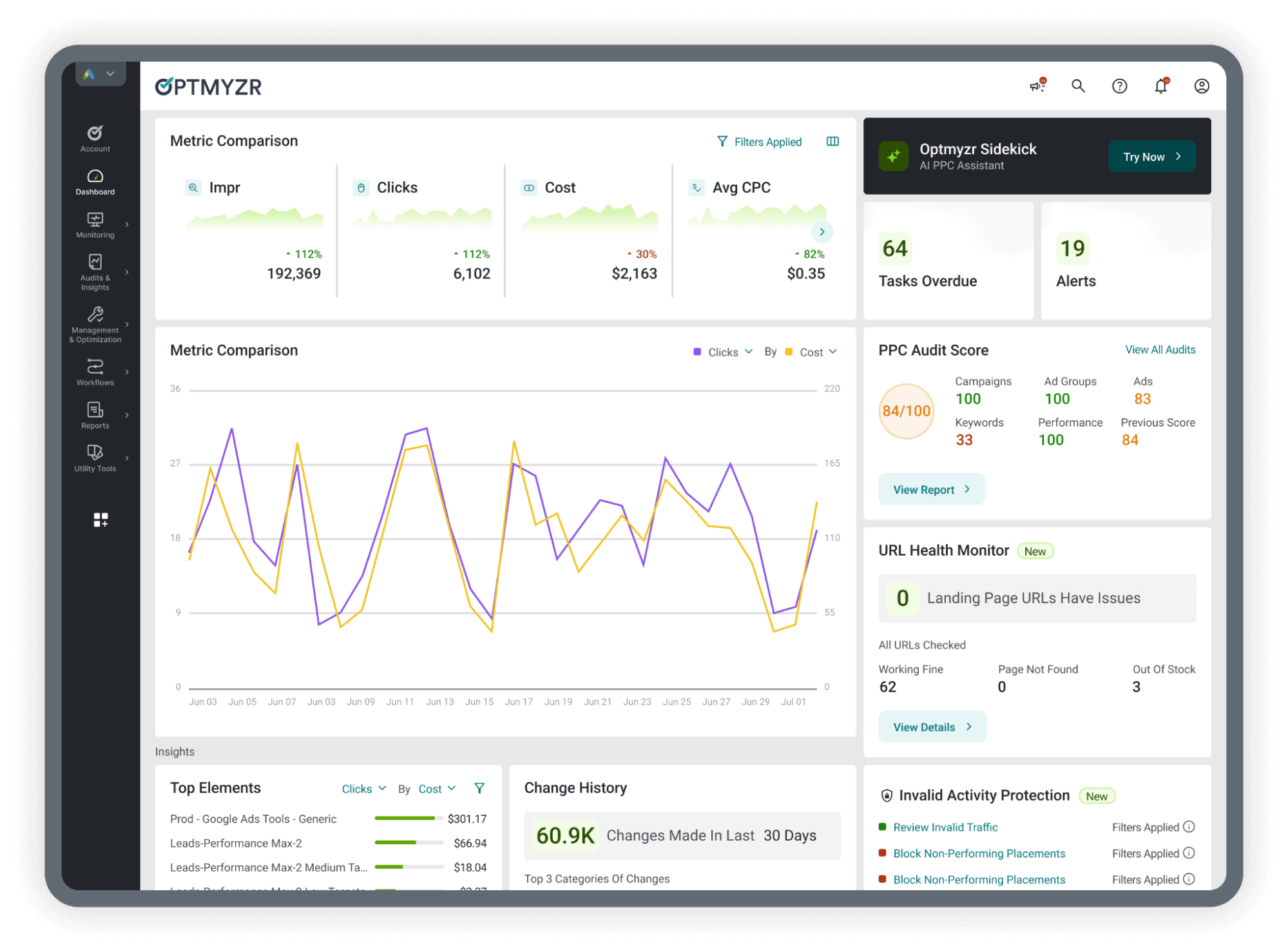
Source: Optmyzr
Adalysis uses AI to automate PPC optimization across Google Ads and Microsoft Ads. It runs account-wide audits, flags performance issues, and offers actionable suggestions based on AI analysis. Adalysis helps agencies and brands with large account portfolios simplify management while focusing on strategic growth.
Key features include:
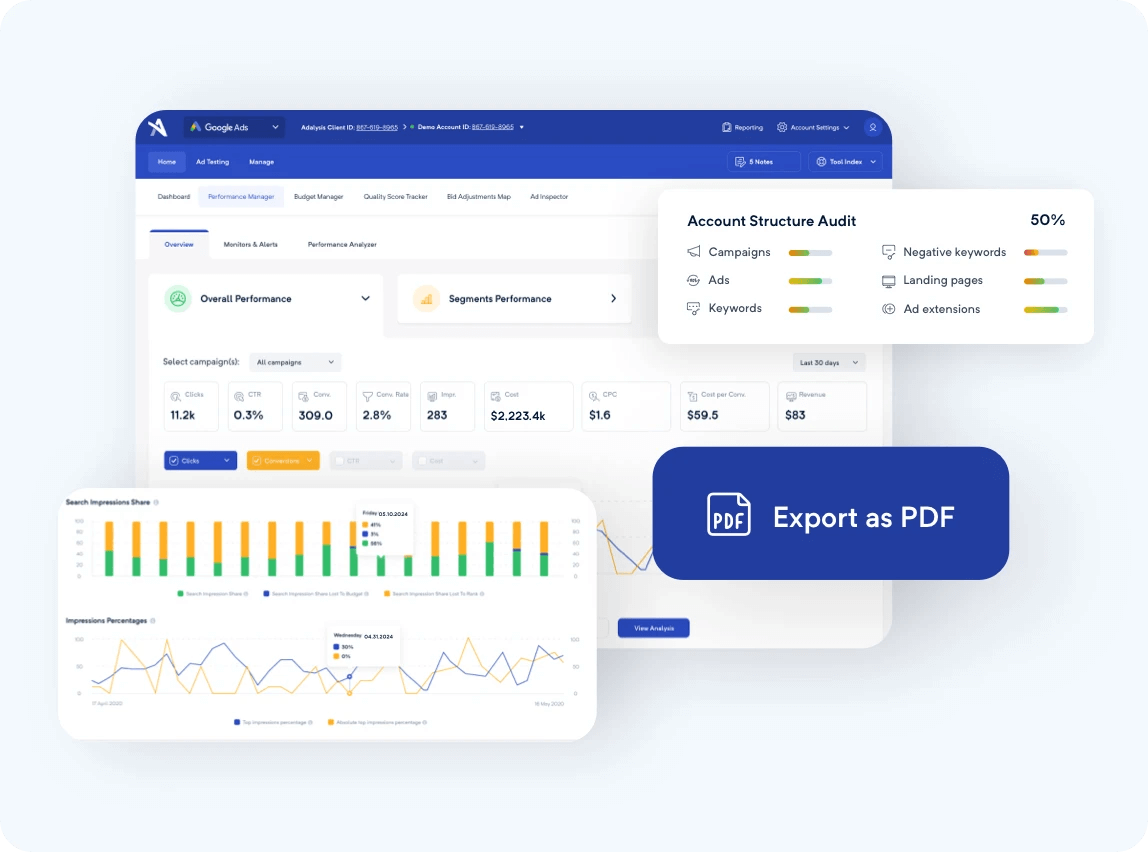
Source: Adalysis
Writesonic uses generative AI to help marketers create ad copy, landing pages, and blog content optimized for PPC campaigns. Its AI models generate text tailored for conversions, making it useful for crafting ad headlines, descriptions, and promotional content across platforms.
Key features include:
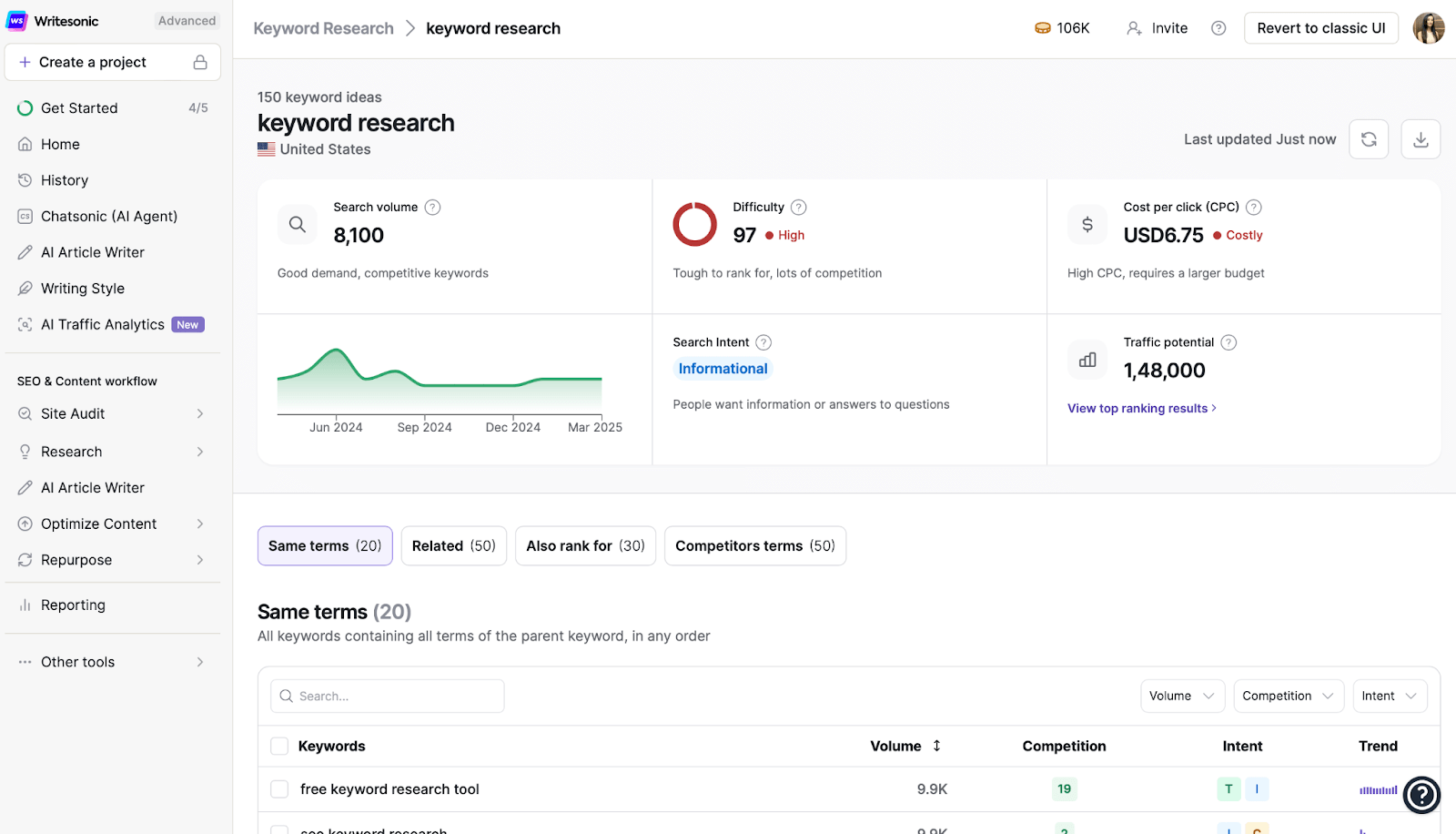
Source: Writesonic
copy.ai offers AI-powered tools to create PPC ad copy, blog content, and social media posts. It focuses on generating persuasive, audience-focused text using prebuilt templates and custom prompts. Its AI models help marketers craft engaging messaging that fits with campaign objectives and audience needs.
Key features include:
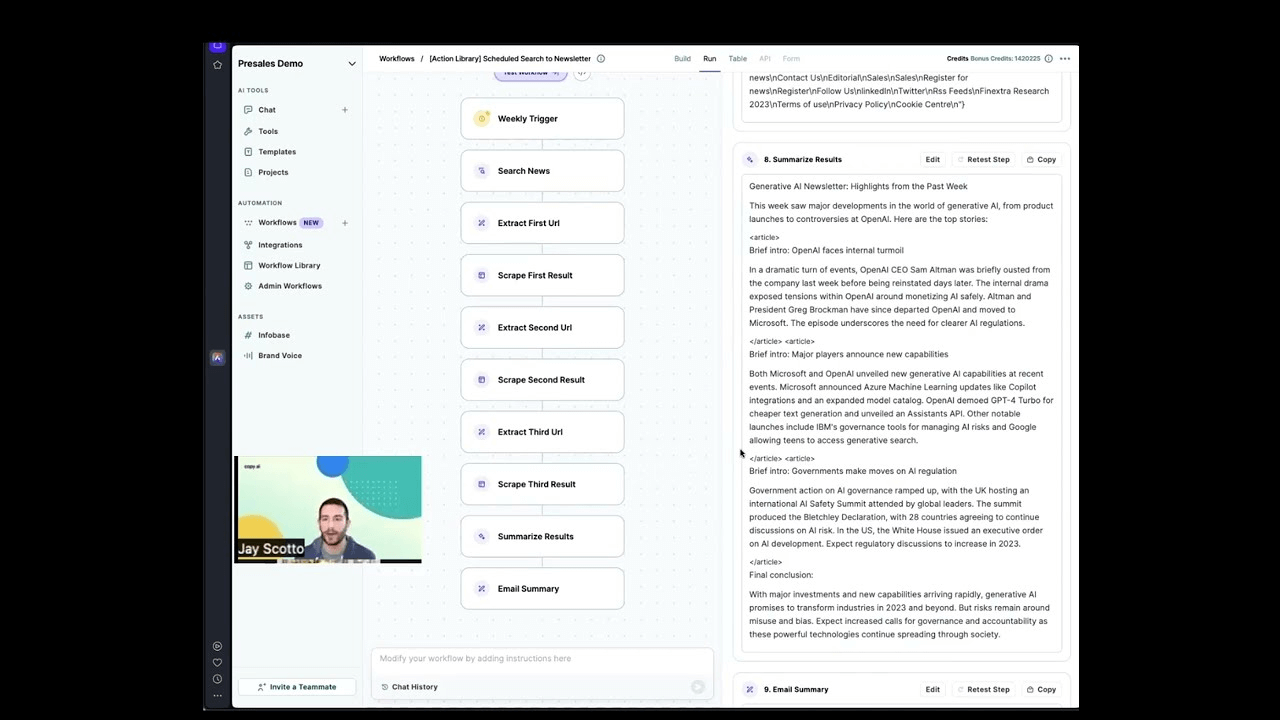
Source: copy.ai
AdCreative.ai is an AI-powered platform that generates ad creatives, including banners, texts, product photos, and videos. Designed for marketers, agencies, and eCommerce brands, the platform combines creative automation with analytics to deliver conversion-optimized assets and strategic insights before you spend on media.
Key features include:
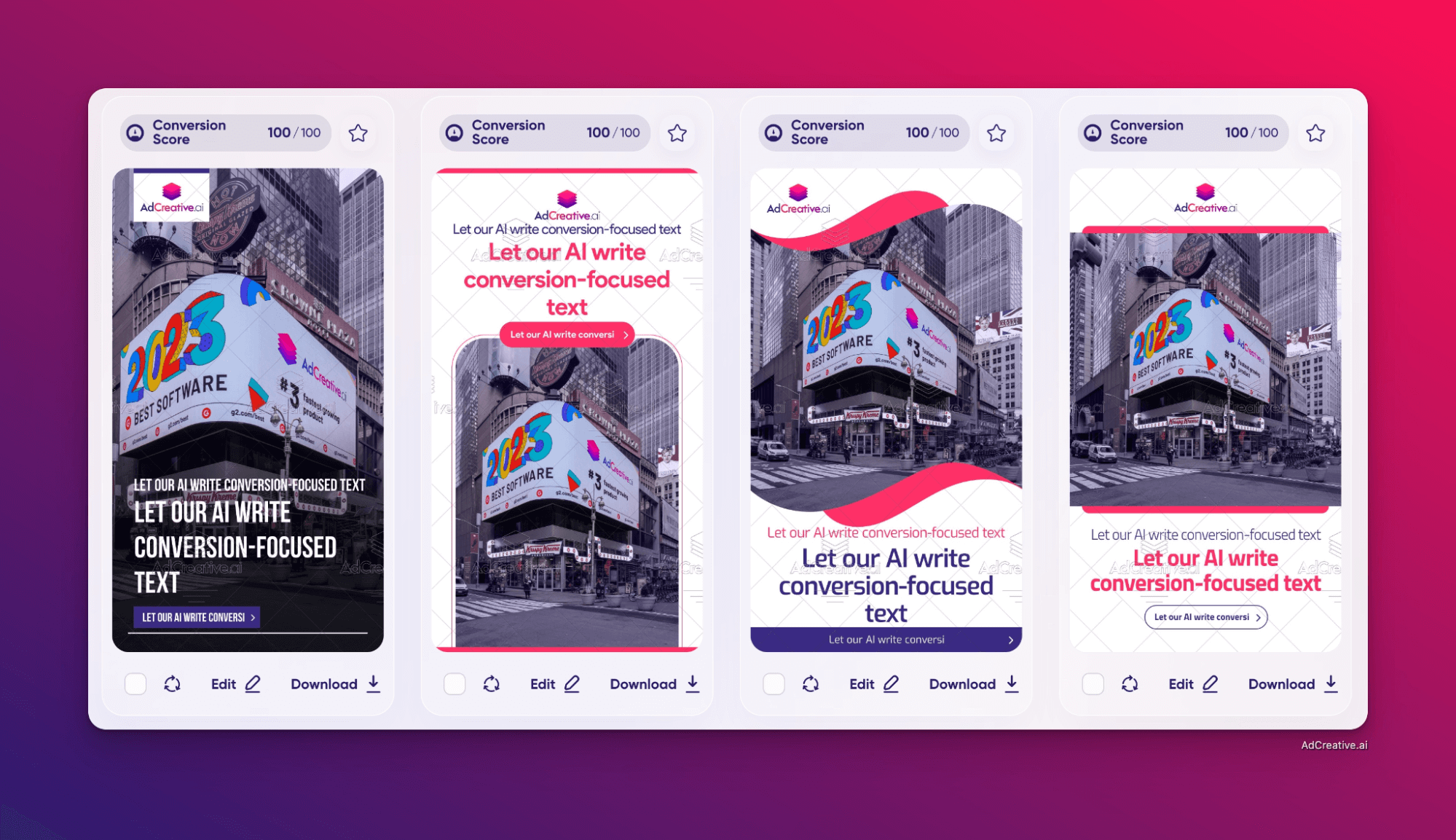
Source: AdCreative
Canva is a visual design platform that supports content creation across a range of formats, suitable for PPC campaigns and digital marketing. It combines a drag-and-drop interface with AI-powered features to help users create on-brand visuals, copy, and videos quickly.
Key features:
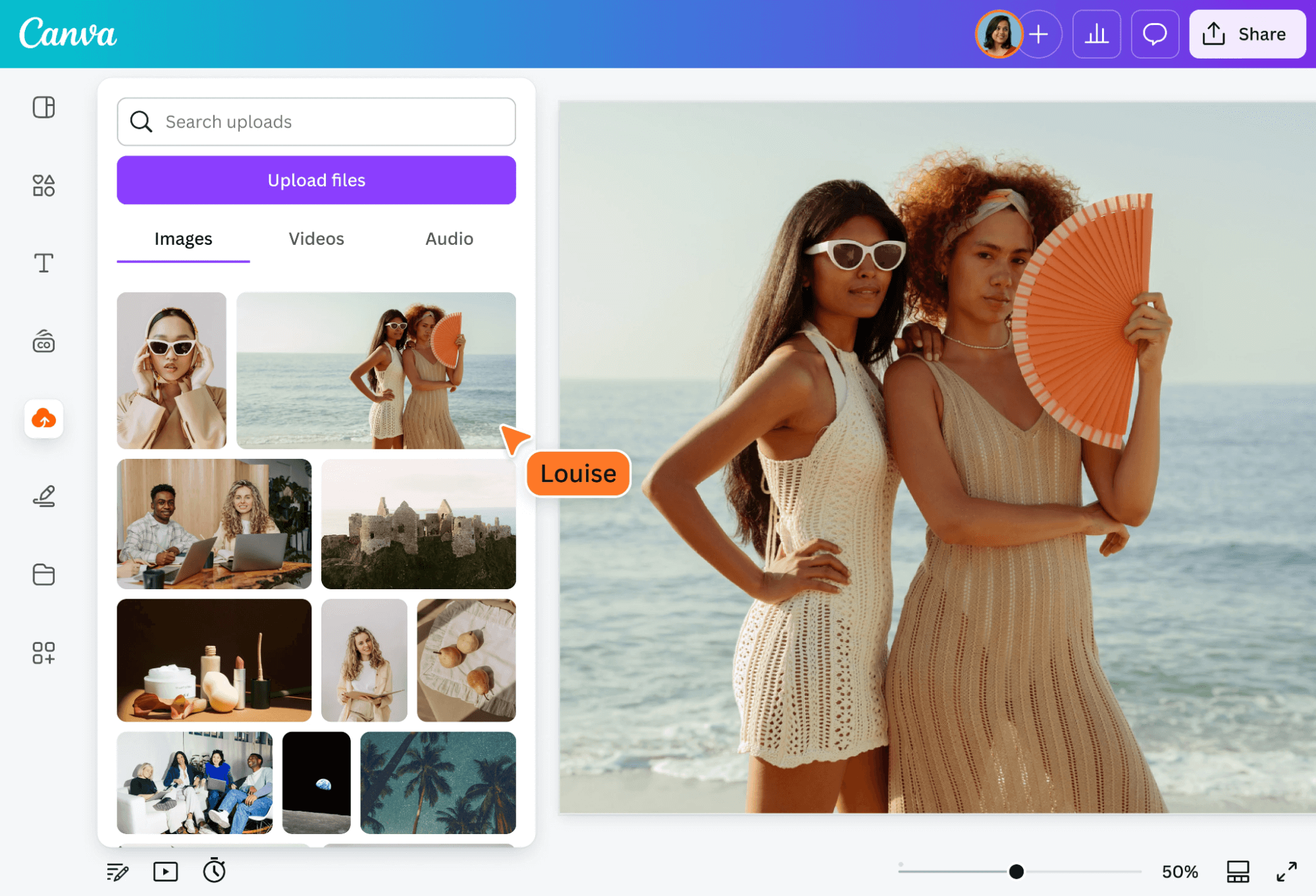
Source: Canva
Creatopy is an AI-powered ad design and management platform intended for maintaining brand consistency. It enables teams to generate, customize, and deploy digital ads across multiple platforms with minimal manual work.
Key features:
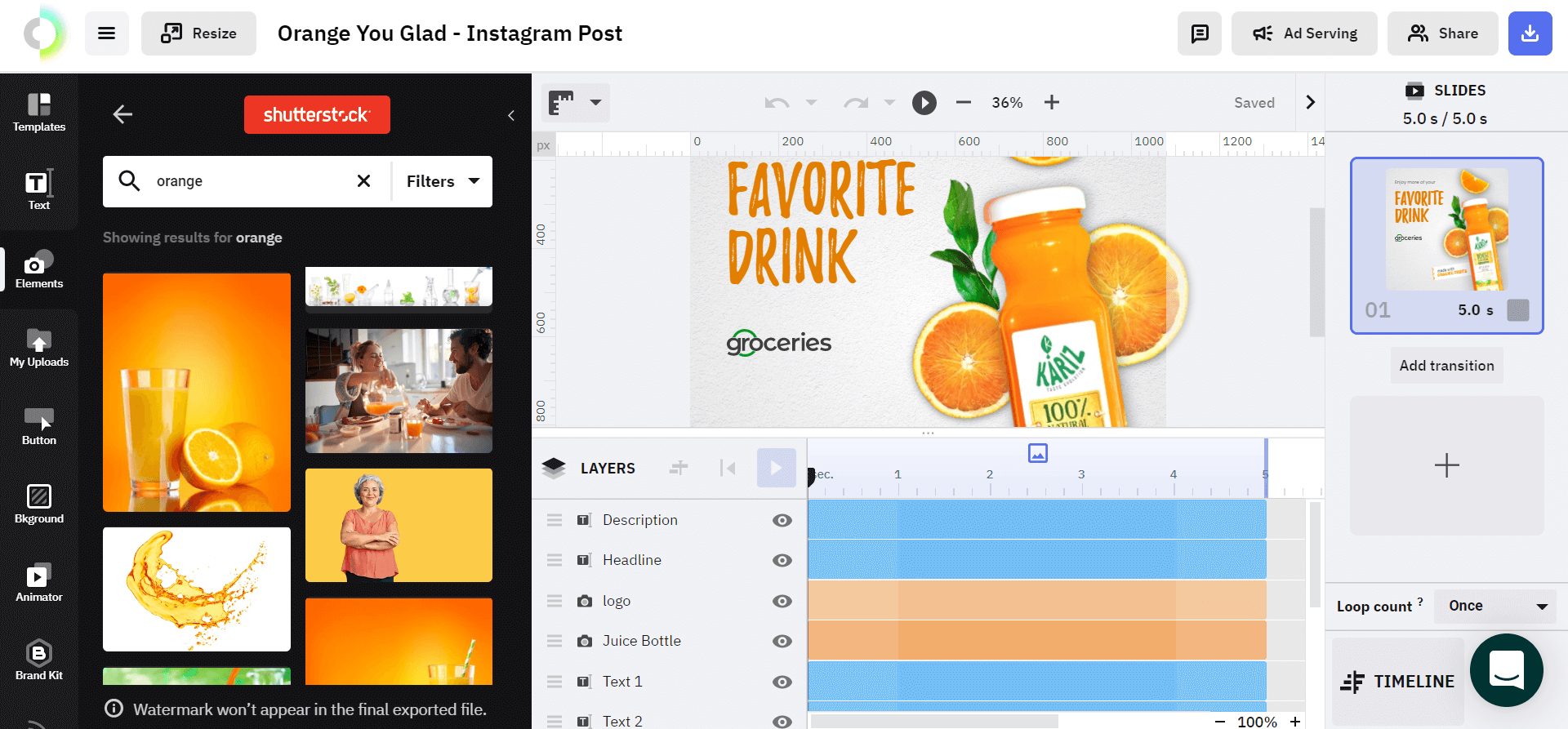
Source: Creatopy
Sivi is a generative AI design tool to create branded marketing visuals without relying on templates. Powered by a proprietary Large Design Model (LDM), Sivi generates ad creatives, banners, email designs, and YouTube thumbnails, customized to brand guidelines and available in several languages.
Key features:

Source: Sivi.ai
AI is not just a tool, it’s becoming the backbone of modern PPC advertising. By automating routine tasks and providing real-time insights, AI allows marketers to focus more on strategy and less on manual operations. With Similarweb, you can use AI to do faster, smarter keyword research and more insightful paid competitor analysis.
But the real advantage comes from using AI thoughtfully. Success depends on how well teams integrate AI into their workflows, monitor its decisions, and adapt strategies based on performance data. AI works best when paired with human judgment and continuous testing.
As competition in digital advertising intensifies, using AI effectively can mean the difference between good results and great ones. Marketers who embrace AI-powered tools today will be better positioned to scale campaigns, cut waste, and capture higher returns in the evolving PPC landscape.
How does AI improve PPC campaign performance?
AI improves performance by analyzing large data sets in real time to make more accurate decisions about bids, audience targeting, and ad placement. It helps maximize conversions, reduce wasted spend, and streamline campaign management.
What tasks can AI automate in PPC?
AI can automate keyword research, bid adjustments, audience segmentation, ad copy creation, landing page testing, and performance monitoring. This reduces manual workload and speeds up optimization cycles.
Is AI in PPC suitable for small businesses?
Yes, AI tools are accessible for businesses of all sizes. Many platforms offer budget-friendly AI-driven solutions that help small businesses compete more effectively by optimizing ad spend and improving targeting.
What are the risks of using AI in PPC campaigns?
While AI can improve efficiency, over-reliance on automation without human oversight can lead to budget waste or missed strategic opportunities. It’s important to review AI-driven changes regularly and combine them with human judgment for best results.

by Gil Feldman
Gil is a Performance Marketing Director with 13+ years of experience in digital marketing. He worked in different startups from all sizes and industries like gaming, SaaS, Fintech and more
Top Ecommerce Companies in the USA: The 100 Brands Winning the Traffic Race in 2026

3 of the Sharpest Minds Weigh in on the State of Gen AI in 2026

Give it a try or talk to our marketing team — don’t worry, it’s free!