


 Marketing Intelligence
The Ultimate Guide to AI for SEO: 8 Essential Tools and How to Use Them

AI has entered mainstream use in SEO, making search optimization smarter and more efficient. From keyword research to content creation and optimization and smarter data-driven strategies, AI is giving SEO experts powerful tools to outpace competitors.
Artificial intelligence is changing how SEO professionals develop and execute their strategies. Rather than replacing traditional SEO, AI is improving it, by simplifying time-consuming tasks, uncovering new optimization opportunities, and enabling more agile decision-making. SEO pros are using AI to improve everything from keyword research to technical site audits.
A common use case of AI-powered tools is adapting content to search intent. According to Statista, 84% of marketers now use AI to better match their content to what users are actually looking for. AI is making it possible to process keywords, cluster structure, and large volumes of content, correlating them with speed and accuracy that was previously impossible.
Content creation is another area where AI is significant. According to Survey Monkey, 50% of marketing professionals say they “most often use AI tools” to create content. This is making it possible to deploy content faster and allows teams to build out content SEO strategies at scale. However, it also raises concerns about content quality and engagement.
Of course, AI has many more uses in SEO, which I’ll cover in the following sections.
Notable AI SEO tools
1. Similarweb
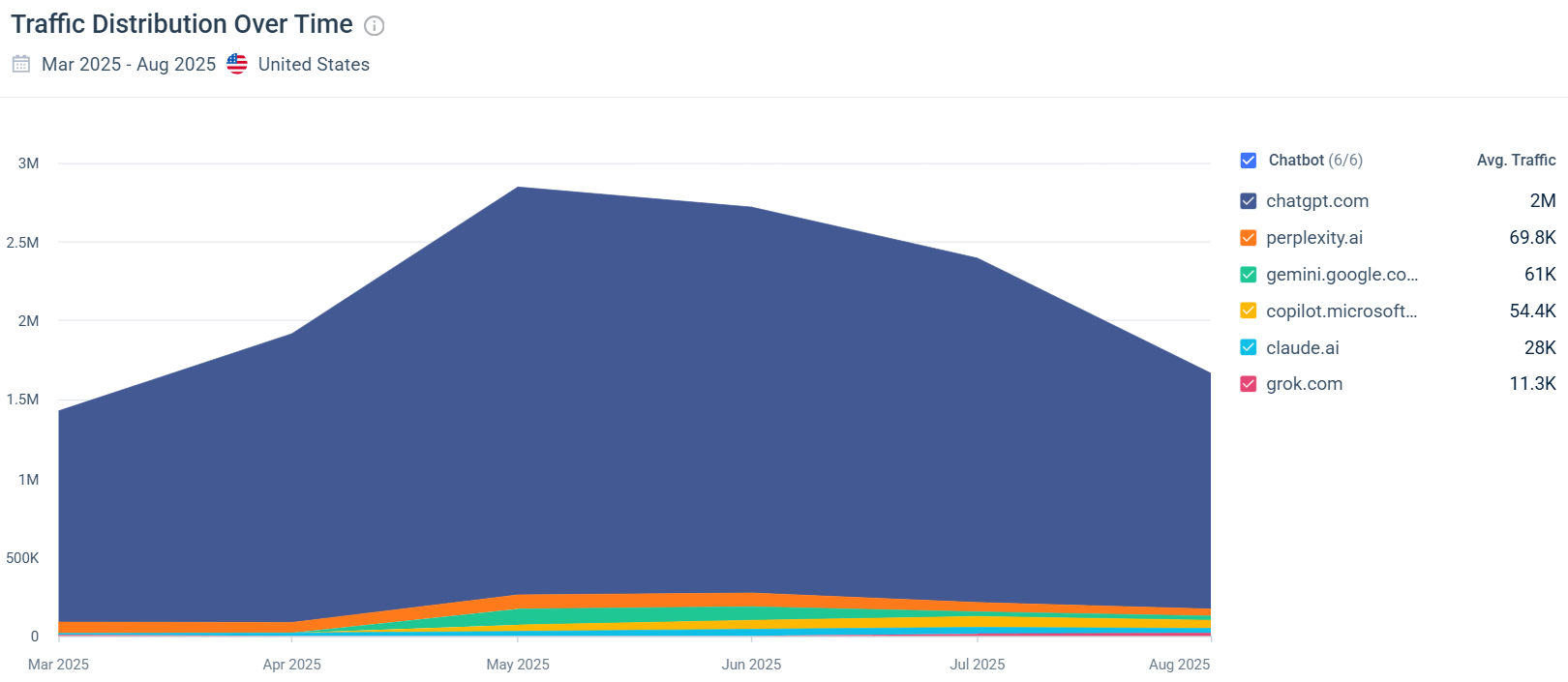
I won’t lie, Similarweb is my go-to tool for most of my AI SEO needs. I’m all about data, and using the most accurate datasets in the world can make the difference between winning your market or losing it. Similarweb is an AI-powered SEO and digital intelligence platform that helps marketers, content teams, and strategists measure their visibility across traditional and generative search, discover keyword opportunities, and build content strategies driven by competitive data.
Unlike traditional SEO tools, Similarweb also tracks traffic and brand mentions coming from AI-driven platforms, giving marketers visibility into a fast-growing traffic channel.
Key AI Search Intelligence features include:
- AI Traffic Tracking: Monitors referral traffic from generative AI platforms. The tool shows which pages are surfaced in chatbot answers, the prompts that triggered those mentions, and how much share of traffic each AI model drives.
- AI Brand Visibility: Tracks how often a brand is mentioned across AI answers, forums, and search results. It compares visibility against competitors and breaks it down by topic to highlight areas of strength or gaps.
- AI SEO Strategist Agent: Turns a keyword wishlist into a complete content plan. The agent analyzes organic traffic, competitor strategies, and intent signals to generate keyword gaps, difficulty scores, and suggested outlines within minutes.
- AI Overview (AIO) Tracking: Shows which queries trigger Google’s AI Overviews and how often a brand’s pages appear in them. This helps prioritize keywords that deliver traffic from both traditional search results and generative answers.
- AI Prompt Analytics: Reseach, analyze and track the prompts that get visibility and traffic to your website or your competitors websites, analyze prompt intent for better optimization insights, and see the pages that AI engines love the most.
- AI Sentiment Analytics: Understand the conversation around your brand and core topics, analyze your audience needs and pains, and create a strategy for increasing positive mentions for you (or negative mentions for your competitors…).
2. MarketMuse
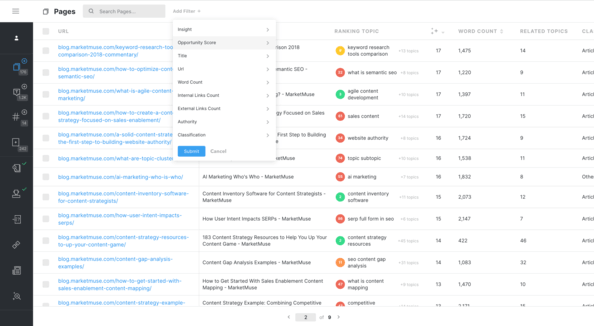
MarketMuse is a content intelligence platform that helps content teams create content strategies based on data-driven insights. Rather than relying on general keyword tools, MarketMuse analyzes existing content, ensures topic authority, and identifies strategic opportunities tailored to the site’s strengths.
Key features include:
- Topic authority analysis: Automatically checks existing content to reveal areas where the brand already has authority and can expand quickly.
- Competitor gap detection: Identifies content opportunities that competitors have overlooked.
- Personalized difficulty scores: Uses AI to assess how difficult it will be for the site to rank for a topic.
- Content planning roadmap: Generates content plans showing what to create or update for maximum impact.
- Inventory analysis: Audits the content library to find quick wins and guide improvements.
Source: MarketMuse
3. Surfer AI
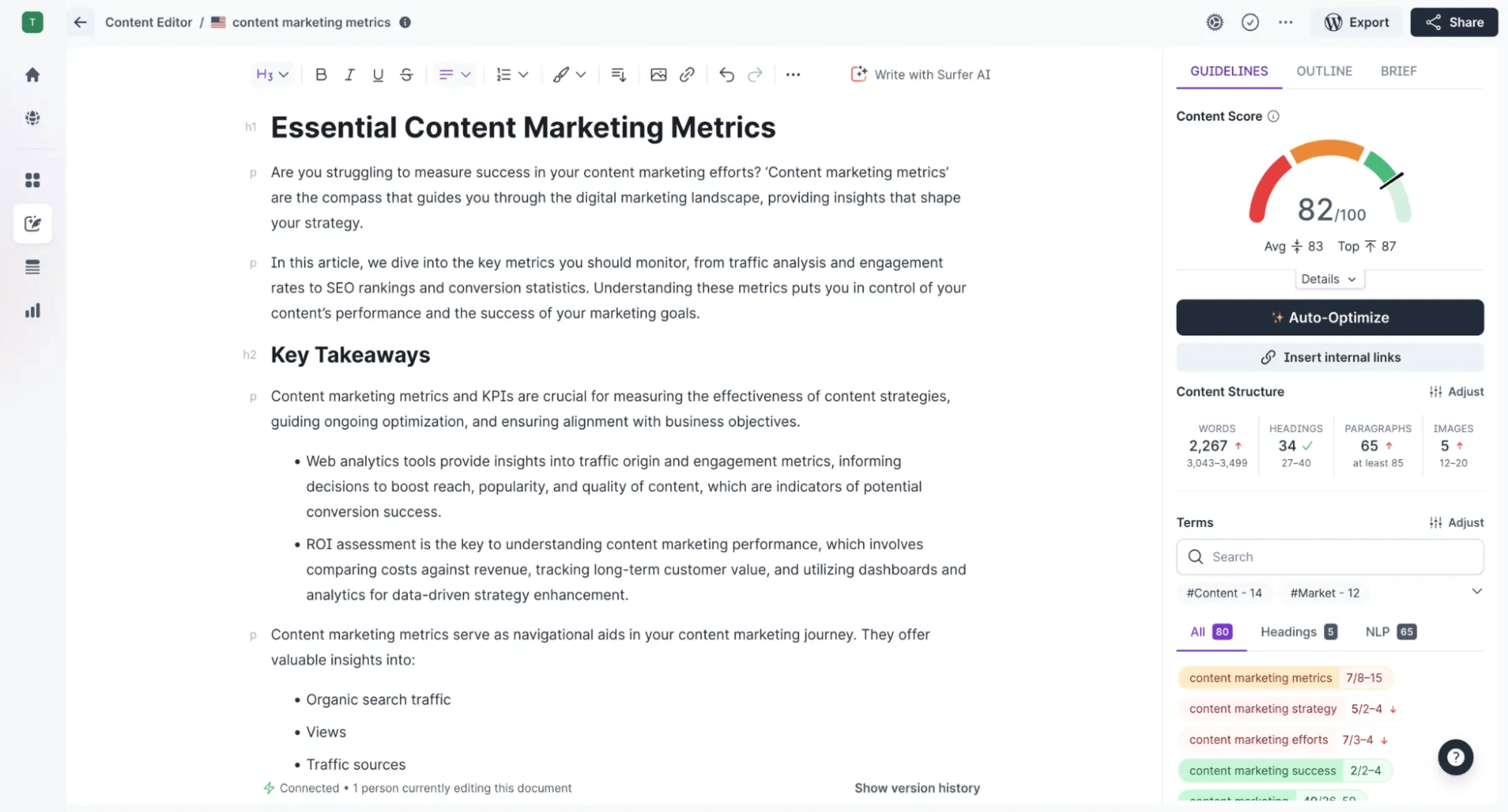
Surfer AI is an AI writing platform for SEO-focused content creation. It automates the research, writing, and optimization process, delivering structured, rank-ready articles. It uses GPT-4o and SERP analysis to help ensure that content is topically relevant and tailored to match user intent.
Key features include:
- Guided article creation workflow: Begin with a keyword, fine-tune article settings, review AI-suggested outlines, and generate a complete article with optimal H2s, H3s, and structure.
- Content engine: Supported by GPT-4o with a 128k token window, enabling research and non-repetitive article transitions.
- SERP-based optimization: Automatically adjusts tone, structure, and FAQs based on top-ranking content by analyzing live SERPs and the “People Also Ask” section.
- Surfy AI assistant: An inline writing assistant that helps rephrase, refine, or expand content.
- Multilingual support: Generates optimized articles in 11 different languages, including Portuguese, German, and French.
Source: Surfer AI
4. Frase
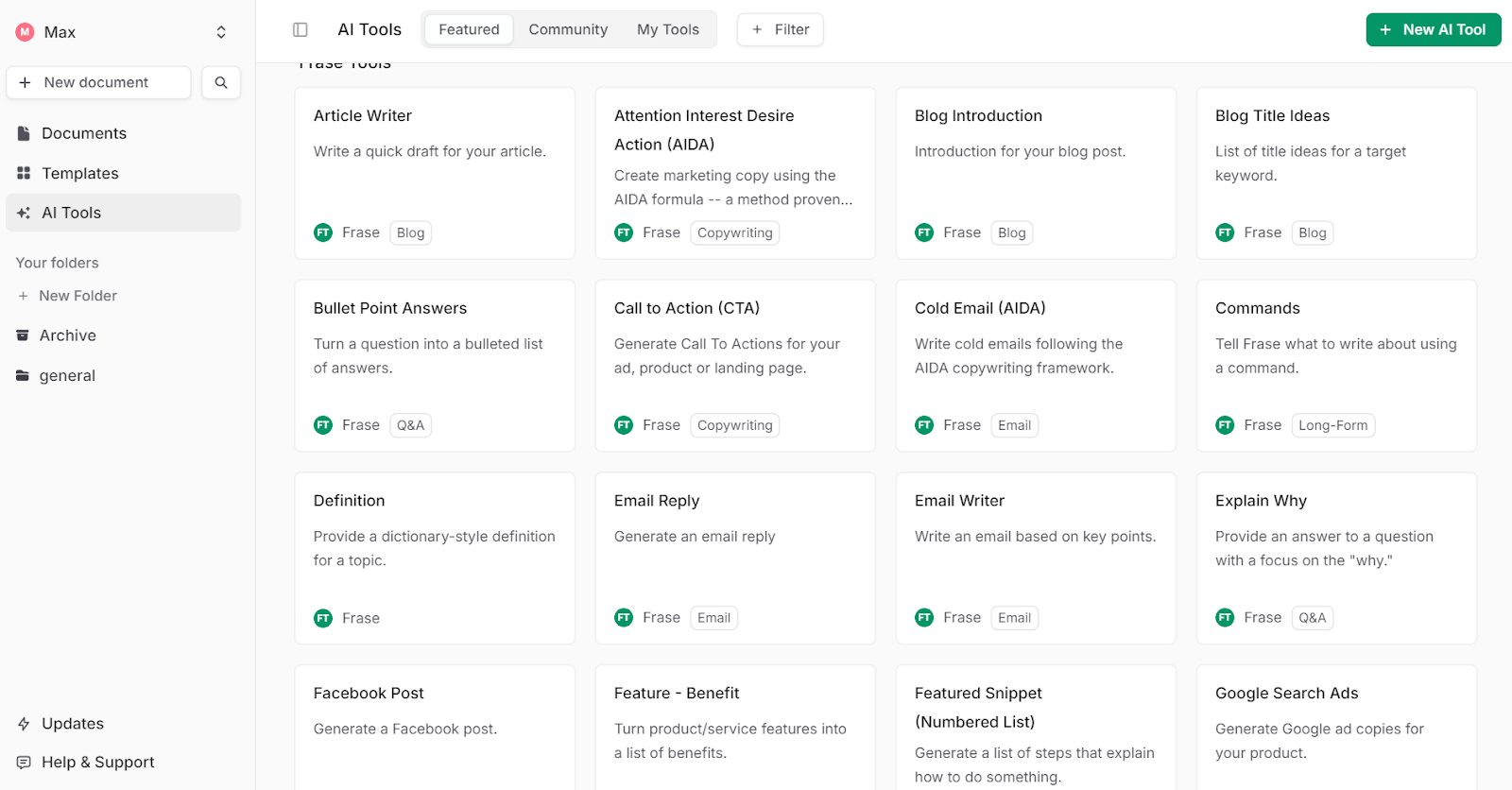
Frase is an AI content creation and optimization platform to help marketers convert keywords to publish-ready content. By combining SERP analysis, content outlining, AI-assisted writing, and optimization into one workspace, it aims to eliminate the need for multiple tools.
Key features include:
- SERP-based research panel: Extracts data from top-ranking pages, including headers, questions, stats, and topic clusters.
- AI content brief generator: Produces SEO-focused content briefs, helping writers understand what to cover.
- Unified writing workspace: Combines research, drafting, and optimization into one interface.
- Topic score optimization: Identifies content gaps and measures how well the article covers the topics found in competing pages.
- Templates and SOPs: Writes can save and reuse content templates, AI prompts, and workflows to ensure consistency.
Source: Frase
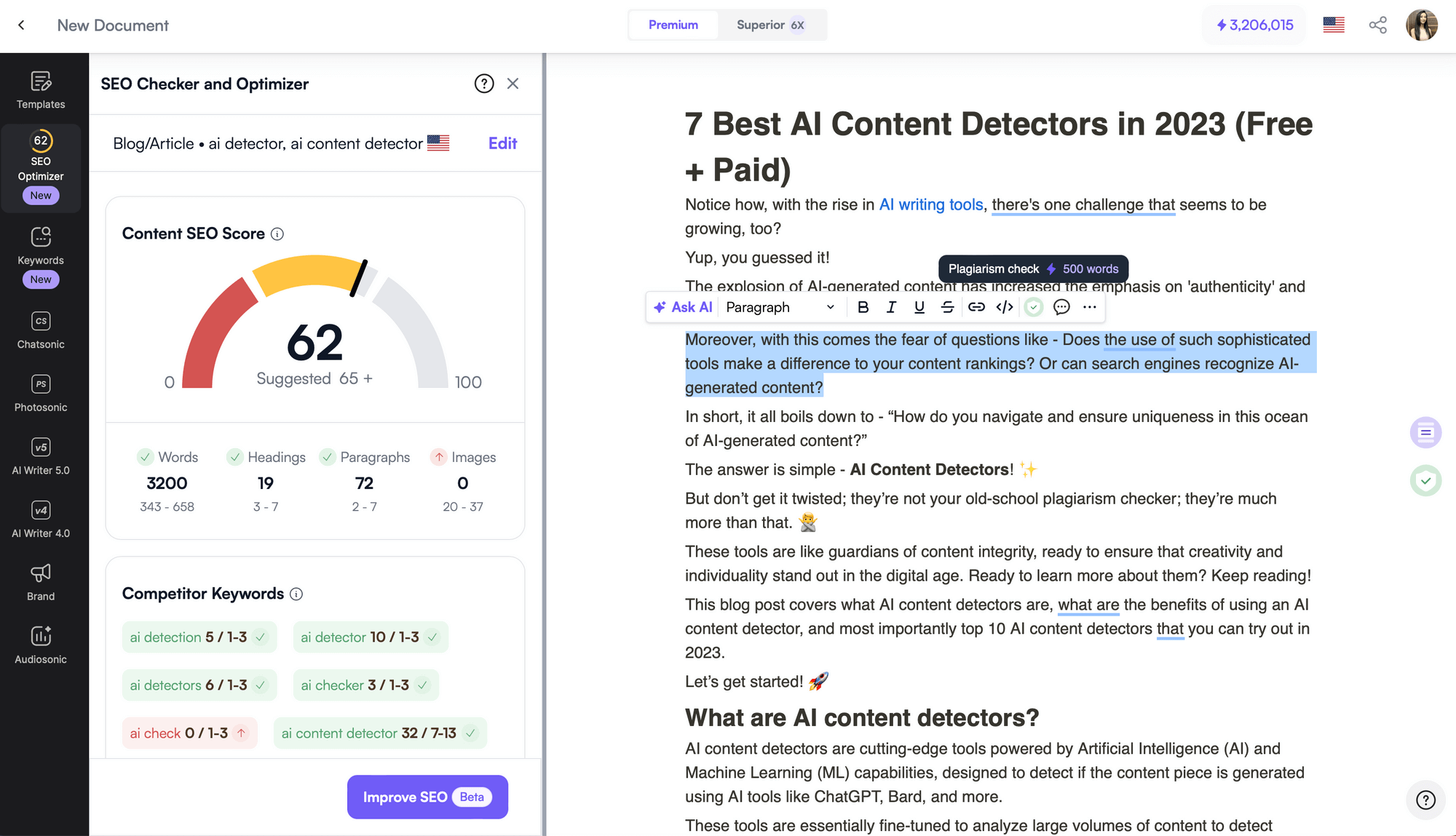
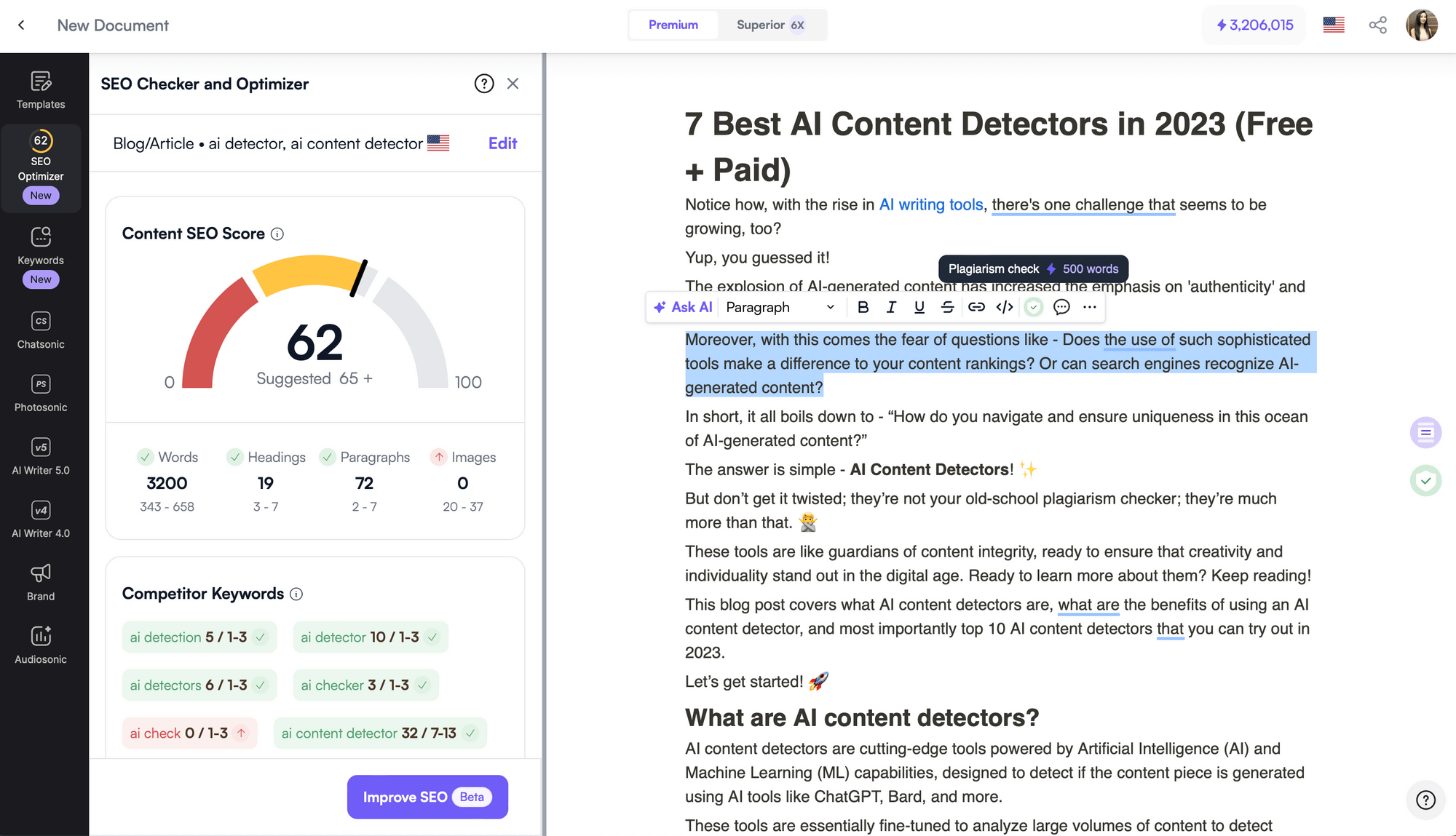
5. Writesonic
Writesonic is an AI marketing and content creation platform to automate SEO, content generation, and generative engine optimization (GEO) workflows.
Key features include:
- SEO research: Pulls data from multiple sources to inform keyword targeting, content strategy, and competitive analysis.
- AI article writer: Generates SEO-optimized, fact-checked content using AI models.
- Custom brand voice: Clones the brand’s tone and style and generates consistent content across articles, emails, and social posts.
- Multi-model flexibility: Choose from AI models like ChatGPT, Claude, and Gemini for tasks or preferences.
- Content optimization engine: Performs on-page and off-page SEO audits, gap analysis, internal linking, and recommends improvements to drive higher rankings.
Source: Writesonic
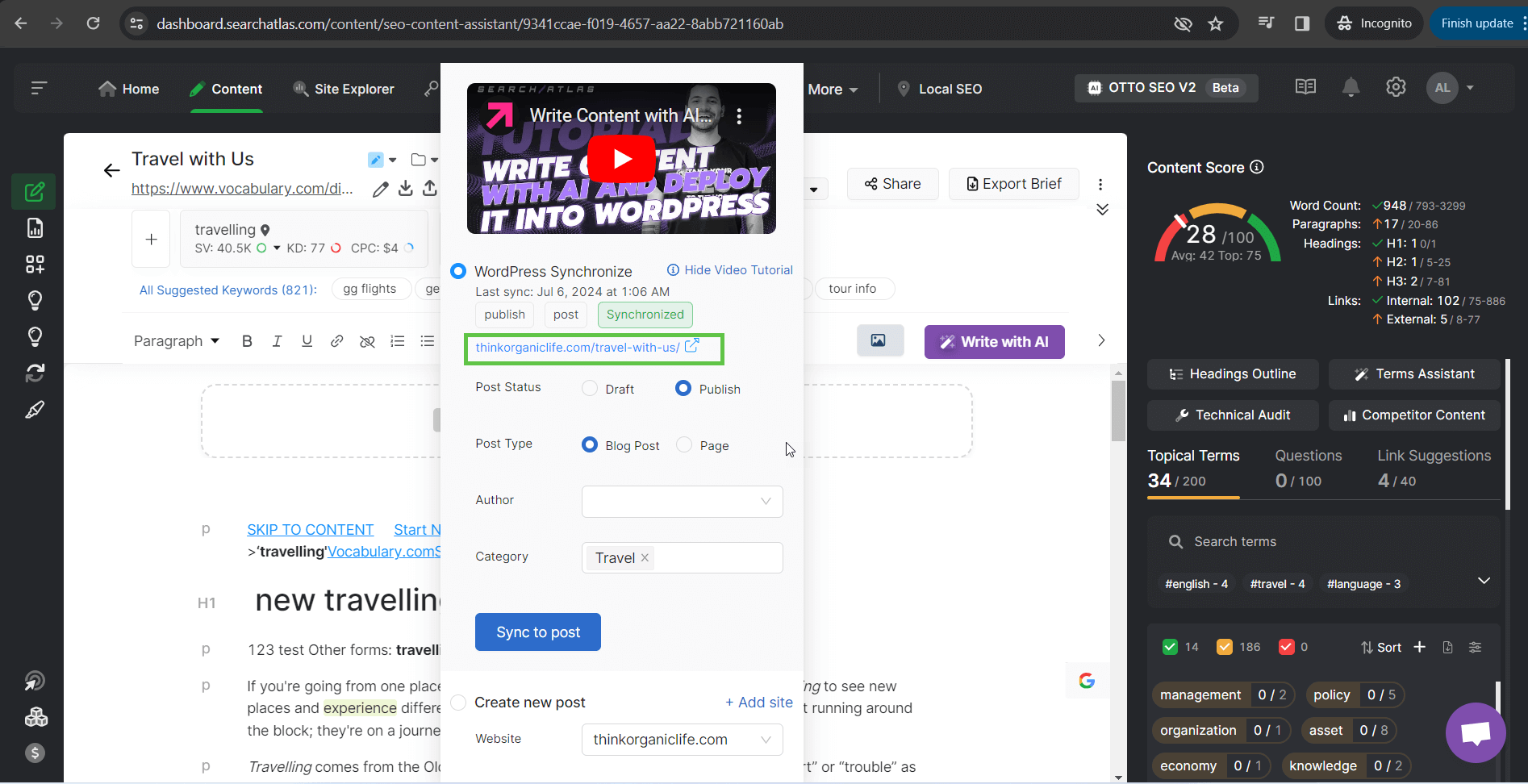
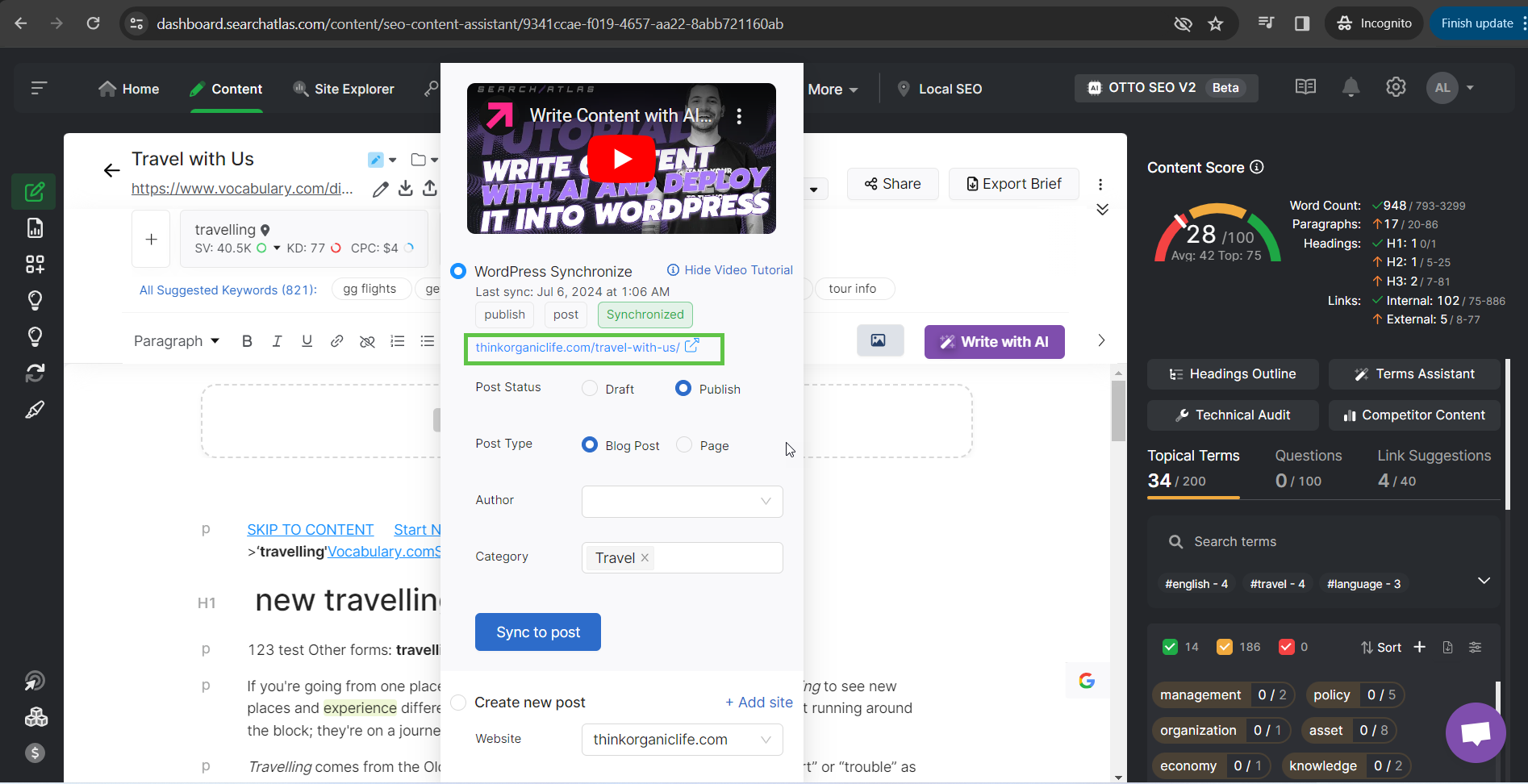
6. Search Atlas
Search Atlas is an SEO platform that blends automation, AI, and search data to help agencies and in-house teams manage and scale organic marketing. Its AI engine, OTTO SEO, enables audits, keyword tracking, content creation, and technical optimization.
General SEO features include:
- OTTO SEO automation: Automatically audits websites, flags technical issues, suggests fixes, and pushes updates live.
- SEO suite: Centralizes keyword research, content optimization, rank tracking, and competitive analysis.
- SEO content assistant: Writes, optimizes, and publishes content from one editor.
- Local and national rank tracking: Monitors keyword rankings across locations and devices.
- Competitor intelligence: Analyzes rival backlinks, keyword strategies, PPC ads, and top-performing content to benchmark performance.
AI features include:
- Predictive SEO recommendations: Uses AI to prioritize high-impact optimization tasks.
- AI content briefs: Generates outlines to target keywords and search intent.
- NLP-powered content scoring: Checks content relevance and semantic coverage against ranking competitors.
- AI-driven link building insights: Identifies backlink opportunities using data models.
- Smart clustering: Groups related keywords and pages for topical authority building and internal linking strategies.
Source: Search Atlas
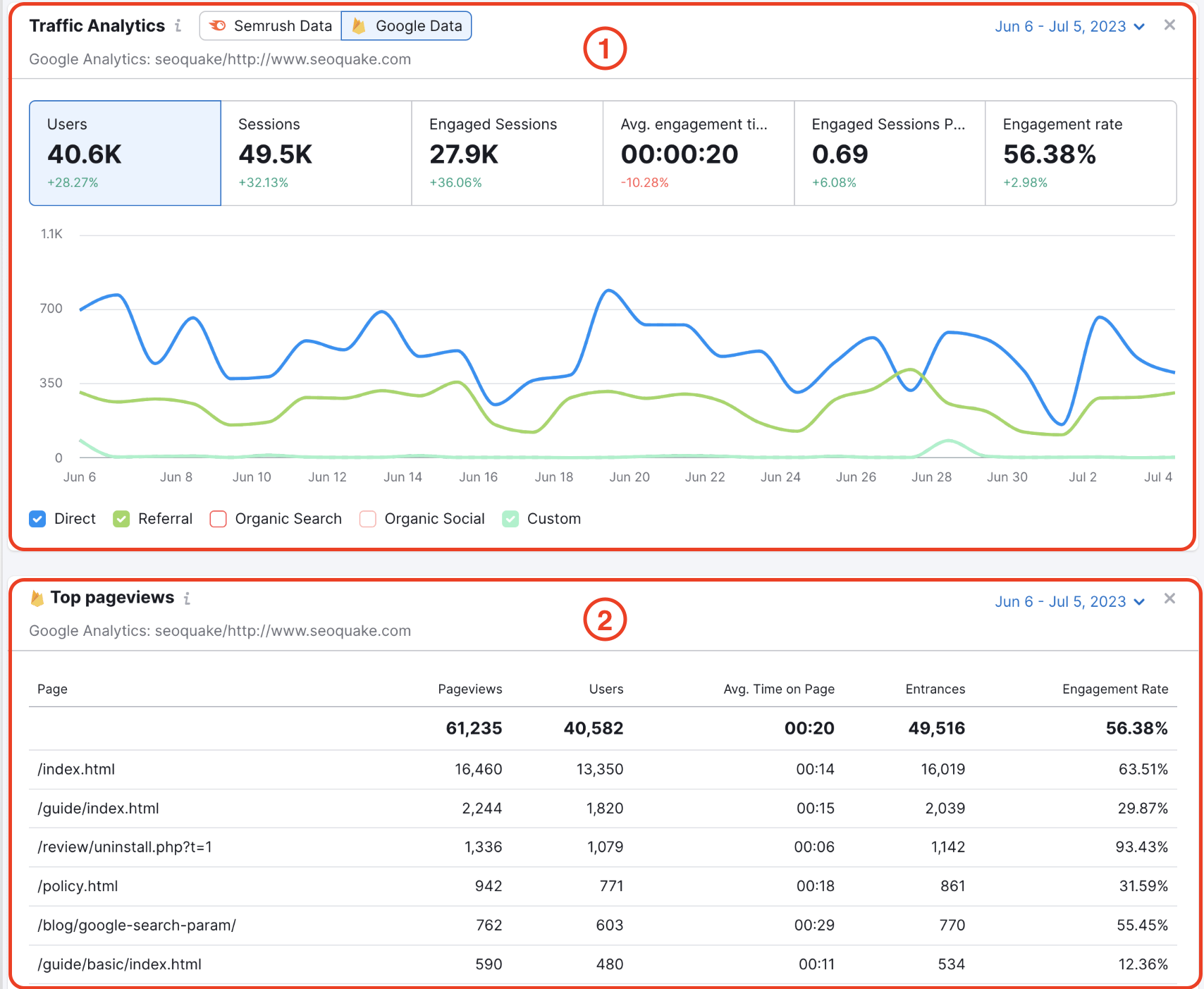
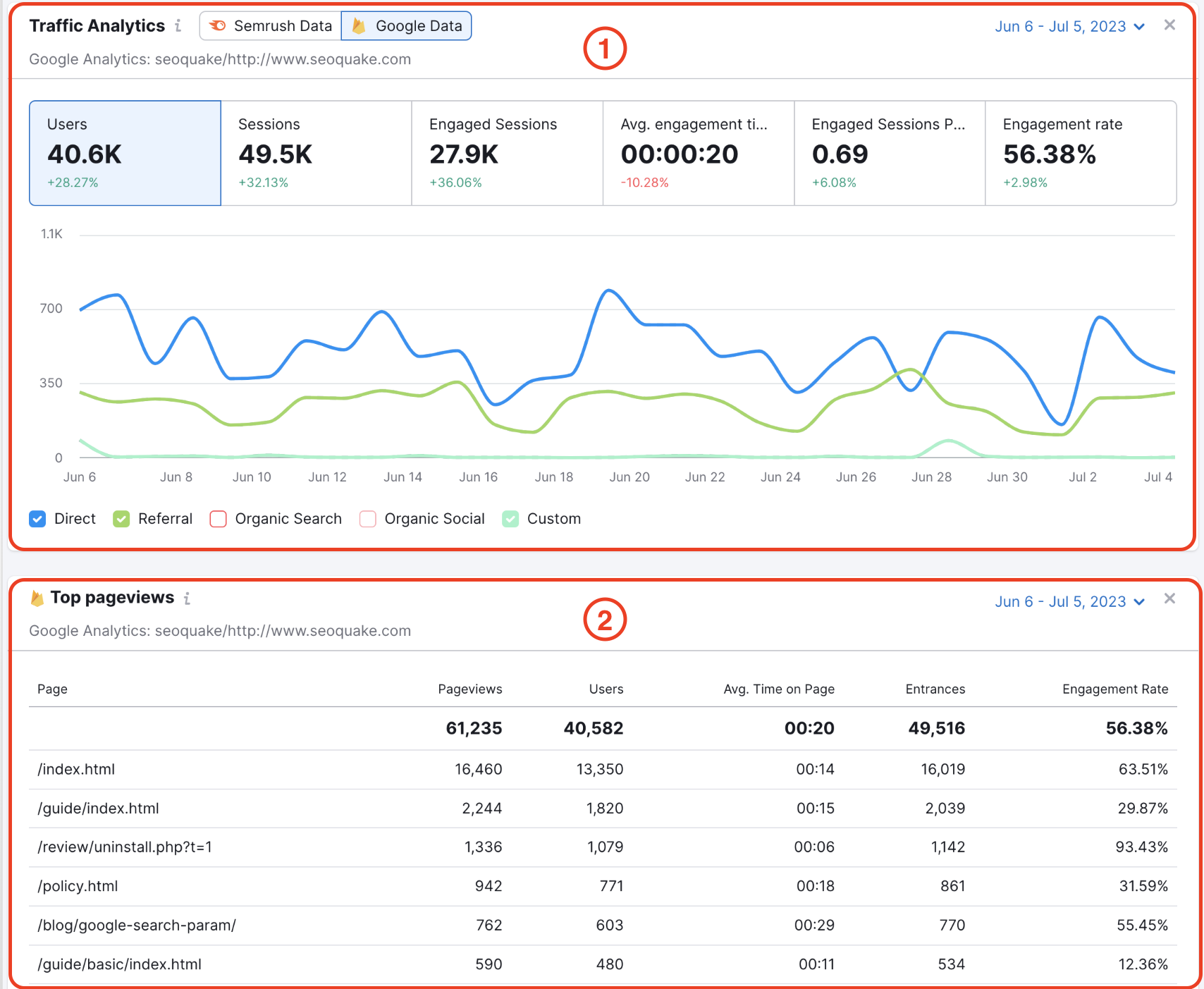
7. Semrush
Semrush is an AI-based marketing platform for SEO, content, advertising, and competitor research. It uses data, automation, and analytics to support online visibility across traditional and AI-driven search platforms.
General SEO features include:
- Marketing toolkits: Offers toolkits for SEO, content, local marketing, advertising, social media, and audience analysis.
- SEO suite: Provides keywords, analyzes backlink profiles, supports technical audits, and helps track rankings.
- Content marketing tools: Generates article ideas, checks performance, and revises content.
- Local SEO optimization: Monitors Google Business Profile performance, manages local listings, and tracks map rankings.
- Traffic & market analytics: Analyzes website traffic sources, audience behavior, and market trends to benchmark competitors.
AI features include:
- AI writing assistant: Generates, rewrites, and edits copy for SEO.
- Keyword intent analysis: Identifies search intent for keywords to guide content creation.
- AI topic research: Suggests topics and headlines based on search trends and competitor gaps.
- Content optimization: Uses AI to recommend semantic terms, readability adjustments, and internal linking.
- AI-based position tracking: Predicts ranking changes and surfaces early signals of algorithm shifts.
Source: Semrush
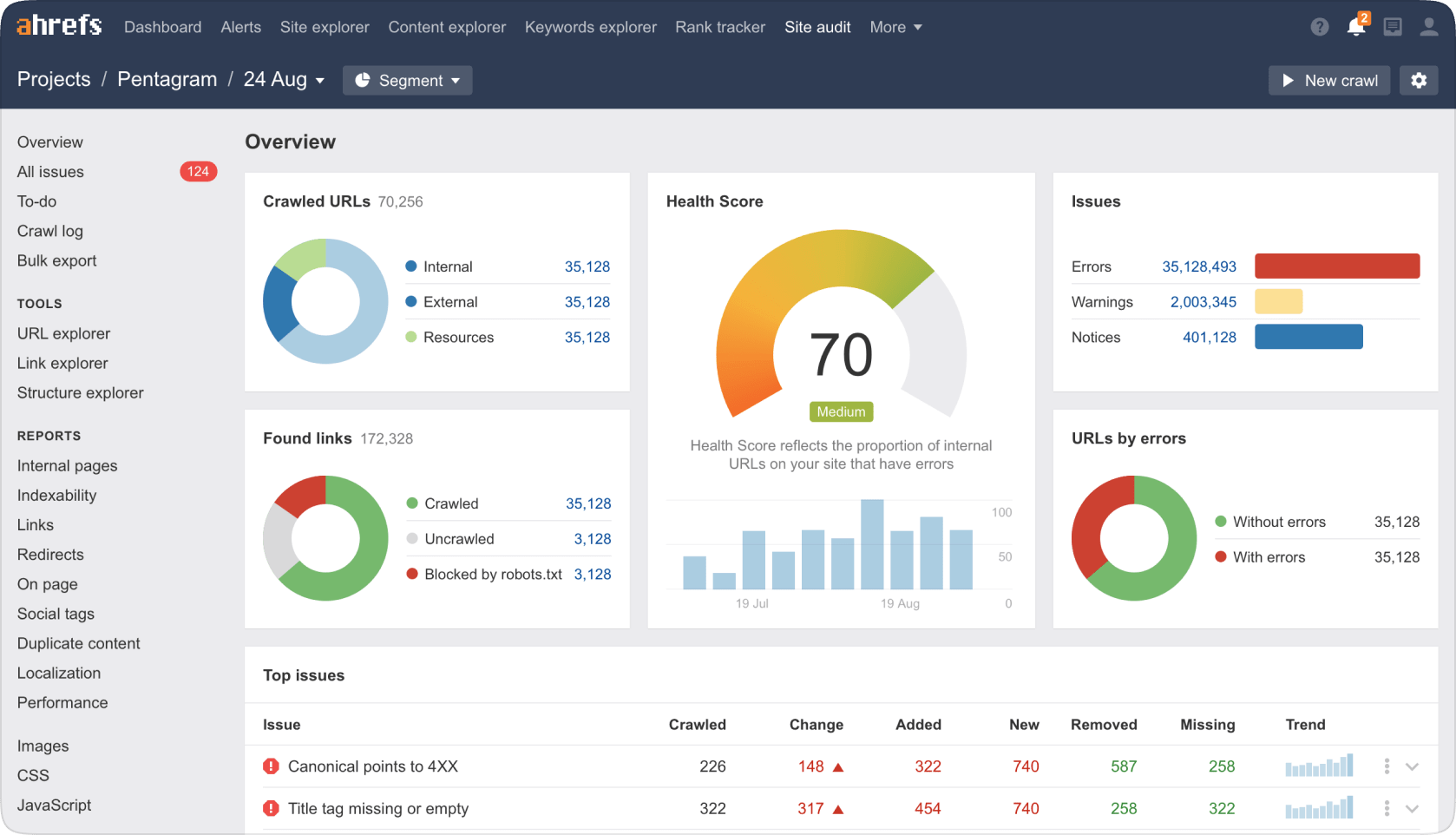
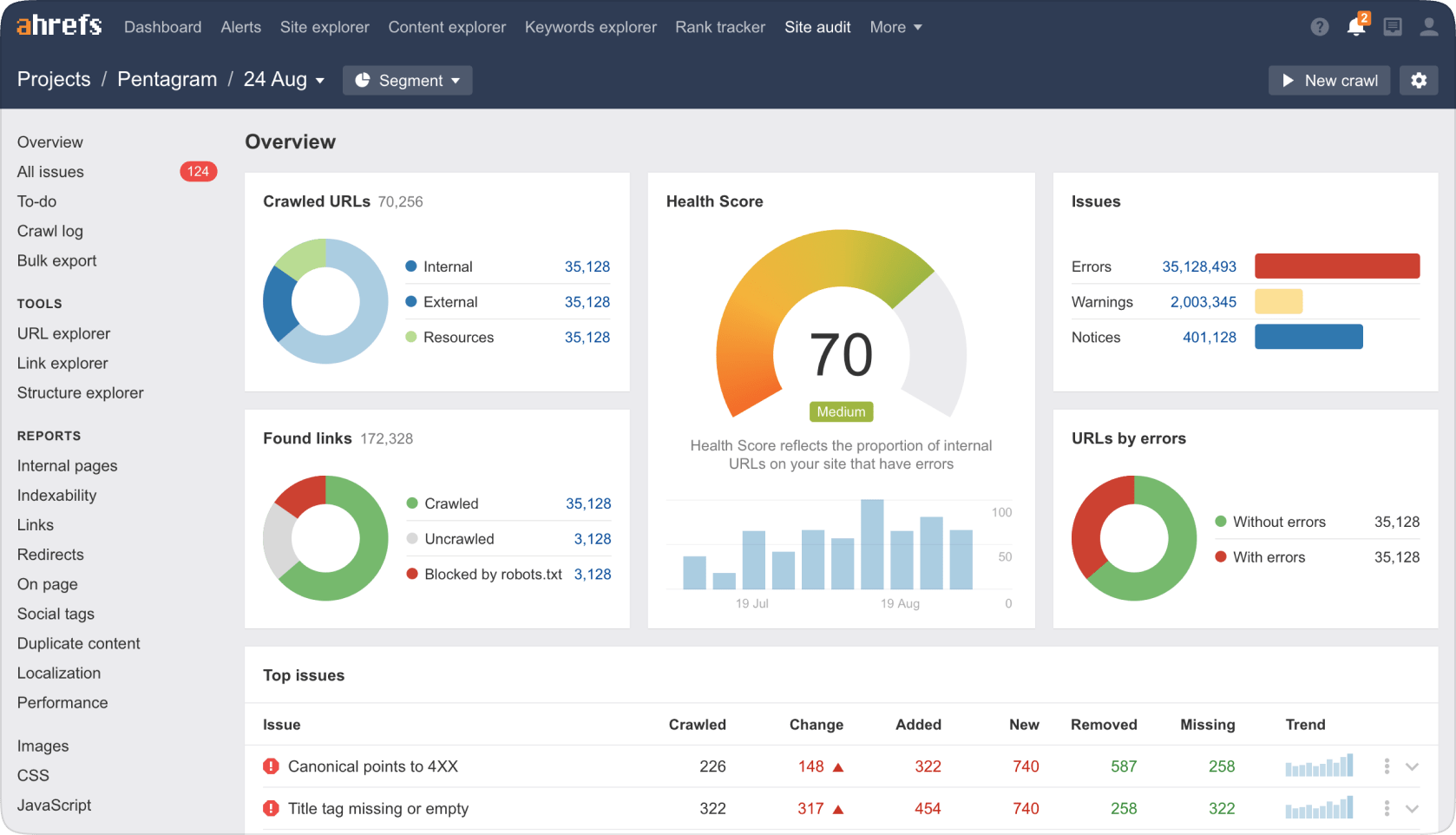
8. Ahrefs
Ahrefs is transitioning from a traditional SEO toolkit into an AI copilot intended to simplify search optimization. Its AI features aim to help marketers with keyword ideation, intent analysis, and content optimization.
General SEO features include:
- AI keyword suggestions: Brainstorms keyword ideas based on intent presets.
- AI search intent analysis: Identifies dominant and secondary intents behind queries.
- Search intent mapping: Uses AI models to classify keywords into categories.
- AI content helper: Scores content and competitors’ pages for topical coverage.
- AI overview tracking: Monitors when keywords trigger AI overviews in Google.
AI features include:
- AI SERP analysis: Breaks down ranking factors and identifies opportunities in competitor pages.
- Content gap finder: Detects missing topics and recommends additions.
- Query refinement suggestions: Helps refine target queries based on semantic relationships and intent.
- Predictive ranking models: Forecasts potential ranking positions for target keywords.
- Natural language processing insights: Highlights entity relationships and concepts to improve semantic SEO.
Source: Ahrefs
How to use AI for SEO with Similarweb?
1. Analyze AI traffic: Generative search platforms (ChatGPT, Perplexity, Gemini, etc.) can drive valuable referral traffic. Our AI Traffic tool tracks how much traffic your site receives from AI chatbots and which pages are being surfaced. The tool displays the share of traffic by chatbot, a timeline of trends and top landing pages.
I like to start by reviewing the overall AI traffic share, then drill down into each engine and the traffic trend from it to my website.
The nest step is looking at the AI traffic share of the individual pages on my website:
- whiche engines send traffic where?
- What’s each engines traffic share for each page?
- Which prompts are leading to each page?
- What patterns can I identify between the pages each AI-engine cite from my website?
Then I add my competitors for a compatitive AI analysis:
- What’s my AI traffic numbers compared to them?
- What’s my competitors AI traffic trend compared to mine?
- Which AI engines send my competitors website traffic?
- What’s my traffic share from AI engines vs. my competiors?
- Compare page by page: which ptompts lead traffic to my competitors websites vs. mine?

2. Inspect landing pages and prompts: Drill down into the AI Traffic report to see which pages visitors land on and what prompts led them there. For example, you can view the actual question users asked a chatbot and which answer contained your link. Use this insight to adjust internal linking, page titles and schema so that important pages are more likely to be referenced by AI models.
3. Monitor brand visibility: Our AI Brand Visibility tool tracks how often your brand is mentioned across AI‑driven answers, forums and traditional search results. The dashboard shows your brand’s visibility trend over time and compares it against competitors. It also breaks down visibility by topic, helping you see which conversations your brand dominates and where you’re falling behind.

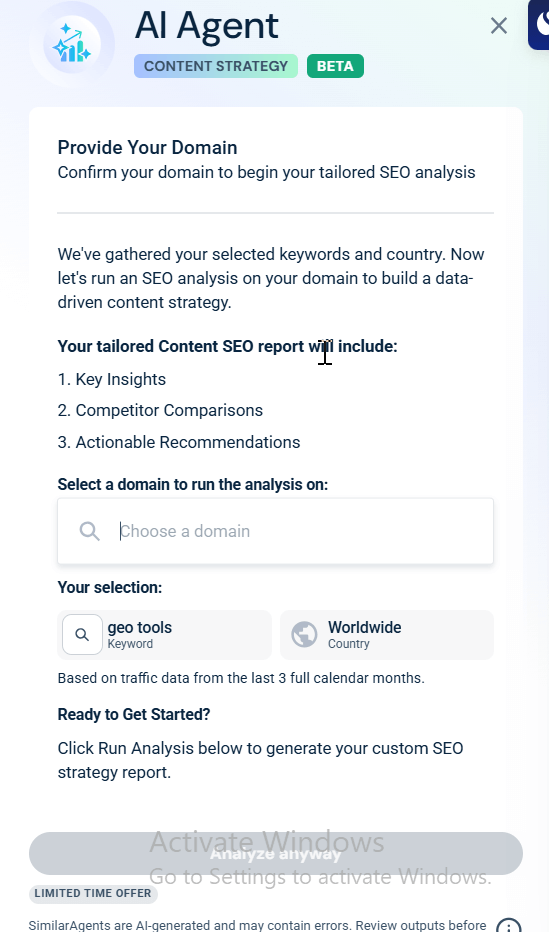
4. Run the AI SEO Strategist agent: The AI SEO Strategist (AI Agent) lets you turn a keyword wishlist into a full content plan. Start by entering one or more topics (e.g., “AI for SEO” or “travel booking”) and run the agent. The agent analyses organic search traffic, competitor performance, and intent signals to identify keyword gaps and subtopics. Within a few minutes, it produces an SEO snapshot showing top keywords, search volume,s and competitive difficulty.
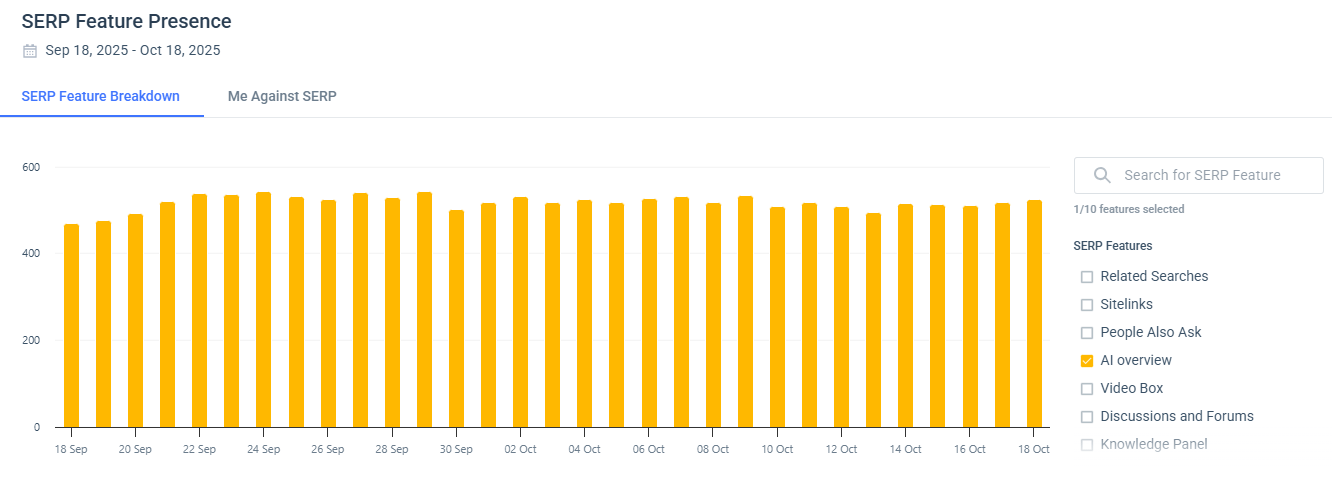
5. Track AI overviews and visibility: Some keywords trigger generative AI answers in search engines. Our AIO Performance feature shows which queries produce AI overviews (AOs) and how often your pages appear in them. Monitoring AIOs helps you prioritize keywords that deliver traffic from both traditional results and AI summaries. For example, after generating a keyword list, filter terms that trigger Google’s AI Overviews and decide whether to optimize for those queries.
AI SEO: Challenges and considerations
Managing consumer trust in AI-generated content
Despite the growing use of AI tools for content creation, consumer trust in AI-generated content remains a concern. Many consumers are optimistic about AI’s potential but remain cautious about the quality and reliability of AI-generated content, particularly when it comes to misinformation. AI models, though improving, are still susceptible to producing “hallucinations” or false information.
Balancing AI reliance and human creativity
While AI tools are undoubtedly improving SEO workflows, over-reliance on automation can lead to a loss of creativity and authenticity. Many marketers report feeling pressure to adopt AI tools but remain wary of becoming too dependent on them. The danger is in treating AI as a volume multiplier, producing more content without considering its quality.
Tool maturity and building AI skills
Many AI SEO tools are still maturing, with feature sets evolving rapidly and user experience often lagging behind. Frequent updates, inconsistent performance, and complex interfaces can limit adoption, especially for less technical users.
To maximize value, teams need to invest in developing AI literacy: understanding how different models work, when to apply them, and how to verify outputs. Building these skills is essential not just for using the tools effectively, but for integrating AI responsibly into long-term SEO strategies.
Implementing AI into your SEO efforts with Similarweb
AI is challanging SEO workflows and tactics at every level, offering unprecedented efficiency and insights. For marketers and SEO professionals, the challenge is learning how to integrate these tools strategically, ensuring that automation supports (not replaces) human expertise and creativity.
We provide several AI agents that can help you integrate AI into your SEO activity. This can unlock new opportunities in strategy, keyword targeting, and content creation. Teams that combine AI’s analytical power with human intuition and storytelling will be best positioned to dominate search visibility in an increasingly complex and competitive SEO landscape.
FAQs
How is AI changing SEO?
AI is transforming SEO by automating time-intensive tasks like keyword research, content optimization, and technical audits. It also helps predict trends and user intent, enabling marketers to adapt their strategies faster than before.
What are the most common AI tools for SEO?
Popular AI SEO tools include Similarweb, Surfer AI, and MarketMuse. These platforms assist with keyword analysis, content generation, backlink tracking, and predictive SEO insights to improve rankings and organic traffic.
Can AI replace human SEO specialists?
No. While AI simplifies workflows and provides data-driven recommendations, human creativity and strategic thinking remain critical for building authentic, engaging, and effective SEO campaigns.
Is AI-generated content good for SEO?
AI-generated content can be optimized for SEO, but quality varies. To avoid issues like thin content or poor engagement, it’s best to combine AI writing tools with human editing and oversight.
What are the risks of using AI for SEO?
Risks include over-optimization, generic content, and potential misinformation from AI-generated outputs. It’s important to use AI as a support tool rather than relying on it exclusively for SEO strategies.

Related Posts



Why AI Engines Cite UGC Over Brand Content And How To Leverage It For AEO

AI Mentions vs. AI Citations: What’s the Difference and Why It Matters for GEO



Wondering what Similarweb can do for your business?
Give it a try or talk to our insights team — don’t worry, it’s free!