




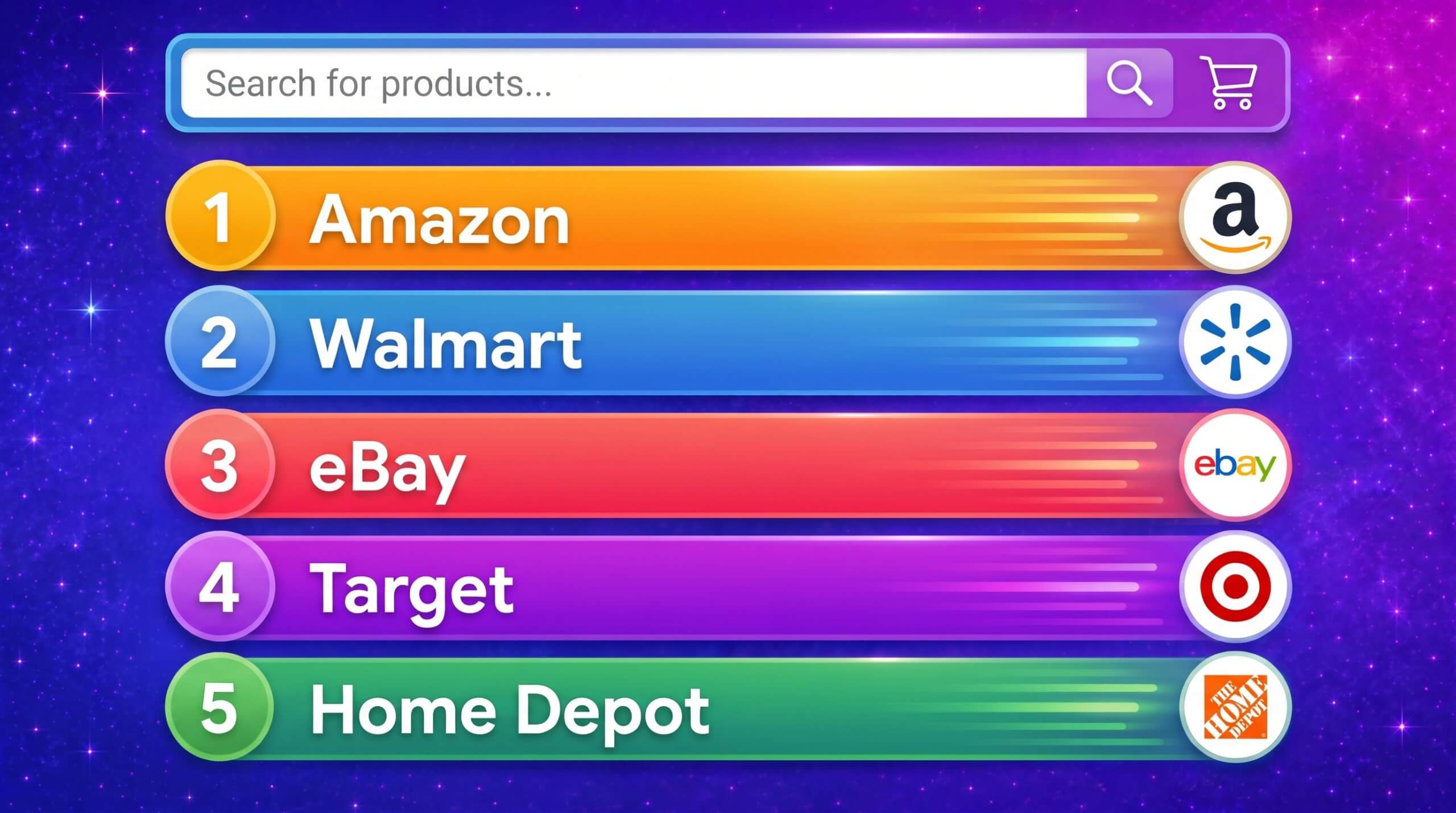

Top Ecommerce Companies in the USA: The 100 Brands Winning the Traffic Race in 2026
by Inbar Eytan6 Min.
Aug 30, 2026
 Marketing Intelligence
Want to increase your search traffic exponentially?
Search engine optimization (SEO) is all about playing the long game. Getting results can take time (and requires keyword research tools). But beyond that, a few core elements are often overlooked that you can use to your advantage.
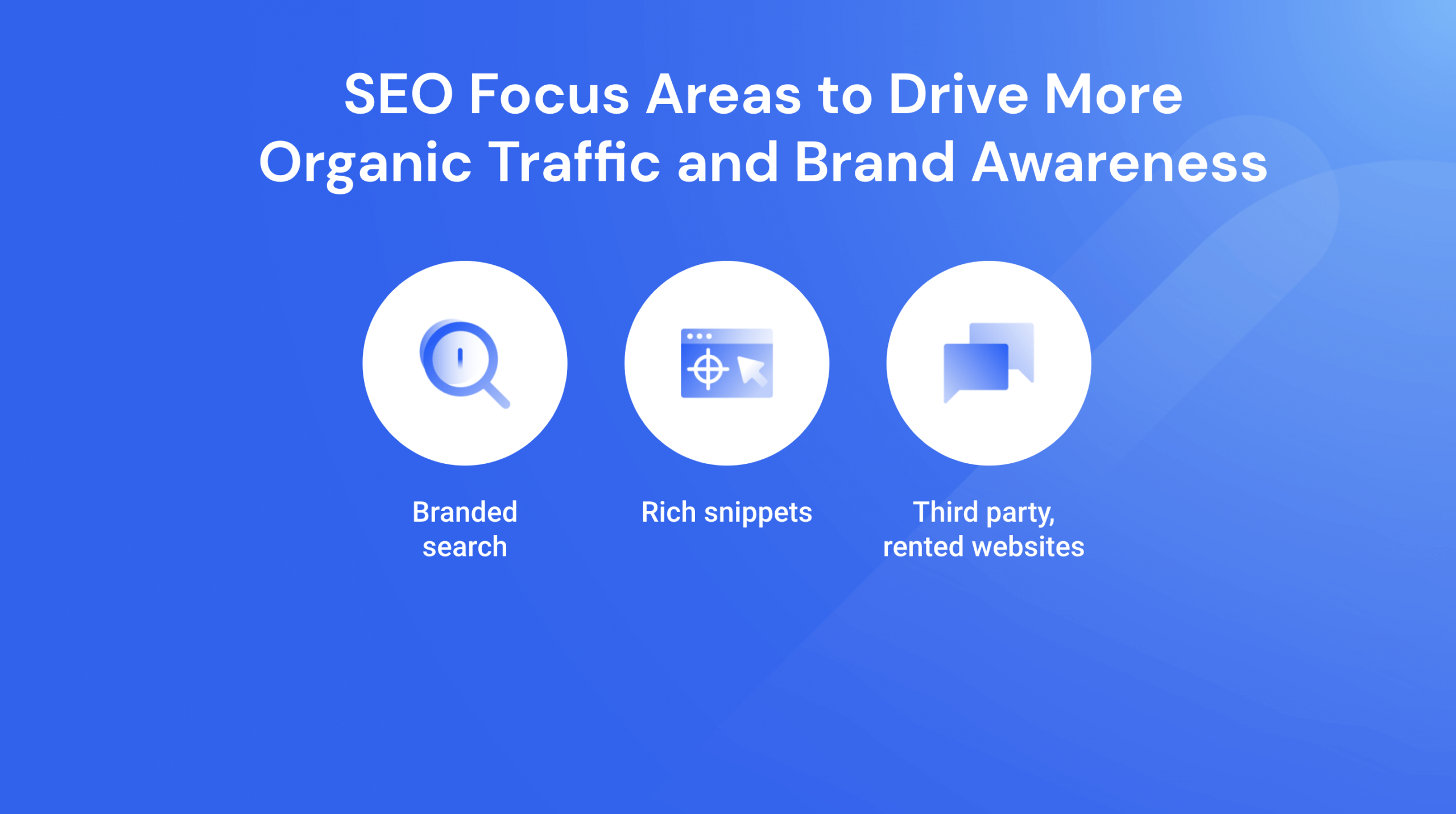
In this article, I’ll zero in on my favorite topic, brand SERPs and additionally, three SEO focus areas that can help you drive more organic traffic and brand awareness.
Are you optimizing for branded keywords? Do you know what shows up when people search for your branded terms? These sound like obvious questions, but all too often, brands forget about this important work.
When brand names are included in a search query, the searcher is thinking about a business or they may already be a customer.
They’re the most valuable audience you have since they’re already familiar with you.
Ranking for branded keywords for your company is a lighter lift than non-branded terms, which can be highly competitive.
Google wants to bring searchers what they’re looking for from the highest authority. You are the authority of your own brand. But that doesn’t mean there isn’t any competition out there.
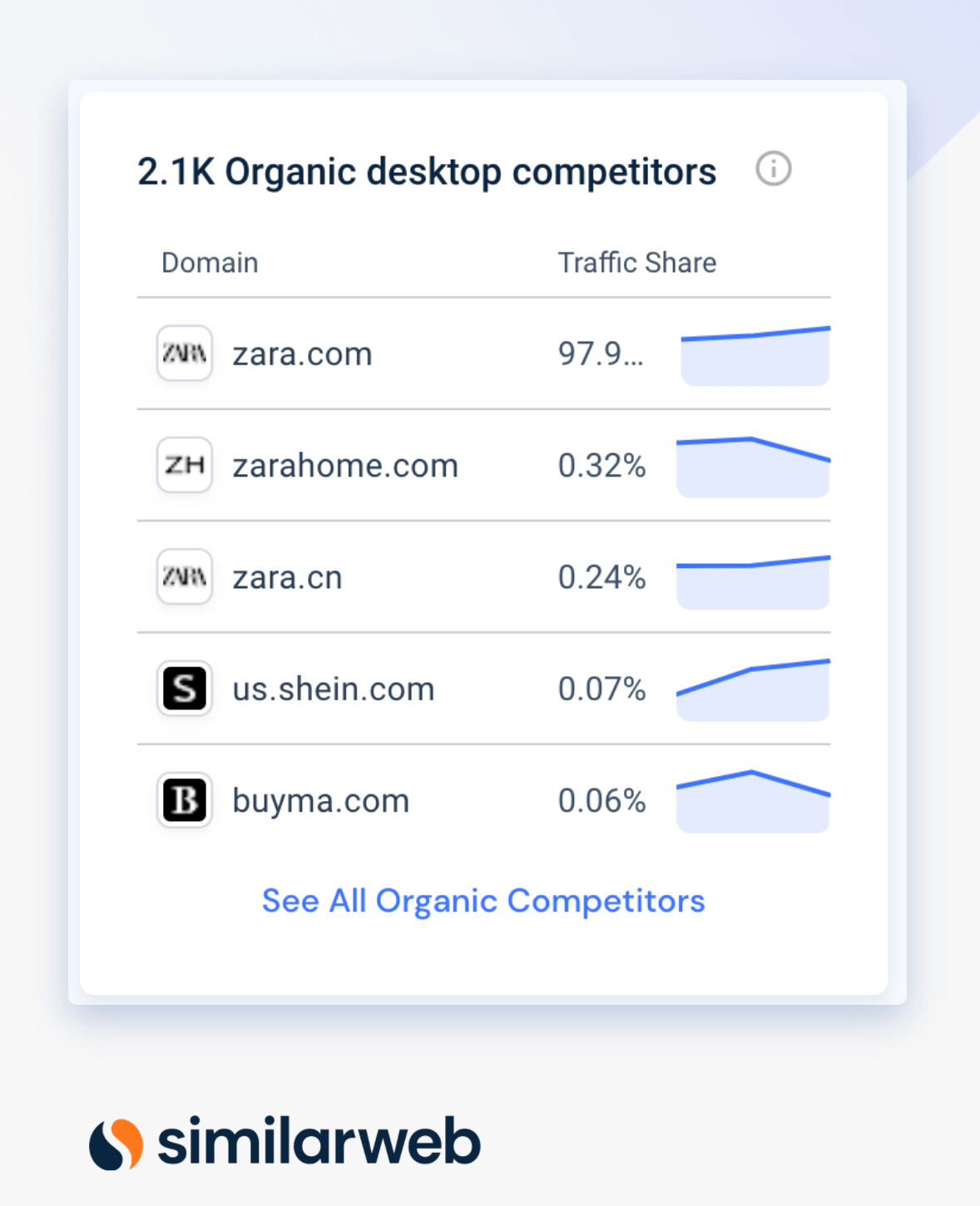
In the image below, you can see that Zara dominates traffic share for the branded term “zara” worldwide over the last three months.
Still, other websites like us.shein.com and buyma.com do appear on the organic search list. Smaller sites and competitors can strategically target branded keywords to win a greater audience, so tracking the market share of your branded keywords is crucial.
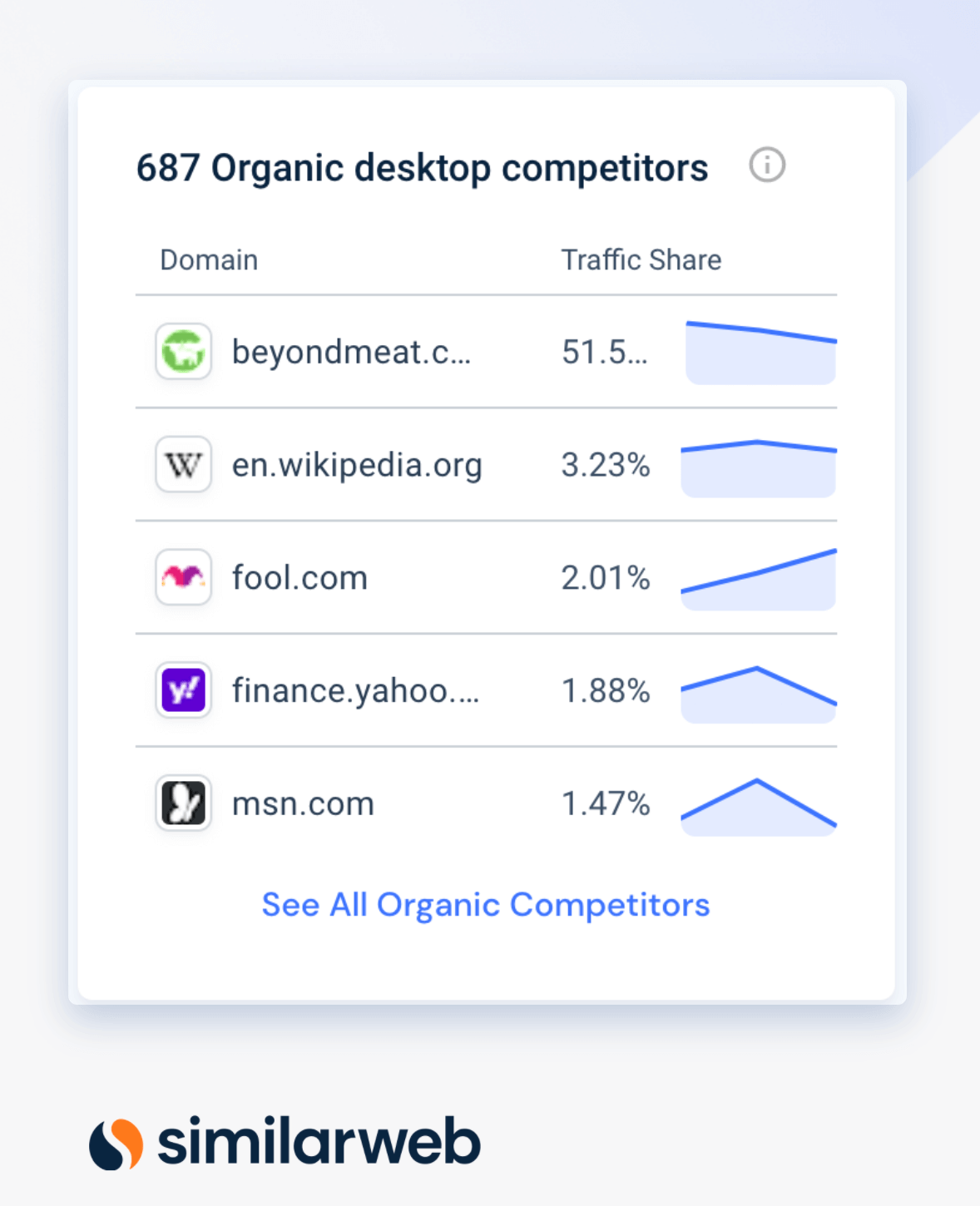
For the branded term “beyond meat,” on the other hand, the company only has around 51.58% of the traffic share.
Organic search competitors include en.wikipedia.org, fool.com, finance.yahoo.com, and msn.com. The competitors are primarily news and investing sites where visitors are likely going to learn about the company and its stock.
These are just two scenarios out of others that show it’s not a given that you will rank in first for your own branded keywords. If other authoritative sites are covering your brand, they could rank higher. You need to monitor brand keywords, and continuously optimize for them using best practices.
To rank for these terms, your content needs to:
Remember: Your exact match brand name is the single most important branded term and the best place to start working on your branded terms. I’ll say it again for those skimming: Always start with your exact match brand name.
Why?
The audience searching for your exact match brand name are usually the most important people to your business: This audience is often interested in learning about your business or becoming a customer, or they already are.
Your brand SERP or the results page that comes up when someone searches the exact match brand term tells you a lot about where your SEO strategy stands. Brand SERP is important to monitor closely because it shows:
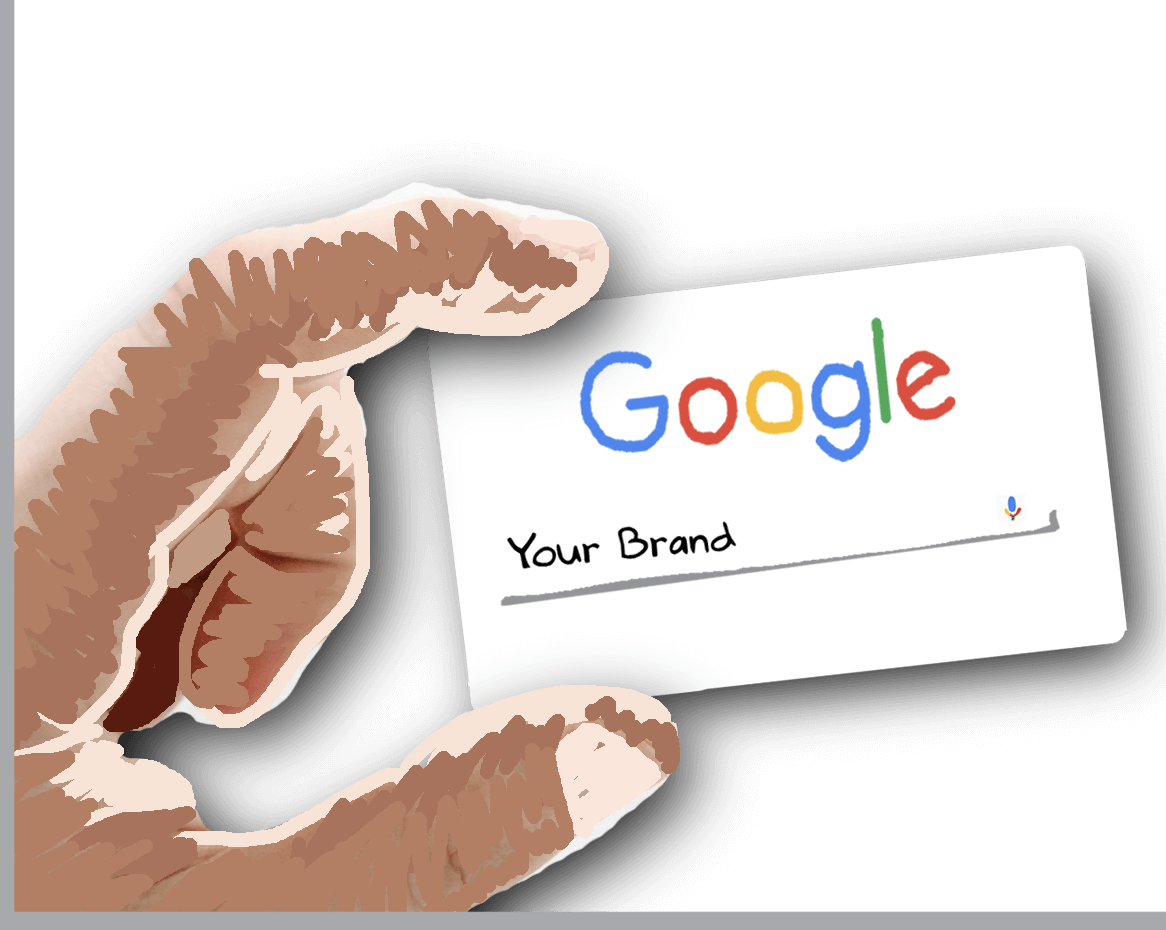
The bottom line is that brand SERP is an important representation of your brand to your audience. It’s your “Google Business Card.”
Blue links are the ‘traditional results Google shows – a blue-text title and description. Like this:

Traditionally, SEO focuses on blue links. This is understandable because, until a few years ago, a simple list of 10 blue links on Google’s SERP was what usually appeared on SERP.
Today, the traditional 10 blue links are the exception. Similarweb data shows that only 40% of non-branded search queries in the U.S. return a result that contains only blue links. For search queries that contain a brand name, that figure is 27.5%.
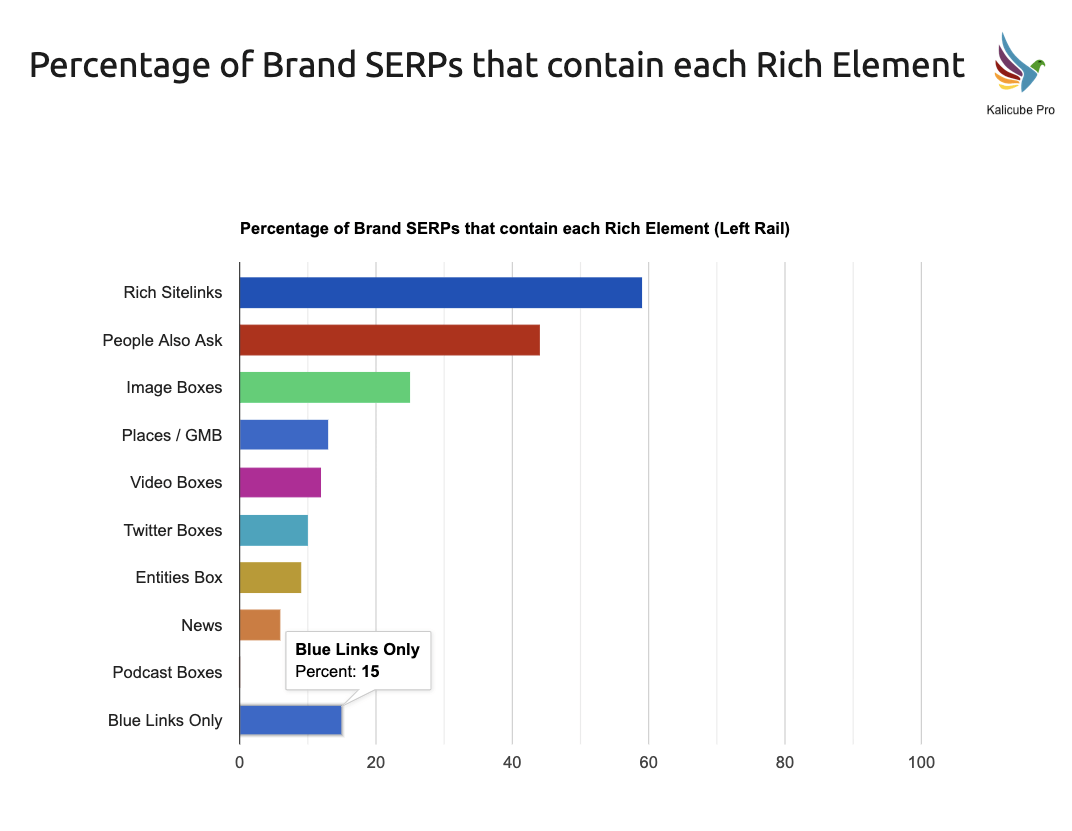
For exact match Brand SERPs in the U.S., that figure is 15% according to Kalicube.
What do we mean by rich element?
Anything that isn’t a blue link: video boxes, Twitter boxes, image boxes, knowledge panels, Google my business panels, people also ask, featured snippets, see results about, and the list is growing.
Remember that brand SERPs are a special case. Google shows the content it sees as the most closely related to a search query with the intent to interact with a specific brand. According to Kalicube data, 85% of the time that includes at least one rich element: a piece of content that is more than a simple title, description, and blue link.
In brand SERPs, there is an average of eight blue links, which might seem like a lot until you consider that there are 3 rich elements.
Think about how your eye is drawn to the content on the SERP that breaks up the monotony of the blue links and is more visually attractive: images, video boxes, Twitter boxes, and knowledge panels.
They aren’t some kind of fun extra Google is adding on a whim: Three rich elements on a SERP will tend to dominate the user’s attention. Rich elements are growing more common on SERPs, grabbing more and more attention and attracting more and more clicks.
Creating content with these rich elements in mind is a great opportunity to rank on a Google SERP for branded and non-branded terms alike.
Here’s why:
But don’t shift all your attention to videos, images, and Twitter just yet! The content you create for blue links also serves many rich elements like featured snippets, knowledge panels, and especially people also ask. In fact, people also ask shows up well over 40% of the time on search results for both branded and non-branded terms.
Keep in mind, the format of your written content should be optimized with these in mind since these aspects of the SERP are driven by different algorithms and Google uses different criteria to judge the relevancy of your written content.
Branded searches and your brand SERP are great places to take your new ‘beyond blue links’ strategies for a test run and evaluate their effectiveness. These are relatively controlled environments, meaning you don’t need links, a super-fast webpage, or even the best UX to rank.
You are the authority and you should be ranking high in the blue links if your content is quality. You just need quality content that will trigger these rich elements, so this is a great controlled testing ground.
For example, if you create a series of videos with the aim to rank on a branded search, and those videos do not trigger video boxes (or worse, the pages where they appear do not rank, even in the blue links), then your videos missed their mark and won’t reach your audience. This is a great opportunity to test drive your video strategy before ramping it up to cover non-branded terms.
In SEO, many marketers and brands tend to focus uniquely on ranking for content on their own websites. This approach misses the wider picture of the performance of your content on third-party sites such as YouTube, Twitter, sales outlets, media sites, and partner sites.
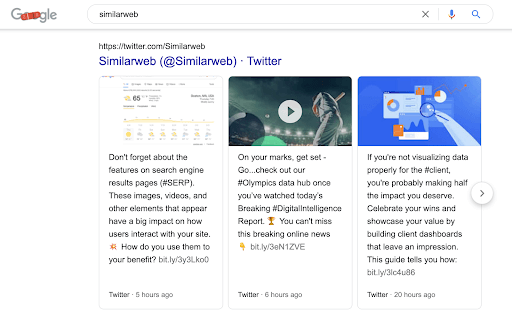
Publishing on third-party websites is a necessary part of your digital marketing strategy and even your SEO strategy. Your site cannot live in isolation if you want to grow your audience and impress Google, both are looking to see you in multiple places in order to understand what you do and what you offer.
Looking beyond your owned website and thinking about your content within the context of your brand’s global digital ecosystem makes a lot of sense. It is the only way to build a sustainable long-term digital strategy.
Even in the short to mid-term, the advantages are:
If you think about what Google is trying to achieve with your brand SERP, then it becomes clear that it is a great window into your entire digital ecosystem. What Google aims to show on your brand SERP is an overview of your brand that is helpful and valuable to your audience.
That makes it a great way for you to judge the success of or areas to improve on your SEO, content, and overall marketing strategies. It is also a great place to start when you want to improve them all from a global perspective.
Open an incognito window (for neutral results) and take a look at your brand SERP now.
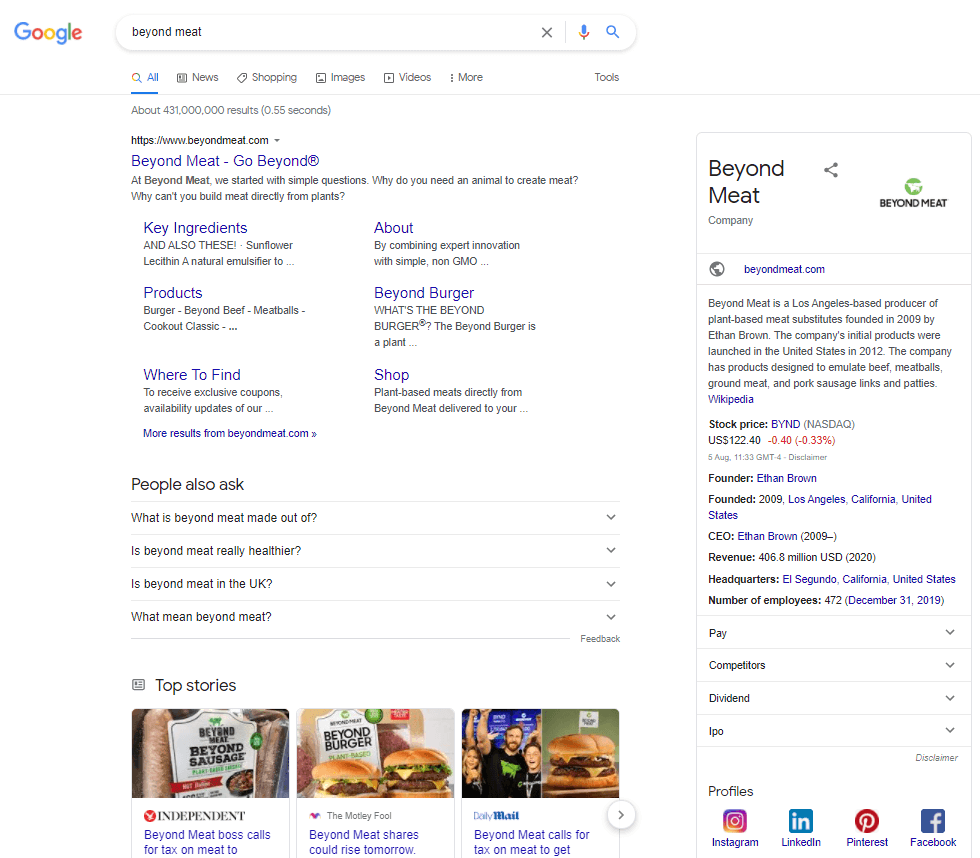
Now look at pages two through five and ask yourself the same questions.
Your brand SERP (including pages two through five) should reflect your digital marketing strategy in a balanced way. If it doesn’t (and it almost certainly won’t), then you can start to work on improving those aspects of your strategy that are sub-optimal, underrepresented, or missing.
Examples:
The list goes on and on. At first sight, a brand SERP looks easy to understand and simple to manage. Ultimately, Brand SERP gives you a window into the impact of your overall digital strategy.
When executed with precision, the strategies outlined above will naturally draw your targeted audience down the funnel to the very bottom where they search your exact match brand name and start to interact with your brand SERP on a regular basis.

Founder and CEO, Kalicube
Jason is the founder and CEO of Kalicube, a digital marketing agency that optimizes Brand SERPs and manages knowledge panels.
Top Ecommerce Companies in the USA: The 100 Brands Winning the Traffic Race in 2026

3 of the Sharpest Minds Weigh in on the State of Gen AI in 2026

Give it a try or talk to our marketing team - it’s free!
