





Top Ecommerce Companies in the USA: The 100 Brands Winning the Traffic Race in 2026
by Inbar Eytan6 Min.
Aug 30, 2026
 Marketing Intelligence
Keywords are still a key driver of positive SEO in 2025. Fueling online searches, aiding visibility, and providing context for target consumers, they are crucial to any search optimization strategy.
However, for modern-day digital marketers, the million-dollar question is ‘Where should I place my keywords?’ Obvious answers include blog posts, product pages, meta descriptions, and more.
But what about your domain name?
Your domain name plays a vital role in your performance as an industry player. It’s one of the first elements of your online presence that searchers discover.
They look to domain names to help clarify what a site is about, build trust, and familiarize themselves with a brand name they already interact with on another platform.
The question is, do keywords help or hinder your domain SEO? Let’s find out.
Keyword-driven domains were once a fast track to ranking highly in a Google search. Back in the early 2000s, URLs with exact-match domains (EMDs) immediately drove traffic in direct keyword searches.
However, as Google’s ranking algorithm continues to evolve, exact-match domains are becoming less important as a ranking factor in modern-day search.
A keyword domain, also known as an exact-match domain, is a domain name built around a specific keyword or phrase related to the site’s content.
For example, if you were creating an EMD for a landscaping service in London, you’d identify the keyword with the highest search volume for your target searchers and generate a domain name that includes that searchable keyword.
In this case, the best keyword match is “landscaping services London,” which could be used to create the domain: landscapingserviceslondon.com.
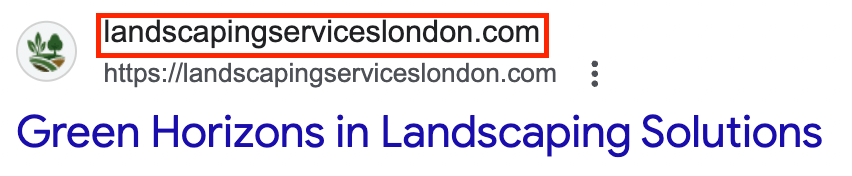
Historically, the domain with the best keyword match would obtain first place in a SERP result. However, as you can see here, when the keyword ‘landscaping services London’ is typed into Google, this EMD domain doesn’t even appear on the first page of results.
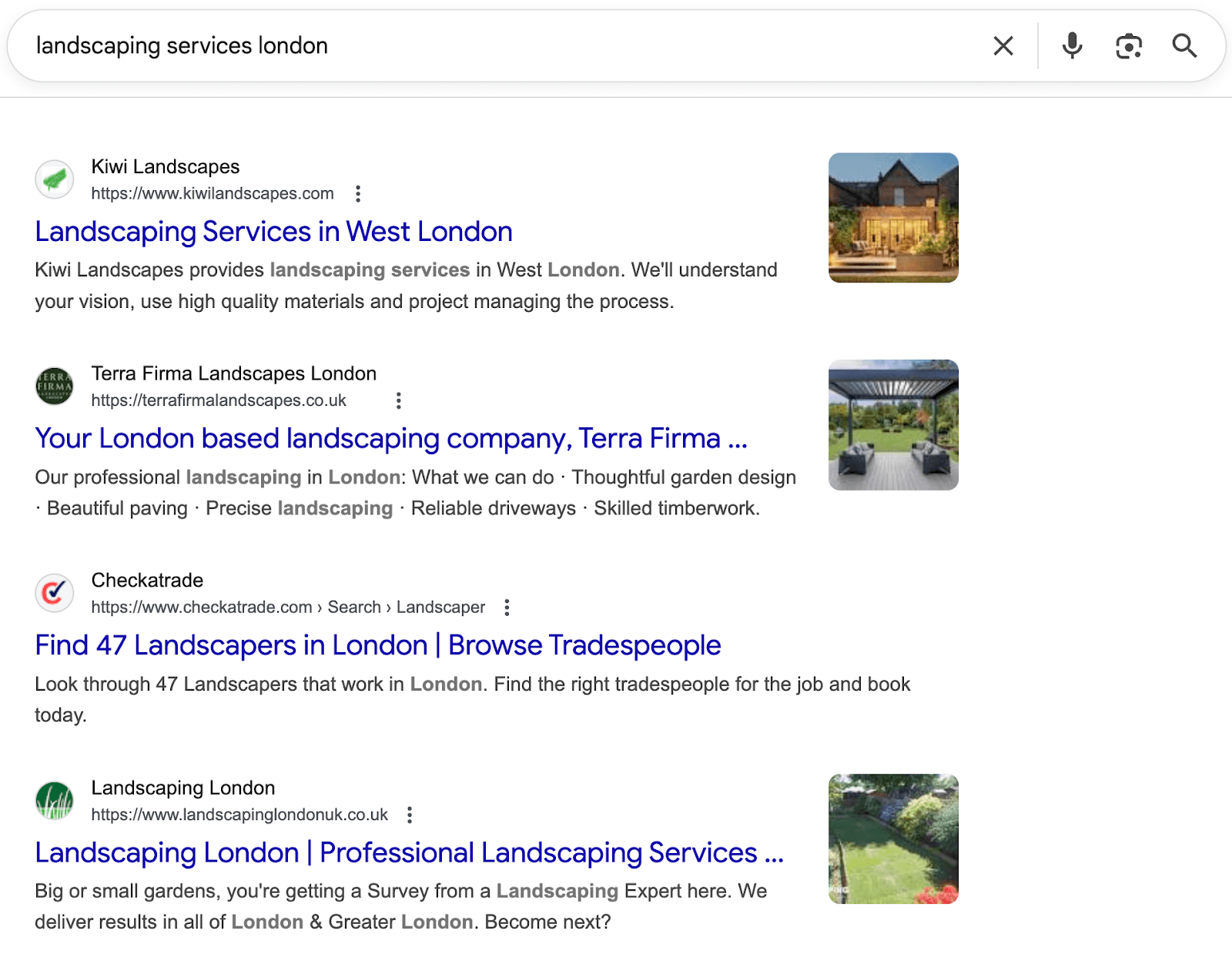
Search engines are simply more intelligent in 2025. After rolling out an initial EMD update in 2012 aimed at devaluing low-quality domains that used keywords for ranking boosts, Google’s ranking algorithm has continued to evolve.
From the introduction of the Search Generative Experience (SGE) to prioritizing new ranking factors such as search intent, Google’s latest algorithm treats keywords differently.
So, are keyword-powered domains dead?
Surprisingly, the answer is no. While exact-match domains won’t get you far, using keywords within your domain can still benefit your SEO performance.
In 2025, keyword domains aren’t dead. But how you use them matters.
Keywords still matter for SEO and online brands. But the dynamic has changed despite the evolution of Google’s ranking algorithm. And the implementation needs to be thoughtful and authentic.
Here are some of the SEO benefits associated with adding keywords to your domain name in 2025:
Keyword-powered domains don’t automatically raise search rankings. But they can improve your chances of engagement if you’re already visible in search.
Does your domain appear on the first page of SERPs? Then other SEO factors such as search intent, thought leadership, link building, and UX accessibility, the added keywords in your domain may encourage users to choose your site first.
While adding keywords to your domain can help SEO, exact-match domains can actually hinder your search visibility.
Chasing exact-match domains purely for SEO may cause Google to devalue your website and make it appear spammy to searchers.
Here are some of the key issues associated with EMDs:
Many “good” EMDs are already taken or overused, meaning most exact-match keywords aren’t even available as domains in 2025.
To achieve the best domain rating, you need more than relevance. Modern SEO favors brands that establish authority in their niche and create a memorable presence across multiple platforms.
Think about it this way: the highest-ranking online clothing store globally is ASOS.com, a domain with no direct connection to the industry’s searchable keywords.
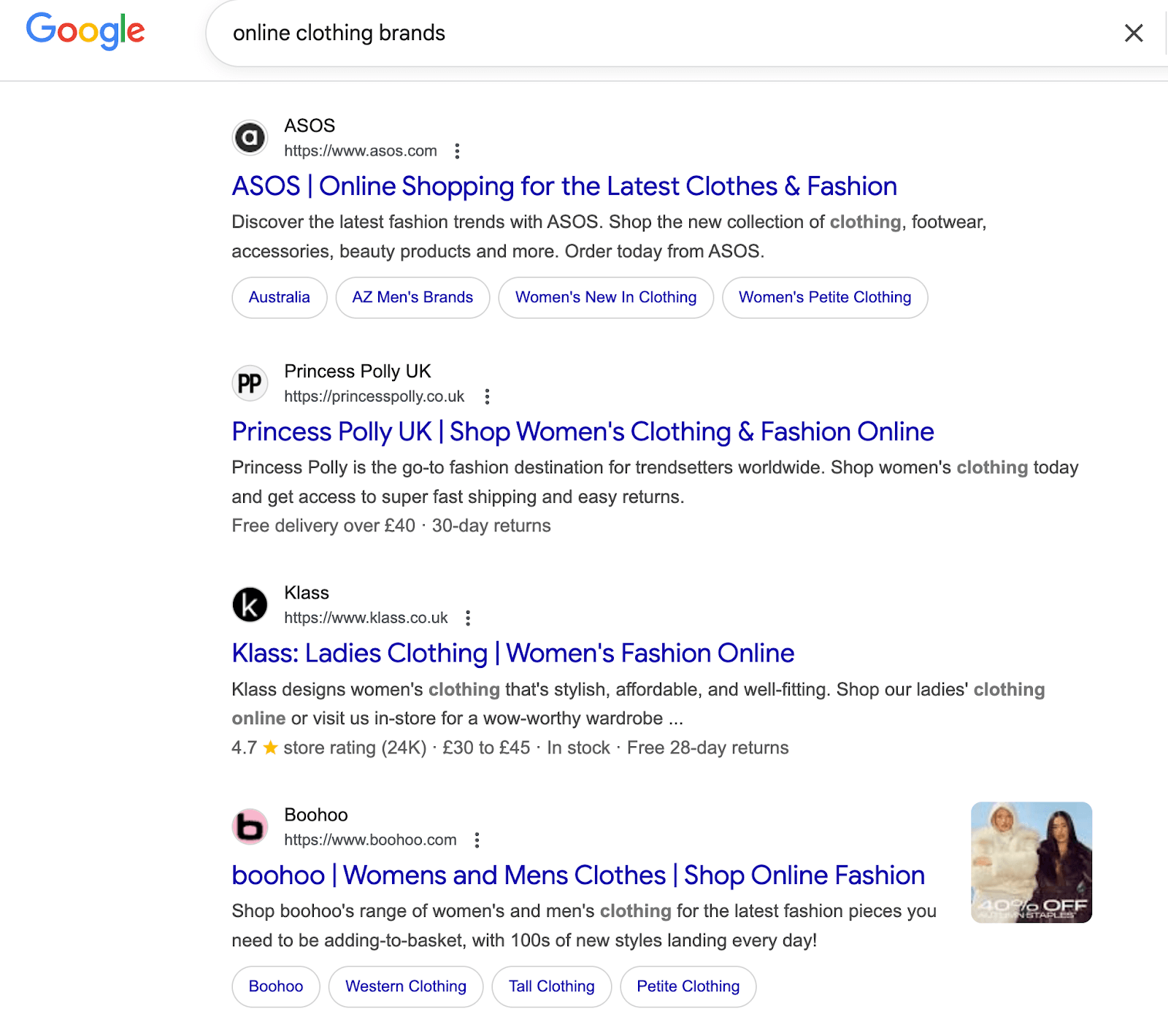
Instead, ASOS has focused on creating a memorable domain name that works across platforms.
The best domain names in 2025 are “keyword-informed” rather than “keyword-stuffed”.
Today, a good domain name is short, memorable, and easy to spell. It also includes relevant keywords when possible while still being brandable.
A recent study found that 77% of consumers say a domain name is important or very important when evaluating a brand online.
With this in mind, here are some key factors to consider when crafting your domain name in 2025:
The best domain names strike a balance between brandability and search relevance. This usually means choosing a domain name built around a positive keyword idea but coined as a creative brand name.
Take Skyscanner, for example. Ranked in the top position for the search term “book flights,” the domain includes the keywords “sky” and “scanner,” which are both relevant to flight searching and have since become synonymous with the brand.
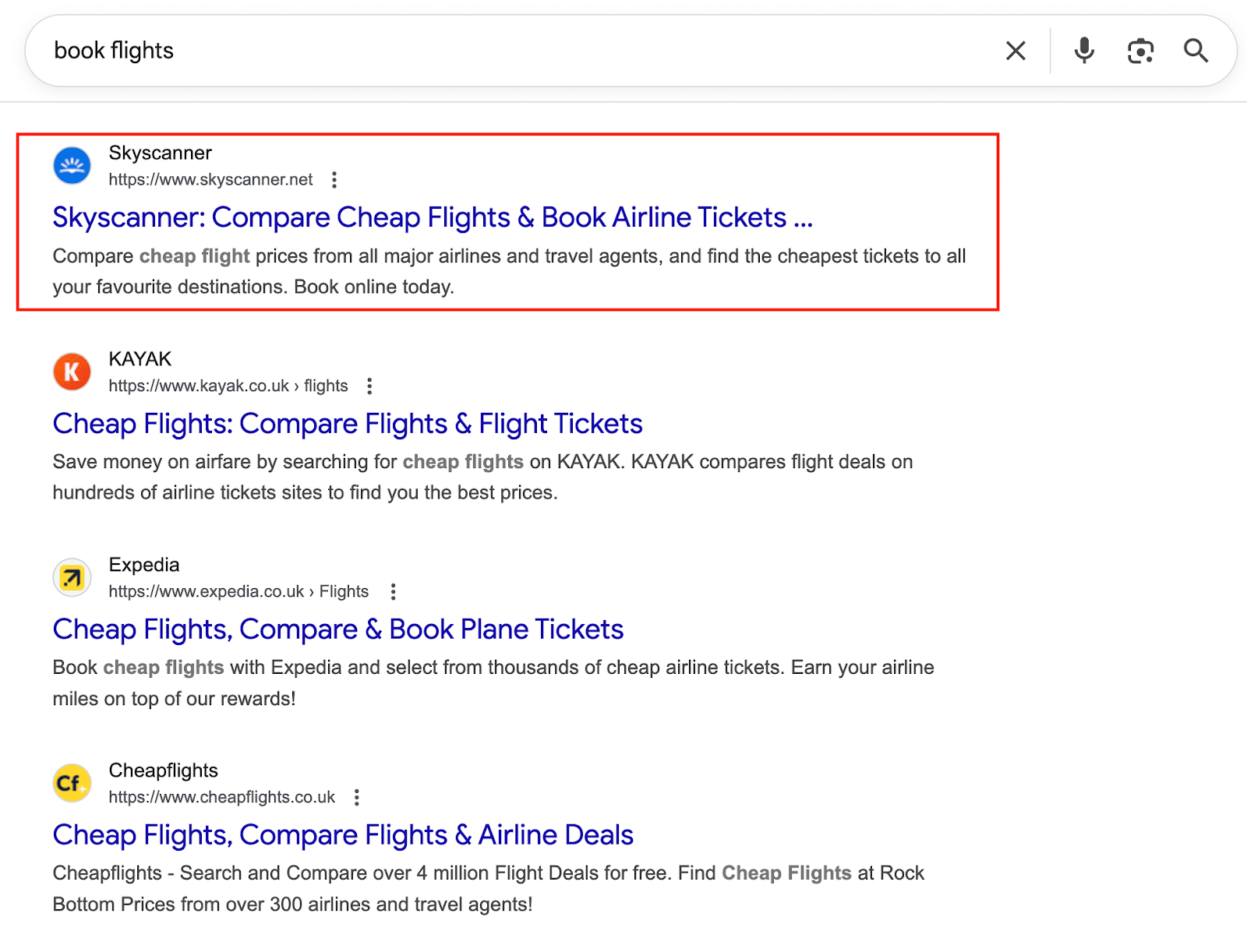
The term “skyscanner”, with its strong brand recognition, has also become one of the most searchable keywords in the industry.
Skyscanner uses keywords in its domain to its advantage. Rather than using exact keyword matches such as “flight” or “flight booker,” the brand coined relevant terms and turned them into something memorable.
The key is to use keyword modifiers or thematic relevance, not an exact keyword match.
For example, if you’re an electric bike company, instead of choosing buyelectricbikes.com, choose voltcycles.com. The brand name is catchy, memorable, and still targets relevant search terms in the industry.
The SEO Keyword Research Tool from Similarweb is a strong starting point for identifying the keywords that can influence your domain name.
Using real-time search behavior and clickstream data, the keyword research tool shows you the terms your audience is actually searching for, rather than keywords with historical volume.
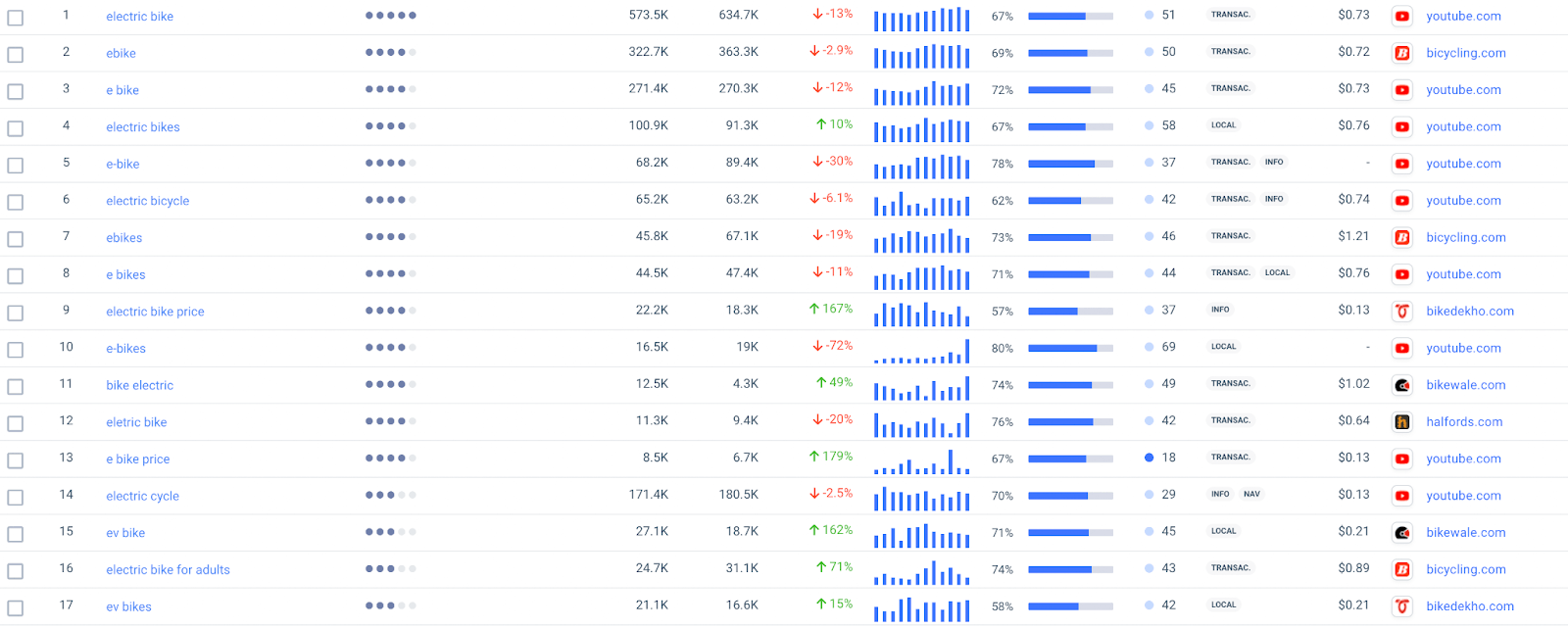
Let’s put this into practice using our electric bike company example. With Similarweb’s SEO keyword research tool, you can compare keyword competition side by side and identify long-tail keywords that may be underused by your competitors.
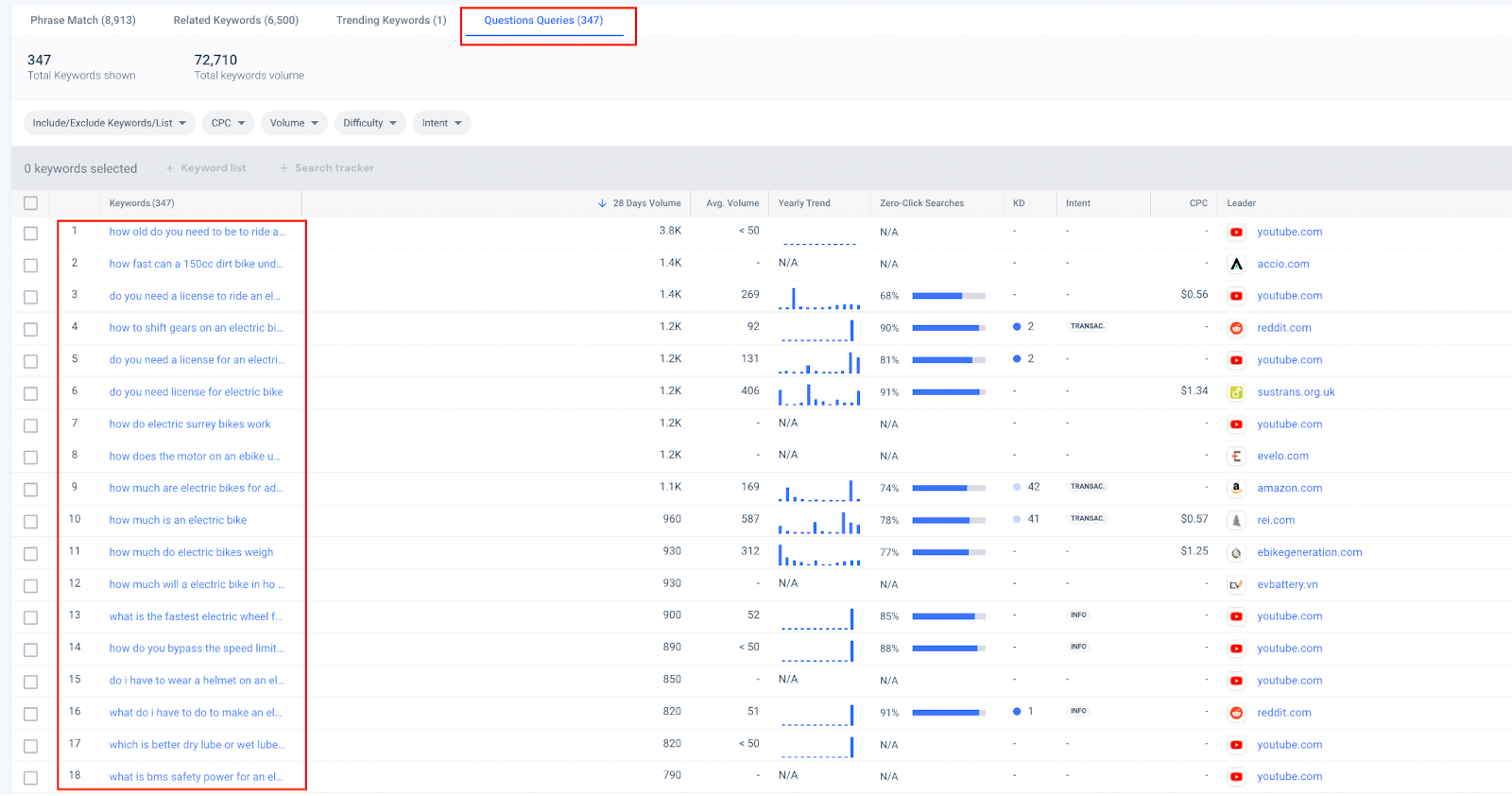
If you’re looking to target search intent with your domain name, explore the “Question queries” section, which highlights the most-searched questions related to your keyword or phrase.
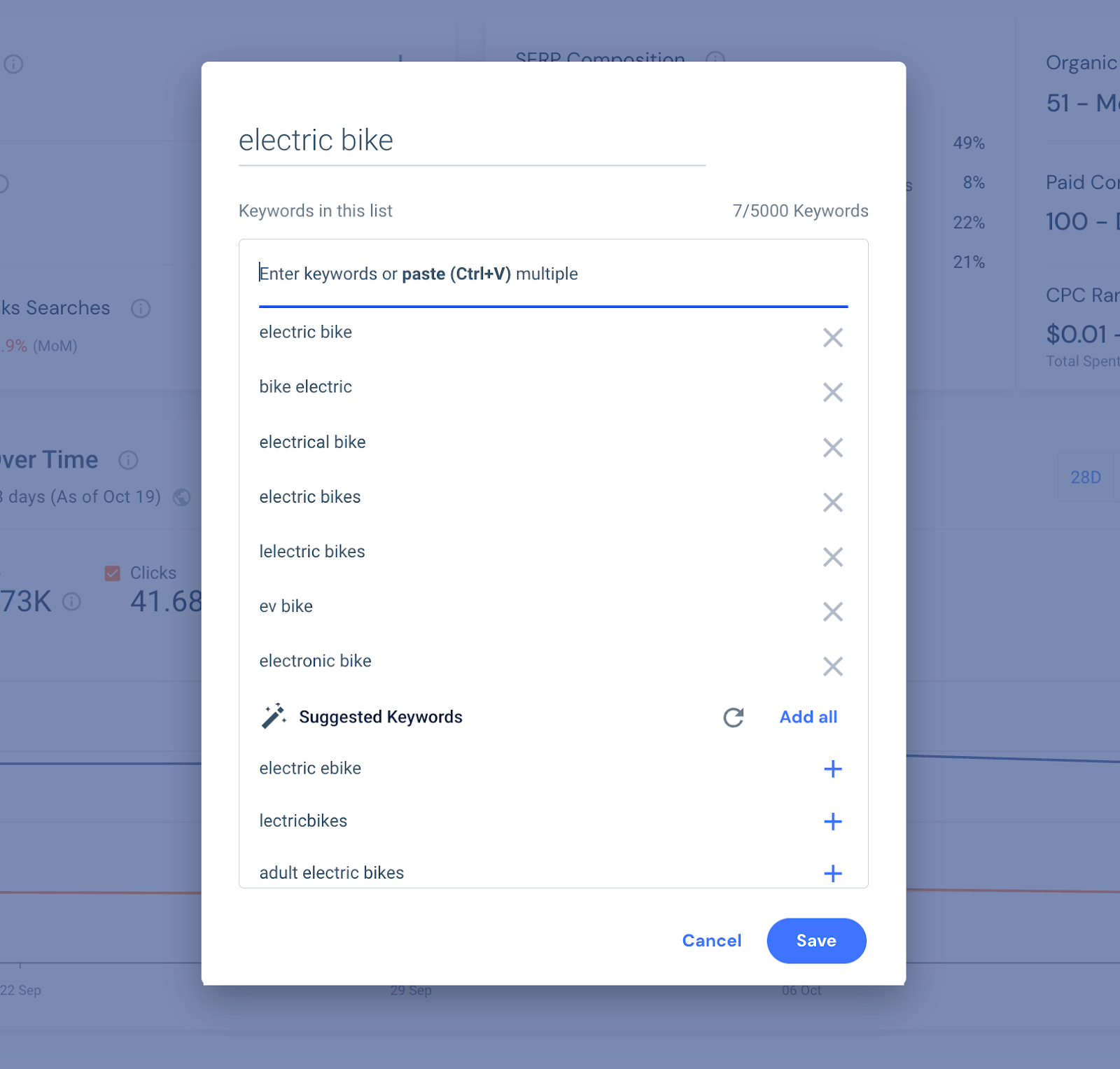
Finish your keyword search by creating a keyword list of the best-fit terms for your domain SEO.
Once you’ve identified your key terms to build your domain name around, perform a domain name search to see whether your chosen URL is available. Tools like Hostinger and GoDaddy are useful here because they suggest similar domain ideas if yours is already taken.
To build a winning domain name, you must differentiate yourself from your competitors. This often means jumping on a keyword trend before it becomes oversaturated.
If you coin an emerging keyword within your domain, your website may perform better in a related search when that term peaks.
The key to catching keyword trends early is to analyze search term growth in real time.
Using Similarweb’s Trend Analyzer Agent, you can spot emerging keyword trends by category or topic and track real-world shifts in demand over time.
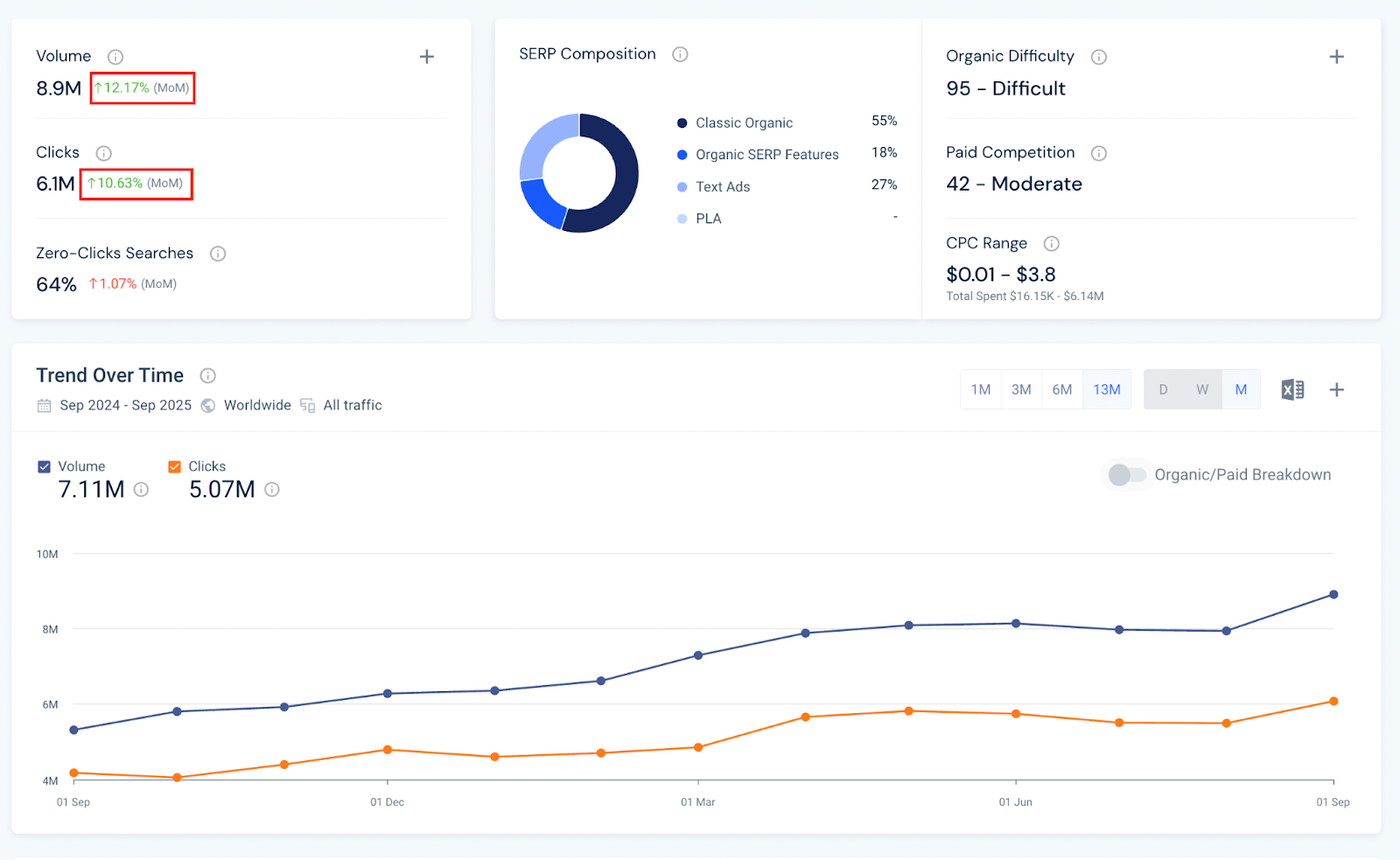
For example, as shown above, keywords containing the term “AI” continue to grow in volume in 2025.
If you are launching a business around an AI tool, like an automated résumé builder or an AI plugin, you may want to consider domain names that incorporate the term “AI” before it becomes saturated.
The AI Trend Analyzer gives you the foresight to act before everyone else does.
Last but not least, think about scalability when crafting a keyword-driven domain name.
As your business grows and you move your brand across multiple platforms, your domain name must be optimized to appear in a social feed and in an email inbox.
Keep it short, memorable, and brandable so it can carry across all digital and physical touchpoints.
Think about it this way. Buyelectricbikes would not make a very catchy store name, but you can imagine Voltcycles on the high street.
While a keyword is useful for initial SEO, make sure the name can also grow into a strong, recognizable brand.
Keyword-led domain names are less common than they used to be. In 2025, the best domain names are built with search intent in mind and brandability at the forefront.
This doesn’t mean that the era of using keywords is over. When it comes to creating an SEO-friendly domain name, crafting a name around a popular search term or phrase is extremely important.
Your domain name is your brand’s first chance to showcase its offerings to a target lead. If your domain name coins a popular industry term, searchers instantly recognize your brand and are more likely to engage with your content.
In 2025, powerful domains start with smart keywords and thrive with smarter research.

Content marketer @ Solvid
Rebecca is a content marketer at Solvid, specialising in SEO strategy and the newest digital marketing trends impacting business success.
Top Ecommerce Companies in the USA: The 100 Brands Winning the Traffic Race in 2026

3 of the Sharpest Minds Weigh in on the State of Gen AI in 2026

Give it a try or talk to our marketing team - it’s free!
