






The Top 100 Most Visited Websites in the USA (August 2026)
by Shai Belinsky10 Min.
Sep 29, 2026
 Marketing Intelligence
At the advent of the internet, the purpose of meta keywords was to label your webpage with its key points so when someone searched for a topic that you wrote about, they’d find your page. The meta keyword used to be really important to this process but isn’t any longer.
Somehow, the topic seems to continually pop up in SEO circles: should we use meta keywords or not? The resounding response is no, get those out of here! There are better uses of your time that yield better return on investment (ROI).
Meta means “beyond.” So, anything meta on your web page is beyond what displays on the page.
Visitors can’t see anything labeled “meta” in your code, with the exceptions of the meta title tag and meta description tag, which are usually displayed on search engine results pages (SERPs). But that doesn’t mean metadata isn’t important; there’s actually a ton of metadata in your code, which instructs the web browser how to display your data. Meta keywords are the fossils of SEO, in a way.
If you’re confused about where to find meta tags, they show up on the backend of your webpage, a.k.a the source code that provides structure to your site. You’d have to be in your content management system or webpage dashboard as an admin to edit it.
The meta keywords code is in the header section of your website. It will have this format: <meta name=”keywords” content=”Keyword1, Keyword2, Keyword3″> and will show up between these two elements: “<head> <head/>”
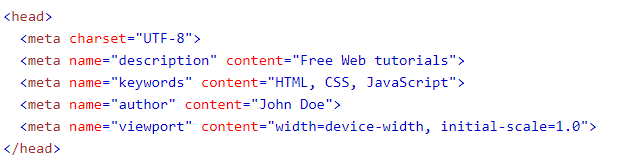
There will be other “tags” in this section that are labeled “meta.” These ones are important for digital marketing, so don’t delete them. The title tag and meta description tag show up as snippets on the search results page:
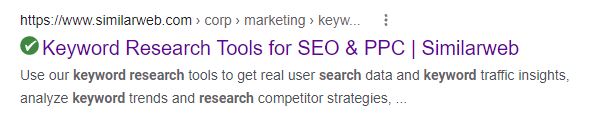
Meta keywords are different from the keywords that you use in your page content for things like blogs, landing pages, etc.
In a way, the meta keyword was the precursor to keywords. But, the usefulness of the meta keyword has long since expired, and in the world of SEO today, they are all but dead.
To understand why meta keywords are so unnecessary, you have to know how major search engines interact with your site.
You have a web page because you want to share something with the world. So, you want the right people to find it. Organic traffic is one pathway to your site. When someone finds you on a search engine, like Google, Bing, Ask, etc., this is organic traffic.
Search engines organize the information on the internet so they can present it back to us. They use robots to “crawl” your web page, read content on the front and back end of your site, and then use this for different reasons including:
Early search engines used the meta keyword element for indexing, retrieval, and ranking. However, in the late 1990s, it became clear that the meta keywords function was easy to misuse.
One guess why?
If you guessed keyword stuffing, you got it. Irrelevant or misleading keywords were purposefully added into these tags, deeming them obsolete over time.
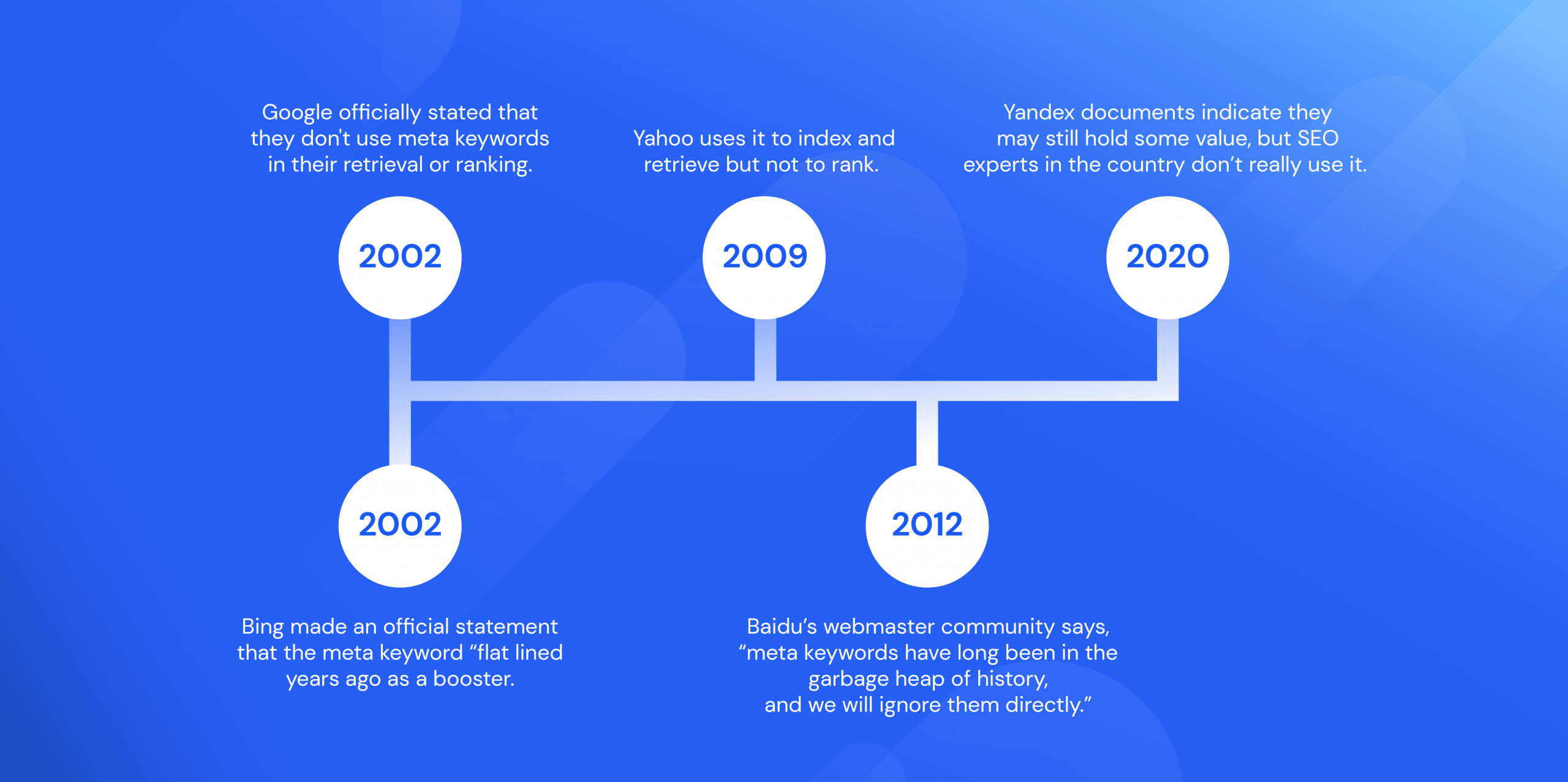
Search engines still index them but as a ranking factor, the meta keyword was dropped:
The guidelines of Naver, Yandex, and Baidu suggest they may still use meta keywords. But in what capacity?
Remember, there are over 200 ranking factors.
Even if meta keywords are still used by some in ranking, they hold no power. The major search engines themselves have said they have low relevance. In other words, they matter as much as the color of an athlete’s uniform in awarding Olympic medals.

Now that you understand search engines, you can grasp why they ignore the meta keyword.
The thing is, if you’re browsing the web, we can’t blame you for getting a little confused. I mean, when I read the articles written about it, a lot of them tell you no, you shouldn’t and then seemingly also tell you yes. What is that?
That is the type of bad mixed messaging you shouldn’t tolerate anywhere (take notes for your dating life, if you need). You deserve a straight answer and that answer is no.
Here are some clues that this feature is definitively defunct:
Google came out in 1998, right after support for meta keywords fell out of favor. Google never supported the meta keyword as an indicator of retrieval or rank. It still indexes your meta keywords if you use them, but that’s where its involvement stops. Essentially, it just stores them and never looks at them again.
In mid-2024, Google had a leak of their search algorithm and ranking factors. Meta Keywords is not one of these ranking factors.
Yoast admitted it kept a meta keyword function on its site just to keep consumers happy. This lasted for years. It removed it completely in 2018.
P.S
Some people confused Yoast’s focus keyword with meta keyword. They are not the same thing.
The search engines killed the meta keyword because of manipulative misuse. Now, it may still be used as an indicator – but an indicator that your site is spammy.
Your competitors can see or scrape your meta keywords. Then, they use this to compete directly against your SEO strategy.
And their tone is so exasperated, it gave me a good laugh. If nothing else convinces you, this should:
Bing’s Former Head of Evangelism Christi Olson is so definitive, it’s almost comical. She doesn’t just say it, she screams it for the people in the back:
“The meta keyword tag is dead in terms of SEO value for @BingWMC. We exclude it and ignore it.”
Matt Cutts of Google left this message on his own web page as if to say: ‘Yeah guys, don’t know why you can’t let this go. Now I have to talk about it in my downtime!’
Since the meta keywords feature is defunct, you should consider removing it.
The meta keywords may all be pulling from the same spot and be easily fixable with one line of code. If you notice this is the case with your site, here’s how to fix it.
The code may actually be bloating your website, which could slow your load times and negatively impact your rank.
Read the receipts. Meta keywords are no longer a priority in your SEO strategy.
To drive the point home: of the seventeen articles linked in this site, none of them included meta keywords in their code.

Senior SEO Specialist at Similarweb
Maayan is a senior SEO specialist with 7+ years of experience in SEO. She loves complex research projects, creating SEO strategies and performing technical audits.
The Top 100 Most Visited Websites in the USA (August 2026)
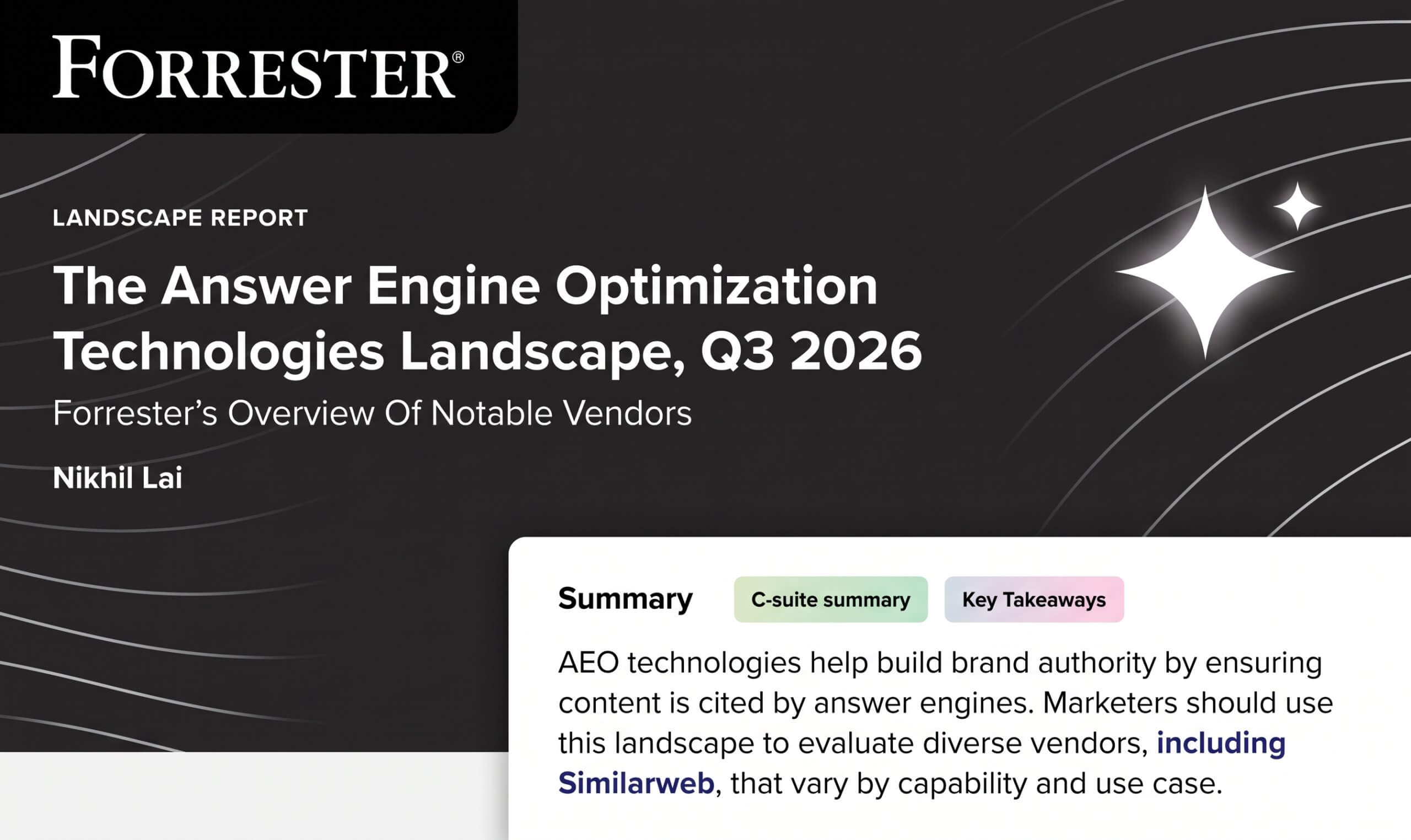
Similarweb Named in Forrester's Answer Engine Optimization Technologies Landscape, Q3 2026

Anthropic IPO: What Claude's Web and App Data Show
Give it a try or talk to our marketing team - it’s free!
