


 Research Intelligence
What is Demand Analysis?

Ever wonder how some businesses always seem to know what people want before everyone else?
That’s usually thanks to demand analysis. It’s a way for companies to anticipate consumer behavior and figure out what people are looking for, what’s becoming popular, and how things might change.
By looking at past data, search trends, and keywords, businesses can get a good understanding of market demand for their products or services. This helps them make smarter choices about inventory, pricing, and where to focus their marketing.
Demand analysis helps companies stay in tune with what people actually want. That’s how they grow and stay competitive.
What is demand analysis?
At its core, demand analysis is the process of understanding what people are interested in buying. To do this, businesses look at both quantitative (search volumes, keyword performance) and qualitative (consumer sentiment, market indicators) data.
Think of it as a guide. It answers questions like:
- What products are becoming popular?
- What price points work best?
- How are customer needs changing?
By spotting patterns and emerging trends early, companies can plan ahead and build strategies to match market demand.
Instead of reacting to changes after they happen, demand analysis allows businesses to make forward-thinking and data-backed decisions.
Demand analysis vs social listening
Both demand analysis and social listening help businesses decode market trends, but they tackle the challenge from different angles.
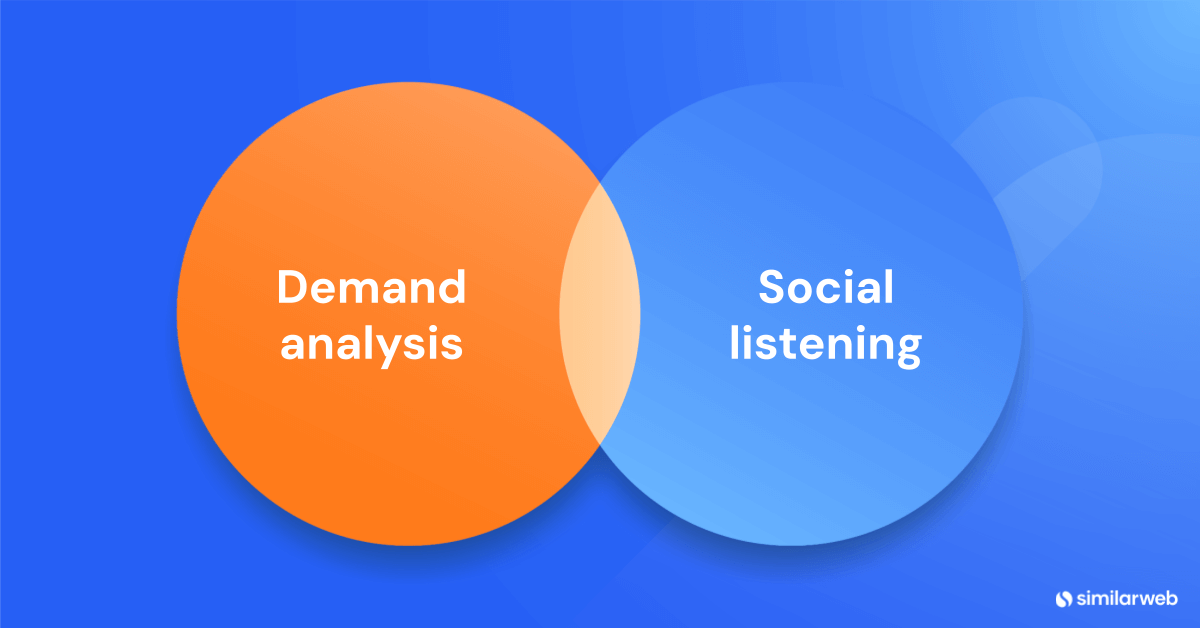
Demand analysis relies on hard numbers like search trends, keyword data, and historical sales figures to project future demand.
It’s all about identifying where interest is growing. If search data consistently shows a rising trend for certain products, companies can bet on increased market demand and adjust production strategies accordingly.
Social listening tools “listen” to actual conversations happening across social media rather than just crunching numbers.
What are consumers saying about a product? What do they love? What frustrates them? This qualitative layer helps businesses understand the why behind the data.
Let’s say demand analysis reveals a surge in searches for a new gadget. That’s promising. But social listening might uncover concerns about battery life, price, or ease of use or maybe, users are raving about its new design.
The takeaway is you need both.
Demand analysis tells you where to look, while social listening explains what’s driving the conversation. Together, they provide a 360-degree view of the market.
Why is demand analysis important for businesses?
Knowing what consumers want before your competitors do is what separates market leaders from the rest.
Here’s why demand analysis should be at the core of your business strategy:
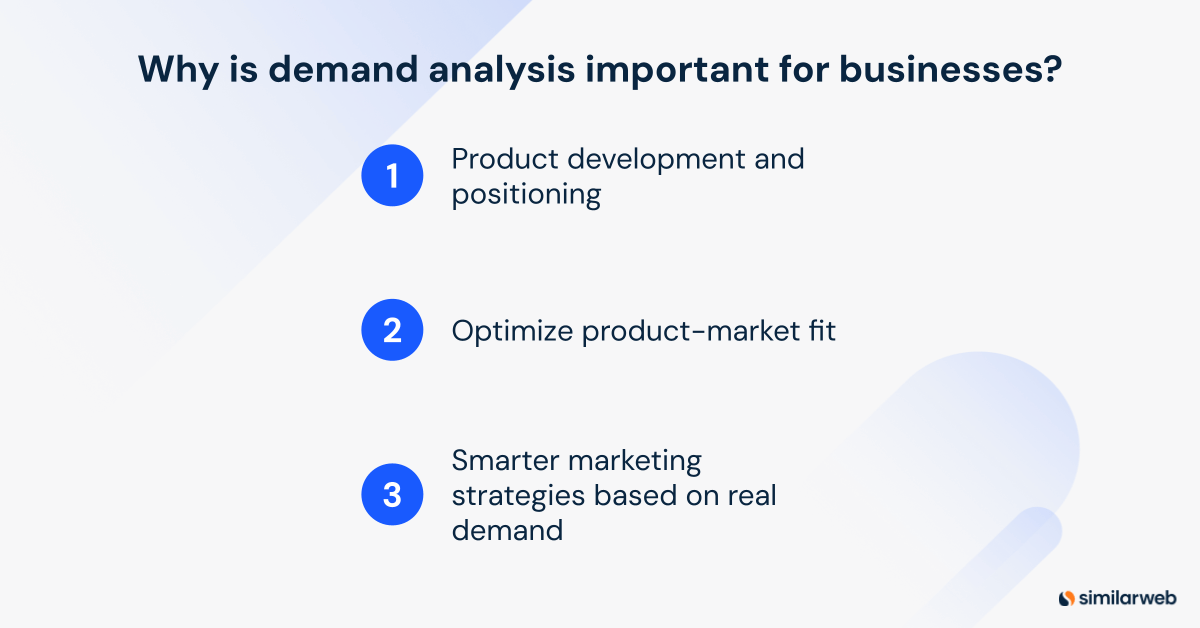
Product development and positioning
Demand analysis reveals the hidden opportunities behind changing consumer behaviors. By tracking the size and growth of specific trends, businesses can find emerging micro-demand segments that others overlook.
Let’s say a company notices a spike in interest for sustainable packaging in beauty products. Demand analysis helps them position a new product before the trend goes mainstream.
This supports product development that matches real market demand. Companies can create unique and novel solutions to meet consumer needs.
Optimize product-market fit
You should use demand analysis to ensure your product resonates with your target audience.
By diving into consumer behavior patterns, companies can adapt features, pricing, and messaging to improve product-market fit. This can lead to higher conversion rates, stronger brand loyalty, and a higher lifetime value per customer.
Beyond just influencing your product strategy, demand insights provide context for performance data.
There are many reasons your sales could increase or dip, and knowing the why behind the numbers helps businesses make better decisions.
Smarter marketing strategies based on real demand
The best marketing strategies are rooted in reliable demand signals.
Demand analysis helps companies track shifts in consumer sentiment before they become industry-wide trends. This early detection gives businesses a significant advantage and allows them to tailor marketing campaigns that speak directly to what customers want right now.
Here’s a demand analysis example: if interest in plant-based protein is surging, a food brand can adjust its messaging and ad spend to highlight its vegan product line before competitors flood the space.
Companies can optimize their ad budgets, target high-intent consumers, and craft relevant messaging.
How to conduct demand analysis with Similarweb
With Similarweb’s Demand Analysis tool, you get an overview of consumer interest across industries. Whether you’re launching a new product or refining an existing one, this tool pinpoints exactly where demand is surging.
Here’s how to conduct demand analysis like a pro:
Evaluate search demand with search trends
Start by generating a keyword list using the Demand Analysis tool. This feature pulls live search data and gives you an instant snapshot of consumer interest.
Look beyond raw traffic volume. See how each keyword performs across different domains; this tells you where people are searching.
Why does this matter? Because not all demand is equal. Some keywords might bring traffic, but they don’t always drive action. Prioritize search terms that fuel interaction, so that you’re tracking trends with real growth potential.
Let’s have a look at the topic of “men joggers”:
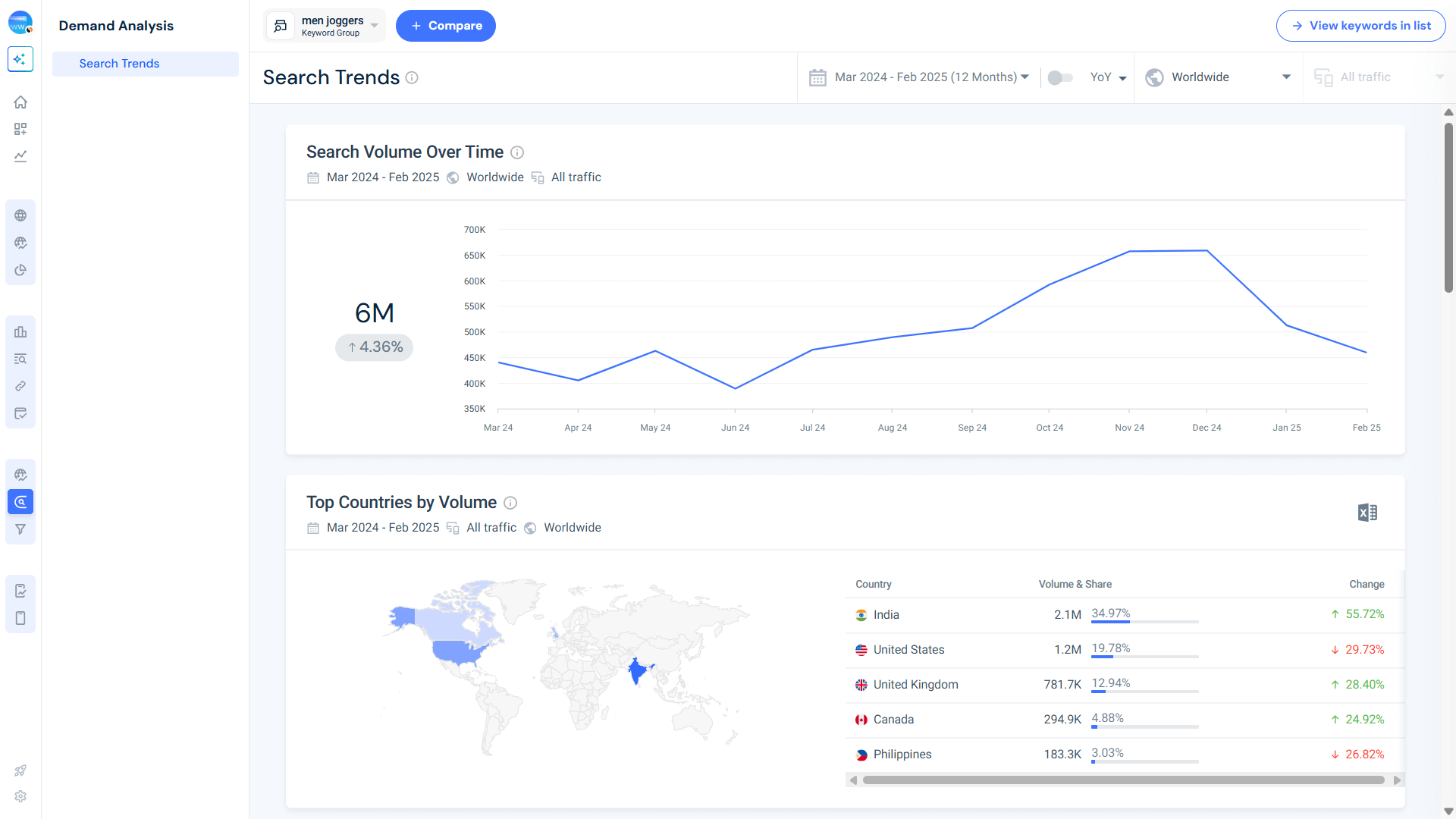
It looks like demand increased towards the end of 2024 but is now declining. This could be related to end-of-year sales for these types of products.
Analyze geographical demand
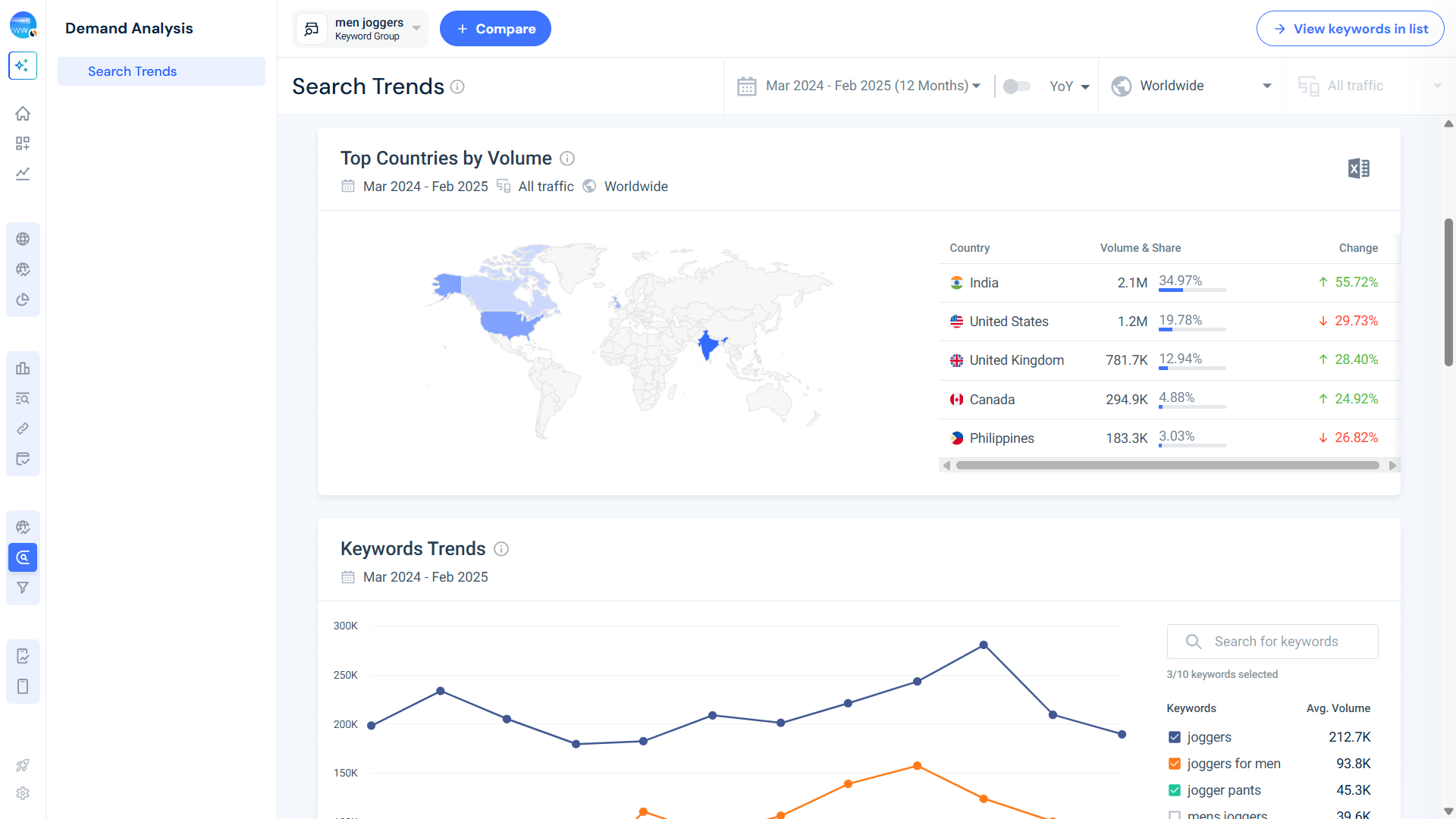
Where is demand strongest? Similarweb’s Top Countries By Volume feature answers that.
Use this data to pinpoint high-opportunity markets. If demand for a product is soaring in Germany but flat in the U.S., your expansion, advertising, and inventory strategies should reflect that.
By identifying regional hotspots, you can improve your marketing spend, localize messaging, and focus resources where they’ll have the biggest effect.
Below, we can see that demand is increasing in countries like India, the U.K., and Canada while declining in the U.S.
Compare trends
Some trends rise fast and fade even faster, while others keep climbing. How do you tell the difference?
That’s where Keyword List Comparison comes in. When you compare multiple keyword lists side by side, you can see:
- Which trends are gaining momentum
- How consumer interest is changing
- Which keywords offer sustained growth potential
This comparative analysis allows you to invest in the right opportunities and not chase short-lived fads.
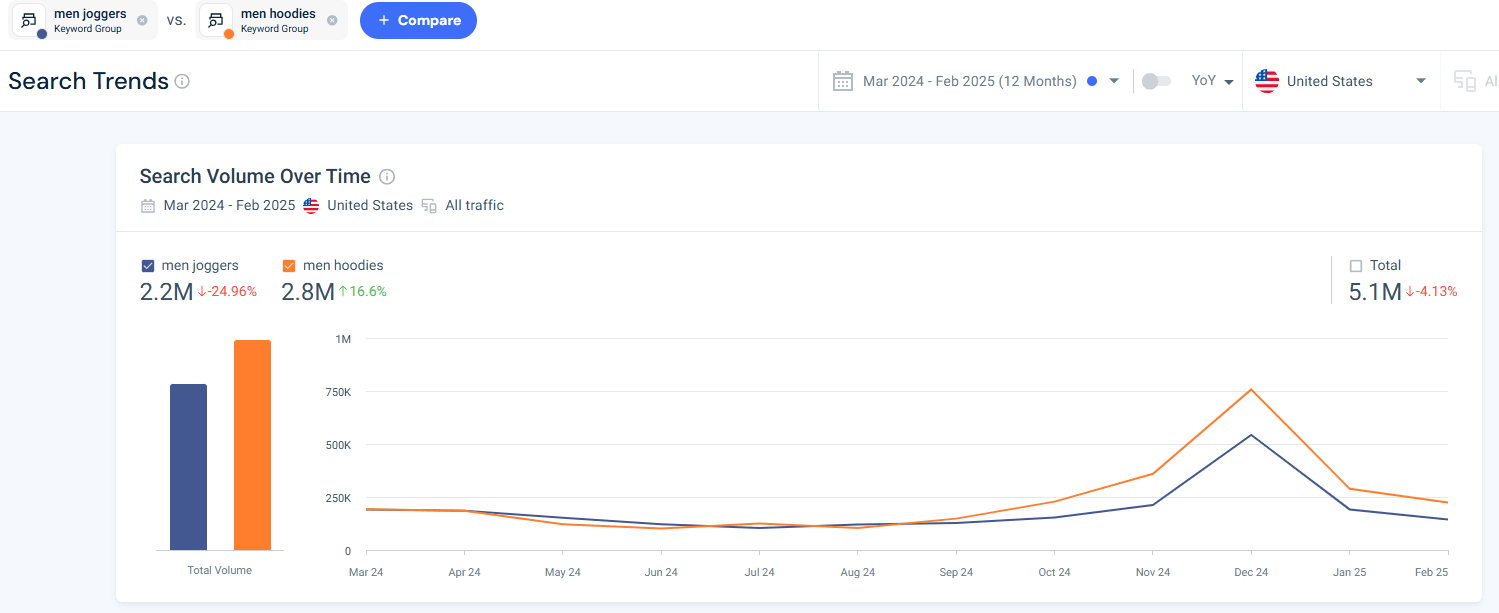
In the example below, we’ve compared “men joggers” (Where we saw a decline in demand in the previous example) to “men hoodies”, indicating that clothing brands would be wise to invest in hoodies instead of joggers.
Search by topics
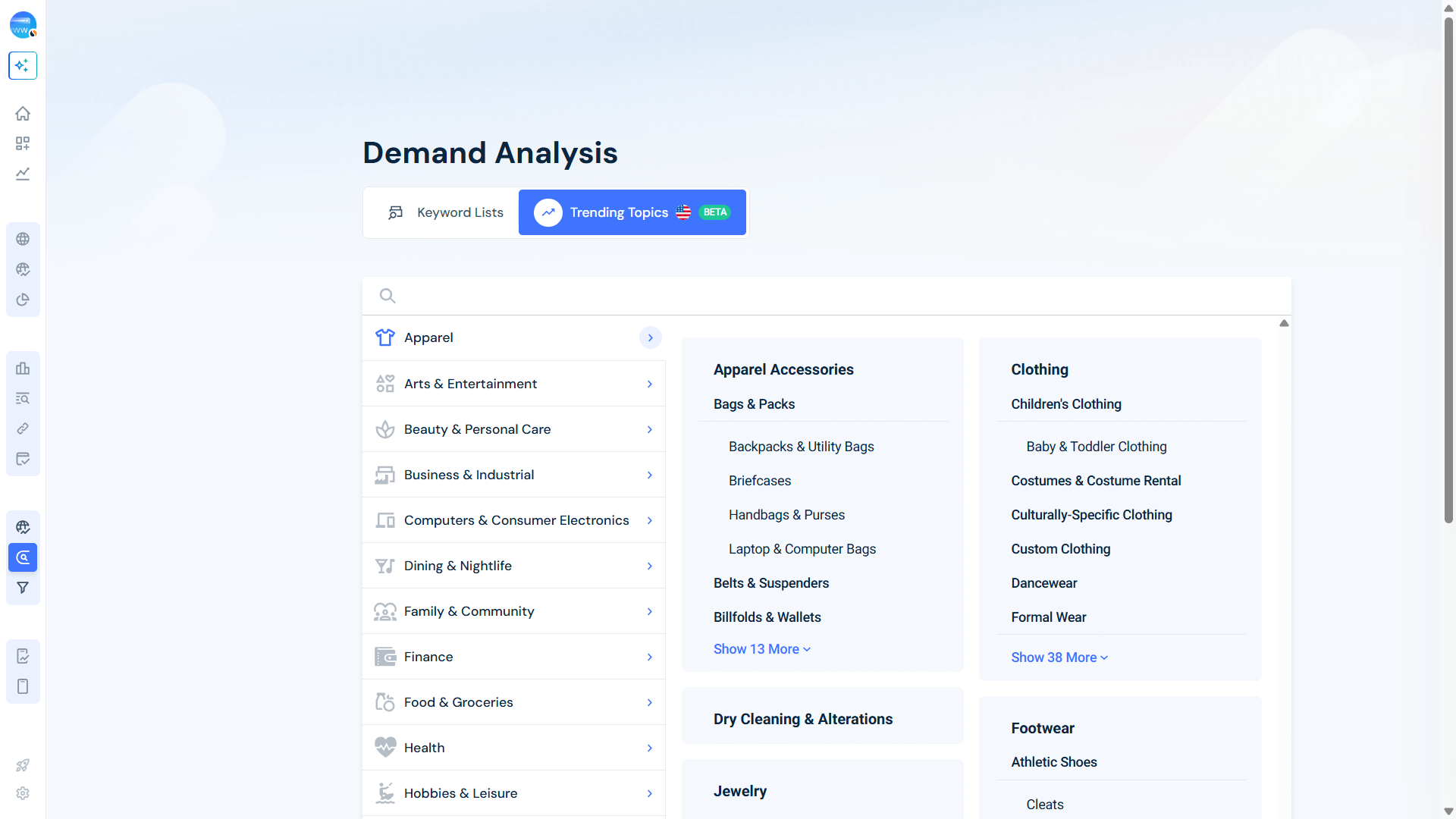
You can build custom keyword lists in Similarweb or save time with predefined keyword lists curated by industry experts.
Predefined lists give you a head start by tracking emerging consumer trends across industries. Whether you’re researching tech, fashion, or finance, these curated insights are your source for the most relevant market data.
The result? Faster research, sharper strategies, and a clearer growth path.
Explore sub-trends with clusters
Want a deeper look into a major trend? Look at keyword clusters.
Clusters group related keywords together, breaking down broad trends into niche sub-trends. This helps you:
- Identify overlooked market segments
- Spot rapidly growing niches
- Understand the hidden drivers of consumer demand
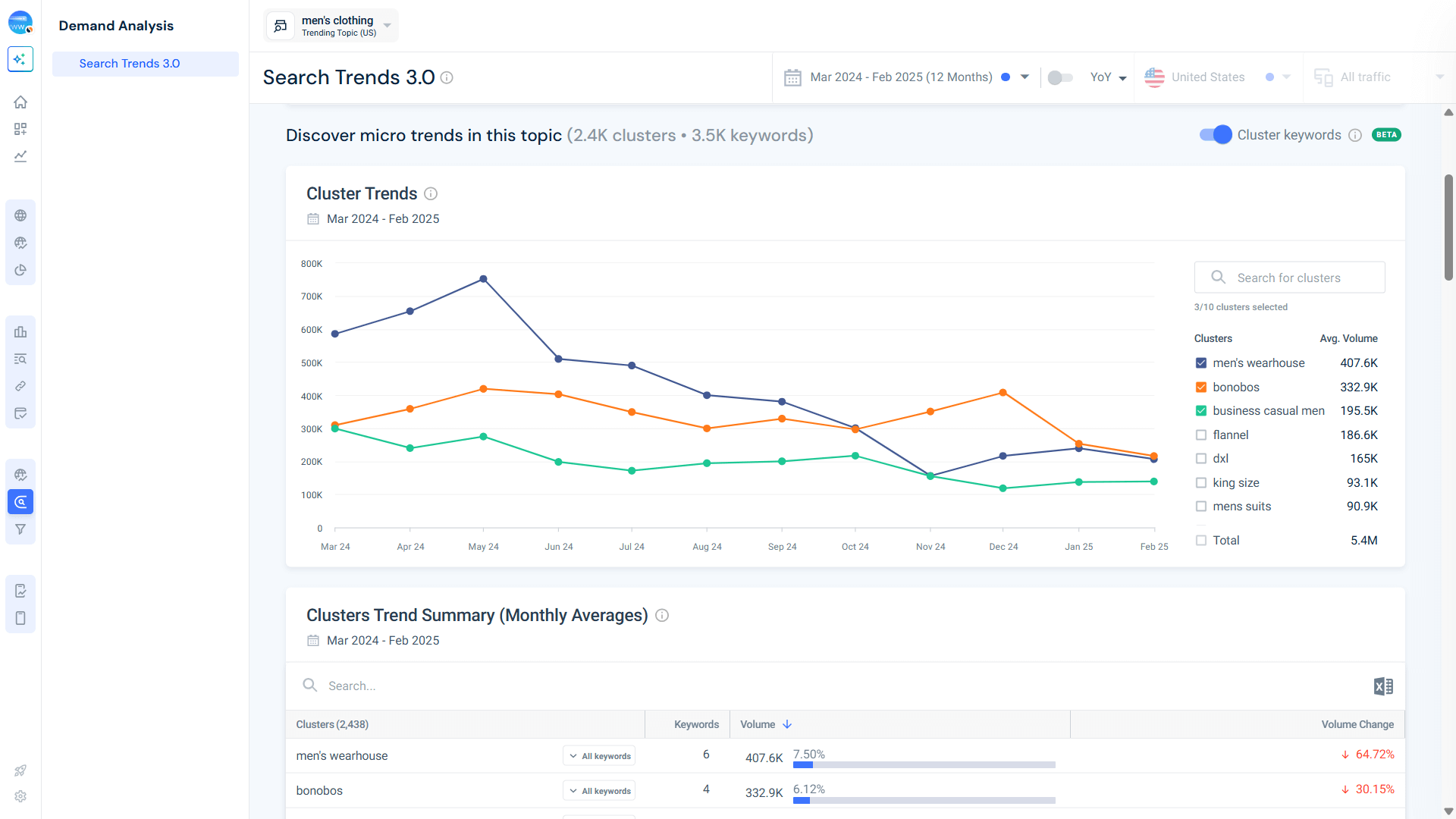
For example, instead of taking a step back and looking at trends for our pre-defined topic of “Men’s clothing”, you can uncover sub-trends and specific brand performance in the men’s clothing topic.
These findings let you refine marketing strategies, develop targeted products, and seize high-potential opportunities before your competitors notice them.
Tips for better demand analysis
Keeping up with varying market trends is all about making use of real data to uncover what’s gaining traction before your competitors do.
Here’s how to refine your market and demand analysis with practical, data-backed techniques that deliver real results:
Monitor trends regularly
Consumer demand is never static. Preferences constantly change, trends emerge, and new keywords gain momentum. If you want to win, you should monitor these changes continuously and not just quarterly or yearly.
If spotted early, this insight allows you to adjust your inventory, refine your paid campaigns, and dominate the search rankings before competitors catch on.
Track the full user journey
Don’t stop at search volume. Look at the full customer journey, from search to purchase.
If interest is high but conversions are low, dig deeper. Maybe something’s missing.
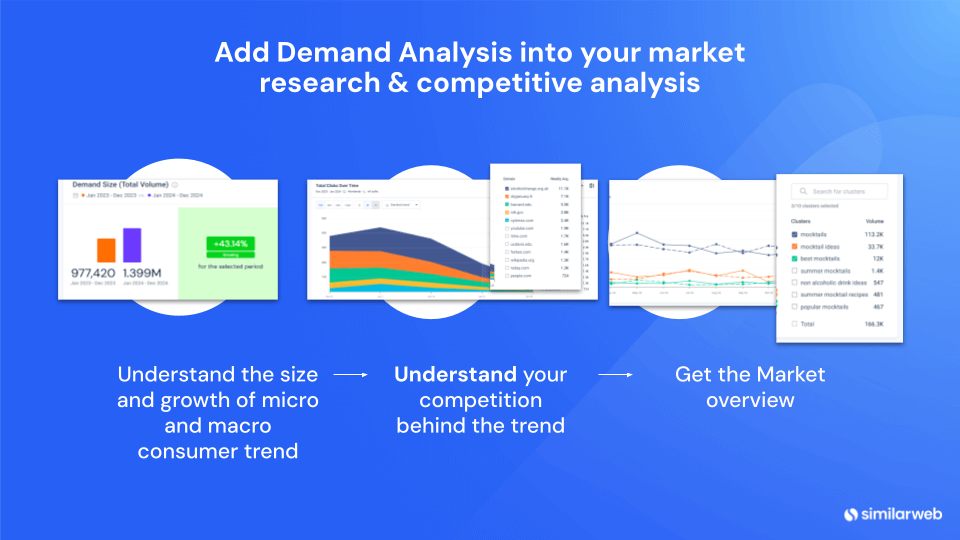
Practical tip: Use Similarweb’s Demand Analysis tool to break down demand trends by funnel stage. A sharp rise in search interest might suggest early demand, but what about conversion rates? Analyze the SERP competition, which brands are winning organic clicks? Who’s dominating paid placements?
If you see competitors doubling down on paid ads for a keyword, it’s a strong indicator of monetizable demand. This level of understanding helps refine marketing efforts and target high-intent consumers.
Combine qualitative and quantitative data
Data shows what’s happening, but feedback explains why.
Let’s say searches for “vegan skincare” are up 30%. That’s a good sign. But if reviews mention poor results, your messaging should address that.
Use both types of data to guide smart decisions.
Stay ahead with demand analysis
Want to stay competitive? Start with demand analysis.
It shows where interest is heading so you can adjust pricing, improve products, and create targeted campaigns. When done right, it helps you spot trends early and avoid costly mistakes.
With Similarweb’s tools, you can track what people care about, explore market shifts, and make confident decisions.
Whether you’re launching something new or refining your strategy, this kind of insight helps you move faster and smarter.
FAQs
When should a company conduct a demand analysis for a product launch?
The best time is before you even finalize the product. Early demand analysis helps gauge market interest, refine features, and set realistic sales expectations. When you track search volume, competitor activity, and consumer sentiment, your company can make informed adjustments and reduce the risk of launching something that misses the mark.
How does demand analysis shape pricing strategies?
Price it too high, and you lose customers. Price it too low, and you leave money on the table. Demand analysis reveals how much consumers are willing to pay and uncovers trends that guide pricing decisions. It helps companies find the sweet spot, one that balances competitive pricing with profitability while still being in tune with changing market expectations.
Why is historical data important for demand forecasting?
Consumer behavior is rarely random. Historical data reveals seasonal trends, demand spikes, and long-term shifts. This gives businesses a blueprint for smarter demand forecasting. Combining past data with current market signals allows companies to anticipate future demand more accurately, plan inventory, and fine-tune production cycles so that they always meet customer needs.
How can demand analysis reveal emerging market opportunities?
The ability to spot trends before they explode is a great advantage. Demand analysis tracks both macro and micro consumer behaviors. This surfaces untapped niches and early signals of changing preferences. Brands that act on this data can pioneer new product categories, capture demand before competitors, and expand into high-growth segments.

Related Posts




How to Do A Competitive Analysis: Complete Guide & Free Templates


Track your digital metrics and grow market share
Contact us to set up a call with a market research specialist