






The Top 100 Most Visited Websites in the USA (August 2026)
by Shai Belinsky10 Min.
Sep 29, 2026
 Marketing Intelligence
Your pricing strategy can make or break your business. It’s a delicate balance: set prices too high and lose customers. Set them too low, and your profit margins tank.
Competition-based pricing offers a strategic solution. It can enable you to stay competitive and profitable.
It helps a business catch the attention of potential customers while reducing operational expenses. It is also particularly beneficial for retailers in a crowded and competitive market.
Here’s why it’s important to have a competitive pricing strategy.
A survey by Bright Data shows that 82% of consumers believe pricing is the most important factor when purchasing.

But all this involves more than just pricing. It’s about monitoring prices and constantly re-pricing them. Here, we’ll define competition-based pricing, its pros and cons, and how to implement it successfully.
Competition-based pricing, often referred to as competitive pricing, is the strategy of setting prices based on what competitors charge.
A pricing strategy like value and cost-plus pricing starts with the business’s costs and uses them to select a price.
Competition-based pricing analyzes the competitive landscape to determine what peers are offering. Businesses that follow this pricing model attempt to be as close as possible to what others are charging so that they do not overprice themselves.
Competition-based pricing becomes a very attractive model for businesses needing to keep up with the market. Here are some key advantages:
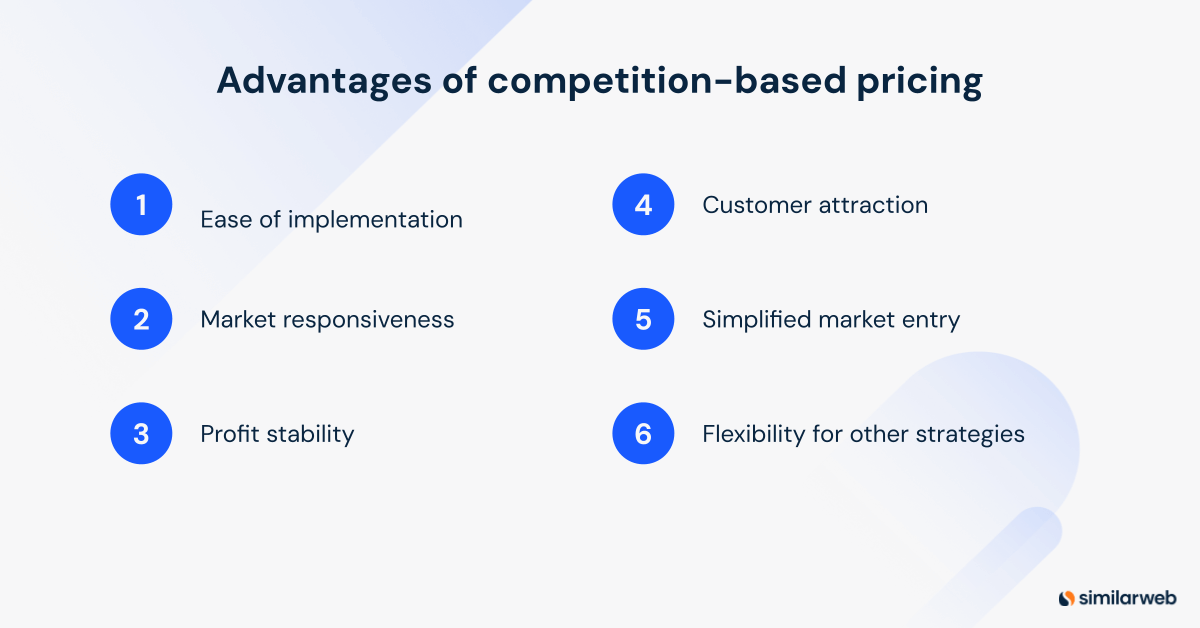
Competition-based pricing has several advantages. But it also comes with a few drawbacks. It’s essential to understand these weaknesses before building out your strategy.
To design a result-oriented, competition-based pricing strategy, a business needs to follow certain rules or steps:
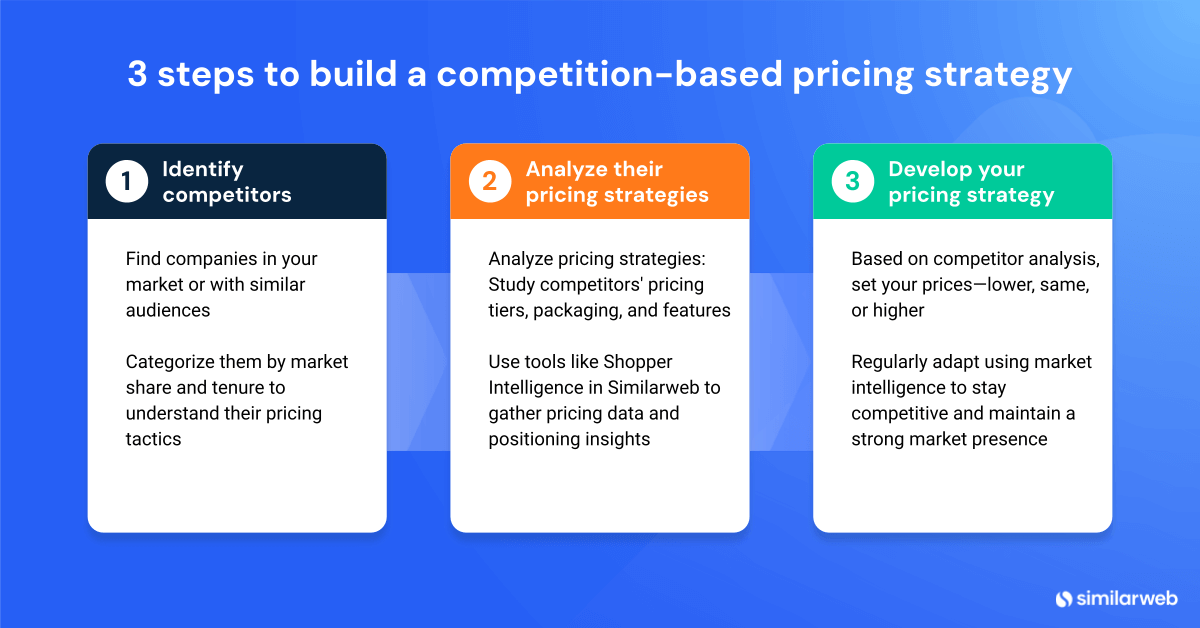
1. Identify your competitors:
The first step is to identify your current competitors. Search for other firms that operate in the same geographical markets or serve a similar target audience. Categorize them based on their market share and tenure. It helps to define different types of competitors so you understand the pricing tactics they use.
2. Analyze their pricing strategies:
Research how your competitors set their prices. Consider factors such as pricing tiers, packaging, and the features they offer. Use competitive analysis tools to capture pricing data and content analysis to understand how competitors position themselves.
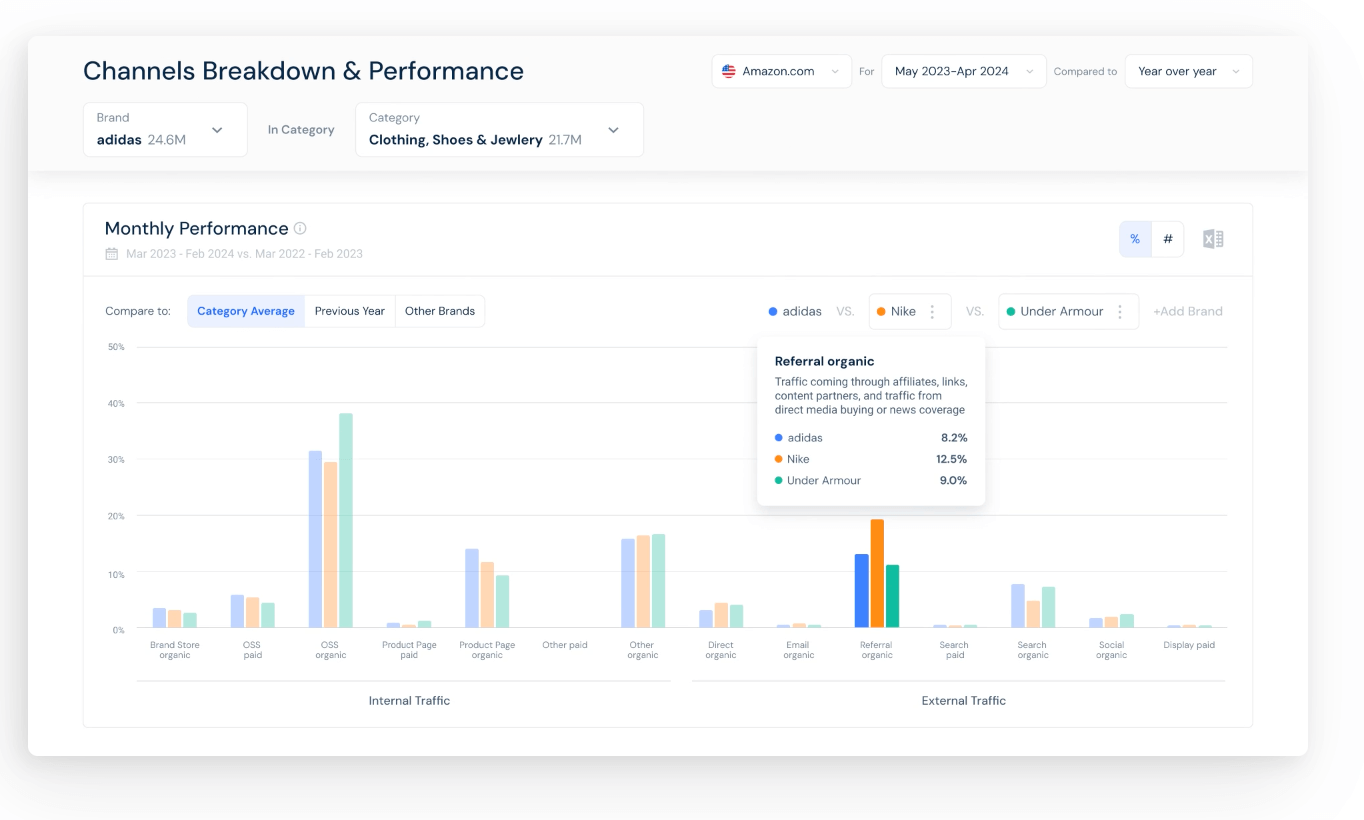
The Retail Intelligence platform offers price intelligence into your competitors’ performance and pricing strategies, within the Similarweb platform. It will also enable you to build a winning competition-based pricing strategy.
3. Develop your strategy with competitor pricing:
Once you understand your competitors’ pricing, set your policy accordingly—whether to price lower, the same, or higher. Use competitive benchmarking and marketplace intelligence to adapt to market changes and add a unique value proposition to your offer.
This sequential approach to building a competition-oriented pricing strategy allows organizations to stay competitive and reactively revise their strategy to adapt to market changes.
Companies can establish a strong market reputation through detailed competitor analysis and responsive actions, gain the most profit while providing a good customer experience. Ongoing market and competitor monitoring is necessary to recognize market shifts and respond appropriately.
Competitive pricing allows businesses to position themselves strategically in the market, reacting quickly to competitor actions.
Combine this with the right Competitive Analysis tool like Similarweb, and you’ll be sure to stay ahead of the game. From understanding consumer behavior to utilizing your competitors’ pricing strategies, Similarweb’s Shopper Intelligence provides detailed insights into your online shopping moves and how they compare to the broader market.
Stay ahead and monitor your pricing strategy relative to the market and your customers’ needs. With Similarweb, you can get the insights you need to improve and dominate your market.
With the right insights, your next online growth opportunity is just a click away.
How does competition-based pricing impact profit margins?
Competitive pricing can maintain or reduce margins depending on how it’s managed. For example, if the company adopts a discounted price-matching or undercutting strategy, it could considerably reduce margins. Conversely, if the company focuses on premium pricing due to the scarcity of price-sensitive customers, it can sustain or even increase its margin.
What are common industries that use competition-based pricing?
This strategy is commonly used by industries with little product differentiation, such as retail, consumer electronics, and e-commerce, to stay ahead of other firms and appeal to price-sensitive consumers.
How can small businesses effectively use competition-based pricing?
It can work for small businesses by monitoring local competitors closely so that prices are set in line with expected market levels while taking costs into account in order to remain profitable.
What tools can help implement competition-based pricing?
For assessing and monitoring competitive pricing, a range of competitive analysis tools, such as Similarweb and pricing software, can be utilized to obtain and analyze competitors’ pricing dynamics, thereby adjusting firms’ pricing levels dynamically to enhance competitiveness.
How does competition-based pricing differ from other pricing strategies?
Cost-plus and value-based pricing start with internal costs or perceived customer value calculations. In contrast, competition-based pricing is closely tied to the external market prices determined by competition – hence the name.

by Roi Kaufman
VP of Demand Generation at Similarweb
As a seasoned growth marketing leader with a deep passion for demand generation, I bring a wealth of expertise in driving scalable B2B growth strategies.
The Top 100 Most Visited Websites in the USA (August 2026)

Similarweb Named in Forrester's Answer Engine Optimization Technologies Landscape, Q3 2026

Anthropic IPO: What Claude's Web and App Data Show
The ultimate solution to help you build the best digital strategy
