




The Top 100 Most Visited Websites in the USA (August 2026)
by Shai Belinsky10 Min.
Sep 29, 2026
 Research Intelligence
In today’s digital economy, competition is fierce. In fact, 63% of marketers say their top challenge is generating traffic and leads in highly saturated markets.
Whether you’re a business owner, marketer, or product strategist, staying ahead means having a deep understanding of your competitive landscape.
In this article, we define what makes a market competor is intensely competitive ditive, explore real-world examples you can follow using Similarweb data, and share actionable strategies to help your business thrive.
A competitive market is one where multiple businesses vie for the same customers, often offering similar products or services. In these environments, companies need to constantly innovate, optimize pricing, and deliver standout experiences to maintain and grow their market share.
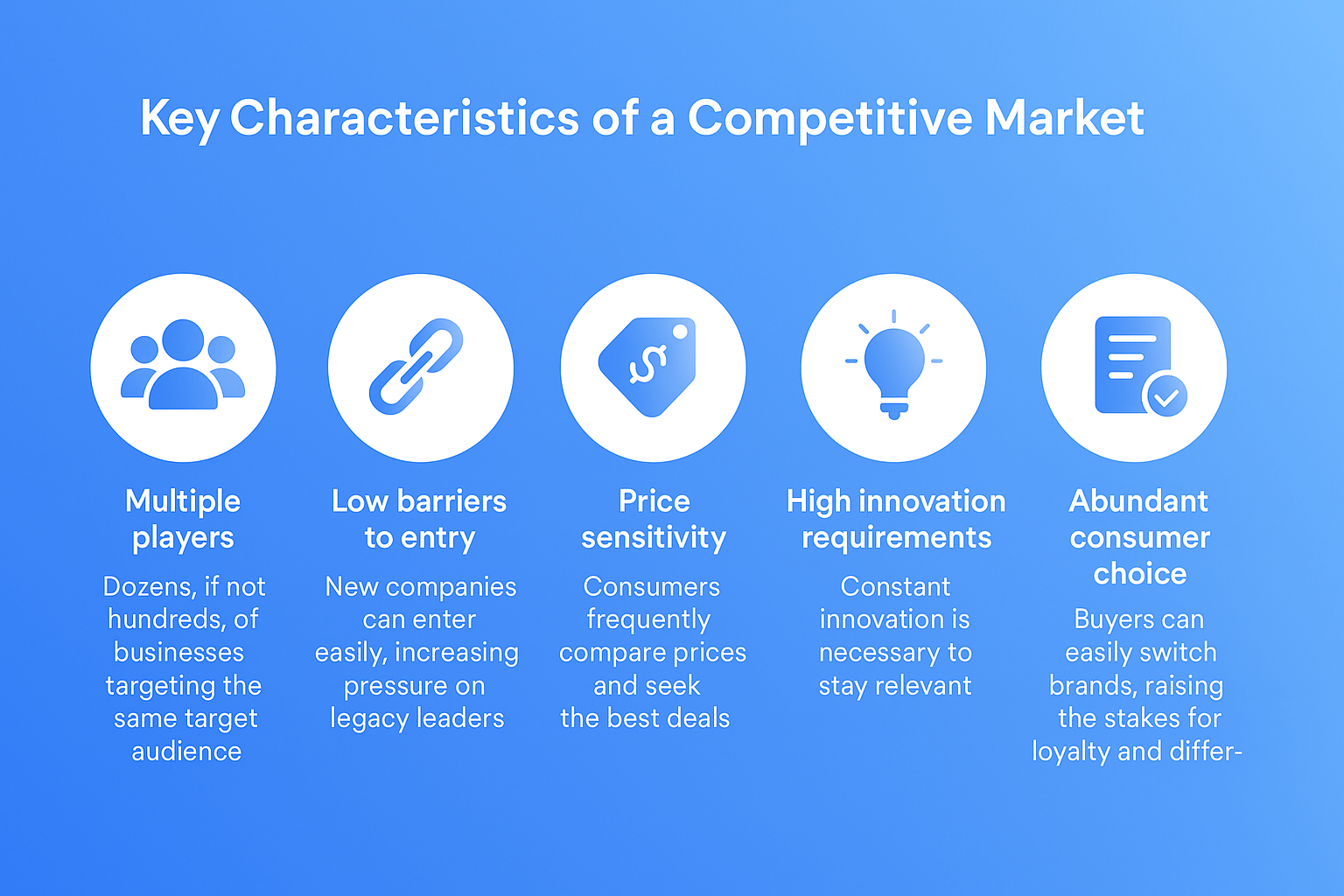
Understanding these market dynamics is critical for any business seeking long-term success.
Let’s examine two highly competitive industries – Ecommerce and Online Travel & Hospitality – using Similarweb’s Market Analysis tools.
The ecommerce industry is a classic example of high competition. With low startup costs, global access, and shifting consumer expectations, businesses face ongoing challenges to capture attention, convert (and retain) visitors.
From fast shipping to next-day returns, customer expectations are sky-high. That’s pushed many brands toward a direct-to-consumer (D2C) model. This skips the middleman and competes on experience. That’s where Similarweb’s Market Analysis comes in handy.
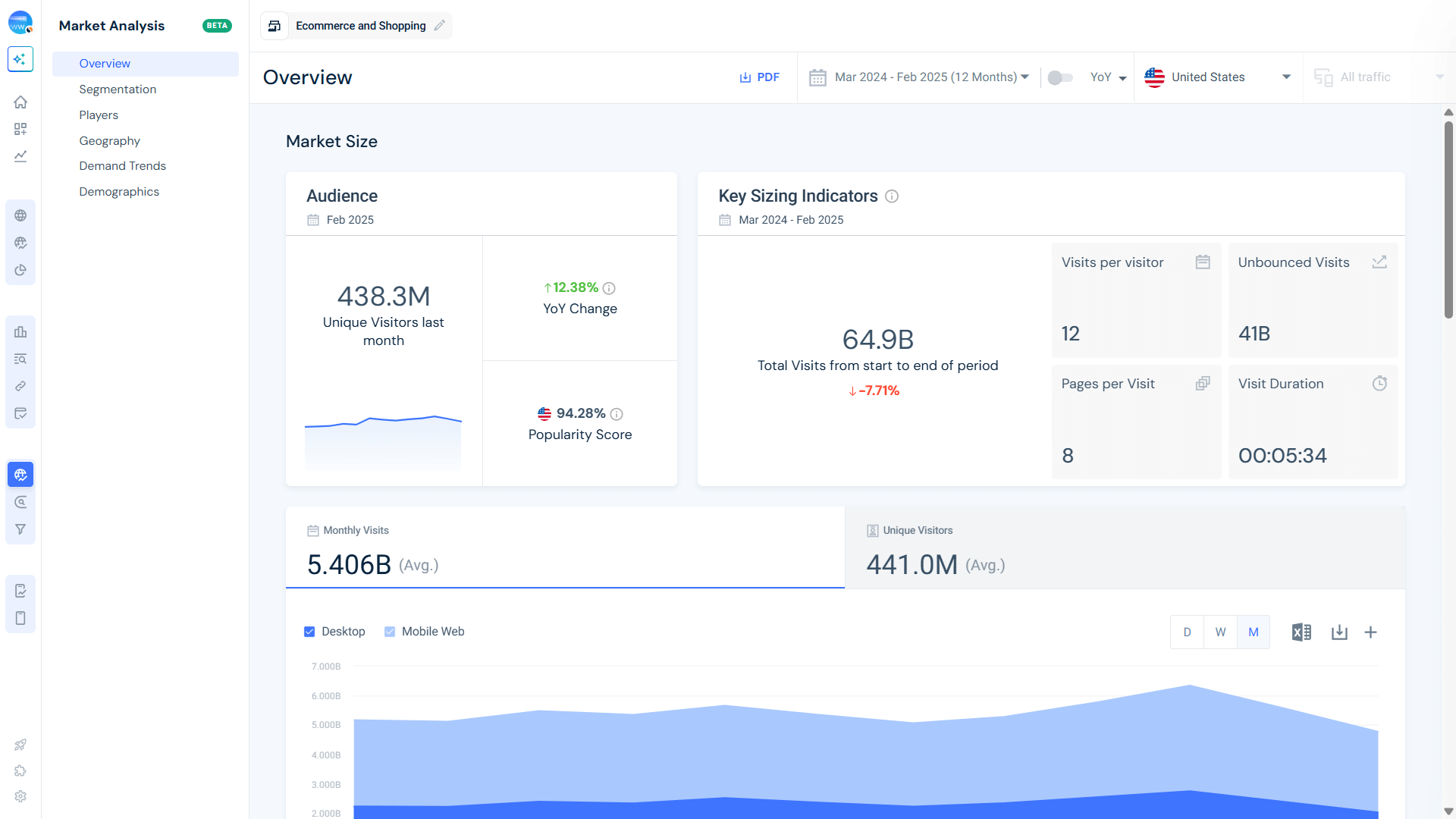
Below is an overview of the U.S. ecommerce market. It lets you:
Gauge the ecommerce and shopping market size with various audience and sizing metrics. We can see that this market has a massive audience volume that highlights the immense opportunity:
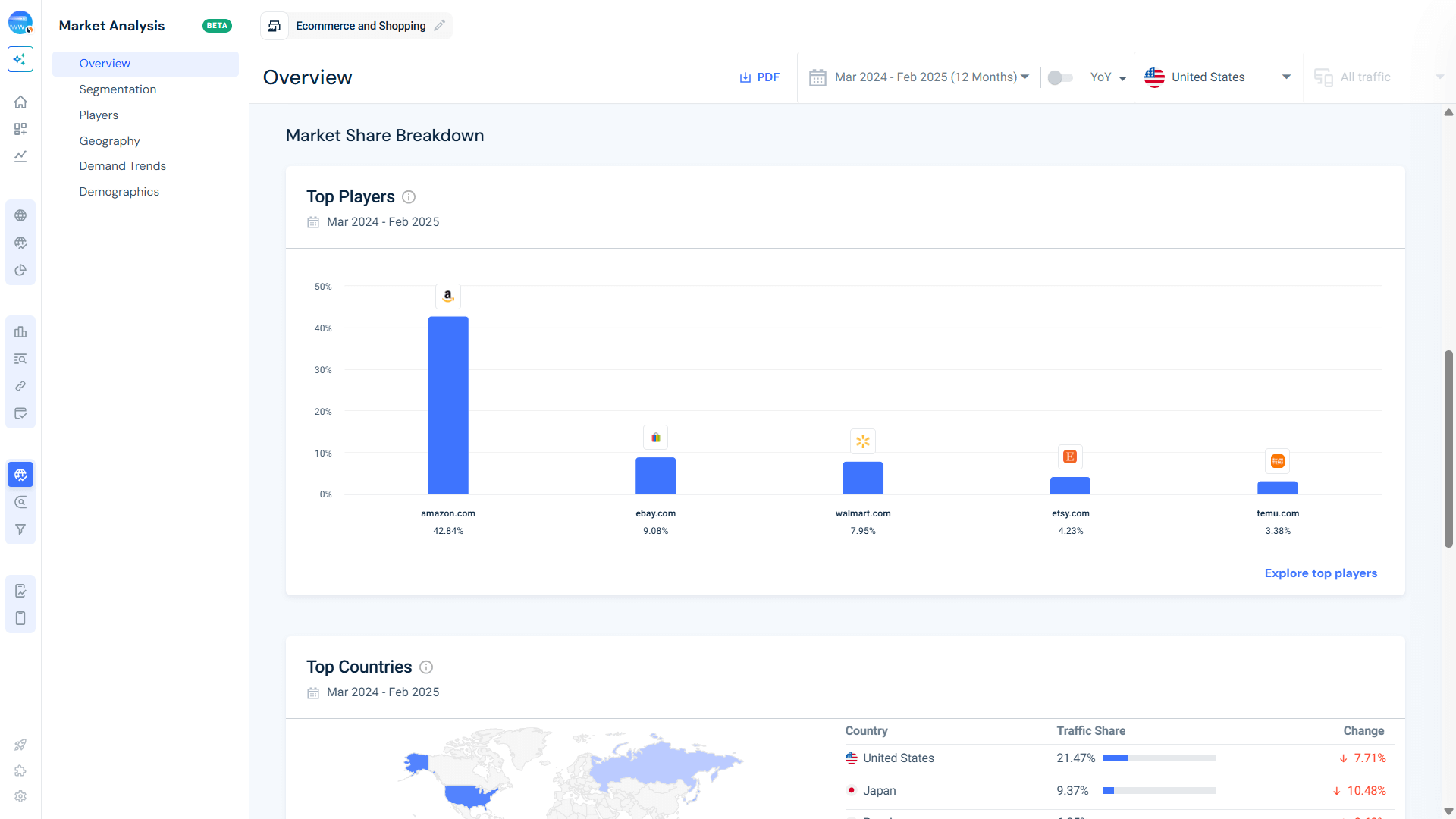
Benchmark top-performing players in this industry using the Top Players section. Notice that Amazon dominates, followed by Walmart, eBay, and Target:
See how competitive your category really is under Market Difficulty, which in this case is high. The presence of established marketplace leaders, combined with new DTC entrants, creates intense competition for both attention-grabbing and conversions:
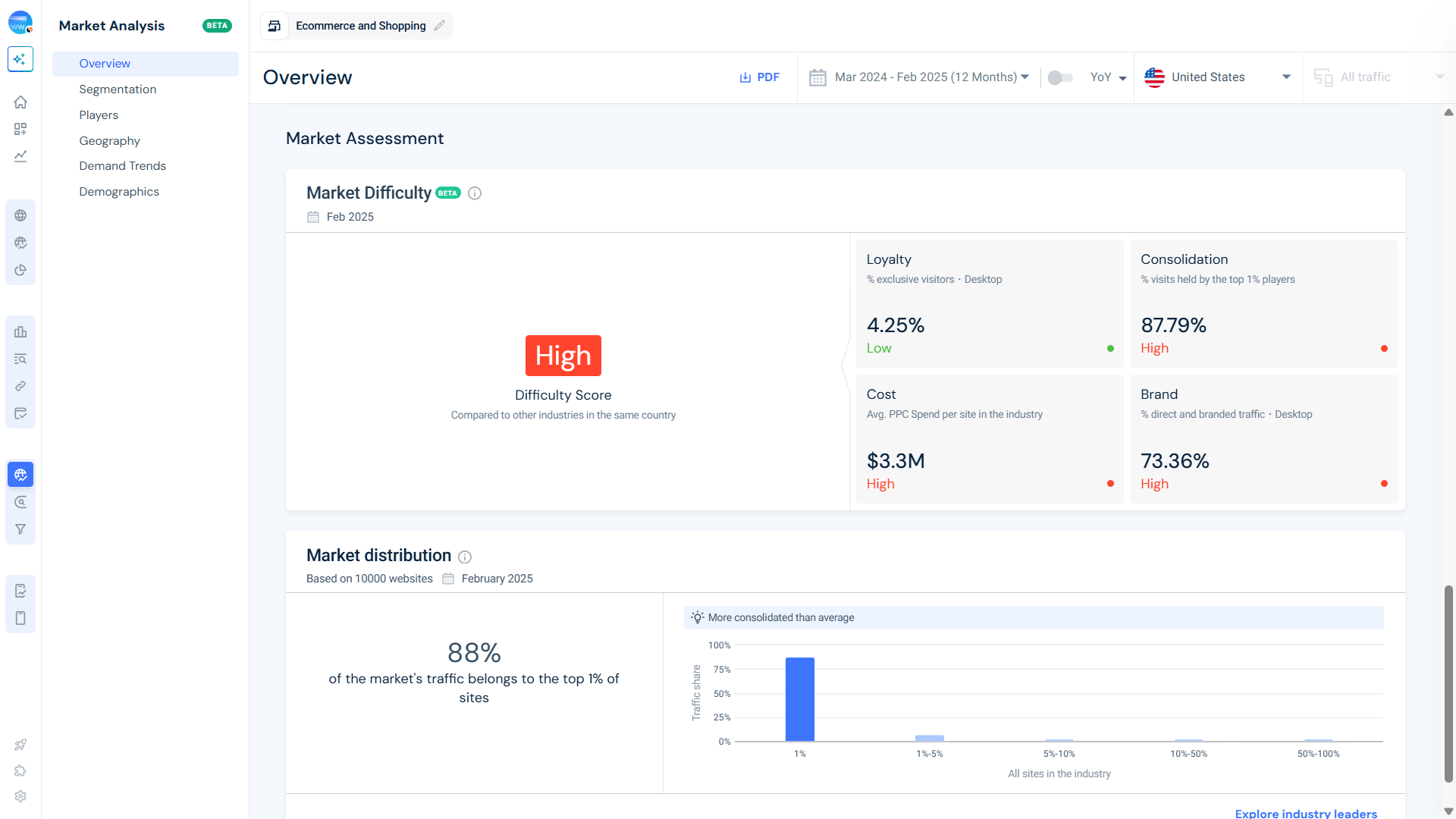
This sector is intensely competitive due to price comparison tools, the popularity of loyalty programs, and fluctuating demand tied to shopper seasonality.
Let’s take a look at the recent data for the Online Travel & Hospitality industry within the US market.
With Similarweb’s Market Analysis, you can surface the kind of intel that gives you a clear advantage:
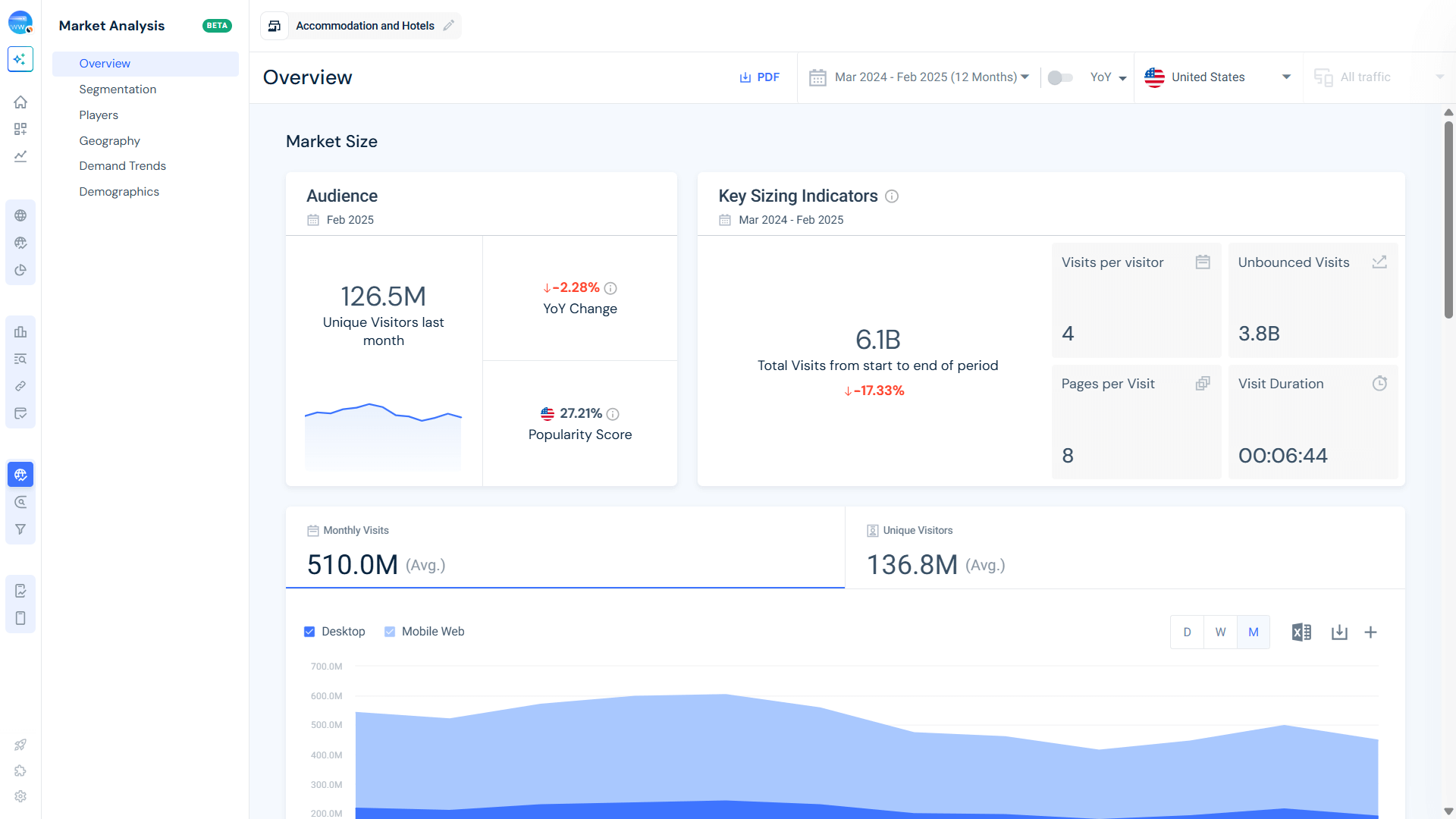
Get a clear view of the accommodation and hotels space. See how big the opportunity really is – in this case, the market is big and seasonally variable. Peaks align with holidays and key vacation periods.
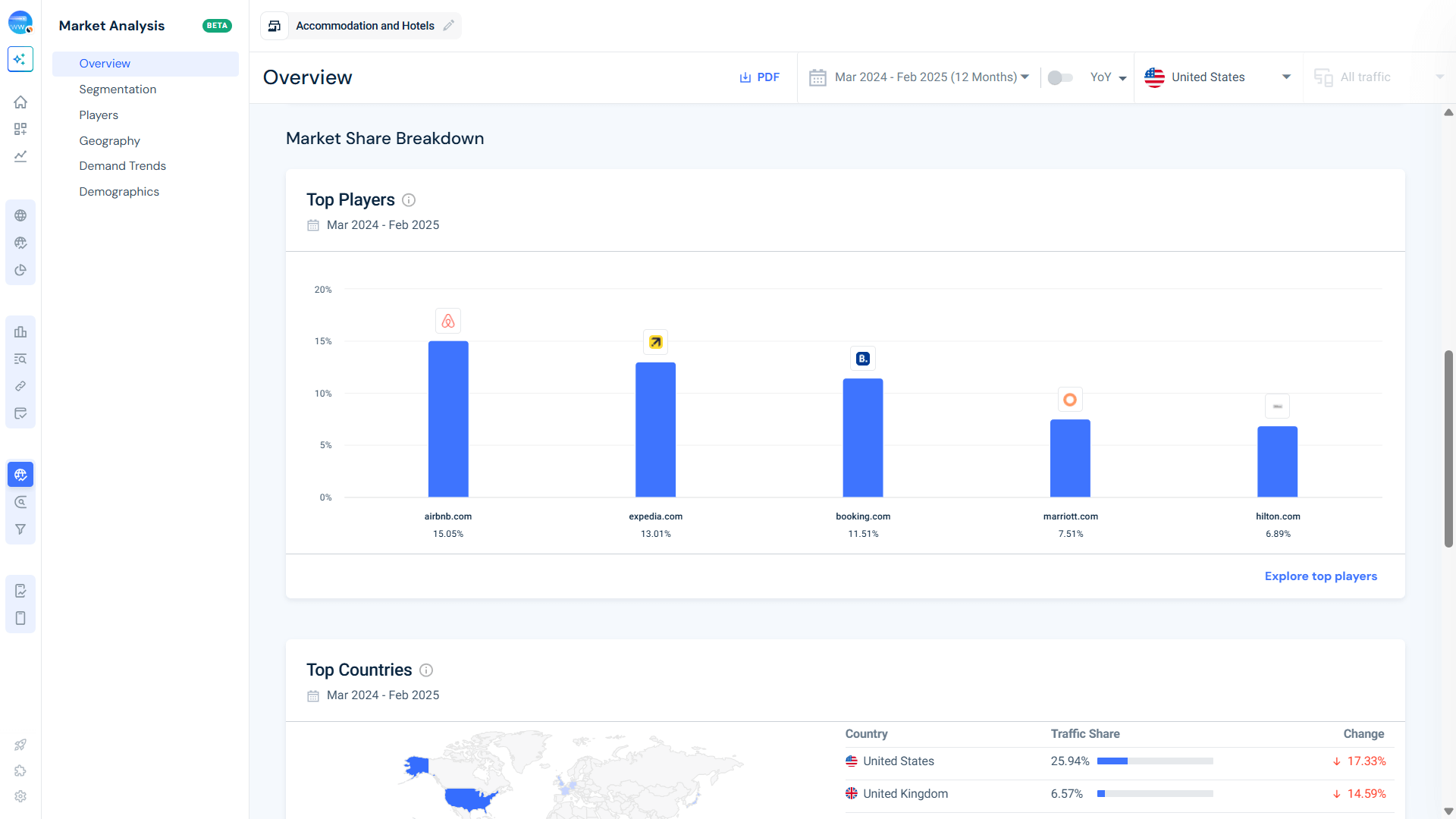
Head over to the Market Share section and zoom in on the leaders in this space. Airbnb, Booking.com, Expedia, Hotels.com, and Vrbo are the clear leaders in site traffic and engagement.
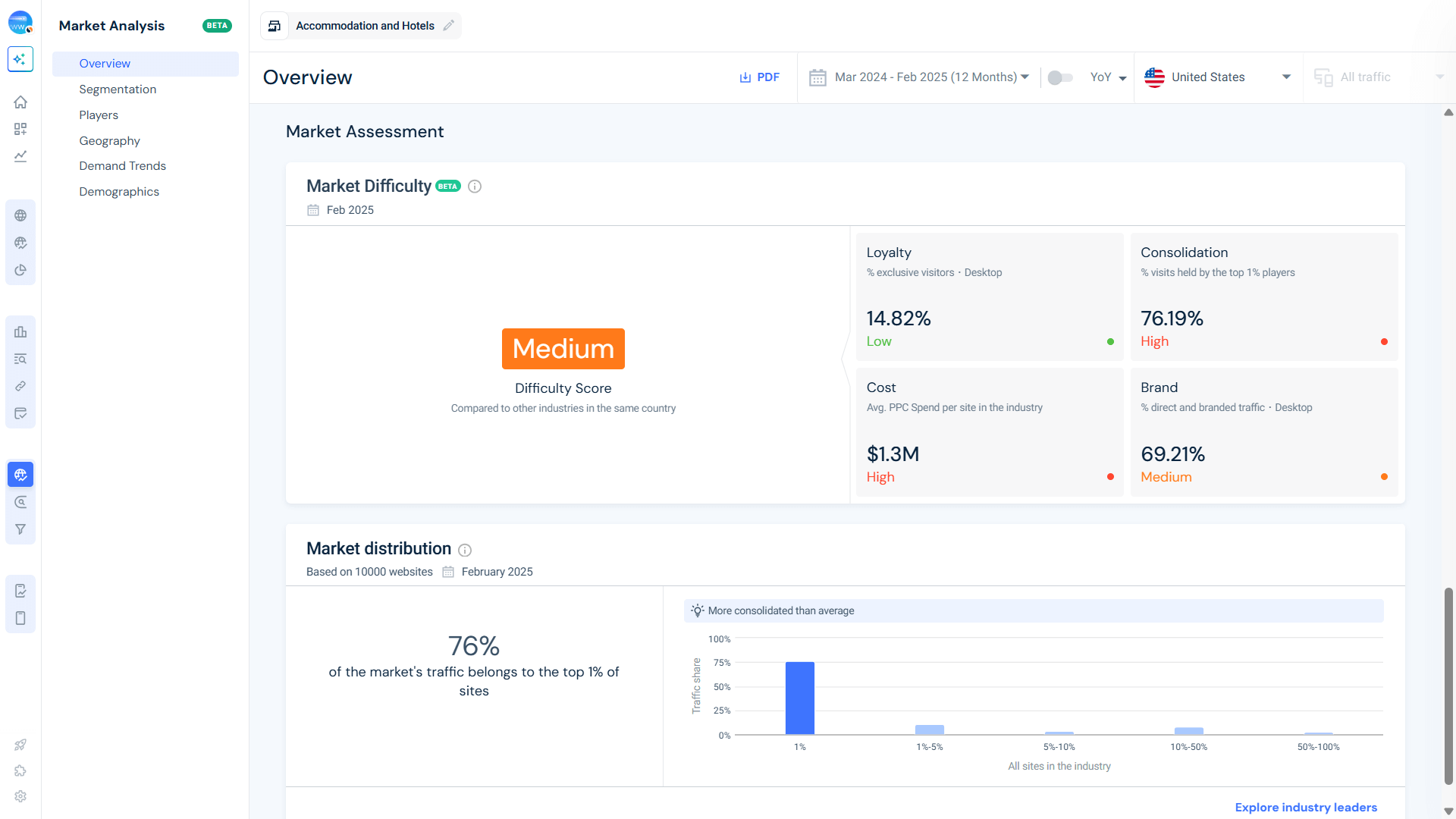
Curious about how challenging this market really is? Use Market Difficulty to get a clear, no-nonsense view of the competitive landscape. In this case, the difficulty is medium, meaning there’s still room for new entrants. However, price-sensitive consumers actively compare deals, and hotels are stepping up direct booking efforts to bypass third-party fees.
To rise above the noise, businesses must go beyond surface-level tactics. Below are a few proven strategies backed by industry-leading competitive intelligence.
Start by knowing who you’re really up against.
Use Similarweb’s Competitive Intelligence tools to track your rivals’ website traffic, engagement, and market growth trends. It’s about knowing who’s winning and, more importantly, why and how.
As an example, let’s benchmark website performance for some of the top players in the Accomodation and hotels industry in the US: airbnb.com, expedia.com, booking.com, vrbo.com, and hotels.com.
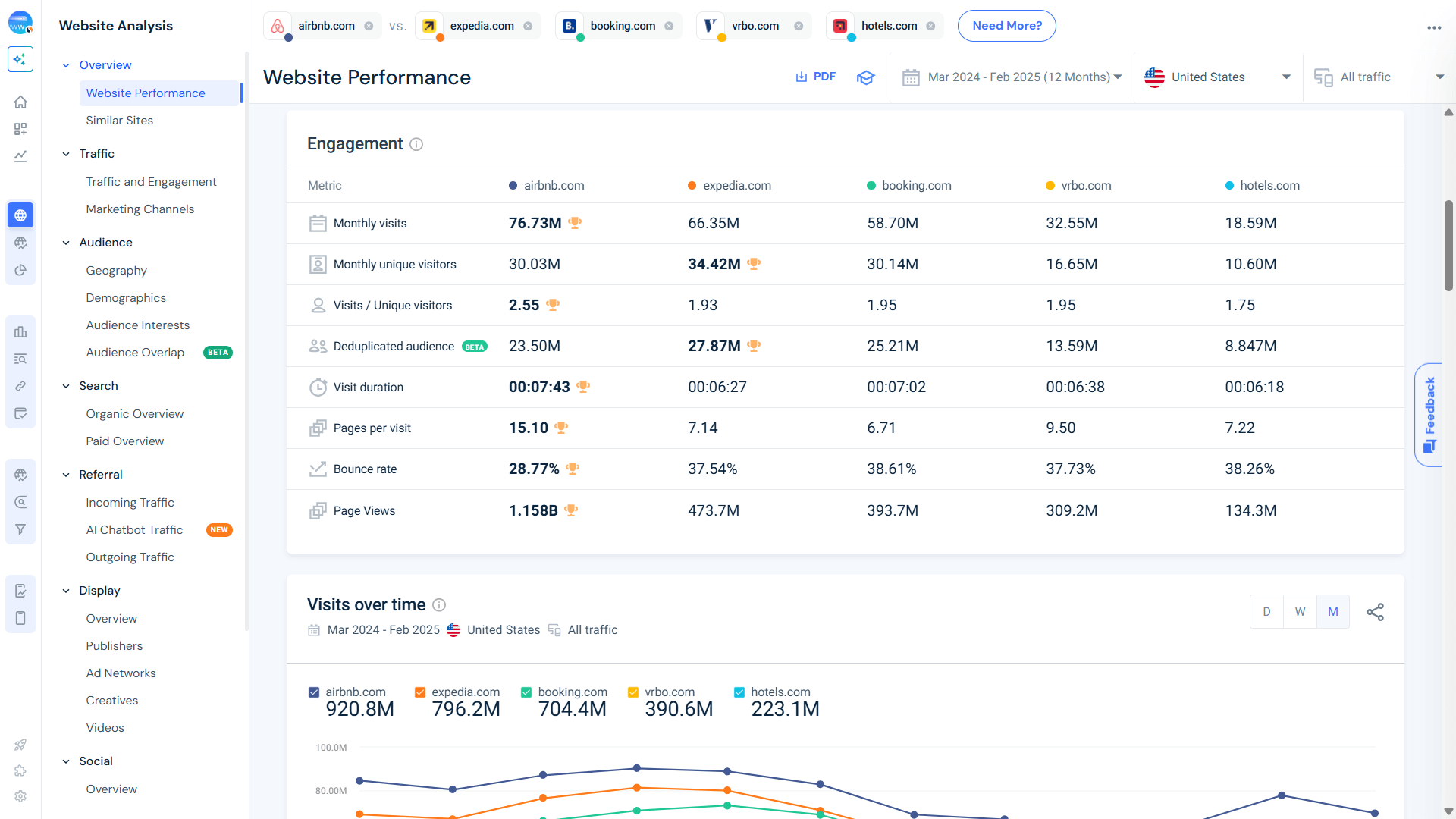
Key insights we can see right away:
Next up, look into site performance, traffic sources, and top-performing content. This kind of competitive market analysis gives you a full view of how saturated your space is and where the competitor gaps (and opportunities) are.
Businesses that thrive in competitive markets know how to stand out. Whether it’s through pricing, features, or experience, differentiation is essential.
Tesla bypasses traditional dealerships, selling directly to consumers. This gives them full control over pricing, customer experience, and branding, cutting out middlemen and improving margins.
How to apply this:
Reacting to the market is good. Predicting it is better. Businesses that use data to guide decisions are more adaptable and resilient.
Let’s say we want to explore a fast-growing niche like “wellness tourism.” We’ll head into Similarweb’s Demand Analysis, create a keyword group, and watch how consumer interest evolves over time.
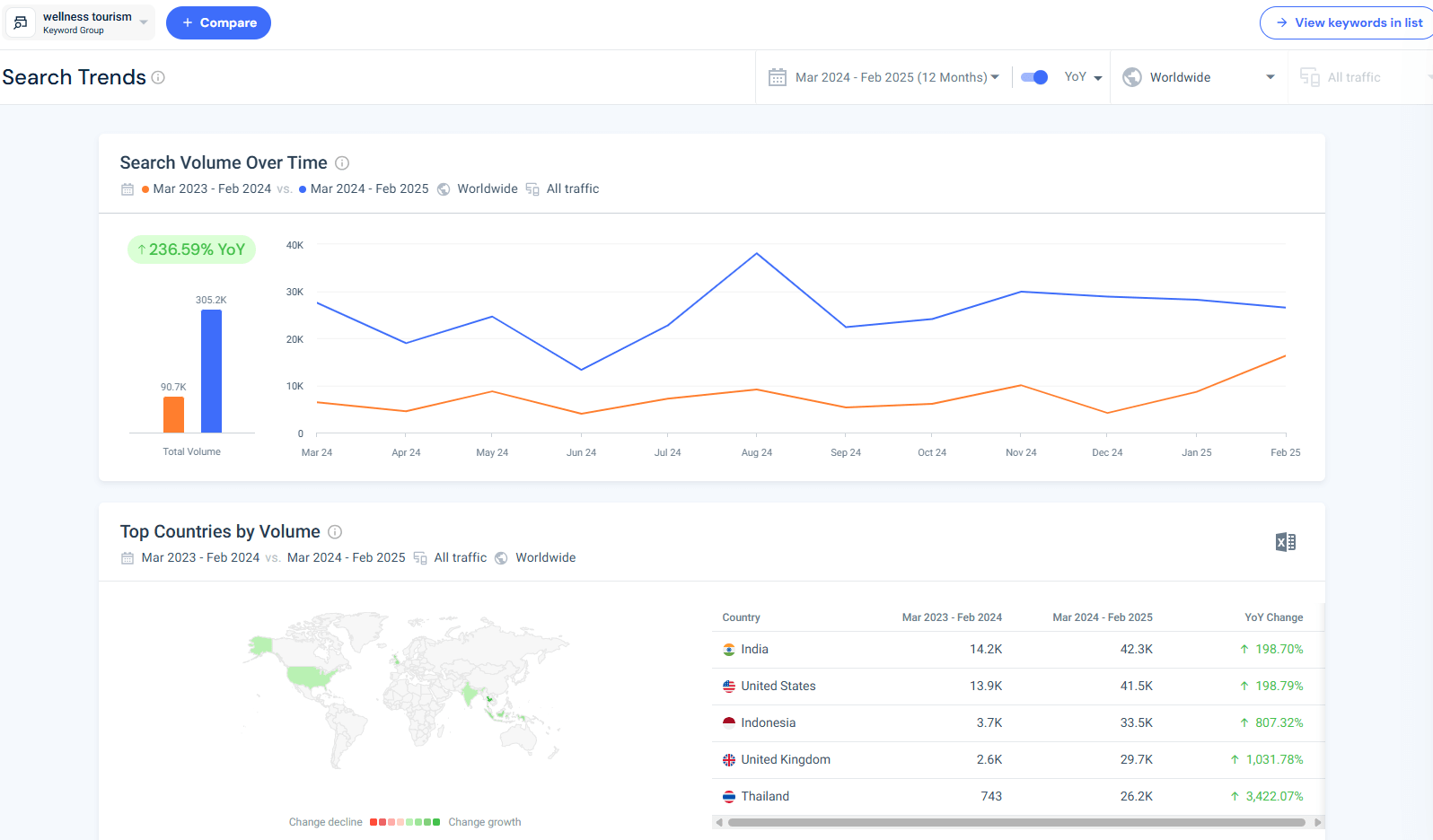
Key insights we can see right away:
Succeeding in a competitive market requires more than great products – it means having insight, agility, and strategy that are data-backed and consumer-focused.
By leveraging competitive intelligence tools like Similarweb, businesses of all sizes can:
Companies that embrace market data and continuously refine their approach gain a lasting competitive advantage. Start exploring Similarweb’s tools today to stay ahead!
What is market competition?
Market competition refers to the rivalry between businesses trying to attract the same customers. It forces companies to innovate, optimize, and differentiate.
Why is competitive analysis important for marketing teams?
Competitive analysis helps marketers understand what works for competitors, find audience gaps, and adjust campaigns based on real-time traffic and engagement data.
How can Similarweb help me analyze a competitive market?
Similarweb offers tools like Market Analysis, Website Analysis, and Demand Analysis that provide insights into market size, key players, traffic metrics, and keyword trends.
What industries benefit most from competitive intelligence?
Virtually all industries can benefit, but it’s especially valuable in saturated sectors like ecommerce, travel, tech, media, and financial services.

Principal Product Marketing Manager
Daniel brings 10+ years of marketing experience, specializing in both B2B and B2C audiences. He thrives at managing delivery of projects, consistently developing concepts that drive impact.
The Top 100 Most Visited Websites in the USA (August 2026)
Similarweb Named in Forrester's Answer Engine Optimization Technologies Landscape, Q3 2026

Anthropic IPO: What Claude's Web and App Data Show
Contact us to set up a call with a market research specialist
