





The Top 100 Most Visited Websites in the USA (August 2026)
by Shai Belinsky10 Min.
Sep 29, 2026

Understanding where your website traffic comes from is the first step to building a smarter digital strategy. Each traffic source can offer insights into user behavior that will guide your marketing efforts.
According to BrightEdge data, organic search accounts for 53% of site visits, making it the top driver of all traffic. Miss this, and you could lose more than half your potential audience. Paid search ads, responsible for 15% of clicks, effectively reach targeted audiences quickly. Meanwhile, social media, accounting for 5% of traffic, continues to grow.
Shifts in browsing habits, like increased mobile browsing and the rise of digital assistants, reshape how users find and interact with websites. For marketing teams, regularly analyzing traffic performance is crucial to stay competitive.
To reach more users, focus on identifying the most valuable traffic sources and adjusting your marketing strategies to match audience behaviors.
Traffic sources reveal how users find your site, offering valuable insights to refine your strategy and grow your audience.
From direct traffic that highlights brand recognition to social traffic that measures audience engagement, each source provides valuable insights to shape your digital marketing approach.
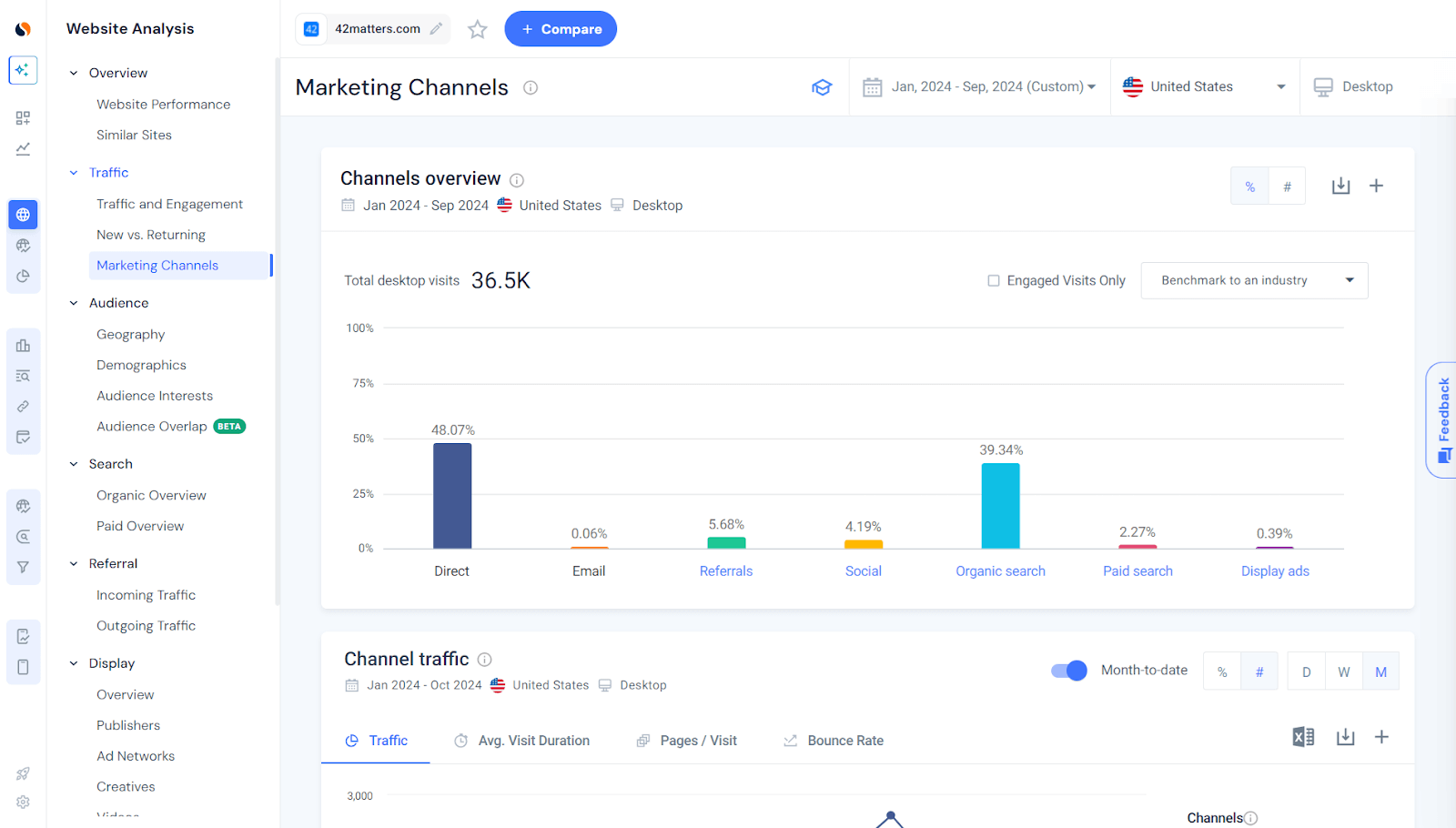
With Similarweb’s “Website Analysis” (and free traffic checker), you can explore a detailed breakdown of your traffic sources and trends.
Under the Website Analysis tab, head to “Overview” and “Marketing Channels,” to discover more granular traffic insights.
This provides businesses with a competitive advantage online as they can adapt their strategy to better meet their consumers’ needs.
Direct traffic refers to users who visit a site by typing in its URL, using a bookmark, or clicking a saved link.
Head to Similarweb’s “Marketing Channels,” this segment is labeled as “Direct.” It is often seen as an indicator of brand strength, reflecting brand awareness and the existing demand from users familiar with the brand.
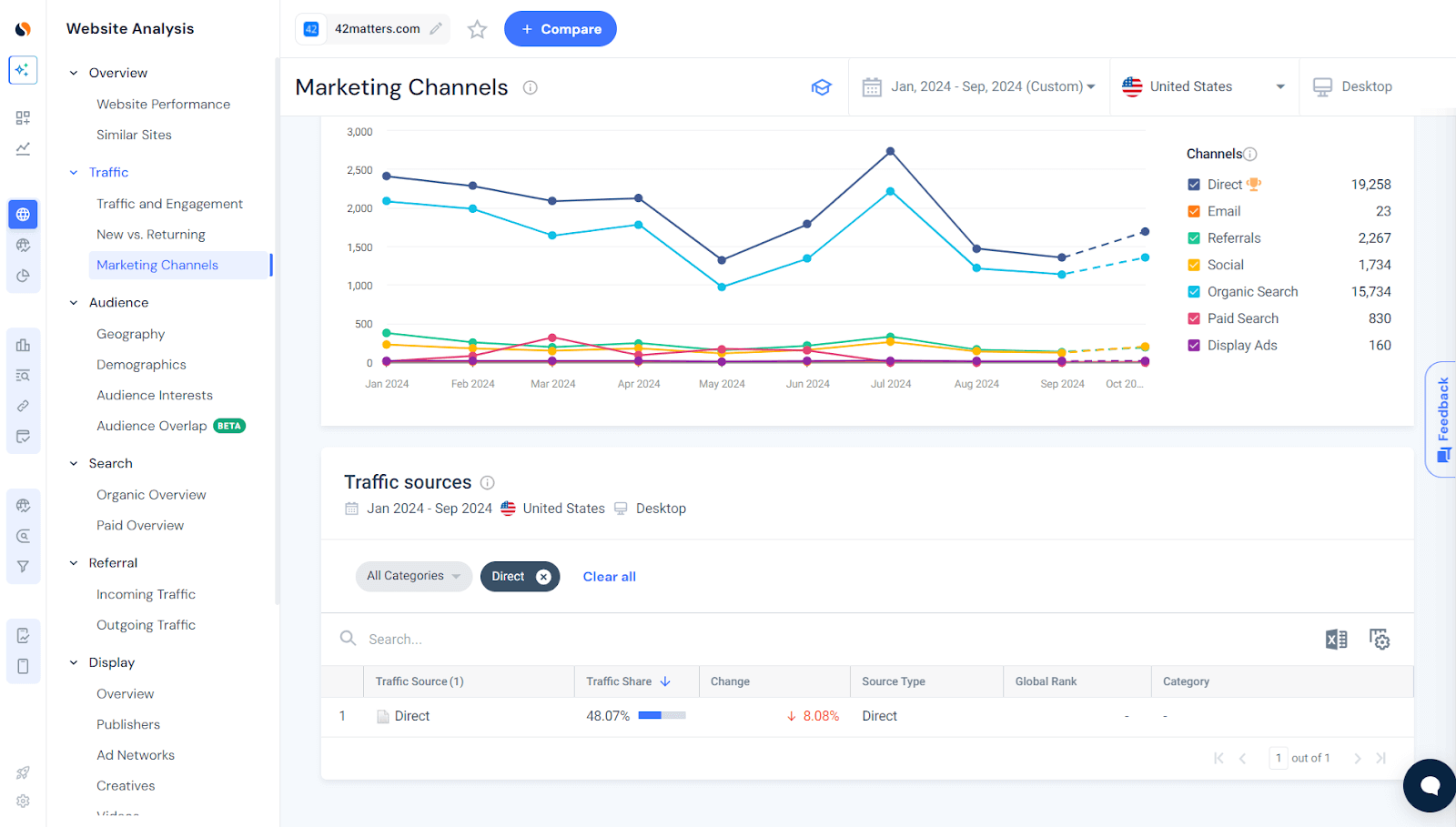
When there’s a high volume of direct traffic, it signifies robust brand recall and a dedicated consumer base. This means users are returning without needing prompts from external sources. By capitalizing on these insights, companies can create strategies that nurture and expand the audience’s existing positive perception.
A high volume of direct traffic signals strong brand recognition and a loyal customer base. These users return to your site without relying on external prompts, demonstrating trust and familiarity. By leveraging this loyalty, businesses can develop strategies to reinforce their audience’s positive perception and foster long-term growth.
Organic traffic represents visitors landing on your site through search engines without the influence of paid ads. Identified as “Search / Organic” in the Similarweb “Marketing Channels” report, it shows how well a site performs in search engine results based on its SEO.
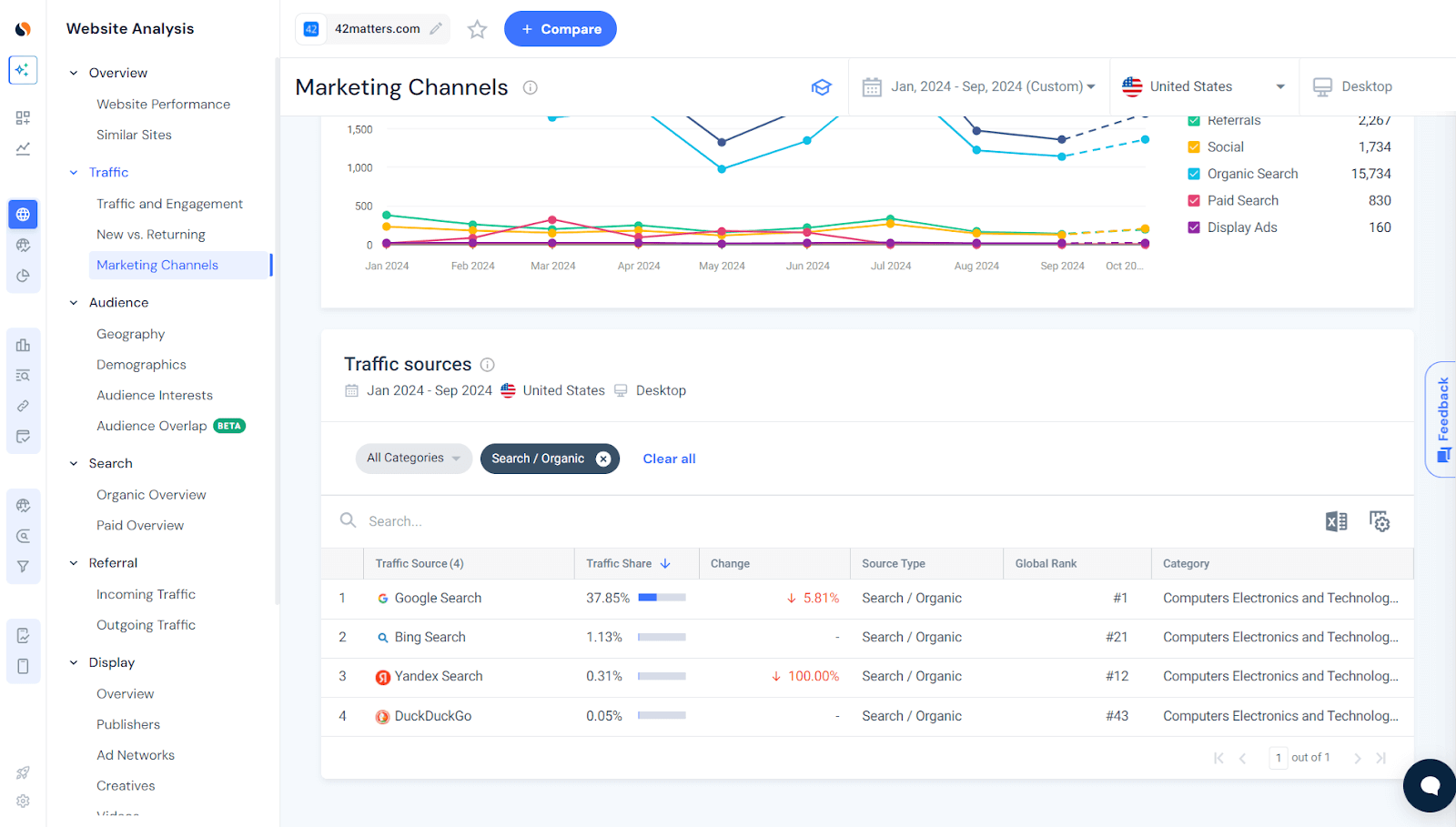
The connection between direct and organic traffic frequently reveals brand awareness since branded searches drive many organic visits. Effective SEO strategies, including precise keyword clustering and valuable content creation, are critical for sustaining organic growth. Organizations thriving in this space typically have a profound grasp of search engine dynamics, ensuring their content stays relevant and engaging, drawing organic traffic regularly.
Referral traffic is generated when visitors click through links from other websites, landing on yours. Classified as “Referrals” in Similarweb’s “Marketing Channels” report, this traffic often highlights effective affiliate marketing strategies or major media mentions.
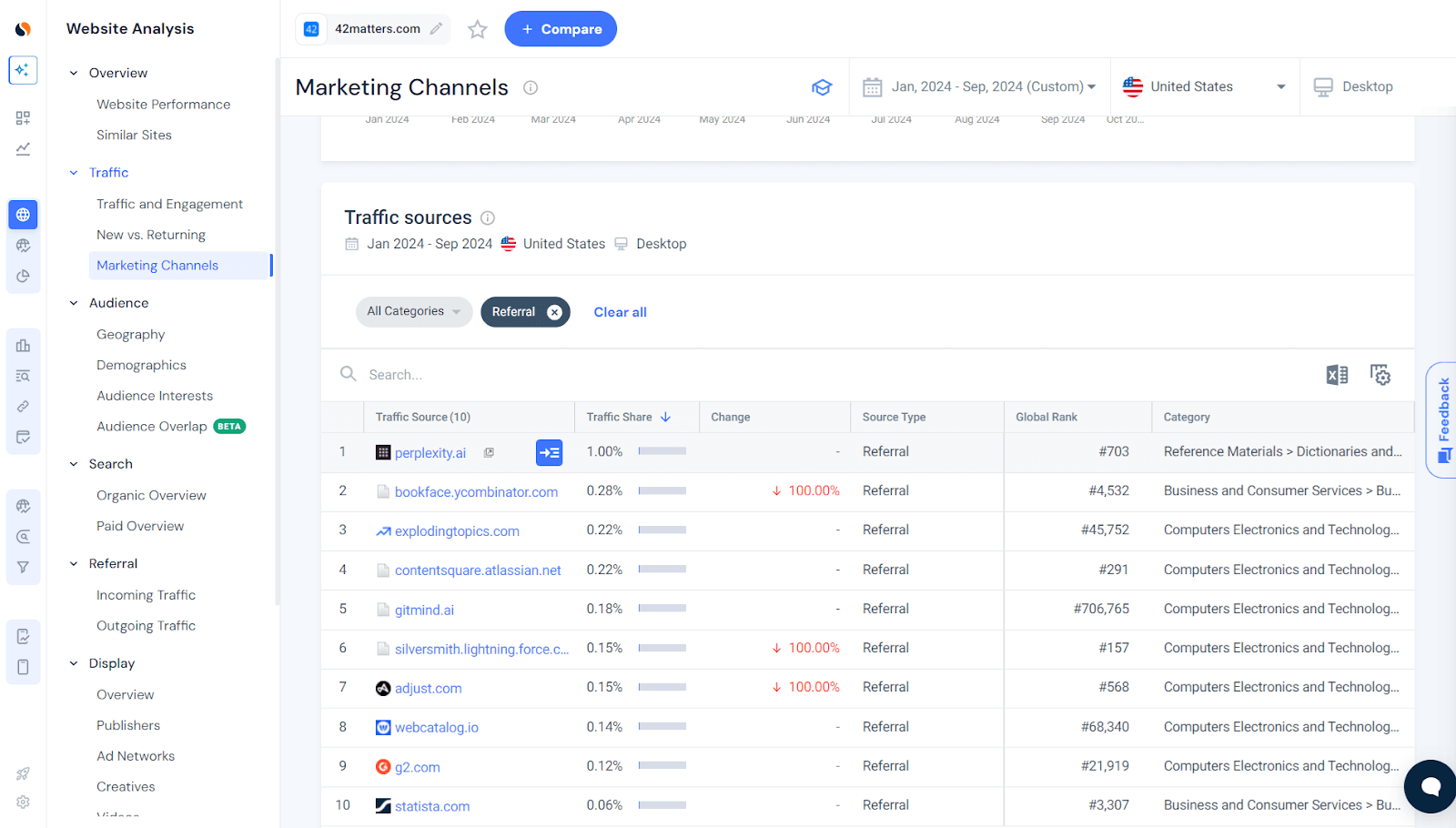
Websites boasting substantial referral traffic usually engage in affiliate marketing and benefit from positive associations with partner sites or influential networks. These connections serve as endorsements, boosting the site’s credibility and visibility across the internet. Building strong partnerships and securing media coverage can significantly broaden your site’s reach, attracting more visitors and potential customers.
Social traffic stems from interactions generated through social media platforms. Within Similarweb’s “Marketing Channels” report, this data is recorded under “Social.”
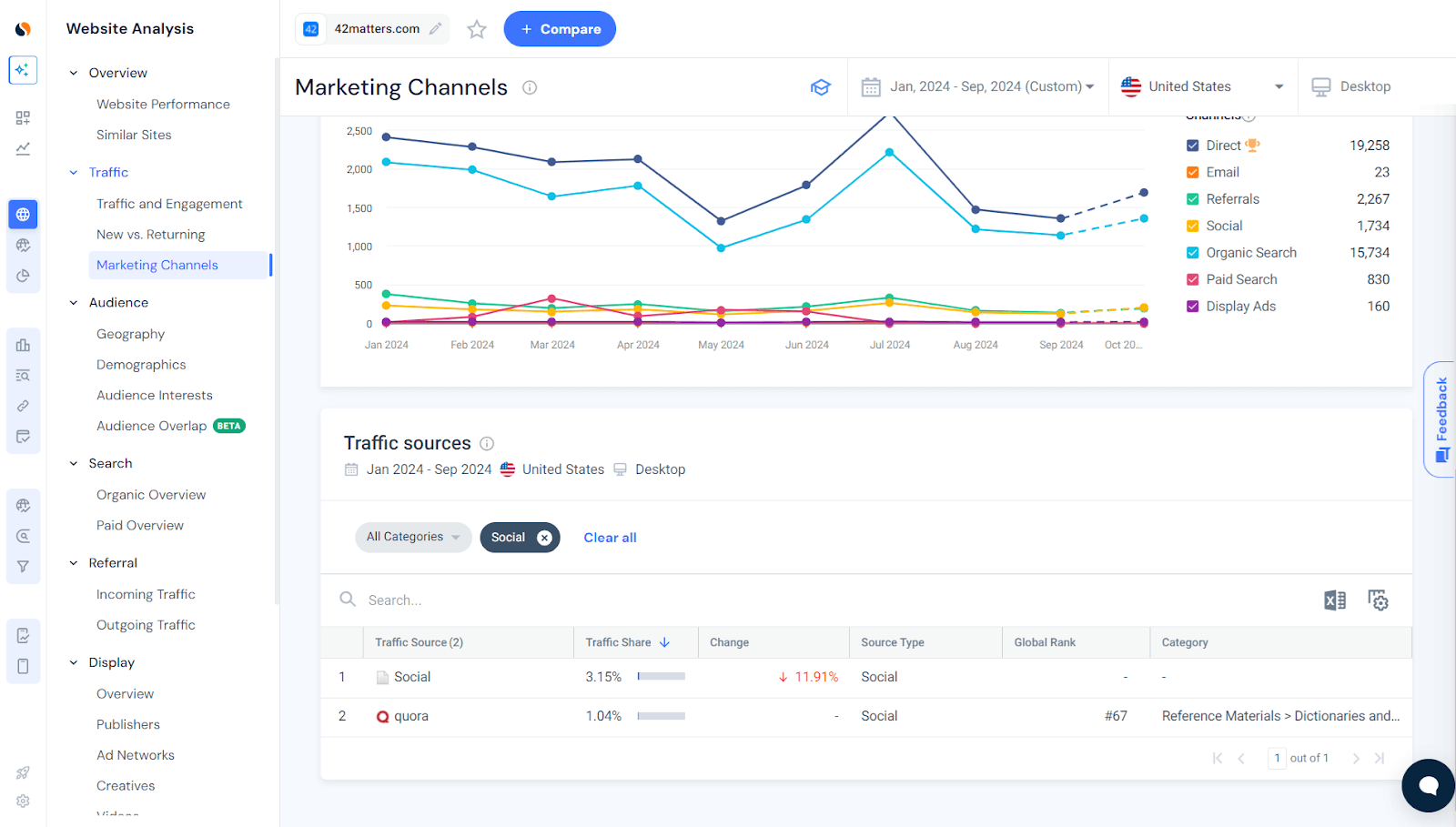
Websites that capture high levels of social traffic typically enjoy support from a vibrant online community. Success in this arena involves crafting content tailored to each platform’s audience and maintaining engagement through active communication. By nurturing an interactive environment, brands can solidify loyalty and inspire users to contribute to a brand’s dynamic presence, ultimately expanding their reach through active participation.
Paid search refers to visitors arriving via sponsored advertisements in search engine results. This metric is detailed under “Search / Paid” in the “Marketing Channels” report.
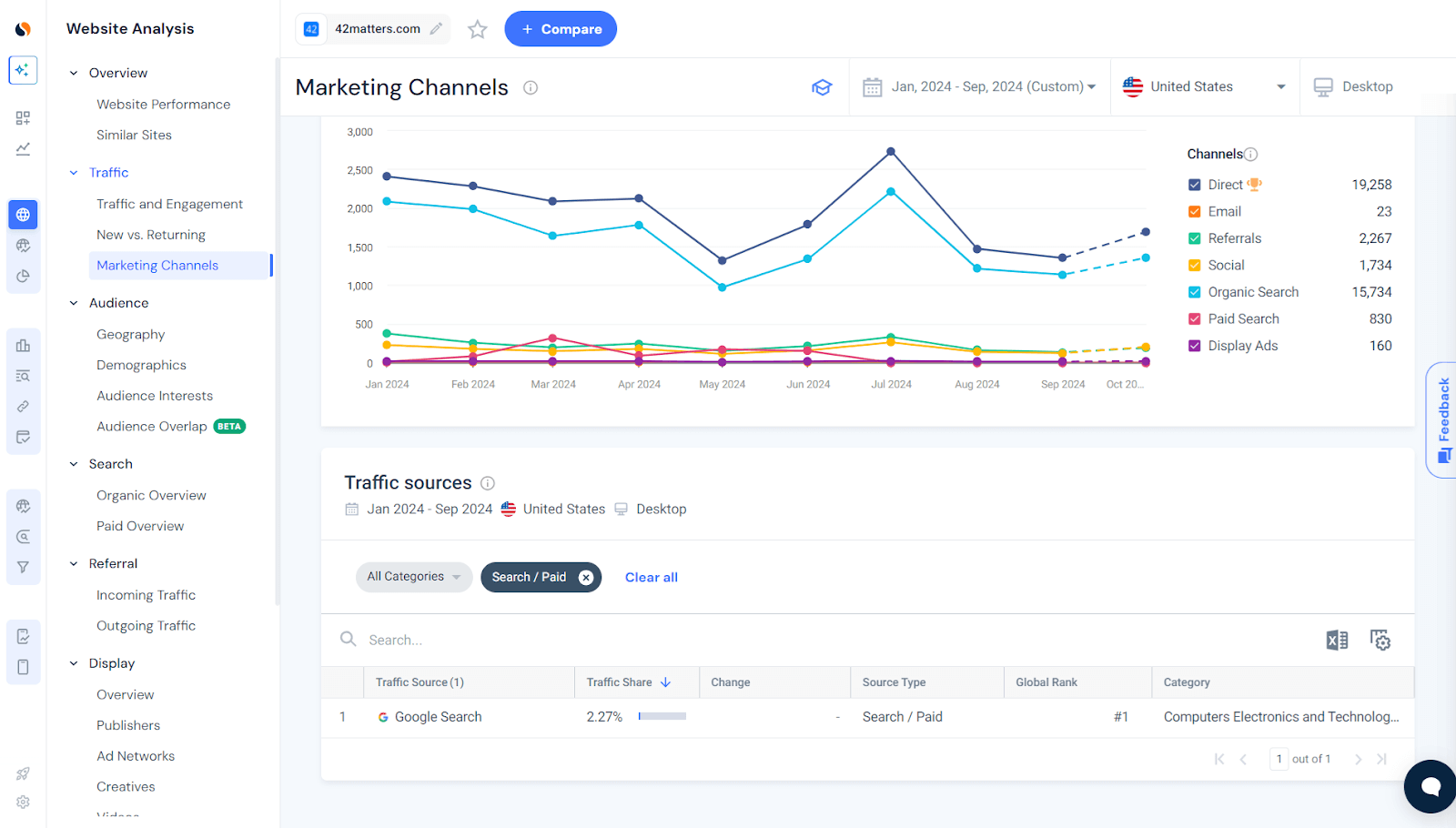
Many businesses invest in paid search to quickly boost brand awareness or connect with specific target audiences. Success here relies on strategic keyword choice, compelling visuals, engaging copy, and precise placement of ads. Well-crafted campaigns combined with persuasive calls-to-action can drive immediate engagement, aligning with audience needs for effective reach.
Display ads encompass visually persuasive content displayed on various platforms, tracked as “Display Ad” in the “Marketing Channels” report. This source includes traffic generated by known ad-platform services like DoubleClick or Taboola.
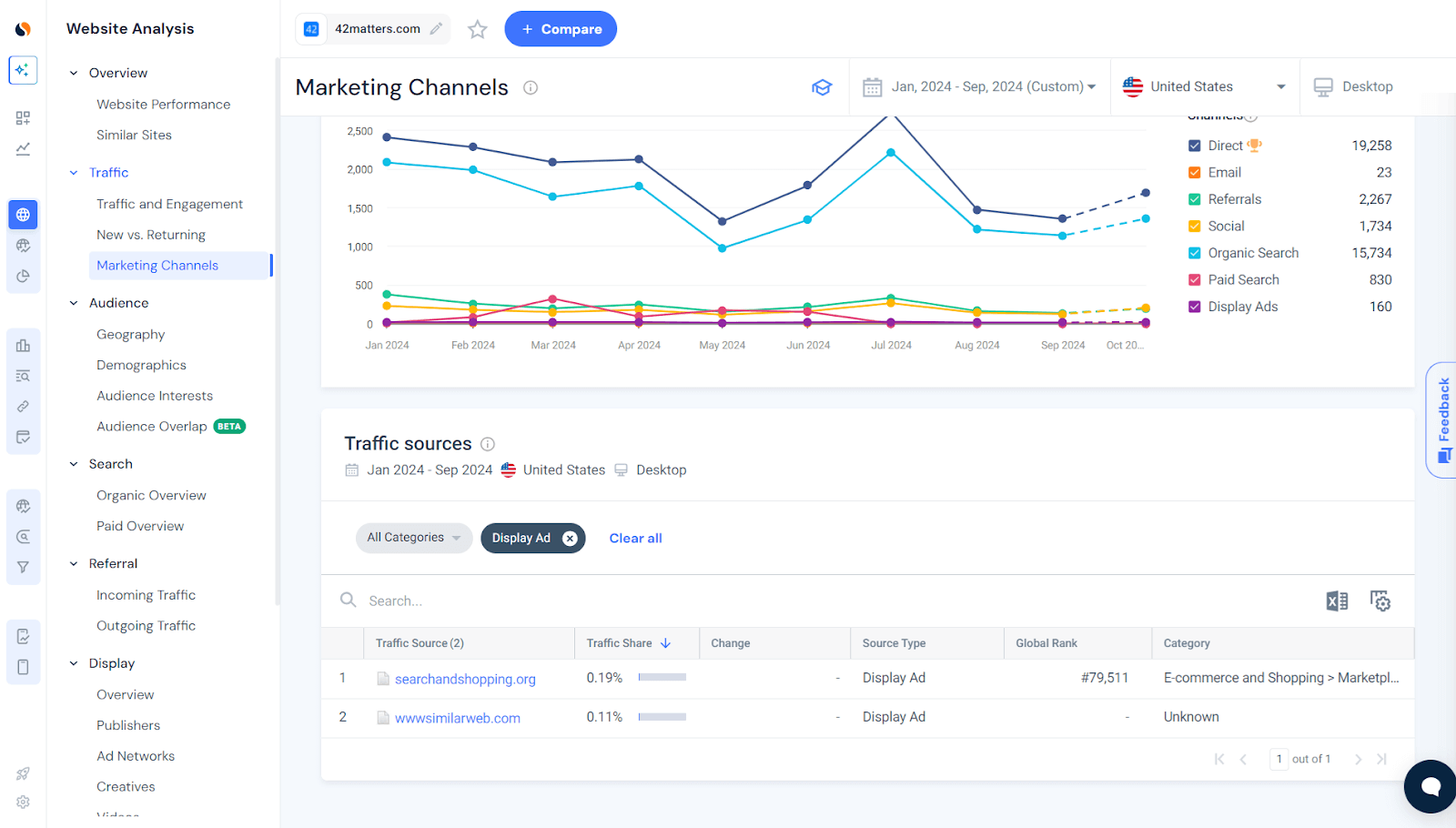
Display ads capture attention through visually engaging and segment-focused content. Interactive elements within ads can encourage direct user participation, expanding brand awareness across a broad audience spectrum. Through retargeting and appealing visuals, they not only attract but also engage recurring visitors, driving conversions efficiently. With Similarweb Ad Intelligence, you can deep dive into any competitor’s ad campaigns as well, spy on their ad creatives, and refine your media strategy.
Email traffic is generated when readers click links within your email communications. Such traffic is noted under “Email” in Similarweb’s “Marketing Channels” report.
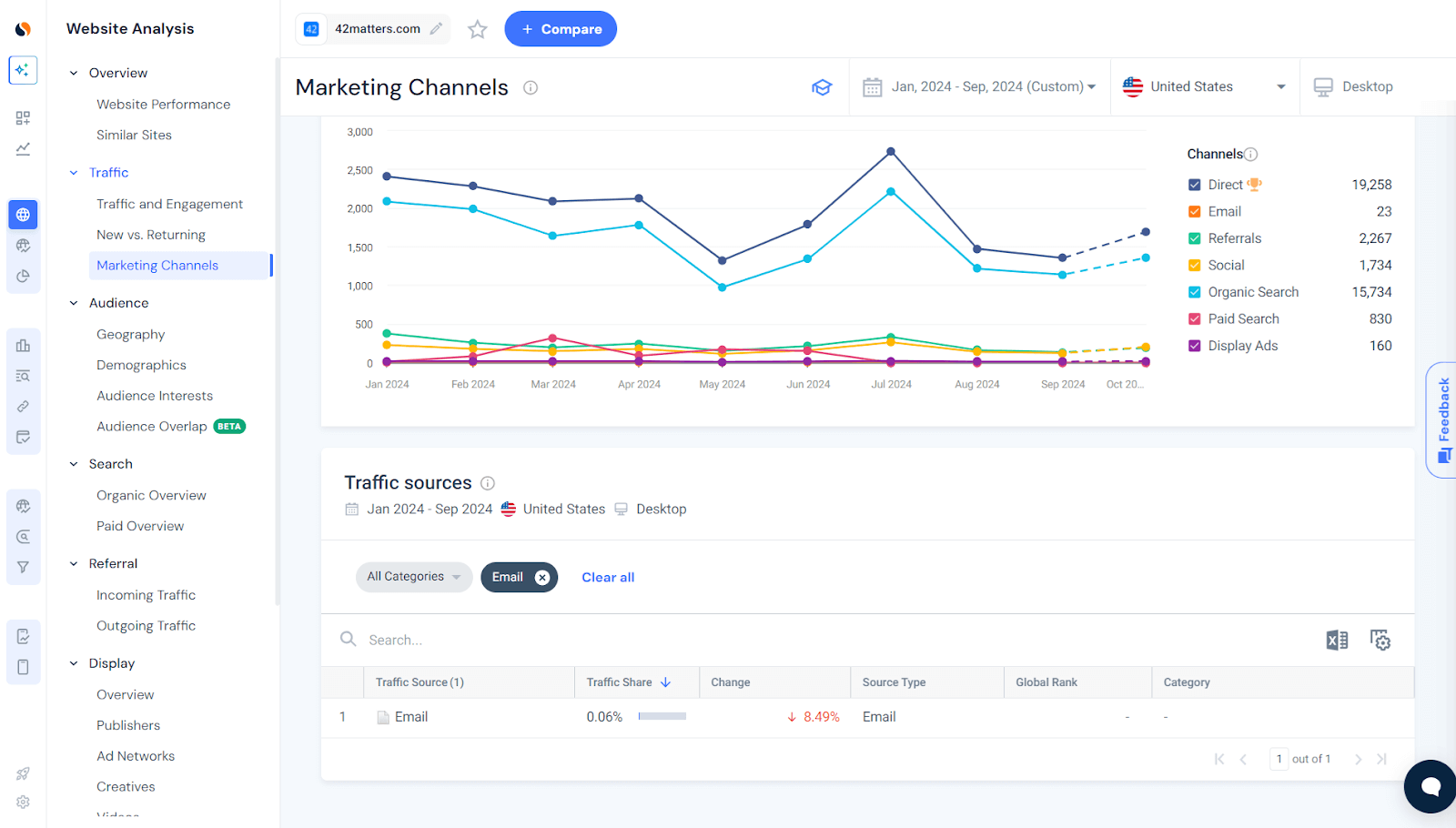
Successful email strategies revolve around personalized content and strong calls to action, which entice recipients back to your site. Email campaigns that consistently engage audiences reinforce a brand’s presence by delivering valuable content. With an extensive mailing list, businesses tap into a ready-and-willing audience eager to explore what the brand offers further.
The best long-term success results from testing and using every traffic source. High-quality, reliable data is a must for measuring traffic effectiveness and market share. At Similarweb, our data is one of the most up-to-date and accurate in the world, and it gives you the insights to make informed decisions to grow your presence online.
The use of tools to measure and analyze web traffic from multiple sources helps businesses better understand their audience and deliver a higher rate of engagement and conversion. With Similarweb, you are informed by powerful insights that fuel growth and innovation.
What is the difference between organic and paid traffic?
Organic traffic is when users land on your site from an unpaid search, while paid traffic occurs when users click ads or paid search results.
How does social media affect website traffic?
Social media can drive substantial website traffic through posts, ads, and partnerships with influencers. However, it is effective only with a good social media presence and plan.
How can businesses know which traffic comes from a direct source?
Straight visitors are those who enter the URL of the site into the browser. It’s counted by excluding internal IP addresses to minimize bias and looking for referral-free traffic.
How important is referral traffic for SEO?
Referral traffic, which comes from backlinks from other websites, is very effective in terms of SEO. High-quality backlinks also improve a website’s domain authority, which means better search engine rankings.
Do web analytics tools provide free insights into traffic sources?
Yes, there are tons of tools that can provide you with free insights into visitors and source analytics. Companies can make data-driven decisions without worrying about the cost.

Director of SEO & AI Search at Similarweb
Limor brings 20 years of expertise in SEO and AI Search. She thrives on solving complex problems, creating scalable strategies, and building amazing dashboards.
The Top 100 Most Visited Websites in the USA (August 2026)
Similarweb Named in Forrester's Answer Engine Optimization Technologies Landscape, Q3 2026
Anthropic IPO: What Claude's Web and App Data Show
The ultimate solution to help you build the best digital strategy
