




Top Ecommerce Companies in the USA: The 100 Brands Winning the Traffic Race in 2026
by Inbar Eytan6 Min.
Aug 30, 2026
 Sales Intelligence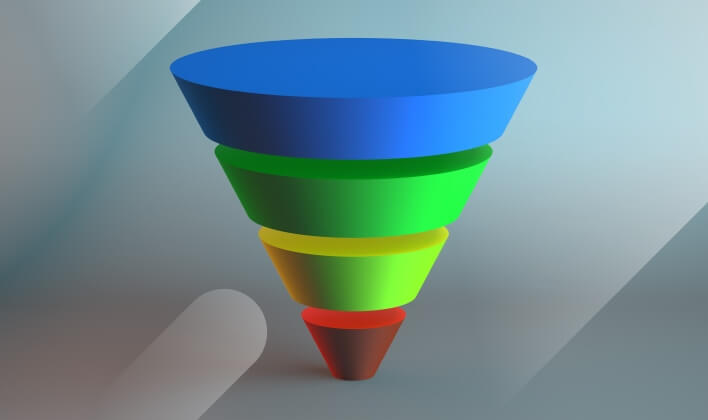
Whether you’re a business owner, in email marketing, or a sales rep at a startup, knowing the basics of how the sales funnel works will help you create more effective processes and bring in more clients.
A sales funnel is a visual description of the different stages of the sales process, from the very beginning until the “end” when you’ve made the sale and have a paying customer.
There are three stages in the typical B2B sales funnel: (1) Awareness & Discovery at the top, also known as the top of the funnel or TOFU, (2) Interest & Engagement in the middle, also known as the middle of the funnel or MOFU, and (3) Decision & Purchase at the bottom, also known as the bottom of the funnel or BOFU.
Keep in mind that there are many representations of a sales funnel to be found and most companies will have their version based on their specific sales journey and CRM settings. In this blog post, we’re gonna keep it simple and divide it into three stages.
Here’s a little something to help you visualize the sales funnel and its three stages:
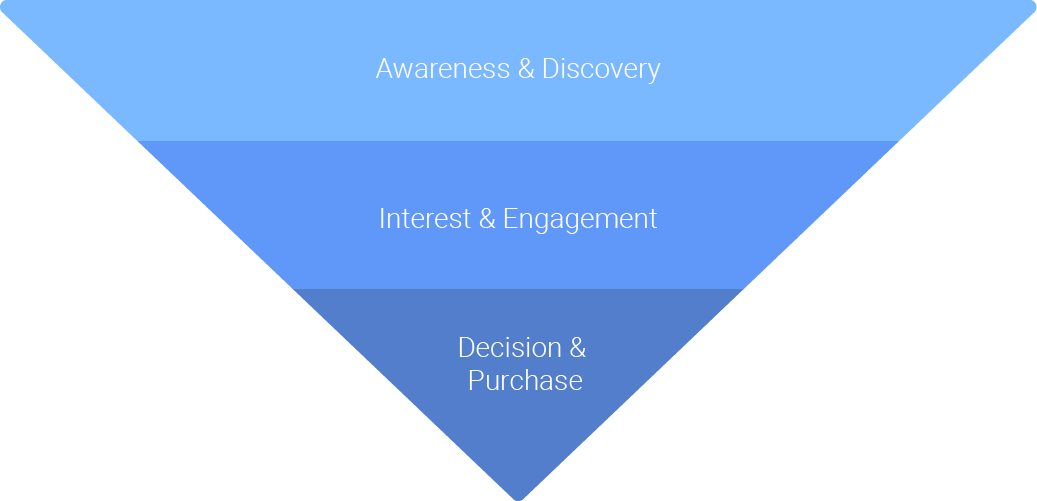
This illustrates that the sales process requires many leads or opportunities to come through the top because most of them will drop off and not make it until the end of the process where they become paying customers.
The top of the funnel is the phase of the sales journey where your prospects are entering the stage of “Awareness & Discovery”.
During this stage of the sales funnel, prospects are coming into contact with your brand, solution, or product for the first time. Whether you are a large or small business, this is the moment you get to create your narrative and explain your value.
This stage is where they are engaging with your content online, running into a landing page, hearing about you from a user, or seeing an advertisement campaign you’ve been running.
Once a prospect passes the awareness phase, they move to the middle of the funnel. This is the phase of the sales journey where they begin to show “Interest & Engagement”.

This might signify that they’re interested in learning more about how you can help them solve a specific issue that they have, or become better acquainted with types of content that speak directly to their use cases.
The prospects that move from the top of the funnel to the middle of the funnel have also likely already decided they’re going to be spending money on a solution, product, or service that will solve their specific pain points.
This doesn’t mean they’ll end up spending any of their budgets with you, but rather that they’ve already internalized the fact that they need help in reaching their goals.
The third phase is the bottom of the funnel.
This is the section of the sales journey where your prospects enter the stage of “Decision & Purchase”.
They are acquainted with what you can offer and understand how you can solve their pain-points, have most likely already explored what your competitors can offer them, and are now ready to become your new customers.
When a prospective buyer makes it to this step, it indicates that they have a budget and are ready to begin the last stages of negotiation.
This is the moment where they’ll look at the package they’re interested in buying.
They’ll likely want to speak to an implementation manager or be looking to understand who will train the team to use the solution and how long it will take.
As you might notice, all parts of the funnel have specific requirements that must be met for prospective customers to move through them, and that these components vary from one company to another.
Let’s explore each part of the funnel in more detail, and also look to understand what is important to each member of the sales team within each stage.
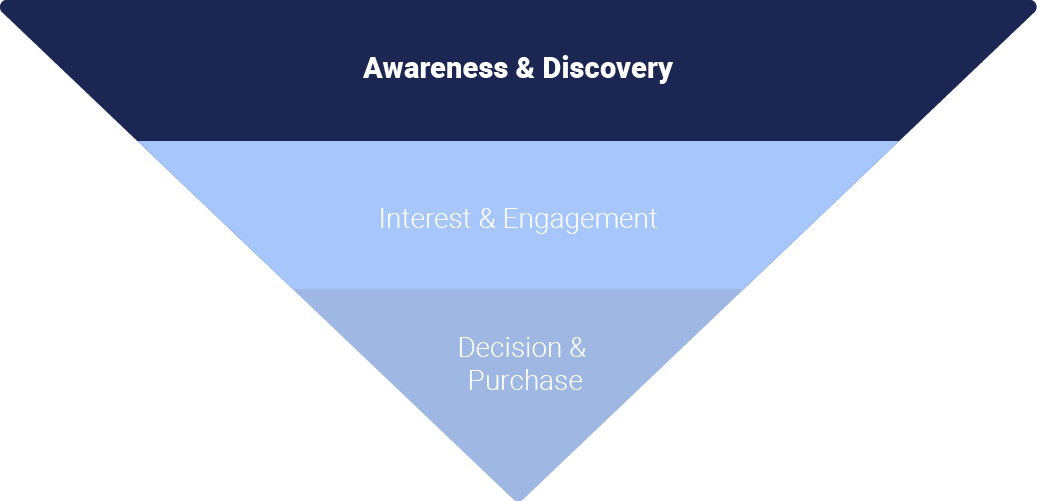
The top of the funnel is the first stage of the sales process that leads will go through in their journey towards becoming a paying customer.
During this phase, leads are just becoming aware of your product/solution and are discovering information about it.
This is the time in the sales funnel where your marketers have the opportunity to spread awareness about who you are and what you can do.
It’s a phase that will allow you to educate your prospects and position yourself through brand, product, solution, insights, or use cases.
The top of the funnel is the stage of the sales funnel where you are going to be exposed to the largest number of people.
The larger the pool of prospects you influence in this stage, the more you’ll have to work with into the next stage.
Let’s look into the types of assets and activities that can serve as lead magnets and will allow you to create awareness and enable discovery during the first stage of the sales funnel.
There are a variety of assets and content you can create to allow potential customers to learn about your product, service, or solution.
Below is a list that will give you a basic idea as to what type of content works well during this stage. When creating content, it’s important to make sure it’s relevant to your buyer persona.
We’ll divide it into types of content that would be produced for inbound and outbound lead generation, you can click through here to read about the difference.
Inbound content to generate leads for the first stage of the sales funnel:
Outbound content to generate leads for the first stage of the sales funnel:
Microsoft

In this TOFU example, we see that Microsoft offers students free use of Office 365. This is a great way to get young people familiarized with the product and build loyalty towards the brand. The premise here would be that if you’re familiar with Windows, it’s it takes some effort to switch out of it. For now, they’re giving their product away for free to this audience base, so in the future, when these young people are no longer students and can pay full price, they’ll most likely convert to paying users of Office rather than switching to another operating system.
IBM

Here is an example of IBM’s news blog, the Industrious. It is a gated downloadable booklet that corresponds to industry trends. Users can read it and learn about how IBM is solving different pain points for companies in different industries.
During every stage of the sales funnel, different stakeholders within the sales organization will have distinct goals for that specific stage. We’re going to explore what are the goals for two main stakeholders during TOFU.
Sales Managers: Outbound
For sales managers that are targeting outbound leads, the priority during the top of the funnel activities is to create more pipeline for themselves.
The implications of this are that they’re going to be searching for ways to acquaint more people with the brand, product, or solution (remember this is the stage of awareness and discovery).
As we mentioned earlier, there are many ways to reach out to potential customers using content during this stage, such as emails, insights, slideshow presentations, social media posts, video emails, and webinars.
Alternatively, sales managers can use other ways to reach prospective customers that take place offline, such as events, conferences, and industry-specific trade-shows.
Sales Leadership: Managing the Connection Between Marketing & Sales
For sales leadership, the priority during the top of the funnel activities is to correctly manage the connection between marketing and sales.
The use of content to help leads understand your offering is key during the awareness and discovery stage of the sales funnel.
This is why the main concern for sales leadership should be how well the marketing and sales teams are communicating and working together to make the most of their inbound lead generation efforts.
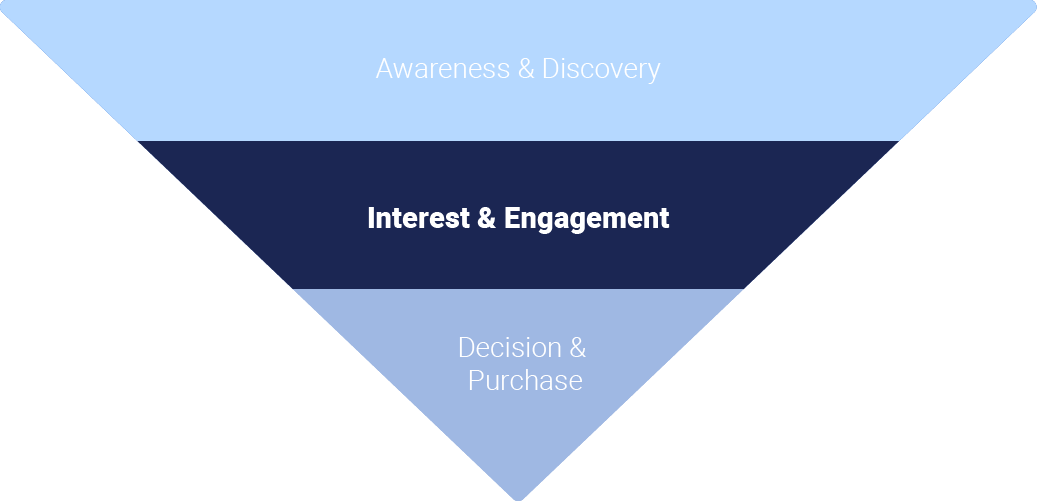
The middle of the funnel, or in short MOFU, is the second stage of the sales process that leads will go through in their journey towards becoming a paying customer.
During this phase, they are gaining interest in your product/solution and are actively engaging with content, and even your sales team.
This is the phase of the sales funnel where you have the opportunity to nurture your leads.
While in the first step they became aware of the solution, the second level of the funnel is focused on a follow-up that centers on teaching them about your solution and walking them through what they could gain by using it.
By positioning yourself as a partner who will strive to bring value, and not making the “hard sell”, you can engage your prospects and act as a trusted advisor during both the sales process and after.
The middle of the funnel is the stage of the sales funnel where you are going to need to be creative in your efforts to personalize and create specific assets that speak directly to each prospective client and their use case.
The larger the pool of prospects you influence in this stage, the more you’ll have to work with into the next stage.
Let’s look into the types of assets and activities that will allow you to create interest and enable engagement during the second stage of the sales funnel.

The middle of the sales funnel is the stage where you want to solidify your relationship with your prospective clients.
The idea is to nurture the leads that have passed through to this stage by making them feel that you are paying special attention to them.
You can rely on the following tactics to do this:
UPS

UPS has a fact sheet about how many airplanes, airports, and flights they serve. During the middle stage of the sales funnel, what they can do is create a personalized fact sheet for every different prospect they are nurturing. For example, if they have a prospect that sells mostly to South America from the United States, they’d want to show how many airports they serve there, how many daily flights they have to all the different countries in the area, and how many of their planes are specifically destined for those routes.
GE
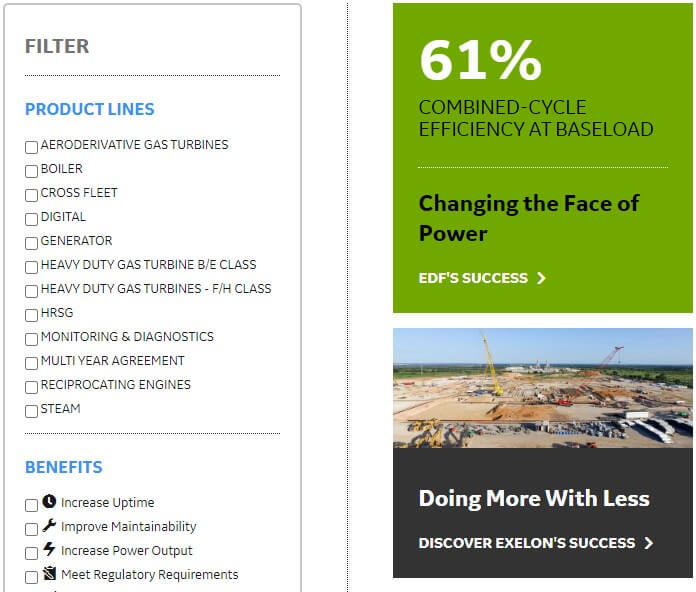
General Electric has a wide variety of case studies that can be filtered through product lines, benefits, and regions. This allows them to speak to many different types of prospective buyers, giving them the chance to explore how working with them can increase efficiency, cut costs, increase ROI, etc.
In the middle stage of the sales funnel, there are three stakeholders with their own distinctive goals for this phase.
Sales Operations: Lead Scoring
During this process, sales operations teams want to make sure they’re scoring leads correctly so that they can help the sales managers focus on leads in the way that will be most efficient.
Read here to learn more about lead scoring.
Some companies divide their leads by size, geography, industry, or even solution.
This allows sales managers to work more effectively, and focus their resources better.
Sales Managers: Qualifying & Prioritizing
Sales managers have goals to achieve that are usually based on the amount of money they will bring to the company. They need to be very efficient in the way they spend their time, and how they engage prospects.
They aim to qualify prospects in order to quickly understand who has the highest potential to become a paying client and then prioritize those prospects over others.
Sales Leadership: Conversion Rate of Leads
During this middle stage of the sales funnel, sales leadership would want to see what the conversion rate is for the leads passing from the top of the sales funnel to the middle stage.
A good conversion rate suggests that the content being produced at the first stage of the sales funnel is sufficiently relevant in bringing prospects that would convert to the next stages.
If conversion rates are low, it indicates that the type of content is not bringing in the right people, and they’ll eventually become disqualified.
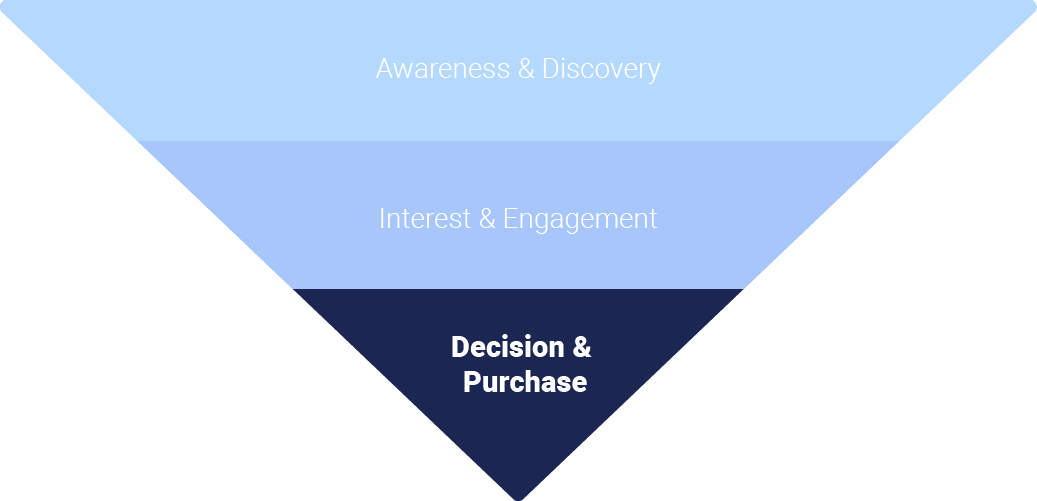
The bottom of the funnel, or in short, BOFU, is the third and final stage of the sales process that leads will go through in their journey towards becoming a paying customer.
During this phase, they need to make a buying decision and are now looking into the product or solution that is the best fit for their pain points, budget, and goals.
This is the moment of the sales funnel where you are going to be negotiating the details of the deal and pushing them along the buying process.
It’s a terrifying, yet exciting, stage of the sales funnel because on one end you’ve gotten this far and the prospect has shown deep interest in your product or solution.
On the other end, it can be nerve-racking because during this stage the prospect will be measuring you against your competition, or simply weighing the possibility against not purchasing at all.
The bottom of the funnel is the stage of the sales funnel where you’ve already engaged and shown value, so your negotiating skills and ability to meet the client’s demands, while staying true to your company’s capabilities, will be definitive.
Sales Managers: Closing & Deal Size
During this last stage of the funnel, sales managers will be directing all their efforts towards finding the best deal they can offer to prospects.
This means talking about things like:
Sales Leadership: Closing & Deal Size
For sales leadership, this stage is all about understanding what is required to close deals, what is their sales organization’s closing rate, and what is the size of the deals being made.
All these values can serve as benchmarks for the team as ways to plan how the company is growing and how to help set goals for the sales managers.
Understanding your prospect’s unique journey through the sales funnel is critical to pushing them towards the bottom stages.
As discussed above, every company will have a distinctive flow through the sales funnel, but this should give you a good idea as to how the basic structure works.
With that knowledge, you can create your own sales funnel, based on your company’s unique customer journey.
What is a sales funnel system?
The sales funnel refers to the buying process that companies lead customers through when purchasing products.
What are the 5 stages of sales funnels?
The 5 stages of sales funnels are Awareness, Interest, Evaluation, Engagement, and Commitment/Purchase.
Sales Intel. Content Manager at Similarweb
Sigal weaves data and insights into engaging content. She holds degrees in Communications and Security & Diplomacy and enjoys reading, traveling, and exploring Tel Aviv.
Top Ecommerce Companies in the USA: The 100 Brands Winning the Traffic Race in 2026
3 of the Sharpest Minds Weigh in on the State of Gen AI in 2026

Try Similarweb Sales Intelligence today — free of charge
