




The Top 100 Most Visited Websites in the USA (August 2026)
by Shai Belinsky10 Min.
Sep 29, 2026
 Research Intelligence
Most marketers are running the same playbook they built in 2022. Meanwhile, three traffic channels are either growing fast or being underused by most teams: video search, online communities, and AI-referred traffic. The good news is that the fundamentals – SEO, content, paid search – still work. But the teams pulling ahead are the ones adding new channels before competitors do.
This guide covers 21 proven strategies to grow your website traffic, from mastering the channels you already know to capturing the ones you haven’t fully tapped yet.
We’ll cover:
Ready? Let’s get started.
Before going into tactics, it helps to understand which channels drive traffic – and which ones are growing fastest. All traffic sources play a different role in your overall strategy.
Organic traffic comes from search engines like Google, Bing, and Yandex. The higher your page ranks on search engine results pages (SERPs), the more exposure it gets and the more clicks it earns. Users who discover your website through organic results tend to arrive with clear intent, making them more likely to engage.
The best part: organic traffic costs nothing beyond the time invested in creating and optimizing content.
Direct traffic comes from users who type your URL directly into their browser, bookmark your page, or click through from documents like PDFs or email clients. An increase in direct traffic often signals rising brand awareness – these users are actively seeking you out rather than discovering you by chance.
Paid search – pay-per-click (PPC) advertising, also known as search engine marketing (SEM) – places your site at the top of SERPs by bidding on targeted keywords. It’s one of the fastest ways to drive high-intent traffic, and it can be highly efficient when campaigns are well-managed. Unlike organic, paid traffic requires a budget, but it delivers results immediately rather than over months.
AI-referred traffic is an emerging source worth tracking today. Platforms like ChatGPT, Perplexity, Gemini, and Claude now send measurable volumes of visitors to external sites via citations in their responses. According to Similarweb’s 2025 Generative AI report, AI platforms generated over 1.1 billion referral visits in June 2025 – a 357% increase year-over-year.
The channel is still small relative to organic search, but it’s growing fast – and Similarweb data shows users referred from ChatGPT convert to transactional sites at 7%, compared to 5% from Google referrals.
Display ads drive traffic through visual banners hosted on networks like Google AdSense. They’re particularly effective for brand awareness and retargeting, reaching users based on browsing behavior and demographics across the web.
Referral traffic arrives when users click a link to your site from another website – an article, a blog post, a resource page, or a partner site. High-quality backlinks from authoritative domains don’t just bring visitors directly; they also improve your organic rankings, compounding the value over time.
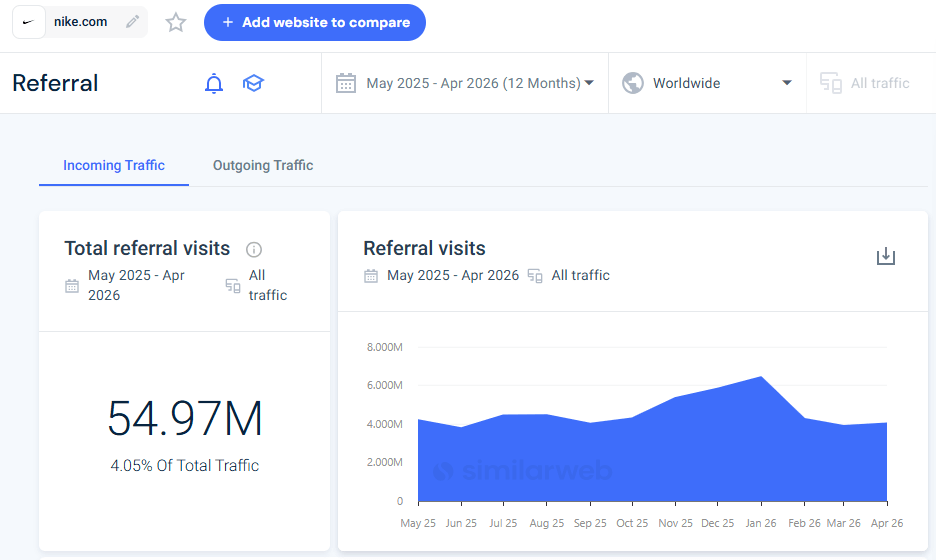
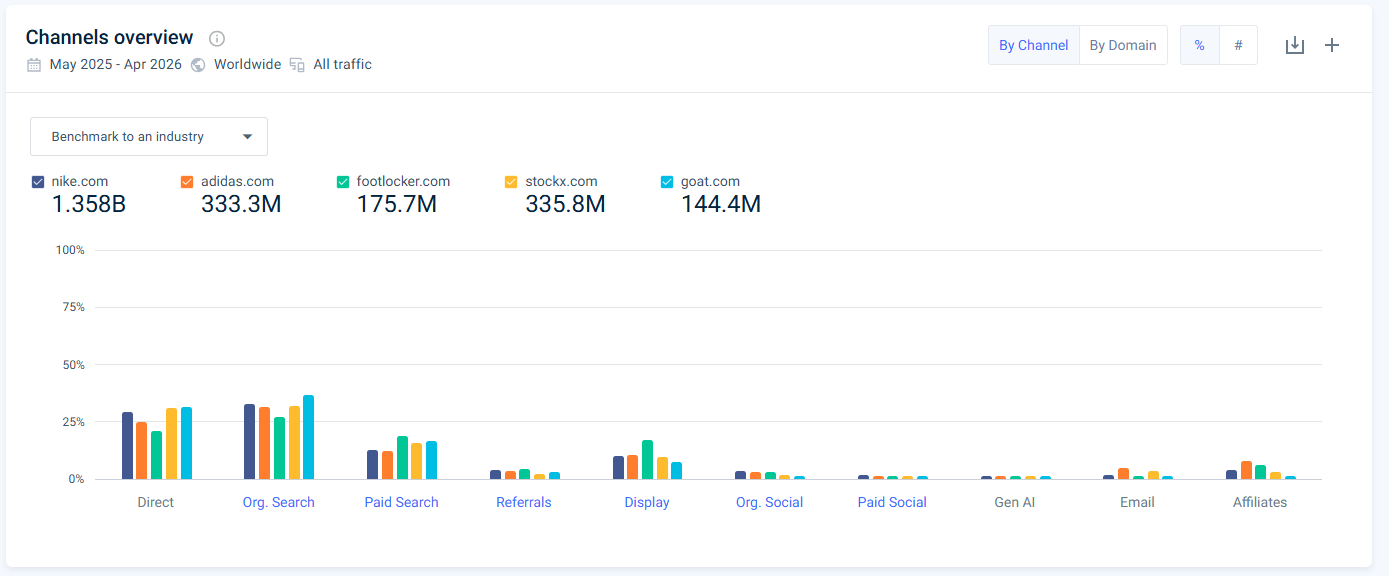
Nike, for instance, got almost 55 million visits from referral traffic in the last 12 months – a clear demonstration of how having a strong and authoritative brand and having people mention you and link to your site online, having affiliates and partnerships, amplifies reach at scale.
Platforms like Facebook, LinkedIn, X (formerly Twitter), Instagram, TikTok, and YouTube can be major traffic drivers when used with a channel-specific social media strategy. Each platform has its own content formats, algorithms, and audience behaviors, and what works on LinkedIn rarely works on TikTok.
Email delivers an average return of $36 for every $1 spent, according to Litmus research – making it one of the highest-ROI marketing channels available. Newsletters, promotional emails, and automated sequences keep your audience engaged and bring repeat visitors back to your site consistently.
Your content is one of the most powerful long-term drivers of website traffic. It demonstrates expertise, builds trust, and creates the kind of pages that earn backlinks, social shares, and search rankings simultaneously.
Invite guest writers to contribute to your blog, and write posts for authoritative sites in your industry. Guest blogging builds valuable backlinks, introduces your content to new audiences, and signals to search engines that your site is connected to the broader conversation in your field. Don’t overlook platforms like Medium and LinkedIn Articles for additional distribution, as (unfortunately) they seem to be favored by Google.
Transform high-performing blog posts into videos, infographics, podcasts, or email sequences to reach audiences in the formats they prefer. Repurposing extends the life of your existing content across multiple channels without starting from scratch. Updating older posts with fresh data and examples also refreshes their search rankings.
Infographics break down complex information into shareable visuals. Interactive elements like calculators, quizzes, and assessments increase time on site and give users a reason to return. Both formats perform well for organic shares, which builds referral traffic over time.
When managed correctly, PPC is one of the fastest ways to drive targeted traffic. Here’s how to build campaigns that make the most of your budget.
Focus on specific, intent-rich phrases rather than broad terms. Long-tail keywords typically have lower competition, lower cost-per-click, and higher conversion rates because they closely match what users are actually searching for based on search intent. Regularly update your keyword list using performance data to keep campaigns efficient.
Ad copy that aligns with the user’s search intent outperforms copy that leads with features. A/B testing different messages – headlines, descriptions, calls-to-action – helps you refine based on real behavior rather than assumptions.
One of the fastest ways to sharpen your copy is to study what’s already working in your category. Similarweb’s Ad Intelligence lets you see competitors’ active ad creatives, landing pages, keywords, and spend trends across display, video, social, and search – all in one place. Seeing which messages competitors are investing in (and doubling down on) tells you what’s resonating with your shared audience before you spend a dollar testing it yourself.
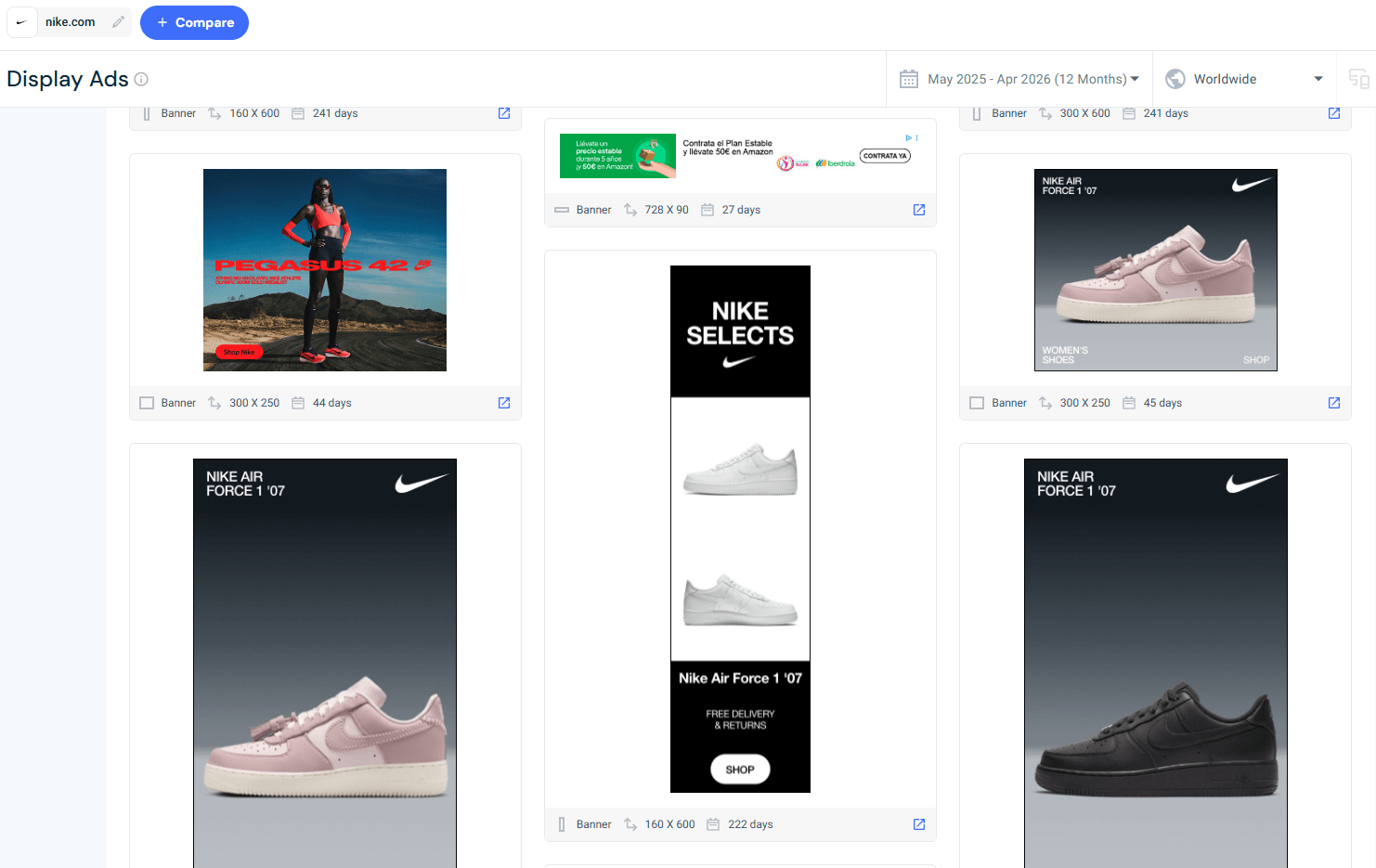
Retargeting campaigns re-engage visitors who came to your site but didn’t convert. These users have already shown interest, making them significantly more likely to return. Dynamic retargeting ads that display products viewed or content consumed by specific users can produce substantially higher conversion rates than cold traffic campaigns.
Distribute your budget across campaigns to capture traffic at different stages of intent – informational, navigational, and transactional. Review KPIs month over month and adjust bidding strategies as performance data accumulates. Knowing your ROAS targets before you scale prevents wasted spend.
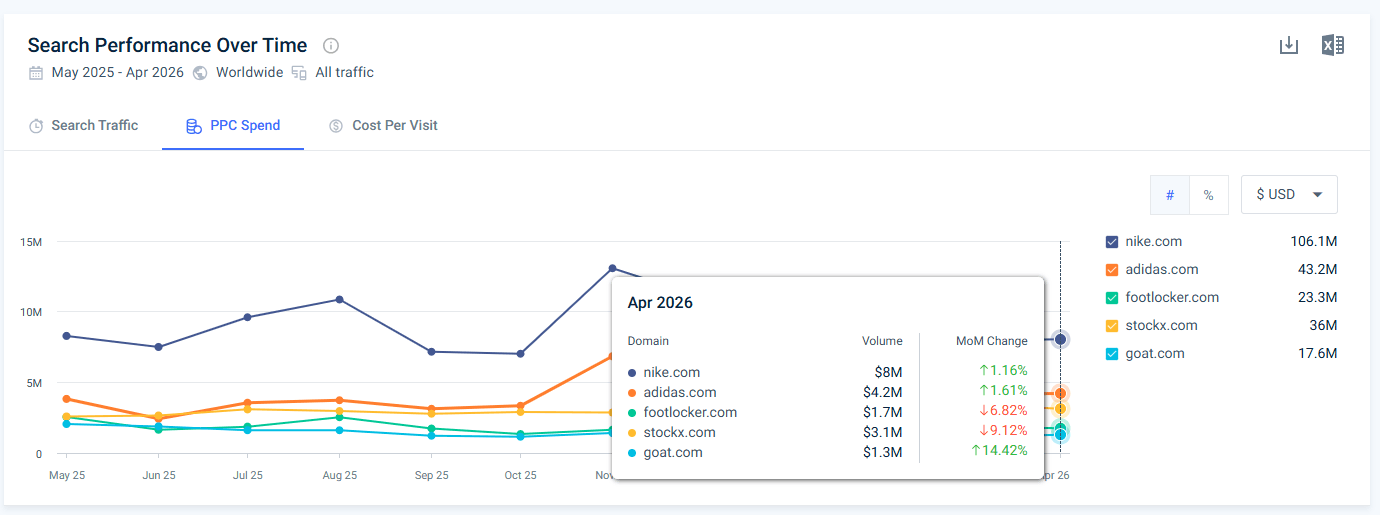
Similarweb’s PPC Tools help you make smarter budget decisions by surfacing paid search trends in your category and showing what competitors are spending. Rather than setting budgets in isolation, you can see where rivals are investing – and where they’re pulling back – to allocate spend where it will have the most impact.
Organic search remains the single largest driver of website traffic for most businesses. Getting it right requires both technical precision and content quality.
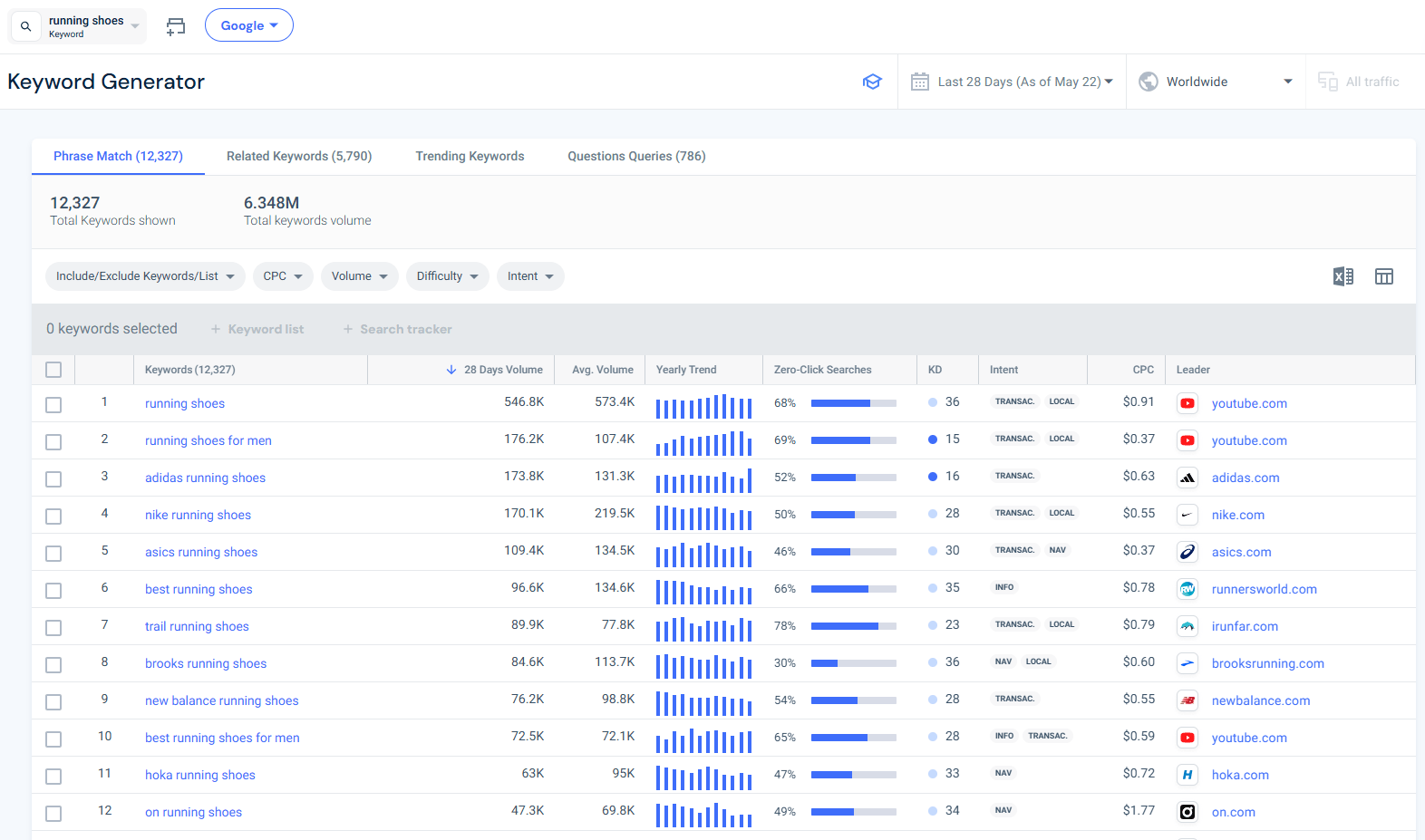
Keyword research is the foundation of any SEO strategy. Identifying what your audience searches for allows you to create content that answers their exact questions. Similarweb’s Keyword Research tool lets you analyze search demand, identify terms your competitors rank for that you don’t, and run a gap analysis to find your best opportunities. Once you’ve built your keyword list, create and optimize content around those terms rather than hoping rankings will follow general quality alone.
Internal links connect related pages within your site, distributing authority and improving navigation. External links from reputable sites act as endorsements that boost your credibility with search engines. Broken link-building – finding outdated links on other sites and offering your content as a replacement – is one of the most efficient ways to earn backlinks because you’re solving a problem for the site owner.
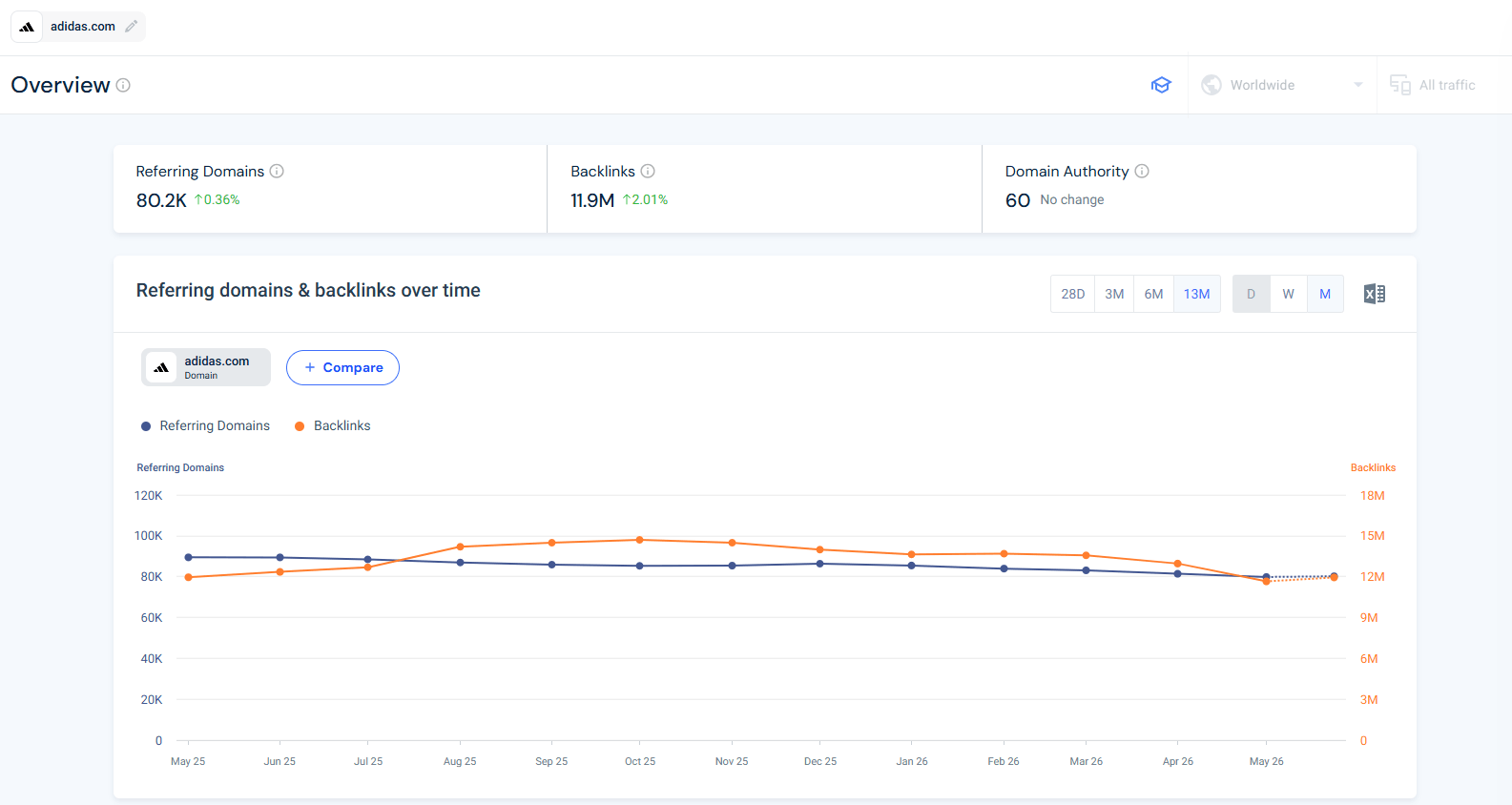
Before building new links, it’s worth understanding your current backlink profile and your competitors’. Similarweb’s Backlink Analysis tool tracks 360 trillion links across 200 million domains, updated daily. You can see the quantity and quality of links pointing to any domain, the anchor text used, domain and page trust scores, and the specific dates links were gained or lost. Pulling a competitor’s backlink profile reveals the sites already willing to link to content in your niche – a ready-made outreach list.
Page loading speed directly affects both user experience and search rankings. Google’s Core Web Vitals metrics measure real-world performance – loading speed, interactivity, and visual stability. Compress images, enable caching, and minimize unnecessary scripts. Use Google PageSpeed Insights to identify specific improvements. Faster pages reduce bounce rates and improve ranking potential simultaneously.
Your site needs to be easily crawlable and indexable to rank. Submit an XML sitemap to search engines, resolve broken links, ensure mobile-friendliness, and use HTTPS. Structured data (schema markup) helps search engines understand your content and can earn rich results – star ratings, FAQs, breadcrumbs – that increase click-through rates even at the same ranking position.
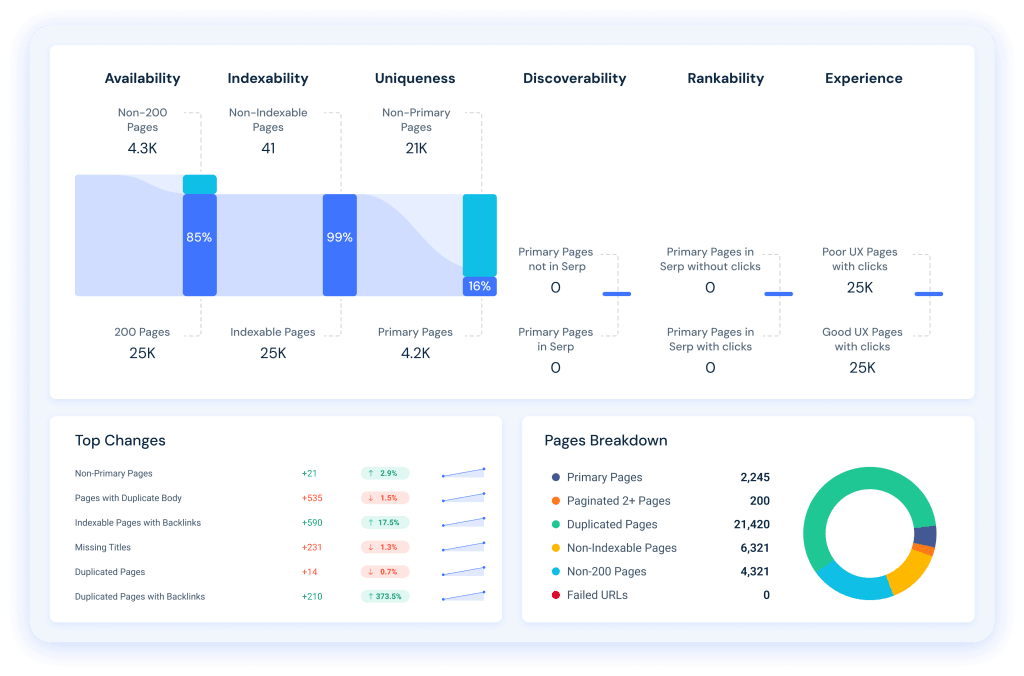
Similarweb’s Site Audit tool crawls your site across 300+ performance factors and prioritizes fixes by impact – from indexability and rankability through to page speed and user experience. It runs on Similarweb’s own secure server (so it won’t slow your site), supports scheduled crawls, and benchmarks your technical health against industry standards. Every flagged issue comes with instructions to fix it, so your team can turn audit findings directly into an action plan.
AI search is a growing traffic channel, and it rewards a specific type of content. AI platforms like ChatGPT, Perplexity, and Google’s AI Overviews cite sources when they generate answers. Sites that get cited receive both direct referral visits and a compounding authority signal that influences future citations.
SE Ranking’s analysis of 2.3 million pages found that high-traffic sites earn roughly three times more AI citations than low-traffic ones – meaning that building AI visibility and building traditional SEO authority are complementary goals, not competing ones.
Generative Engine Optimization (GEO) focuses on making your content the kind that AI models cite. Practically, this means: writing answer-first introductions that state the key point clearly before expanding; using structured formatting (headers, numbered lists, concise definitions) that AI systems can parse easily; citing primary sources and including verifiable data points; and covering your topic with enough depth and authority that AI models recognize your content as a reliable reference.
Similarweb’s AI Search Intelligence suite gives you the measurement layer to turn GEO from guesswork into a trackable strategy.
AI Brand Visibility shows which AI platforms are mentioning your brand and how your presence compares against competitors.
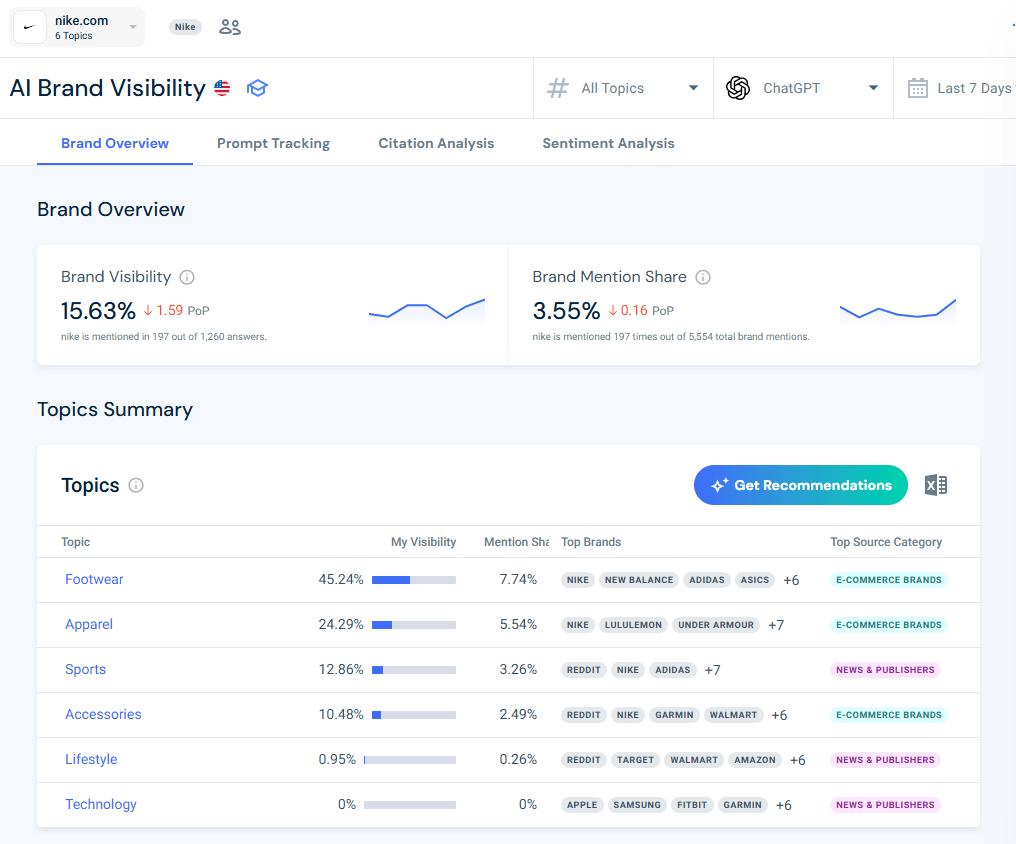
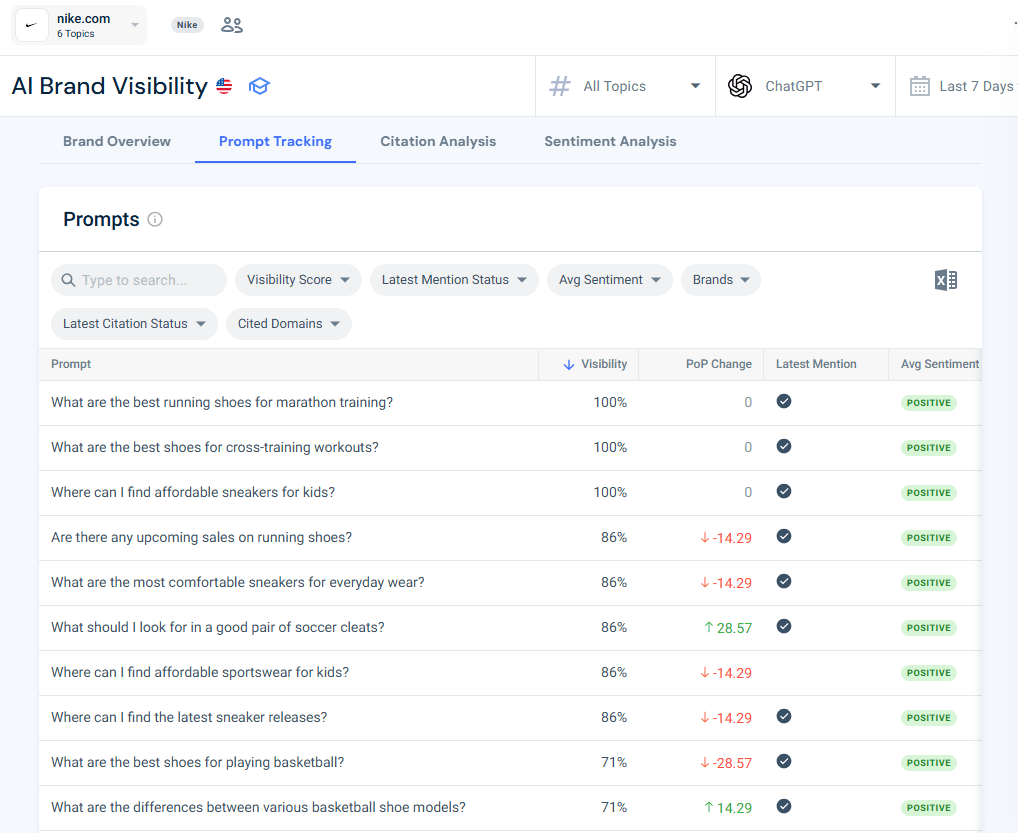
Prompt Analysis reveals which user queries are triggering your brand citations – so you know exactly what topics to double down on.
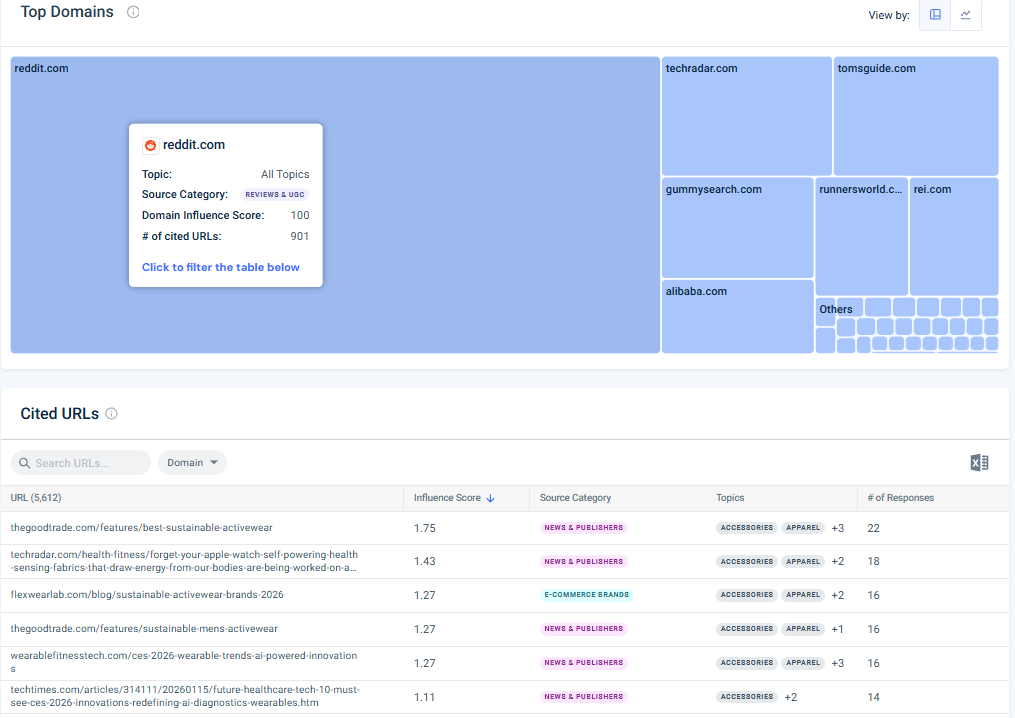
Citation Analysis identifies which of your pages are being cited as sources by AI models.
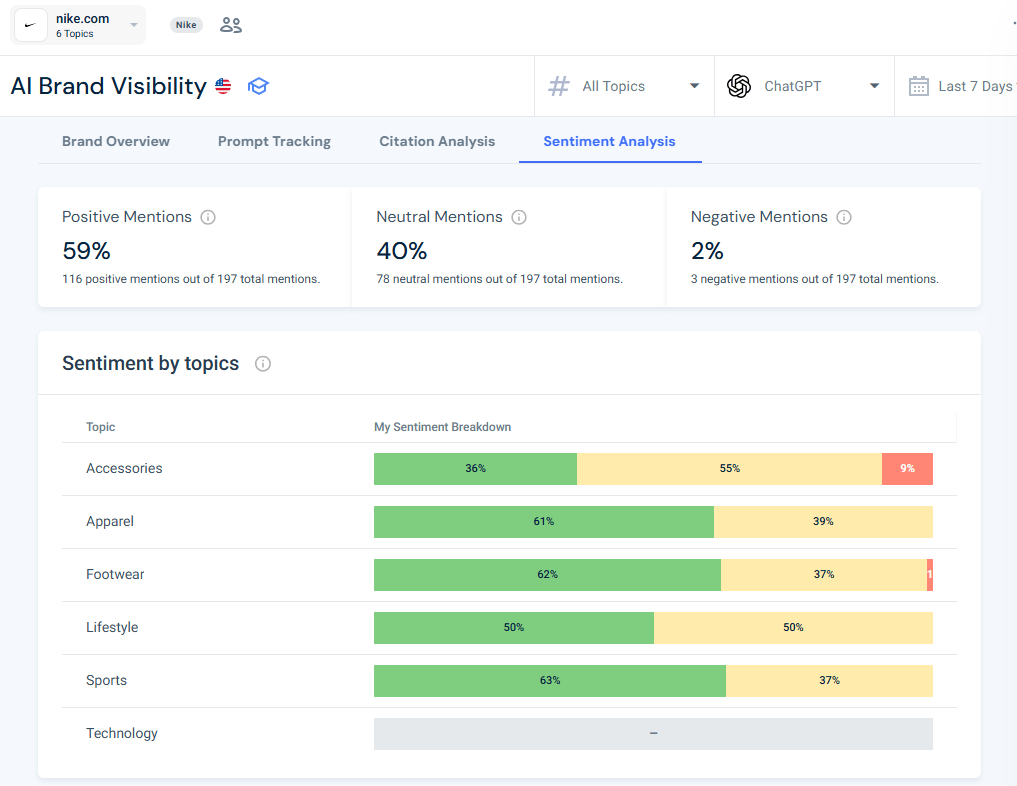
Sentiment Analysis monitors how AI platforms are framing your brand in the responses where you appear – positive, neutral, or negative.
Answer Engine Optimization (AEO) focuses specifically on winning placements in AI Overviews, featured snippets, and AI Mode. These placements are increasingly prominent: Google AI Overviews now appear in over 25% of Google searches, up from 13% earlier in 2025, according to Conductor’s analysis of 21.9 million queries. Winning an AI Overview position can generate significant traffic even as traditional organic click-through rates face pressure from zero-click results.
To optimize for AEO, create dedicated FAQ sections that directly answer common questions in your category. Use question-based headings (H2s phrased as questions). Keep answers concise – typically 40-60 words – before expanding. Implement FAQ schema markup so search engines can identify and extract your answers. Track which questions you’re answering versus which ones competitors are capturing using Similarweb’s AEO Tools.
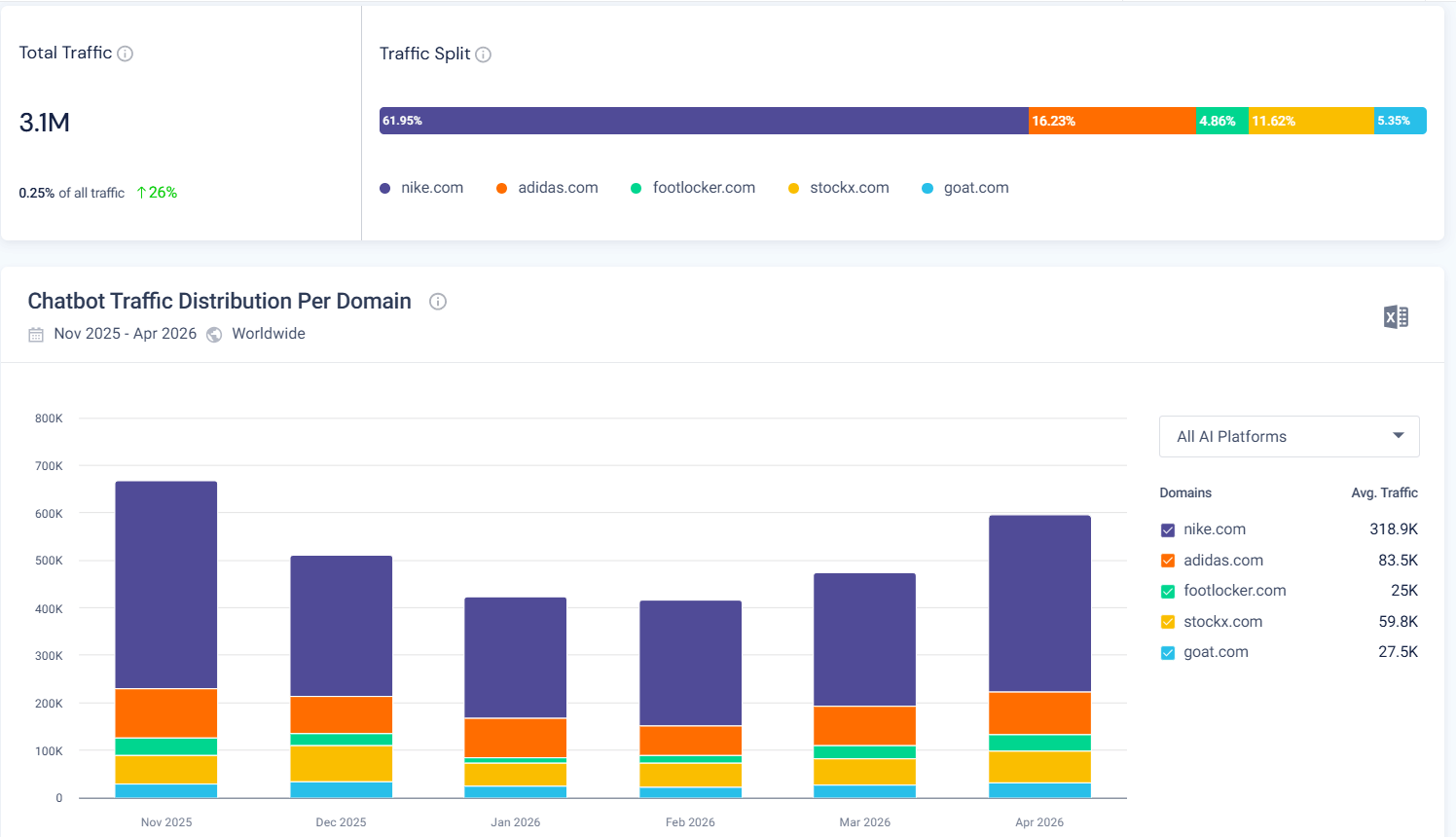
For a ground-level view of how AI chatbots are already sending traffic to your site and your competitors’, Similarweb’s AI Chatbot Traffic tool breaks down visits by chatbot source – ChatGPT, Gemini, Perplexity, Claude and others – so you can see which platforms are driving the most referrals.
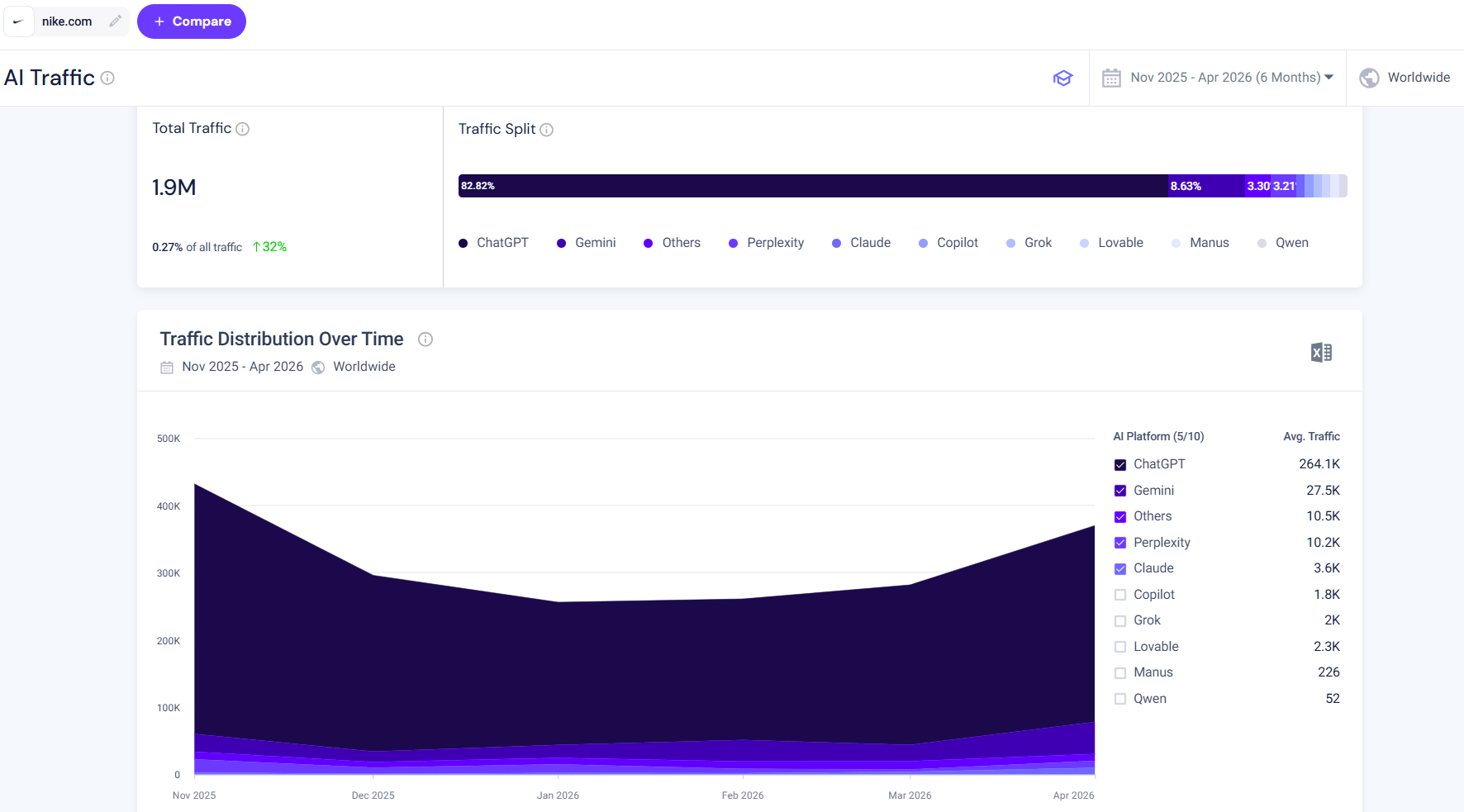
You can also see how AI traffic splits across your competitive set, and which prompts are leading users to specific pages. It’s the fastest way to benchmark your current AI traffic baseline before optimizing for more.
Hashtags make your content discoverable to users who aren’t already following you. Interactive content – polls, quizzes, questions – earns far higher engagement rates than static posts, which in turn extends organic reach on most platforms. Branded hashtags can build communities around your content over time.
Each social platform rewards different content formats. Short-form video dominates on TikTok and Instagram Reels. Long-form professional content performs on LinkedIn. Threads and quick commentary work on X. Adapting your format to the platform – rather than posting the same content everywhere – is the difference between traction and silence.
Partnering with relevant influencers in your industry puts your content in front of audiences that already trust the messenger. Micro-influencers (10,000-100,000 followers) often outperform larger accounts on a cost-per-engagement basis because their audiences are more focused and engaged.
Consistency builds audience habits. Regular posting signals to both platform algorithms and your followers that you’re active and worth following. Social scheduling tools help maintain cadence without requiring you to be online constantly.
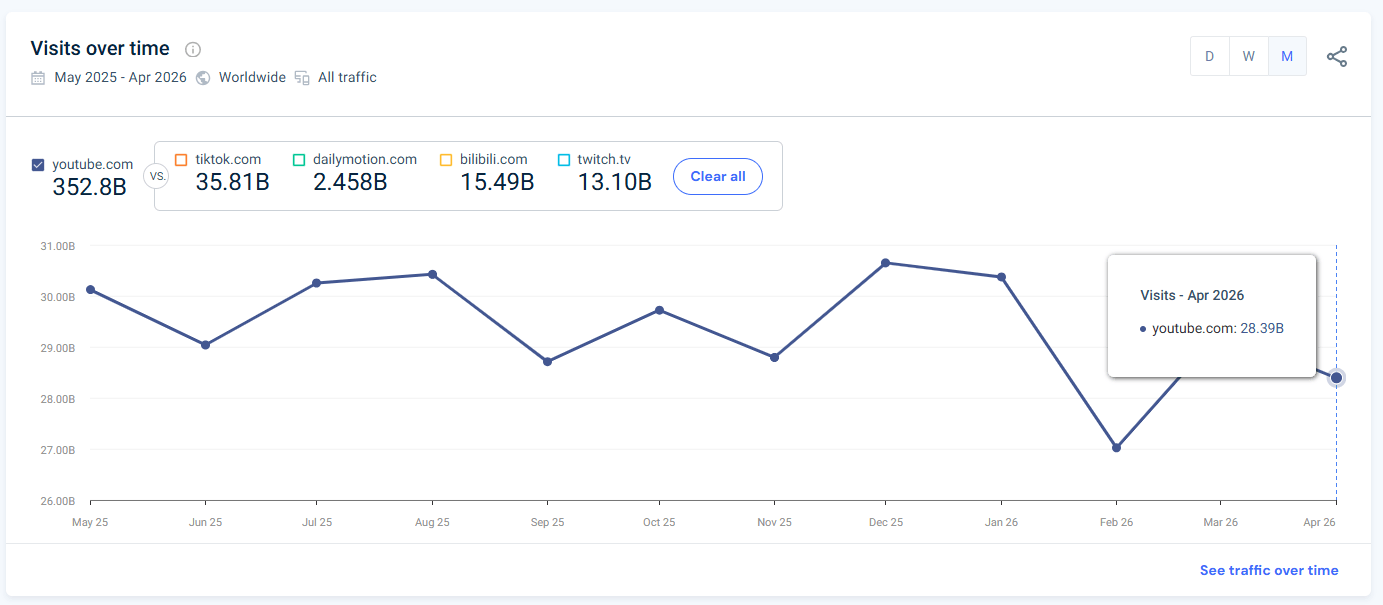
According to Similarweb data, YouTube received 352.8 billion website visits between May 2025 and April 2026 – nearly 10 times more than TikTok (35.81B) and over 25 times more than Twitch (13.10B) over the same period.
On the app side, data from Similarweb’s App Intelligence shows YouTube’s 1.21 billion daily active users and 62% daily stickiness rate, confirming it’s not a platform people dip into occasionally – it’s a daily habit at scale.
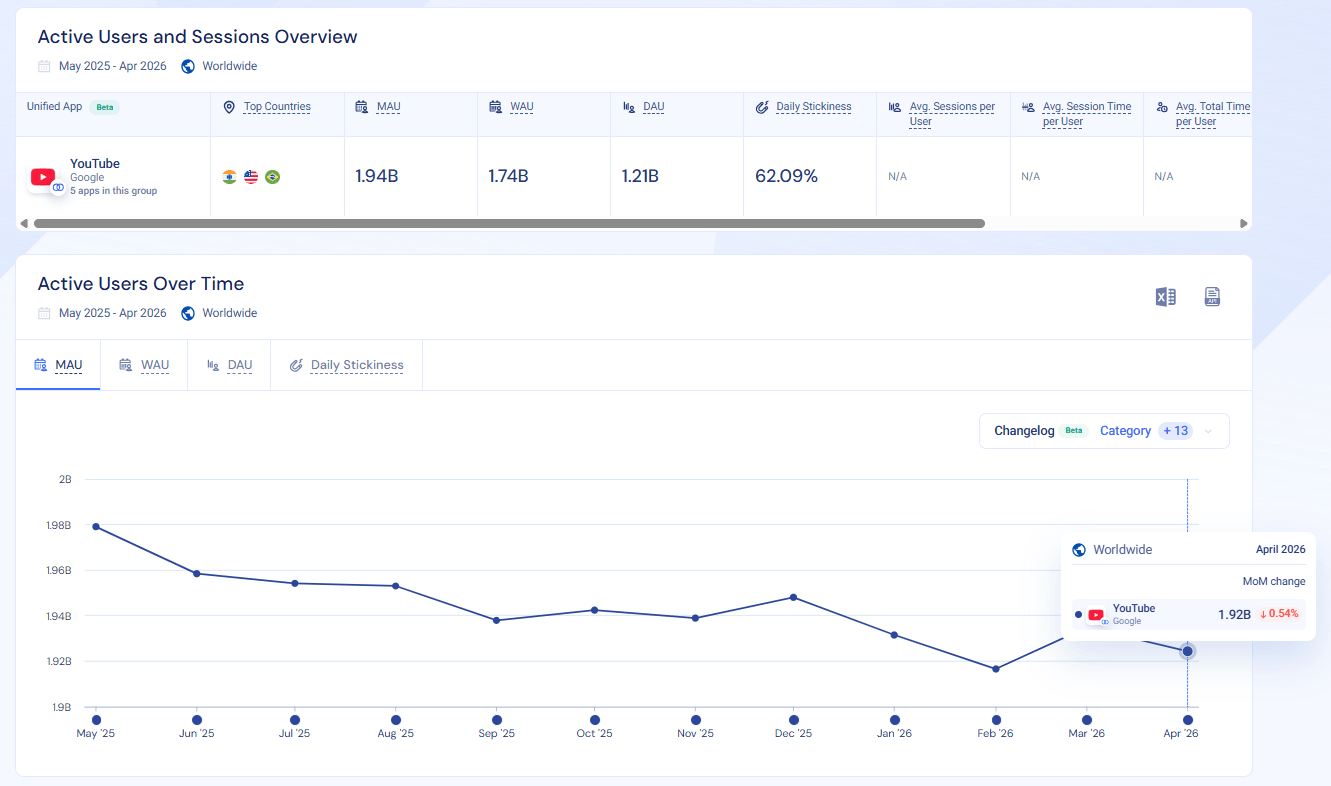
That combination of web and app dominance makes YouTube effectively the world’s second-largest search engine, and yet most brands still treat it as a social media channel rather than a search channel, which means they’re leaving a significant traffic source untapped.
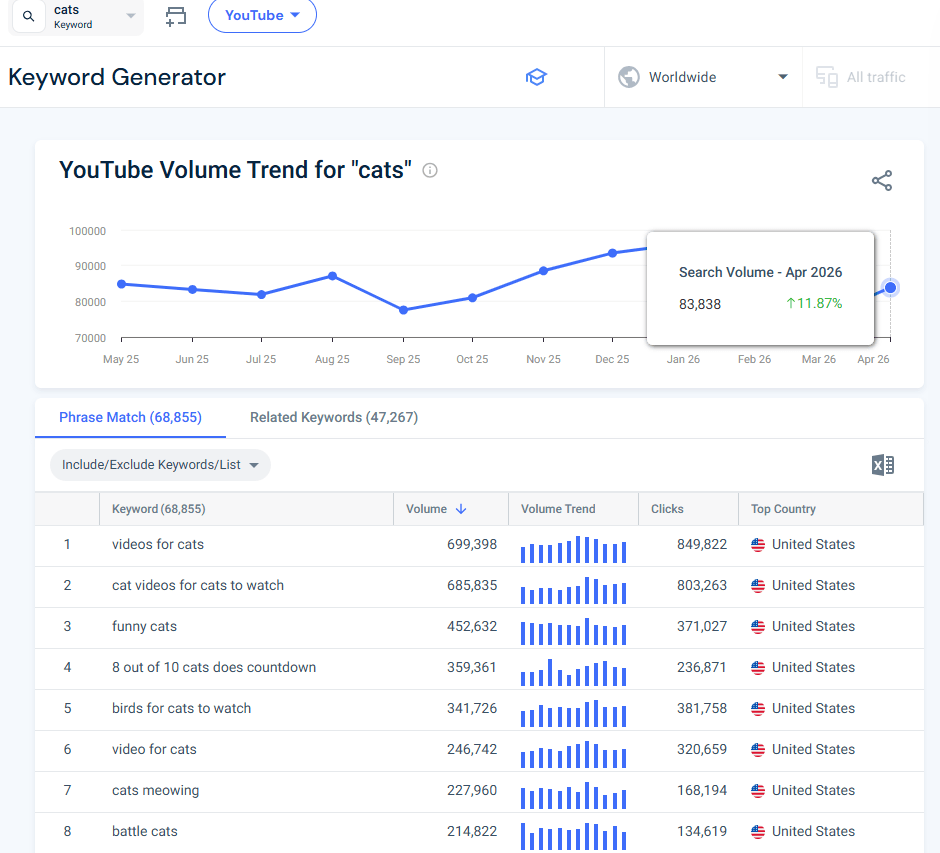
YouTube has its own SEO logic. Keyword research for YouTube requires understanding what people search on the platform specifically, which differs from what they search on Google. Similarweb’s YouTube Keyword Tool helps identify high-volume video search terms in your category. Include your primary keyword in the video title, description, and tags. Use chapters (timestamps) to improve watch time and navigation. Add a clear verbal and visual CTA linking to your website in the first 30 seconds.
Importantly, Google regularly surfaces YouTube videos in standard search results – particularly for how-to, tutorial, and review queries. A well-optimized video can drive organic traffic from both YouTube search and Google simultaneously.
The most efficient approach is to treat video and blog content as complementary rather than separate. Embed relevant YouTube videos in your blog posts to increase time on page. Repurpose video scripts into written content. Create blog posts that expand on video topics in depth. This cross-linking structure drives traffic between platforms and reinforces topical authority that benefits both channels.
Online communities are one of the most underused traffic channels for most brands. Reddit alone had 116 million daily active users in Q3 2025 and consistently ranks among the top 10 most visited sites in the US. Its posts rank prominently in Google search results. More importantly, community members are active researchers – 74% of Reddit users say the platform influences their purchasing decisions, according to Reddit’s own brand discovery research.
Reddit communities (subreddits) and other forums quickly identify and reject promotional behavior. The approach that works is building a real presence by answering questions, sharing expertise, and contributing value before ever mentioning your brand or product. Over time, a credible presence in a relevant community earns natural mentions and links that drive consistent traffic.
Find the subreddits, Discord servers, Slack communities, or LinkedIn groups where your target audience discusses your category. Observe the culture before posting. Answer specific questions rather than sharing general advice. Done consistently, this builds both traffic and brand trust.
If a community doesn’t exist for your niche, building one positions your brand as the hub of the conversation. A branded subreddit, a Discord server, or a LinkedIn group can become a destination in its own right – driving direct traffic, generating user content, and producing the kind of organic word-of-mouth that paid campaigns can’t replicate.
Good strategy without measurement produces guesswork. Similarweb gives you the data to know what’s working, what isn’t, and where to invest next.
Start with the full picture. In Similarweb’s Web Intelligence platform, go to ‘Website Analysis’ then ‘Traffic and Engagement’ (Non-users can try our free website traffic checker and our free trial). Total visits, bounce rate, and session duration together tell you whether incoming traffic is engaged or not. Benchmark these metrics against your industry to understand where you stand relative to competitors, not just relative to your own history.
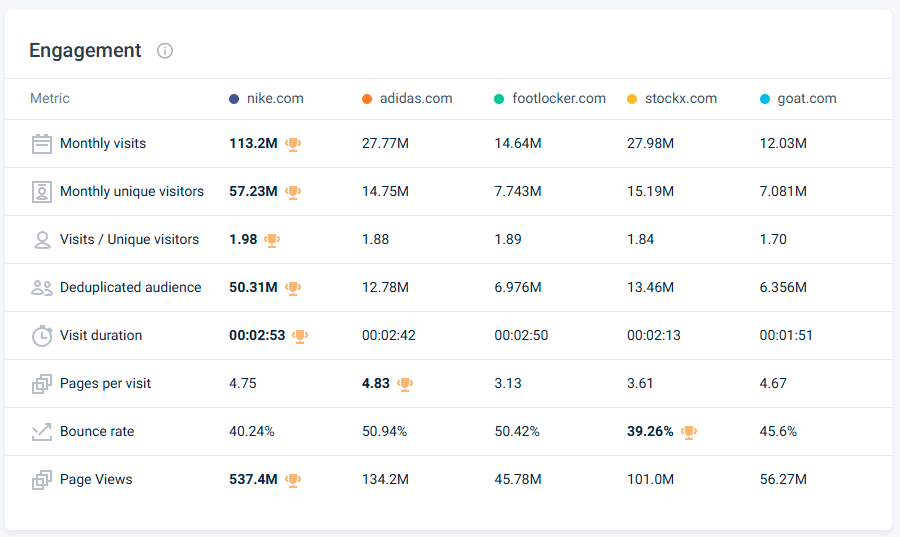
Under ‘Marketing Channels’, you can analyze how your traffic splits across organic, paid, direct, referral, social, and email channels. This analysis is essential for resource allocation – if one channel is over-performing, it’s a signal to invest more. If another is underperforming despite significant spend, you need to know before the budget cycle closes.
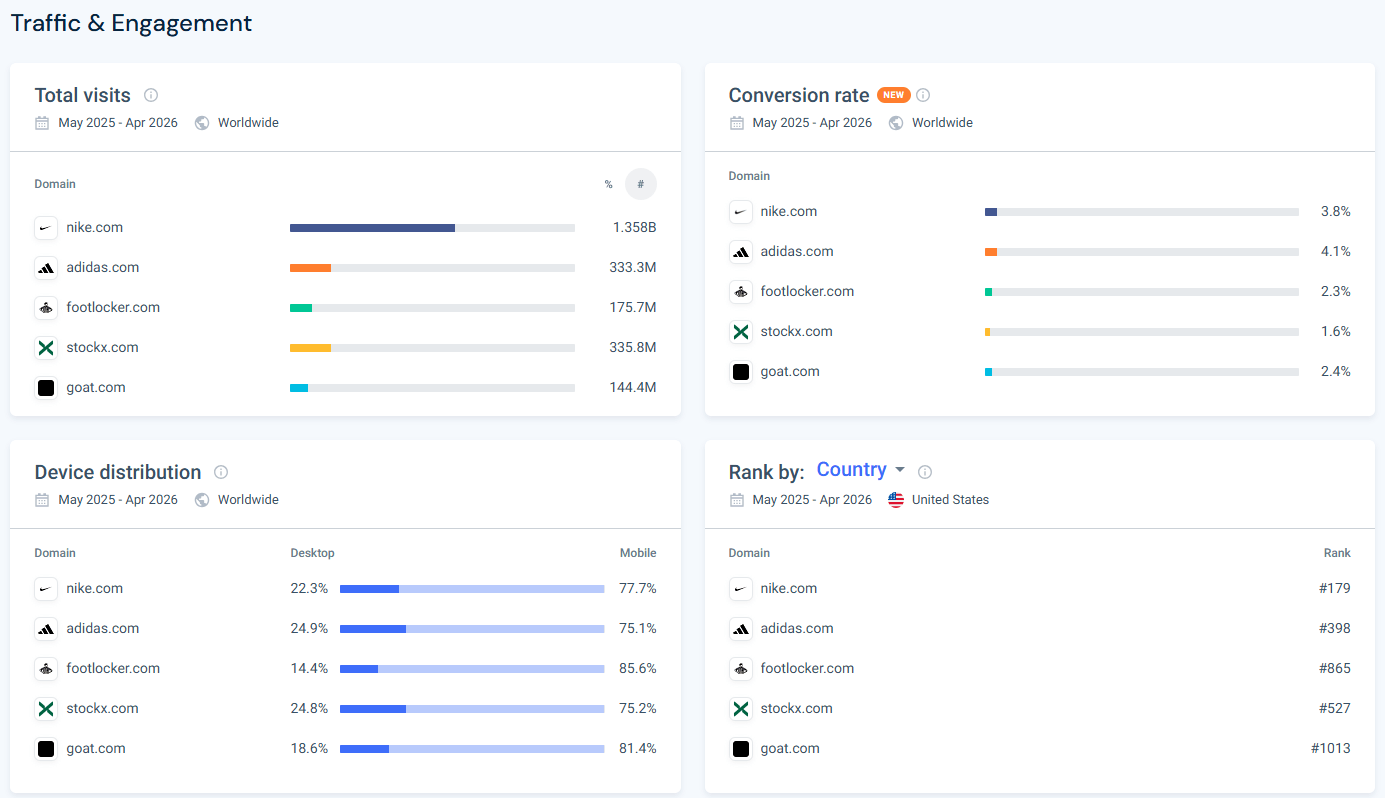
Understanding your own traffic is only half the picture. Running a competitive analysis with Similarweb’s competitive analysis tools lets you see how competitors are growing their traffic, which channels they’re investing in, and where they’re capturing audiences you’re not. Use it to spot traffic gaps in channels that competitors invest in that you don’t.
The Keyword Gap Tool reveals search terms competitors rank for that you don’t – a direct list of content opportunities.
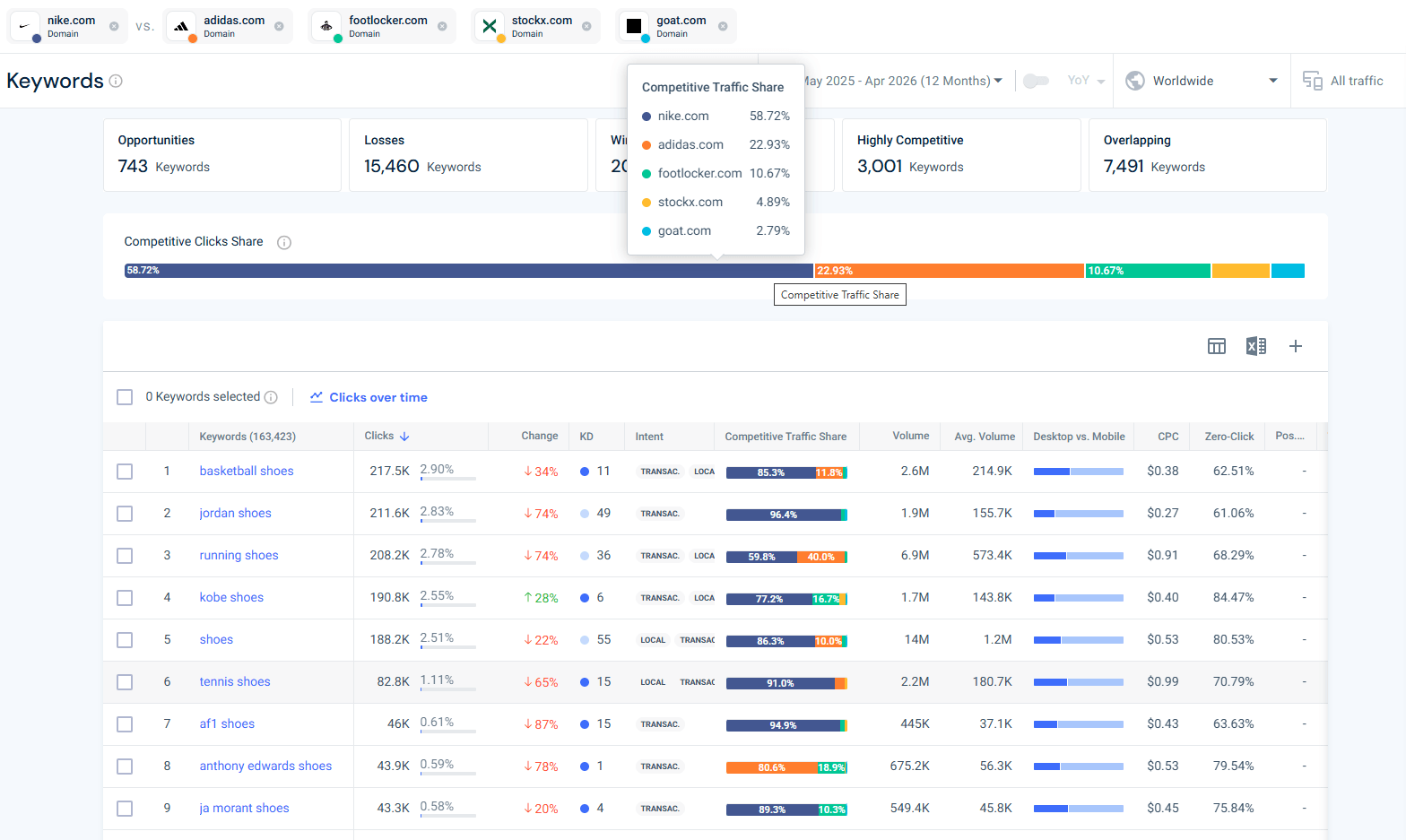
Combined with a SWOT analysis of competitor data, this gives you a complete picture of where to invest. Identifying a competitor’s fastest-growing channel before it becomes obvious saves you months of reactive work.
Increasing website traffic takes a combination of channels, consistency, and the right data to know which bets are paying off. The strategies above cover the full spectrum – from the SEO and content fundamentals that build long-term authority, to the emerging channels like community and AI search that are generating outsized returns for early movers.
Start with the channels where your audience already spends time. Measure your baseline so you know what you’re improving. And as you build momentum, add channels one at a time rather than trying to do everything at once.
Similarweb Web Intelligence gives you the traffic data, competitive benchmarks, and channel insights to make every decision in this guide a confident one – not a guess. Try it free and see exactly where your traffic growth opportunities are.
How do I know which traffic channels to prioritize?
Start by looking at where your competitors are already getting traffic before deciding where to invest. Channels generating strong results for similar sites in your niche are proven demand – you’re not guessing whether the audience exists. Alongside that, factor in your own resources: SEO requires sustained content investment, PPC requires budget, and community building requires time. Most sites benefit from two or three channels working together rather than trying to dominate all of them at once.
How often should I audit my traffic strategy?
A light review monthly – checking channel trends and whether any source is declining unexpectedly – and a more thorough assessment quarterly. Algorithm updates, competitor moves, and shifts in how your audience searches can all affect performance in ways that aren’t obvious until you look at the data. Benchmarking against competitors at least quarterly helps you spot whether a traffic drop is industry-wide or specific to your site.
Is it better to focus on one traffic channel or spread across several?
Diversification reduces risk. Sites that depend on a single channel – typically organic search – are vulnerable to algorithm updates that can wipe out traffic overnight. A balanced mix of organic, paid, social, and referral traffic means no single change can dramatically affect your overall performance. That said, spreading too thin early is a common mistake. Build one channel to a reliable baseline before adding the next.
When does it make sense to invest in paid traffic versus focusing on organic?
Paid search makes most sense when you need traffic quickly, when you’re testing whether a keyword or audience converts before investing in SEO content, or when you’re in a highly competitive category where organic rankings take a long time to build. Organic is better for sustained, cost-efficient traffic over time and for content that answers informational queries at scale. Most effective strategies use both: paid to capture high-intent transactional demand now, organic to build authority and reduce cost-per-visitor over time.

by Roi Kaufman
VP of Demand Generation at Similarweb
As a seasoned growth marketing leader with a deep passion for demand generation, I bring a wealth of expertise in driving scalable B2B growth strategies.
The Top 100 Most Visited Websites in the USA (August 2026)
Similarweb Named in Forrester's Answer Engine Optimization Technologies Landscape, Q3 2026
Anthropic IPO: What Claude's Web and App Data Show
Contact us to set up a call with a market research specialist
