


The Top 100 Most Visited Websites in the World (August 2026)
by Shai Belinsky10 Min.
Sep 17, 2026
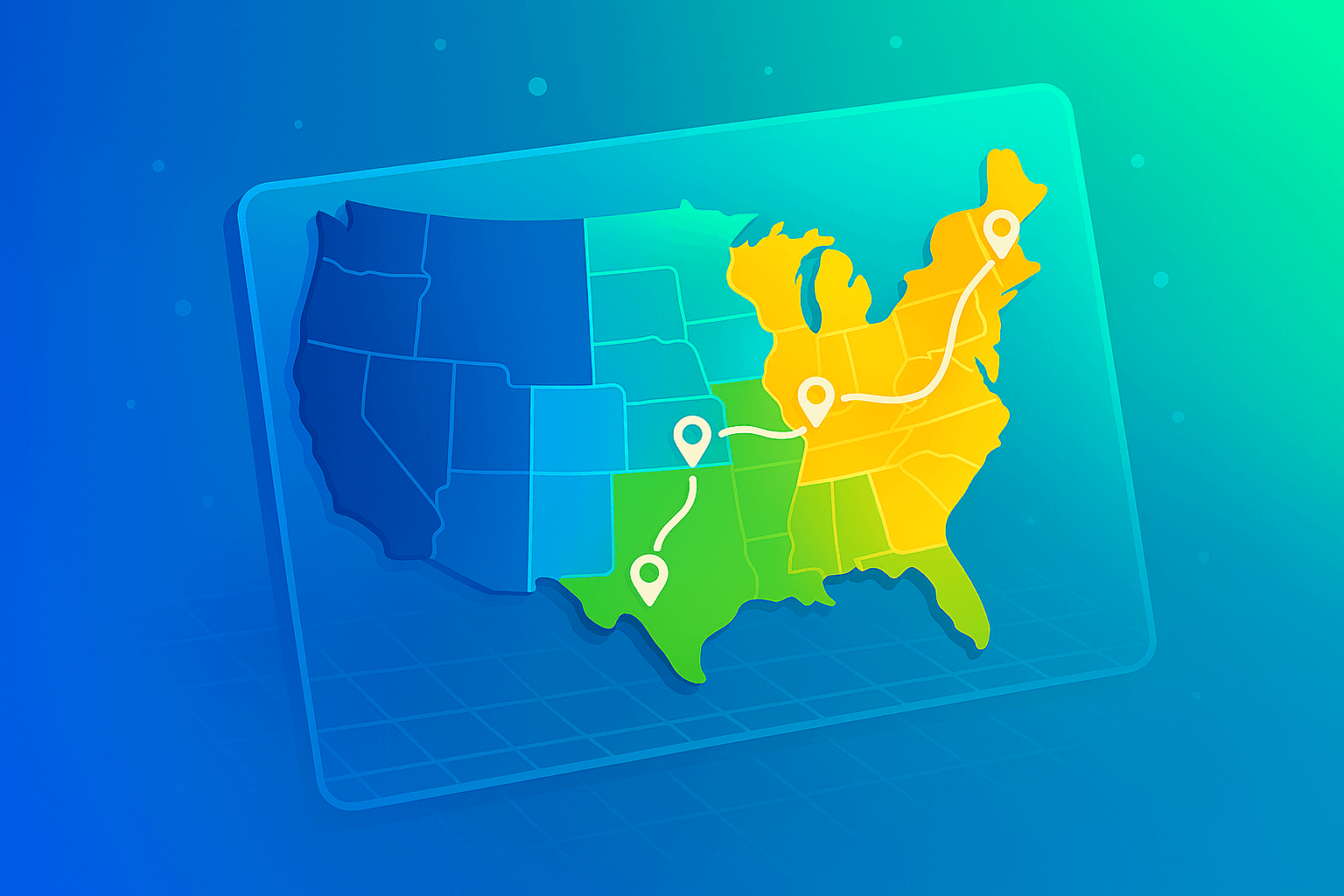
Without a structured strategy, businesses risk losing opportunities and inefficiencies. A well-defined mapping system not only improves coverage but also drives smarter resource allocation so that every territory gets the attention it deserves. This results in higher sales efficiency and stronger customer relationships.
Sales success is about working smart, and that’s why sales territory mapping matters. It’s how you match the right reps to the right prospects in the right places.
Summarize with ChatGPT | Google AI | Perplexity | Grok
But here’s where things really click: adding sales intelligence into the mix.
With data like Total Addressable Market (TAM) at your fingertips, you’re measuring opportunity. TAM shows you what’s possible, where to focus, and who to chase.
And here’s the kicker: not every tool gives you this.
Without TAM, you’re working in the dark. Guessing instead of prioritizing. Making calls with half the picture.s.
Territory optimization is a must in complex markets. A strategic plan guarantees that you focus on high-potential clients while personalizing interactions to promote loyalty. The ability to adapt territorial strategies based on market shifts can improve productivity and long-term growth.
Matching business goals with a data-backed plan gives companies a competitive edge, allowing them to achieve consistent revenue growth while staying ahead of market trends.
Sales territory mapping is a statistical template that carves out specific regions or customer segments for sales teams to cover efficiently.
Sales territory mapping by zip code used to mean drawing boundaries on a physical map. It was simple but not precise. Today, tech-driven sales mapping uses AI, customer insights, and industry-specific data to divide territories strategically. It’s about where the real sales potential lies.
A clear territory plan trims wasted hours and lowers costs by removing overlap. Reps see exactly which accounts are theirs, so they spend less time on the road. With clean lines in place, collaboration across teams gets a whole lot easier.
However, real‑time territory changes rarely surface in most mapping platforms. The data arrives as a static snapshot, so sales teams end up guessing where to focus next. Without live analytics or on‑the‑fly segmentation, reps keep working yesterday’s lists while fresher opportunities go untouched..
Combining human judgment with AI-driven data optimizes sales potential, improves customer interaction, and maximizes revenue. When sales reps know their playing field inside and out, they can sell smarter.
When done right, a well-planned sales territory map helps optimize resource allocation, improve customer service, and drive revenue growth.
Here’s how to build sales territory maps that work, step by step:
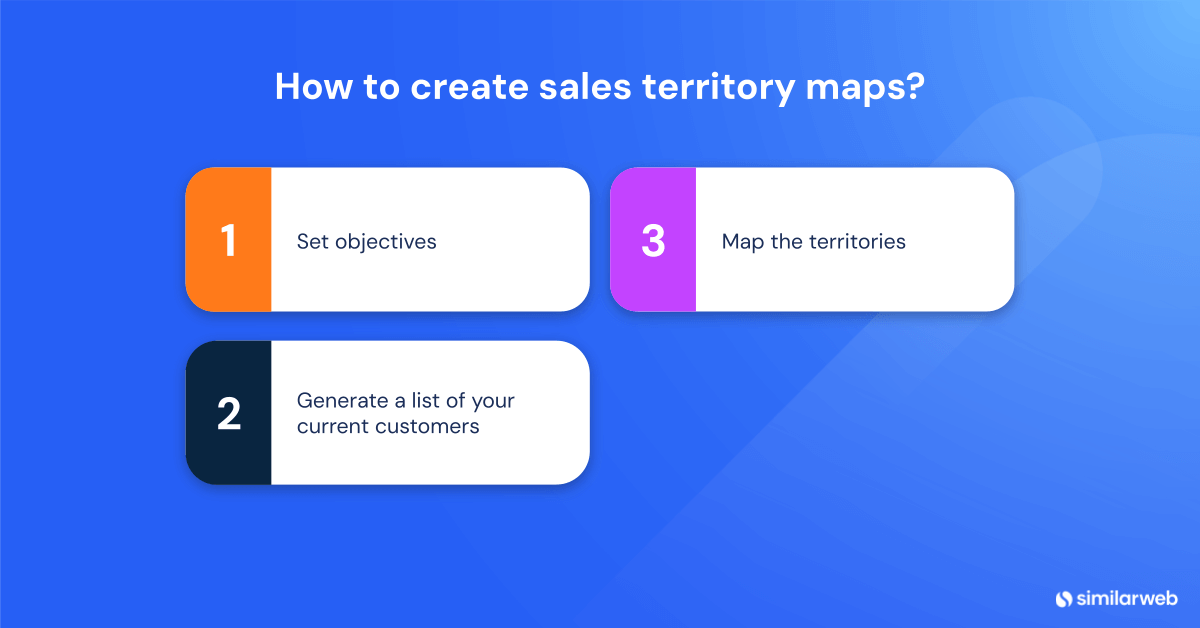
Before diving into mapping, ask yourself: What’s the endgame?
Are you aiming to:
Each objective shapes your strategy. If you’re focused on growth, identifying high-potential regions is a must. If customer satisfaction is the goal, balancing workloads is needed so that every client gets attention.
Once objectives are locked in, define success metrics. Will you track revenue growth? Customer acquisition? Market penetration? Every sales territory should have a measurable performance standard to guide decision-making.
A solid strategy begins with knowing what you’re solving for, so set those goals now.
Before expanding, take stock of your current customer base. Where are they located? Are some regions overserved while others are neglected? Which areas generate the most repeat business?
A CRM system can pull accurate data on customer distribution, purchase patterns, and user interaction history. By visualizing where your most valuable customers are, you can:
Beyond pure numbers, customer feedback matters. Surveys and community user interaction data can uncover service gaps, allowing your team to fine-tune sales efforts in weak spots.
Pro Tip: Not all customers are equally valuable. Segment them based on strategic importance so your sales reps spend time where it counts.
With Similarweb Sales Intelligence, you get a powerful suite of tools to map your territories and spot opportunities so that your reps are exactly where they need to be.
Here’s how to map sales territories like a pro using Similarweb:
First things first, gather your customer data. This includes company names, locations, and relevant sales metrics. With that in hand, head over to Similarweb’s Lead Generator.
This feature helps you find and manage high-value prospects while integrating your existing customer base. Upload your list via management settings, use the import function, and let the system do the heavy lifting.
Once uploaded, your data becomes interactive. This makes it easier to identify important trends and uncover gaps in your market coverage.
Now it’s time to map out your customers. Similarweb’s tools pinpoint customer locations, allowing you to see where your business is thriving and where there’s untapped potential.
Using interactive mapping features, you’ll see patterns emerge:
This visualization is about market penetration. It helps you target smarter.
Once you see where your customers are, it’s time to draw the lines.
With Similarweb’s Regions filter, you can define territories based on specific geographical areas. Whether it’s multiple countries, cities, or primary regions, this tool lets you create precise, non-overlapping sales zones.
Once your territories are set, keep everything in sync with Similarweb’s Salesforce Integration. With a one-click export, your lead lists and market insights flow directly into Salesforce to keep your sales and marketing teams in line with each other.
It’s sales intelligence that works for you, giving you the visibility, structure, and statistical data to conquer your market with confidence.
Territories aren’t static. They adapt to customer behavior, market shifts, and competitive landscapes.
So, how do you make sure yours stays ahead?
Markets change, so as the customer needs. If you’re not reassessing your sales territories, you’re already falling behind.
Assess your customer base continuously to track demand shifts and market presence fluctuations. Are some regions seeing a spike in interest? Is a once-promising territory drying up? Quickly adjusting your tactics allows your reps to focus on areas that actually drive revenue.
Pro tip: Sales data is your best friend here. Patterns reveal evolving demand, which can help you realign territories before opportunities slip away.
Not all sales regions are created equal. Some drive consistent revenue, while others lag behind. You need to spot these underperforming territories before they become dead weight.
Use performance reviews to determine which regions are thriving and which need attention. A strong region today isn’t guaranteed to stay that way, especially with competitors moving in. Look into the data, identify where reps struggle, and adjust coverage accordingly.
Keep in mind that sales is about defending the ground you’ve already won as well as chasing new opportunities.
Trends build over time, and the best sales teams recognize shifts early and act before the competition does.
Comb through your sales data for user interaction patterns, emerging demand, and shifting buyer behavior. Are customers in a specific region showing interest in a new product line? Is a once-dormant market heating up? Adjusting territories in response to these findings keeps your sales strategy dynamic and competitive.
Sales territory mapping is the backbone of an efficient, high-performing sales operation. Get it right, and you’ll be able to convert those scattered efforts into a targeted, evidence-based machine that converts opportunities into revenue.
With Similarweb’s Website Analysis and Sales Intelligence tools, you gain an unfair advantage. You’re unlocking hidden demand, optimizing resource allocation, and identifying high-value prospects with precision.
Good sales territory planning and management streamline evaluations, minimize inefficiencies, and scale operations seamlessly. There is no more guesswork, just strategic execution powered by reliable data.
So, what’s the next step? Equip your team with the tools and insights they need to work smarter, close faster, and expand further. In sales, knowing where to go next makes all the difference.
What factors should you focus on when designing sales territories?
Getting the right balance between workload and opportunity is critical, it’s what separates an efficient sales team from one constantly playing catch-up. Consider factors like rep expertise, geographical barriers, and resource distribution. When sales territories match skill sets and business goals, your reps can perform at their best.
How often should sales territories be reviewed?
Plan for quarterly or biannual check-ins. Markets, competitors, and customer needs constantly change. Waiting too long to reassess can leave gaps in your strategy. Regular evaluations keep territories matched with business objectives and prevent unexpected disruptions. Think of it as a necessary tune-up to keep performance running smoothly.
What makes automated tools a big step forward for territory mapping?
Forget spreadsheets, automation means reliable insights, instant adjustments, and zero manual guesswork. These tools study data on the fly and help you improve your sales efforts with precision. The result is a well-oiled sales machine that adapts quickly stays efficient, and maximizes pipeline potential without unnecessary bottlenecks.

Ayelet Mechany, Sales Intelligence Product Marketing Manager by day, rock climber by weekend. Equally obsessed with helping sales teams reach their peak as I am conquering mountain summits.
Try Similarweb Sales Intelligence today — free of charge