
The Top 100 Most Visited Websites in the USA (August 2026)
by Shai Belinsky10 Min.
Sep 29, 2026

Sales is no longer just a numbers game. It’s a data-driven, tech-enabled discipline. AI sales agents are transforming how companies prospect, qualify, and convert leads by automating the most time-consuming parts of the sales process. These digital assistants are helping teams scale faster, close more deals, and stay competitive in increasingly crowded markets.
AI sales agents are software tools powered by artificial intelligence that automate and optimize various sales tasks, acting as digital assistants to human sales teams. They use technologies like traditional natural language processing (NLP) algorithms and generative AI chatbots to handle functions like outreach, lead qualification, scheduling meetings, and follow-up communication.
The primary role of AI sales agents is to reduce the workload on human sales teams for repetitive or high-volume activities. They function across digital channels like email, chat, and SMS, enabling scalable, efficient interactions without the limitations of human scheduling.
Key functions of AI sales agents include:
While AI sales agents excel at automation and data analysis, they are not intended to completely replace human sales representatives. Human sales reps possess valuable skills like emotional intelligence, relationship building, and the ability to adapt to complex situations that AI is still developing. Instead, AI sales agents are designed to augment human capabilities, freeing up sales teams to focus on building relationships and closing deals.
Let’s explore how organizations can use the relative advantages of AI sales agents and human sales representatives.
AI agents excel at handling repetitive, high-volume tasks, such as responding to common customer inquiries, following up on leads, and entering data into CRM systems. They can process vast amounts of information at high speed, ensuring consistent communication without human limitations like fatigue or availability issues. This automation allows organizations to scale their sales efforts more efficiently and reduce the administrative burden on human teams.
Human sales reps bring emotional intelligence, creative problem-solving, and personalized relationship-building that AI agents currently cannot replicate. While AI can manage initial lead qualification and routine communication, human reps are better suited for complex negotiations, building long-term relationships, and adapting to nuanced customer needs. Sales reps also provide a human touch that many customers still prefer, particularly in industries where trust and personal rapport are critical.
The combination of AI agents handling routine tasks and human sales reps focusing on high-touch, strategic sales efforts allows companies to leverage the strengths of both and optimize overall sales performance.
AI sales agents use machine learning and natural language processing to scan websites, social media platforms, customer databases, and industry-specific sources to find promising prospects. These agents analyze vast amounts of data quickly, identifying patterns that humans might miss.
For example, they can track a visitor’s behavior on a website, detect intent signals such as downloads or page visits, and initiate outreach through personalized emails or messages. This automation reduces the time and effort traditionally spent on manual prospecting, while ensuring a steady flow of new leads into the sales pipeline.
More advanced agents layer in digital market intelligence alongside traditional intent signals. Traffic pattern analysis, for instance, can flag accounts whose web activity suggests they’re actively researching your category or evaluating competitors — giving reps a timing edge that firmographic filters alone can’t provide.
AI can evaluate multiple factors that contribute to a lead’s likelihood of converting. These factors include demographic data, historical interactions, online activity, and even engagement with previous marketing campaigns. For example, if a lead has downloaded a whitepaper, attended a webinar, or repeatedly engaged with certain product pages, AI can prioritize that lead as high-value.
AI can score leads on a scale of readiness, flagging those who need more nurturing versus those who are ready to close. This eliminates the need for human sales reps to manually sift through all leads, allowing them to focus on prospects who are most likely to convert. AI systems can also continuously adjust qualification criteria based on feedback.
The most effective AI qualification combines firmographic fit with real-time engagement signals: traffic spikes to category pages, technology adoption changes, or shifts in a company’s referral sources. This two-layer approach helps filter out low-quality accounts that look right on paper but show no digital signs of active buying activity.
By using customer data from CRM systems, past interactions, and behavioral analytics, AI agents can tailor each conversation to the preferences and pain points of the individual prospect. If a customer has shown interest in a particular product feature or has raised concerns in past communications, the AI agent will address these directly in its messages.
AI can adjust the tone, content, and frequency of communication based on individual interactions, helping to establish a more personalized experience. This level of personalization can happen at scale without sacrificing quality or relevance. By using generative AI to simulate human-like conversations, AI agents can craft responses that feel intuitive.
Traditional sales teams are restricted by working hours, but AI sales agents can respond to leads and inquiries at any time of day or night. This means that organizations can continue engaging with prospects in different time zones or during peak times when human agents might be unavailable.
The scalability of AI agents is another key benefit. As demand grows, AI systems can handle an increasing number of customer interactions simultaneously without any degradation in performance. Whether it’s a sudden surge in website traffic or an ongoing series of customer queries, AI systems can scale to meet the demand.
AI sales agents are useful tools for gathering and analyzing data, providing insights that human sales teams can use to refine their strategies and improve overall performance. By examining every interaction, AI agents can identify trends, patterns, and key behaviors that would otherwise go unnoticed.
For example, they might detect that certain messaging resonates better with a specific demographic or that a particular product feature sparks more engagement at certain times of year. These insights can be used to adjust sales tactics. AI can also provide analytics on the sales pipeline, helping teams forecast future revenue, predict customer behavior, and identify bottlenecks or areas for improvement.
Some platforms extend this to competitive monitoring: detecting when a target account increases traffic to a competitor’s site, or when a competitor starts appearing more frequently in your customers’ referral paths. These signals can trigger proactive alerts so reps act before a relationship shifts.
AI agents can pull data from CRM platforms and incorporate it into their interactions with leads and prospects. This ensures that every communication is informed by a complete picture of the customer’s history, preferences, and past engagements with the brand. For example, an AI agent can automatically update CRM records with details about a prospect’s inquiries, behavior, and engagement.
This eliminates the need for manual data entry, reducing errors and ensuring that sales data is up-to-date and accurate. By integrating AI with CRM systems, companies gain insights into their customer base, enabling them to segment leads and personalize future communications. The result is a simplified
There are two primary types of AI sales agents: autonomous and assistive.
Autonomous AI sales agents can handle the complete sales process with minimal human intervention. These agents can autonomously perform tasks such as lead generation, qualification, follow-up, and closing deals. Using machine learning models and data analytics, autonomous agents can interact with prospects, assess their needs, and make recommendations based on customer behavior and preferences.
They have the ability to continuously learn from past interactions, improving their performance and decision-making over time. Autonomous agents are particularly useful in environments where speed and efficiency are essential, as they can operate 24/7 and scale quickly to handle large volumes of interactions.
Assistive AI sales agents work in tandem with human sales representatives, augmenting their capabilities rather than replacing them. These agents assist with routine tasks, such as data entry, lead tracking, and providing real-time insights, so that sales teams can focus on high-value, strategic activities.
For example, assistive agents can recommend the best follow-up actions based on prospect behavior or suggest personalized content during sales conversations. They can also provide sales reps with analytics, helping them identify the most promising leads or potential opportunities. Rather than fully automating the sales process, assistive agents serve as a support tool, improving the productivity of human agents without replacing them.
Most AI sales agents use some form of intent data to prioritize accounts: signals gathered from third-party content networks showing which companies are researching topics related to your category. It’s useful, but it has limits. Intent data tells you that someone at a company is reading about a subject. It doesn’t tell you what’s actually happening to their business.
Digital market intelligence goes further. It’s based on actual behavioral data from the web: website traffic patterns, channel mix, audience engagement trends, and competitive positioning. When a company’s direct traffic spikes, their paid search spend doubles, or a major referral partner suddenly disappears from their traffic mix, those signals reflect real business change.
This distinction matters for AI sales agent prioritization. Similarweb’s AI agents are built on digital market intelligence, which means account signals reflect what’s actually happening in a prospect’s business right now, not just what their employees happen to be reading. That gives reps sharper timing on outreach and fewer false positives in their pipeline.
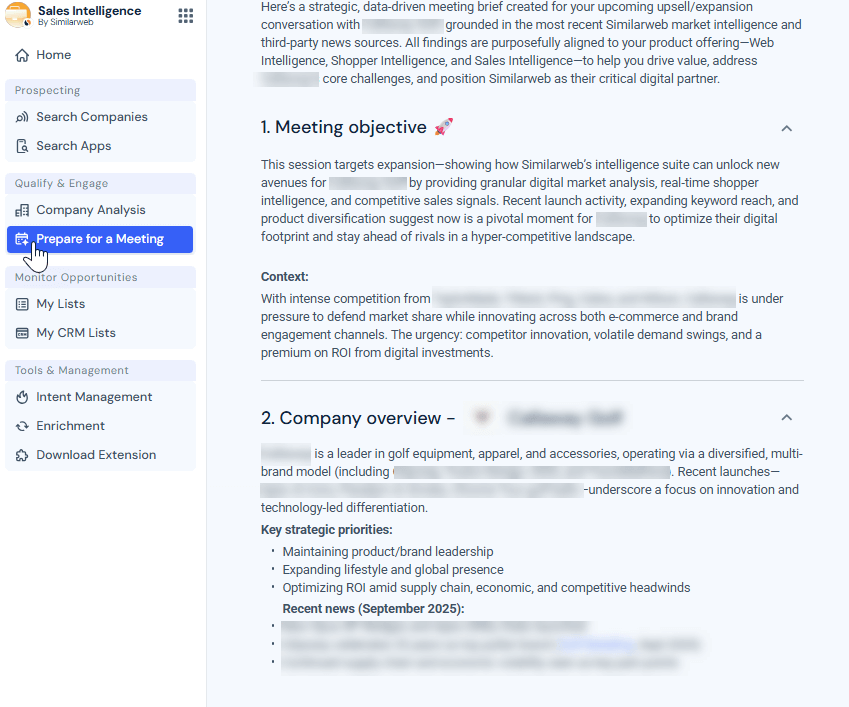
Similarweb AI Meeting Prep equips sales teams with actionable, data-driven briefs that ensure every meeting starts with a winning plan. By combining real-time company and performance insights with technographics, firmographics, and intent signals, the tool creates tailored briefs that showcase how your solution impacts each prospect’s business.
Key features include:
Limitations include:
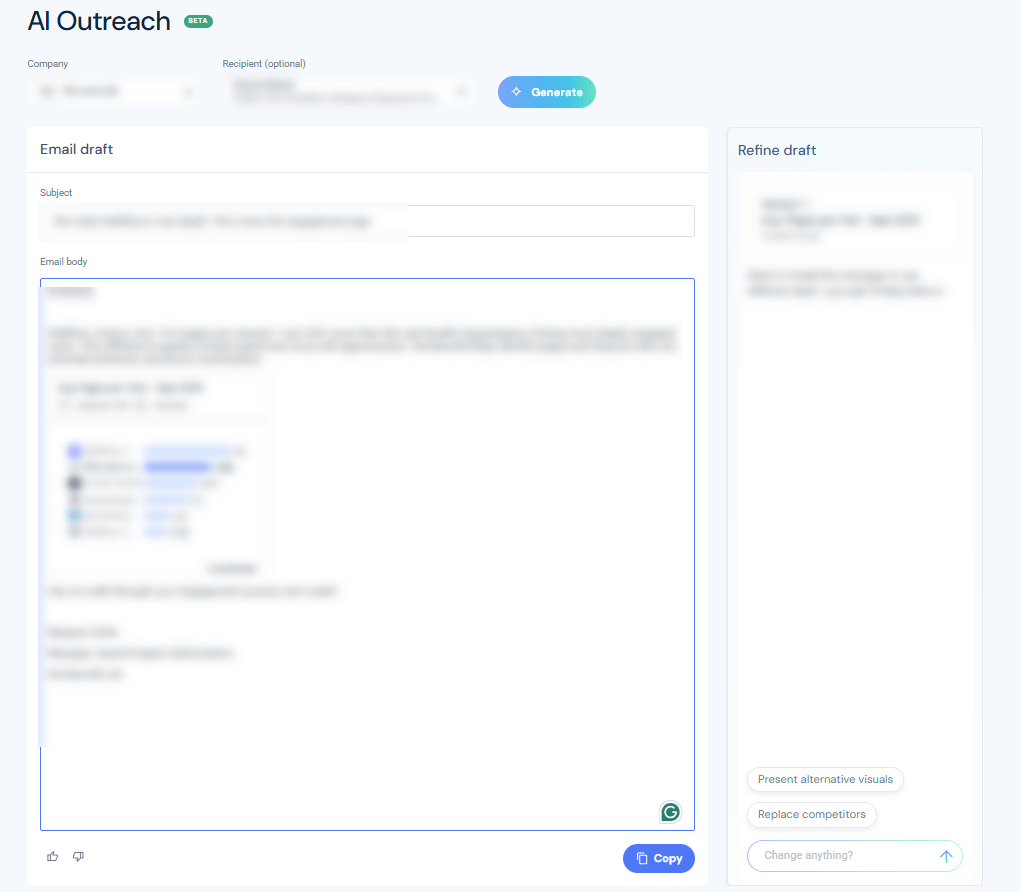
Similarweb AI Outreach Agent empowers sales teams to cut through the noise with personalized, data-driven outreach that captures buyers’ attention. By combining real-time insights, visual storytelling, and smart personalization, the platform transforms generic emails into impactful conversations that convert.
Key features include:
Limitations include:
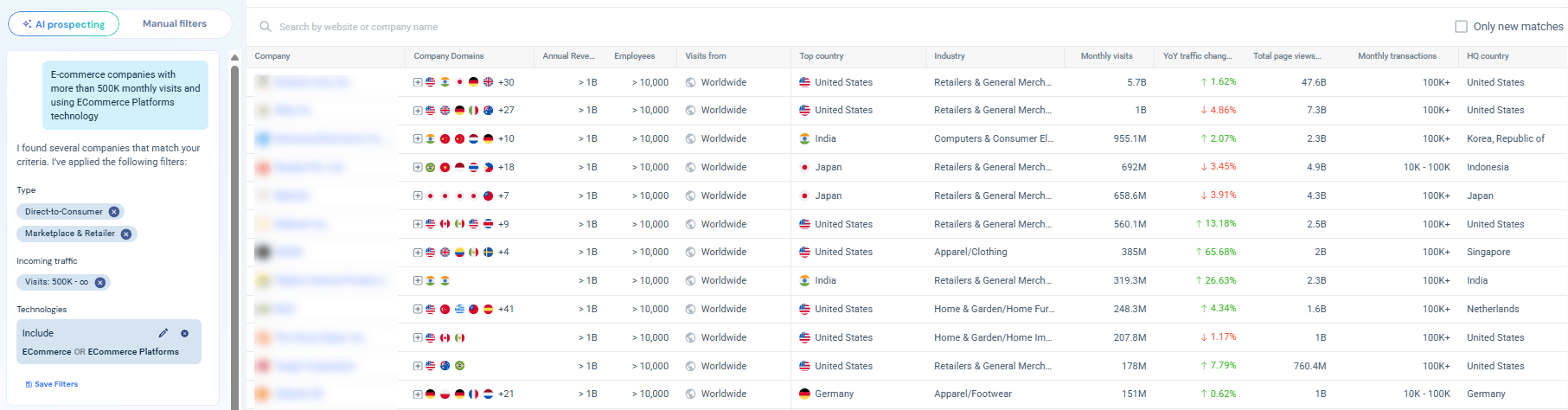
Similarweb AI Prospecting Agent transforms the way sales teams discover and prioritize opportunities by using natural language search, smart filtering, and real-time sales signals. It helps reps instantly identify the most relevant companies and contacts without manual research, turning prompts into sales-ready opportunities.
Key features include:
Limitations include:
Salesforce Agentforce is a platform to build, deploy, and manage AI agents that can integrate into business processes. It enables organizations to augment employee capabilities with low-code and pro-code tools, making it easier to configure and supervise AI agents to automate tasks and workflows.
Key features include:
Limitations (as reported by users on G2):
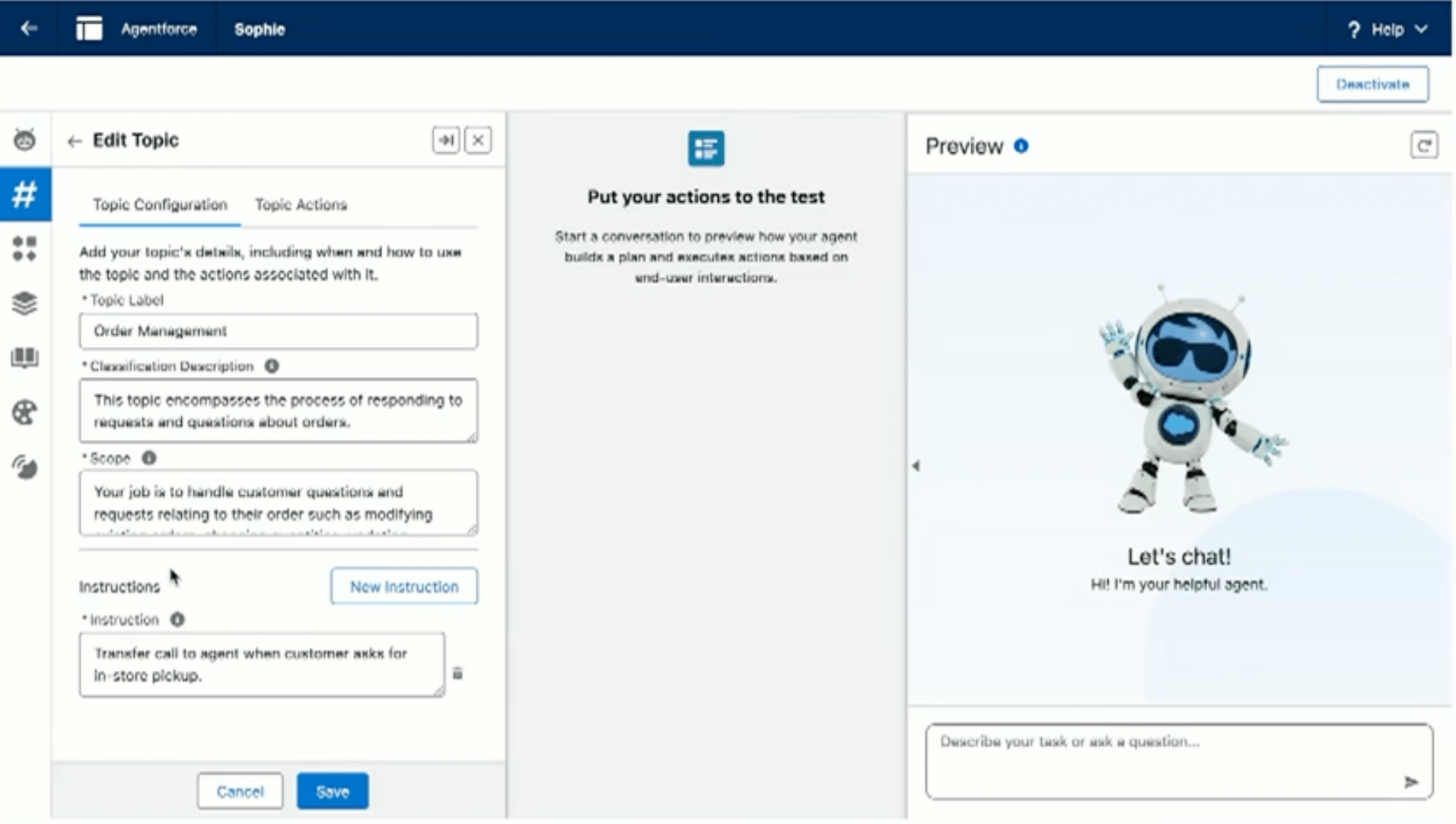
Source: Salesforce
Breeze Customer Agent is an AI-powered support agent built into HubSpot’s Service Hub, intended to manage high-volume customer conversations across marketing, sales, and service channels. The agent handles routine tasks and inquiries using approved content, providing fast responses.
Key features include:
Limitations:
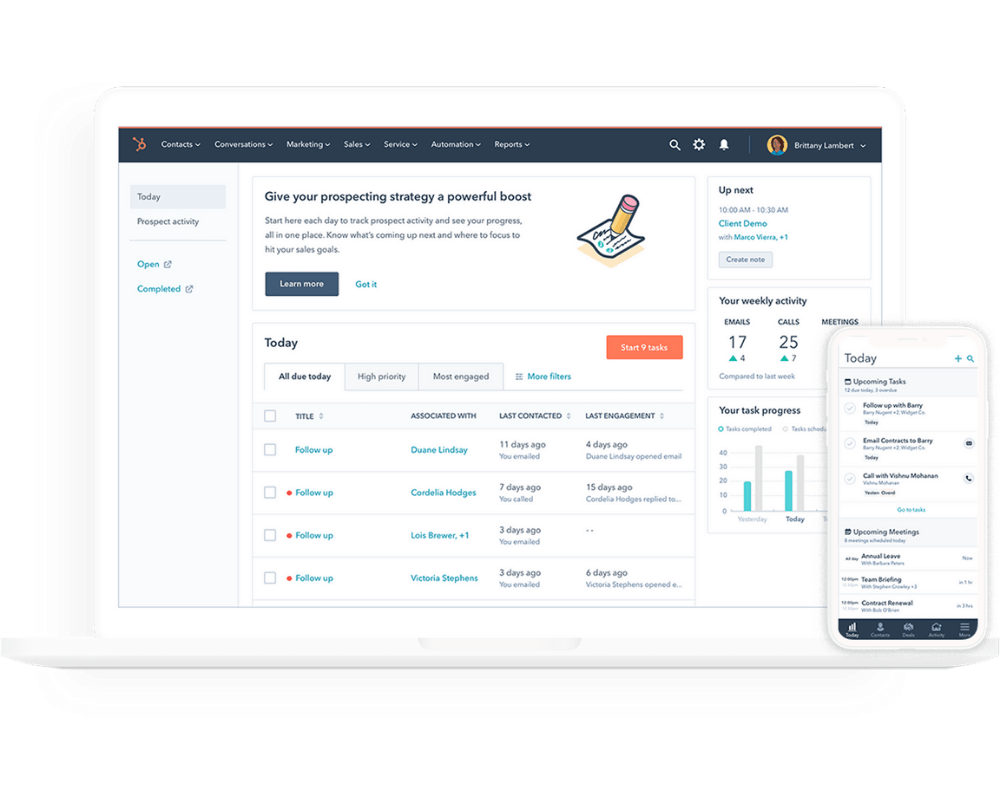
Source: HubSpot
Claygent is an AI-based research agent to simplify the process of gathering company and people data. By automating the often time-consuming task of manual research, it allows sales and marketing teams to obtain key insights about companies, competitors, and individuals.
General features:
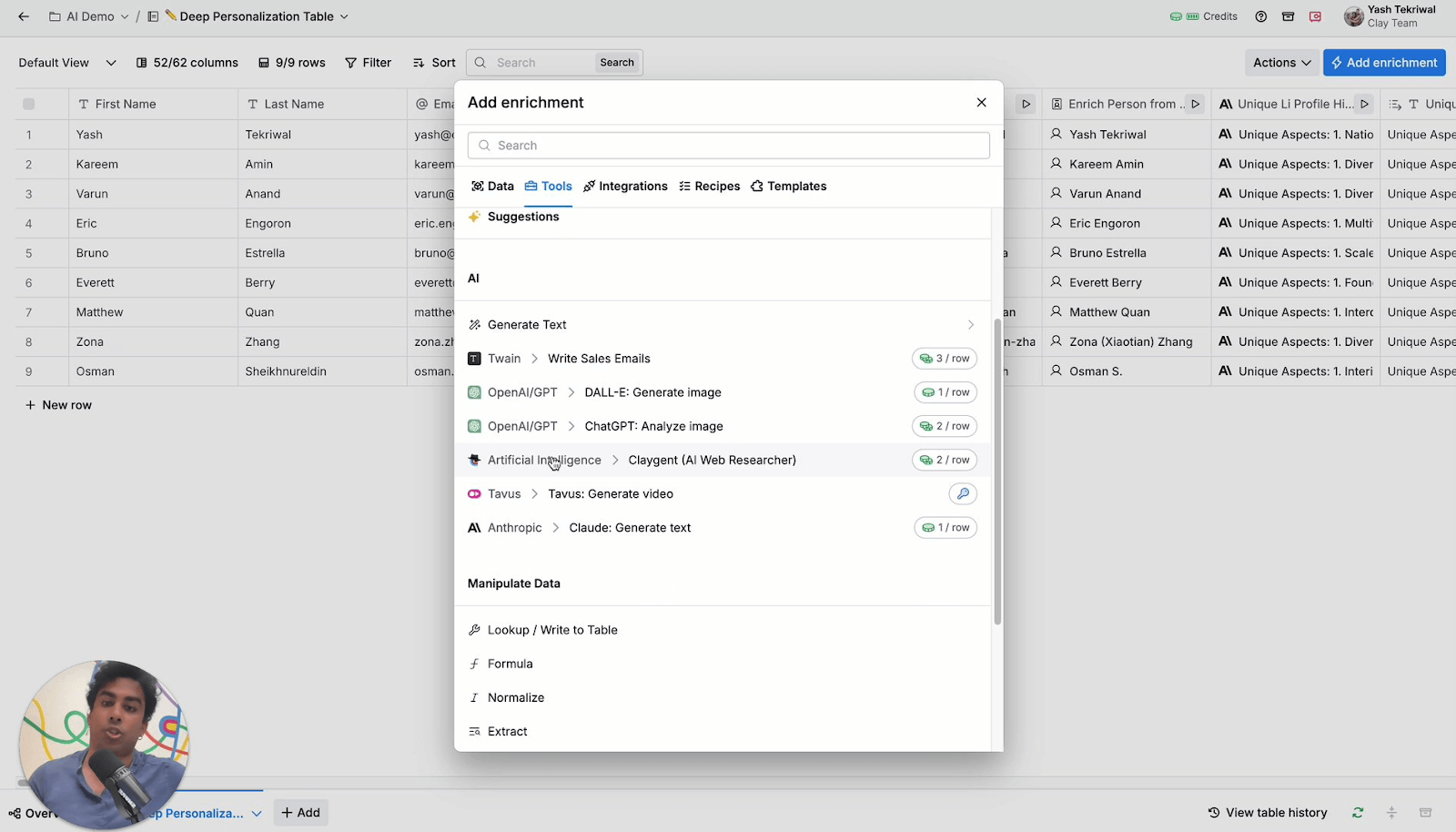
Source: Clay
Closed-won revenue is the ultimate measure, but it’s a lagging indicator. By the time a deal closes, you’re months behind on knowing whether your AI agents are improving pipeline quality. These leading indicators give faster feedback:
Track these separately for AI-assisted vs. manual activity. That comparison is the only way to know if your investment is working and whether to expand it.
With so many platforms making similar claims, vendor evaluation comes down to a few specific questions worth asking before you commit:
AI sales agents are no longer experimental. Teams using them are prospecting faster, personalizing outreach at scale, and walking into every meeting better prepared than the competition.
Yes. AI sales agents are software products used by B2B sales teams to automate or assist with prospecting, outreach, qualification, and meeting prep. In practice, they vary widely in capability, so it’s worth identifying your specific bottleneck before choosing one.
It depends on your biggest gap. For prospecting and account prioritization, a platform with strong digital signals (like Similarweb Sales Intelligence) will outperform generic contact databases. For rep coaching and deal forecasting, Gong is stronger. Define the problem first, then evaluate against it.
The two main types are autonomous agents, which run tasks end-to-end with minimal human oversight, and assistive agents, which work alongside reps to speed up research, prep, and outreach. Assistive agents tend to deliver better quality for high-value accounts because reps stay in the loop.
The main platforms include Similarweb (prospecting, outreach, meeting prep), Salesforce Agentforce (custom agent workflows), HubSpot Breeze AI (integrated SMB AI), Outreach AI (sequencing and pipeline), and Gong (conversation intelligence). The right one depends on your stack and which part of the process you want to improve.
It augments. AI handles repetitive, high-volume tasks well. Human reps handle complex negotiations, relationship building, and judgment calls that AI can’t yet replicate. The best use of AI in sales is removing admin work so reps spend more time on conversations that close deals.
At the top of the funnel: AI builds prospect lists and identifies in-market accounts. Mid-funnel: it personalizes outreach and preps reps for meetings. Late-stage: it monitors account signals and supports forecasting. The most effective teams use AI across all three stages rather than as a point solution.
Not directly. AI agents improve the speed and quality of inputs into your sales process. They help reps find better accounts, reach them faster, and prepare more effectively. The revenue comes from the deals reps close. AI is the multiplier, not the closer.
Start with the workflow that’s costing your reps the most time. Then ask vendors to show you the specific workflow for that use case, what data they use to make recommendations, and what integrations exist today. The evaluation questions in the section above cover the main areas to probe.
Intent data tracks topic consumption on third-party networks. Digital market intelligence is based on actual online behavior: website traffic, channel mix, competitive positioning. The difference in practice: digital market intelligence tells you what’s happening to a company’s business, not just what their team is Googling. That produces sharper account prioritiation with fewer false positives.
It depends on the platform. Salesforce Agentforce connects natively within the Salesforce ecosystem. Similarweb’s AI agents currently rely on manual export, with direct CRM integrations in development. Always ask what’s live today vs. what’s on the roadmap. A planned integration that’s 12 months out is a different buying decision than one that’s available now.

Content Marketing Manager
Hanna Mathé-Cohen, by day a Content Marketing Manager; at heart, a storyteller. With 3 years in B2B SaaS, she makes complex ideas simple, and even a little fun!
The Top 100 Most Visited Websites in the USA (August 2026)
Similarweb Named in Forrester's Answer Engine Optimization Technologies Landscape, Q3 2026
Anthropic IPO: What Claude's Web and App Data Show
Try Similarweb Sales Intelligence today — free of charge