
What Is Retail Intelligence? How It Works and Why It's Essential to Digital Commerce
by Ida Lorenz12 Min.
Oct 19, 2026
Not long ago, AI search was immeasurable. There was no data on how your brand appeared in an LLM answer, no way to know if you were winning or losing, and no playbook for what to do about it. Teams had theories but no proof.
That’s changed today. Similarweb’s AI Search Intelligence has grown from measuring a single traffic metric into a complete AEO platform. Teams can now see not just whether they’re getting clicks from LLMs, but where they appear, how they stack up against competitors, which trends are driving visibility, and how they can close the gaps.
When Answer Engine Optimization first emerged, teams were hyper-focused on one question.
Is there direct referral traffic from LLMs?
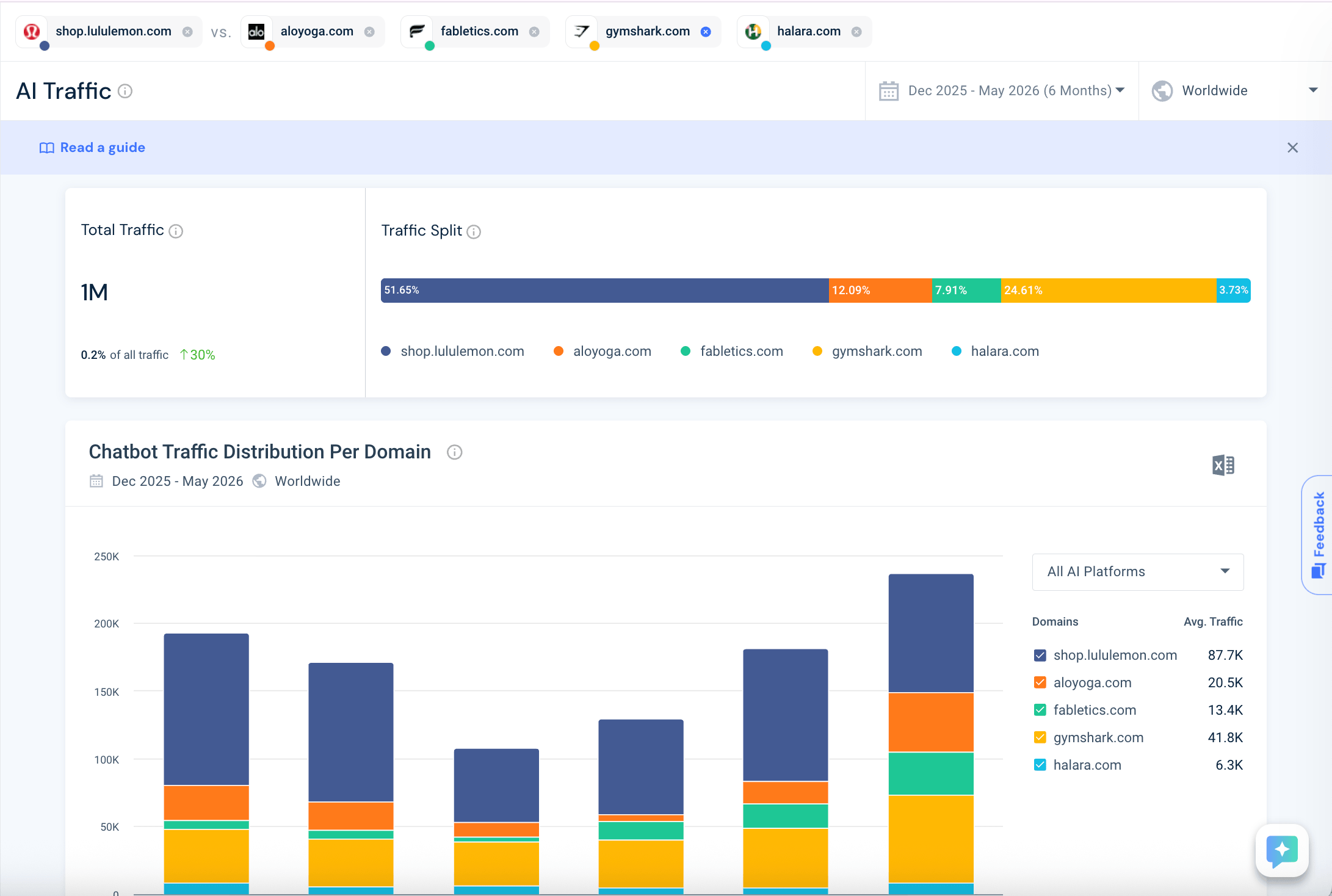
The answer was yes, AI platforms were generating over a billion referral visits a month, with ChatGPT leading the pack. And so we launched the AI Traffic Tracker, giving teams a way to measure and benchmark their AI-referred traffic against competitors for the first time.
But that traffic soon plateaued. Usage kept climbing, yet click-through rates didn’t follow, revealing something fundamental. AI is built to answer questions, not route users elsewhere.
This is why we launched the AI Brand Visibility Tracker. Beyond referral traffic, teams can now see how their brand appears in AI conversations, as well as topical mentions, citation behavior, sentiment, and benchmark all of it against competitors to find where they were winning, where they were invisible, and where the real opportunities were hiding.
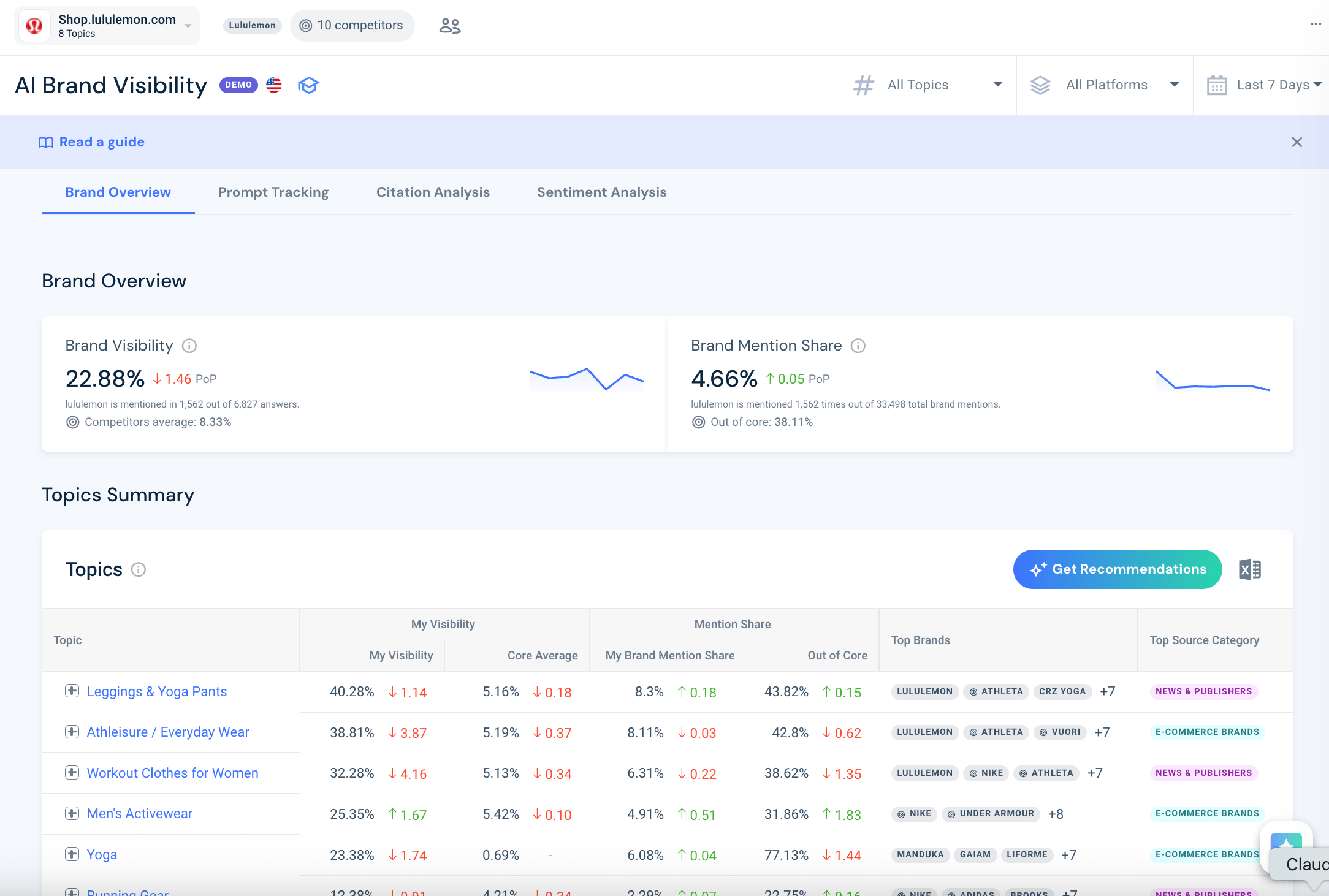
Three tools complete the tracking picture:
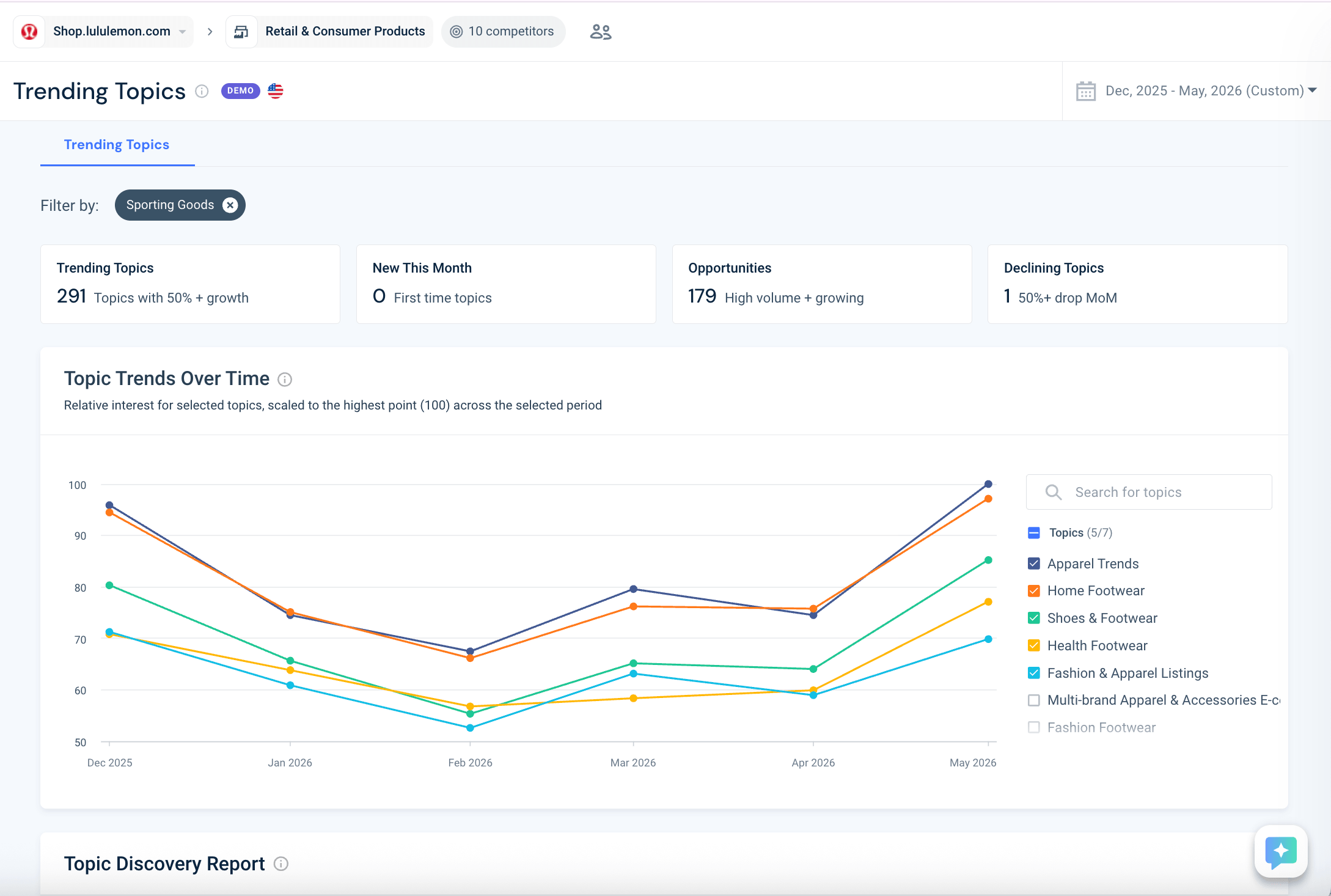
Knowing where you stand is a start. But teams also need to know which topics matter. Traditional SEO had keyword research to map demand. AEO had nothing comparable. So we launched Trending Topics, which surfaces what people are actually asking AI about in your category, in real time. Real questions from real users, grouped into topics you can track month to month. The brands winning in AI search build content based on what’s trending now, positioning their visibility before the wave peaks.
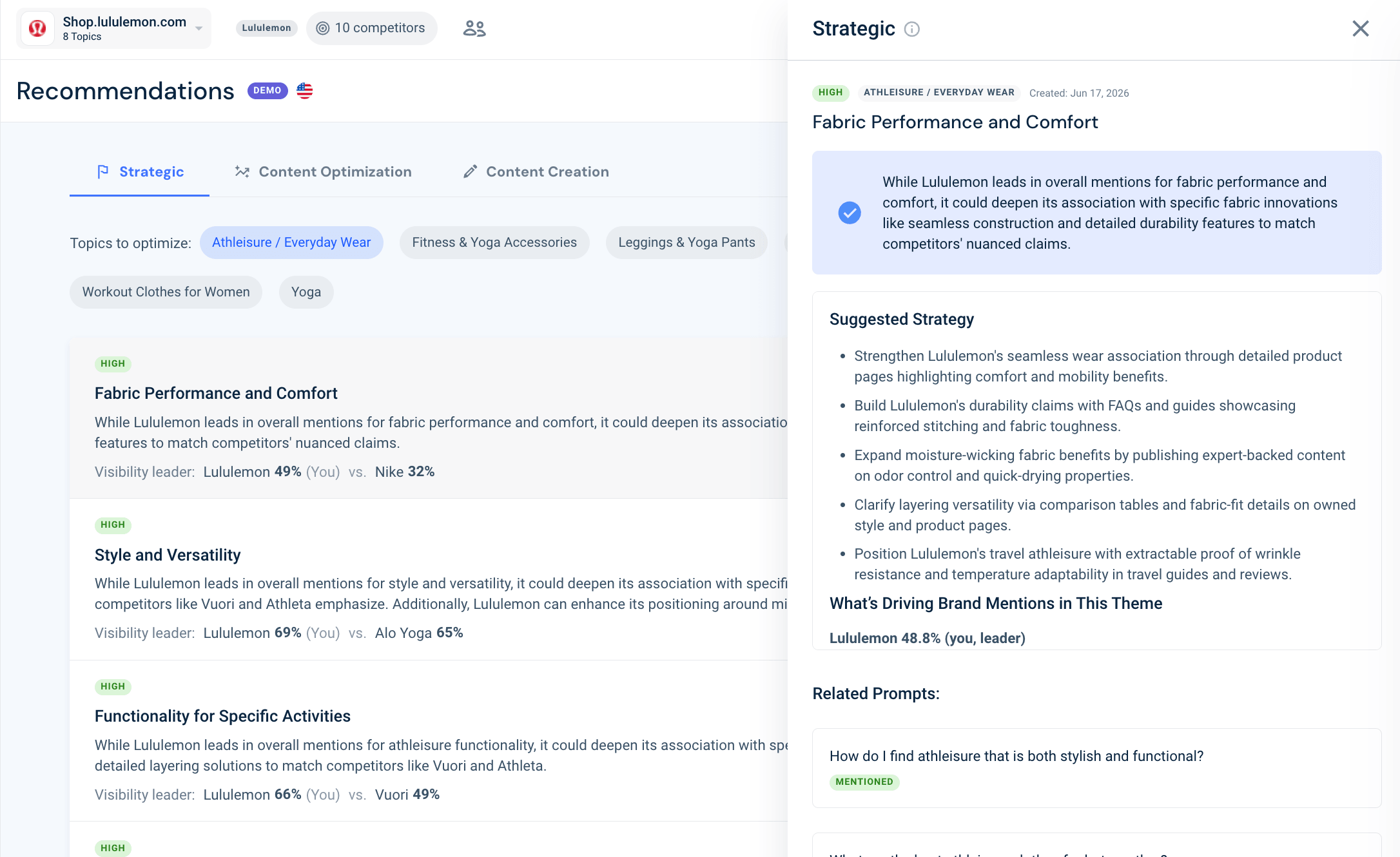
The final piece was turning insight into action. Most AEO advice focuses on citations, but citations are only part of the story. AI doesn’t rank pages. It synthesizes answers from everything it knows about a topic. The brands showing up consistently own the full conversation landscape, appearing across their own site, third-party sources, and the discussions AI rdraws from when forming responses. The AI Optimization Recommendations close that loop, turning visibility gaps into action, surfacing strategic recommendations, content optimization, and briefs for new content, all tied to real topic gaps in your data.
The product didn’t evolve in isolation. The research did too. Over the past year, we’ve published reports, guides, and studies that dig into what it actually takes to win in the AI search era, including how recommendations translate into real traffic, which brands are leading on visibility, and how AI journeys diverge from traditional search.
Here’s a selection of what we’ve published:
The next chapter is about making it all work better together.
That means smoother workflows, insights that are easier to digest and act on, and a more holistic view that connects AI visibility with search and wider web performance, so teams see the full picture of how they’re discovered. It also means tighter integration, so AI Search Intelligence fits naturally into the systems teams already rely on.
What won’t change is the foundation. Everything we build sits on real user data, not estimates, not synthetic prompts, but the actual behavior of real people. That’s what’s made the insights reliable so far, and it’s what will keep them reliable as the landscape shifts.

by Rice Tong
Product Marketing Manager
Rice is a Product Marketing Manager at Similarweb, focused on the evolution of search and AI. She loves shaping stories that make complex ideas feel human and relatable.
Give it a try or talk to our insights team — don’t worry, it’s free!