
3 of the Sharpest Minds Weigh in on the State of Gen AI in 2026
by Darrell Mordecai3 Min.
Aug 26, 2026
 Insights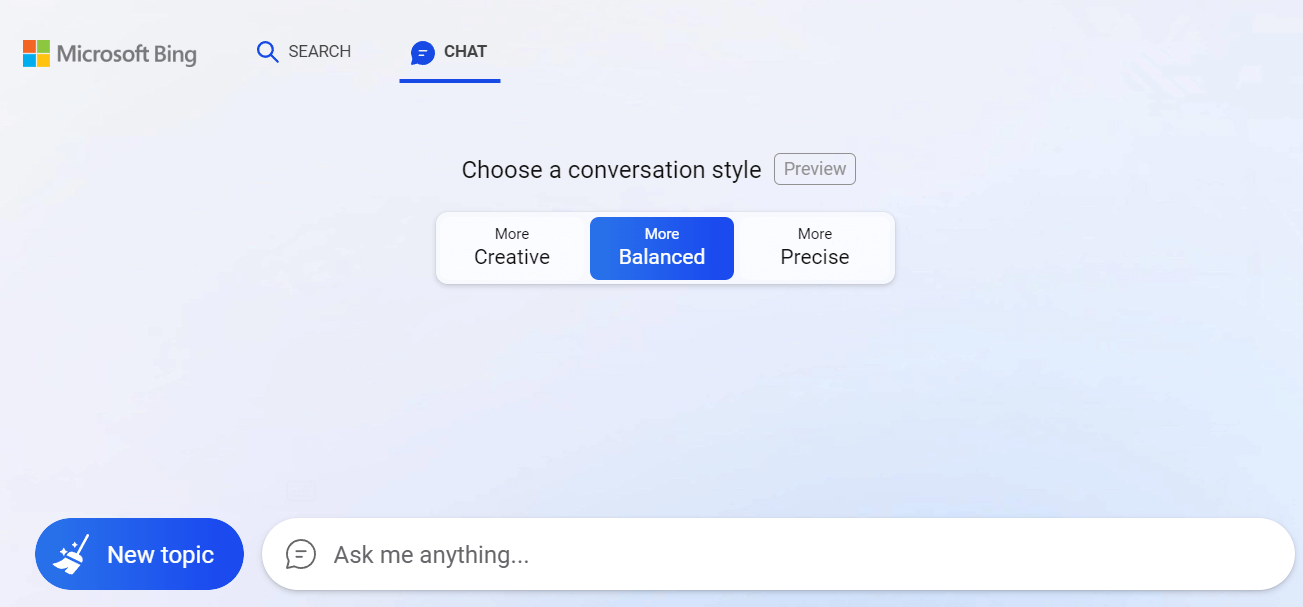
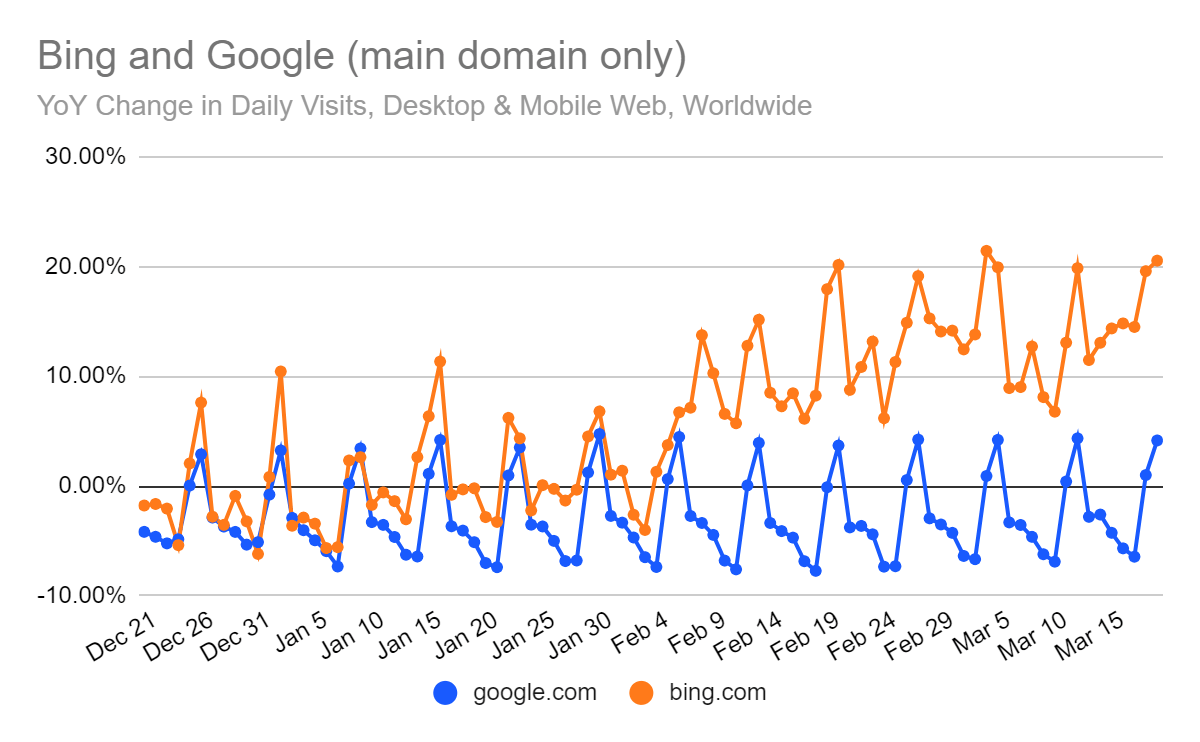
Microsoft’s Bing search engine is starting to see a noticeable gain in traffic attributable, at least in part, to its incorporation of AI chat features.
Bing.com was already gaining traffic prior to its introduction of ChatGPT-like features, but the gains increased after it introduced its version of an OpenAI chatbot in February.
Bing actually incorporated the new GTP 4 algorithm before it became widely available, although it received some adverse publicity from the “hallucinations” the bot experienced while it was still being fine-tuned. Microsoft wound up adding the ability for users to choose between a more “creative” version of the chatbot (more likely to make things up if it doesn’t know the answer) or a more factual one.
Although bing.com’s growth looks impressive on a relative basis, it looks flat in comparison to what ChatGPT itself has been experiencing lately.
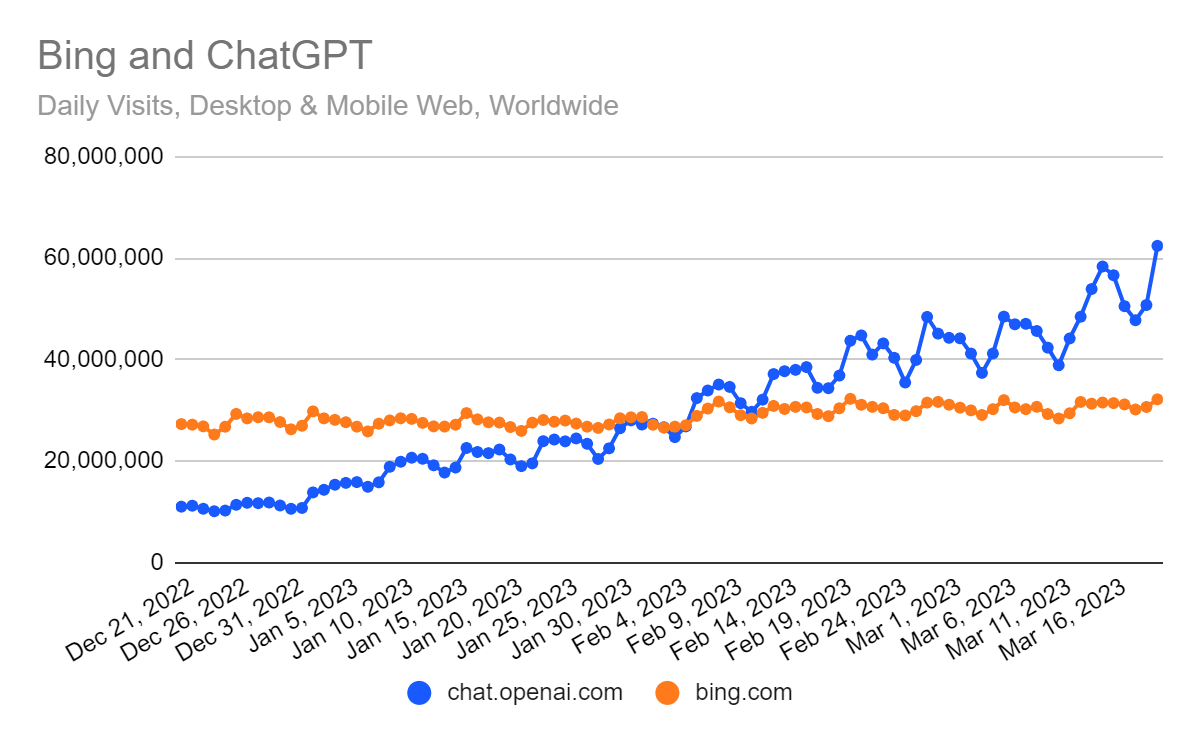
The chatbot and the buzz surrounding it amplified the gains in traffic Bing was already making thanks to factors including its integration with the Edge browser and with Windows.
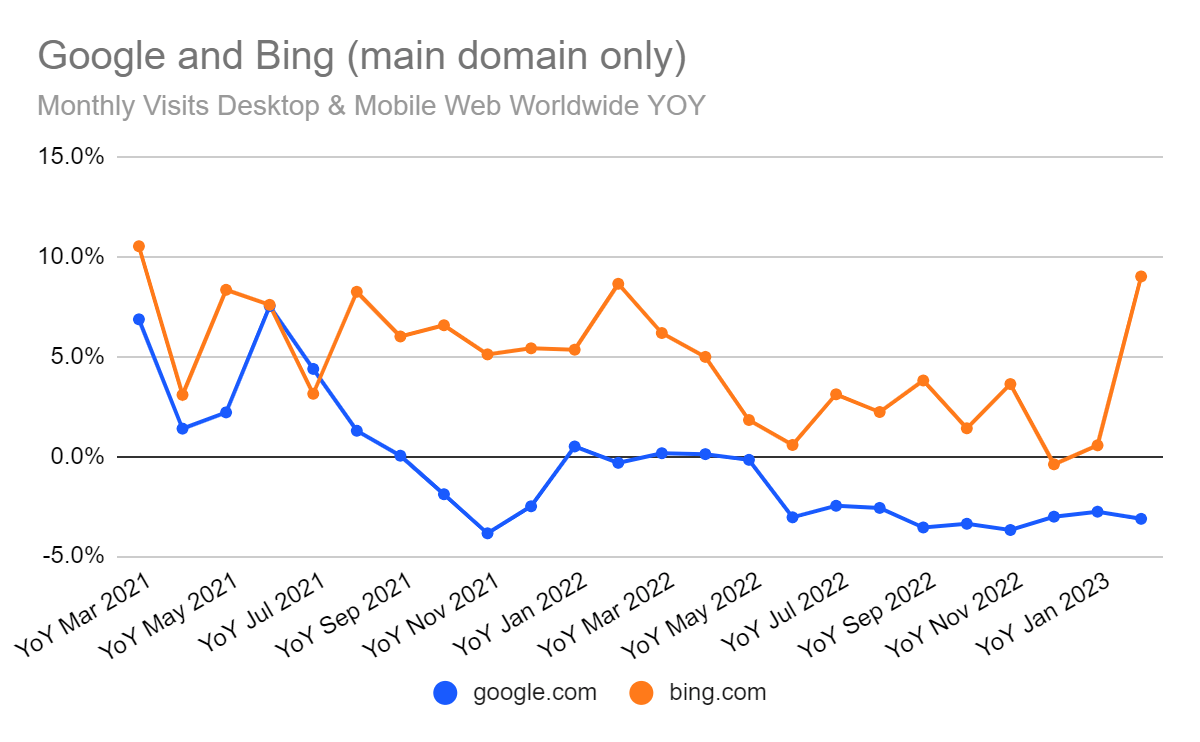
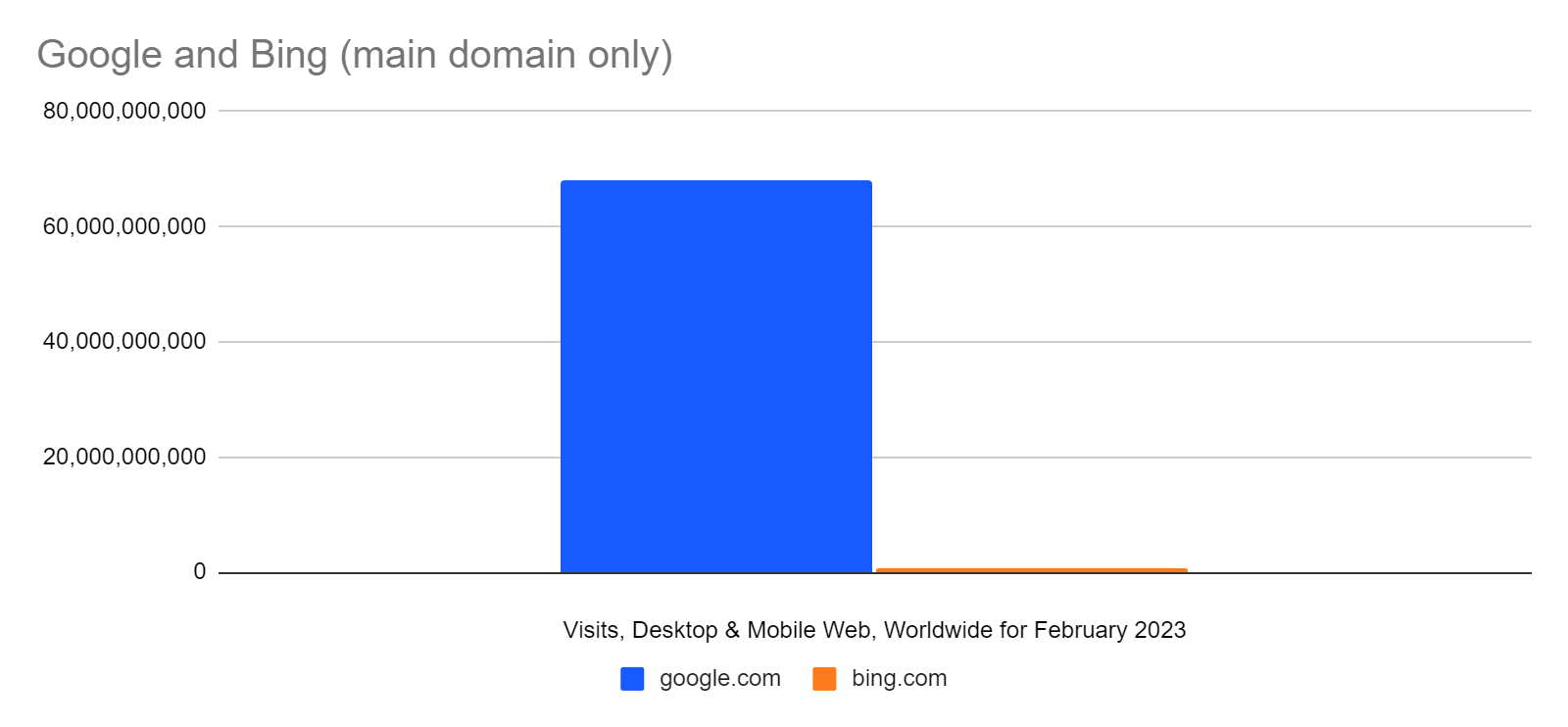
While Bing is experiencing great gains relative to its prior year’s performance, “google” remains the verb associated with search and has a towering lead. But with the recent debut of Google’s Bard chatbot underwhelming AI chat aficionados, Google’s lead in search and discovery technology is beginning to be questioned.
The Similarweb Insights & Communications team is available to pull additional or updated data on request for the news media (journalists are invited to write to press@similarweb.com). When citing our data, please reference Similarweb as the source and link back to the most relevant blog post or similarweb.com/blog/insights/.
Disclaimer: All names, brands, trademarks, and registered trademarks are the property of their respective owners. The data, reports, and other materials provided or made available by Similarweb consist of or include estimated metrics and digital insights generated by Similarweb using its proprietary algorithms, based on information collected by Similarweb from multiple sources using its advanced data methodologies. Similarweb shall not be responsible for the accuracy of such data, reports, and materials and shall have no liability for any decision by any third party based in whole or in part on such data, reports, and materials.

David covers social media, digital advertising, and generative AI. With a background in web trends since the 1990s, he’s also the author of "Social Collaboration for Dummies".
Give it a try or talk to our insights team — don’t worry, it’s free!