by Darrell Mordecai4 Min.
Oct 21, 2026

Meta launched Muse on September 8, 2026, a personal AI agent that plans, browses, and pays on your behalf. The first two weeks were slow, but then, on September 21, growth took off and didn’t stop. By mid-October, about 2.9 million people in the U.S. were using it every day, making it the third most-used AI app in the country.
Key takeaways
Here’s the part that matters to every company with an online presence. People spend only a few minutes a day in the Muse app, and that’s the product working as designed: an agent is built to finish tasks, not to hold attention. Because Muse can check out for you, brands now have a new kind of customer: software that compares, chooses, and buys.
Below, we cover what Muse is, how well it keeps users, how users move between app and web platforms, and what AI agents mean for your brand.
Scope: every figure covers the standalone Muse app and website only. It excludes use inside WhatsApp, Instagram, Messenger, or any other Meta app.
Unlike a chatbot that only answers questions, this Meta AI agent plans, browses the web, and completes tasks such as sending emails, booking travel, and making purchases for you, and it keeps working after you close the app.
An AI agent is software that takes actions toward a goal instead of only generating answers. A chatbot tells you which flights are cheapest. An agent compares the options, fills in the booking form, and asks for your approval before it pays. In Meta’s launch announcement, the company says Muse can check out with Link built by Stripe, which is the moment an agent stops advising and starts buying.
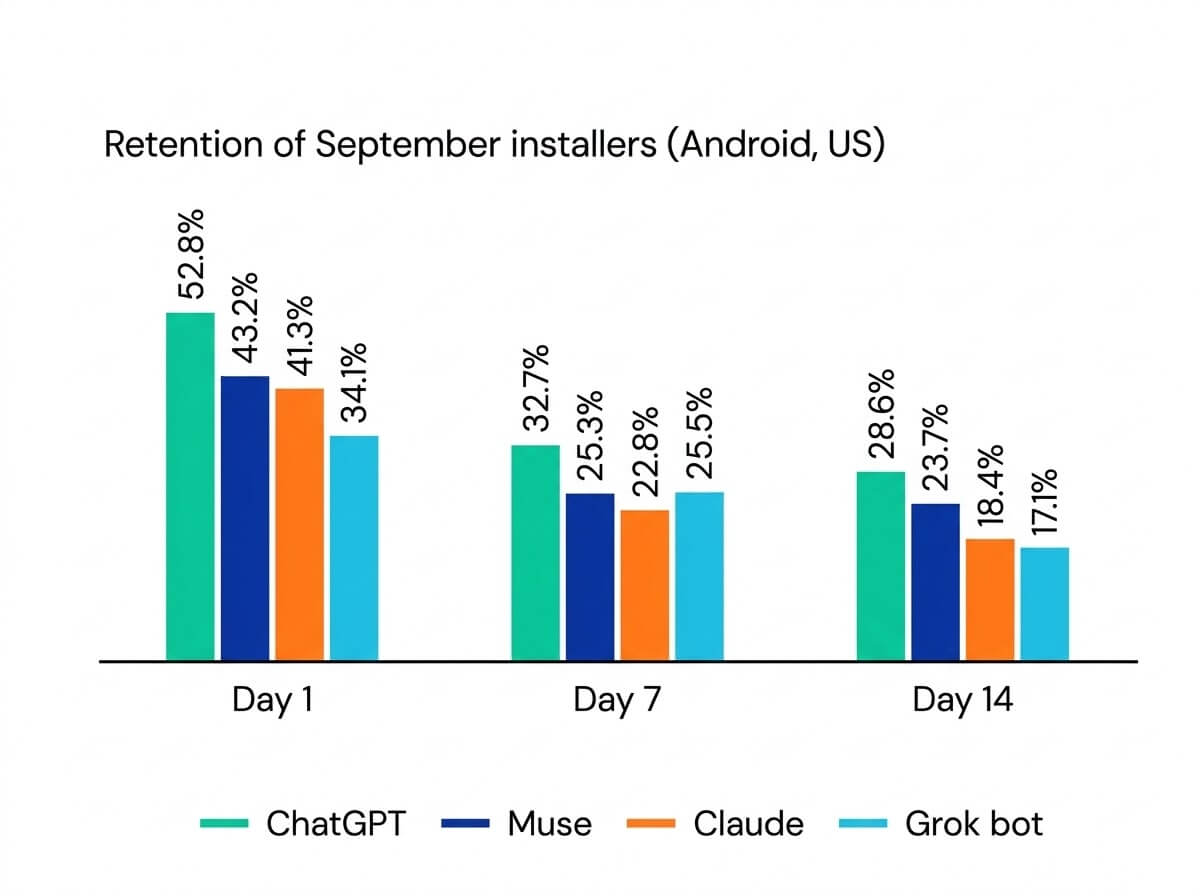
At day 14, Muse sits five points behind ChatGPT and ahead of Claude and Grok Bot. For a product that’s five weeks old, holding roughly a quarter of installers at day 14 is a solid result.
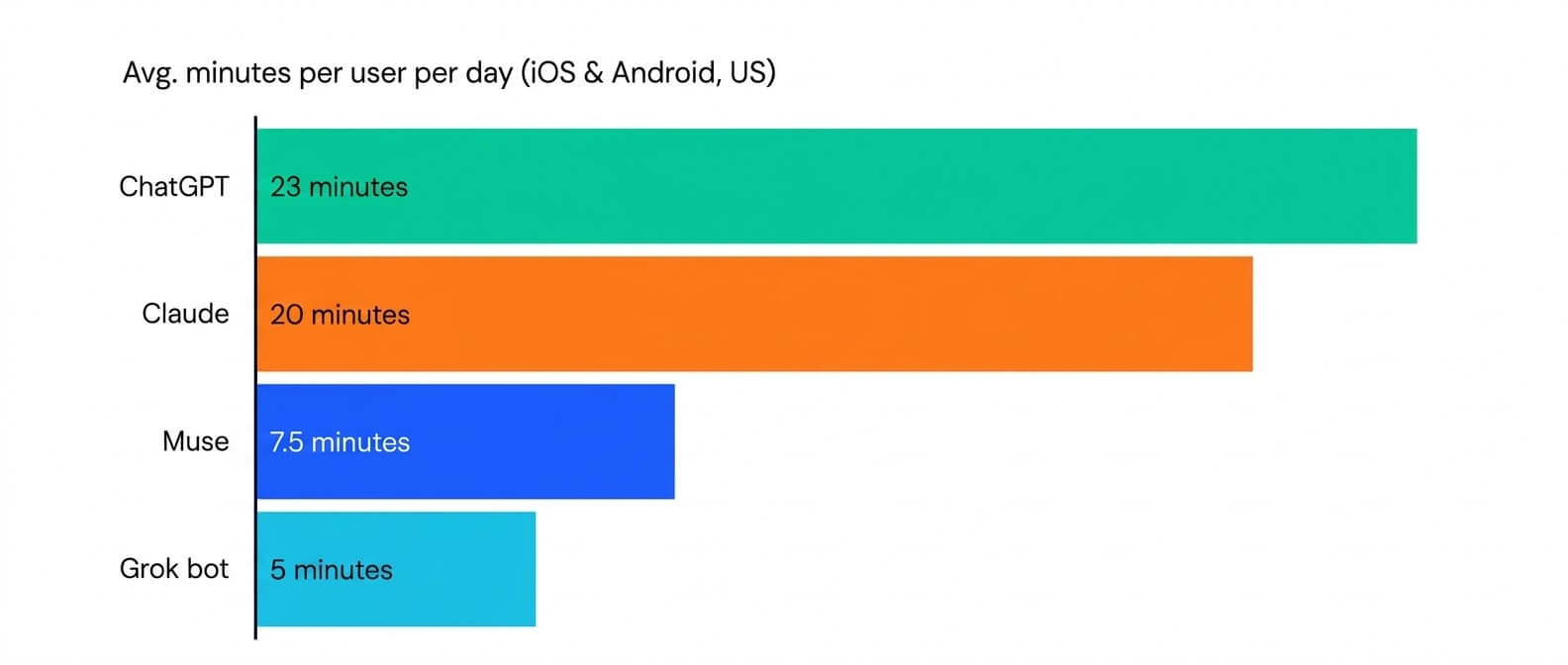
That changes how you should judge it. For an agent, watch task completion, repeat usage, and retention before you watch session length. For a conversational app like the ones compared in our Claude vs. ChatGPT analysis, time spent is a healthier signal.
In September 2026, the Muse app and website reached 4.65 million unique U.S. users across app (iOS and Android) and web.
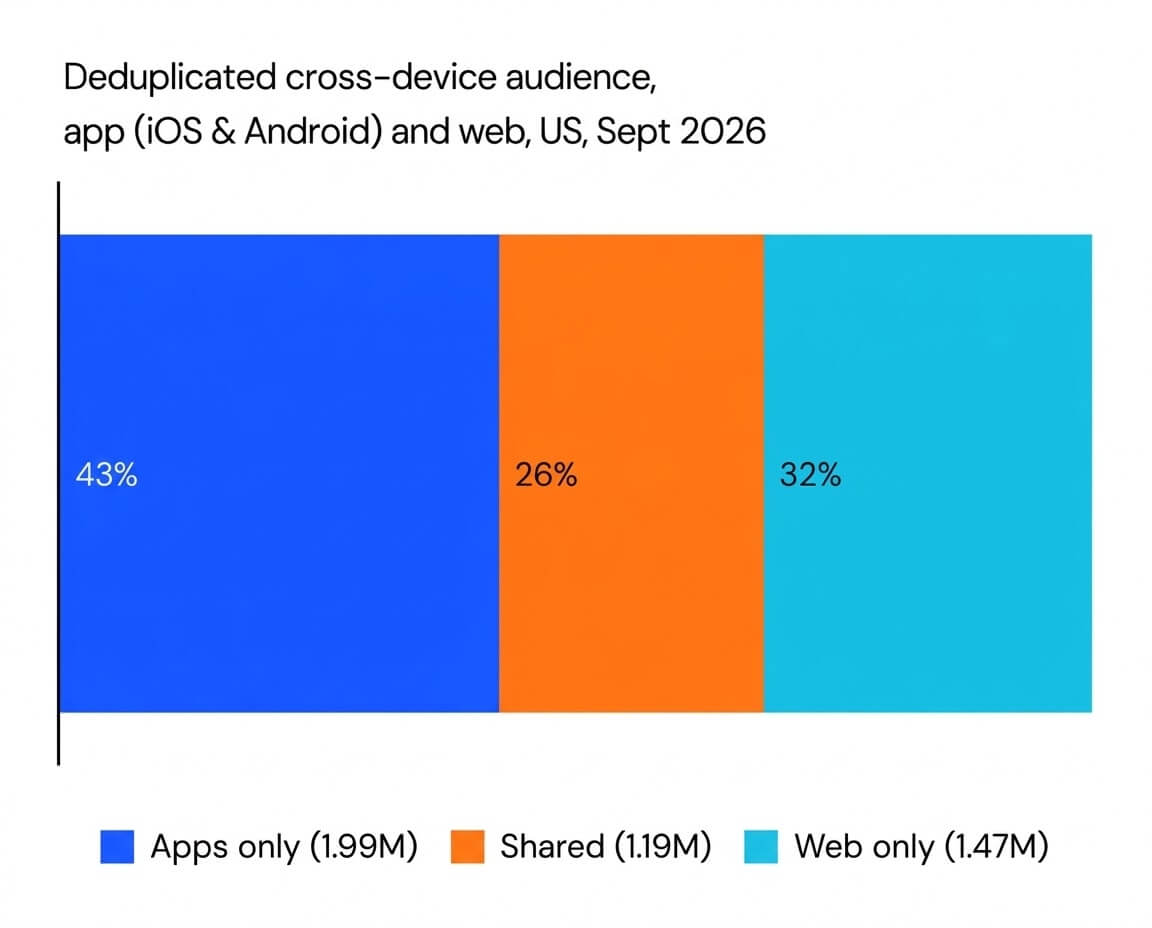
Takeaway: if you measure only your app, or only your site, you’re missing a big part of your full audience. Pull both and deduplicate.
The bigger shift is who the user is. When an agent compares, chooses, and checks out, the visitor your site has to convince is software acting for a person. Your product pages, checkout, and payment options now serve two audiences, and the agent is the one that clicks buy.
In the agent era, the best experience is the one nobody has to sit through.
To see the full Muse data, check out our Muse breakdown. To track the next launch that shakes up your category, explore Similarweb App Intelligence.
About 2.9 million people in the U.S. used the Muse app daily as of October 17, 2026, according to Similarweb data, making it the third most-used AI app in the country. In September, the Muse app and website together reached 4.65 million unique U.S. users.
Muse retained 24% of installers at day 14, about five points behind ChatGPT and ahead of Claude and Grok Bot, based on Similarweb data. For an app only five weeks old, holding roughly a quarter of installers after two weeks is a solid result for a new AI agent.
Muse is an agent built to finish tasks, not to hold attention. Similarweb data shows users average 7.5 minutes per day in the app, which is expected when an agent works in the background and returns for approvals. For agents, task completion, repeat usage, and retention are better signals than session length.
Yes. Muse can check out with Link, a payments product built by Stripe, and Meta says it asks for approval before sensitive actions such as making a purchase. Meta also states Muse is the first AI agent covered by Link’s purchase protections, including coverage for damaged or lost items and no-fee returns on eligible purchases.
Muse launched in the U.S. on iOS, Android, and muse.ai, and can also be used through WhatsApp, according to Meta. Meta announced availability in Singapore on October 27, 2026. Similarweb’s Muse figures cover only the standalone app and website, so WhatsApp usage is excluded.
Brands should make product pages, pricing, and checkout easy for software to read and complete, not only for people. Because Muse can compare options and check out for users, clear and consistent product information and supported payment options help an agent choose your brand. Tracking AI visibility shows whether agents surface you.
Give it a try or talk to our insights team — don’t worry, it’s free!