




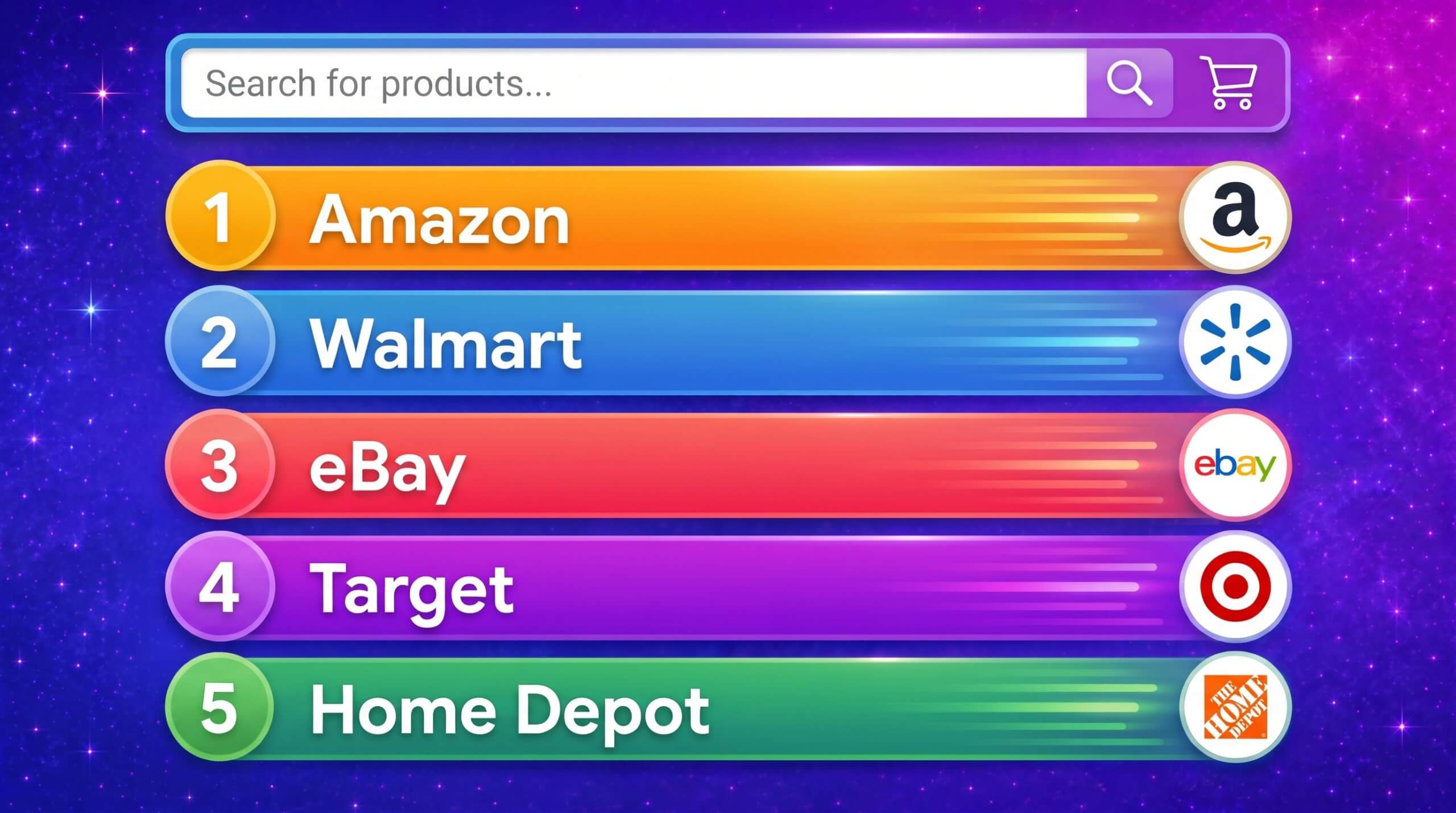

Top Ecommerce Companies in the USA: The 100 Brands Winning the Traffic Race in 2026
by Inbar Eytan6 Min.
Aug 30, 2026
 Stock Intelligence
There are billions, even trillions, of data points investors can use when researching a sector or a specific ticker. So the question is, how do you harness all that data?
Let’s break it down: Individual data points are grouped into datasets and then organized into stock data feeds for easy access and analysis. The data feeds are fed into existing models or used to build backtested models for deep insights into a ticker’s daily, weekly, and monthly performance. This generates the alpha needed to support existing investment theses and create new investment opportunities.
We need to examine stock data feeds more closely to understand their impact.
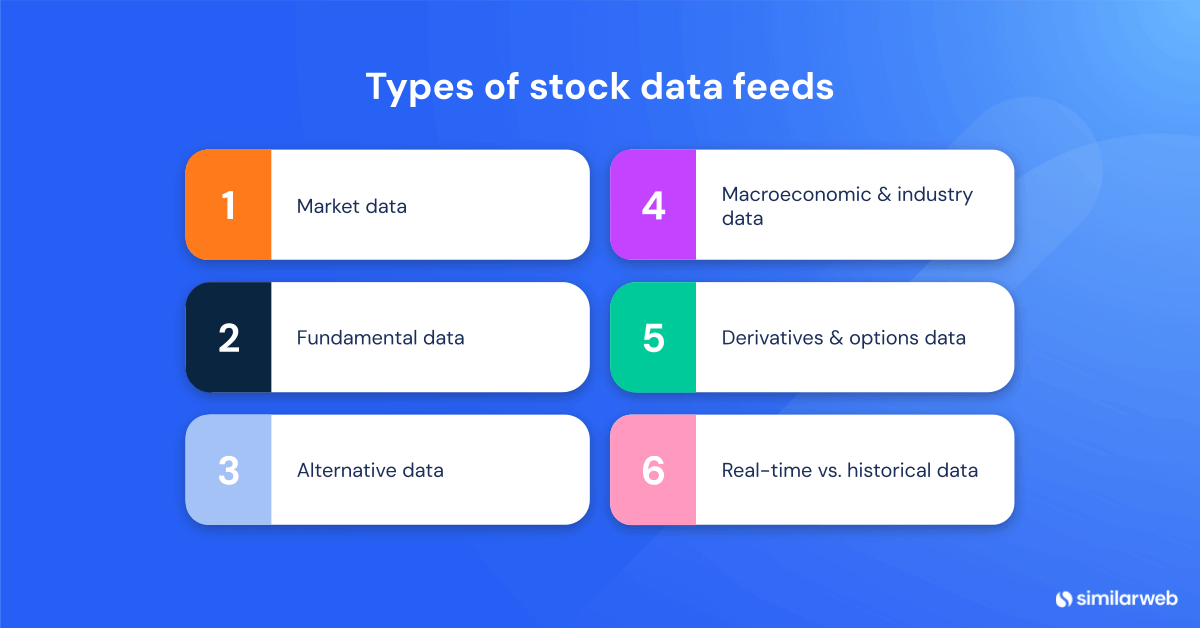
A stock data feed is essentially a data feed that provides access to real-time or regularly updated datasets without manual extraction for automated analysis, reporting, and system integration.
However, a stock data feed is constructed with stock-specific datasets investors need for in-depth ticker analysis, such as:
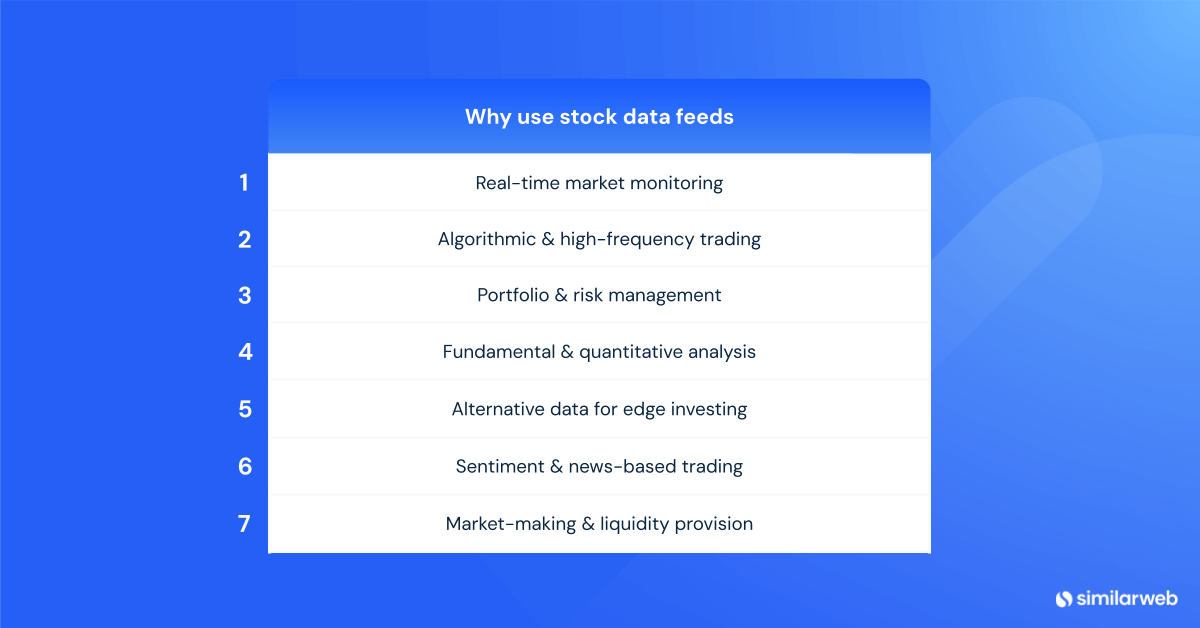
Investors use stock data feeds to generate alpha based on real-time, historical, or alternative data, giving them the agility to make faster, more informed decisions and strengthen investment strategies.
These stock data feeds are used for:
Now, let’s narrow the focus and look at alternative data—more specifically, web intelligence data. Metrics like traffic and engagement, marketing channels, mobile apps, page-level data, and website structure are proxies for company KPIs and can track top-line performance and revenue growth. Combine those metrics into a single data feed for a single ticker, and investors gain granular insights into portfolio companies and potential investment opportunities.
Stock Intelligence’s Stock Feeds help investors build backtested models and discover high-quality signals designed to optimize research and analysis.
More specifically, investors can:
With that information, investors can generate the alpha they need to support investment portfolios, strategies, and decisions.
Think of a Stock Intelligence Stock Feed, a stock profile that delivers high-quality signals for company KPIs to expand research and refine analysis.
Here’s how the data works:
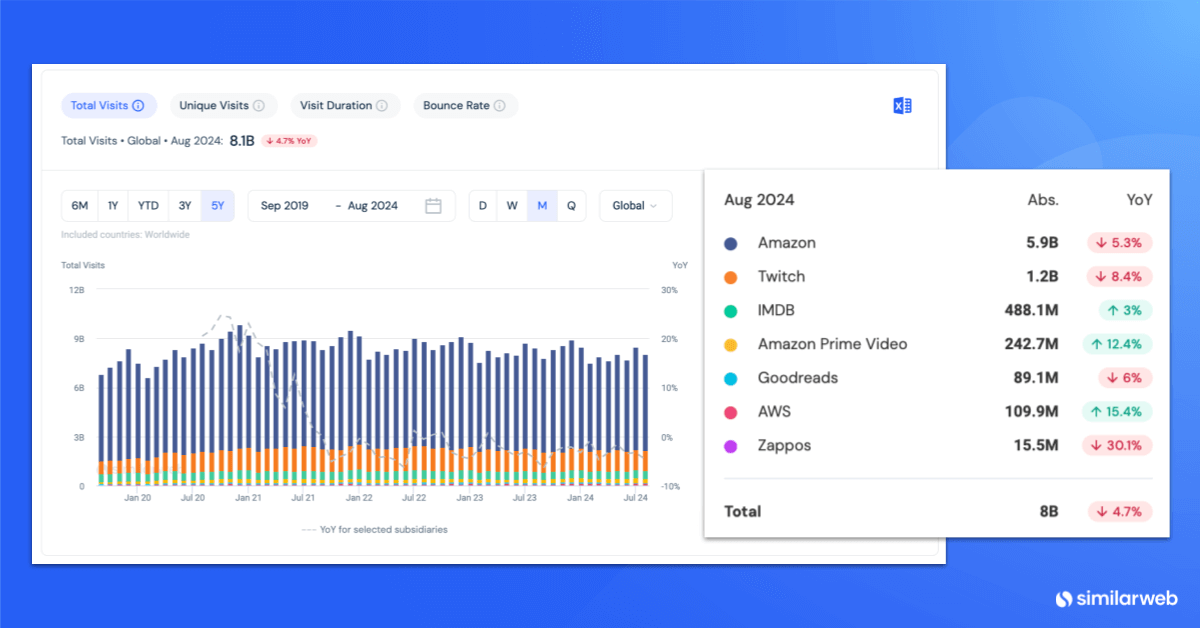
With a holistic view of company performance with website traffic and engagement data, you can answer questions like: How much traffic to Amazon subsidiaries is trending YoY?
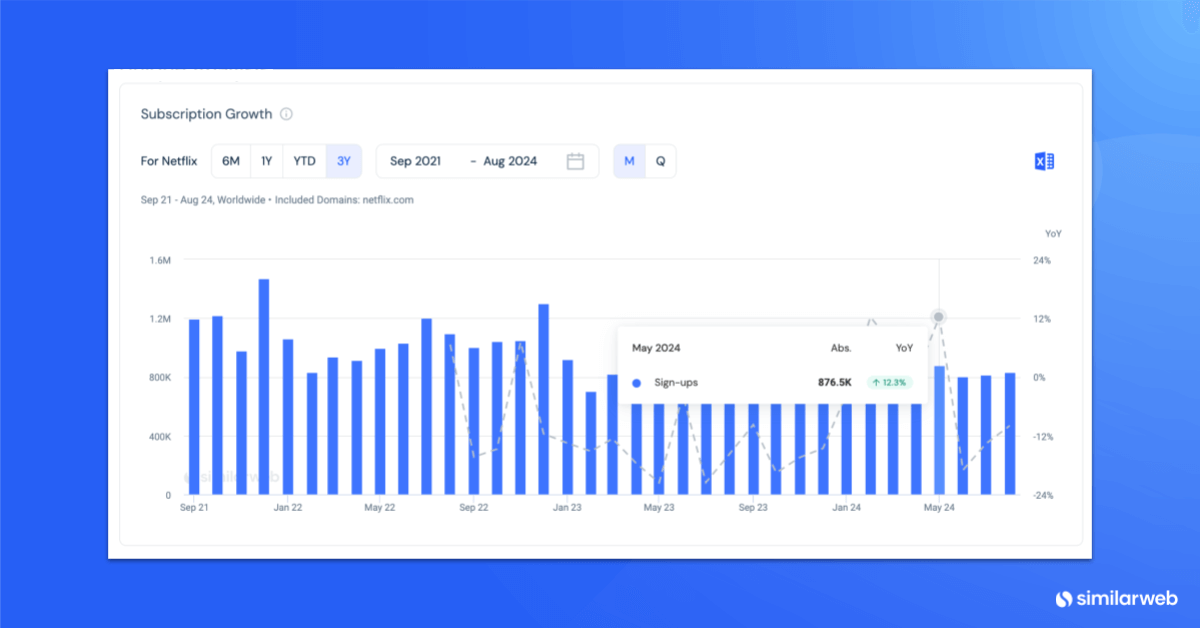
Conversion data can be used to monitor customer growth by tracking traffic to the checkout page through URL segmentation and answering questions like, “What types of clients are signing up to Netflix?”
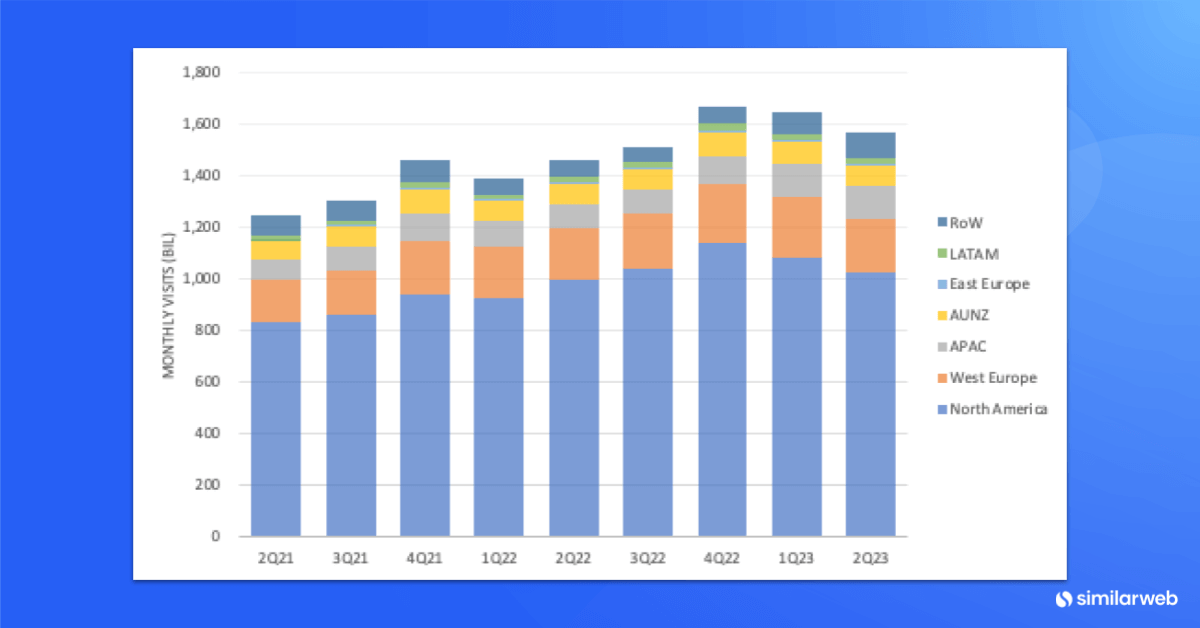
Understand the ecosystem with referral data by tracking traffic sources to reveal strategic relationships and market influence, which provides answers to questions like: How many monthly visits are directed to Shopify by country?
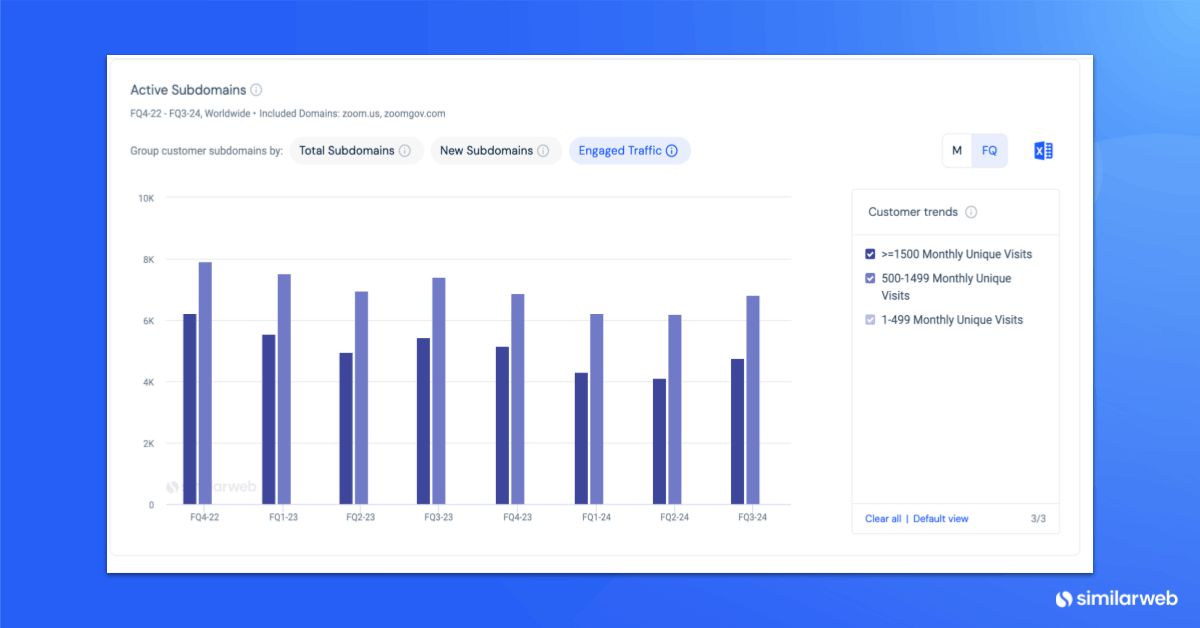
Leverage distinct URLs, such as subdomains (similarweb.zoom.com) and folders (zoom.com/similarweb/), to track client growth. Count-level activity reports can include a month-by-month analysis of which enterprise customers are leveraging a company’s platform, which companies are new, and how these customers are retained over time.
Analyze millions of websites and their technologies or millions of technologies and their customers. For example, how many companies have DHL technology installed on their websites?
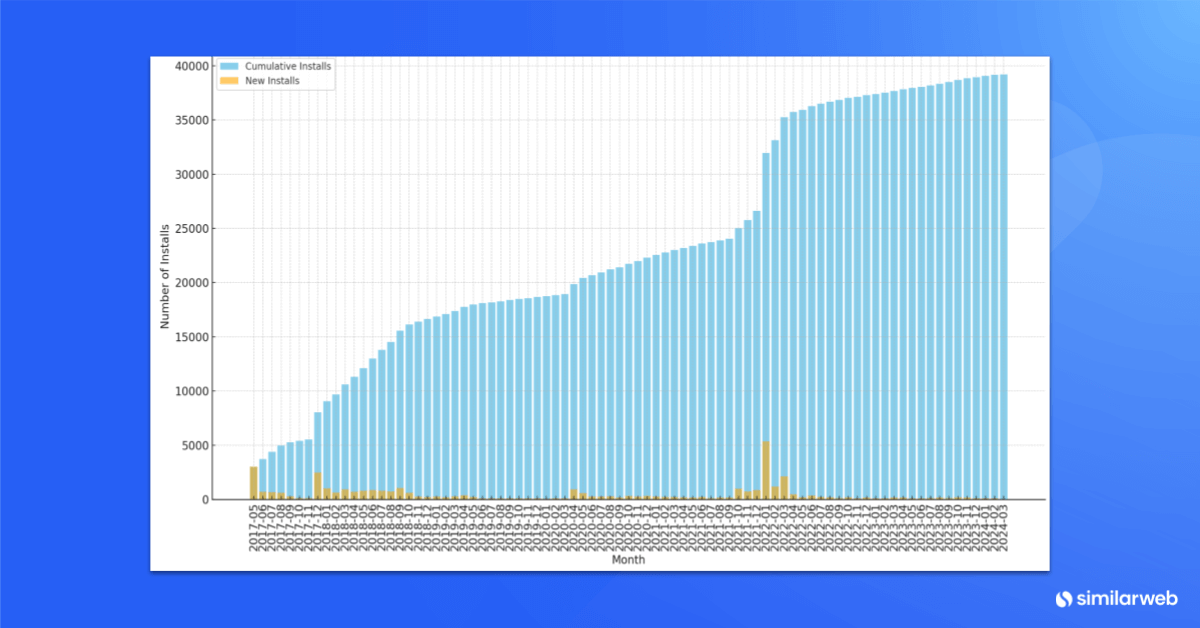
Technographics paired with engagement data show whether that technology is being used or sitting dormant, which can shed light on growth vs. potential churn.
Stock data feeds provide investors with the critical signals needed to refine investment strategies, validate theses, and uncover hidden opportunities. Stock Feeds integrate a layer of web intelligence into your research process. Whether you’re tracking customer acquisition, analyzing retention trends, or identifying market shifts, alternative data from Similarweb Stock Intelligence can give you the edge you need to stay ahead of the market.
How are stock data feeds different from traditional market data feeds?
Stock data feeds combine multiple datasets—including fundamental, market, and alternative data—while traditional market data feeds focus mostly on price and volume. Alternative data feeds, like Similarweb Stock Intelligence Stock Feeds, offer additional insights into customer behavior, web traffic, and company KPIs that can signal performance shifts before earnings reports are released.
Can I integrate Similarweb Stock Intelligence Stock Feeds into my existing models?
Yes. Similarweb Stock Intelligence Stock Feeds are designed for seamless integration into quantitative models, research workflows, and proprietary systems. Whether you need real-time updates or historical data for backtesting, the feeds can be structured to fit your investment approach.
Are Similarweb Stock Intelligence Stock Feeds useful for all types of investors?
Yes, but they are especially valuable for:
by Andrea Pash
Senior Content Marketing Manager
Andrea, with her extensive marketing background and 15+ years in finance, pulls insight and crafts content for Stock Intelligence & DaaS at Similarweb. A UC Irvine grad, she's a concert lover and avid traveler.
Top Ecommerce Companies in the USA: The 100 Brands Winning the Traffic Race in 2026

3 of the Sharpest Minds Weigh in on the State of Gen AI in 2026

Leverage data used by 5,000+ companies to improve your strategy
