


 Marketing Intelligence
Market Intelligence vs. Competitive Intelligence: What’s the Difference?

Market intelligence and competitive intelligence get mixed up a lot. But they’re not the same thing. Knowing the difference and how to optimize both helps you to make smarter business decisions.
Market intelligence zooms out and provides a big-picture view of industry trends, consumer behavior, and market conditions.
Competitive intelligence, on the other hand, looks thoroughly into rivals’ strategies, strengths, and weaknesses.
Why does it matter? Because when you use both, you can anticipate market changes rather than just react to them.
Let’s break it down.
What is competitive intelligence?
Competitive intelligence is about understanding your competitors. You gather and analyze their data to anticipate moves, spot opportunities, and sharpen your market position.
It’s more than just checking their prices or new product launches. It means learning how they think, identifying patterns, and figuring out their strengths and weaknesses.
It helps you make quick decisions when something changes, like a new campaign or product drop.
And AI is making it even easier. According to Crayon’s 2024 State of Competitive Intelligence Report, one in four competitive intelligence leaders already use AI. Over half plan to start using it soon.
What is market intelligence?
Market intelligence shows you what’s happening in the industry as a whole. It tracks trends, customer needs, and economic shifts, giving businesses a 360-degree view of the playing field.
With this information, you can track market size, growth rates, and customer preferences, and spot new opportunities before others do. You can also avoid putting time and money into ideas that won’t work.
For example, if a tech company wants to launch something new, market intelligence helps them figure out what customers actually want and how big the market demand is.
Key differences between market & competitive intelligence
Market intelligence and competitive intelligence serve distinct roles in refining business strategies. While both involve gathering data, their focus, applications, and effect on decision-making set them apart.
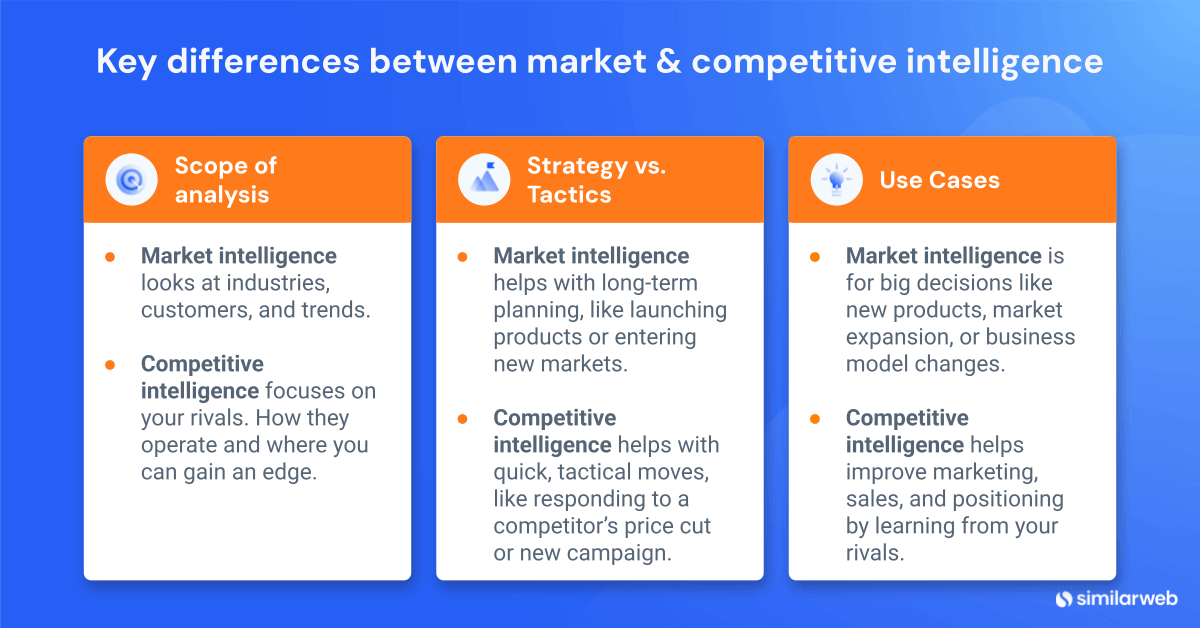
Scope of analysis
Market intelligence zooms out to provide a big-picture view of an industry.
It tracks market size, consumer demand shifts, and external forces like regulatory changes or economic conditions. It’s the go-to resource for businesses that are planning expansion or making long-term strategic moves.
Competitive intelligence, on the other hand, zooms in on rivals.
It tracks how competitors operate, their strategies and pricing models. The goal is to decode their strengths and weaknesses to form your own winning strategy.
Strategic vs. tactical decision-making
Market intelligence helps with long-term strategic planning. It equips businesses to plan to launch new products, market entry strategies, and position for future growth.
Competitive intelligence helps businesses react quickly to competitor actions, whether it’s a sudden price drop, a new promotional push, or a product launch. Companies armed with this intelligence can adjust quickly so that they stay competitive in dynamic markets.
Use cases for different business objectives
Market intelligence is the foundation for high-stakes business moves like expanding into new markets, developing new products, or changing business models. It helps companies assess risk vs. opportunity before making major investments.
Competitive intelligence, meanwhile, is all about competitive benchmarking, marketing strategies, and sales tactics. By pinpointing competitor gaps, companies can refine their own offerings and secure a winning position in their industry.
How competitive and market intelligence are similar
Competitive intelligence and market intelligence may serve different functions, but they share core objectives: to provide businesses with useful information.
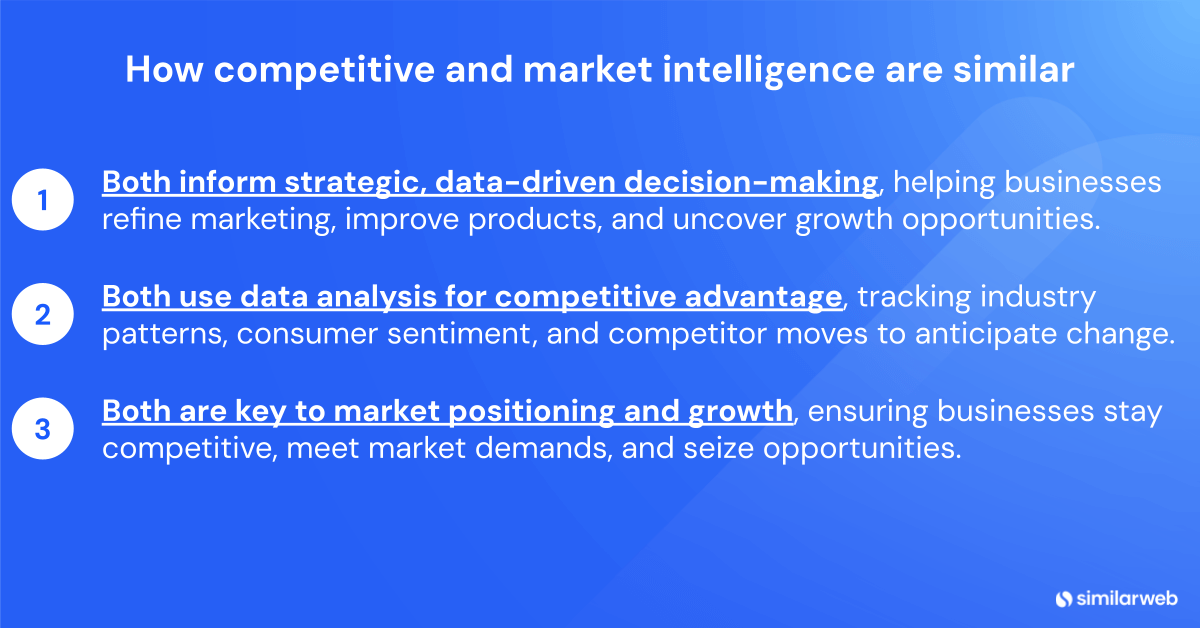
Both help businesses make informed strategic decisions
At their core, both intelligence types fuel strategic, data-driven decision-making.
Competitive intelligence focuses on knowing your rivals and industry trends, while market intelligence tools provide a broader view of these trends, consumer behavior, and demand shifts.
Businesses use these findings to sharpen marketing efforts, improve product offerings, and identify untapped growth opportunities.
Data-driven approach to gaining competitive advantage
Both intelligence methods rely on extensive quantitative and qualitative data analysis. They track industry patterns, consumer sentiment, and competitive movements.
This allows businesses to anticipate any changes rather than just react to them.
A company that integrates both intelligence types gains the advantage, as it allows them to make refinements to their strategies before competitors even see the change coming.
Essential for market positioning and growth
Competitive intelligence helps businesses outperform competitors, while market intelligence checks that they meet consumer needs and industry changes.
Together, they create a 360-degree market view. This equips companies to identify risks, seize opportunities, and dominate their space.
Combining market and competitive intelligence with Similarweb
To win today, you need good data and the right tools. Similarweb brings both types of intelligence together in one place.
Creating a data-driven growth strategy
For businesses eyeing new market expansion, success starts with knowing the competitive landscape.
Similarweb’s Demand Analysis tool does the heavy lifting by tracking market size, search volume shifts, and seasonal demand trends.
With this information, companies can gauge market conditions before making high-stakes decisions.
Market intelligence use case
Let’s say you’re exploring the sustainable fashion industry.
Running a keyword group analysis for “sustainable fashion” in Similarweb’s Demand Analysis tool will reveal the search trend for this topic and the leading countries funneling traffic to it:
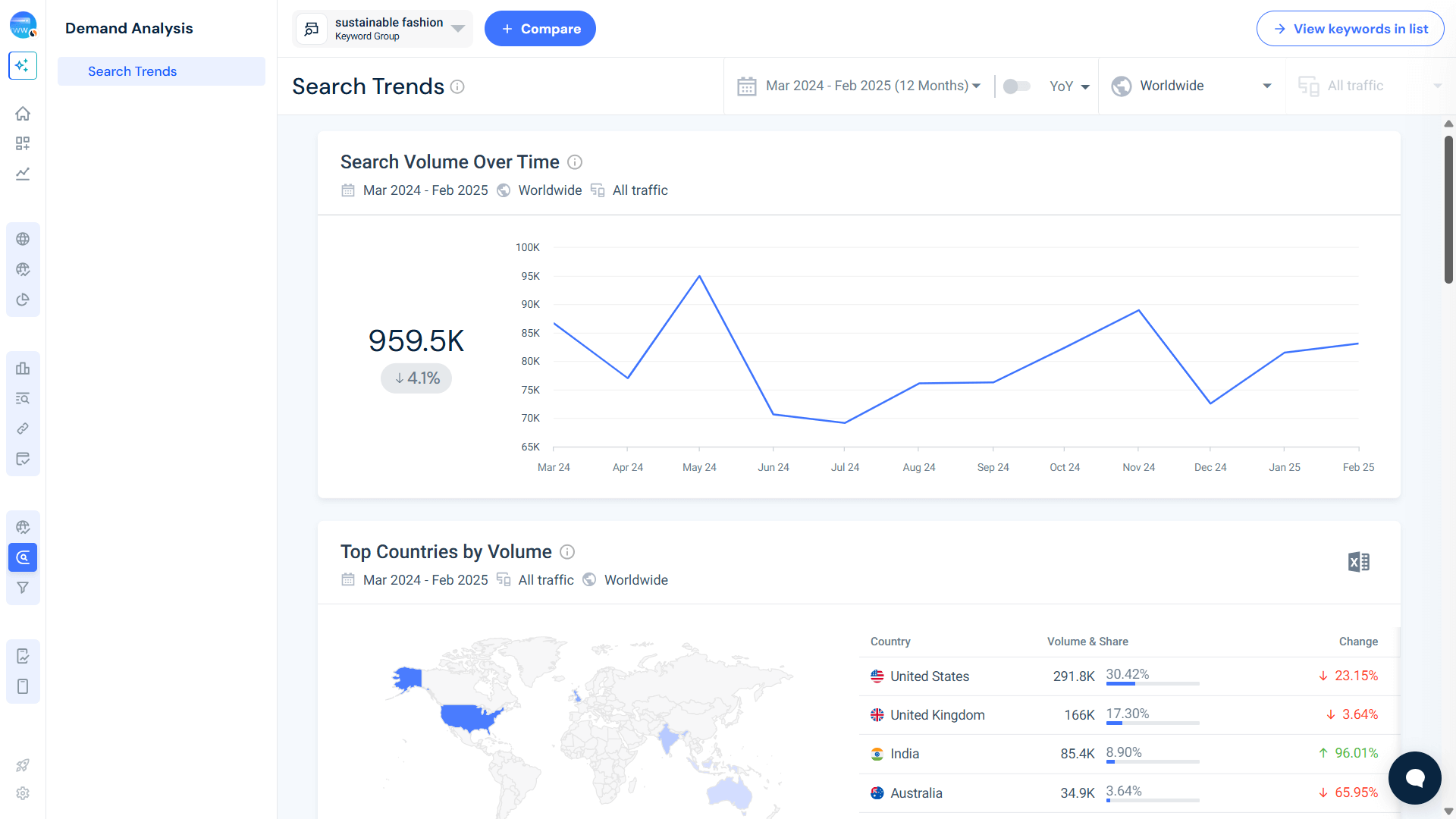
Scroll down and you’ll find the Keyword Trends report. Here, you can track which keywords are changing to market shifts over time.
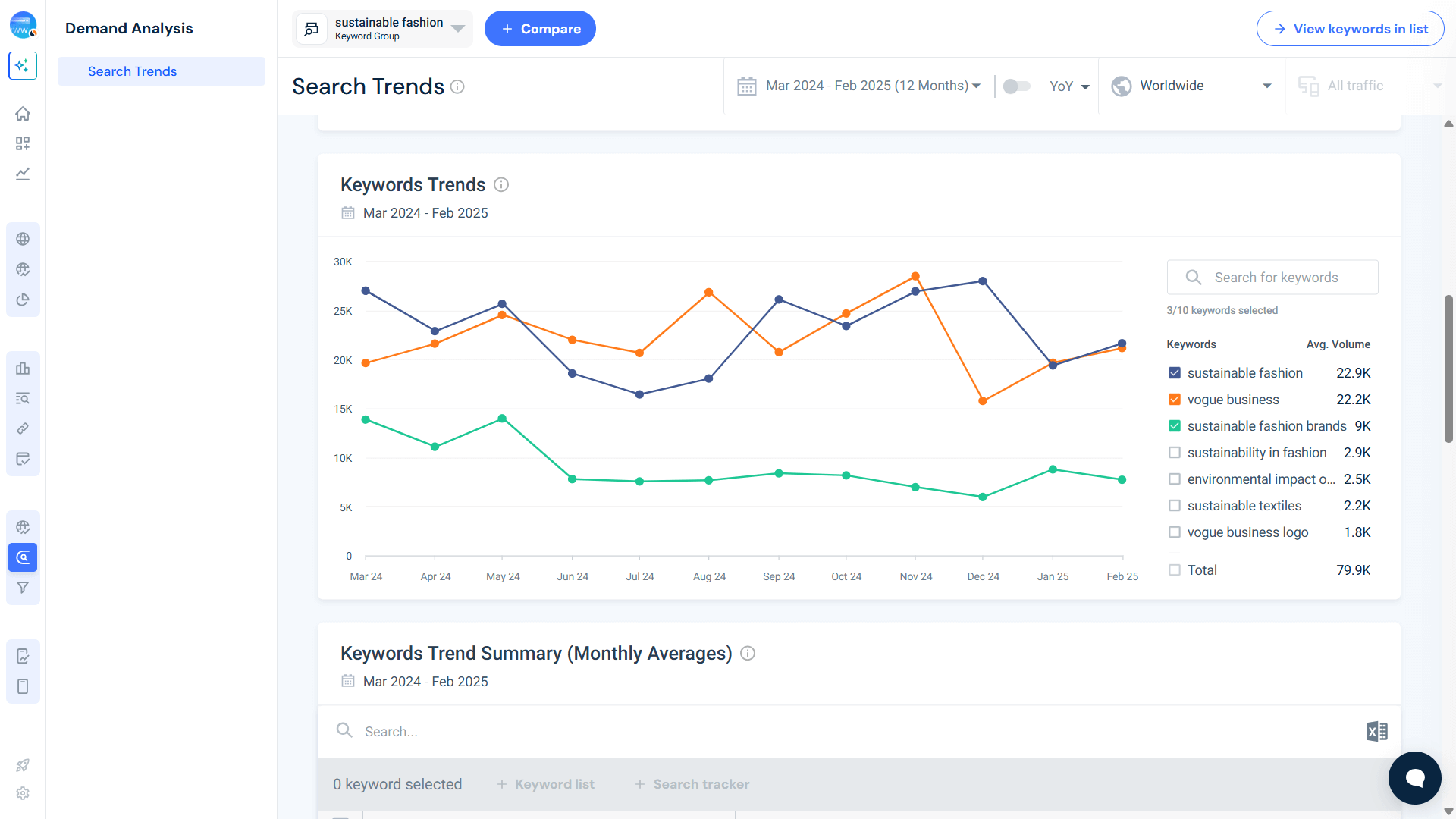
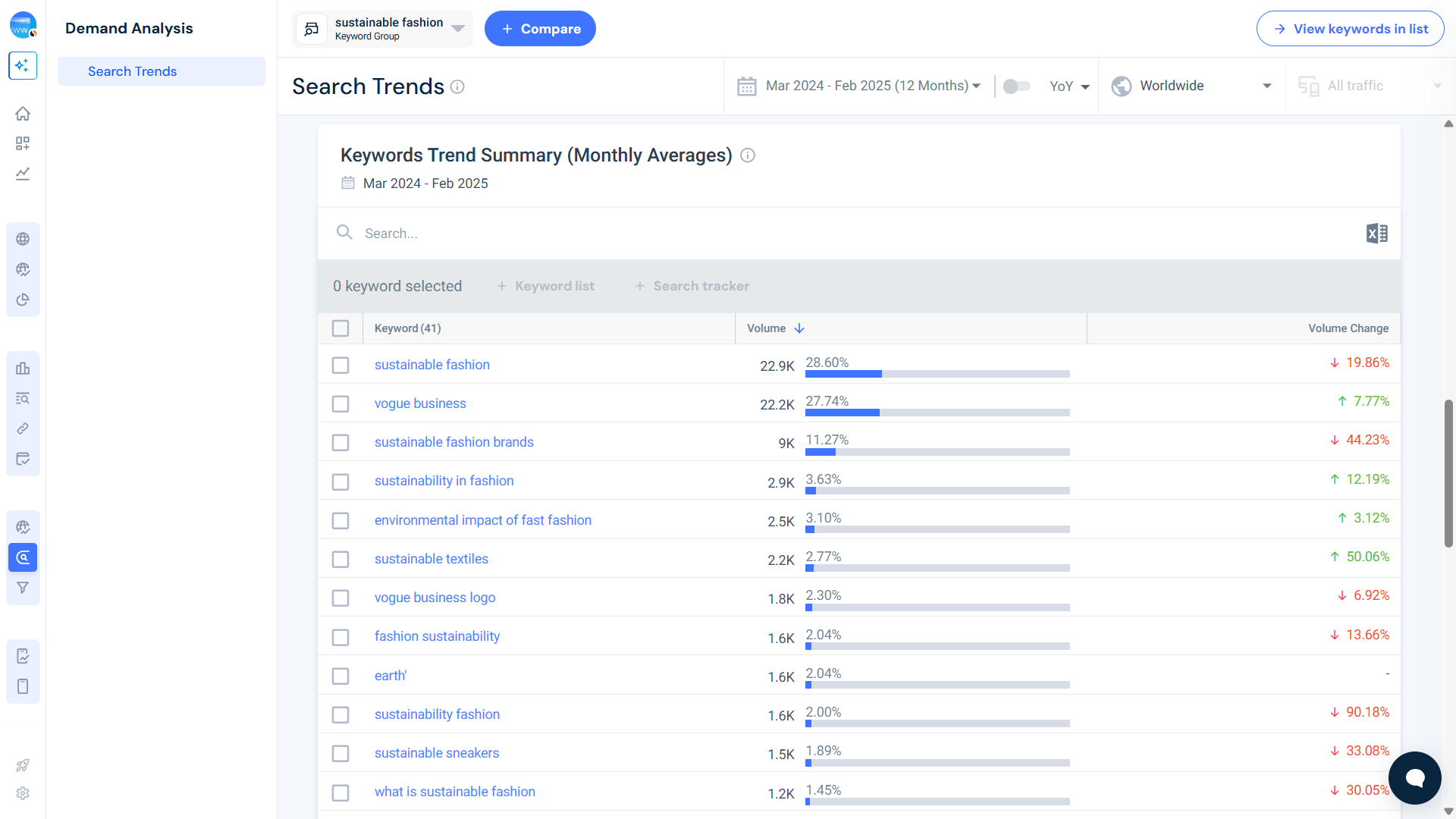
Scroll down further, and you’ll find this table, which breaks down the keywords that are shaping the trend.
Competitive intelligence use case
Knowing the market is one thing, and knowing how competitors operate is another. Similarweb’s Website Analysis uncovers traffic trends, behavioral metrics, and cross-site comparisons by offering an accurate view of competitive activity.
Let’s have a closer look at some of the top sustainable fashion brands: patagonia.com, allbirds.com, and eileenfisher.com.
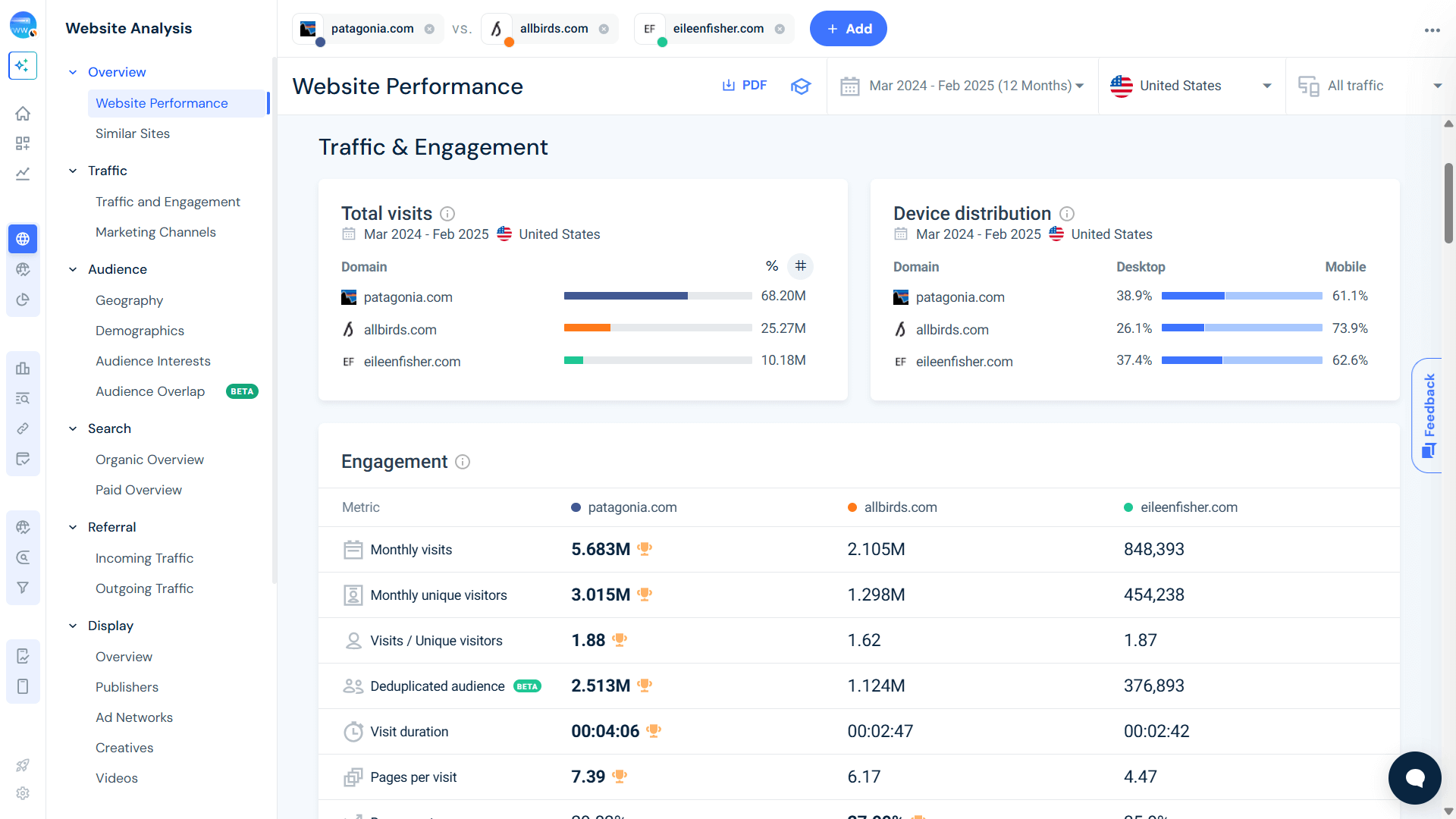
Head over to Website Analysis and look for the Traffic & Engagement section. Here’s what you’ll find:
- Total Visits: The sum of all visits over your selected period over the last 12 months
- Device Distribution: The split between desktop and mobile visitors
- Engagement Metrics: Includes average visit duration, pages per visit, and bounce rate
These numbers help you gauge how involved the audience is, showing Patagonia as a clear winner.
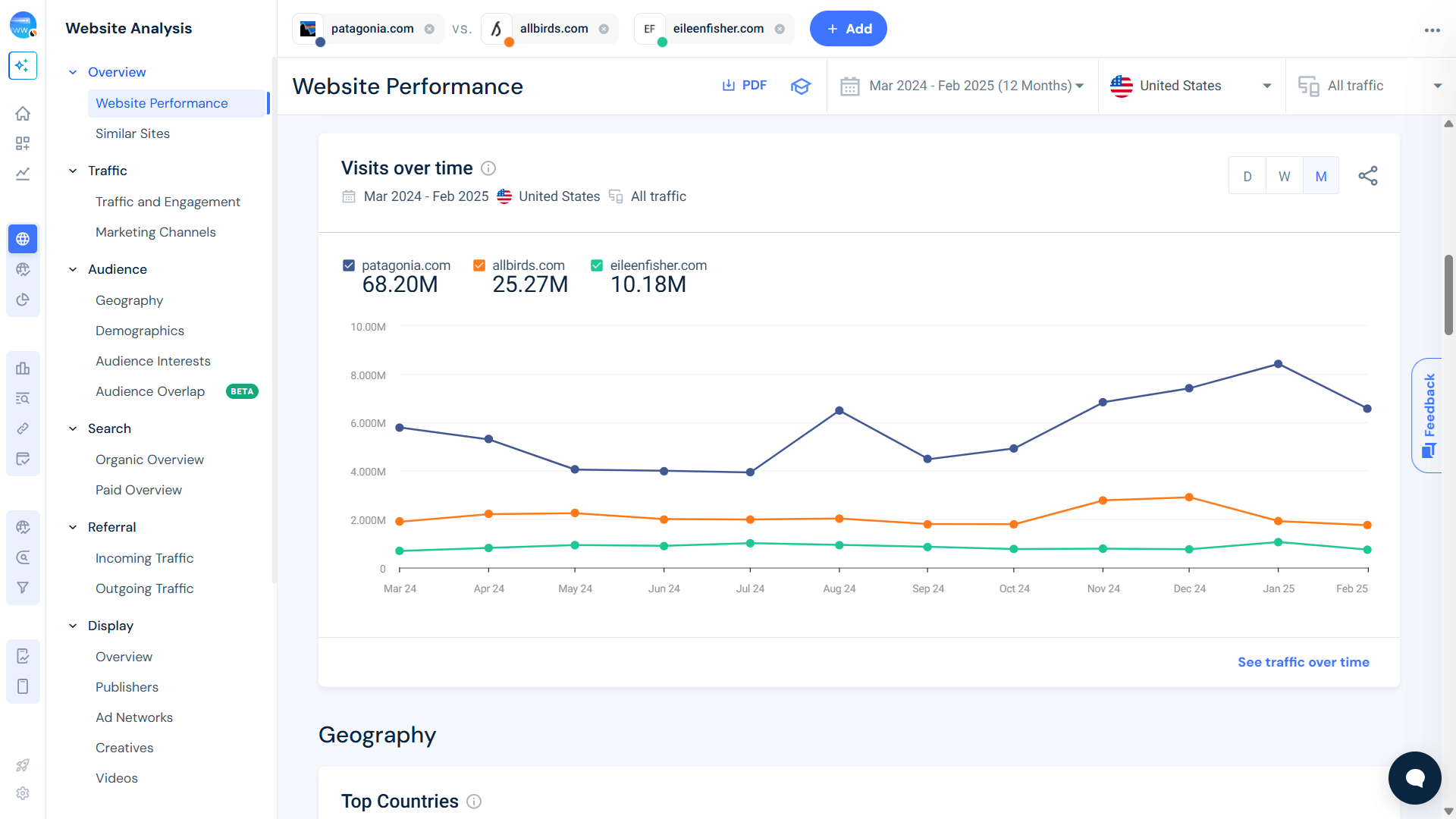
Scroll down a bit, and you’ll see Visits Over Time—a visual trendline that shows how website traffic has fluctuated during your selected timeframe.
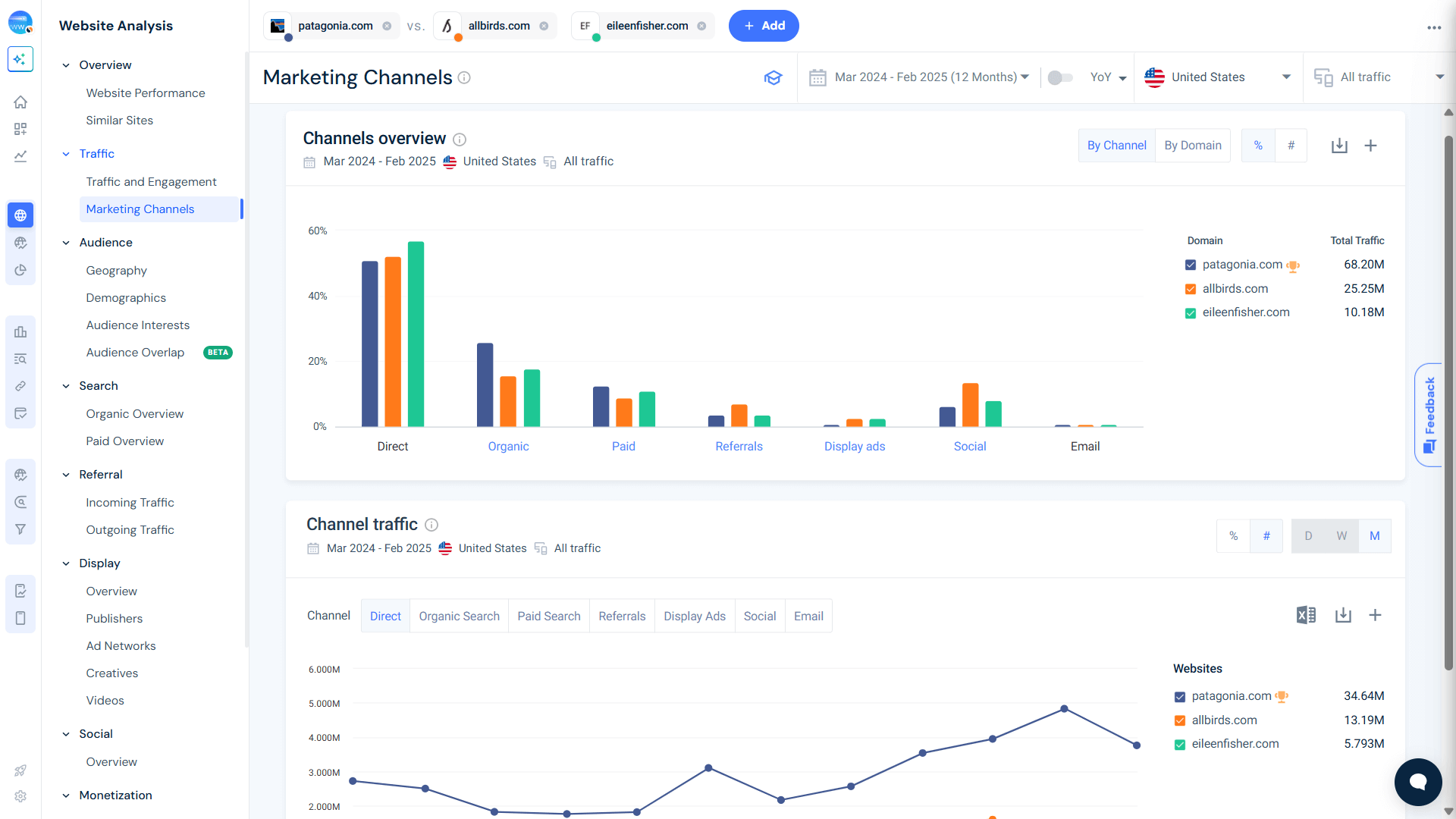
Still in Website Analysis, head this time to Marketing Channels to get the following data:
- Channels Overview: See how different traffic sources like organic search, social, and paid ads are trending
- Channel Traffic: Compare traffic per channel with monthly granularity to spot spikes or declines
How they work together
When you combine market and competitive intelligence, you get a full view of:
- What customers want
- Where the market is going
- How your competitors are moving
This helps you make better choices—whether you’re launching a product, entering a new market, or changing your strategy.
Aligning product development with market demand and competitive positioning
Successful product development is about knowing what customers actually want. To make informed decisions, businesses need a clear view of market demand and competitive trends.
That’s where Similarweb’s tools offer information that you can use to match your product strategies with data-backed precision.
Market intelligence use case
Say a SaaS company wants to launch an AI-driven marketing tool. Before investing resources, they need to gauge whether demand is strong enough to justify the launch.
Similarweb’s Demand Analysis tool tracks search volumes, emerging trends, and keyword growth for evidence-based knowledge of whether the market is heating up or cooling off. This checks that the company is investing in a product that meets actual user needs.
Let’s take a look at the trend for the topic of “AI marketing automation”:
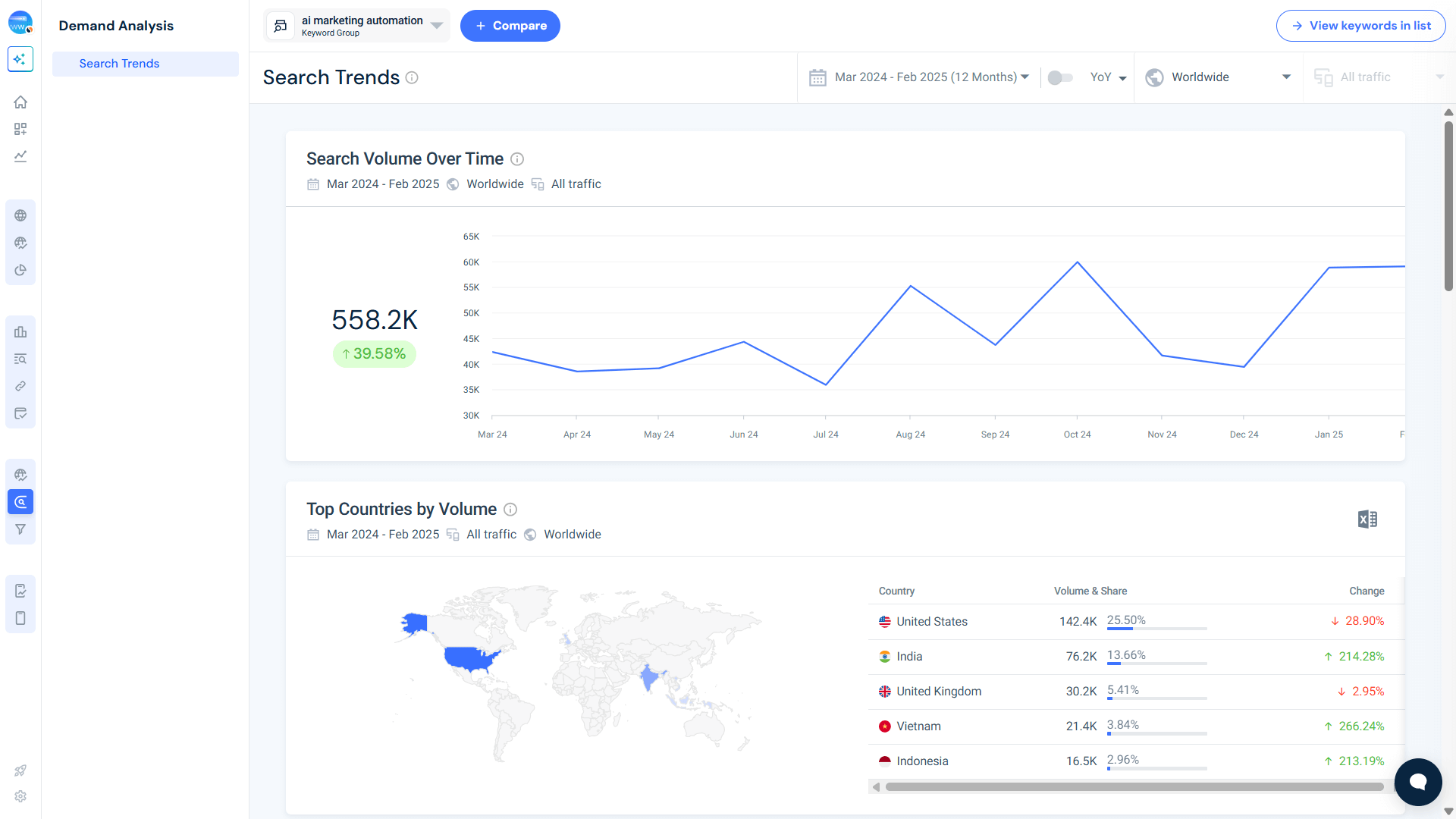
It looks like this topic has been blowing up over the last 12 months!
Now that market intelligence has told us AI automation products are hot, competitive intelligence is what will help the Saas company position its tool to stand out.
Competitive intelligence use case
With Similarweb’s Keyword Research tools, you can identify high-impact keywords that drive traffic in your space.
Go to Search Intelligence, and then to the Keyword Generator. We’re entering “AI marketing automation” to see what data pops up.
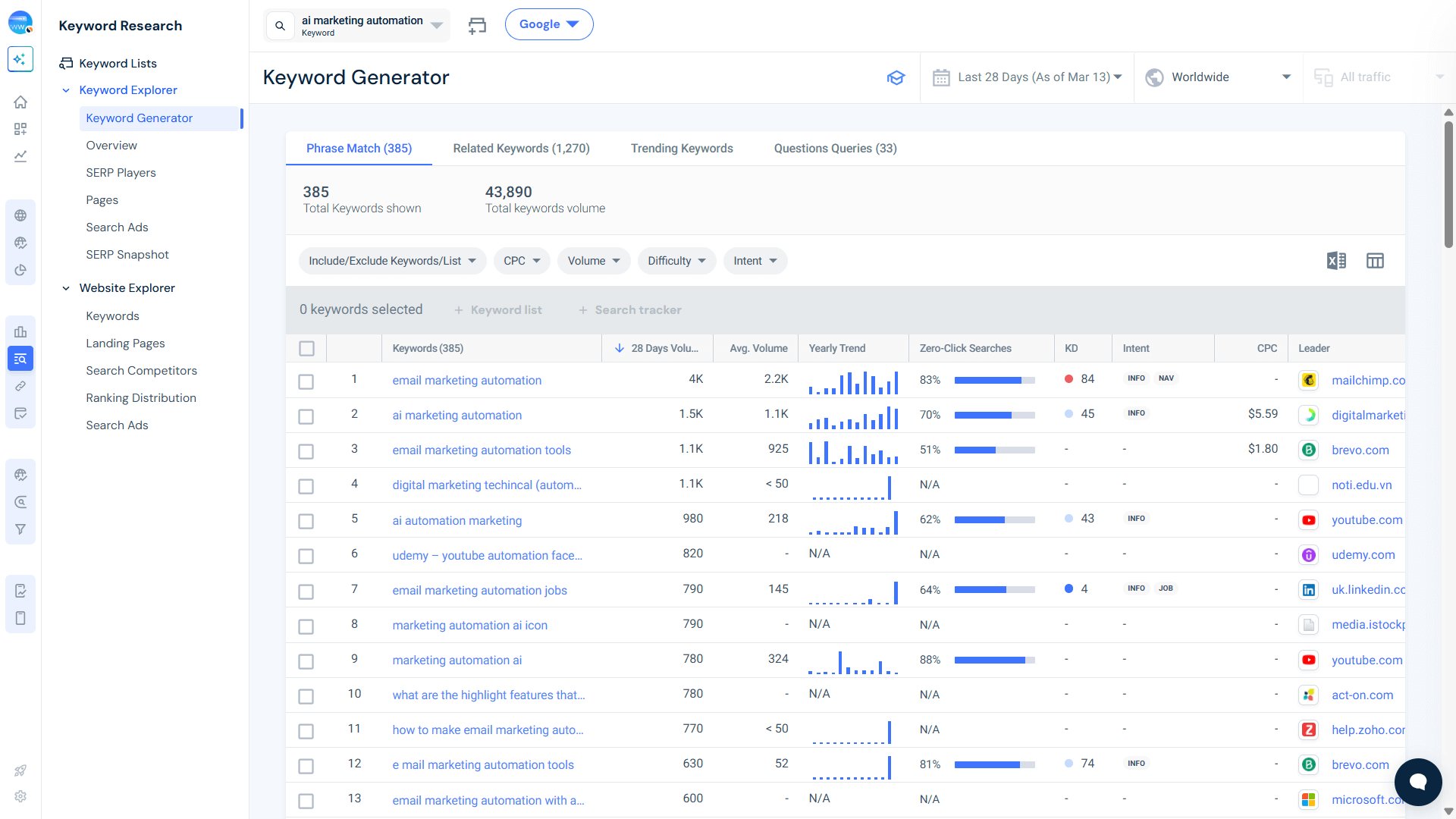
By analyzing what keywords drive traffic to your topic, you can refine your positioning, optimize messaging, strengthen SEO, and make sure your product stands out.
How they work together
Market demand shows if there’s real interest in your product, while competitive insights help you position it in a way that stands out. Similarweb combines both in one platform, so you can test ideas, reduce risk, and build strategies backed by real-world data, before you launch anything.
Competitive intelligence vs market intelligence: why you need both
One gives you the wider view, and the other shows what your rivals are doing. Together, they give you a complete picture.
Market intelligence tells you where the opportunity is.
Competitive intelligence tells you how to win it.
With Similarweb, you can do both. You’ll make decisions faster, avoid guesswork, and move with confidence.
Learn how Similarweb’s competitive analysis tools help you cut through the noise.
FAQs
How do businesses gather competitive intelligence?
Businesses should track competitor websites, assess public financial reports, attend important industry events, and use competitive analysis tools. Each of these sources reveals useful insights into competitor tactics, pricing strategies, and market positioning.
How does market intelligence shape product development?
Market intelligence pinpoints what customers actually want, identifies emerging trends, and maps out growth opportunities. By matching product features with consumer needs and market demand, businesses can develop offerings that resonate, leading to better adoption, stronger sales, and a competitive edge.
Why should businesses combine market and competitive intelligence?
Think of it this way: market intelligence tells you where the industry is heading, while competitive intelligence shows you how rival brands are moving. Separately, they offer valuable information. Together, they provide a full 360-degree view and help companies anticipate market shifts, outmaneuver competitors, and make smarter strategic moves.
What part does data play in competitive and market intelligence?
Data is the engine that powers both market and competitive intelligence. It reveals patterns, uncovers opportunities, and provides a factual basis for decision-making. Whether it’s tracking consumer behavior, measuring industry trends, or analyzing competitor actions, businesses that know how to use data-backed insights can react faster.

Related Posts

How to Do A Competitive Analysis: Complete Guide & Free Templates

How to Build an AI Search Intelligence Dashboard for Client Presentations Using Claude and Similarweb MCP

AI Visibility Momentum: The VAMP Framework For Tracking What Visibility Scores Miss

The Dark Funnel Paradox: Why Your Best B2B Leads Are Invisible (And How to Find Them Anyway)
![GEO Framework For Growth Leaders [+Free Template]](https://www.similarweb.com/blog/wp-content/uploads/2026/02/attachment-growth-leader-geo-decision-framework-768x429.png)
Your full marketing toolkit for a winning strategy
The ultimate solution to help you build the best digital strategy