





The Top 100 Most Visited Websites in the USA (August 2026)
by Shai Belinsky10 Min.
Sep 29, 2026
 Research Intelligence
Expanding into a new market can be exciting and challenging. You want your business to grow, reach more customers, and increase profits.
But how do you choose the right path?
That’s where market entry strategies come in.

A solid strategy helps you simplify the complexities of a new market. It guides your decisions on how to introduce your products or services effectively. Without it, you might face unexpected hurdles or miss out on opportunities.
In this blog, we’ll explore 12 proven market entry strategies to help businesses, whether startups or established companies, make informed decisions.
Let’s find the best strategy to take your business to the next level. But first…
A market entry strategy defines how brands push into new territory.
Companies use these plans to boost their reach through better visibility and smarter distribution. The strategy works for both home markets and foreign lands.
Success demands deep knowledge. Many newcomers stumble here due to lack of preparation. Here’s what matters most:
Smart companies research before they leap.
It reveals what drives success in each market. It exposes roadblocks that could derail growth. Most valuable, it uncovers hidden chances that competitors missed.
In short, the market entry strategy serves two vital purposes.
It builds a clear picture of the market while spotting gaps in the company’s approach. This reality check prevents costly mistakes that plague hasty market entries.
Choosing the right market entry strategy is key to your business’s success abroad. Without a solid plan, expanding can lead to wasted time, money, and effort. Here’s why these strategies matter:
In short, market entry strategies are essential for entering new territories and gaining a competitive advantage. They help you reduce risks, use resources efficiently, understand the market, make better data-driven decisions, and stay ahead of the competition.
Expanding into a new market requires careful planning and the right approach. Below, we’ve outlined 12 proven market entry strategies to help you find the best fit for your business.
Exporting is one of the simplest ways to enter a new market. With direct exporting, you handle sales and distribution yourself, giving you full control. Indirect exporting, on the other hand, involves using intermediaries like distributors or export management companies. While it’s less risky, you’ll have less control over sales and marketing.
👍🏼 Pros:
👎🏼 Cons:
Piggybacking lets you partner with a company that already operates in the target market. You add your product to their offerings, leveraging their distribution network. It’s a fast and cost-effective way to gain market access, though you’ll share profits and depend on their performance.
👍🏼 Pros:
👎🏼 Cons:
Licensing allows another company to use your intellectual property—like a product, brand, data, or process—in exchange for fees or royalties. It’s a low-risk, low-investment option that works well if your product is in demand and your licensee has strong market connections.
👍🏼 Pros:
👎🏼 Cons:
In a joint venture, you team up with a local business to share resources, risks, and rewards. This strategy provides access to local expertise and reduces entry barriers, though it requires careful management to avoid conflicts.
👍🏼 Pros:
👎🏼 Cons:
Acquiring a local company gives you instant market access. It can provide a strong customer base and local credibility, but it’s expensive and requires significant due diligence to avoid potential pitfalls.
👍🏼 Pros:
👎🏼 Cons:
Franchising allows others to run branches of your business under your brand. It’s ideal for businesses with strong brand awareness, as it lets you expand quickly with lower investment. The downside? Less control over operations.
👍🏼 Pros:
👎🏼 Cons:
Outsourcing involves hiring local companies to handle specific operations, like sales or manufacturing. It reduces costs and allows you to focus on your core business, but may lead to less control over quality and customer experience
👍🏼 Pros:
👎🏼 Cons:
With a Greenfield investment, you build operations in the new market from scratch. This could involve setting up factories, offices, or retail locations. While it offers full control, it requires significant time and financial investment.
👍🏼 Pros:
👎🏼 Cons:
In turnkey projects, you contract with a local firm to build a fully operational facility that you can take over once complete. This strategy is often used in industries like construction or manufacturing and helps mitigate risks by leveraging local expertise.
👍🏼 Pros:
👎🏼 Cons:
Countertrade works like barter: instead of money, you trade goods or services with a local partner. It’s a useful option when currency restrictions or lack of cash flow are challenges in the target market.
👍🏼 Pros:
👎🏼 Cons:
Direct exporting is all about cutting out intermediaries. Your business handles the entire export process, from marketing to shipping and customer interactions. This approach offers full control over your brand and profits but requires investment in infrastructure and expertise to manage the logistics and compliance.
👍🏼 Pros:
👎🏼 Cons:
This strategy involves partnering with distributors in the target market. Distributors purchase your products and handle their sales locally, making it easier to scale without directly managing sales or customer service. While it’s convenient, you may have limited insight into your customers and less control over your pricing and marketing.
👍🏼 Pros:
👎🏼 Cons:
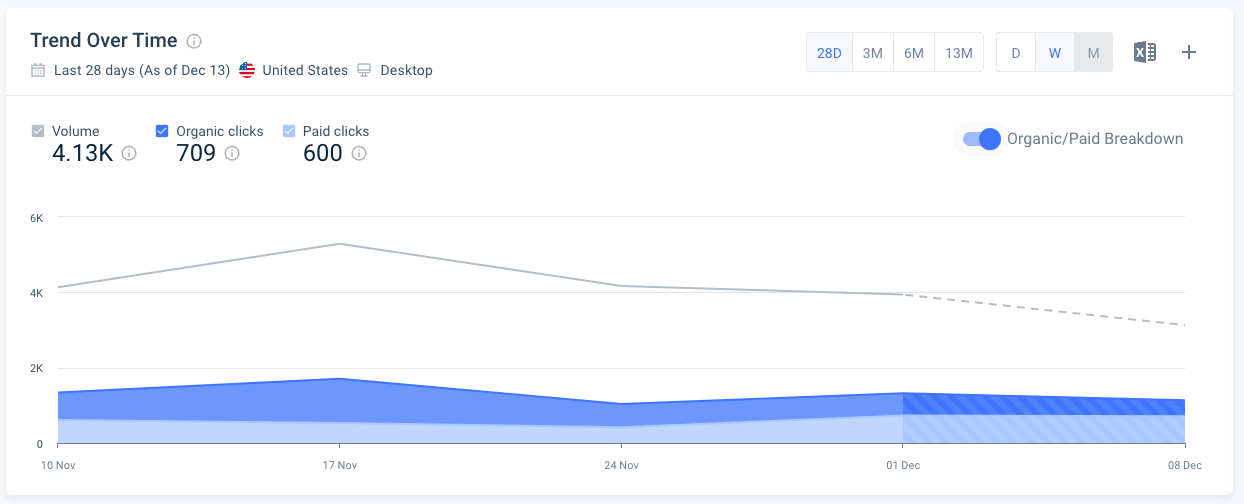
You can use Similarweb to provide data on target market trends, demand for products, and potential competitors. In the examples below, we’ll make an assumption that we’re looking to enter the household market with a new form of carbon monoxide detector.
For example, using Similarweb’s market research tool, we can see in the graphic below the growth in organic and paid searches for carbon monoxide detectors.
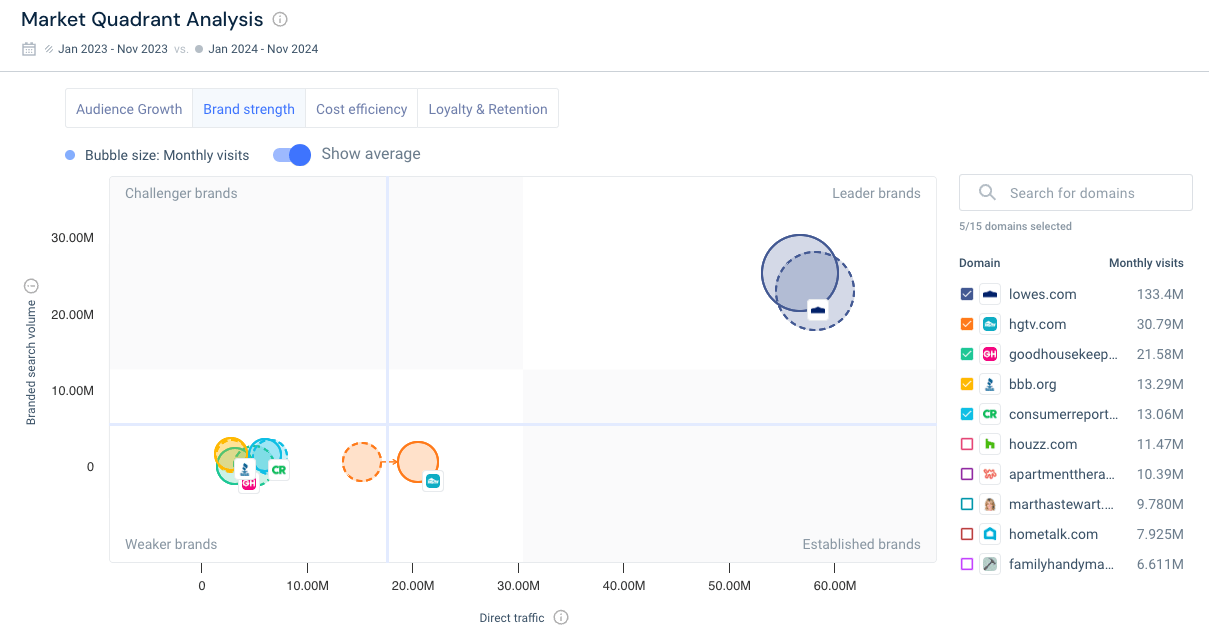
Use our quadrant analysis tool in the Market Research add-on to pick out the strongest brands in your category. In the example below, we look at home improvement brands.
Finally, we can use the Demand Analysis tool to check on whether interest in this is going up or down.
It’s just a simple case of entering our primary keyword, ‘carbon monoxide detector’. The tool will generate 1000+ related keywords and calculate demand. Fortunately, it is going up (see below).

Expanding into a new market is a big step, and having the right strategy makes all the difference. The 12 market entry strategies we’ve covered offer a variety of options to suit different goals, budgets, and industries.
Each strategy provides unique opportunities to succeed, from low-risk approaches like licensing to high-investment methods like Greenfield projects.
The key is to align your chosen strategy with your business objectives and the specific needs of your target market. Research thoroughly, assess your resources, and plan carefully. A well-thought-out market entry strategy isn’t just a roadmap—it’s your guide to navigating challenges and seizing opportunities.
Ready to take the next step? Explore these strategies further, adapt them to your goals, and start planning your market entry with confidence. The right approach can open the door to growth, new customers, and long-term success.
What is a market entry strategy, and why is it important?
A market entry strategy is a game plan for introducing your business, products, or services into a new market. It’s essential because it helps minimize risks, optimize resources, and ensure a smooth and successful market expansion by addressing local challenges and seizing opportunities.
How do I choose the right market entry strategy for my business?
The right strategy depends on your business goals, budget, product type, and target market characteristics. Consider factors like competition, cultural differences, and market conditions to decide on an approach like exporting, licensing, or partnerships.
What are the key benefits of having a market entry strategy?
A strong strategy minimizes risks, enhances market understanding, guides decision-making, and provides a competitive edge. It ensures your business is well-prepared to adapt to local challenges and maximize growth opportunities.
How can Similarweb support my market entry strategy?
Similarweb provides valuable data on target market trends, product demand, and competitor performance. Tools like quadrant analysis and real-time insights help identify the best strategies and align them with your business objectives.

Team Manager, Content Marketing
James is an former journalist & content strategist in B2B tech, who has previously created content for companies like EDF and X (Twitter). He also has a journalism post-grad from LCC.
The Top 100 Most Visited Websites in the USA (August 2026)

Similarweb Named in Forrester's Answer Engine Optimization Technologies Landscape, Q3 2026

Anthropic IPO: What Claude's Web and App Data Show
Contact us to set up a call with a market research specialist
