




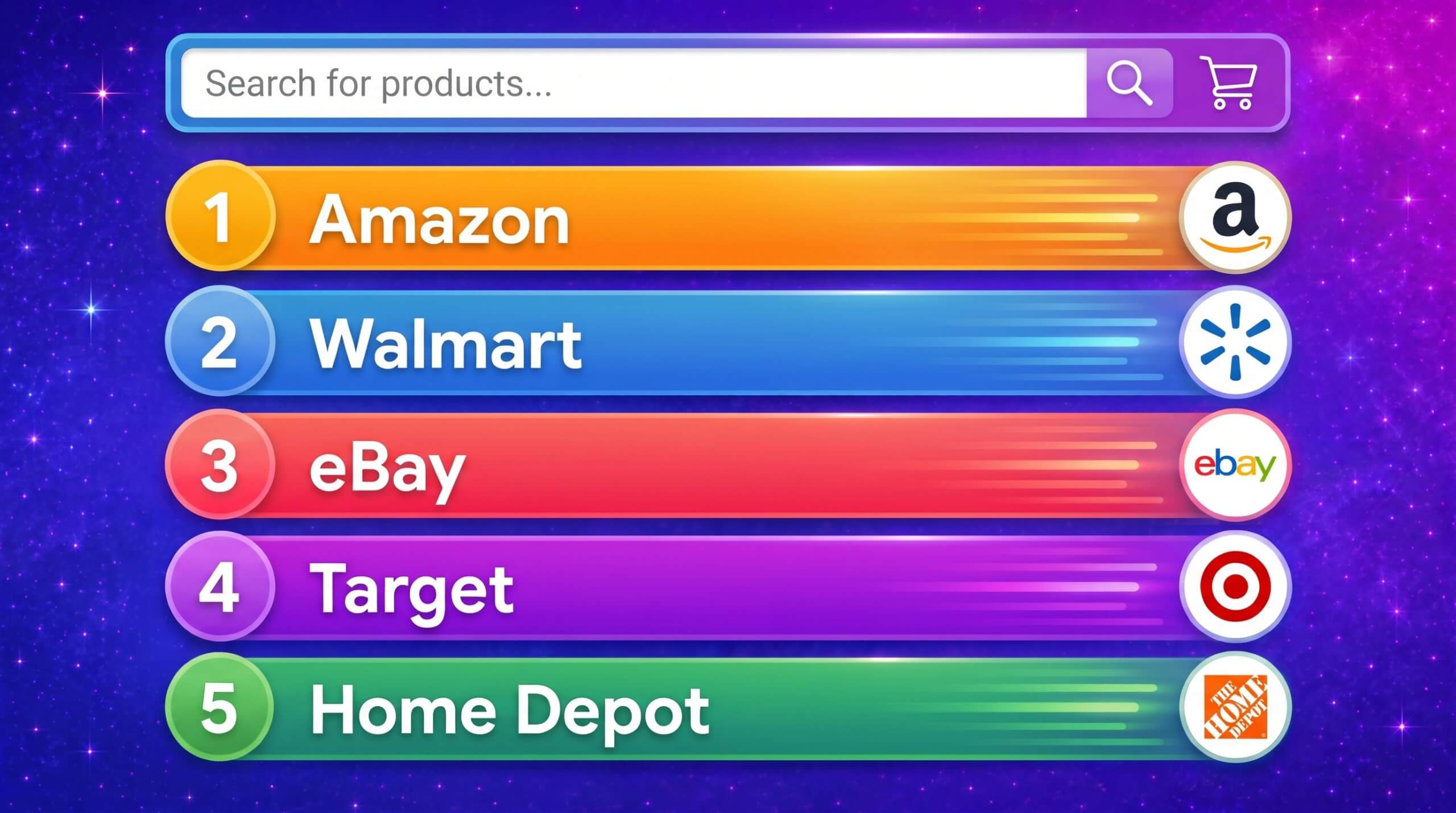

Top Ecommerce Companies in the USA: The 100 Brands Winning the Traffic Race in 2026
by Inbar Eytan6 Min.
Aug 30, 2026
The weight loss market is enormous: over $250 billion per year.
With all that cash at stake, what can upstart weight loss app Found do to:
We asked Ian Nagy, Co-Founder of Inceptly YouTube ad agency and VidTao YouTube ad library, to do a breakdown on how to use Similarweb to get insights on what Noom is doing right with its YouTube ads to fast-track Found’s path to success. Inceptly manages over $5 million per month in YouTube ad spend with Similarweb as a crucial element in its research process.
Ready to see how to launch and scale with YouTube ads?
Let’s dive in with Ian…
When it comes to driving awareness, interest, and sales at scale for B2C SaaS products (and short sales cycle B2B SaaS like Monday and ClickUp as well), right now there’s no channel like YouTube ads.
(We’ve managed over $100 million in adspend at our YouTube ad agency Inceptly. Much of that has been for B2C SaaS products, which are our biggest vertical.)
Let’s take weight loss app Noom as an example.
Crunchbase describes Noom as “a psychology-based digital health platform used to provide intelligent nutrition and exercise coaching.”
YouTube ads make up Noom’s biggest top-of-funnel traffic source for new user acquisition, with over $131 million spent on the platform (Based on an observed view count of Noom’s unlisted YouTube ads and an assumption of $0.05 cost per view).
So when startup weight loss app Found closed a $100 million Series B funding round this December 2021, you better believe it’s preparing to scale on YouTube big time, very soon.
But right now, if you look inside VidTao or Similarweb, it doesn’t look like Found is running a single YouTube ad yet.
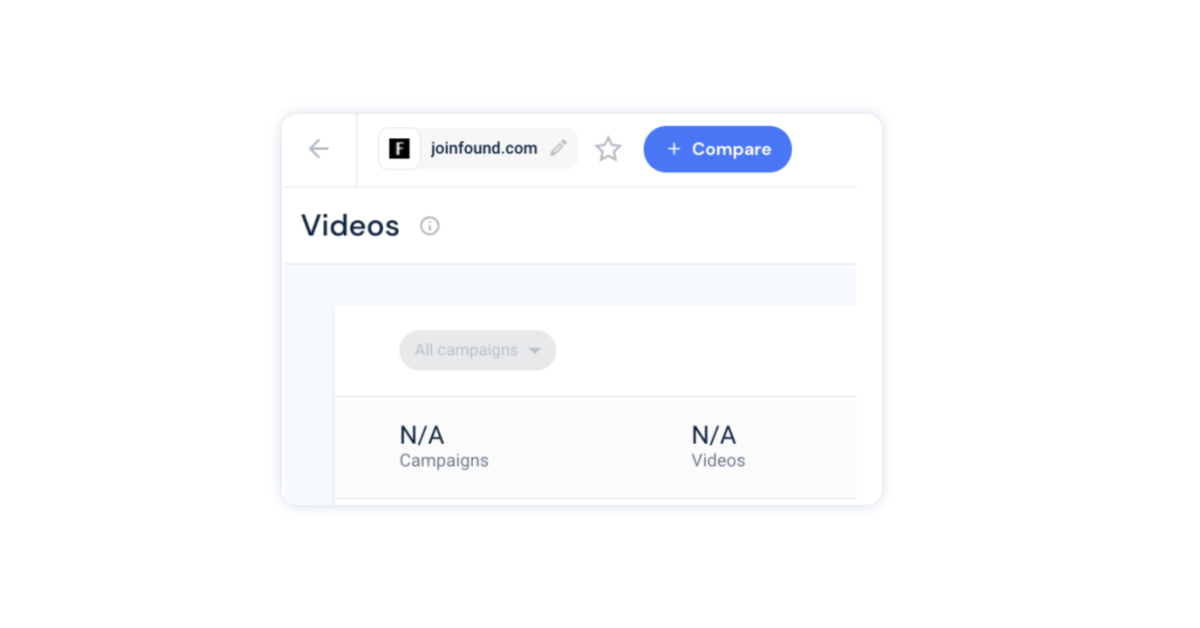
No YouTube ads yet? No problem. We’ll have plenty of ideas on that very soon.
But first, a quick look at the big picture:
Opening up our competitive research tool in Similarweb, we see that in the past three months, Noom has over 28x more website traffic than Found:
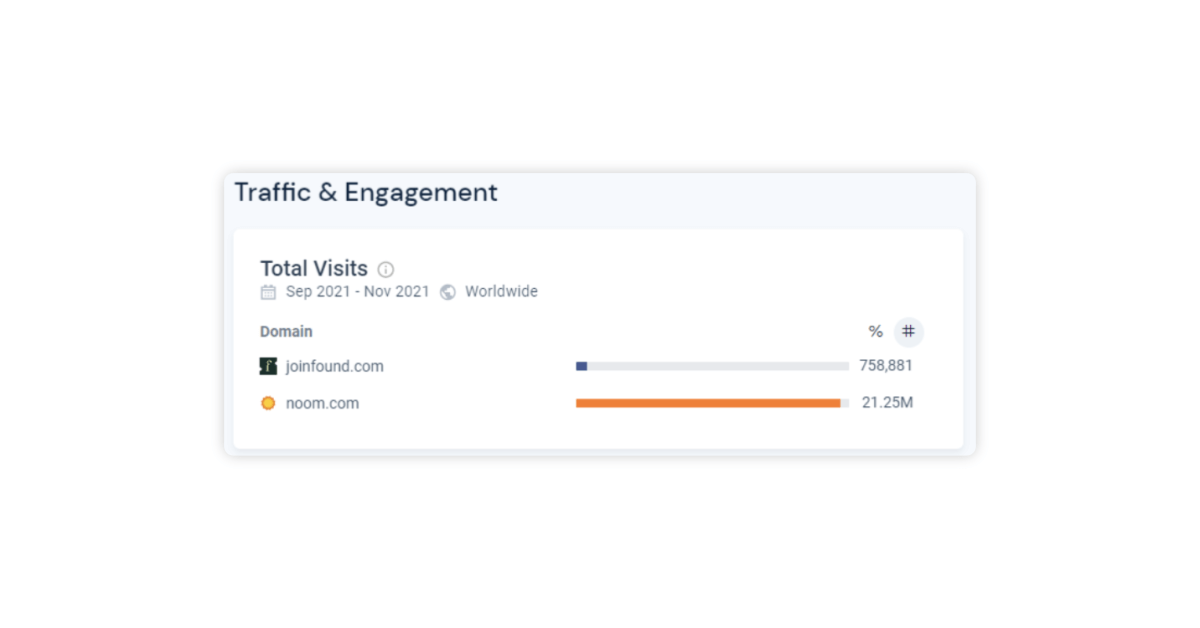
(Noom started in 2008 while Found launched in 2019, so Noom has a bit of a head start.)
Let’s take a closer look at the traffic channel breakdown for Noom:
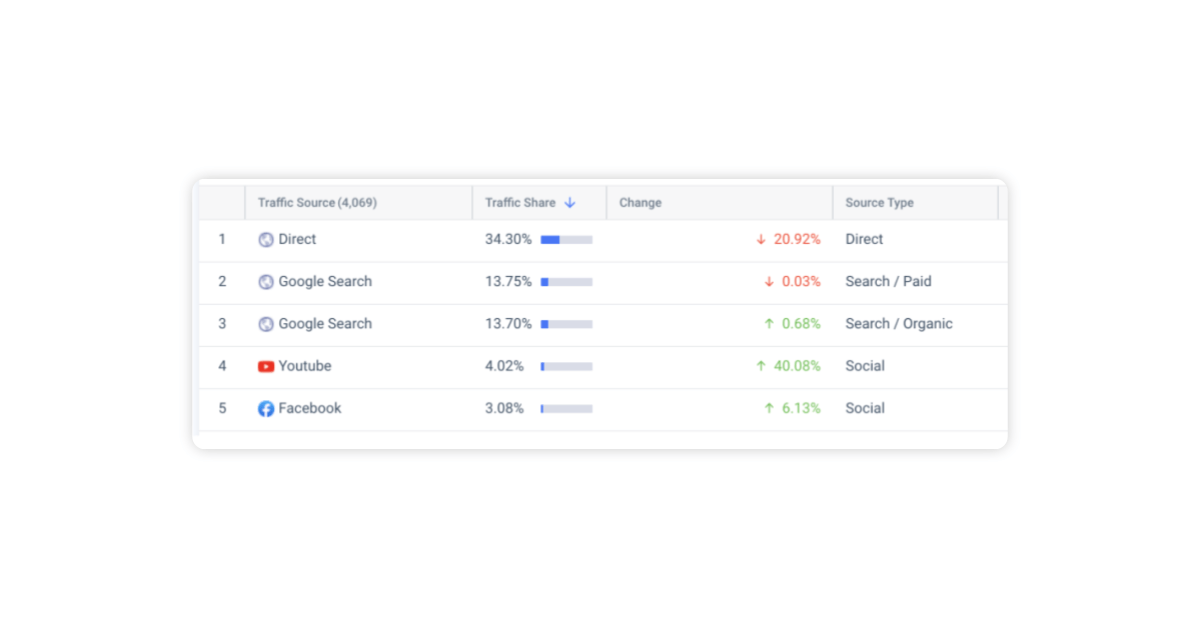
“Wait, I thought you said YouTube was its biggest driver of top-of-funnel traffic?”
Not so fast there tiger – let’s dig deeper:
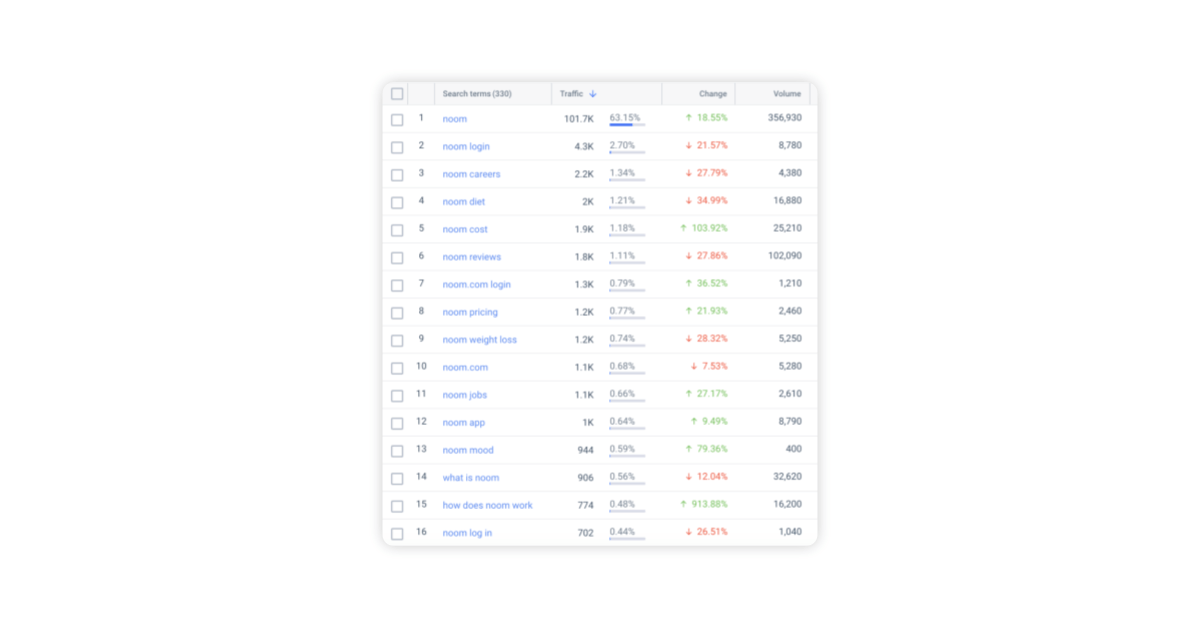
So how is Noom driving awareness and action from entirely cold, unaware audiences?
It’s that fourth channel, YouTube.
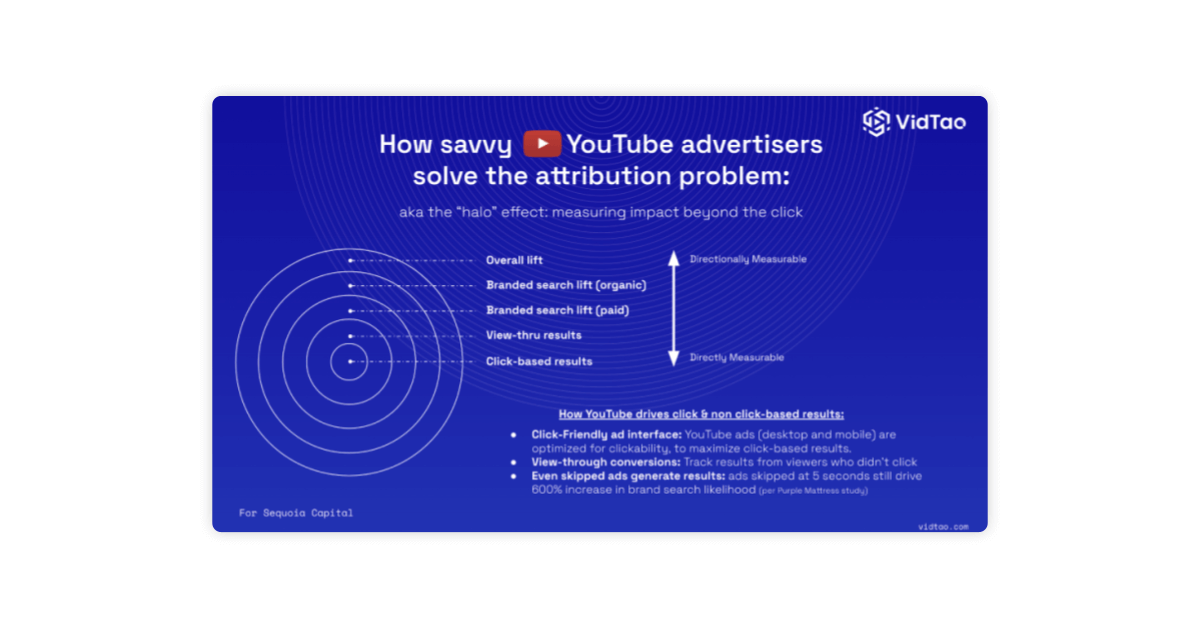
YouTube advertisers notice again and again how YouTube ads drive results beyond “just the click,” especially at scale. Keep in mind that even viewers who skip ads at five seconds are 600% more likely to search for your product (hello paid and organic branded search traffic).
Here’s a quick diagram we made showing this in more detail:
Here’s what head of growth at another unicorn, $13 billion Grammarly, which spent over $300 million on YouTube ads, has to say about how YouTube ads have powered click-based results (and beyond):
“YouTube is definitely a powerhouse of a channel for us…It’s performing well as a direct response channel. It’s also providing a substantial brand lift. We’re seeing that there’s an overall broader brand awareness of Grammarly. We’ve seen that reflected in things like brand searches, which we’re then able to capitalize on with ads, as well as with organic listings.”
– Yuriy Timen, Head of Growth, Grammarly
That might be great for Grammarly, but if you’re at Found, with no YouTube ads yet but looking to scale fast, maybe you’re thinking:
“So what? How do I actually get started scaling on YouTube?”
Specifically:
The clues, as always, are in the data.
Let’s dig back into Similarweb and find the answers…
Key Point: We’re going to use Similarweb to build highly relevant, unique, and scalable custom audiences for Found’s YouTube ads.
We’ll walk through three unique use cases (including one sneaky counterintuitive use case that can work extremely well). But first, a quick love letter to one of our favorite Google Ads features that’s working great right now for 2022:
Custom audiences

Standard targeting options that can scale, (like in-market and affinity segments) are becoming more and more of a “Red Ocean.” With more and more advertisers joining YouTube, these default options are getting more and more expensive.
Make no mistake: Broader audiences like these are essential if we’re going to scale to $100,000 per day and beyond. But to best inform Google with conversion data as quickly and cost-effectively as possible, (so that we can cost-effectively scale on broad audiences later on), thankfully, we’re finding that custom audiences (done correctly) are working better and better.
As a refresher, Google Ads’ custom audiences allow you to target users based on:
Here’s a screenshot of how you might start setting one up to target competitor URLs:
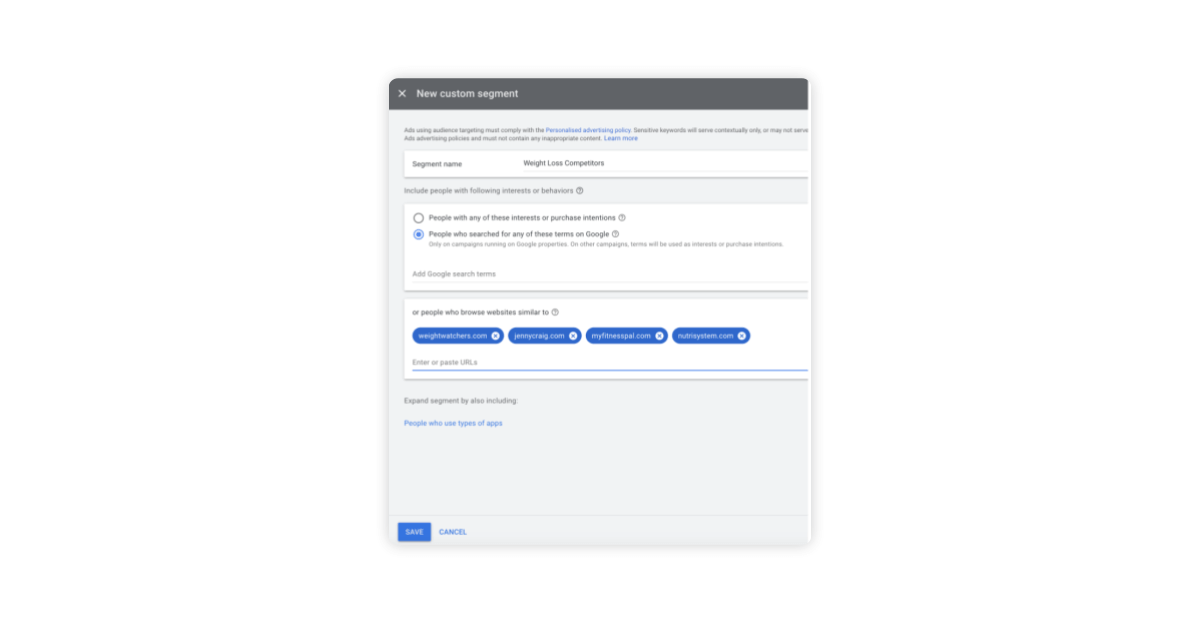
(Usually, we’ll bundle around 15 keywords or URLs, grouped thematically, to create a single custom audience.)
Here are three of our favorite things about using custom audiences:
Here are three ways we’re going to fast-track our pathway to success with high-quality targeting, including one sneaky tactic that can work extremely well:
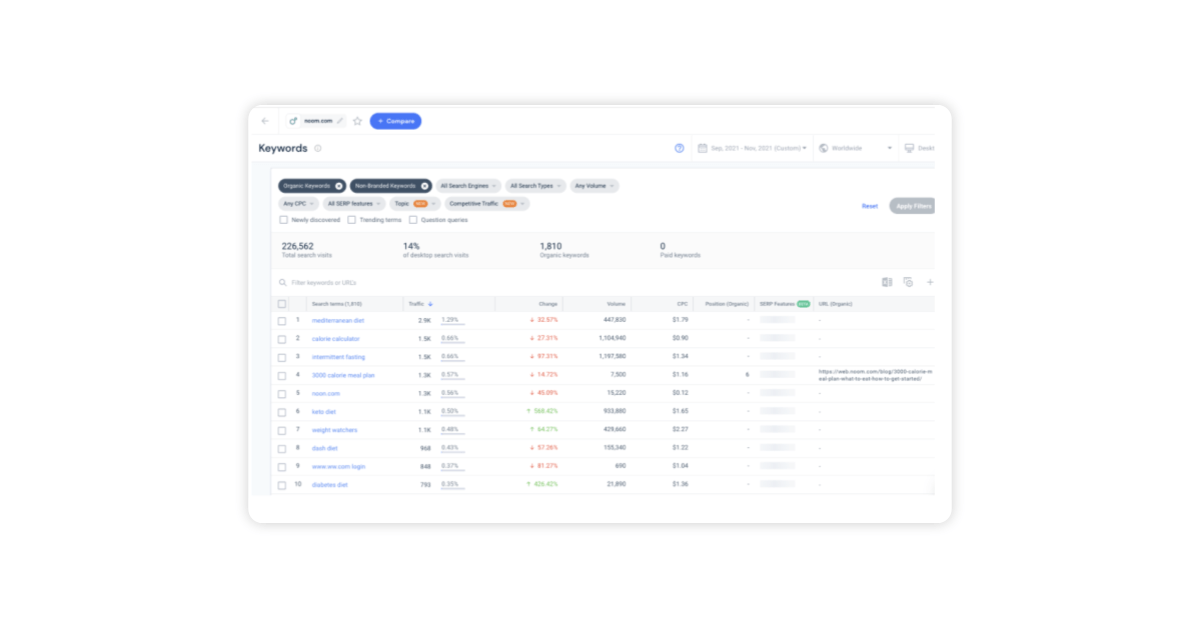
In this step, simply use the Similarweb keyword tool to find the non-branded keywords Noom is using via Google Search to turn new, unaware users into customers. Then, build custom audiences with these keywords to show YouTube ads to these users.
Why it works:
These are proven keywords that Noom is having success with to drive top-of-funnel purchases. We’re just going to re-purpose the keywords for Found’s YouTube campaigns. Instead of using these for Google Search (which we could absolutely do), we’re going to build out a custom audience with these keywords as a “seed” to the audience.
How to do it:
In the keyword generator select “Non-Branded Keywords” and look at the results:
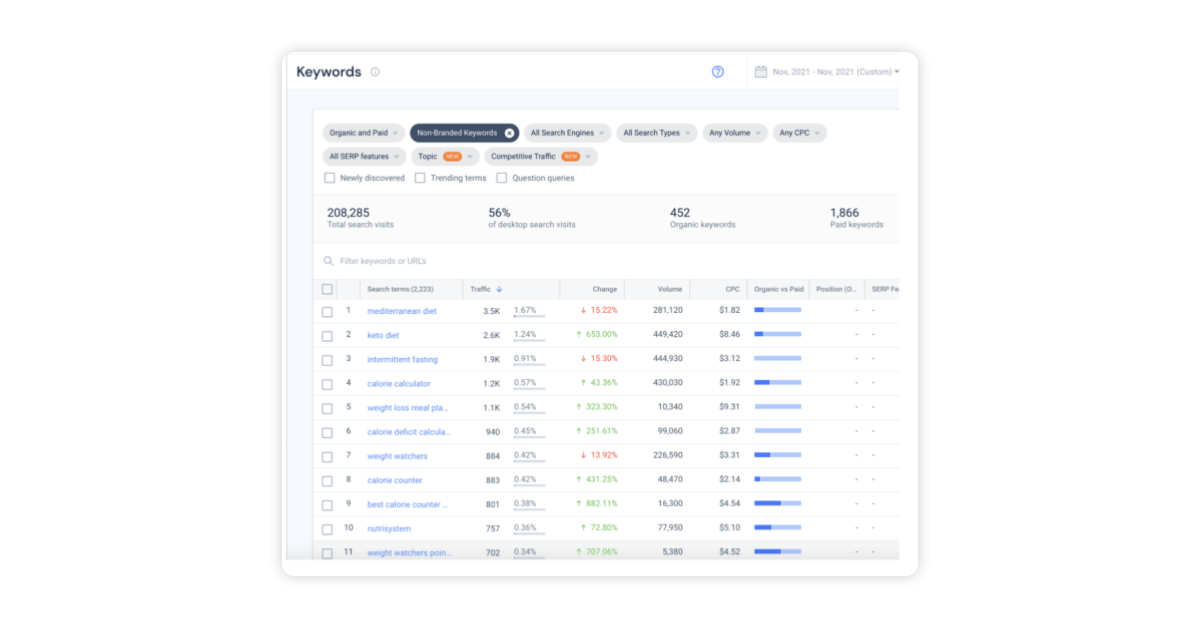
Here we’re going to add keywords like “mediterranean diet,” “keto diet,” “intermittent fasting,” “calorie calculator,” “weight loss meal plan,” etc. to a new custom audience Segment.
Add the top non-branded keywords like these to a custom segment and create that custom audience.
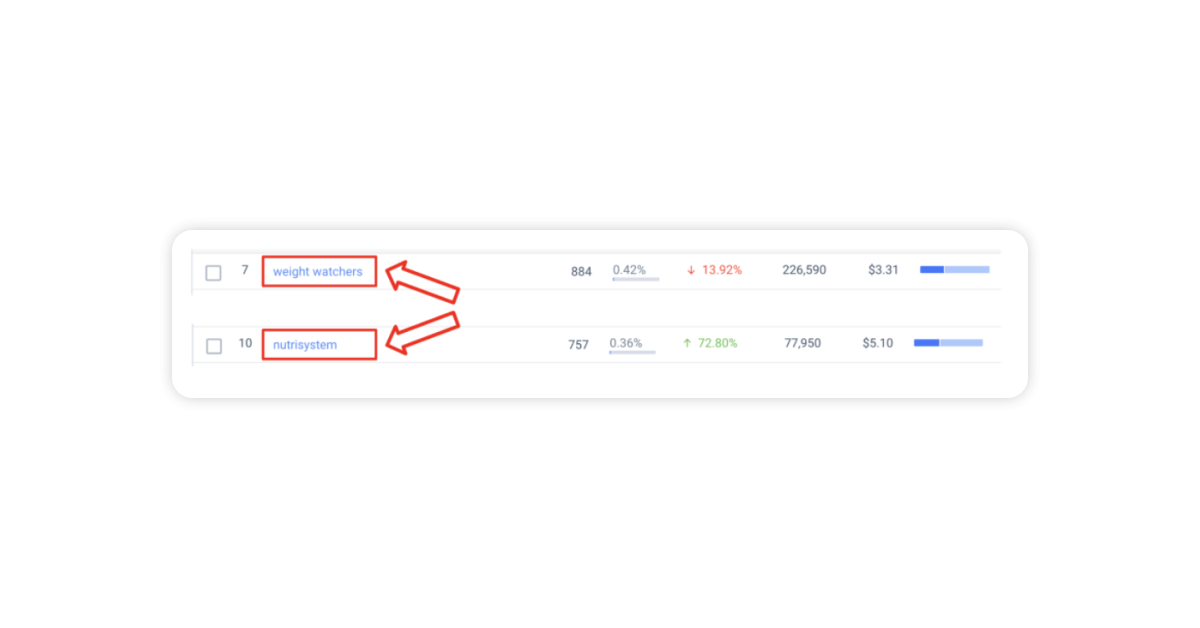
(Note: Save the competitor branded keywords (like “weight watchers” and “nutrisystem”) for the next step.)
Audience #1 complete. On to the next.
Here we’re going to build a custom audience of Noom’s competitors.
Why it works:
If someone is in the market for Noom or a competitor, they should be a reasonable fit for Found, right? That’s the premise here.
How to do it:
You’ll see competitors Noom is already targeting in its Similarweb non-branded keyword report. Grab these names:
In addition to what you find in the Similarweb search report, start to use the “[competitor] vs ______” technique to grab possibilities from Google’s search auto-populate, like this:
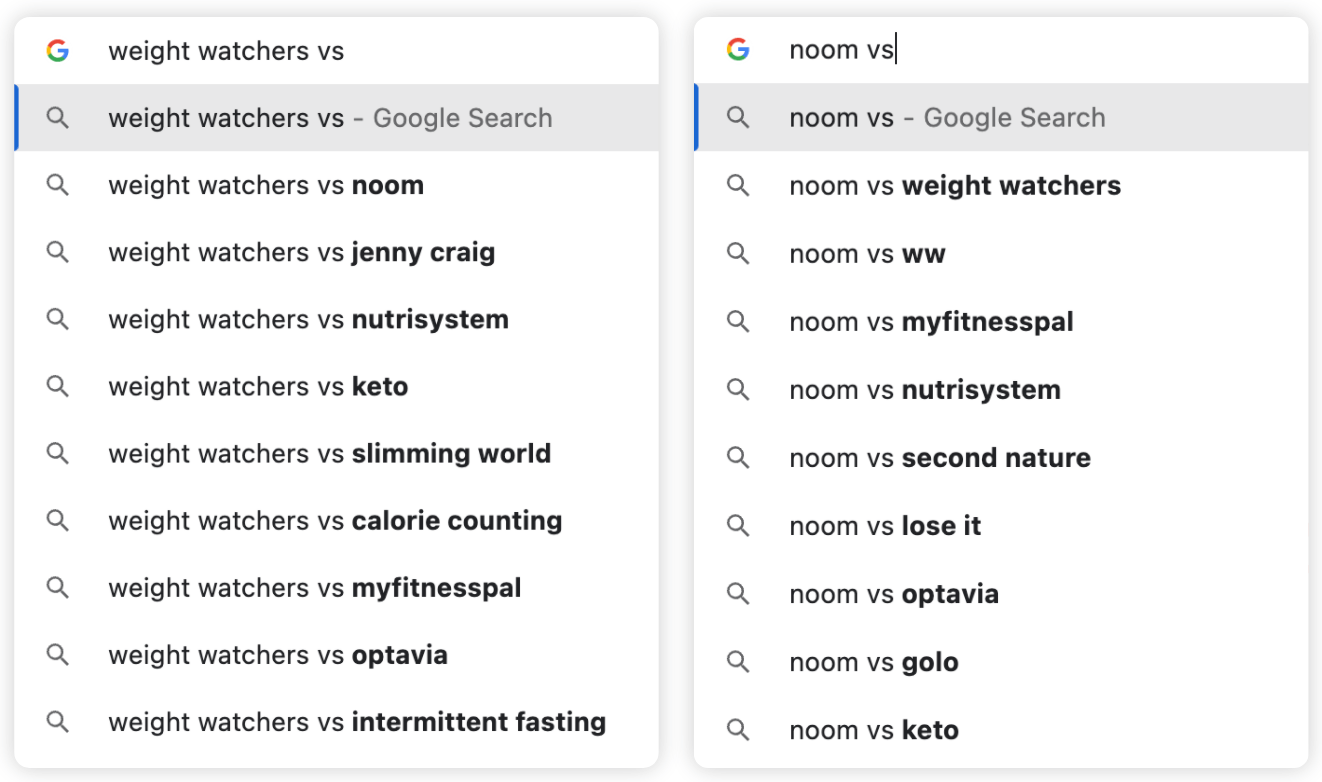
With this search we’ve added a few more competitors to the mix: “myfitnesspal,” and “second nature.”
Doing the search again, with different competitor terms, will give you even more results like you see above with the “weight watchers vs” search. Go ahead and try the same trick with other brand names and see how many relevant brands you can find.
Got around 15 relevant competitors? Great! On to our next custom audience.
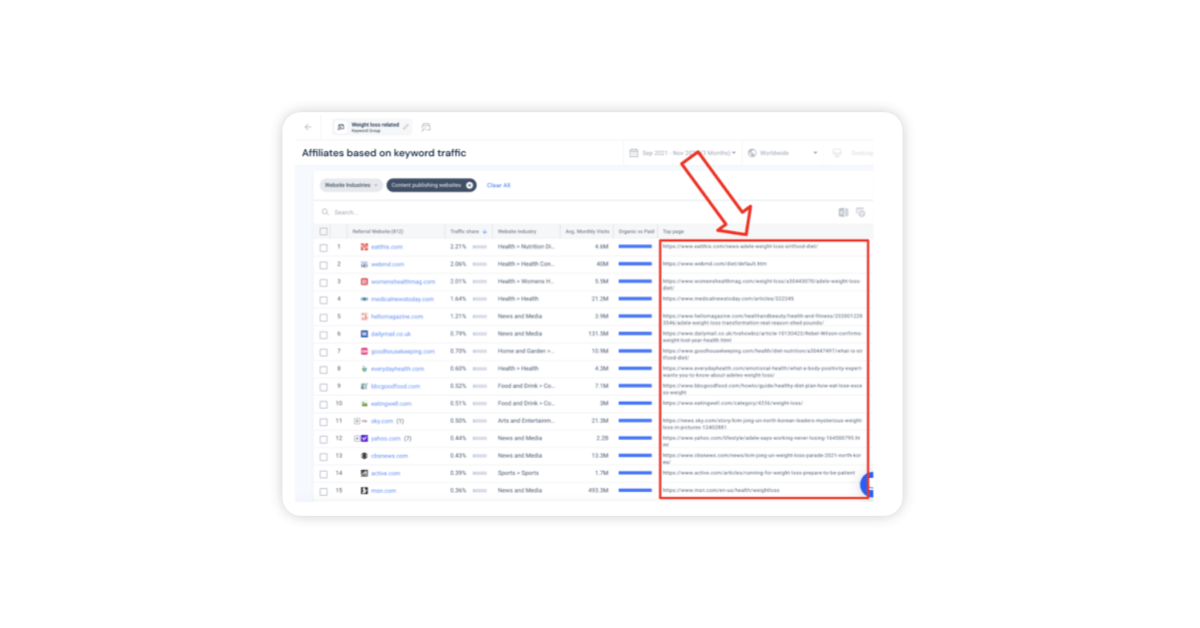
Here we’re going to use Similarweb’s Affiliate Publisher search to find the most relevant high-traffic affiliate publisher sites in your niche.
From this, we’ll build another seed audience of highly relevant, high-traffic URLs to use as a basis for a custom audience. This approach gives you some very unique and highly scalable seed data.
Why it works:
Customers in your market are visiting these sites – and buying from ads on them – en masse. That’s why affiliate advertisers are placing so many ads on these specific URLs.
Here we’re leveraging Google’s intelligence to find other people just like these, who will be a great fit for Found.
How to do it:
In Similarweb affiliate research, go to Keyword Affiliates, and type in your keyword:
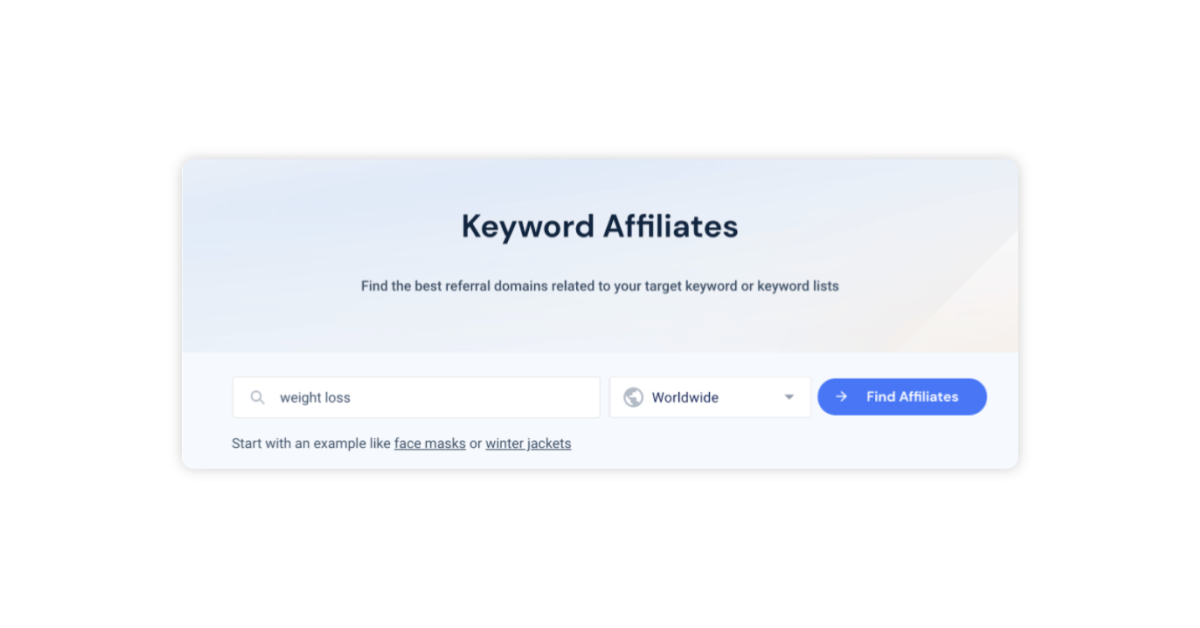
Once you click “Find Affiliates” you’ll see a bunch of publisher URLs showing top traffic receiving pages for your keywords:
Build a custom audience with Noom’s branded search keywords, so people similar to those searching for Noom see Found’s ads.
Why it works:
Is Found looking to go head-to-head with Noom directly? This is a great way to do it.
Remember: nearly 50% of Noom’s search traffic is for branded keywords (meaning people searching for something related directly to “Noom”). Thanks to Noom’s $131 million+ in YouTube adspend, that means there’s A LOT of traffic for Found to target via this approach.
Just make sure Found’s ads address exactly why Found is a better option than Noom – more on that in the next section.
How to do it:
Simply search for all of Noom’s branded keywords in Simliarweb. Build a custom audience using the highest search volume branded keywords as “seed” keywords.
That’s it!
Wrapping up…
Ok – if you’ve been following along for your own business, now you have four solid audiences to start testing with.
What about the actual YouTube ads themselves?
Let’s talk about that next…
Noom spent $131 million + on YouTube ads…
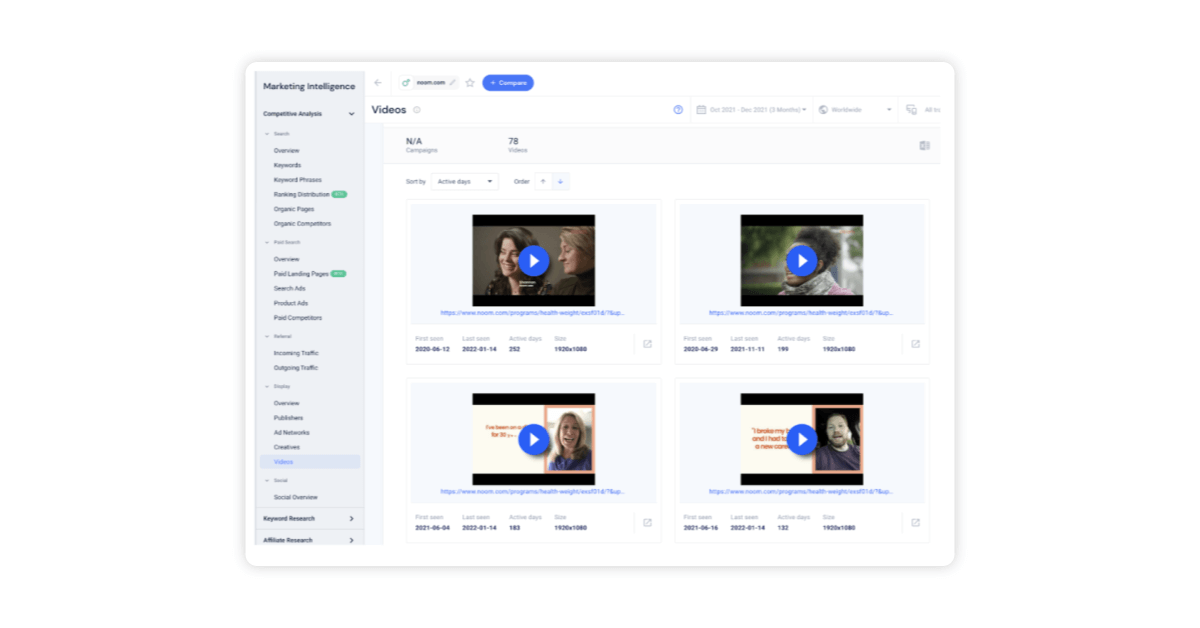
Now that we have some good initial targeting in place, let’s open up Similarweb and look at Noom’s YouTube ads to help us build out the YouTube ads we’ll use to scale Found.
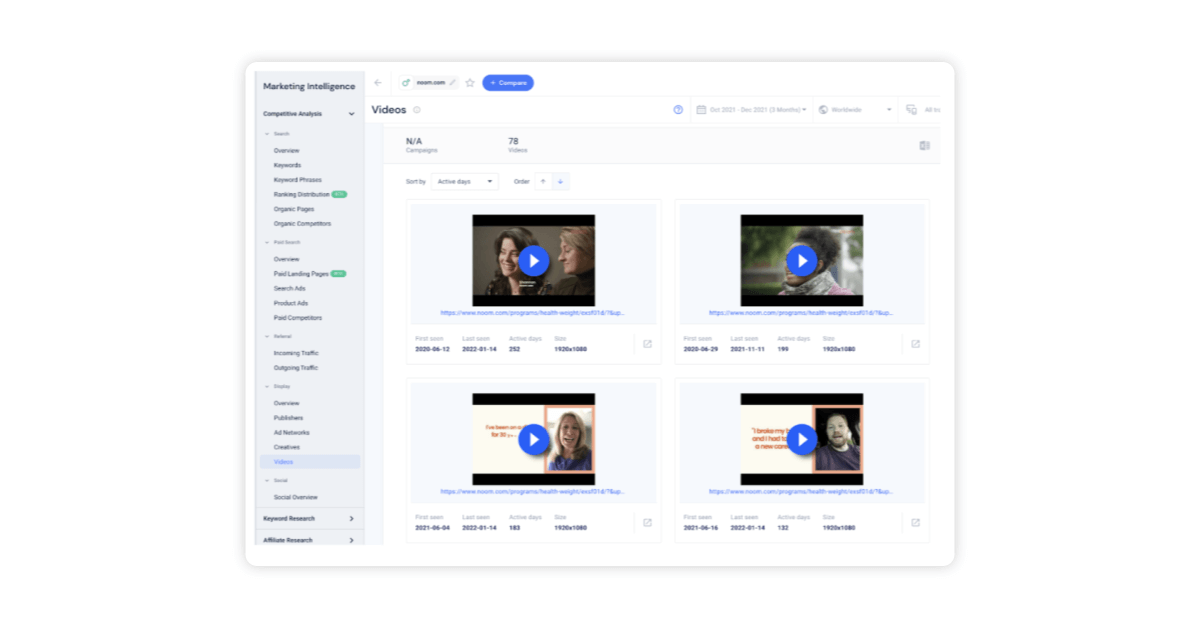
“Imitate first, innovate second.”
Maybe you’ve heard this quote before. No idea who said it first, but it applies here. Don’t take it the wrong way: We’re not going to copy Noom’s ads. But we definitely want to see what elements are working for Noom, and model/apply these learnings for our first iterations of Found’s YouTube ads.
Let’s take a closer look…
First, it’s crucial to keep in mind YouTube in-stream ad structure:
These two milestones are particularly important when it comes to dissecting exactly why Noom’s ads have been so successful.
Your YouTube ad’s first goal: Get viewers to stick around past 10 seconds.
How does Noom do this? By packing those first 10 seconds with overwhelming, “stacked” social proof. Let’s see this point in action with Noom’s top-performing YouTube ad from the past 30 days.
Notice how In the first 10 seconds, we’re hit with three pieces of overwhelming proof:
This video catches relevant user attention right away with these amazing results. Plus, the clips’ user-generated content (UGC) format makes the stories believable.
Noom did a great job here, and many viewers will have stuck around past 10 seconds, giving the app more time to make its pitch.
Viewers are left thinking “This Noom thing clearly works. These results are amazing…” But this begs the next question: “Will it work for me?”
Because here’s the thing: The average adult tries 126 different diets in their lifetime (not to mention other approaches like exercise programs, supplements, etc.)
Chances are, this is NOT the first time our viewer has tried to lose weight.
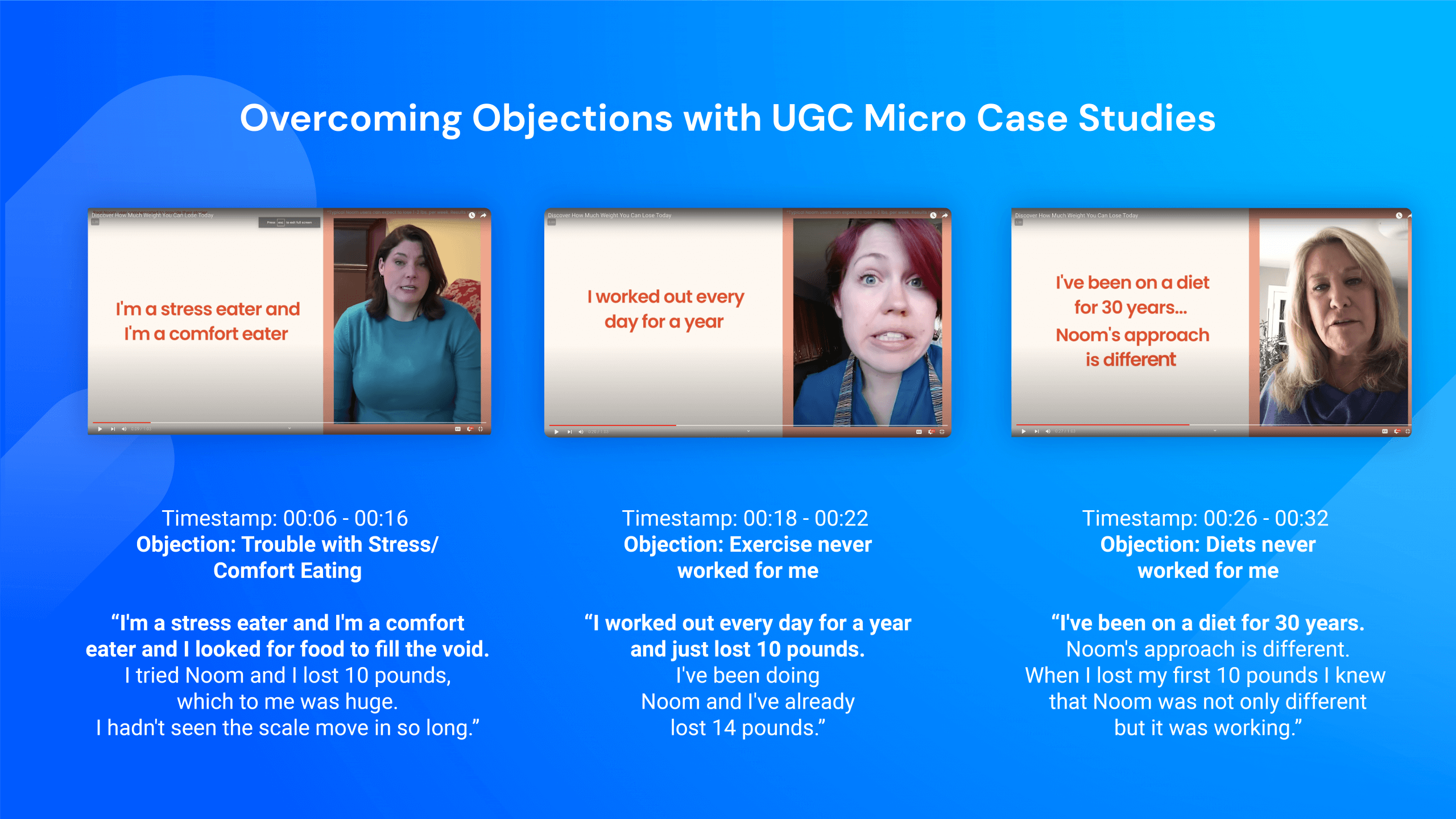
At this point, they’re probably having thoughts like “I’ve tried doing XYZ before to lose weight, and it didn’t work, because ABC…”, which leads us to the next major takeaway from Noom’s videos…
How does Noom skillfully handle these objections? With simplified UGC “micro case studies” showing that Noom users have successfully overcome these same challenges and used the app to lose weight. Again – note how the UGC format lends believability to what these users are saying.
Fast forward to the end of the video. Many YouTube advertisers make a simple, easy-to-avoid mistake. They do the very hard work of…
But then, at the end of their video: They don’t give their viewer enough time to actually click through and take the next step!
Don’t do this. Instead, at the end of your video, make sure to give your viewer good reasons – and enough time – to actually click on your YouTube ad and take the next step in your sales funnel. (10 seconds or more is a great place to start.)
Be like Noom here and:
Here’s a screenshot from the ad showing how Noom does this:
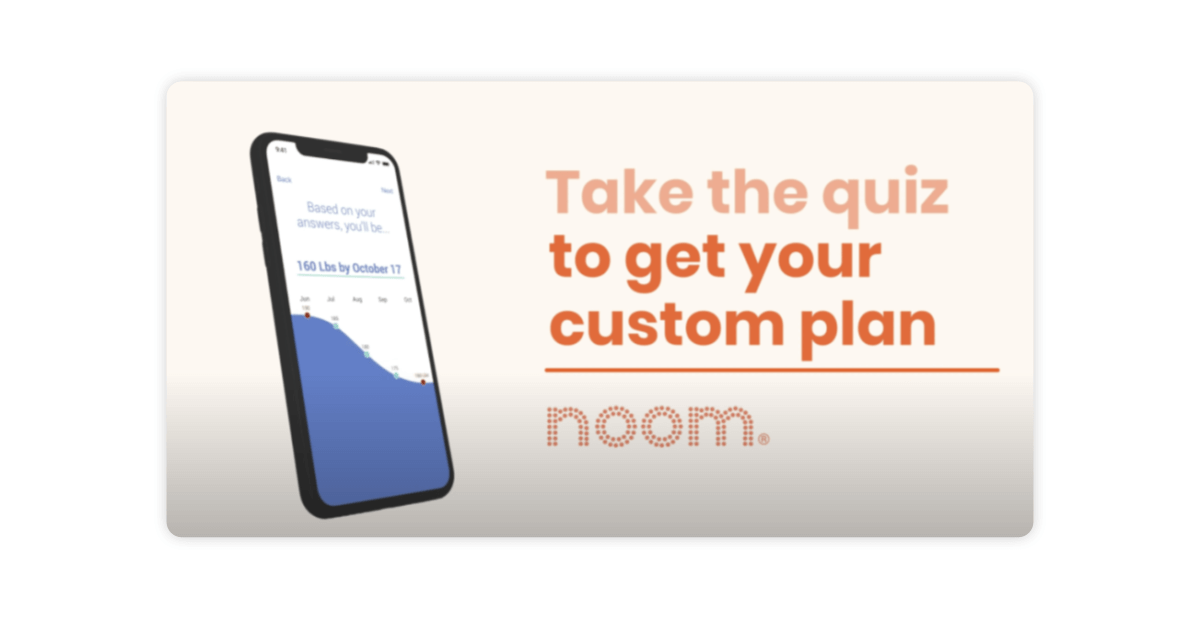
This call to action (CTA) section ensures that Noom will convert as many interested viewers as possible to clicks, and as a result, conversions.
On to our last takeaway from Noom’s ads…
Let’s zoom out a bit and think about overall strategy. Weight loss is a crowded market. Folks will have heard diet/weight loss companies promise pretty much everything.
Key Point: Pay attention to what your prospect already knows about their problem and your solution to that problem.
Two books go into great detail on this:
Depending on where your prospect’s awareness is relative to, they’ll fall into one of Gene Schwartz’s 5 Stages of Awareness:
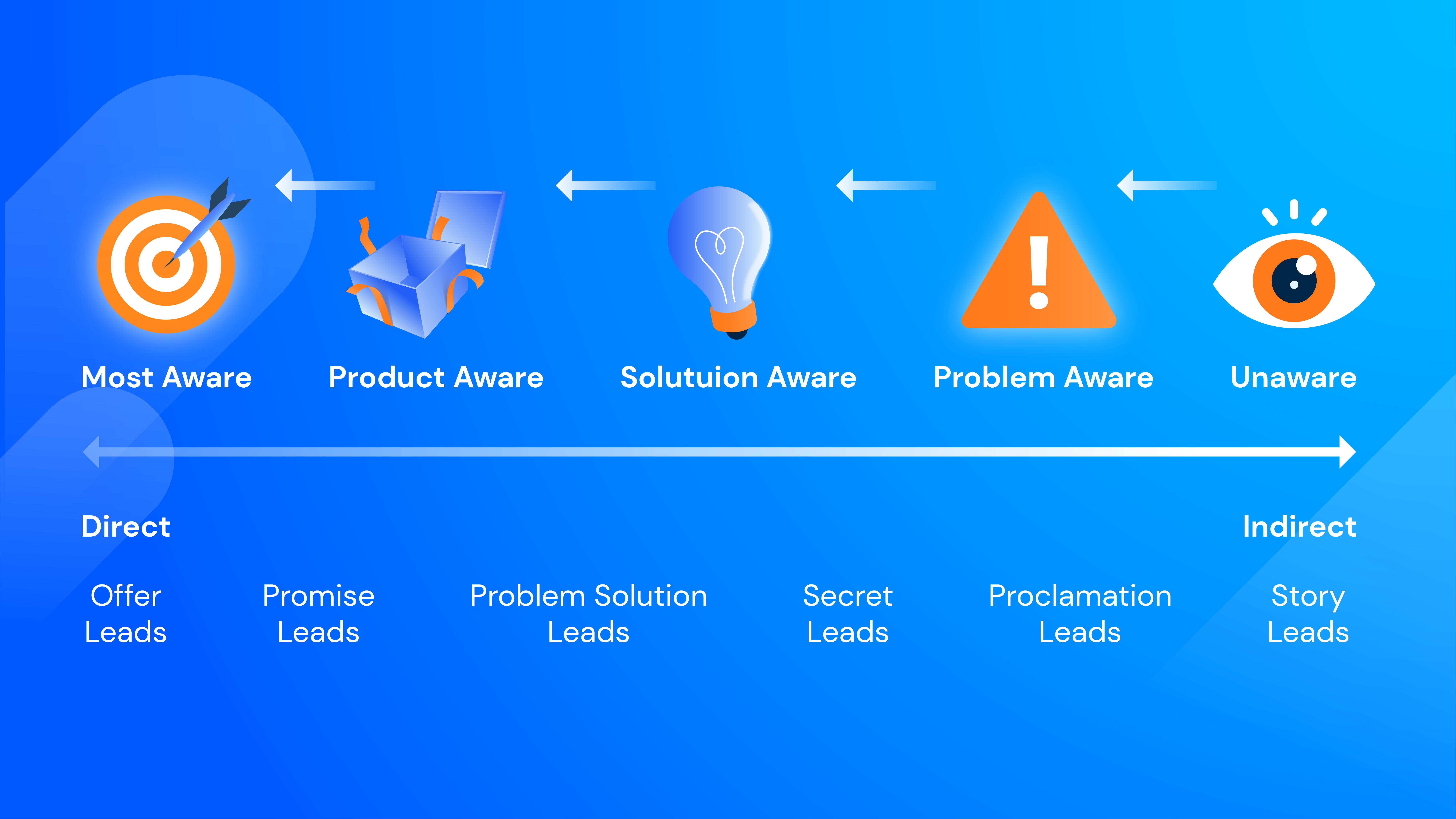
Depending on which stage of awareness someone is in, they’ll respond differently to different “leads” or ad intros. We can get into more detail on how these stages of awareness and lead types in a future post. But for now, here’s what to remember:
Key Point: Testing new leads is always going to be your highest leverage activity. And when possible, test new ads that lead with emotion.
Here’s one ad with over $1 million adspend that shows how Noom applied this approach. Notice how in addition to the more direct intros/leads we’ve seen Noom use so far, it also uses an emotion-heavy problem-solution/ story-lead hybrid approach:
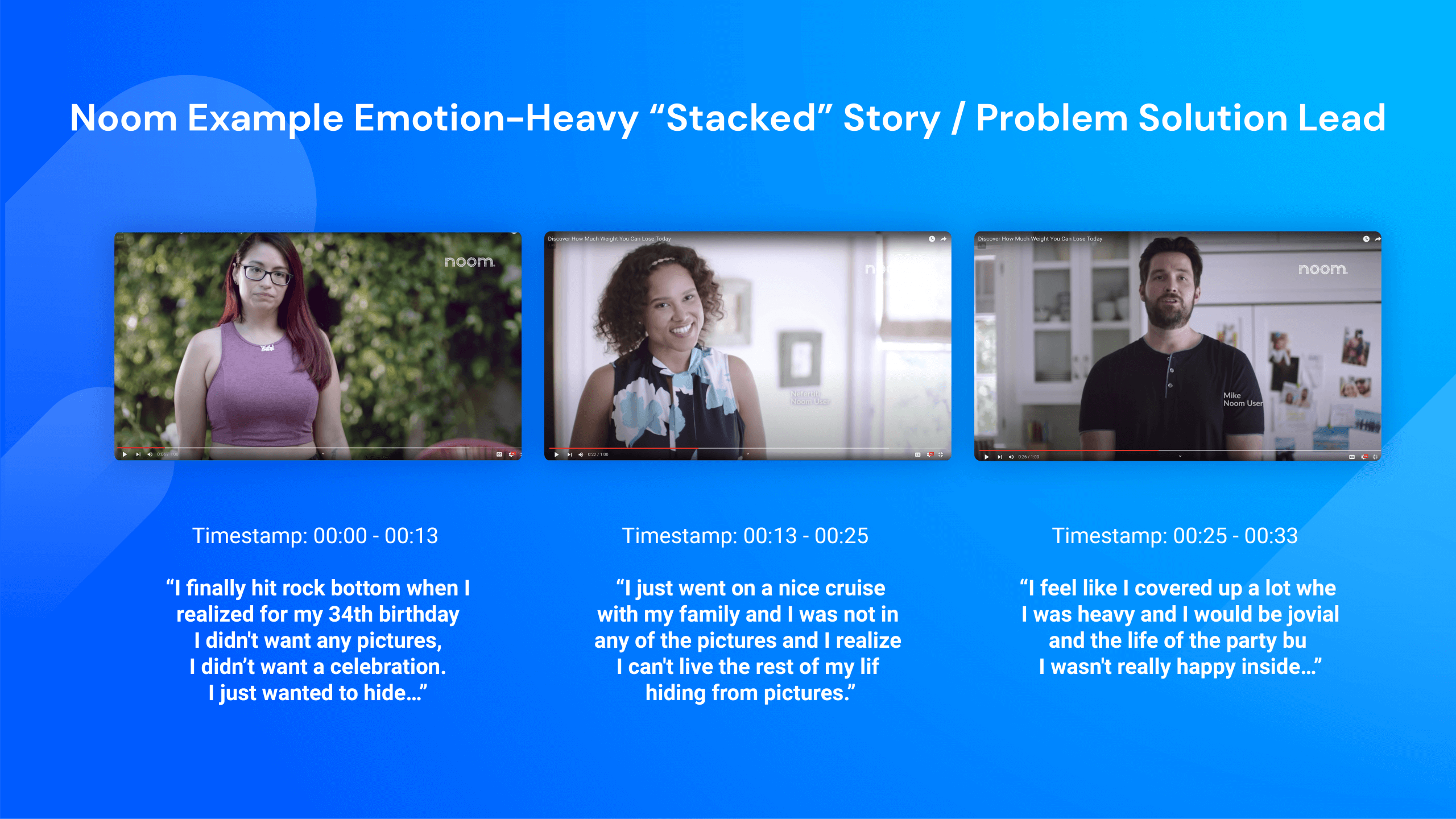
Notice how Noom leads here by presenting the “problem” (being overweight) in very emotional, personal terms for each of these users. After 00:33 you’ll see this video transition to the “solution”, where each user shares how Noom helped them lose weight for good.
Ok, now we’ve seen what worked for Noom. What can we do to create Found’s YouTube ads?
It’s helpful to think of ads in terms of their component parts or “bricks” that you can stack together to make a full ad. This gives you many options you can mix and match to test and find the best possible combination of ad elements.
When you’re making ads, It’s often helpful to visualize the three main parts of an ad and start by “scrapbooking” different elements from your research into these three main parts:
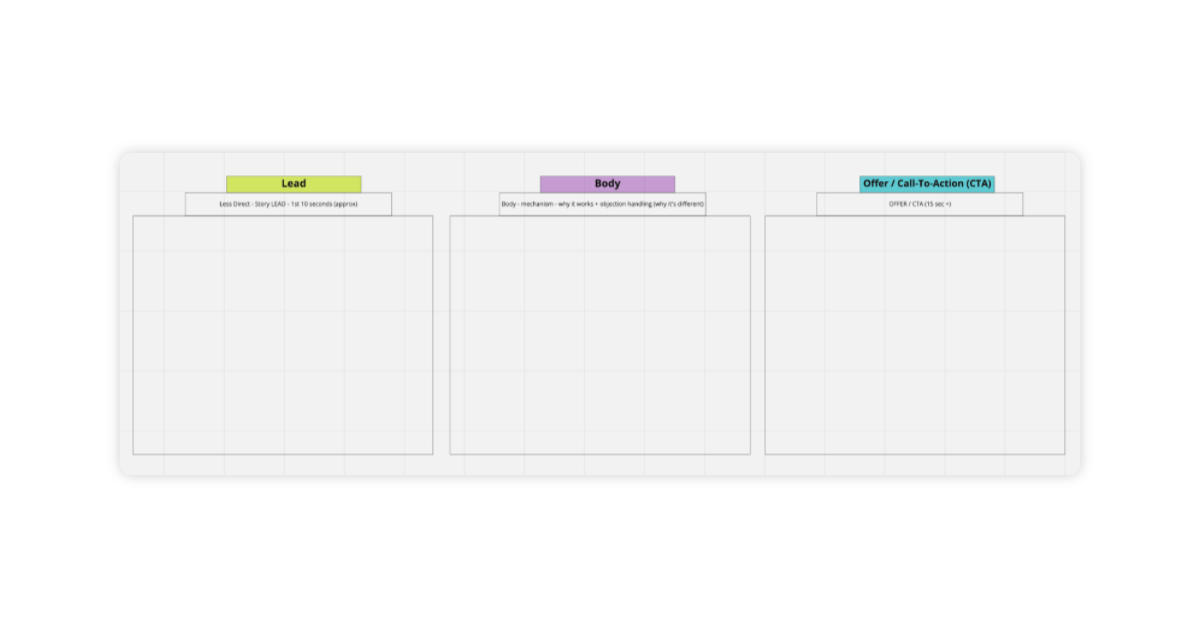
Miro’s virtual project collage space is a great tool for this initial brainstorm stage of ad creation, as seen above in the screenshot from the Miro board we used for this brainstorm. Watch the full 38-minute breakdown of how we “scrapbooked” our way to six new leads with Miro here.
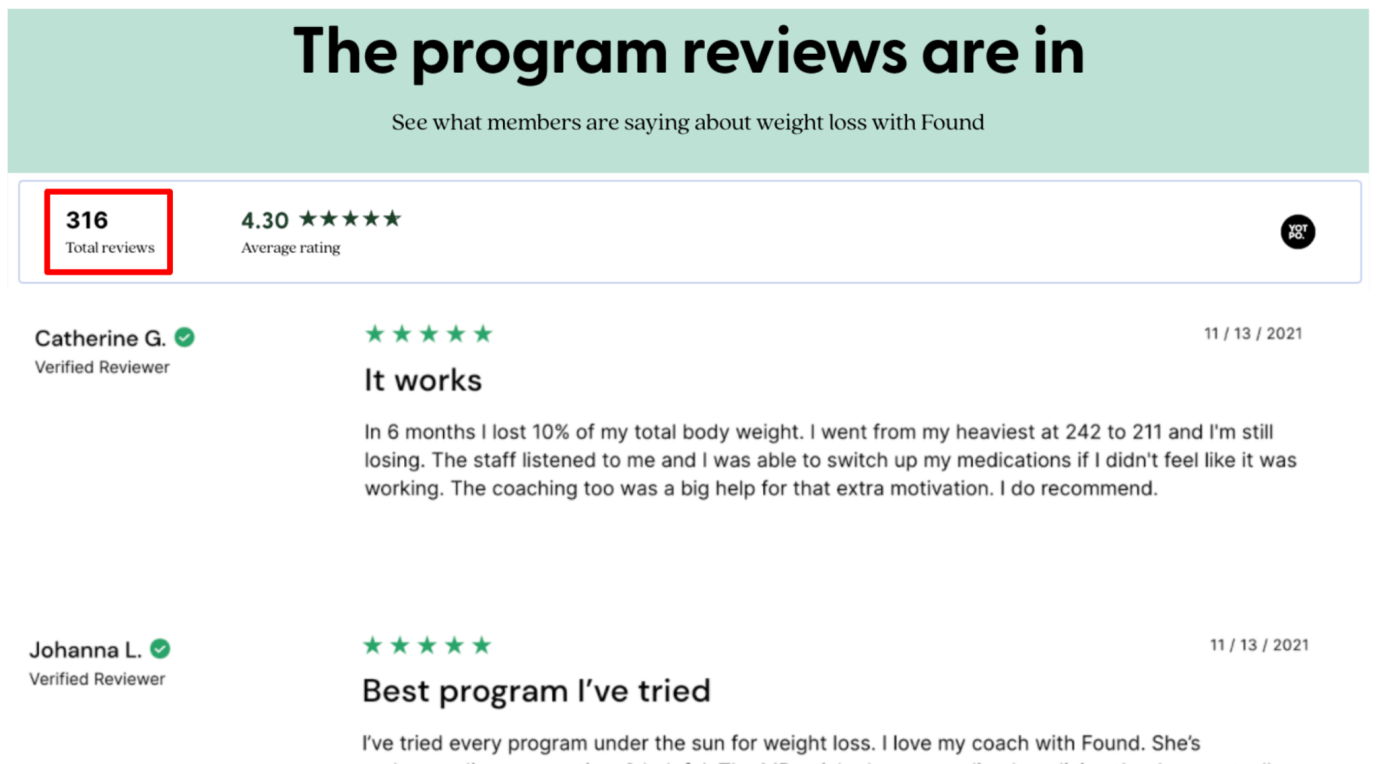
Let’s start with an extremely direct lead, similar to this one of Noom’s. By cutting and pasting social proof from Found’s review page, we’re going to see we have a ton of options here. The homepage has some very impressive results snapshots we could use – see below.
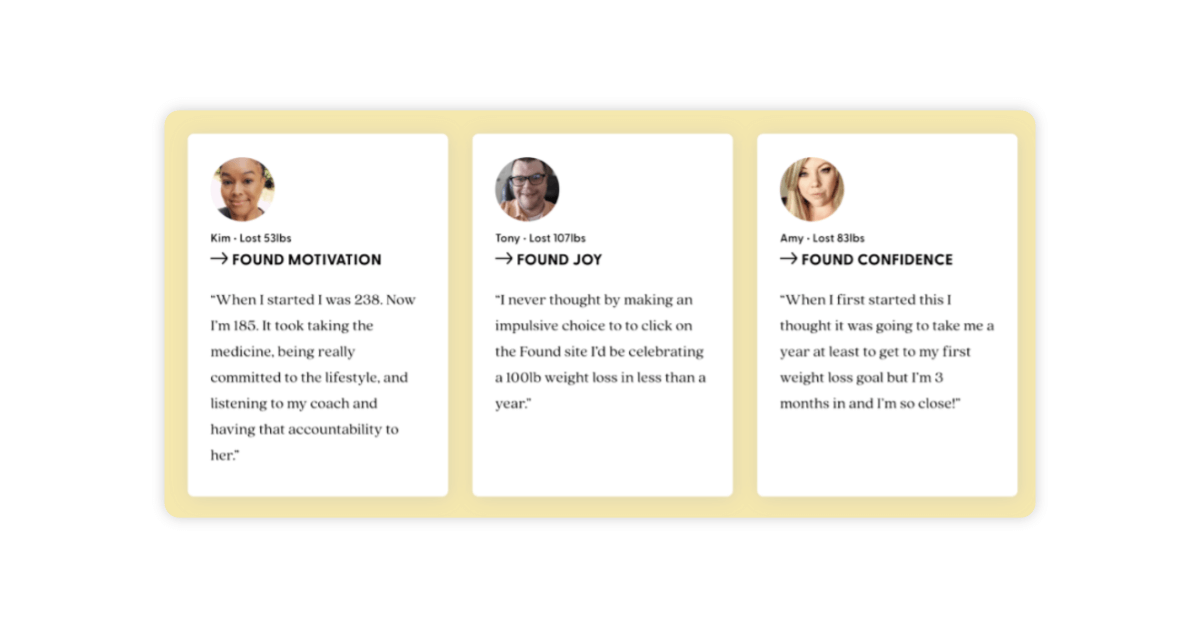
But on Found’s review pages, there are literally hundreds more reviews, often with much more detail on the user’s personal situation:
For this first lead, we’ve taken a few of the most impressive weight loss results and “stacked” them together in the first 10 seconds:
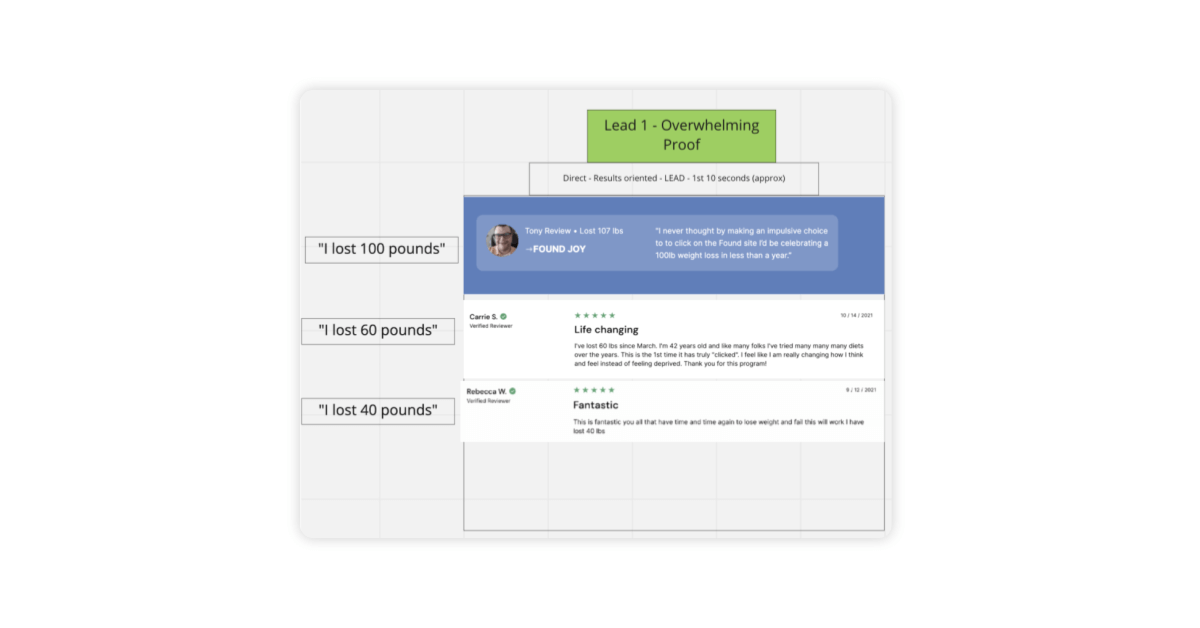
Footage: Of course, now it’s up to Found to go out and get these users to create User Generated Content (like Noom did) so they actually have these result testimonials in video format.
For this lead, let’s head to the opposite end of our lead spectrum and build a more indirect story lead that connects more with our viewers’ emotions. Again, there are many great examples from Found’s testimonials. But here’s one that really stood out:
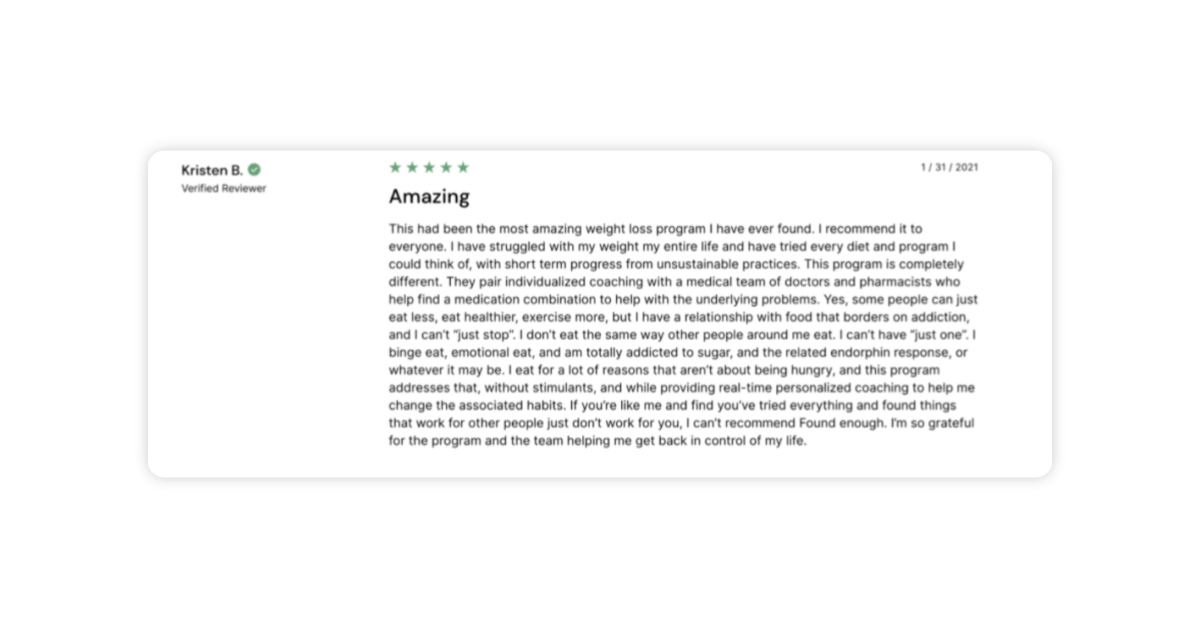
Here’s how we remixed the different elements from this testimonial into an entirely new lead:
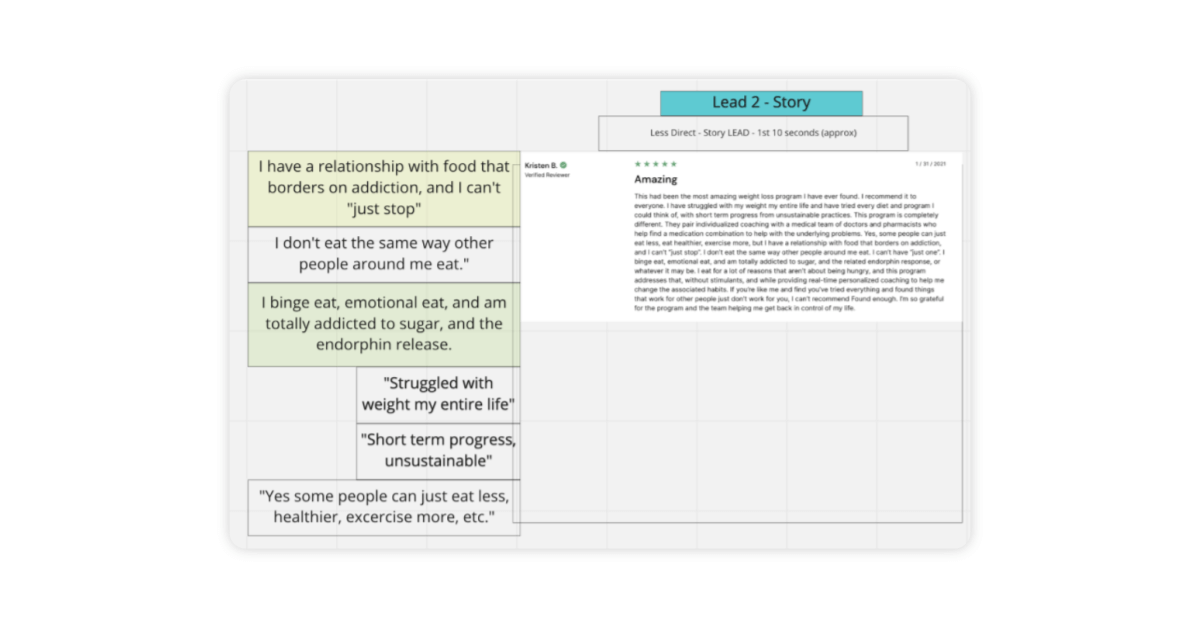
This testimonial also gave us a nice transition to revealing Found as the solution, later on in the ad. We “scrapbooked” this also for a possible transitional element to use in ads:
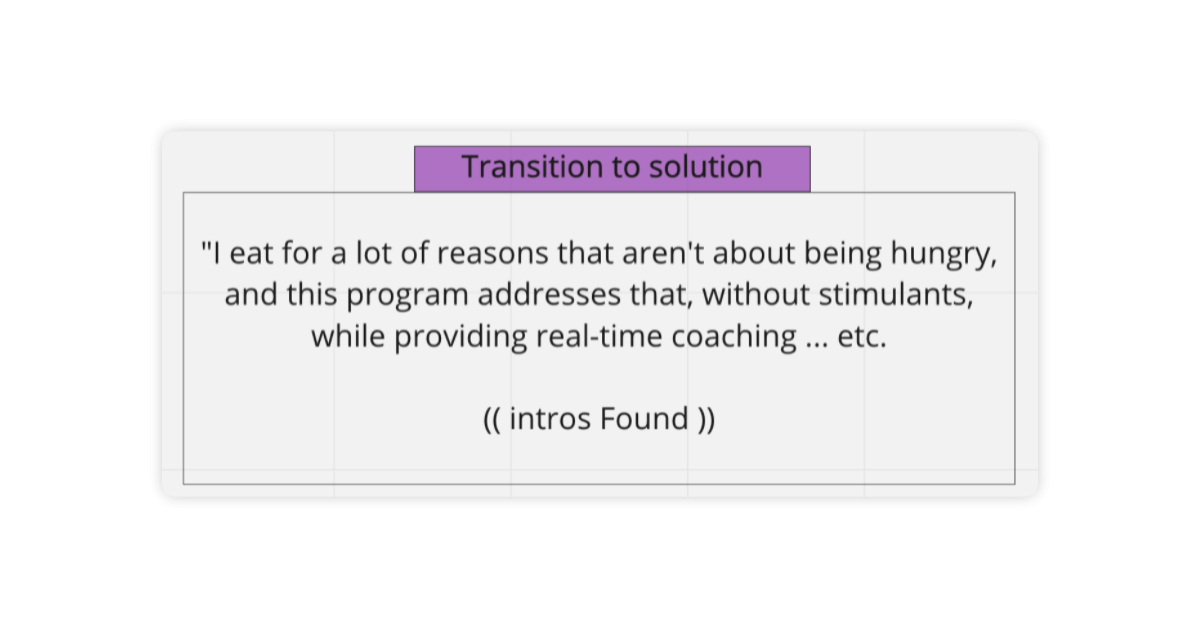
“I can’t lose weight because I am [X] age” seems to be a common objection. To address this right out of the gate, we’ve taken a couple of older Found users and created a lead using their testimonials:
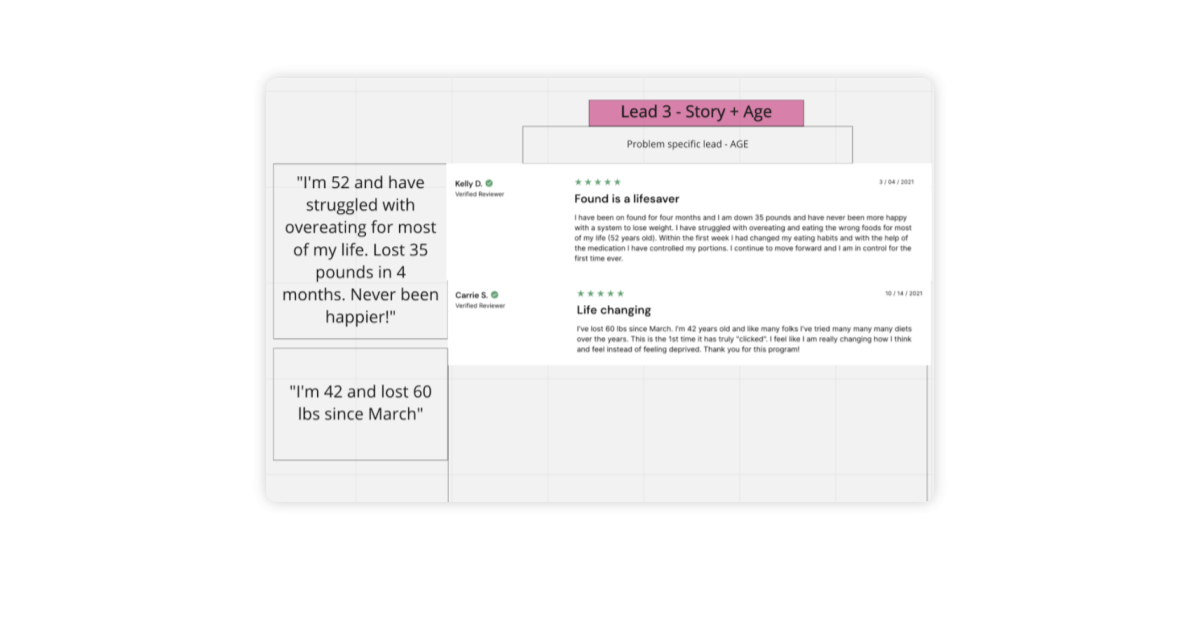
Here we grabbed one of Found’s many post-pregnancy weight loss success stories to address this common situation:
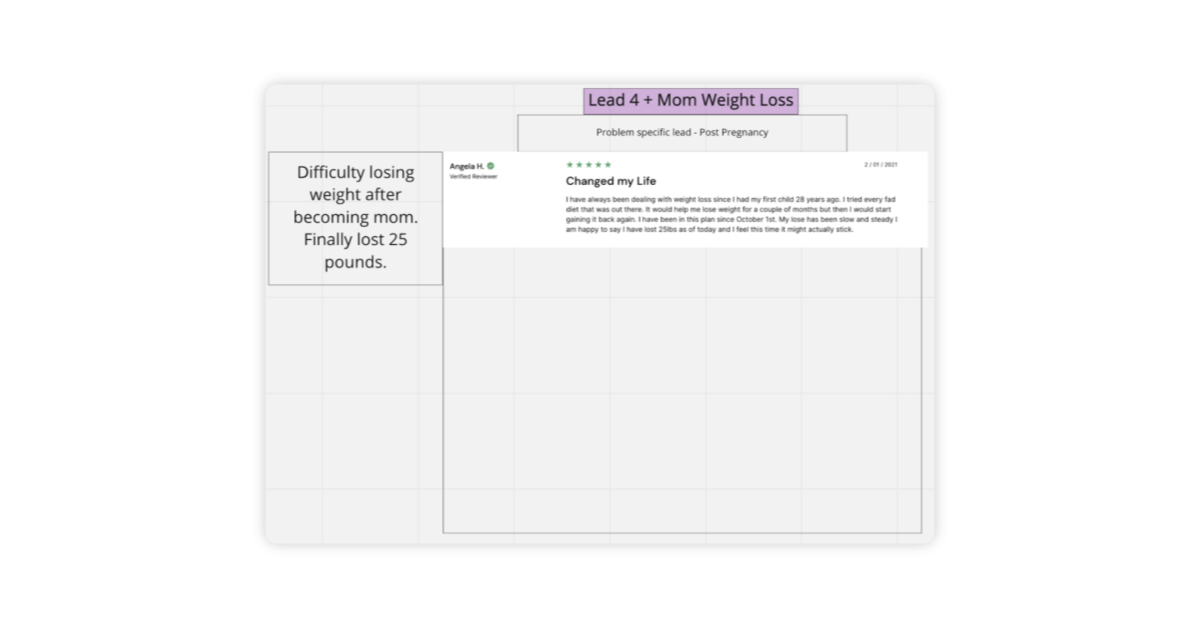
Here we addressed the solution aware section of the audience by spotlighting some of the comments where people explained why Found is different from the many other weight loss approaches they’ve tried.
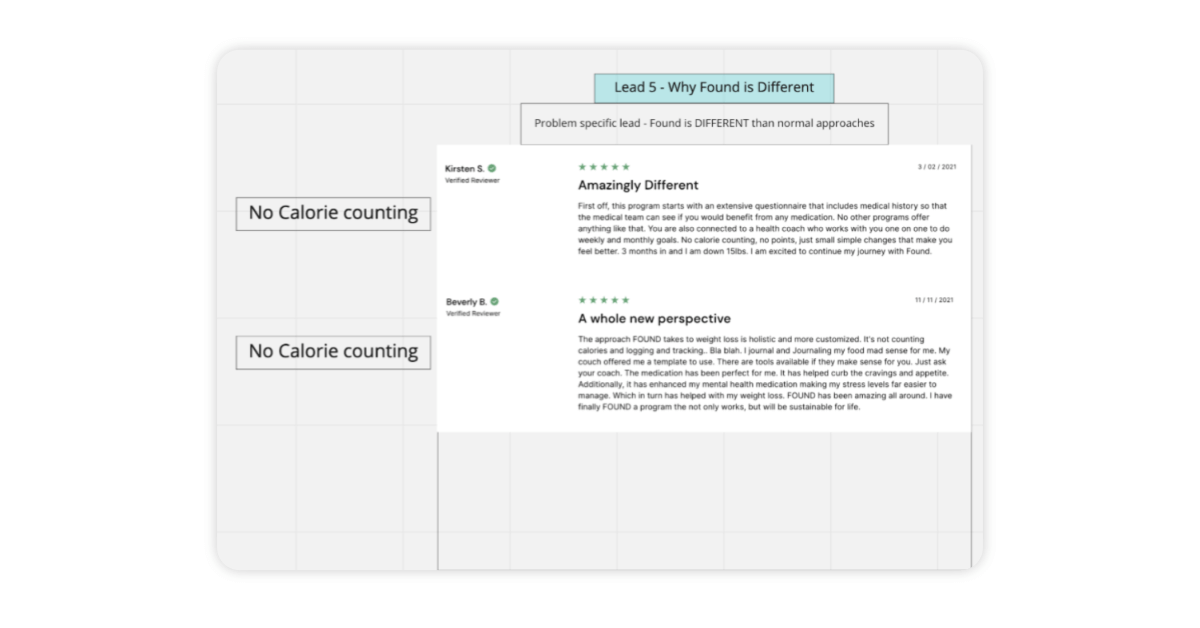
Here we use a two-part lead that targets a more solution-aware audience:
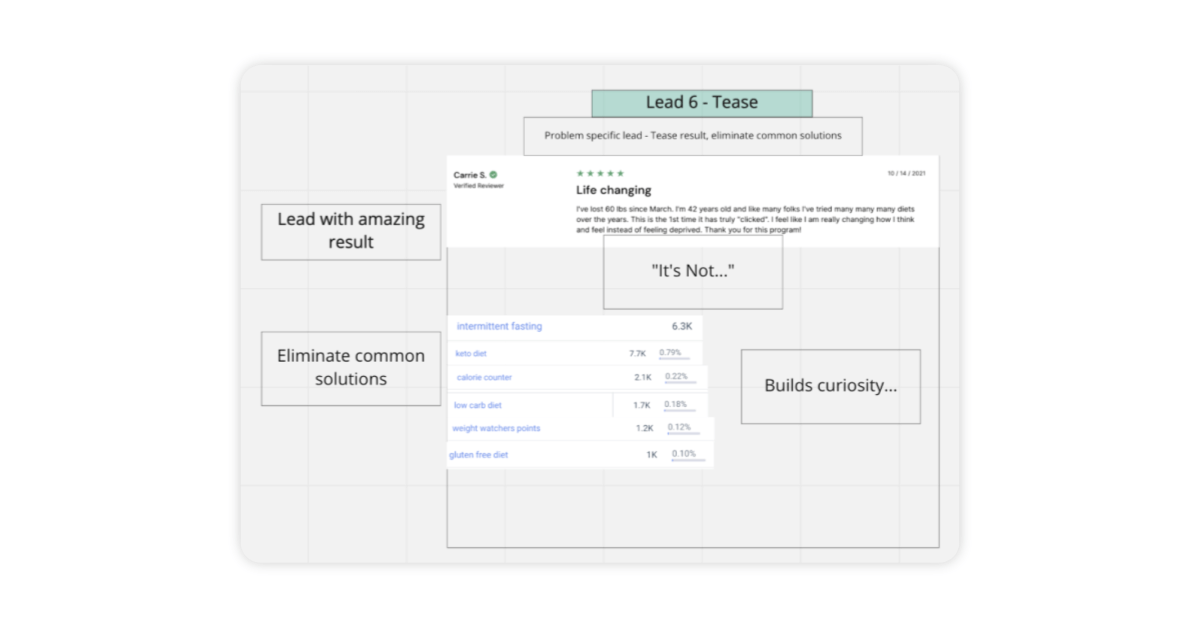
Where did we get these common solutions? They’re from Similarweb’s data on some of Noom’s highest volume non-branded search terms.
These terms’ volume shows that they deliver high-intent traffic to Noom, so we’re going to call out the same terms in our ad here, to build more curiosity on exactly what Found is and why it works so well.
Ok! We now have six leads to test. That was easy, right? Now onto the body of the YouTube ad:
Now that we’ve grabbed viewers’ attention with these amazing results and stories, they’re going to be wondering why Found is different and why exactly it works so well.
How are we going to do this? Again – we’re simply going to re-purpose a lot of amazing info that Found is already using on its site. Check out the full walkthrough on Miro here or see the overview from our Miro board for this section:
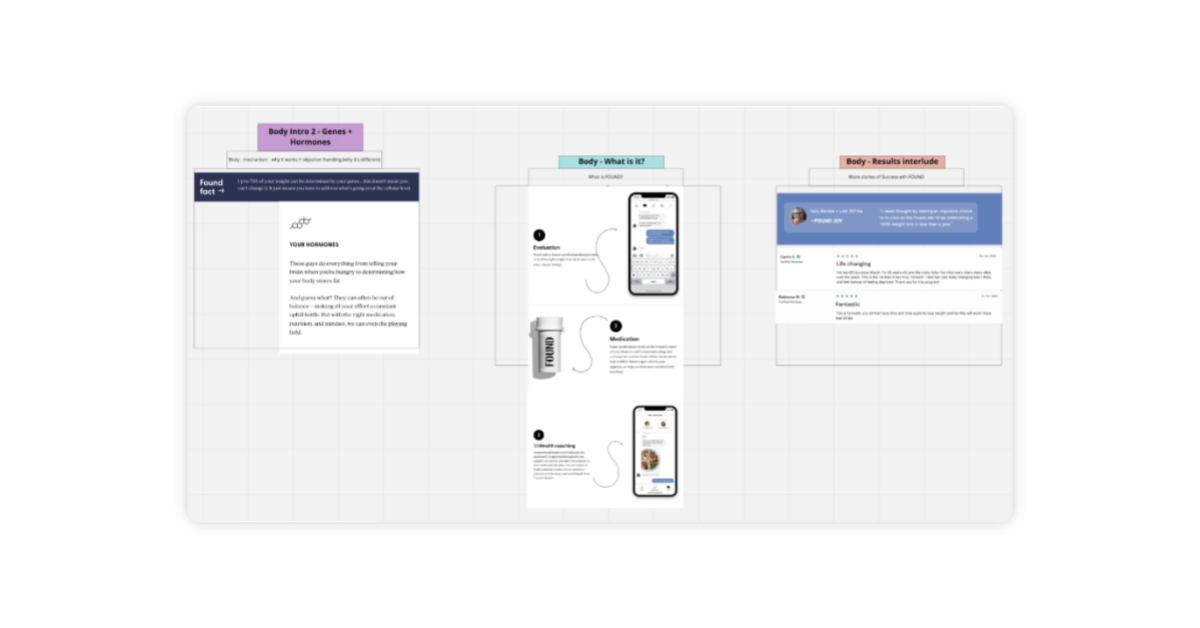
In the body of the ad, we need to:
Here we’ve extracted two elements explaining why Found works and why it’s different while showing how it debunks the common “you simply need to eat less and move more to lose weight” concept:
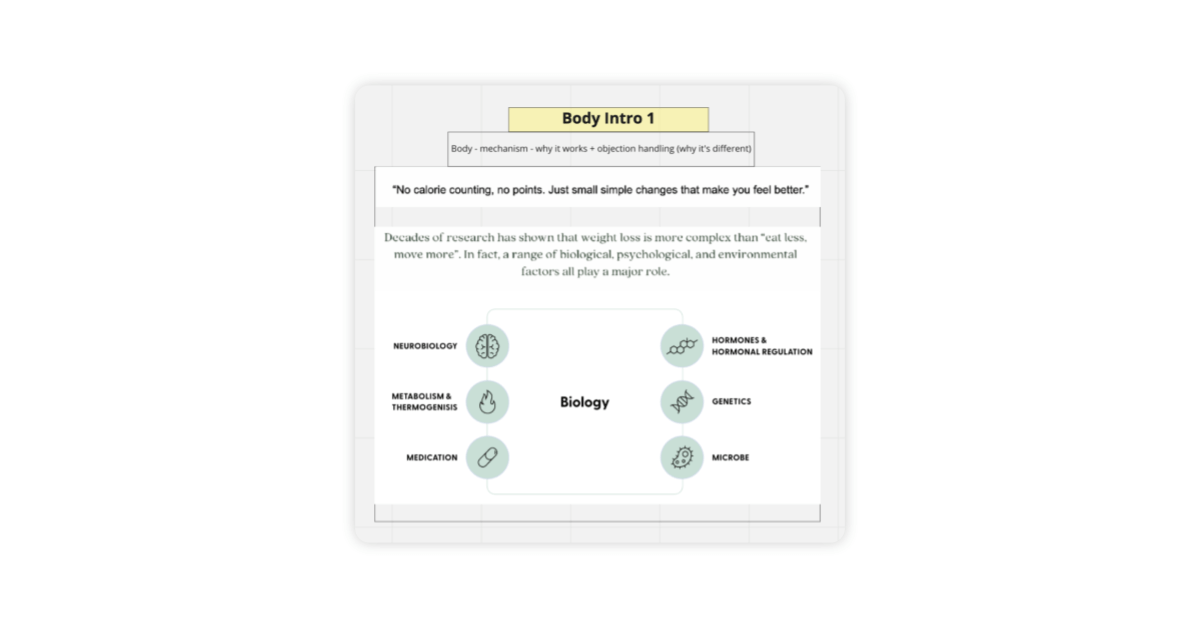
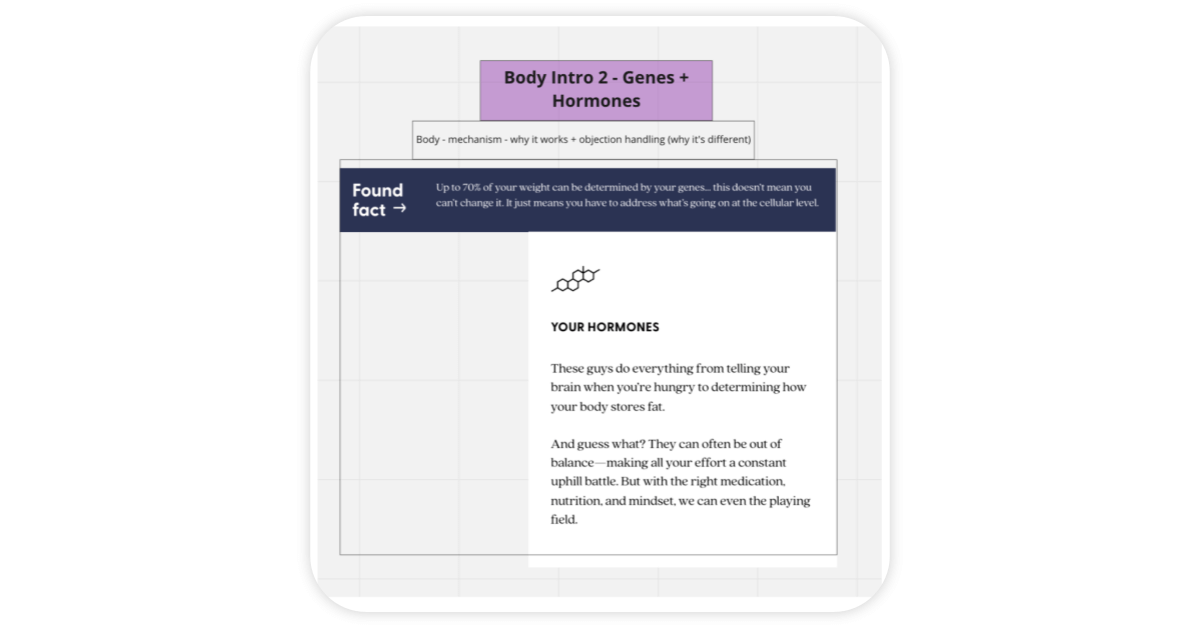
In the second element of the body, we’re focusing more on the fact that 70% of weight loss is determined by genes and hormones, which most other approaches to weight loss can’t touch:
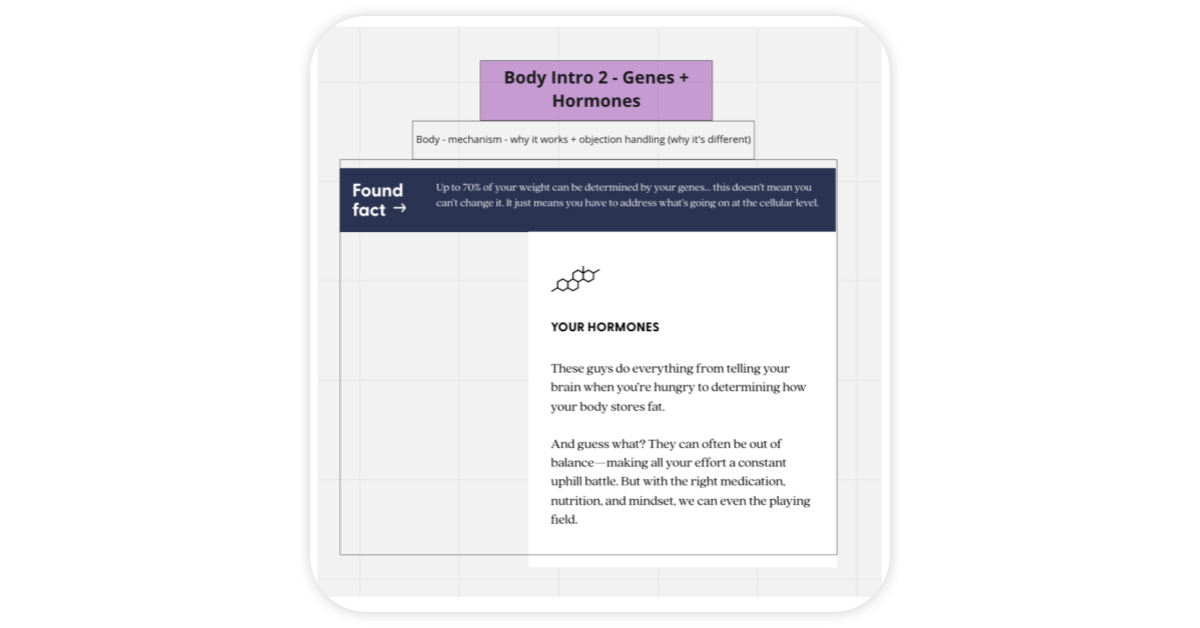
Now that our viewer clearly understands that Found
Let’s explain a bit about how easy and straightforward it is to actually use:
The process breaks down as:
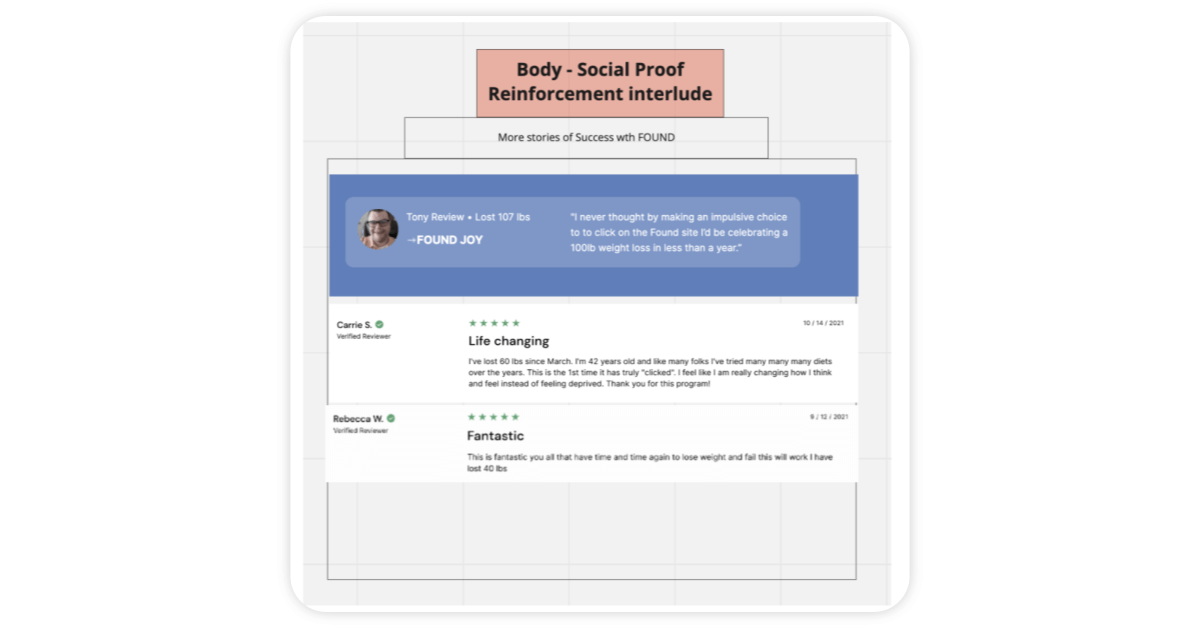
Now that viewers have some kind of context around how it works, let’s reinforce that Found does indeed work. Time for some more testimonials!
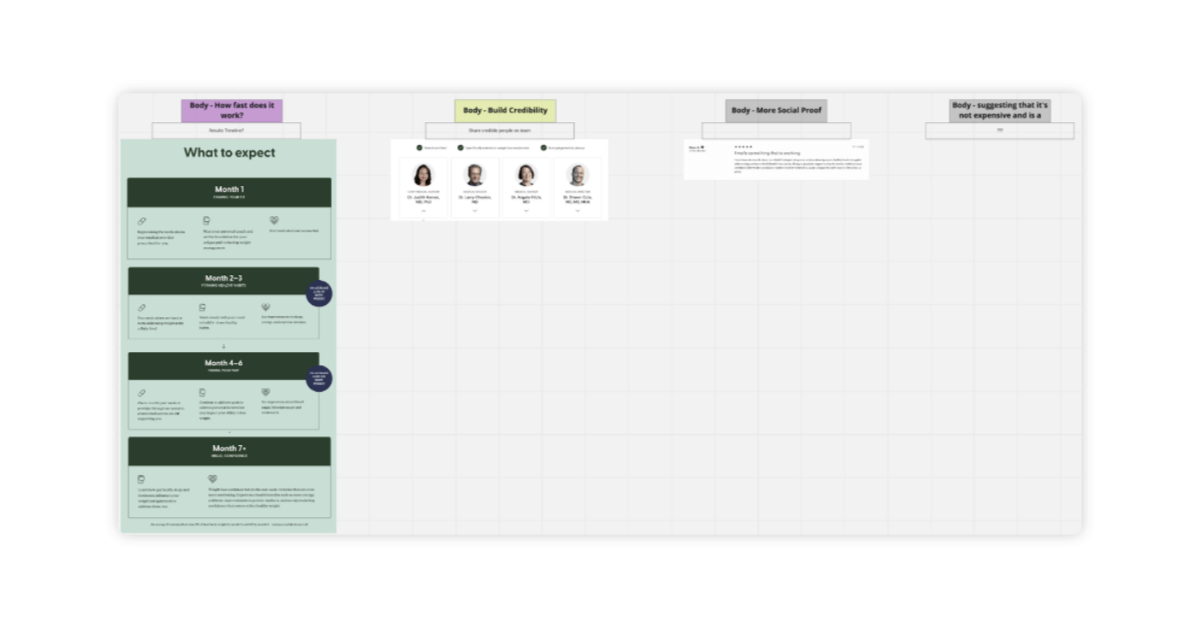
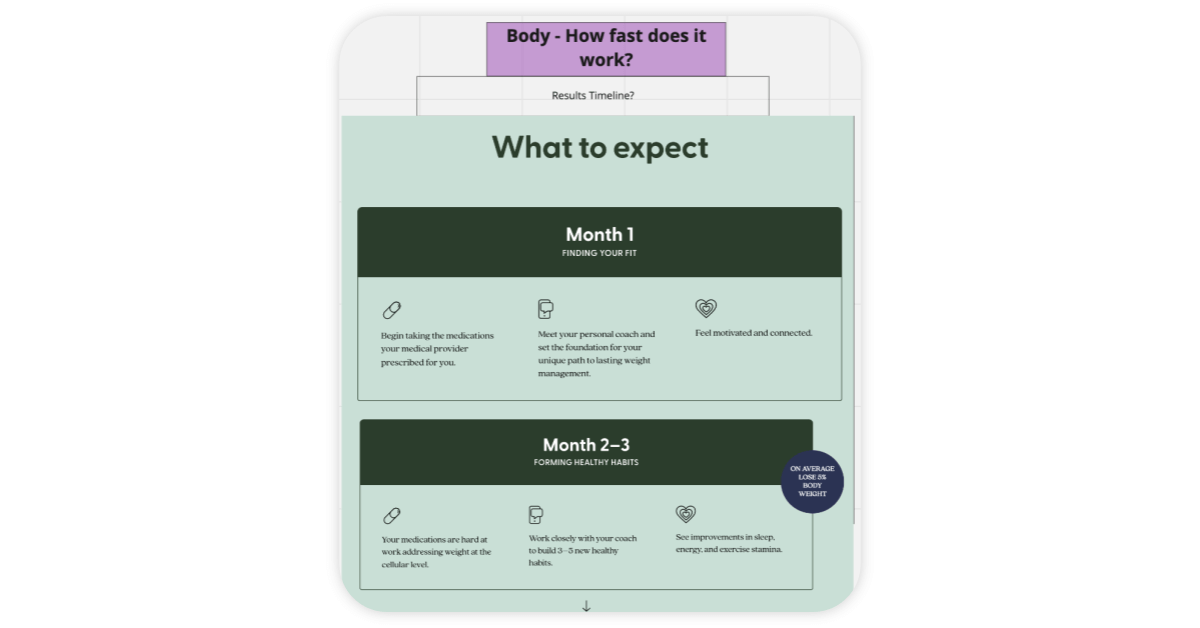
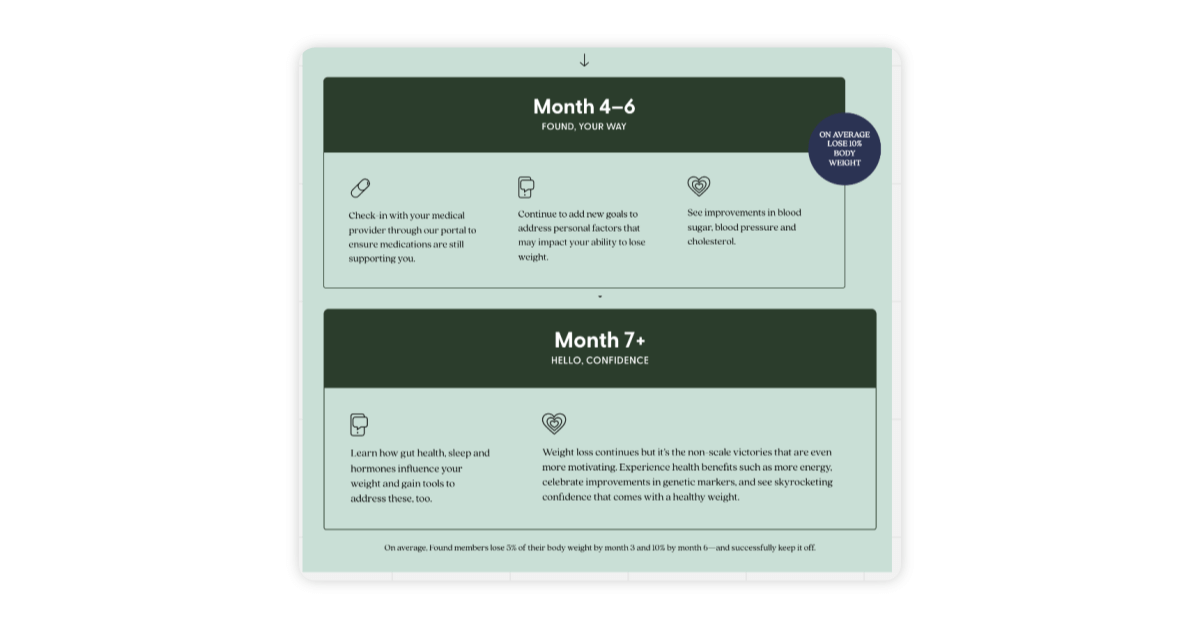
This market has heard “Lose weight FAST!” promises again and again. Found stands out by setting a realistic timeline because the service actually works and delivers sustainable results. Setting expectations properly here helps add validity to the results. So we’ve included this module from the sales page:
More credibility…
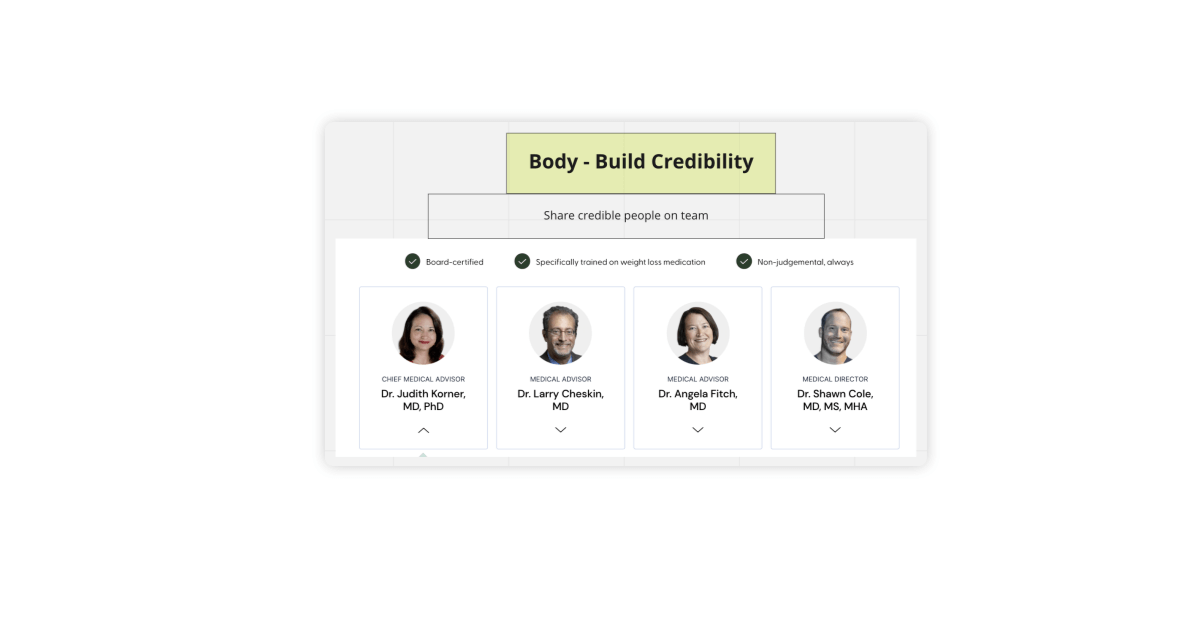
While we’re on the topic of credible results, let’s mention who’s behind this whole thing:
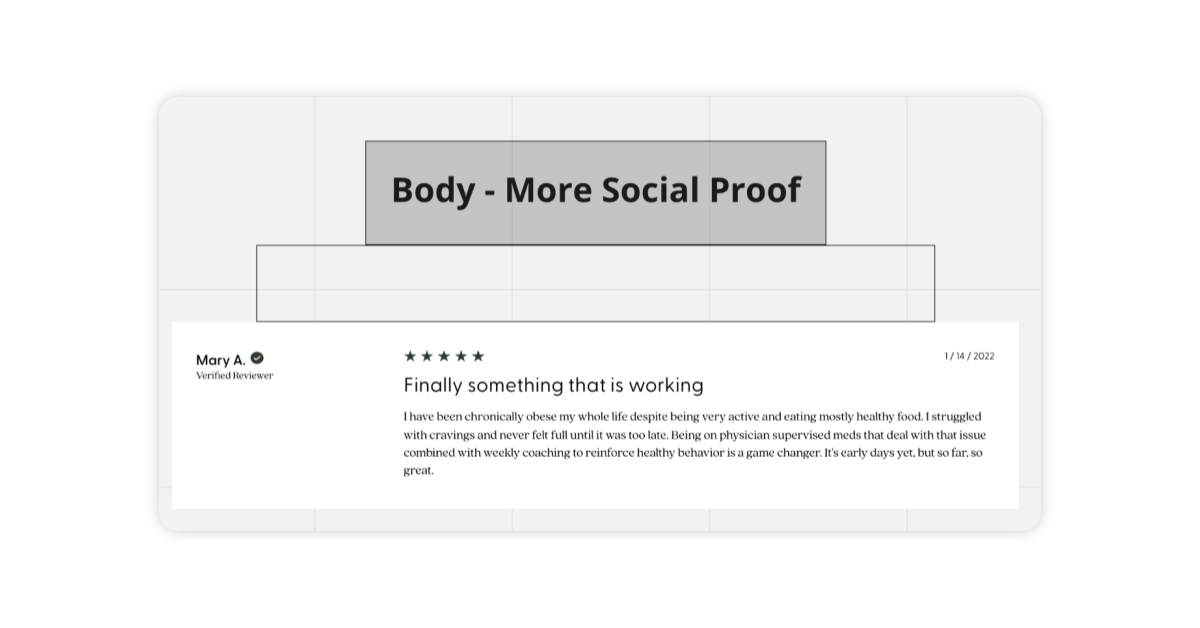
Then back this up with some more social proof…
With all these elements in place, let’s make the pitch and invite our viewer to take action.
Call-to-action (CTA)
The offer: Take the free quiz and get your assessment
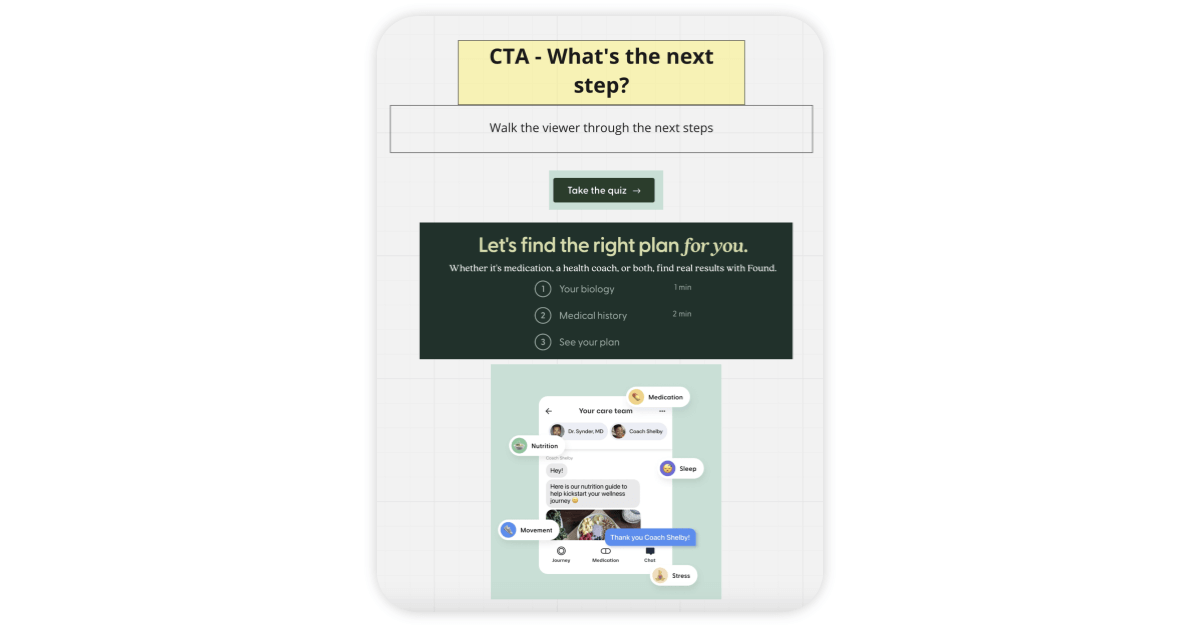
Key Point: In your voiceover here, be clear about exactly what you want the viewer to do:
“Click the link with this video to take the quiz and get your free assessment. It takes just 3 minutes to get your custom plan and see how Found can help you accomplish your weight management goals asap.”
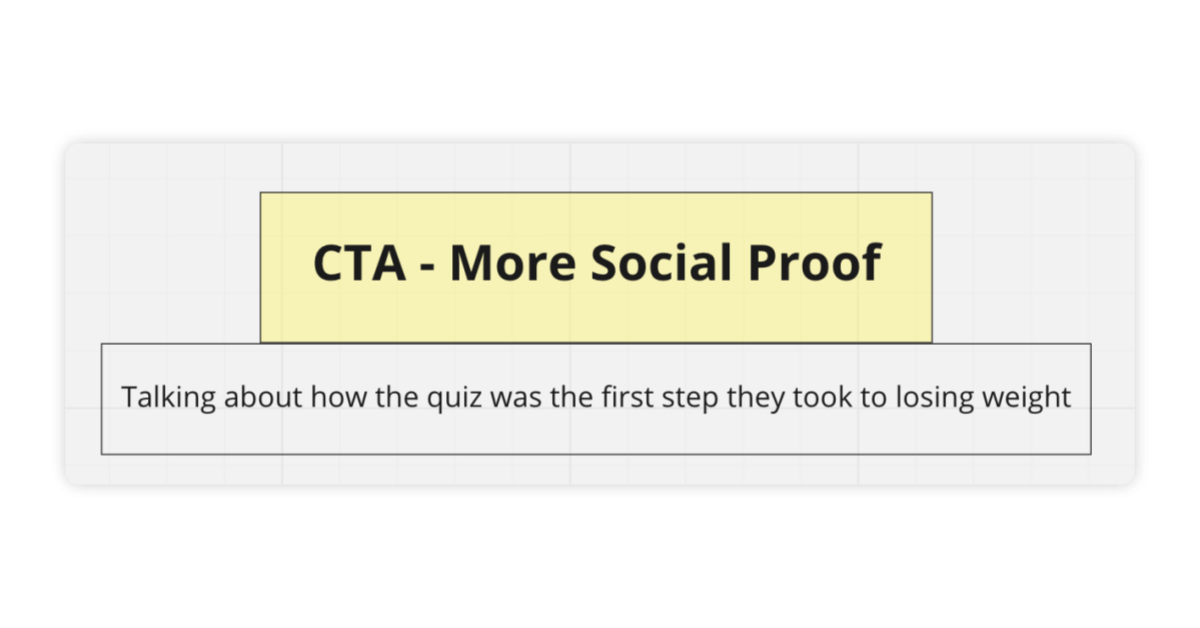
Call-to-action: Social proof reinforcement – talk about the quiz itself
Here we would ideally have a Found user reminisce about how taking this same quiz was both easy and the first step on their path to a new life.
Call-to-action: Reiterate CTA
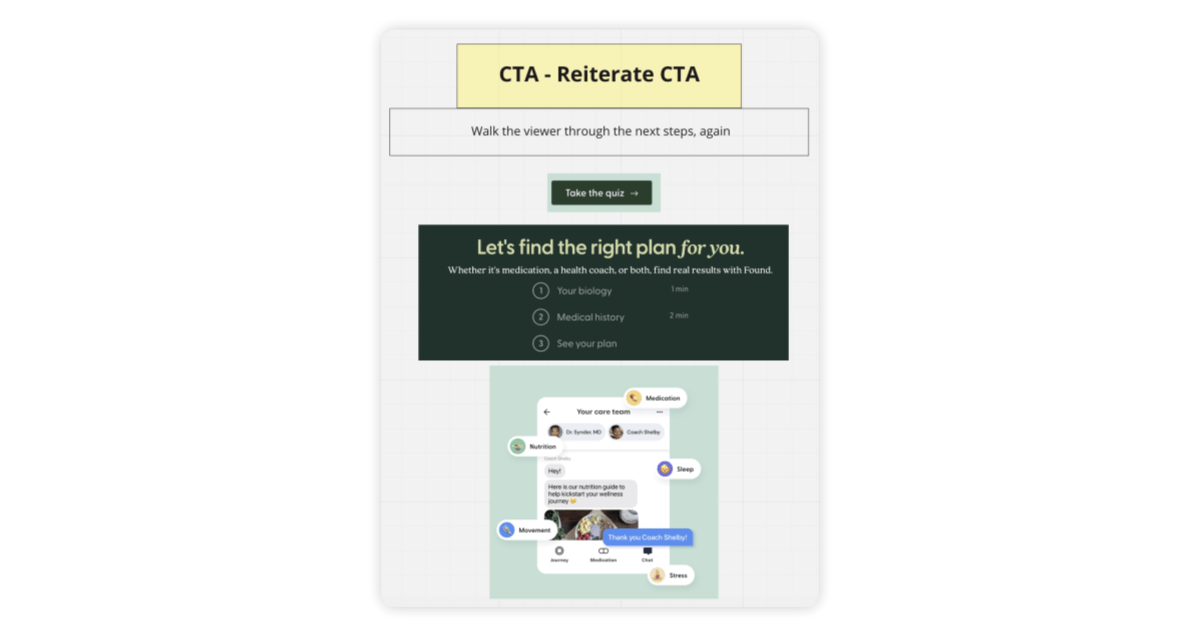
Sometimes you need to repeat yourself. And that’s what we’re going to do here.
Re-emphasize the CTA and walk the viewer through exactly what they need to do to take the first step towards their new weight and new life:
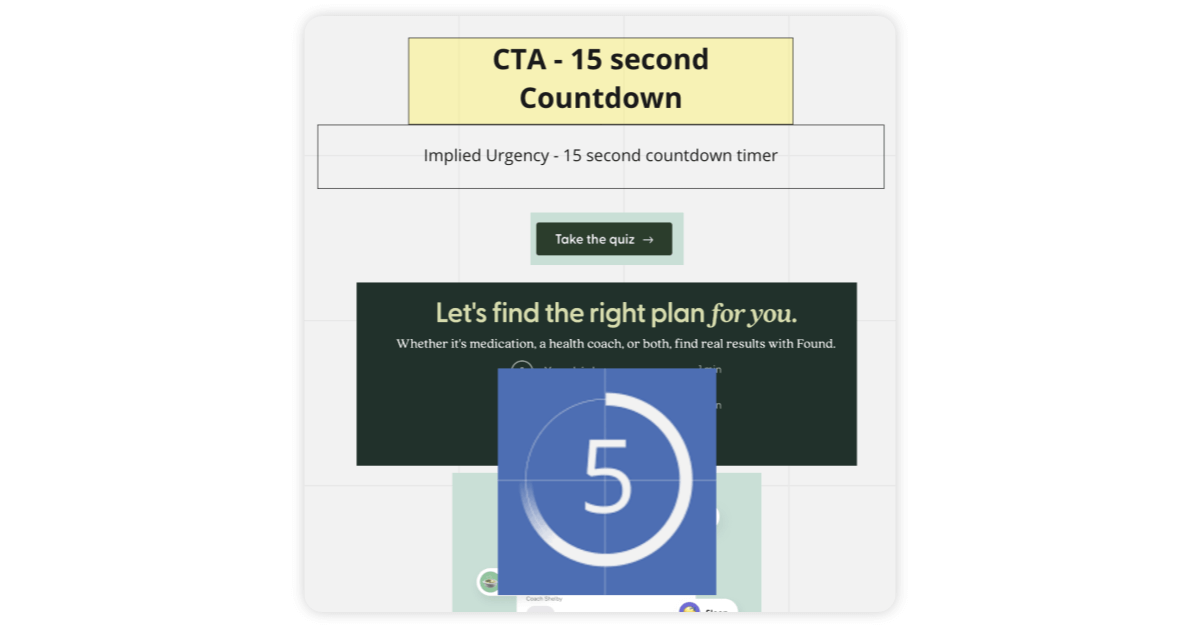
Call-to-action: More urgency
Now let’s emphasize why they need to click now, and not later. In time-limited promotions, you can talk about how this opportunity will end at X date, etc. or use an implied urgency that works in any case. We add a countdown timer to the ad, which will encourage more people to hurry up and click through before the video ends:
Call-to-action: Final social proof
Close out the ad by piling on even more social proof to satisfy the viewer’s need for evidence that Found is indeed the next step for them to finally achieve their goal weight.
Ok – in the process of walking through how Found can take Noom’s market share by leveraging YouTube ads, we covered:
What other questions do you have about YouTube ads for your business? Check out our blog to learn about this topic and so much more! Best wishes and looking forward to your success 🙂

by Ian Nagy
Co-Founder Inceptly.com (High Performance YouTube Advertising) Co-Founder Vidtao.com – (Free YouTube ad library)
Top Ecommerce Companies in the USA: The 100 Brands Winning the Traffic Race in 2026

3 of the Sharpest Minds Weigh in on the State of Gen AI in 2026

Give it a try or talk to our marketing team — don’t worry, it’s free!
