





Top Ecommerce Companies in the USA: The 100 Brands Winning the Traffic Race in 2026
by Inbar Eytan6 Min.
Aug 30, 2026

One of the biggest revelations from the Google leak of 2024 is that Google measures brand signals to rank content. The question is…
What does that mean to you as an SEO?
In this post, we’ll get into what brand SEO is and how you can use it to boost your SEO and stand out in Google and beyond.
Brand SEO is a holistic strategy that aims to boost your brand visibility and authority in search results. In contrast to basic keyword-driven campaigns, brand SEO is meant to drive digital visibility across various channels. Building authority on the internet can increase your customer engagement and search rankings. It is about increasing website content, technical SEO, and using carefully chosen keywords that are relevant to your brand’s objectives.
At the heart of brand SEO is a content strategy that aligns with your business objectives. Taking deliberate steps to establish credibility and trust not only enhances your brand’s reputation but also positions it as a leading player in a competitive market. Mastering brand SEO can change how you strengthen your digital presence and engage with your target audience.
Building a brand requires a blend of traditional marketing and a strong digital presence. Omitting SEO from this equation means missing critical opportunities for visibility. Here’s why SEO serves to enhance your brand:
SEO helps establish your brand as credible and reliable by making it visible in search results. When people consistently encounter your brand, it builds trust and authority. A solid SEO strategy, centered on consistent, high-quality content drives not only website traffic but also attracts an audience genuinely interested in your brand’s topics. This targeted audience fuels lead generation. Unlike paid advertising, SEO focuses on organic reach, reducing customer acquisition costs, and setting your brand on a sustainable growth trajectory.
SEO plays a key role in amplifying your content marketing efforts by driving valuable traffic to your content. By optimizing for relevant keywords, your blogs, videos, and other content can reach a broader audience, positioning your brand as a thought leader. Consistent exposure through SEO helps educate, engage, and nurture your audience, fostering trust and long-term loyalty brand loyalty.
Developing an effective SEO strategy for your brand involves multiple stages, each designed to increase your visibility in search engines and connect with your targeted audience. Here’s how you can craft a comprehensive SEO plan:
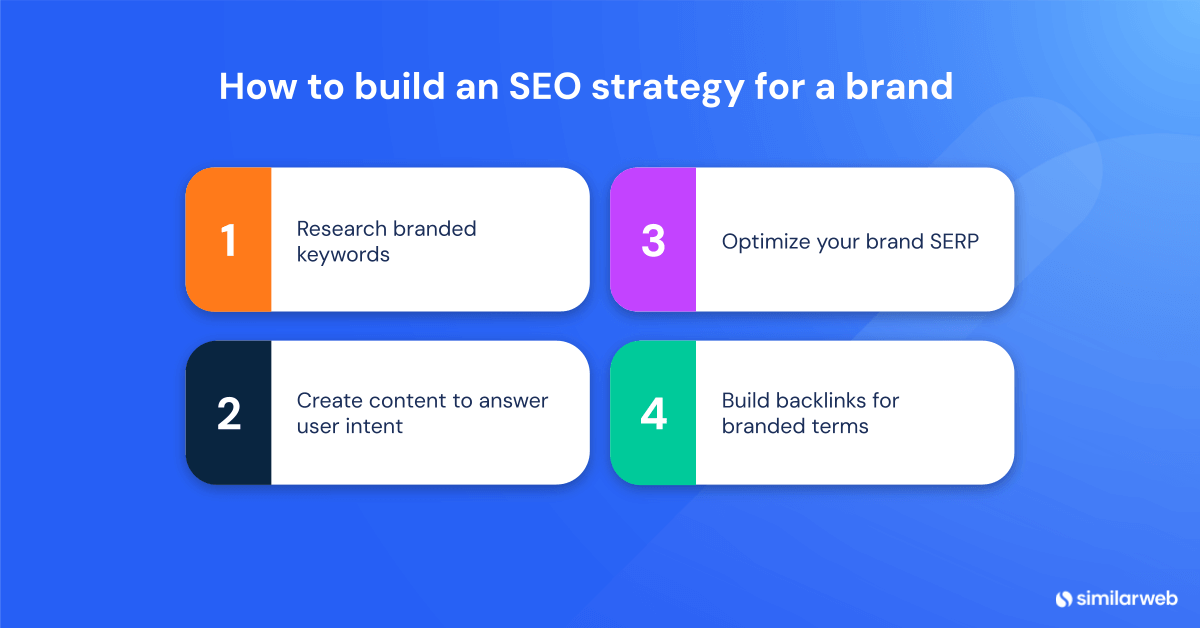
Keywords are the cornerstone of any successful SEO strategy, and branded keywords play a unique role in shaping user interactions with your brand. These keywords can be divided into categories based on user intent:
To effectively research and optimize for these branded keywords:
By understanding the functions of branded keywords, you can also create content tailored to these queries. Transactional queries could inspire product pages, while informational queries might lead to blog posts or FAQs. This comprehensive approach ensures you capture traffic at every stage of the user journey.
Once you’ve identified branded keywords and categorized them by user intent, the next step is crafting content that directly addresses the needs behind each query. Every page you create should align with a specific intent category—navigational, transactional, or commercial—ensuring that users find relevant, helpful information as soon as they land on your site. Here’s a strategy to guide your content creation:
Navigational queries often indicate users who are already familiar with your brand and are searching for a specific page, such as a login portal, support page, or company information. To serve this intent:
Transactional queries signify high purchase intent, making this content pivotal for driving sales and leads. Here’s how to approach it:
Optimize your pages with engaging visuals, such as product images or demo videos, to capture attention and enhance the user experience.
Users searching for commercial queries are evaluating your brand, products, or industry. Your content should position you as the go-to authority:
According to Jason Barnard, your brand’s SERP is a digital business card. It shapes user perception before they even visit your site. Optimizing your brand SERP ensures that users encounter the most accurate, trustworthy, and engaging information about your brand. A well-curated SERP establishes authority, builds trust, and provides easy access to key resources.
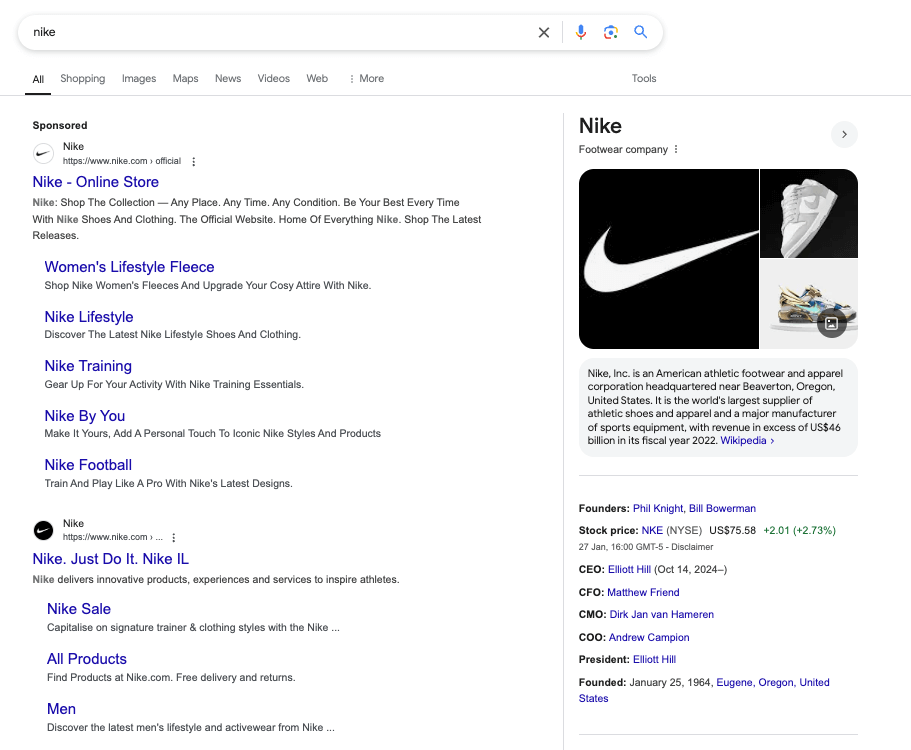
Here’s how to take control of your brand SERP, including leveraging branded entities:
Search engines increasingly rely on entity-based search to understand brands and their relationships to topics, industries, and competitors. By positioning your brand as a recognized entity, you can boost your SERP visibility.
Branded content should populate as many positions as possible on your brand SERP, pushing competitors and irrelevant results further down.
Brand authority is not just about content, it is also about backlinks. You can start by identifying branding words that you need to reinforce and strengthen them. Similarweb’s Backlink Analytics can tell you which websites are linking to your brand and what relationships you could form to build your backlink profile. More often than not, this will be building links to your home page.
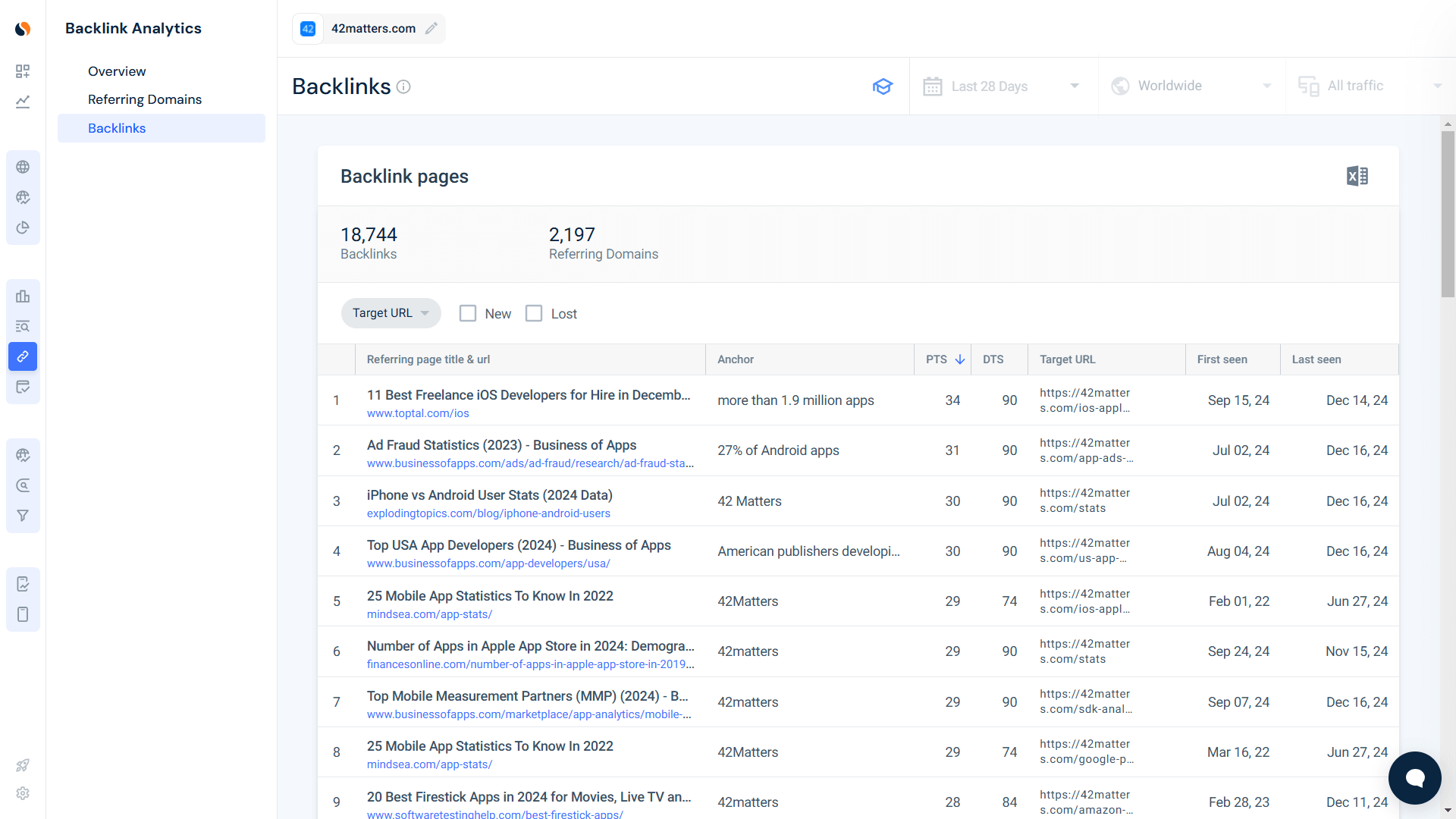
Reaching out to similar brands or influencers will give you valuable backlinks, which will bring you more traffic. Establishing an association between your site and backlinks will make you more influential in your field, and you’ll be able to grow steadily.
If you want to know your brand reach, you need to understand how your SEO campaigns are working. Similarweb’s tools can give you metrics about brand exposure that can help you identify both successes and shortcomings:
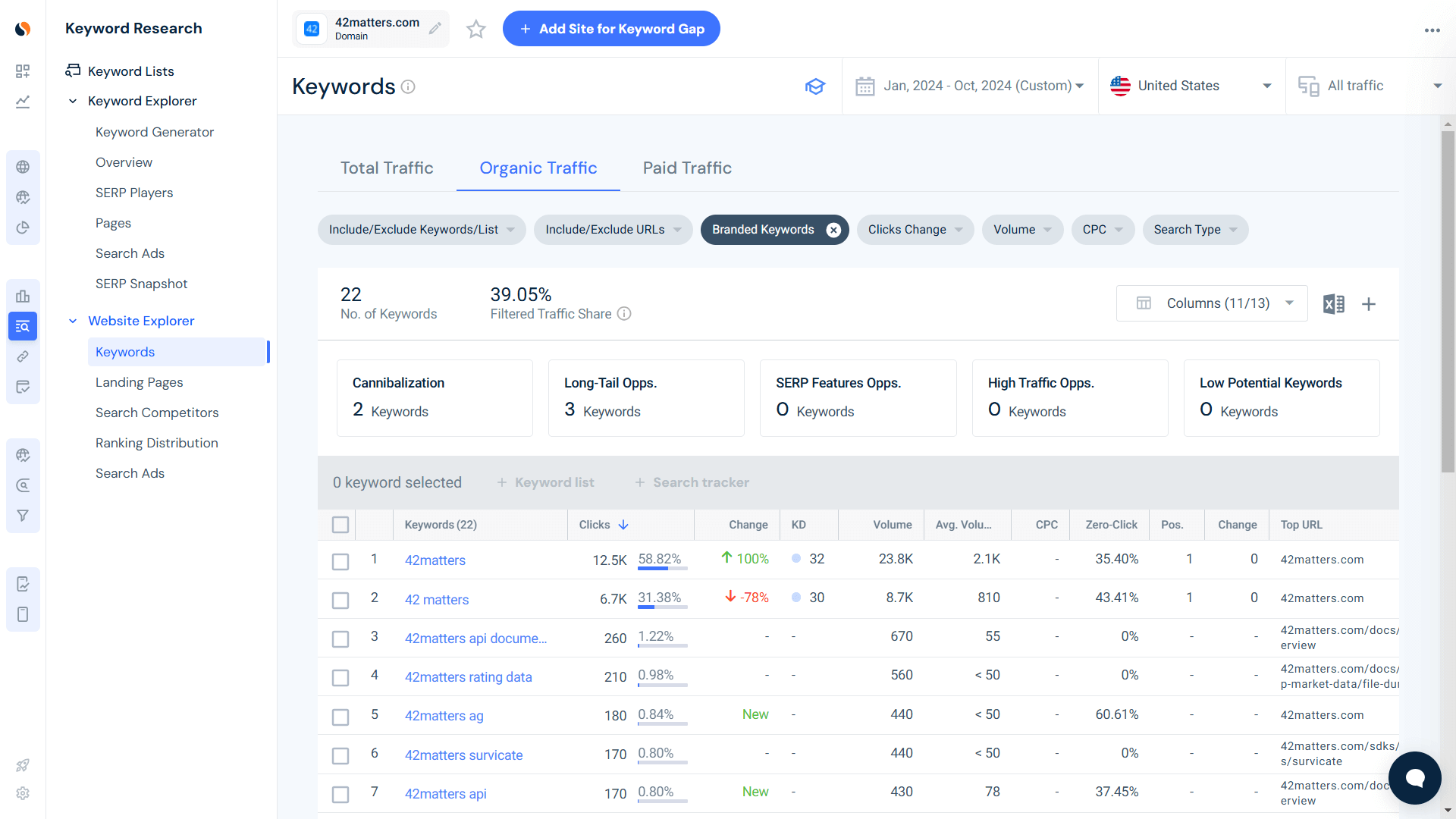
You can check the organic traffic change for your branded search terms with the Keyword Research Tool. Identify your branded keywords and key performance factors, including clicks, keyword difficulty (KD), average searches, and zero-clicks. Such data gives you the opportunity to gain insight into your brand and the way users interact with your content. Observing these trends over time will allow you to evaluate the performance of your SEO campaigns and find ways to expand your brand visibility.
Direct traffic is another important marker of brand recognition. This information, through Similarweb’s Marketing Channels tool, can help your business determine the success of your brand promotion campaigns. A visible increase in direct traffic highlights the benefits of mixing offline and online tactics.
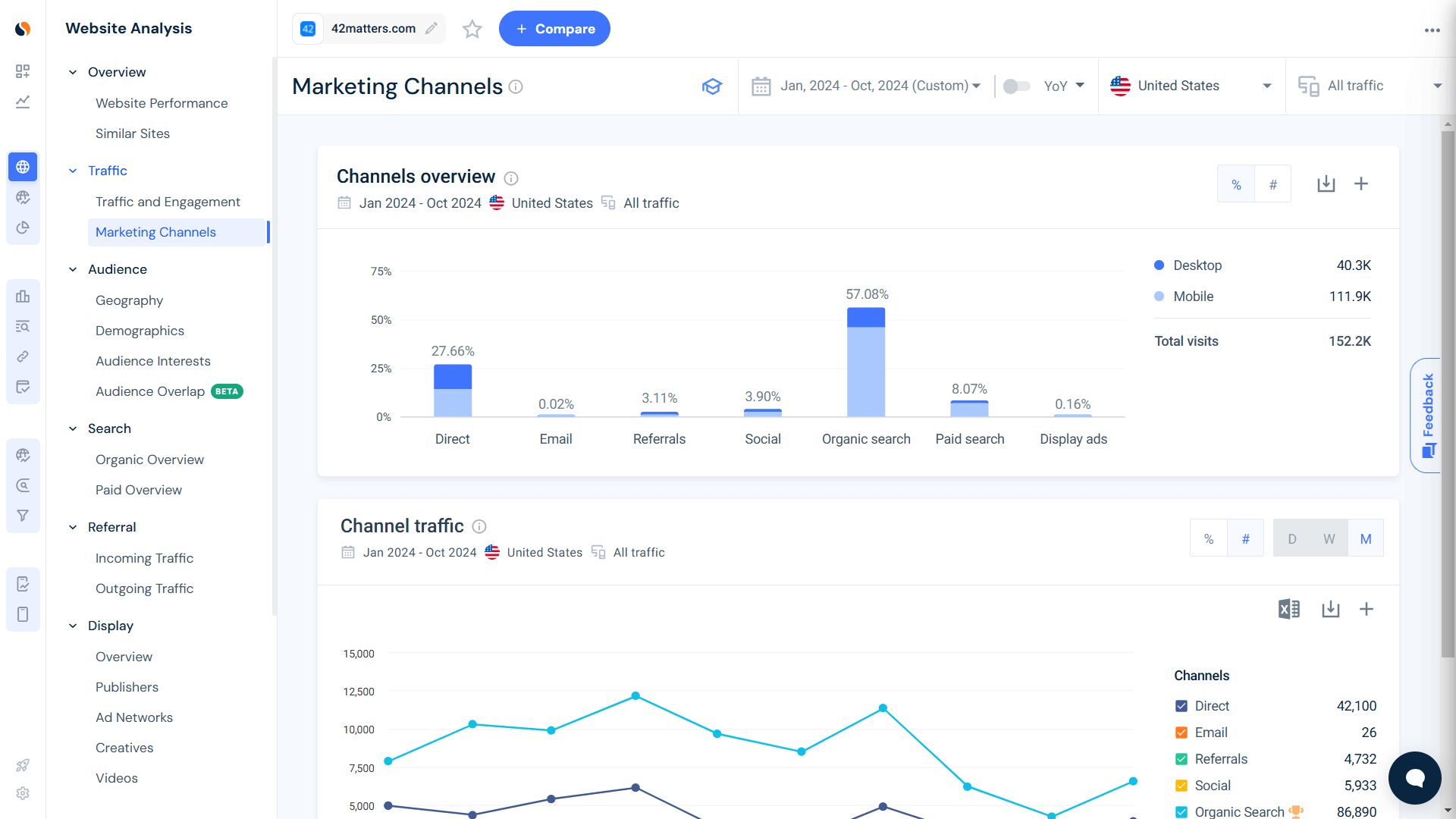
Understanding traffic sources and campaigns helps determine what marketing strategies need optimization for ongoing success. This data gives you a good indication of your brand’s appeal to people and will promote your values and validity across the internet.
Tracking brand mentions across different channels gives you a more detailed picture of the brand presence on the web. Similarweb’s Keywords Research tool gives you the ability to see trends over time. This insight will show you the number of searches that were conducted for the brand name and the number of clicks your brand keyword generated.
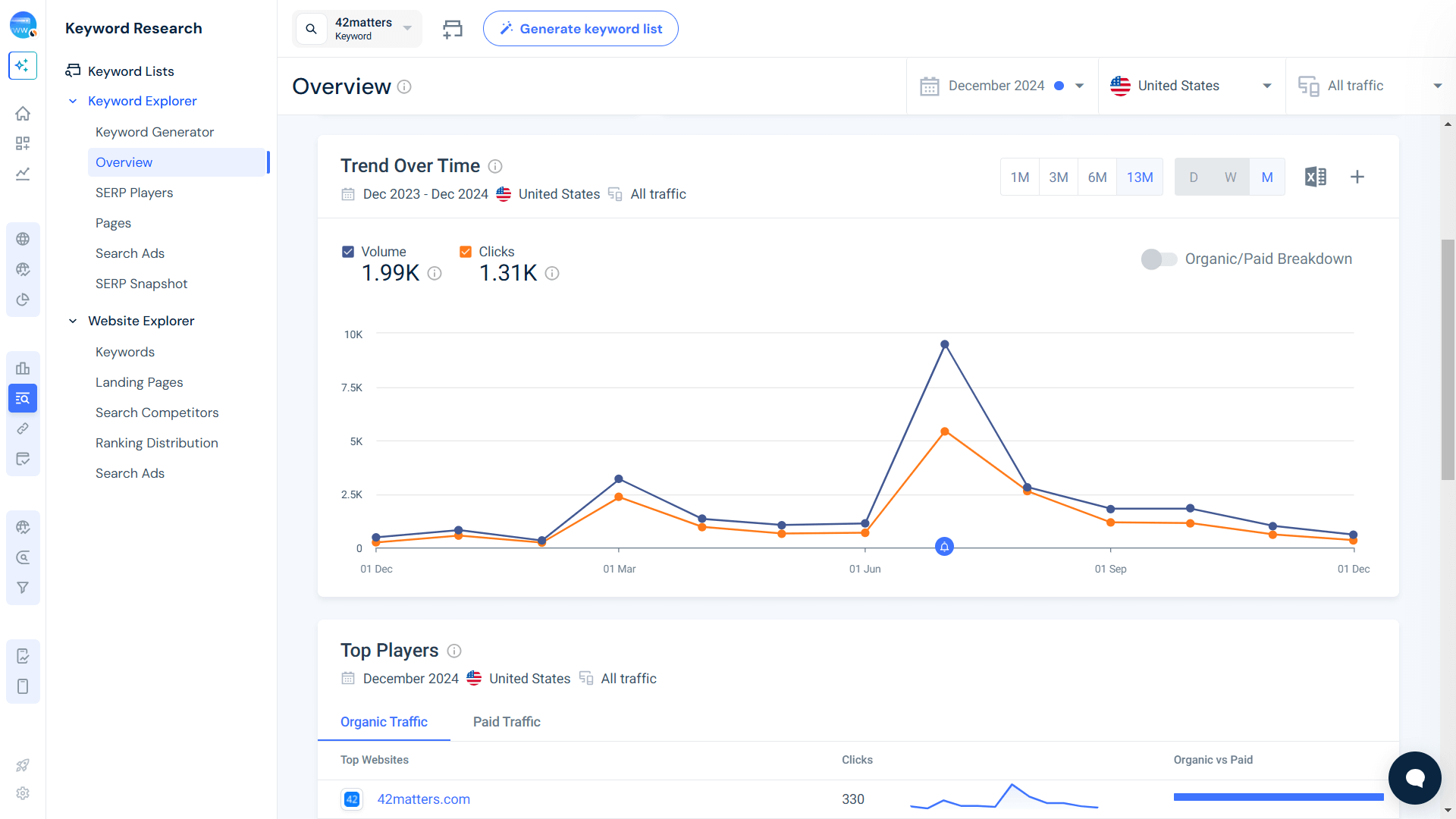
An increase in brand mentions indicates growing interest and engagement, demonstrating the effectiveness of branding activities in capturing consumer attention. This insight can be leveraged to refine future marketing efforts, tailoring messaging and promotions to better meet customer needs and strengthen brand relationships in the marketplace.
Brand SEO is an investment you should make if you want to differentiate yourself from your competitors. Optimizing for search results and relevancy allows a brand to stand out, and to be perceived as a reliable and valuable source.
Similarweb gives you access to comprehensive solutions to analyze website traffic and strengthen SEO practices that improve your brand’s digital footprint. With our tools, brands develop powerful interactions and strategies for continued development. Keeping up isn’t enough for an effective SEO campaign — it’s taking the lead online. Utilizing our comprehensive tools will get your brands on the right path to success.
How does SEO help improve brand credibility?
SEO enhances trust by boosting visibility and rankings, which build credibility with audiences. When keywords are strategically used, and content is well-curated, a brand comes across as both approachable and authoritative.
What are effective ways to boost brand visibility through SEO?
To increase visibility, focus on optimizing on-page elements like H1 tags, meta descriptions, and structured data. High-quality content combined with strategic keyword use forms the foundation of a strong content strategy.
How does brand authority impact my SEO efforts?
Building brand authority establishes your brand as a trusted and reliable name that consumers rely on for decisions. This credibility not only enhances user trust but also boosts your algorithmic standing, leading to improved rankings over time.
What role does SEO play in driving more customer satisfaction?
SEO fosters engagement by delivering valuable, targeted content. This encourages users to explore, interact, and ultimately become loyal customers, fostering long-term relationships.
Is technical SEO just as important for brand awareness?
Absolutely. Technical SEO ensures that search engines can crawl, index, and display your site effectively. Factors like mobile-friendliness, fast loading speeds, and secure connections are essential for establishing a strong and reliable brand presence online.

Senior SEO Specialist at Similarweb
Maayan is a senior SEO specialist with 7+ years of experience in SEO. She loves complex research projects, creating SEO strategies and performing technical audits.
Top Ecommerce Companies in the USA: The 100 Brands Winning the Traffic Race in 2026

3 of the Sharpest Minds Weigh in on the State of Gen AI in 2026

Give it a try or talk to our marketing team - it’s free!
