





The Top 100 Most Visited Websites in the USA (August 2026)
by Shai Belinsky10 Min.
Sep 29, 2026
 Research Intelligence
For local businesses, there’s no question: Your audience’s geography defines your target market. A coffee shop in Louisiana doesn’t need to appear in searches from Washington. If you are offering real estate insurance in the U.K., there’s not much you can do for a homeowner in Australia or Brazil.
But how significant is audience geography for websites, mobile apps, and SaaS platforms? Should you be paying more attention to the geographical location of your customers? The answer is, “Yes, absolutely!”
Using audience geography in your target marketing strategy has significant added value and can increase your revenue from more geographical locations.
Your target audience may be spread all over the world. However, some target market locations have more potential than others, and you need to know where they are. You also need to figure out how to create a presence with your marketing in those regions.
Specifically, you can utilize audience geography on two levels. First, understand your audience better. You can identify types of target audiences and their behavior. Second, it helps to build and develop your target market in specific locations.
The way you display information on your site may depend on the location of your customer audience. For example, you will show prices in US$ if the bulk of your customers is within the U.S., but you may consider adding a € option if you are also targeting European countries. Numbers, dates, and measures also differ in these regions. And that’s only the tip of the iceberg.

Find out how relevant your content is to a specific geographical location. Your target marketing strategy likely includes some reference to geographical location. Make sure that you are significant where you need to be.
For instance, understand which search engines and social platforms are the most prominent in the regions you’re interested in. Is mobile far more popular than desktop (as is typically the case in third-world countries like India); or vice versa, are consumers preferring desktop devices due to disruptive events such as COVID-19? What’s the gender distribution of the visitors to your category? Are they mainly millennials or baby boomers?
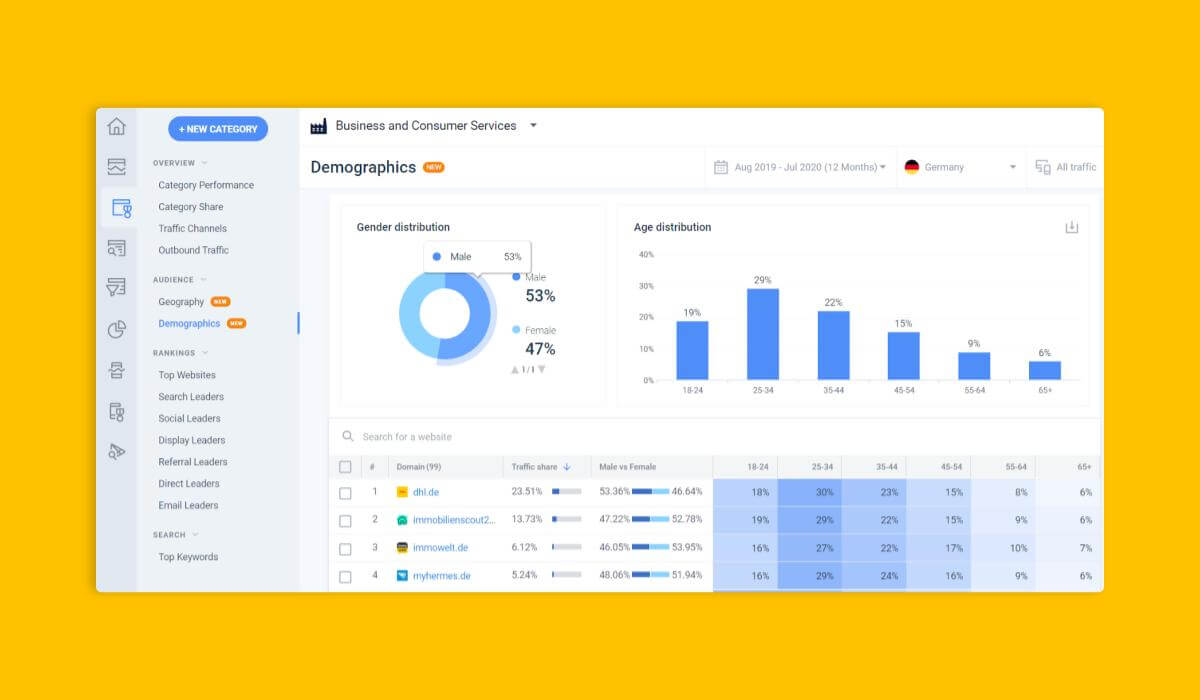
Investigate your site’s or app’s relevance in regions outside of your primary market. Let’s say your eCommerce site is in English. You will naturally attract customer audiences from English-speaking countries. Use Audience Geography to find out if and how well you attract audiences in countries where English is not an official language.
You can use Similarweb’s geographic analytics to better understand which markets are right for you.
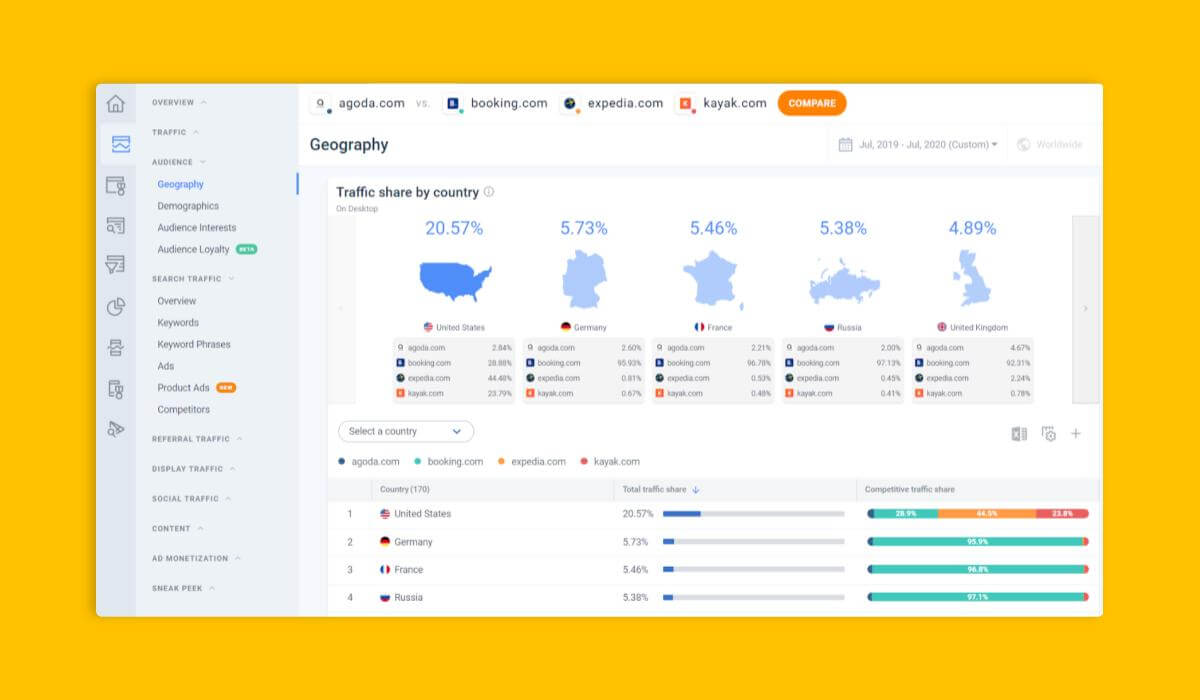
If you are offering a variety of products and several payment options, check if you get traffic from regions where certain products can’t be supplied, or specific payment methods – such as PayPal or Amazon Pay – are not available. Maybe there is specific software that is not supported for a website you’re interested in partnering up with or competing against. You may need to make amendments accordingly.
After you have investigated which marketing channels work according to regions, see whether you are using the best marketing mix, or if you need to shift focus.
Lastly, check your content according to cultural preferences. Certain topics may resonate well with your target audience in some areas, but be less appropriate in others. Images or videos may create more positive associations with people in some areas than in others.
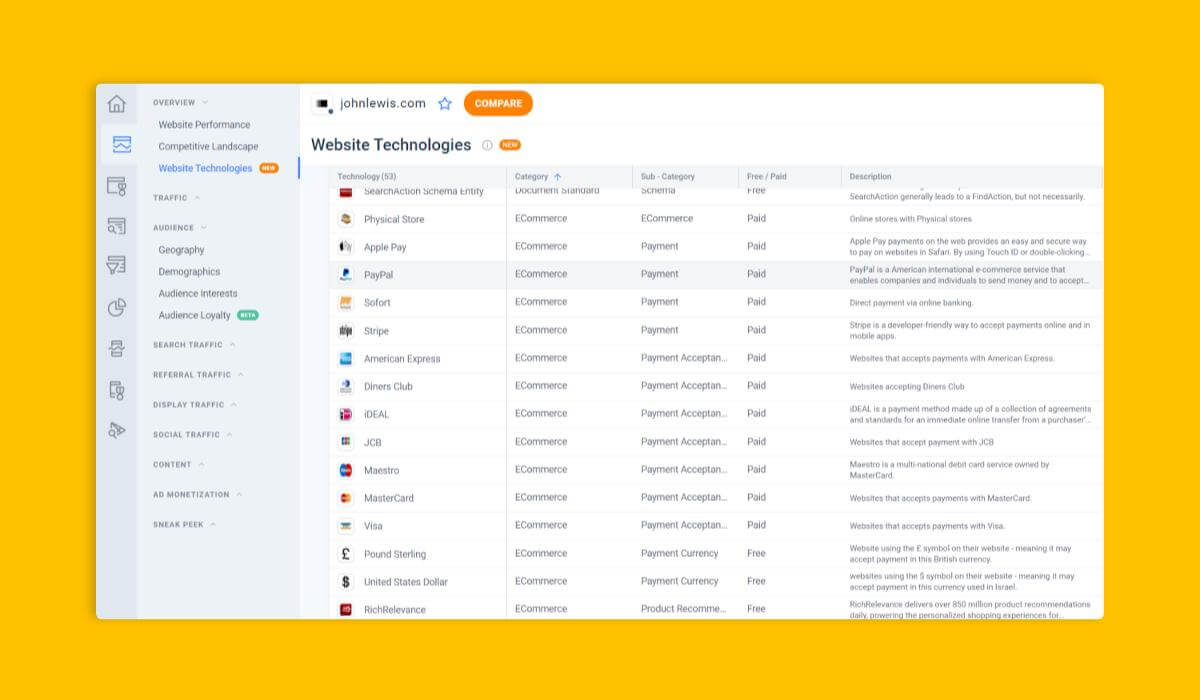
Now it’s time to put to use what you’ve discovered. Below are a few tips on how you can use the knowledge gained from analyzing audience geography to segment your target market and create a region-specific marketing plan.
Boost Your Digital Marketing Strategy
The customization of your site can be done on different levels. It usually depends on the importance of a geographical location or country to your business goals and the resources available to you.
With Similarweb’s analytics software, you can take your geo-targeting to a higher level and optimize it for different types of target markets. Take a look at these two examples:
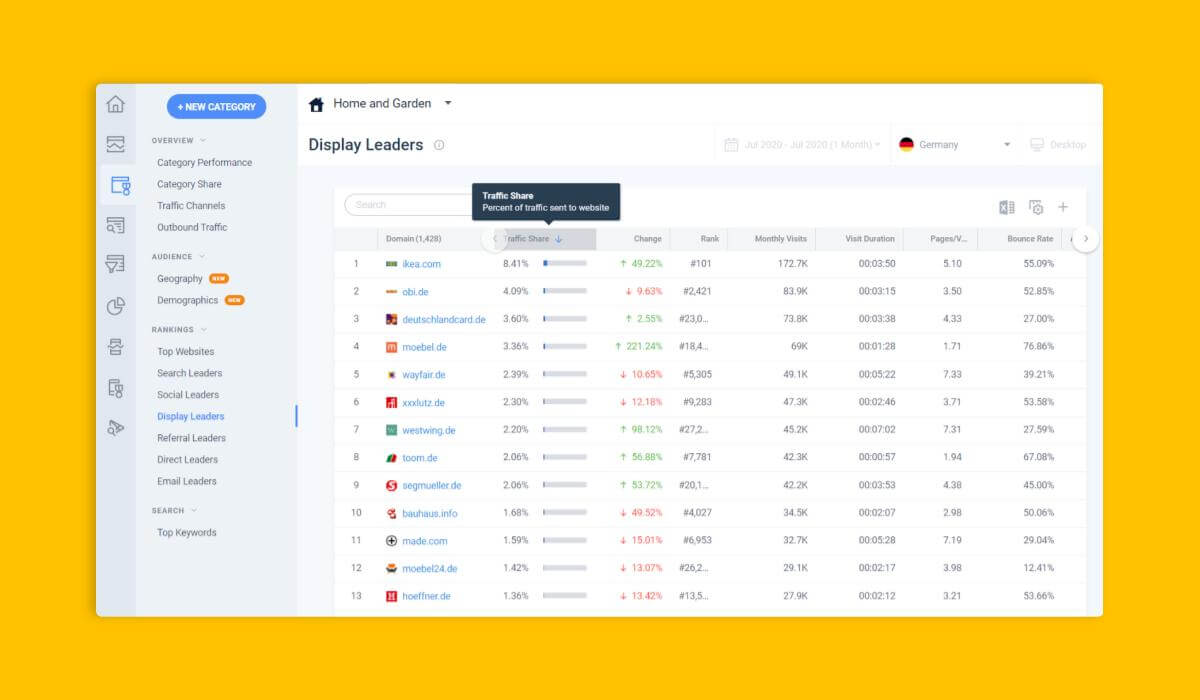
Similarweb allows you to compare your marketing channels’ performance in different regions based on your category (e.g., retail, travel, financial services. etc.). Let’s say you’re ikea.com. In Germany, your display ads are very successful, and you increased the volume of traffic for this channel by 49% in July, month-over-month (MoM). Pretty impressive! But not helpful until you know how your numbers measure up to the rest of the industry.
See Category Leaders to identify other companies that have increased their display ads, gauge the general direction of the change (increase/decrease), and see who’s rising through the ranks. Discover if most leading companies in your industry see a similar traffic increase/decrease from paid traffic acquisition in Germany and adjust your marketing spend accordingly.
In our second example, you see a comparison of different competing OTA companies in the United States. Let’s say you’re vrbo.com. Your paid search dropped by 18% in December 2019 compared to September. In contrast, agoda.com’s visits from display ads have increased by a whopping 249%. Booking.com and expedia.com have also grown their traffic from this channel, by 43% and 10%.
With that information, you know whose ads you need to investigate and compare to yours. Try to figure out what makes them successful and how you need to change your own marketing mix to catch up.
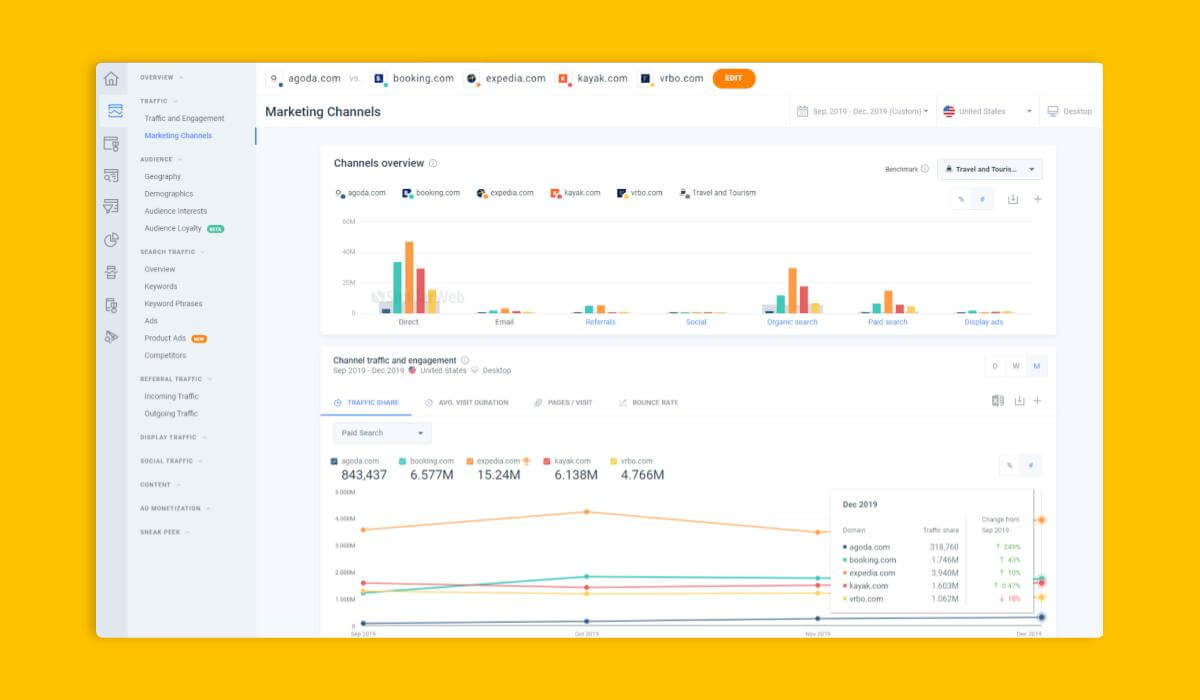
Similarweb lets you collect additional information about your competition, which is useful in selecting your most promising target markets. Benchmark their performance against yours and identify potential market opportunities.
Want to strengthen your presence in a particular region? Discover which channels have low competition in that region. With Similarweb Platform, you can benchmark against up to four companies. Then create dedicated campaigns for these channels, geo-targeting the region you want to improve your presence. Monitor performance and watch how you pull ahead of your competition.
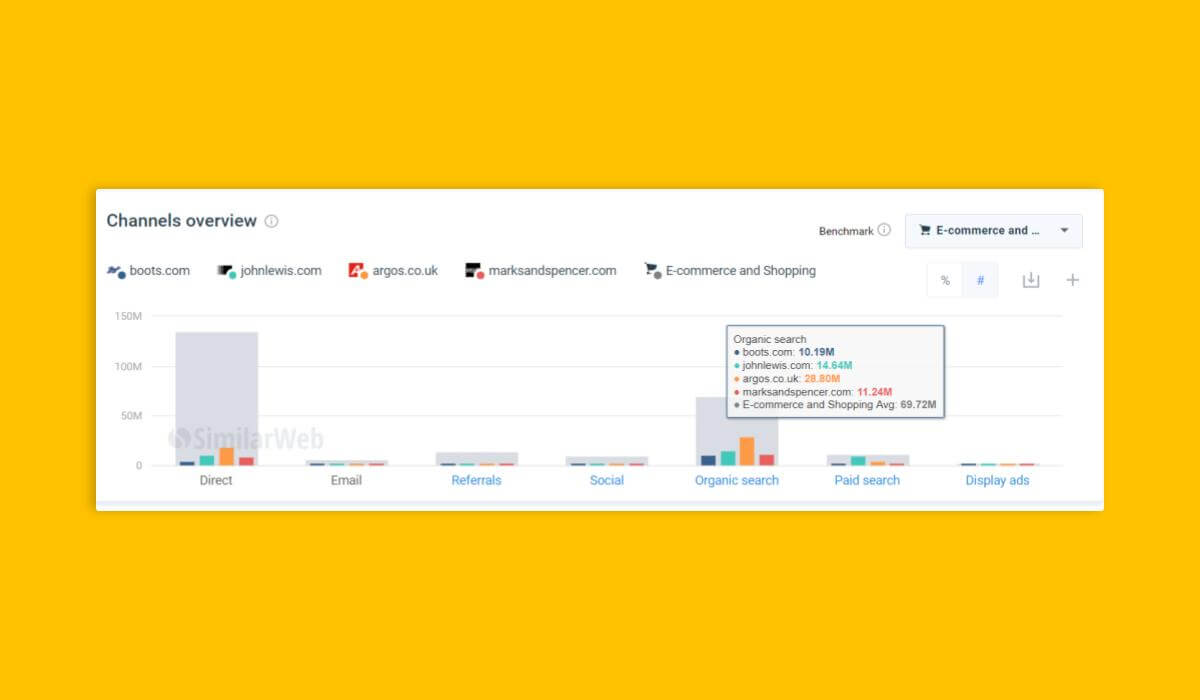
Competitive benchmarking also lets you kick-start your business in new locations. Find and define a target market with low competition. Focus on geo-based market analysis. Develop a marketing strategy for that region using audience geography analysis as a basis. Test which channels work best, and which type of ads, etc. convert the most. Finally, keep tracking and adapting, and soon you’ll be the most relevant provider in the region.
As your business expands over the globe, audience geography becomes increasingly significant. Advanced website analytics, including market research and benchmark analytics with Similarweb’s software, provide vital information for understanding local markets – letting you adapt your marketing strategy, venture into new markets, and be relevant everywhere you want to make an impact.
Find out what else Similarweb can do for you. Schedule a one-on-one meeting with our team!
How do marketers use geographic segmentation in audience analysis?
Marketers use geographic segmentation to understand their audience better and help build and develop their target markets in specific locations.
How can I customize my marketing for different audience locations?
Begin by segmenting your audience by location, then run A/B tests to better understand the localized search intent. Be sure to tweak your content regularly, apply specific, local consumer trends to your segments, and finally, look out for subsequent growth opportunities and open doors to new segments.
How can I customize my digital strategy for target audiences?
Change the currency on your site to suit the country you’re targeting, experiment with different languages, and consider the country’s culture, holidays, and topics of interest.

Principal Product Marketing Manager
Daniel brings 10+ years of marketing experience, specializing in both B2B and B2C audiences. He thrives at managing delivery of projects, consistently developing concepts that drive impact.
The Top 100 Most Visited Websites in the USA (August 2026)
Similarweb Named in Forrester's Answer Engine Optimization Technologies Landscape, Q3 2026

Anthropic IPO: What Claude's Web and App Data Show
Contact us to set up a call with a market research specialist
