





Top Ecommerce Companies in the USA: The 100 Brands Winning the Traffic Race in 2026
by Inbar Eytan6 Min.
Aug 30, 2026
Want both higher ROI and unforgettable customer experiences? Well, B2B market segmentation is the secret sauce for achieving it.
The next question is how? Well, specific insights might just be a click away.
Today, more businesses are using the power of data to stay ahead and stand out. Here, we examine how the segmentation masters are doing it.
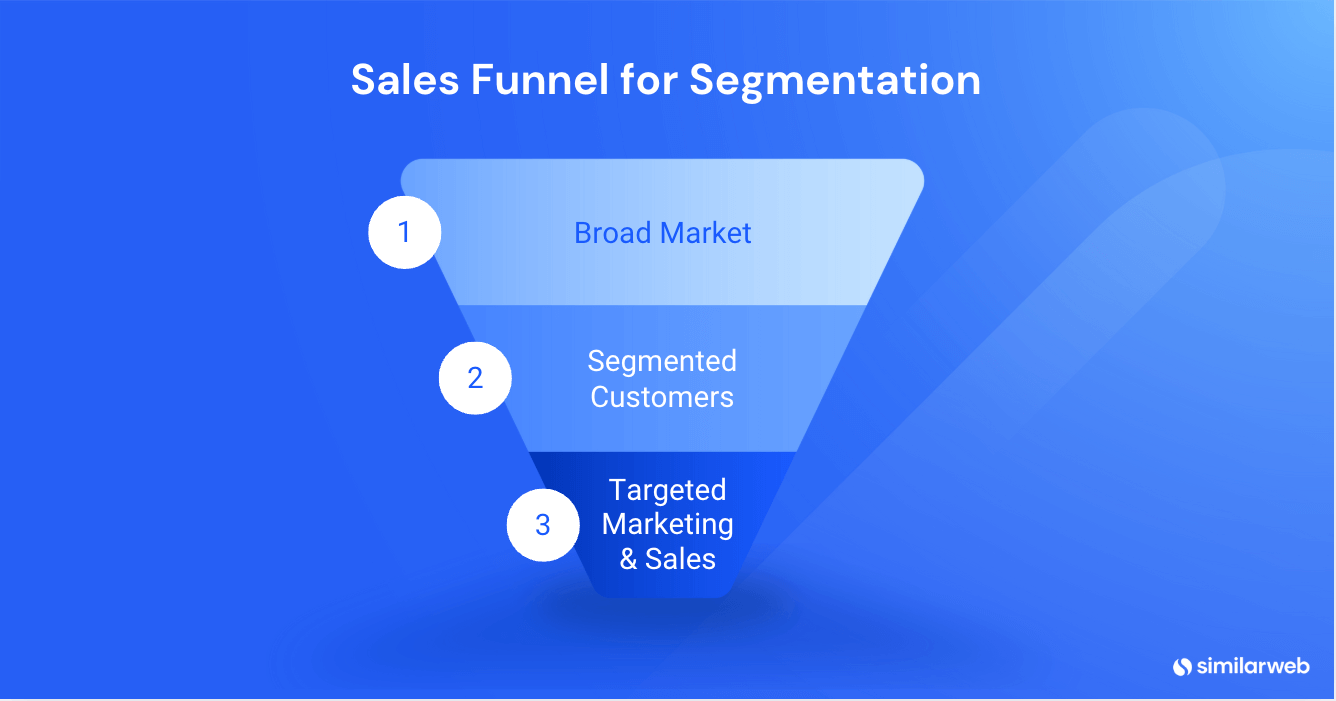
B2B market segmentation is the process of dividing a company’s market into smaller, more manageable groups of potential customers who share similar characteristics, needs, and behaviors.
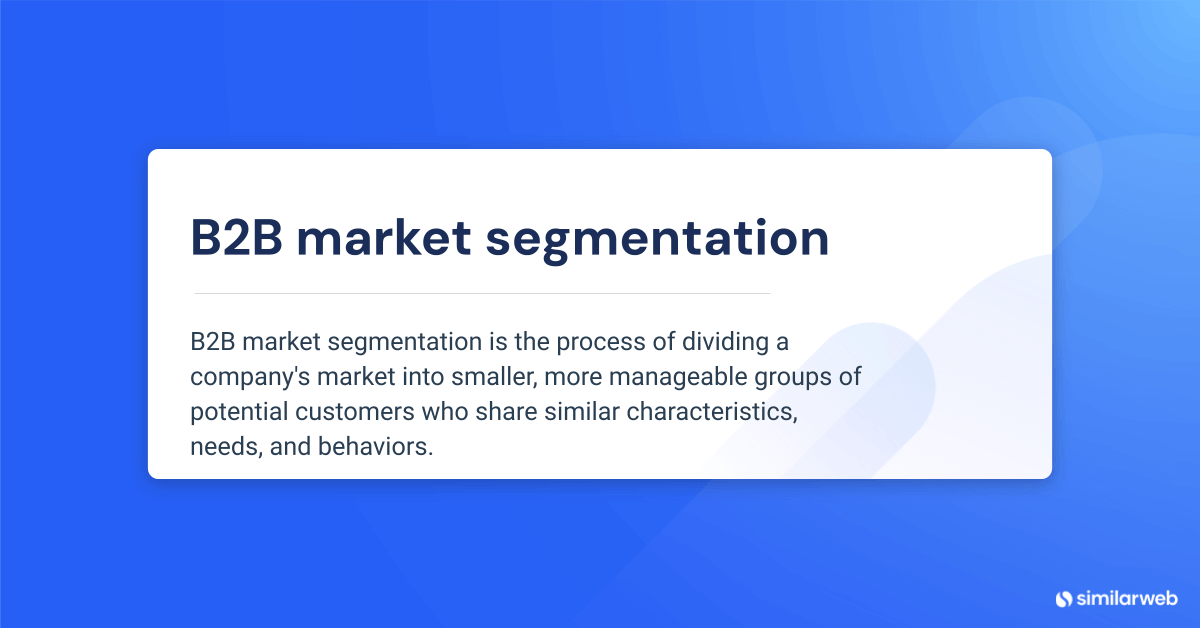
As a result, businesses can tailor their marketing and sales funnels to specific segments, increasing the chances of success and improving overall efficiency.
B2B market segmentation is about simplifying a vast business marketplace into smaller, manageable groups with shared characteristics. Unlike B2C, which focuses on consumer habits and personas, B2B looks at company attributes like industry, size, and location.
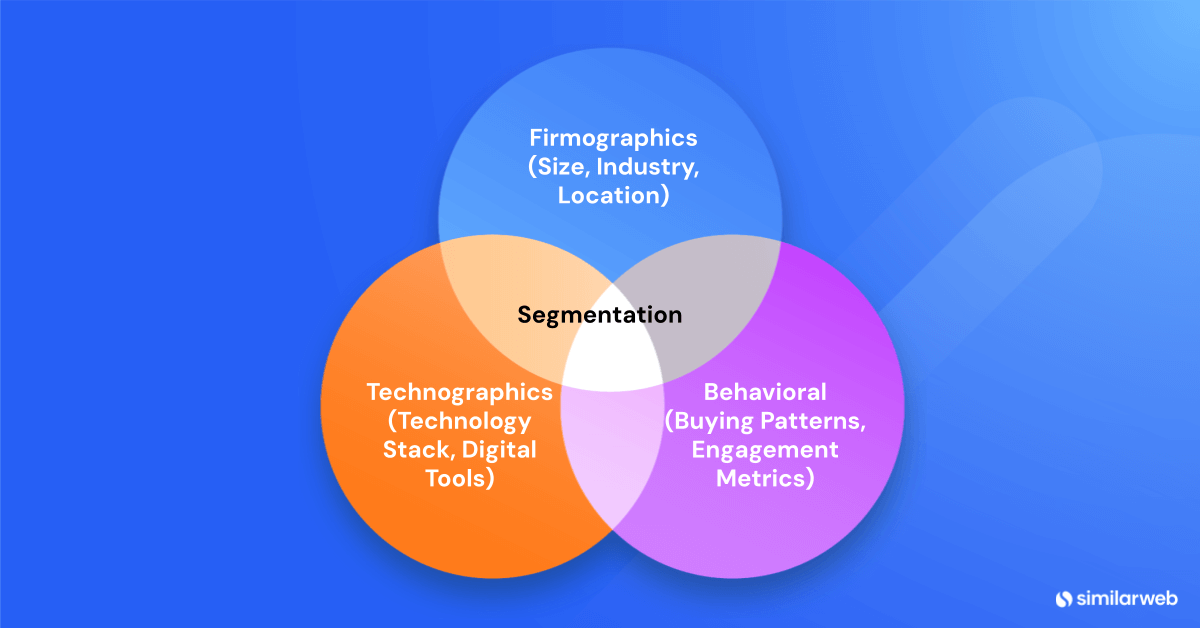
This approach relies on firmographics (business demographics) and technographics (technology usage) to address each company’s unique needs.
B2B sales cycles are longer and involve more decision-makers. Products are often complex and require custom solutions. Trust and understanding are critical. Effective segmentation helps businesses navigate this process by fostering relationships and delivering tailored results.
B2C and B2B segmentation take entirely different paths. Both aim to define target markets, but their approaches differ greatly. Here’s how:
B2C focuses on individuals, drawing on personal tastes, lifestyles, and psychology. Emotional appeal is key. In contrast, B2B views businesses as entities with shared goals like productivity and growth. It examines processes and strategies shaping their ecosystem.
B2C uses demographics, psychographics, and buying behavior. Campaigns often align with attitudes and motivations. B2B relies on firmographics, technographics, and operational needs such as industry, size, and technology to craft tailored solutions.
B2C buying is emotional and spontaneous. Decisions are quick, often driven by immediate rewards. B2B purchases demand thorough analysis. Teams of stakeholders compare options, focusing on performance, value, and alignment with business goals.
B2C sales happen fast, sparked by impulse or attraction. B2B sales take time. Building trust with stakeholders and showcasing value is essential. Solutions must be detailed and specific to client needs.
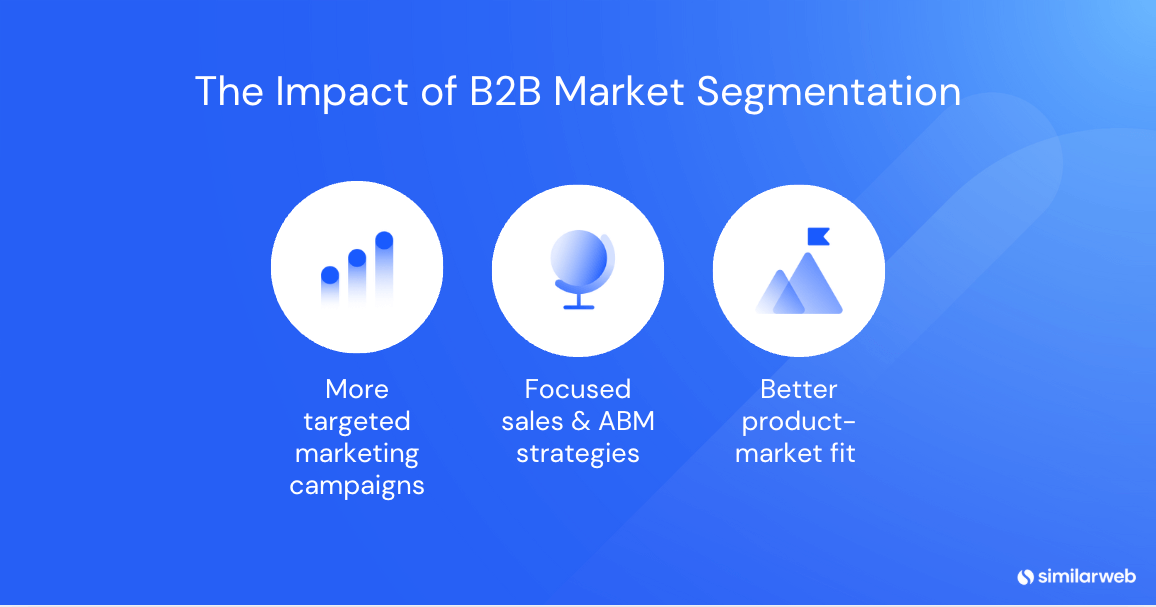
B2B market segmentation offers businesses several key advantages. Here’s how it can transform your strategy:
By leveraging segmentation, companies can improve strategies, customer relationships, and achieve better long-term results.
Segmentation helps businesses identify and connect with their ideal customer persona. Here are four essential methods for effective B2B segmentation:
This method divides companies by size, industry, and location. These factors influence operational strategies, decision-making processes, and purchasing behavior. For example, a small startup in tech may have vastly different needs than a large corporation in manufacturing. Understanding these distinctions allows businesses to tailor their approach for maximum relevance.
Analyzing a company’s technology stack and digital preferences reveals valuable insights. By identifying tools like CMS, analytics platforms, or eCommerce systems, businesses can pinpoint gaps and opportunities in their market.
This approach ensures offerings align with existing tech environments, improving compatibility and client satisfaction. Tools like Similarweb even uncover competitors’ tech setups, highlighting areas where companies can gain an edge.
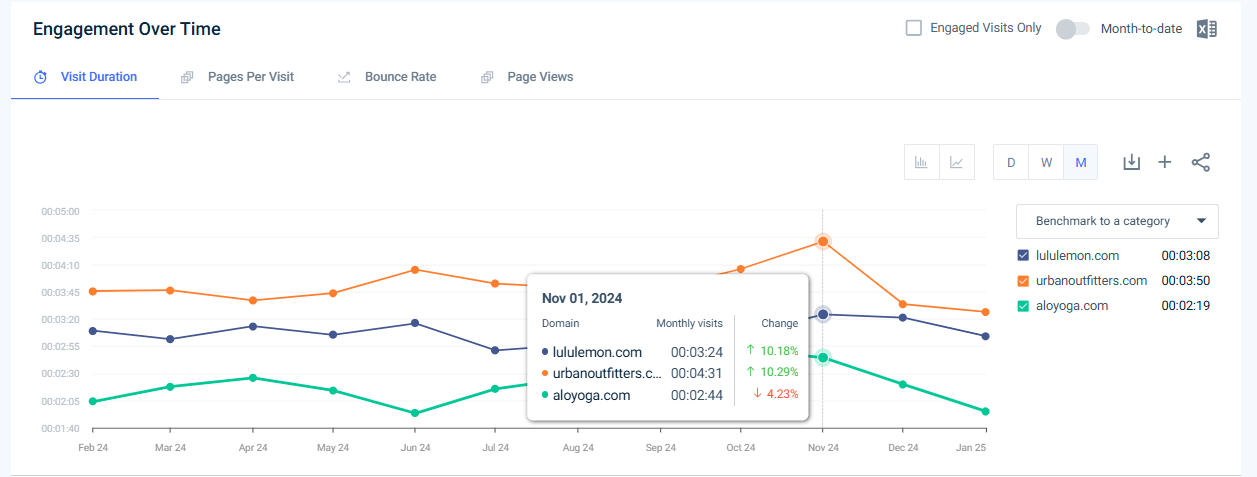
Tracking customer behavior, such as purchasing habits and web traffic, provides a holistic view of needs. Data from metrics like page views, bounce rates, and session durations can refine engagement strategies. Similarweb’s tools monitor digital behaviors, enabling businesses to respond promptly to customer actions and create campaigns that resonate.
Geographical segmentation impacts demand. Regional trends and market conditions shape product needs and preferences. Tools like Similarweb’s Demand Analysis can analyze traffic patterns across locations, uncovering regions with rising demand.
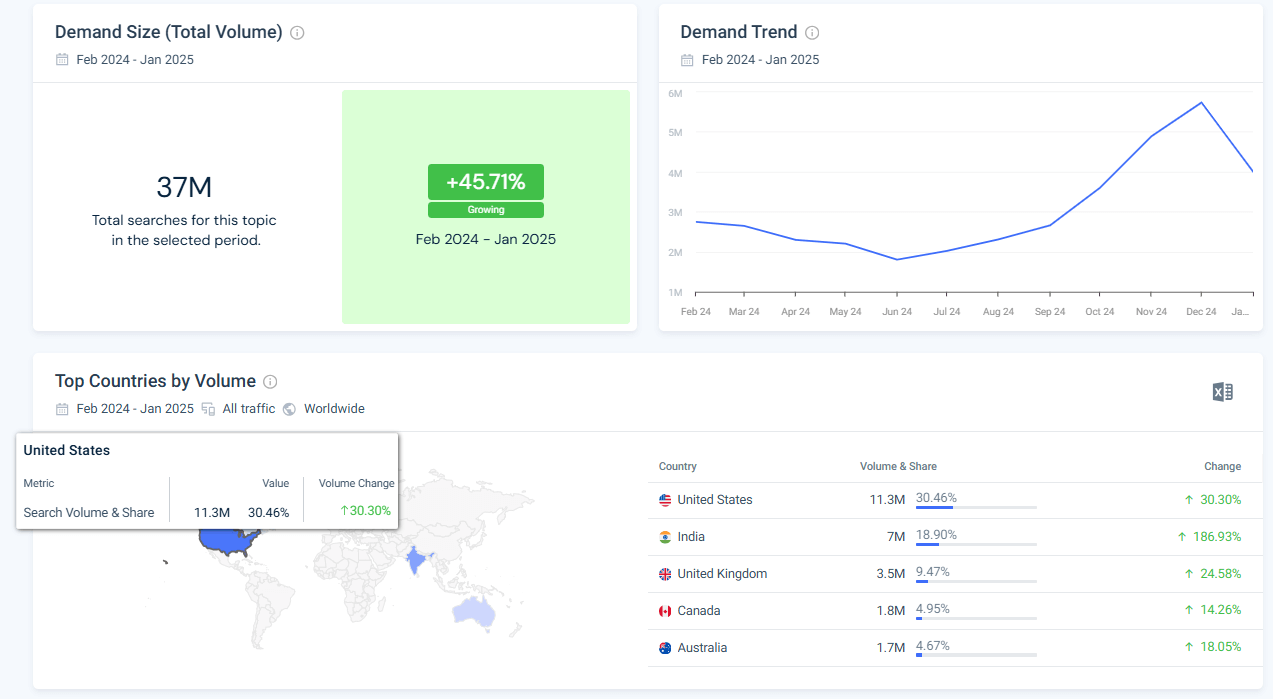
These insights guide strategies for market entry or expansion, ensuring offerings align with local culture and conditions.
By combining these methods, businesses can craft targeted strategies, improve engagement, and foster stronger relationships with their audience.
Creating a strong B2B segmentation strategy requires deliberate planning and execution. Here’s how to implement it effectively:
Start by setting clear goals. Are you looking to improve lead quality, break into new markets, or optimize product positioning? These objectives serve as a roadmap, ensuring your strategy aligns with broader business goals and remains focused.
Gathering accurate data is essential. Use tools to collect firmographic, technographic, and behavioral data to understand your market. Detailed analysis uncovers insights that help define your segments. For example, identifying gaps in technology adoption or regional preferences can guide your marketing strategy.
Once the data is collected, organize it into actionable customer profiles. Break down the market by factors such as company size, industry, location, and behavior. Similarweb’s advanced tools simplify this process by offering robust datasets that make segmentation easier and more impactful.
Create customized campaigns for each segment. Personalized messaging addresses specific needs and challenges, making your efforts more relatable. For instance, a message for a tech-savvy startup will differ from one targeting a traditional manufacturing firm. Personalized outreach improves engagement and boosts outcomes.
Segmentation strategies must evolve. Regularly assess performance using tools like Similarweb to ensure alignment with objectives. Monitor key metrics, and adjust tactics to respond to market changes or uncover new opportunities. Ongoing refinement keeps your approach competitive and ensures success over time.
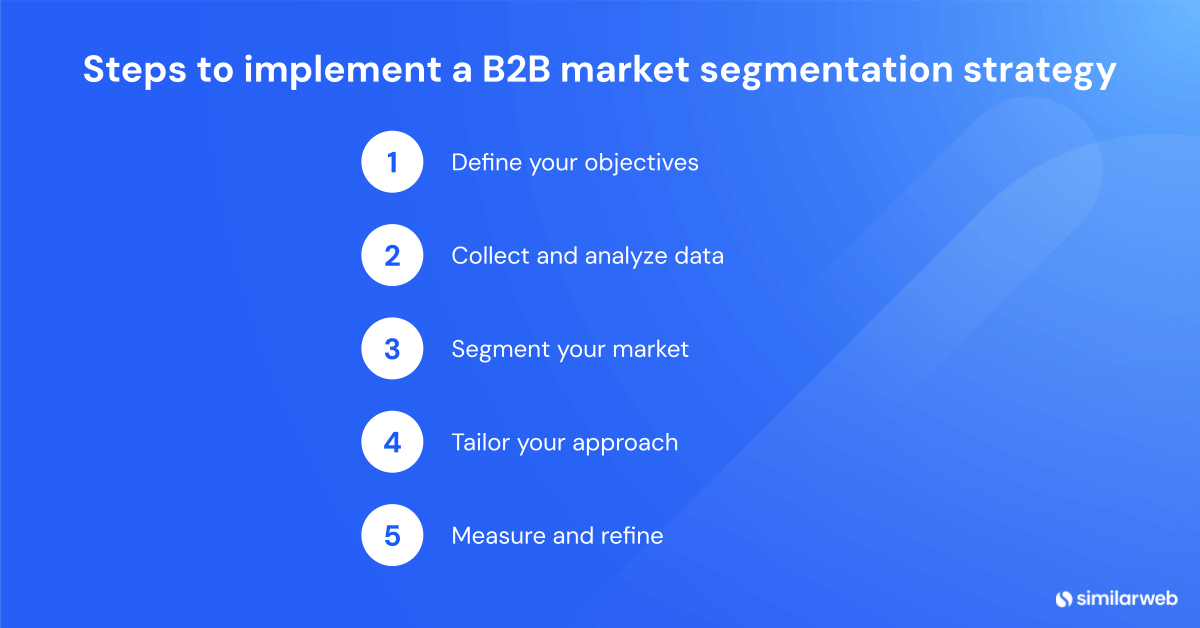
By following these steps, businesses can create dynamic and effective segmentation strategies that deliver meaningful results.
B2B market segmentation can transform strategies, but it comes with challenges. Recognizing and addressing these hurdles is crucial for success.
Reliable data is the backbone of effective segmentation, yet it’s often difficult to acquire. Without accurate and timely information, strategies lose focus. Similarweb addresses this issue by offering comprehensive digital insights. These real-time insights close data gaps, enabling businesses to make confident, informed decisions and sharpen their market strategies.
Finding hidden opportunities in large, complex markets can be challenging. Narrowing down to niche segments is critical but often requires sophisticated tools. Similarweb simplifies this process by uncovering unmet needs and niche opportunities. By identifying and targeting these smaller segments, businesses can achieve higher returns and strengthen their competitive edge.
Even with accurate data, implementing segmentation across marketing and sales processes can be tough. Misaligned teams or unclear workflows often derail efforts. Similarweb’s intuitive tools provide actionable insights that can foster collaboration. This seamless integration ensures marketing and sales work together to drive measurable outcomes.
Addressing these challenges can help businesses refine their segmentation strategies, unlock new opportunities, and strengthen their connections with target audiences.
B2B segmentation drives success in diverse markets. A well-crafted approach improves marketing and aligns strategies with customer needs.
Similarweb accelerates segmentation with data-rich insights. These tools improve performance, helping businesses refine efforts across customer touchpoints.
By leveraging these resources, you can build trust, boost ROI, and stay competitive in the dynamic B2B landscape.
What is the advantage of using firmographic insights in B2B segmentation?
Firmographic insights help companies find and focus on the right companies according to their size, industry, and location, which allows for efficient resource allocation and tailored engagement strategies.
How can technographic segmentation aid in market positioning?
Technographic segmentation informs businesses about their market’s tech environment, thus providing products that fit existing configurations, improving market positioning, and responding to technological demands.
Why focus on behavioral patterns in B2B segmentation?
Understanding behavioral patterns enables businesses to adjust their marketing initiatives to better accommodate customers and customer demands in a way that allows for more customized, effective marketing campaigns.
How does geographic segmentation benefit business expansion?
Geographic segmentation reveals areas with growing product demand, which puts resources in the right place for a strategically targeted interaction and driving sound business expansion plans.
How does Similarweb improve segmentation strategies?
Similarweb provides data-rich insights and intuitive tools that can refine and streamline segmentation efforts, making them more accurate and in tune with market demands.

Team Manager, Content Marketing
James is an former journalist & content strategist in B2B tech, who has previously created content for companies like EDF and X (Twitter). He also has a journalism post-grad from LCC.
Top Ecommerce Companies in the USA: The 100 Brands Winning the Traffic Race in 2026

3 of the Sharpest Minds Weigh in on the State of Gen AI in 2026

Contact us to set up a call with a market research specialist
