





Top Ecommerce Companies in the USA: The 100 Brands Winning the Traffic Race in 2026
by Inbar Eytan6 Min.
Aug 30, 2026
*May 24 Update – I visited Brighton again in 2024! You can read all about it here – 5 Key Takeaways from BrightonSEO 2024
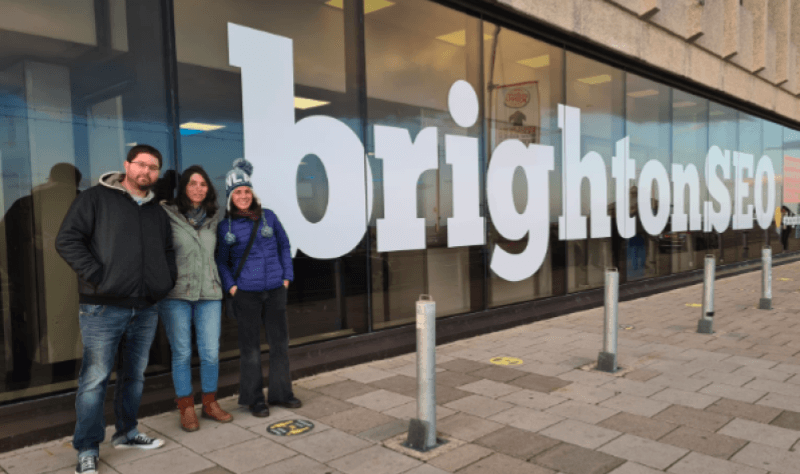
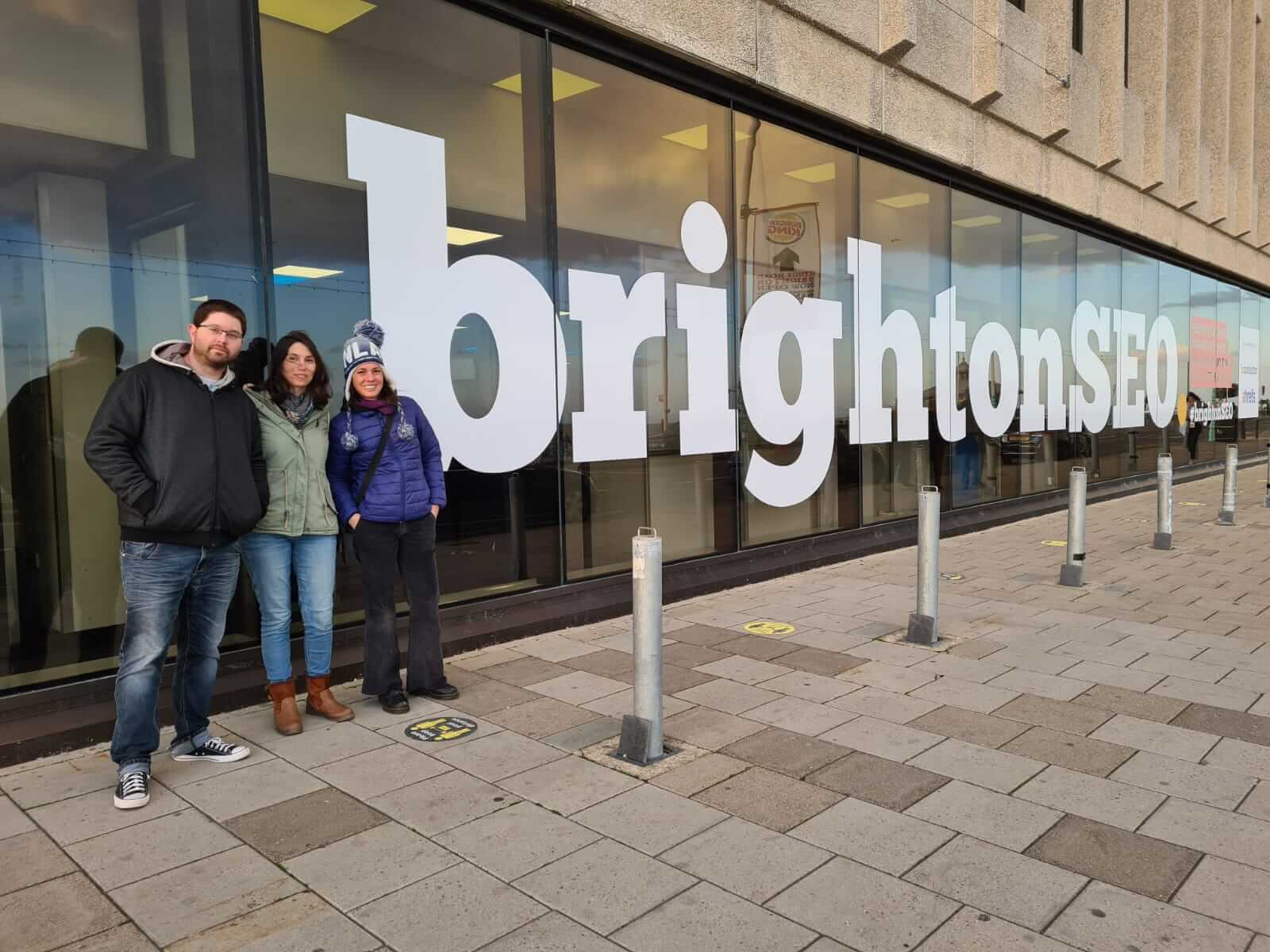
After two years of being landlocked due to the pandemic, I had the opportunity to attend brightonSEO across the pond with my director and a co-worker. We enjoyed the talks, the booths, the swag, and of course, the networking with SEOs from different countries and industries.
There was loads to learn and my agenda was packed with amazing talks, but here are my favorite takeaways from brightonSEO:
Topic: Lessons From Hundreds of SEO A/B Tests
Speaker: Will Critchlow, Founder and CEO, SearchPilot
As an SEO, I know how hard it can be to rank high for a competitive keyword, and once you get through optimizing and tweaking to get to that #1 spot, why fix something if it isn’t broken?
That’s what Will discussed in his talk on the importance of website A/B testing in SEO, where he showed results from various tests SearchPilot performed, alongside polls where SEOs were asked how they thought each test would go.
One particularly notable test focused on rearranging a site page layout to see how it would impact SEO – a bit of digital feng shui.
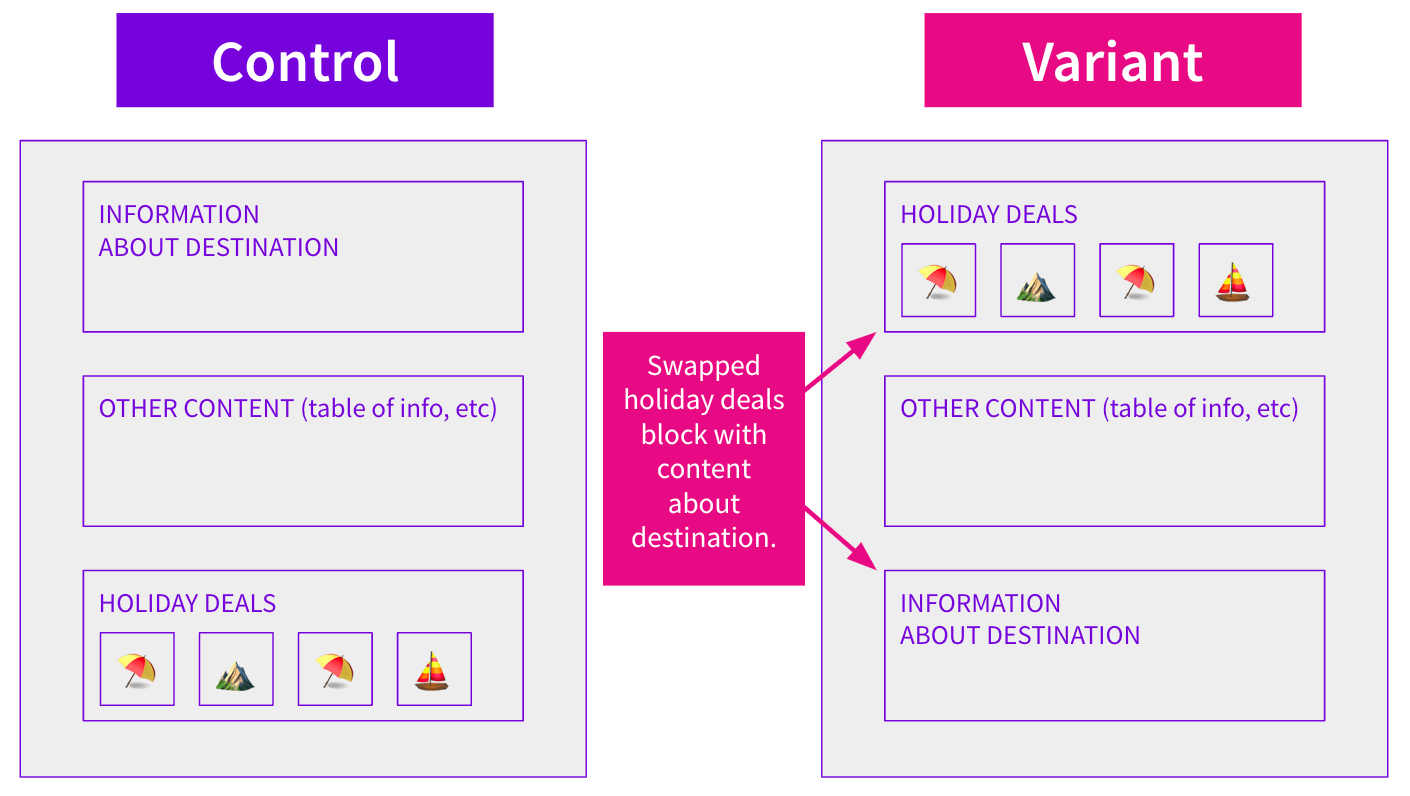
The answer? Believe it or not, the changes impacted the site negatively, which I suspect was due to the fact that content was actually pushed below the fold.
Another test SearchPilot performed used a “data-nosnippet” attribute to try and force Google to respect meta descriptions. It basically checked if Google writes better meta descriptions than us, and the effect on CTR.
Surprisingly, the test showed that forcing Google to show its meta descriptions had a negative effect. Why? Because your pages rank for many long-tail keywords, and it turned out that Google’s rewrites of meta descriptions were able to better answer different search queries, resulting in higher click-through rates.
Takeaway – For better or worse, don’t be afraid to perform A/B tests on your organic pages. Not doing anything might actually set you back, and give time for competitors to try and outrank you.
Topic: The Hidden Power of the SERP
Speaker: Jon Earnshaw, Chief Product Evangelist and Co-Founder, Pi Datametrics
I have to say – Jon was honestly one of the best speakers I ever had the chance to hear in my life. I don’t think I’ve ever seen a presentation as engaging as his – and you won’t catch me saying that often. He spoke about the changing landscape of the SERP in different industries, and how we can get our website in as many SERP features as possible to increase our brand visibility.
This was my favorite slide:
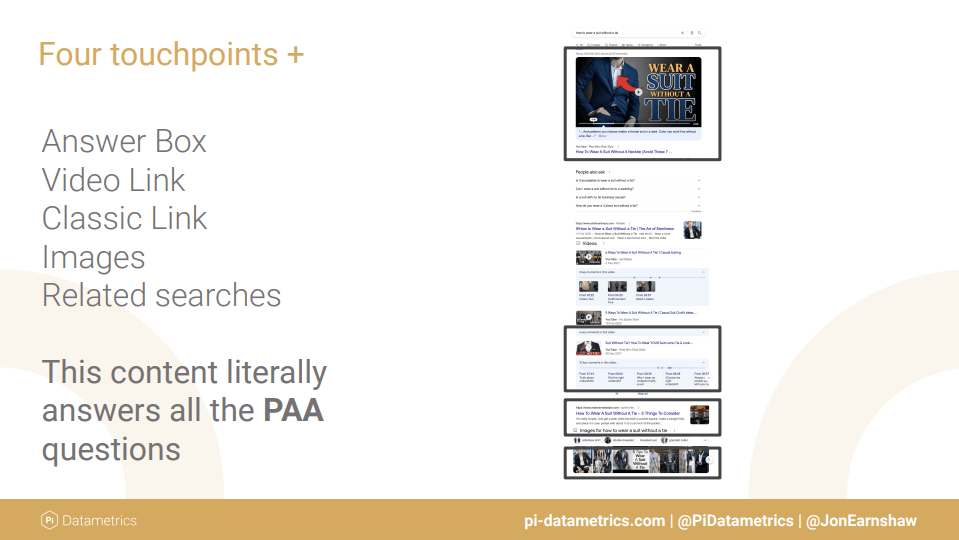
This site is crushing it for the keyword “how to wear a suit without a tie”!
Takeaway – For every piece of content and every competitor that ranks for the keyword we want, we need to give more weight to SERP features, see what’s new, and take over missed SERP opportunities. For example:
Topic: Win the SERPs: A Story of SERP Feature Trends
Speaker: Gerald Murphy, Senior Solution Business Manager, Similarweb
In his talk, Gerald analyzed both U.S. and U.K. SERP features by industry, keyword, and device, using Similarweb data to reveal various noteworthy trends:
This was my favorite slide:
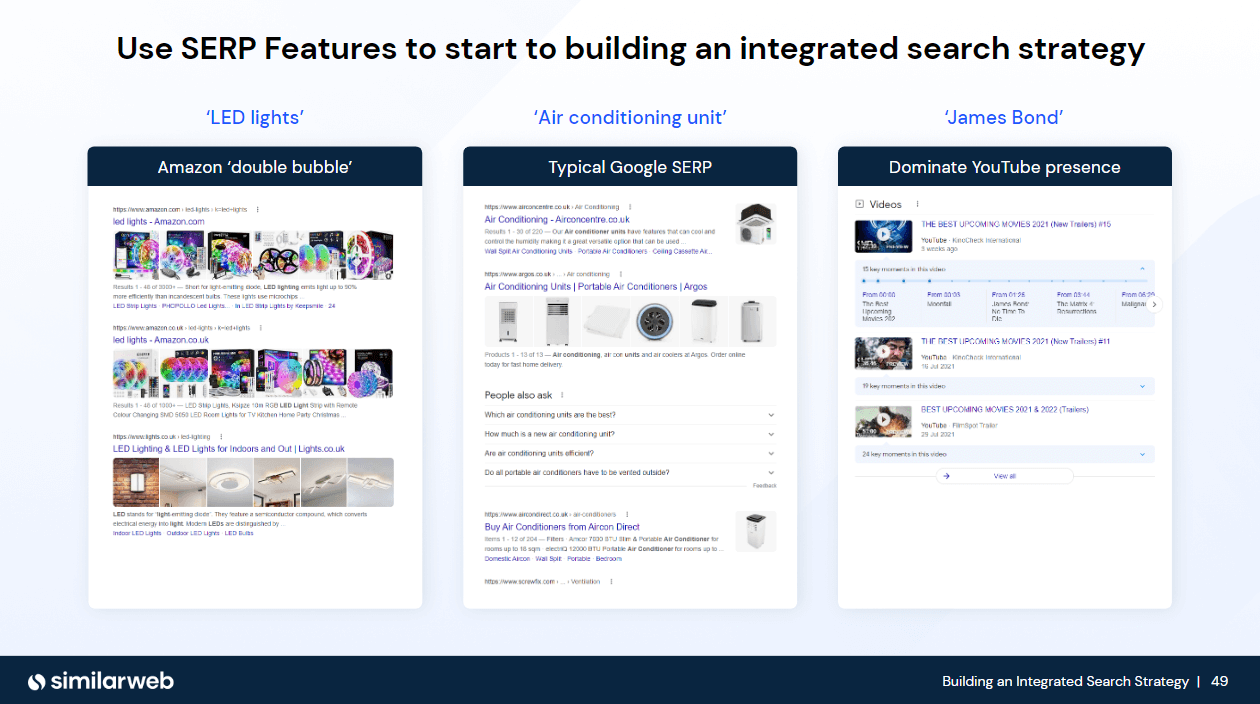
Takeaway – Constantly analyze SERP feature trends in your industry and adjust your search strategy as needed. As real-life changes happen, the SERP changes accordingly, adjusting itself to what searchers need.
Topic: How Do You Optimize the World’s Largest Website?
Speaker: Dan Morehead, Senior SEO Analyst, BBC
The first reason I loved Dan’s presentation as much as I did was that he used Similarweb data to show that bbc.co.uk is the leading U.K. news site 🙂
The second, admittedly less-biased reason is that Dan revealed the many challenges of enterprise SEO while sharing with the audience the different sections of the BBC website and how each of them addresses a different content “world”. Intrigued? Me too.
One of the best examples Dan gave on how he scales content-creating and SEO was to build news hub pages for each town in the U.K. This means that every time someone searches for {town name + news}, the BBC will have a presence in that SERP, and with the BBC’s massive authority, it’s also very likely to rank well.
Takeaway – This is very relevant for us at Similarweb, as we have so much data, and we love to share large-scale amounts of pages with data. For example:
Just like the BBC, we’re always looking for new ways to increase the amount of data that we can share with the internet, and as SEOs, use that to rank for the right keywords.
Topic: Drowning in Content? How to Tackle “Digital Hoarding”
Speaker: Adrian Imms, Head of Digital Content (Digital and Creative Media), University of Sussex
So basically, Adrian gave an amazing lecture on how to deal with people…well, like me.
As a self-proclaimed content hoarder, I can attest to how hard it is to let go of old organic traffic, even if it’s only raking in a few clicks a month and doesn’t align with your current content strategy. In his lecture, Adrian explained how people become content hoarders, why it’s bad for business, and how to stop it.
Takeaway – We at Similarweb actually learned this lesson about a year ago, when we analyzed our own blog and removed around 500 old blog posts. Doing this really helped us be more accurate with our SEO plan, focus on the right topics, get new ideas, and set the course for a brighter future with our blog.
Topic: The Hidden Gems of Low Search Volume
Speaker: Liraz Postan, International B2B SEO and Content Consultant
In her talk, Liraz discussed the real potential of low search volume, long-tail keywords, and why we sometimes need to stop looking at high search volumes.
The real problem arises when we want to get resources. When asking for a budget for writers, editors, buying images, and work hours of everyone involved, we probably encounter these questions:
Seeing website traffic is very important to people like CMOs – they want to increase their brand awareness and exposure. You’re still investing the same amount of content efforts, so why should you have to work with keywords that have minimal monthly searches?
Liraz claims that when you’re dealing with low search volumes, you need to find the right KPIs.
Some examples she gave:
Takeaway – I wouldn’t give up high-search volume keywords yet, but when finding the right opportunities and KPIs, low-search-volume keywords can be gold.
Topic: Content Readability for SEO
Speaker: Emily Hill, CEO, Write My Site
When I’m creating a content brief for a new blog post, I always look at my competitors’ content, see what they’re ranking for, do keyword research, and zero in on the lengths of the pieces of content to get a sense of what my post length should be – sometimes a bit longer to outperform them.
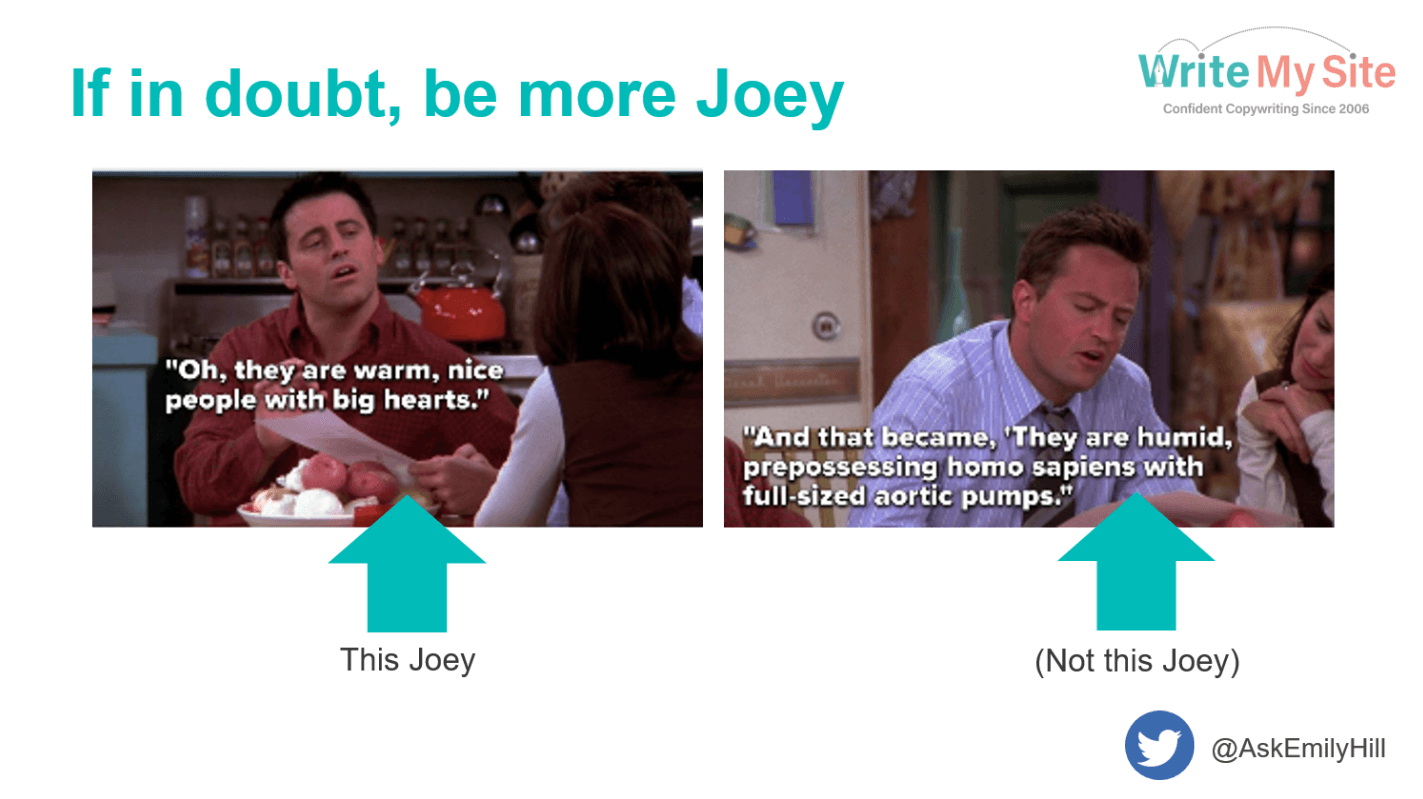
In her talk, Emily discussed the subject of readability and its connection to both readers and SEO. She gave a very surprising stat, saying that readability data suggest that the average reading age of the U.K. population is 9 years!
Not the target audience you’re aiming for when writing B2B SaaS content, am I right?
This, however, doesn’t mean you need to dumb down your content. What you do need to do is make your content more accessible to your readers, simplifying the way you write in order to reach as many people as possible.
Here are some of the great tips she gave:
Takeaway – When in doubt, be more Joey.
Topic: Don’t Be a Cannibal: Identifying and Avoiding Keyword Cannibalization
Speaker: Limor Barenholtz, Director of SEO, Similarweb
I’m not just saying this because she’s my boss, but Limor’s talk was amazing! (Looking forward to that pay raise!)
Kidding aside, Limor tackled a major pain point for SEOs – keyword cannibalization.
Many websites, large and small alike, struggle with this issue, as some pages or even entire sections of their websites contain content that competes with similar content on the same website. This is especially bad for search engines as they crawl your website, unsure which content they should be indexing and ranking.
Limor explained that clarity is key, and if the content on your site is unclear to users (and search engines), you’ll lose traffic in the long run.
After explaining the different types of keyword cannibalization and how to identify them, Limor shared with the audience her tips for fixing it:
Takeaway – Always listen to your boss, don’t be a cannibal, and don’t forget to monitor ranking performance and update your SEO map.
BrightonSEO was an incredible event, and I’m truly grateful that I had the opportunity to attend, represent Similarweb, spend quality time with my team, see our amazing booth in action, and learn new things about the world of SEO.
This will not be my last visit.

Senior SEO Specialist
Shai, with 10+ years in SEO, holds a Bachelor’s and an MBA. He enjoys TV shows, anime, movies, music, and cooking.
Top Ecommerce Companies in the USA: The 100 Brands Winning the Traffic Race in 2026

3 of the Sharpest Minds Weigh in on the State of Gen AI in 2026

Give it a try or talk to our marketing team - it’s free!
