
FIFA Owns the Conversation. Resellers Own the Clicks.
by Rice Tong6 Min.
Jun 11, 2026

Quick stat alert: Australia’s furniture and homeware ecommerce market saw a 5.45% rise in traffic – despite rising living costs.
Proving that even in tough times, people still invest in their homes.
But what’s driving this trend? In this analysis, we’ll peel back the layers to reveal what’s really going on. It will include:
But first we will take an in-depth look at how the furniture market is growing in 2024 to see where this trajectory is heading.
Australia’s furniture and homeware e-commerce market held up well in 2024, despite a rise in the cost of living.
The numbers are clear – there is an upward trend, thanks to shifting consumer habits and new retail strategies. So what’s driving this trend, and what does it mean for the ecommerce brands in the category?
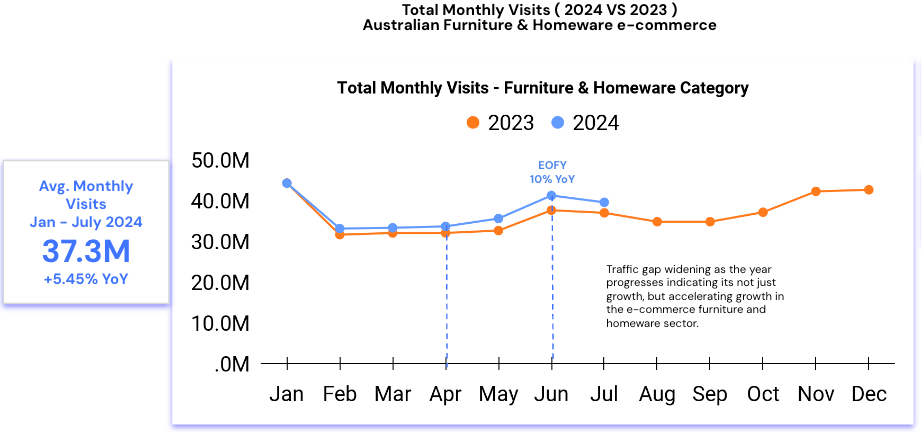
Traffic in the furniture and homeware e-commerce space grew by >5.45% (YoY) year-over-year (YoY) from January to July 2024.
Why?
What can you do?
The takeaway? This growth trend signals that ecommerce isn’t slowing down.
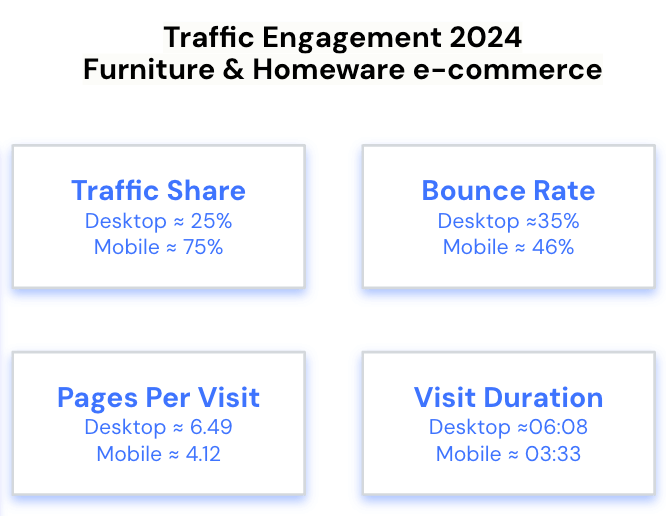
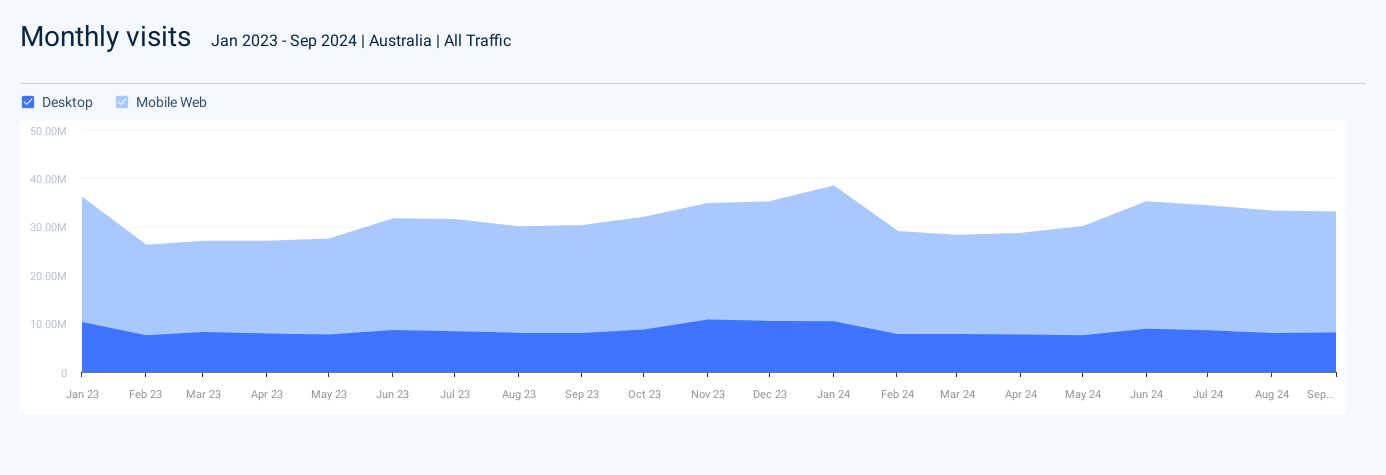
Mobile now makes up 75% of all traffic in the category – not a number you can shrug off. Mobile should be a top priority.
Brands need to get out of the mindset that mobile is just for browsing. If you’re a brand manager, you must focus on the mobile experience and make it easy to buy.
And this clearly isn’t happening.
Desktop users show higher engagement levels across all the main metrics. Mobile underperforms on bounce rates, pages per visit, and visit durations.
The key takeaway? Brands must prioritize mobile performance metrics and experience. Are users dropping off? What quick wins can improve engagement?
Ignoring mobile-first design is like having a hole in your bucket.
Australia’s furniture and homeware ecommerce space is led by some familiar names – but new competitors are shaking things up.
Here’s how IKEA and Temple & Webster continue to hold their ground and why designer brands are carving out a new path.
Together, IKEA and Temple & Webster pull in over 35% of the category’s traffic. But their strategies couldn’t be more different.
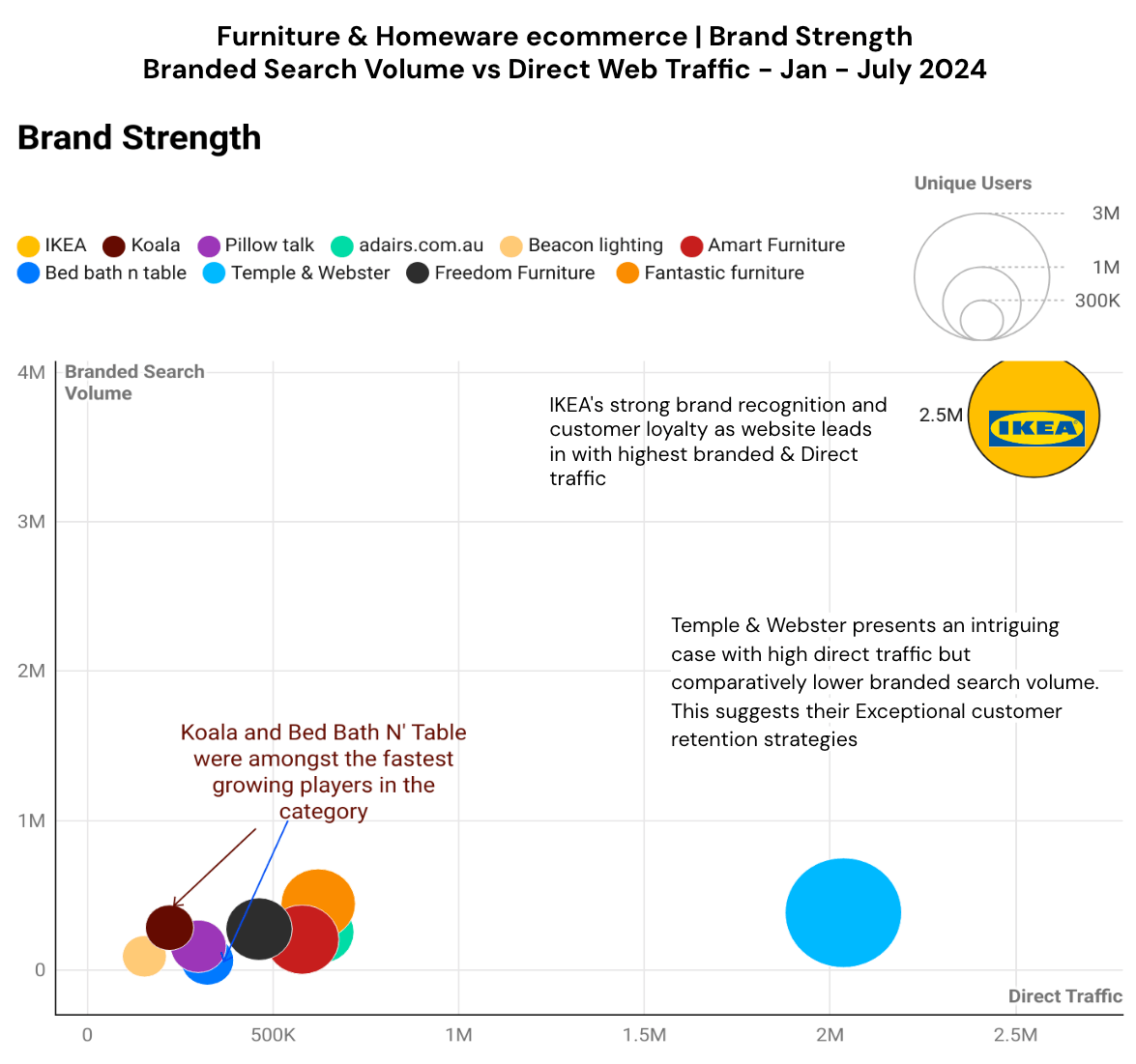
Key findings:
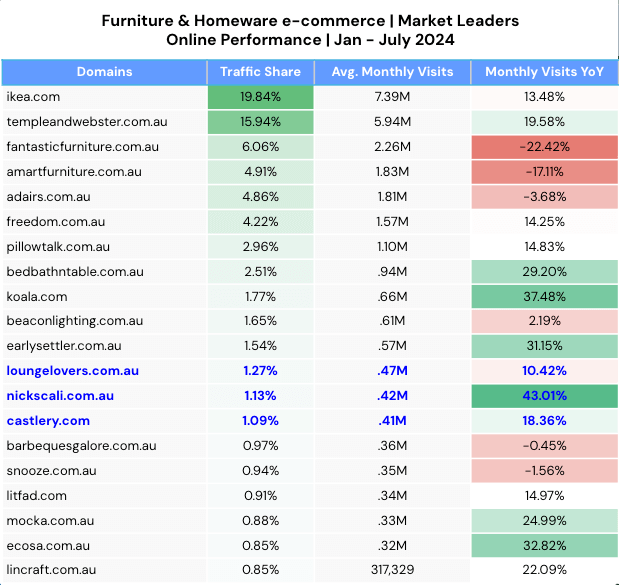
What’s the lesson for you? Balancing the organic strength IKEA enjoys with the paid visibility that Temple & Webster leverages could be the secret to long-term success.
IKEA and Temple & Webster dominate. However, higher-end furniture stores like Lounge Lover, Nick Scali, and Castlery are experiencing significant online growth, outpacing traditional retailers such as Fantastic Furniture and Amart.
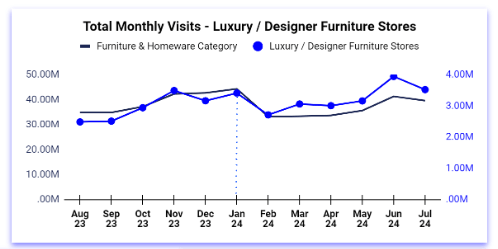
Designer furniture stores saw a 17% growth in traffic, surpassing the category average. This indicates a growing interest in this segment.
What’s the opportunity here? For brand managers, it’s clear: consumers are splashing out on premium, design-focused furniture products. Find the keywords they are using to find them.
If you’re in ecommerce, then you’ve got to know where your traffic is coming from – and how to make the most of it.
Here’s the deal: 43% of all traffic comes from organic search. That’s huge. It means consumers are actively searching for specific products, and they’re more likely to land on brands that are ranking high.
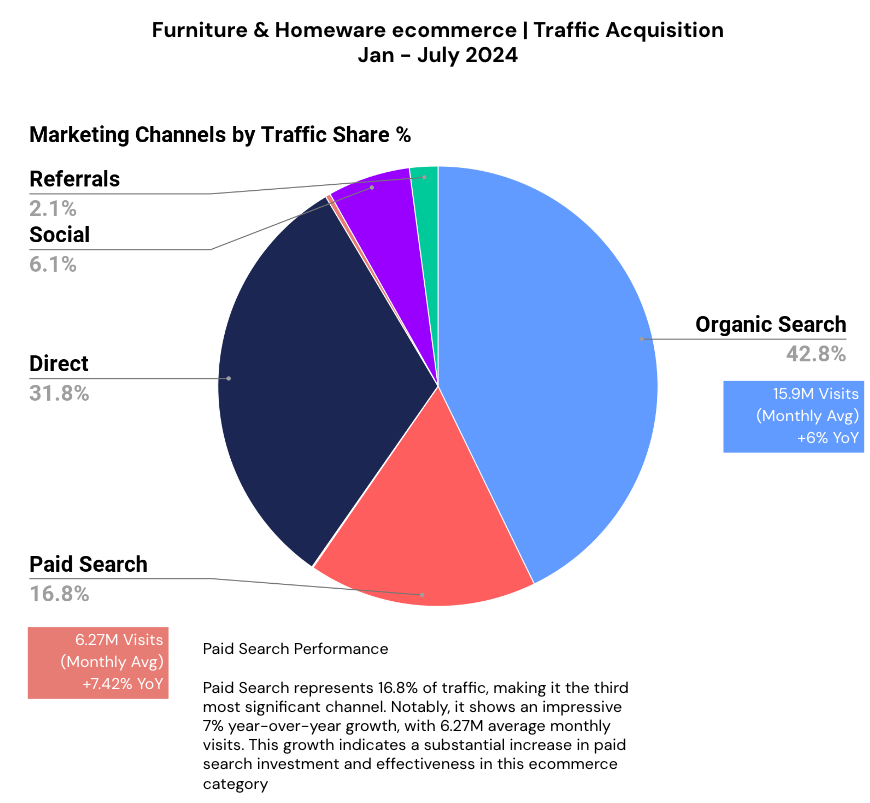
What does this mean?
It’s simple: you need a strong SEO strategy. Optimize your content for relevant product keywords to stay visible and competitive. And find new ones for products people are searching out.
Best of all, more organic traffic to big-ticket items means more for your bottom line.
The big win: Focus on improving your organic rankings. Find newer and less competitive keywords. Lower your customer acquisition costs while driving steady, long-term traffic.
Right now, paid search makes up 16.8% of traffic in the furniture and homeware space, but it’s growing fast – 7% YoY.
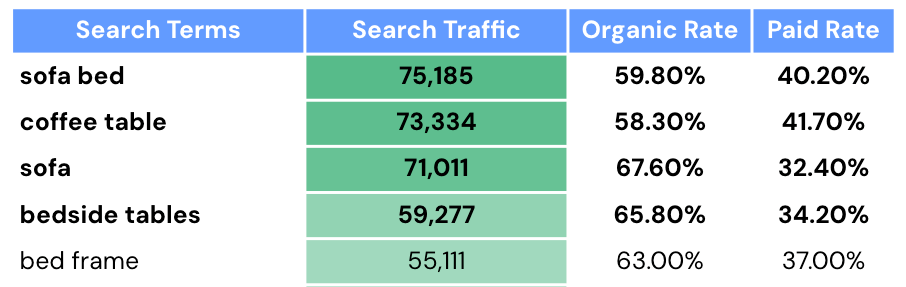
Around 40% of traffic to keywords like ‘sofa bed’, ‘bedside table’ and ‘coffee table’ comes from PPC.
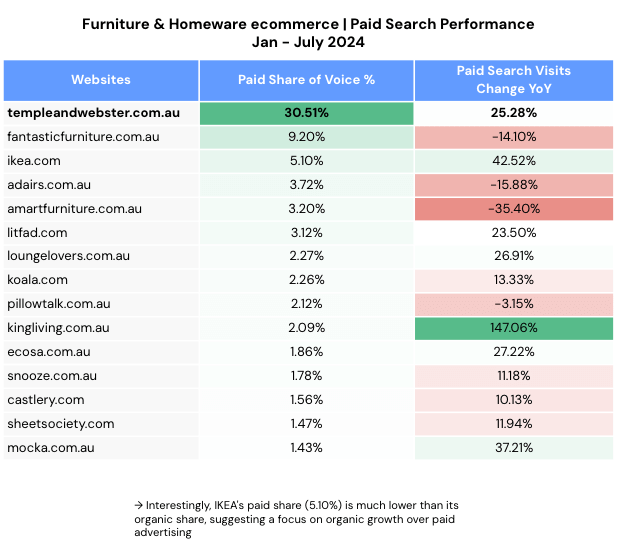
Brands that are investing in PPC are seeing big wins. Temple & Webster is taking more than 30% of paid search traffic. While Kingliving, with a 147% increase, has clearly just switched to paid.
What should you do?
The last word: paid search is a smart way to capture high buying intent traffic quickly in a competitive marketplace.
Understanding how shoppers behave is key. So far, we know consumers are focused – on specific products and seasonal needs.
In 2024, online searches were laser-focused. Shoppers are searching for specific items like “sofa bed,” “coffee table,” and “sofa”. Branded organic search is a competitive area for the top brands.
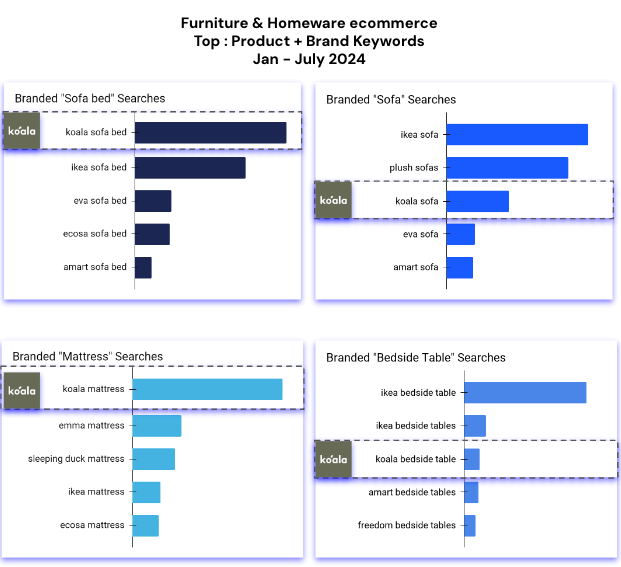
What does this mean for your strategy?
For brand managers, this shift from browsing to buying means a targeted approach based on actual products.
SEO and paid search strategies should not only prioritize the items consumers are actively searching out. They should think about why they’re buying them and who they are.
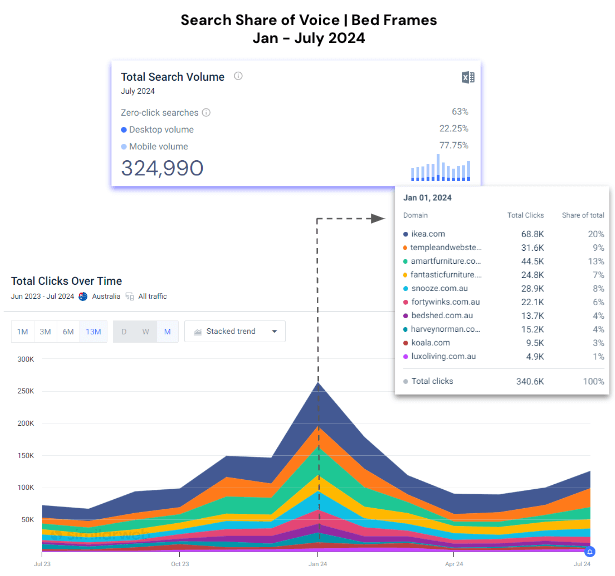
Seasonal behavior plays a big role, especially when it comes to products like bed frames, mattresses, and bedding, which see a major spike every January.
Why? Consumers are upgrading their homes after the holidays, and New Year promotions give them that extra nudge.
What does this mean for your strategy?
For brand managers, this shift from browsing to buying means a targeted approach based on actual products.
SEO and paid search strategies should not only prioritize the items consumers are actively searching out. They should think about why they’re buying them and who they are.
Seasonal behavior plays a big role, especially when it comes to products like bed frames, mattresses, and bedding, which see a major spike every January. Why? Consumers are upgrading their homes after the holidays, and New Year promotions give them that extra nudge.
What should you do?
For brand managers, understanding past search patterns can help you predict these spikes. So you’re ready with the right inventory and marketing when demand peaks.
One of the highlight trends from this report is the use of mobile in the home and furniture category. While this follows a global trend, Australia appears to be slightly ahead of the curve in terms of mobile usage.
Here we can compare Australia with the US, UK, and Global.
As the Australian furniture and homeware ecommerce market continues to grow, the question for retailers is simple: how do you keep up?
The landscape is changing – fast. There’s the rise of high-end retailers and PPC. And if you want to stay competitive, you need to adapt just as quickly.
Here’s what to focus on:
With 75% of traffic coming from mobile, it’s clear that mobile optimization isn’t just a priority – it’s a necessity. If your mobile experience isn’t fast, smooth, and user-friendly, you had better be fixing it right now.
Both organic and paid search will be key drivers of success moving forward.
Consumer behavior is evolving, with a shift towards product-specific searches and strong seasonal trends. Make sure your marketing efforts are in sync with what your audience is looking for – and when they’re looking for it.
Seasonal spikes, like the January surge in demand for bedding and mattresses, offer golden opportunities to reach consumers when they’re ready to buy.
Retailers who stay flexible and focused will be the ones who capture the most market share in 2025.
By staying attuned to consumer behavior – such as the shift toward product-specific searches and seasonal demand – retailers can fine-tune their marketing efforts to meet customer needs and drive sustained growth in 2025 and beyond.
Whether you’re in the pet health industry or competing in another category, Similarweb Shopper Intelligence is your ultimate solution for Amazon Intelligence and the go-to tool for Amazon sellers.
Plus, you can dive deeper with unique cross-shopping and loyalty insights to understand viewership overlap, evaluate your share of wallet, and balance acquisition and retention efforts.
Ready to take your Amazon sales to the next level? Book a meeting with one of our Amazon experts today to see how Similarweb Shopper Intelligence can help you stay ahead of the competition.
The Similarweb Press Office can pull additional or updated data on request for the news media (write to press@similarweb.com). When citing our data, please reference Similarweb as the source and link back to the most relevant blog post or similarweb.com/blog/insights/.
Disclaimer: All names, brands, trademarks, and registered trademarks are the property of their respective owners. The data, reports, and other materials provided or made available by Similarweb consist of or include estimated metrics and digital insights generated by Similarweb using its proprietary algorithms, based on information collected by Similarweb from multiple sources using its advanced data methodologies. Similarweb shall not be responsible for the accuracy of such data, reports, and materials and shall have no liability for any decision by any third party based in whole or in part on such data, reports, and materials.

by Mir Jawad
Principal Solutions Architect at Similarweb
Mir has seven years of experience helping businesses in Australia, New Zealand, and Southeast Asia with e-commerce and digital strategy.
Give it a try or talk to our marketing team — don’t worry, it’s free!