






The Top 100 Most Visited Websites in the USA (August 2026)
by Shai Belinsky10 Min.
Sep 29, 2026
 Stock Intelligence
It’s no secret that making your first acquisition – or even your second or third – is a big step. In the age of unicorns and massive valuations, it’s easy to be intimidated by the high price tag of buying other businesses, not to mention the logistics and risk that can come along with it.
But in my experience growing two seven-figure businesses, edtech company Imagine Easy Solutions and online gaming company Unwind Media, acquiring other companies hasn’t been as cost-prohibitive as you might think, and it’s been an incredibly powerful way to accelerate growth.
Acquiring other companies hasn't been as cost-prohibitive as you might think. It’s been an incredibly powerful way to accelerate growth. Tweet this Even beyond the obvious benefit of turning a key competitor into part of your team, acquiring other companies can allow you to dramatically increase your user base and strengthen your domain ranking and SEO efforts at a low cost.At Imagine Easy Solutions, for instance, we acquired four companies over six years, skyrocketing our total site traffic from 10 million yearly users to 30 million.
Another benefit I didn’t expect: getting an insider look into the best practices and processes of other sites. At Imagine Easy, one of the sites we acquired used better technology to recoup revenue for adblock users – something I hadn’t previously known about.
Of course, these upsides are only realized if you acquire the right companies. Keep reading for a round-up of how to use alternative data to research, identify, and ultimately acquire companies using the website you’re on right now: Similarweb.
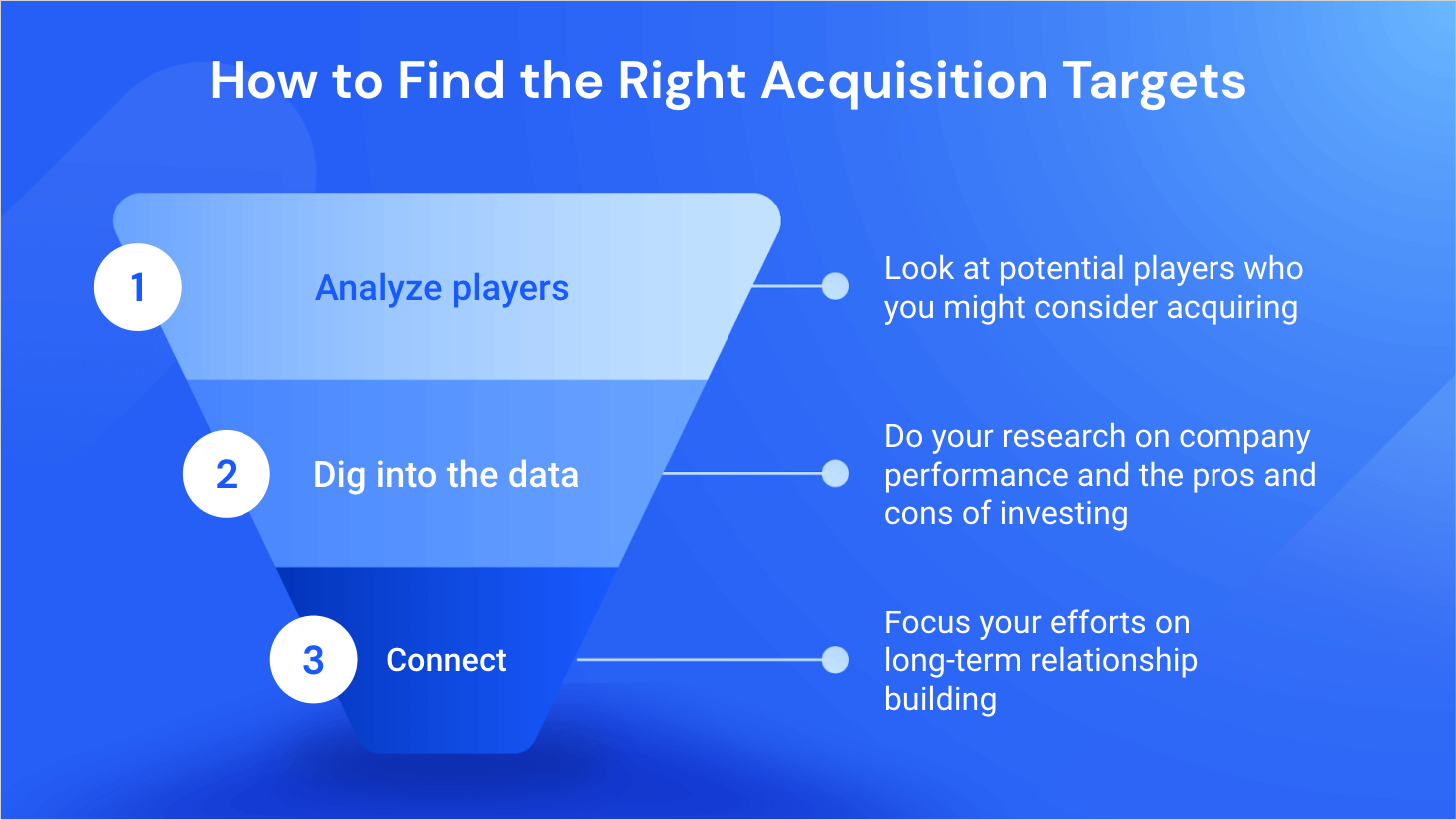
Earlier this year, when my co-founder and I wanted to explore growing Unwind Media and our gaming sites. Our first step was to understand the key players in the market, no small feat in the $173.7 billion, highly fragmented gaming industry. With tens of thousands of smaller companies in the gaming space along with large players like Nintendo and Sony, we approached this research phase systematically and made sure to do our due diligence.
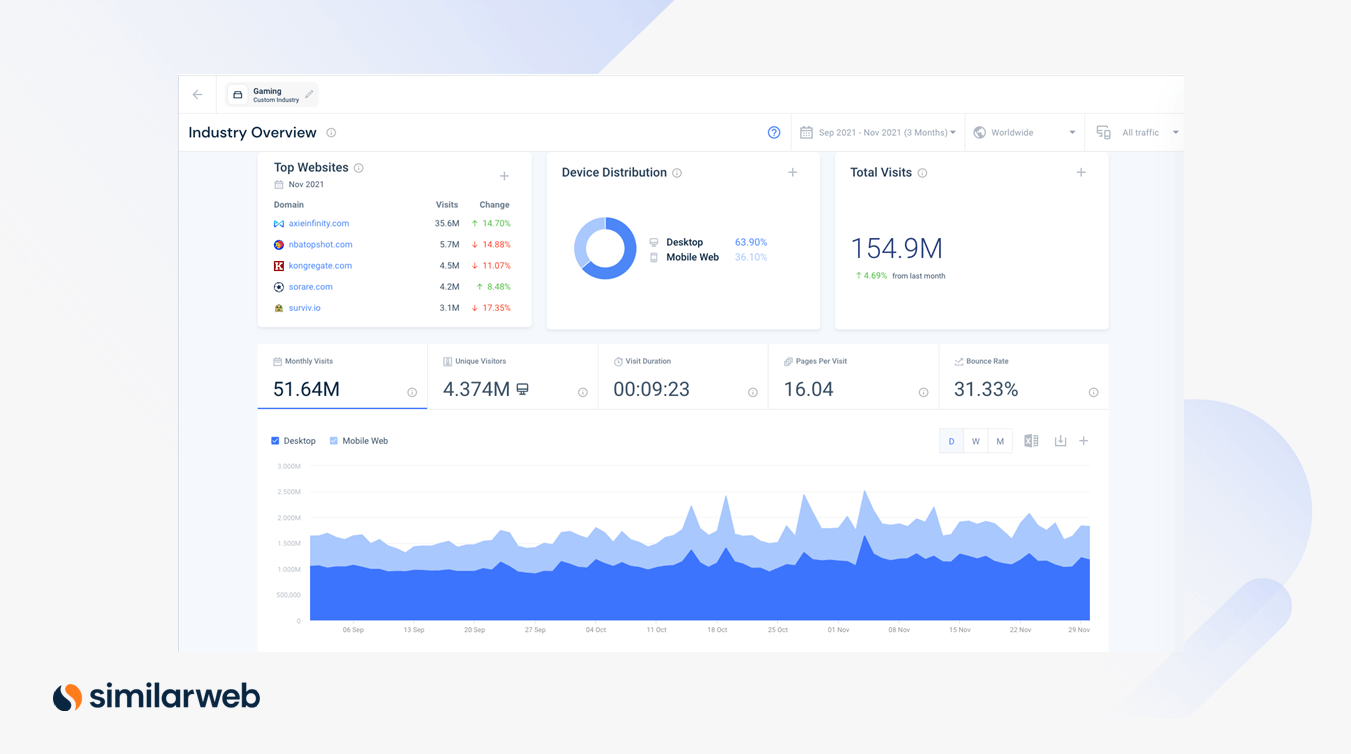
Fortunately, Similarweb makes this simple. The ranked list of top websites, which you can narrow down by industry, gives you the big picture of the performance of companies in any industry. Here is an example of the Industry Overview for Gaming:
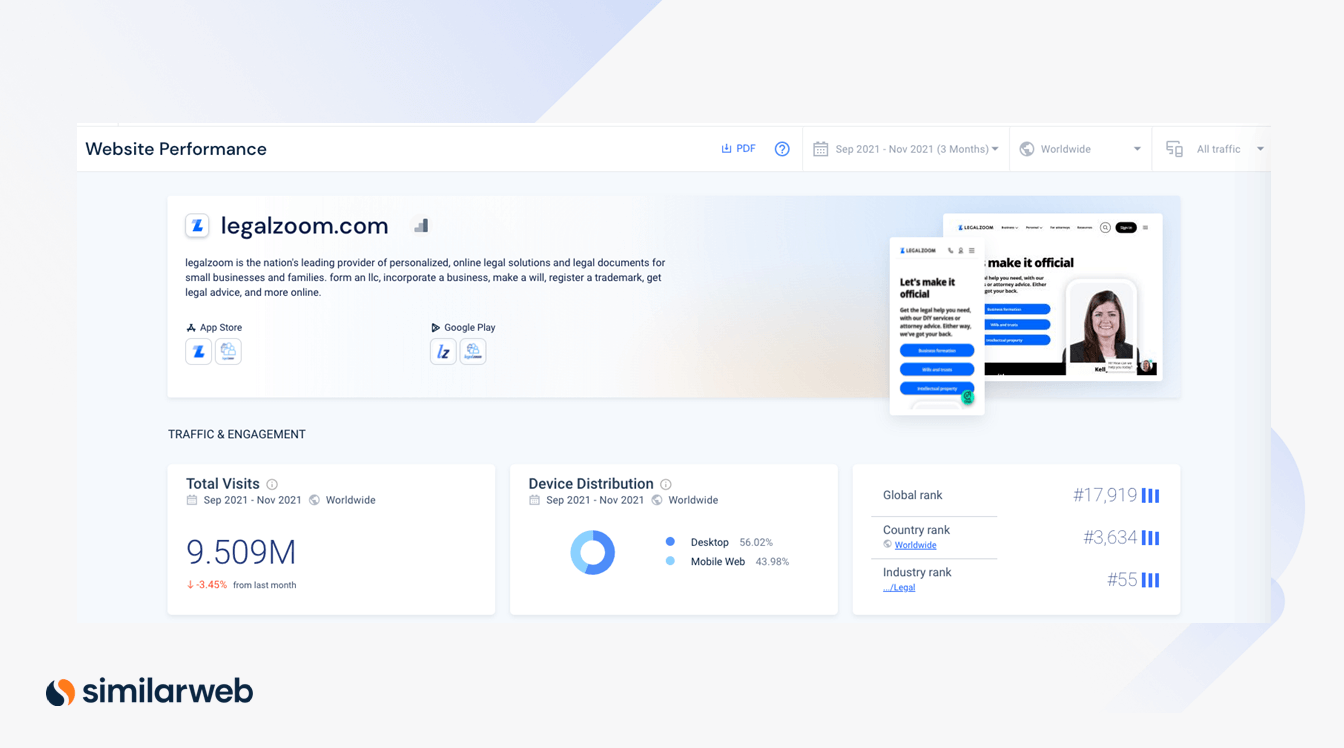
You can also start with a business you already know and look up its profile on Similarweb, where you’ll see it categorized by industry and its industry rank.
Take LegalZoom, for instance. It’s categorized under Law and Government > Legal. To view more companies in that space, simply click on that category.
Once you find a potential acquisition target, you can find similar sites using Similarweb’s “Competitors” tool. This can lead you to businesses you may never have heard of before, as well as industry categories you hadn’t previously considered.
Typically, I invest a lot of time in this research process, digging deeper into similar sites and identifying adjacent businesses to get a well-rounded view of the space and to generate ideas I may not have previously thought about.
For example, for our gaming business, I knew we competed with other card game sites, but Similarweb led me to a category I hadn’t previously considered: online puzzles.
As you’re analyzing the players in the space, it’s helpful to start identifying the criteria you’re looking for in target acquisitions. With Unwind Media, I was specifically looking to invest in companies that were large enough to have seen some traction, but small enough that they still had plenty of opportunity to grow (and would be within my bootstrapped budget).
In particular, I looked for the following alternative data metrics using Similarweb:
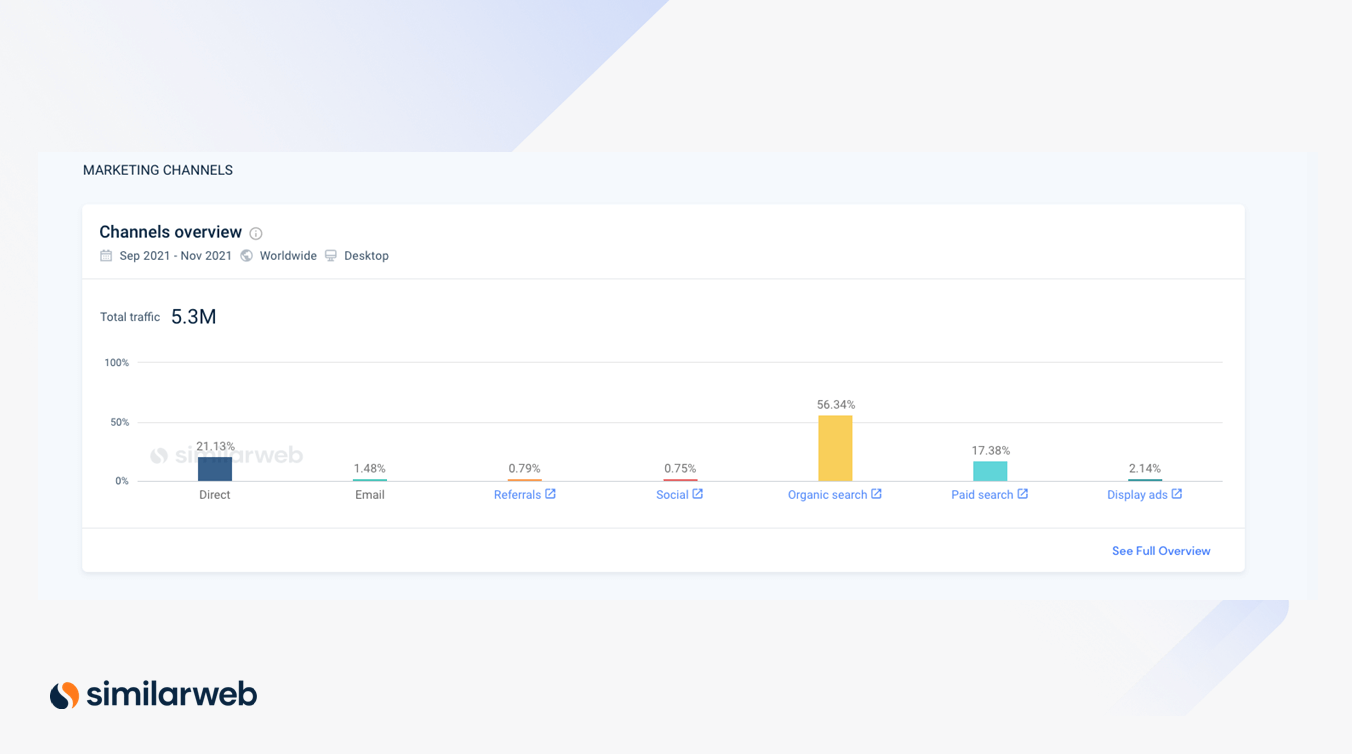
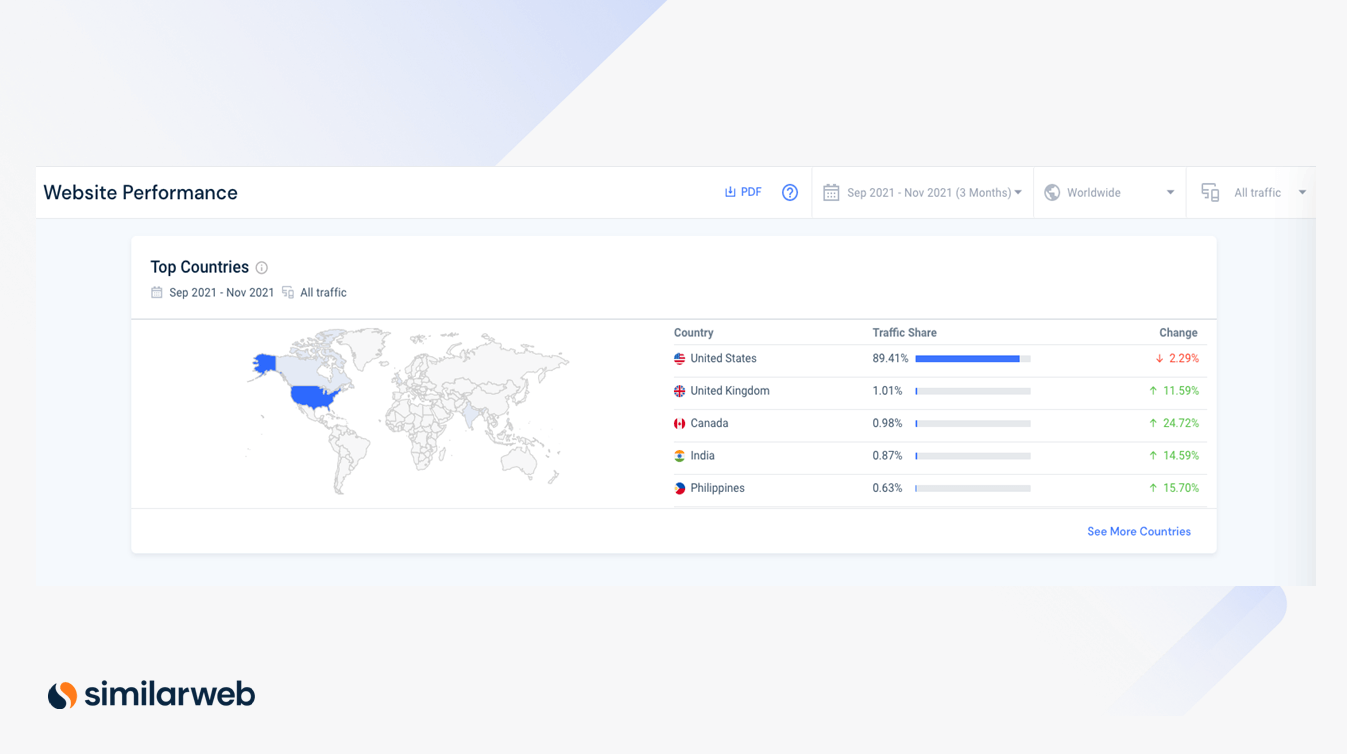
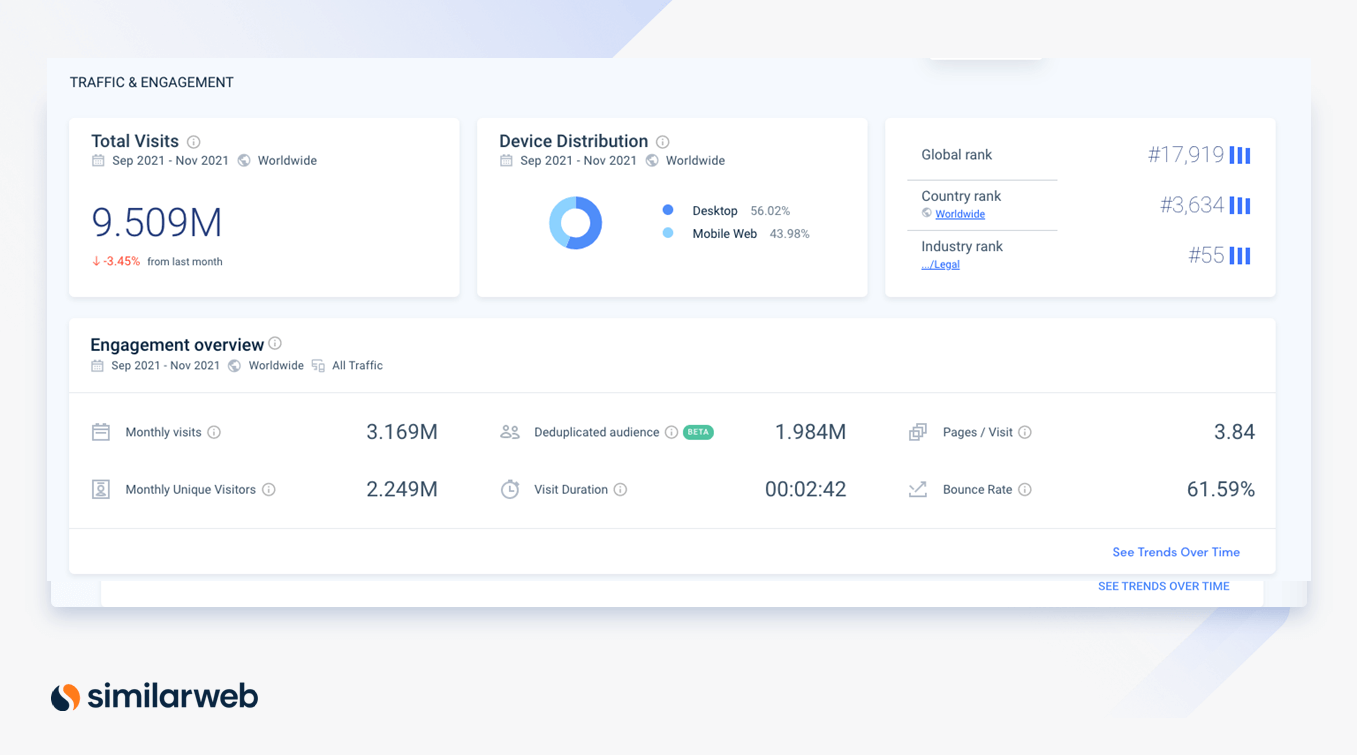
From here, I’ll use Similarweb data and data pulled from additional sources like Google Trends, to build a financial model that helps us to understand how much a target company might make, what it might be worth, and how much value we can create by growing it. Make sure to do your due diligence and research any potential risks carefully.
Recently, we identified and acquired im-a-puzzle.com, a puzzle platform, and partnered with Solitaire Bliss, a casual gaming site. With both, we saw the sites already had strong engagement metrics, traction we could accelerate, and an opportunity to change their geographic mix to more U.S. visitors.
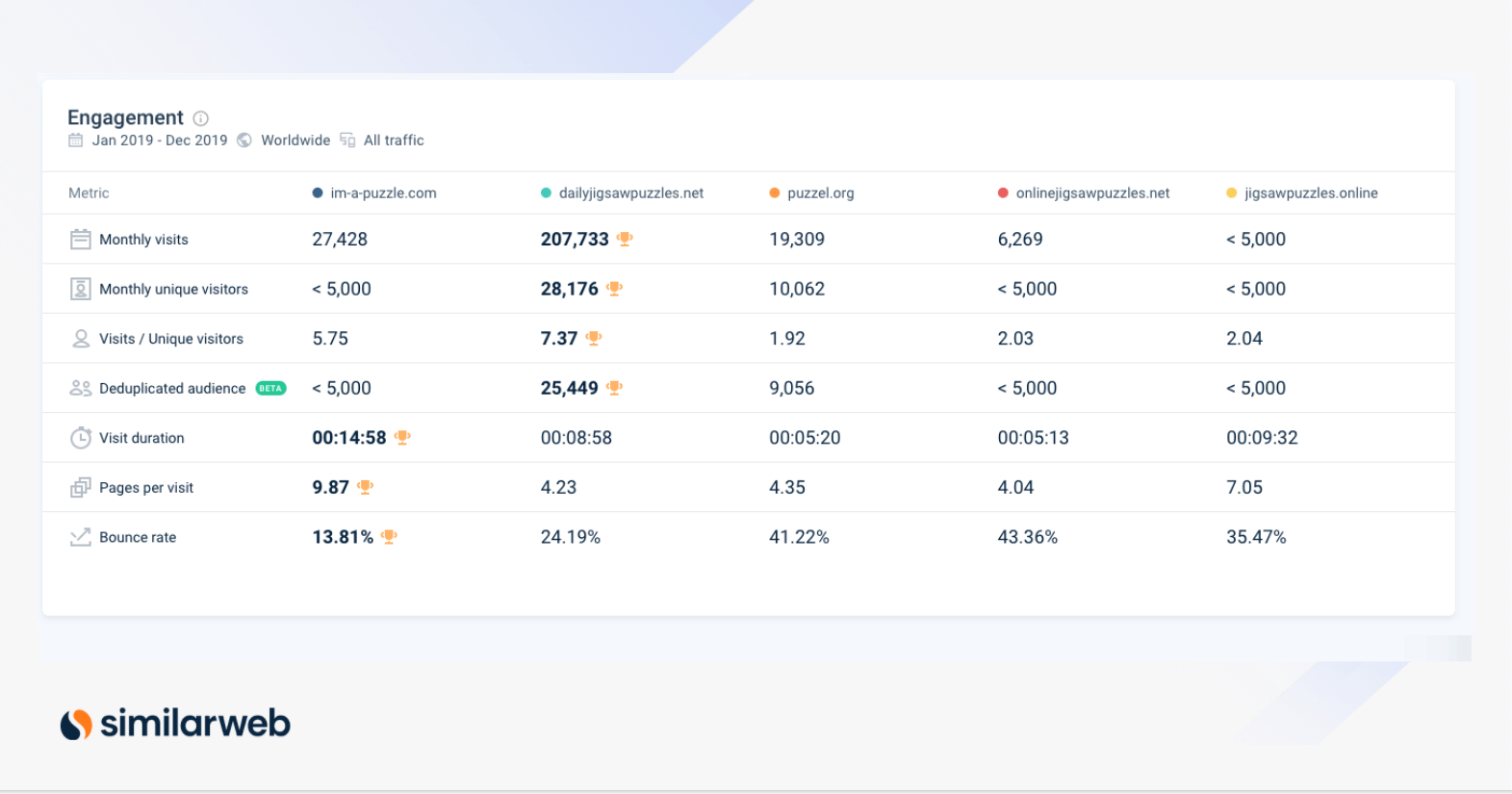
There were plenty of others I considered investing in during this process but that ultimately weren’t a fit. In some cases, the valuation was too high or the growth potential was too limited. In others, the technical overhead to integrate and run the company would become a distraction to our overall efforts.
And, of course, in some cases, the founder simply didn’t want to sell, which brings me to:
Spending time thoughtfully researching and modeling to find the companies worth investing in is great, but the truth is that most company owners won’t respond to your inbound requests, and few among those who do will be interested in selling their business.
So, it’s worth casting a wide net and reaching out to any potential acquisition targets.
Just because someone isn’t willing to sell today, doesn’t mean that won’t change down the line. I don’t treat each no as a no but as the beginning of a relationship. Tweet thisStaying in touch with potential acquisition targets increases your chance of being in the right place at the right time.
I’ll even reach out to those companies that don’t exactly align with my ideal criteria. Who’s to say they wouldn’t become good candidates in the future, either because my company grows or theirs fall on tough times.
Above all, remember that this isn’t a one-and-done process. As an investor, especially one who wants to use acquisitions as a growth strategy, it’s a major part of your job to regularly keep a pulse on the industry and be on the lookout for new target companies. Luckily, Similarweb makes it incredibly simple.

by Neal Taparia
Entrepreneur
Neal Taparia is a serial entrepreneur who sold his edtech company to Chegg and now explores brain training through classic games with Unwind Media.
The Top 100 Most Visited Websites in the USA (August 2026)
Similarweb Named in Forrester's Answer Engine Optimization Technologies Landscape, Q3 2026

Anthropic IPO: What Claude's Web and App Data Show
Leverage data used by 5,000+ companies to improve your strategy