


 Marketing Intelligence
BrightonSEO or BrightonAEO? The Lines Are Blurring: Our Top 3 Takeaways
BrightonSEO 2025 might as well have been called BrightonAEO.
This year’s event was packed – not just with SEOs, but with marketers, content creators, and analysts – all here to make sense of one thing: AI and its impact on search.
Almost every session circled back to it. How AI is changing discovery. How people find, validate, and act on information.
How the metrics we’ve relied on for years suddenly don’t tell the full story anymore.
It’s fair to say the industry hasn’t landed on a single playbook yet, but that’s what makes it so interesting. This is the messy, creative phase where ideas form and frameworks take shape.
Below are our three big takeaways from this year’s event.
1. The search journey is no longer linear
Users aren’t just typing a query into Google and clicking a link right away. They’re discovering, validating, and deciding across multiple platforms – Reddit threads, TikTok videos, YouTube reviews, Threads posts, AI chats, and more.
In one of the talks from Searchpulse, it was shared that social media has now become the second most-used “search engine” after Google.
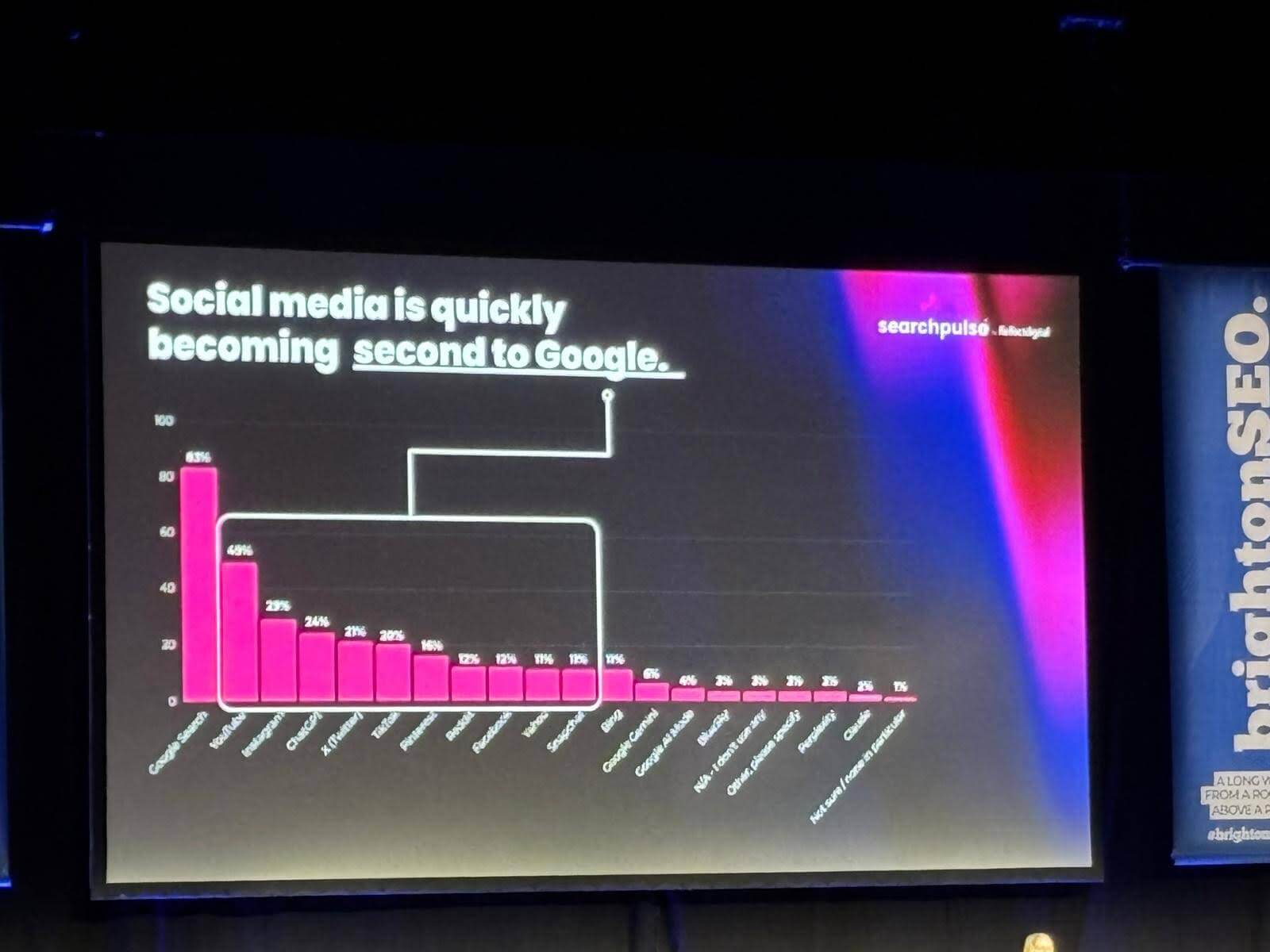
For SEOs, it’s a reminder that visibility isn’t just about Google rankings anymore. It’s about being part of the discovery journey, wherever it happens.
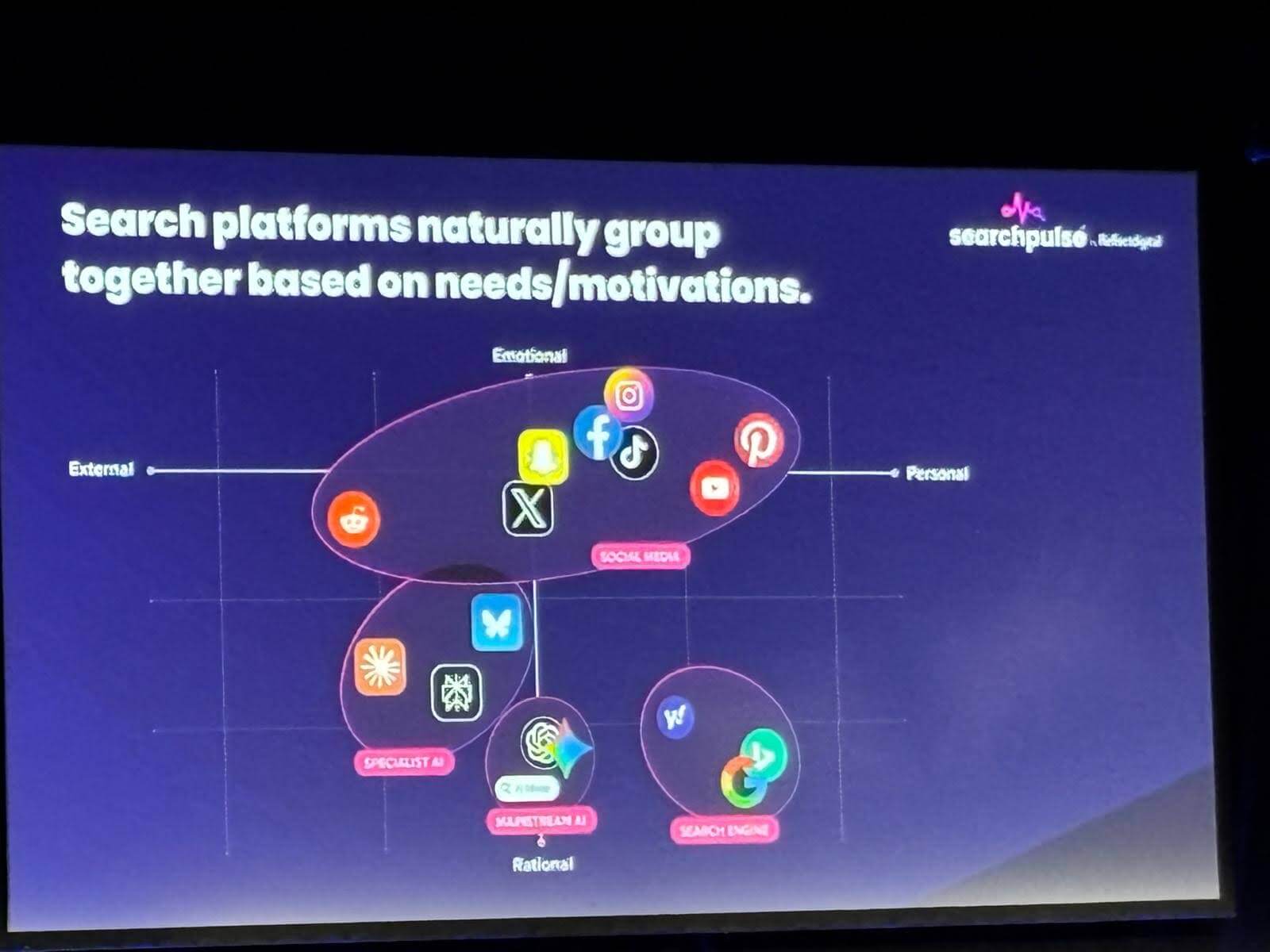
Here’s a simple framework that stuck with us from Searchpulse’s presentation. It’s a great way to think about search intent across platforms:
| Search Intent | Objective | Platforms | What brands should do |
| Crowd-sourcing | Checking what others think, do, or recommend | Reddit, X (Twitter), Quora | Be a part of discussions, not just a voice above them |
| Taste-tuning | Finding ideas, products, or content that match their style or identity | TikTok, Instagram, YouTube, Pinterest | Use visuals and storytelling that connect on an emotional level |
| Fact-finding | Searching for clear, trustworthy information | Google, ChatGPT | Keep content structured, credible, and easy to understand |
| Habit-driven | Going back to familiar or trusted sources | YouTube, newsletters, Spotify | Show up consistently and deliver value so audiences return |
The big takeaway? People don’t just search, they explore everywhere.
Optimizing for search means understanding why people are looking for something, where they go to do it, and how to show up at the right moment – across channels.
2. We’re defining the AEO playbook in real time
Once you accept that discovery happens everywhere, you realise traditional SEO metrics can’t capture the full story on their own.
That’s where AEO comes in.
Instead of optimizing purely for rankings, AEO focuses on being referenced by AI systems that summarize, cite, and interpret content.
In many of the talks, one theme kept repeating: content that performs well for AI has structure, clarity, and credibility. It’s written for humans and machines.
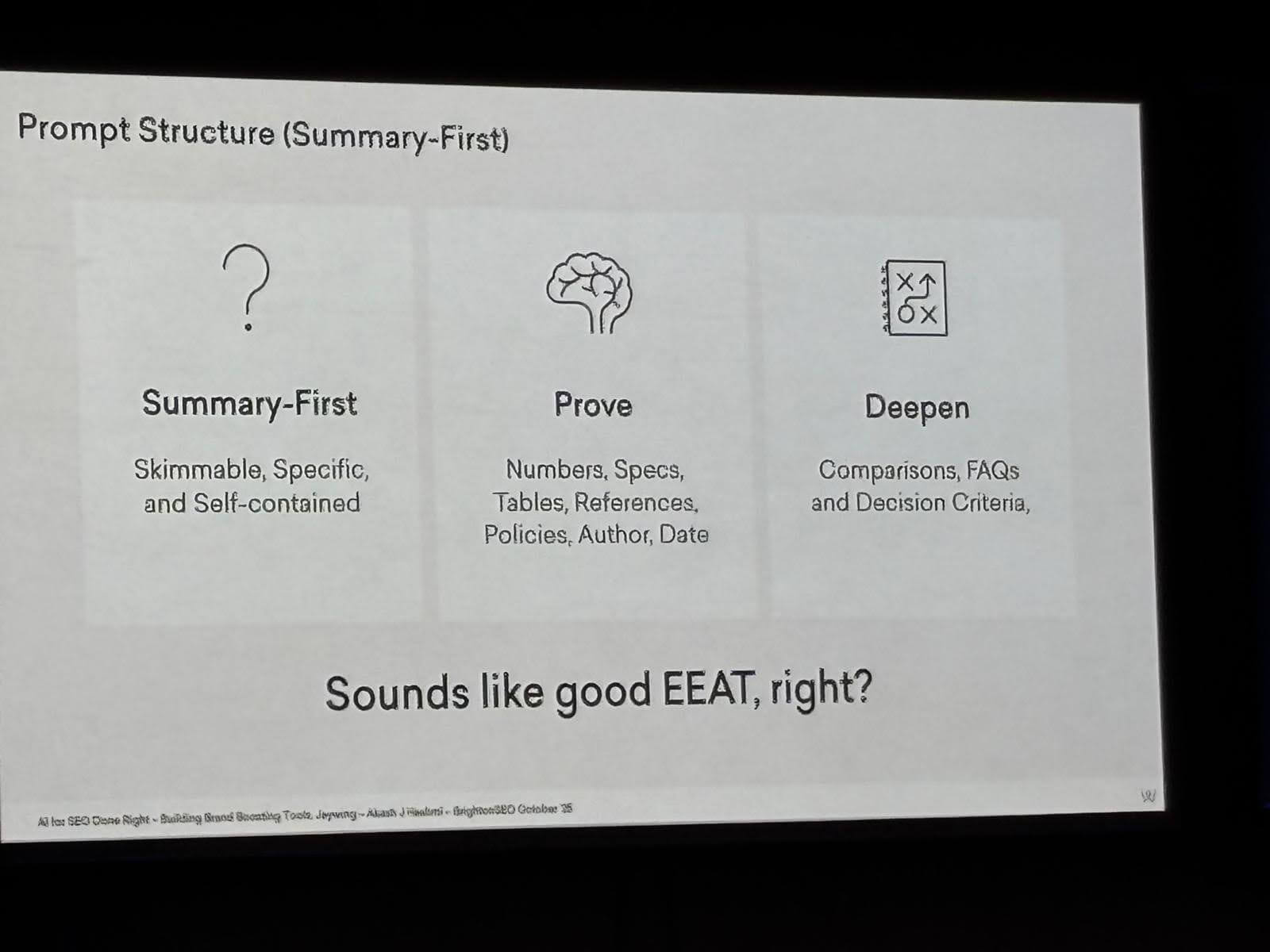
There are some things that stay the same – like EEAT – but there are also things that are quite new to the AEO world. Here’s a quick summary of the kind of content AI seems to prefer:
| Element | Why It Matters | Practical Tip |
| Facts & Statements | AI extracts direct answers | Start sections with concise claims |
| Lists & Tables | Easier for models to parse | Use structured summaries |
| FAQ Prompts | Matches AI query syntax | Mirror natural questions (“How”, “What”, “Why”) |
| Alt Text | Improves multimodal understanding | Describe intent, not aesthetics |
| Unique Data | LLMs cite originality | Publish comparative or benchmark data |
| Off-Page Mentions | Mentions influence AI training | Earn visibility on Reddit, YouTube, Wikipedia |
One quote summed it up perfectly:
“It’s not about who ranks anymore. It’s about who gets referenced.”
SEO is no longer just about visibility in one search engine; it’s about building authority that travels across algorithms, humans and machines.
3. Clarity and structure are the new competitive edge
Structure has always been at the heart of good SEO, but it now feels a bit like the early days again. We’re once more figuring out how systems read and interpret content.
The ones who’ll win in this new phase won’t necessarily be the fastest to publish, but the ones who can make sense of the noise. The ones who know how to connect intent, visibility, and action in a world where AI plays a role at every step.
And in a landscape where clicks are declining but mentions and citations are rising, success is increasingly about being present in the right channels, and not just getting clicks.
In his keynote speech, Mike King (iPullRank) shared a practical way to measure success in this new world. He breaks it down into three layers – input metrics, channel metrics, and performance metrics.

It’s a simple but powerful way to look at performance: understanding what’s feeding visibility, where it’s showing up, and what outcomes it drives.
We’ve started seeing this play out in our own product, too. AI brand visibility and AI traffic tracking are becoming essential for our users to understand how and where their brand appears in generative AI answers, and how people land on their websites from there.
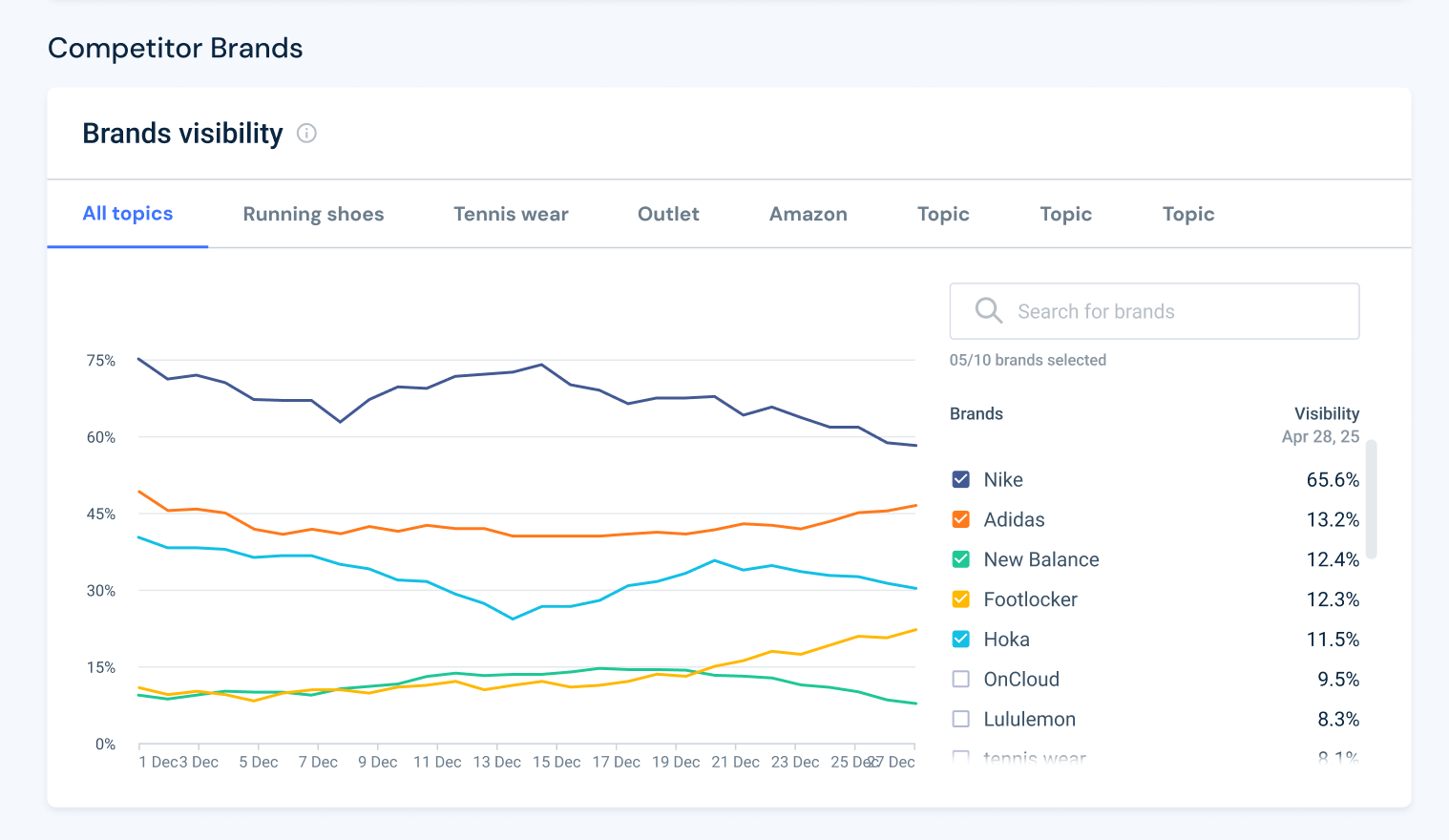
The truth is there’s no universal formula yet. Everyone’s testing, measuring, and iterating. But that’s also what makes it fun. The playbook’s being written in real time.
The game keeps changing as we learn it
As we figure out how to win in this new era, new platforms and search journeys are already taking shape. Google’s AI Mode is a clear example, on track to be the fastest chatbot interface to reach 100 million users. It sits somewhere between a search result and an AI-generated answer, again redefining what visibility looks like.
For SEOs, this means staying curious and adapting as these hybrid experiences influence how people discover brands and make decisions.
And a quick shout to Ben Smith from Similarweb, whose BrightonSEO talk, The Code to AI Mode, broke this down with the kind of clarity (and enthusiasm) the topic deserves. It’s a good reminder that the landscape keeps shifting as we’re finding our footing.
What’s next?
Walking away from BrightonSEO this year, it’s clear the lines between SEO, AEO, and brand strategy are fading fast.
Search isn’t just changing. It’s expanding. And we’re living through one of the most important shifts in how people discover and understand information online.
Those who lean into that complexity with curiosity, structure, and a willingness to adapt will be the ones who define what comes next.
And of course, using the right tool will help you get there much faster.
Similarweb helps you navigate this evolving landscape, providing the competitive intelligence and data you need to optimize performance across AI, SEO, PPC, content, and ecommerce.
Get in touch with us to see how we can support your efforts to stay on top in an AI-powered digital world.
Read our takeaways from former BrightonSEO conferences:
Missed brightonSEO? Catch up on Google Trends, AI Impact, and SEO Must-Knows
5 Key Takeaways from BrightonSEO 2024
8 Takeaways From brightonSEO 2022

Related Posts


What Is AI Share of Voice? The Brand Mention Share Metric You’re Probably Missing




Track Gen-AI And Organic KPI's On The #1 SEO Platform
Give it a try or talk to our marketing team - it’s free!