





The Top 100 Most Visited Websites in the USA (August 2026)
by Shai Belinsky10 Min.
Sep 29, 2026
 Research Intelligence
Pablo Picasso famously said: “Good artists copy; great artists steal.”
In all areas of life, success is relative but builds on learning from others in your field. It’s not enough to try and imitate the best-in-class; you actually need to find out what makes them great and emulate this in your own work.
In the digital space, relative success goes hand-in-hand with competitive benchmarking.
With benchmarking tools and digital intelligence, you get the data you need to compare your performance accurately against industry leaders or companies similar to your own. In the end, you’ll be able to identify successful elements of their strategy and implement them yourself.
Let’s dive into the benefits of benchmarking and how it can elevate your business from just an average competitor to an industry trailblazer.
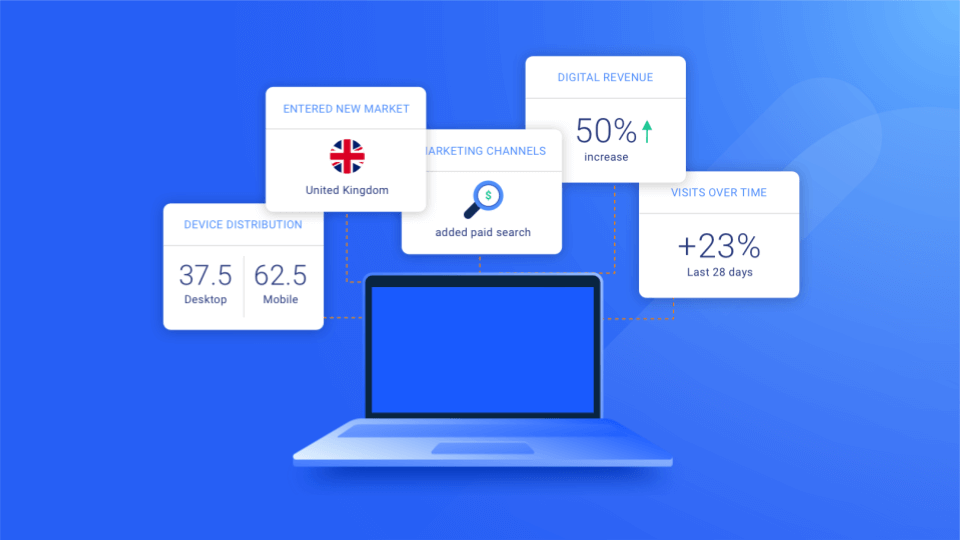
Business benchmarking can help you determine goals, evaluate progress, maximize the effectiveness of your efforts, and save costs.
Key benefits of benchmarking that apply to any digital business include the ability to:
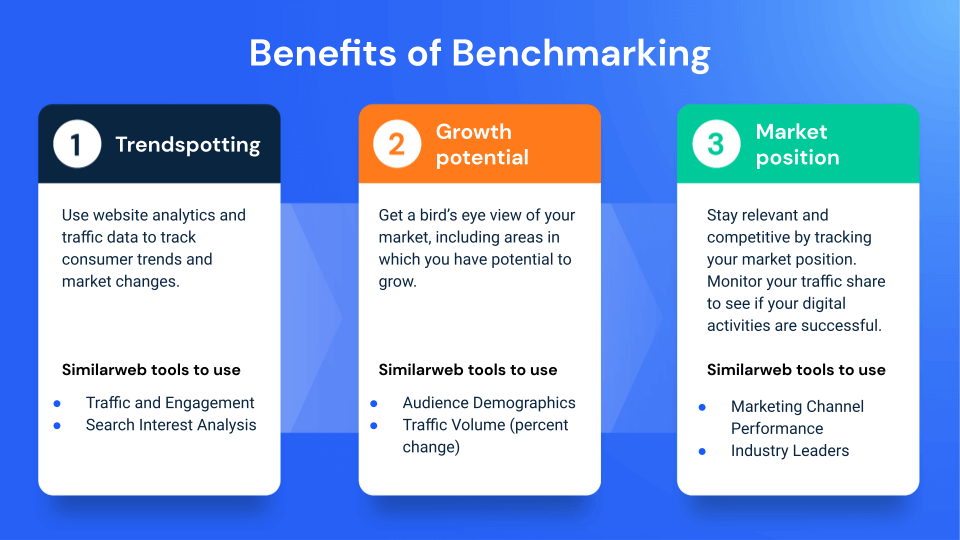
The benefits of competitive benchmarking will give you an advantage over others in your market. You’ll be able to adapt quickly to new trends, meet changing customer expectations, and become a leader in digital transformation. Here are some of the external benefits of business benchmarking you’ll likely notice right away:
Although the process of benchmarking plays an important role in how you track your performance relative to external factors, there are advantages of benchmarking that can give you a ton of information about your own business. Internal benchmarking will help you:
Successful benchmarking helps with more than just evaluating the competition. If you do it right and apply your findings effectively, you can improve your business operations and outperform your market. It’s a valuable tool for optimizing business processes, financial planning, setting strategic business goals, and reaching them.
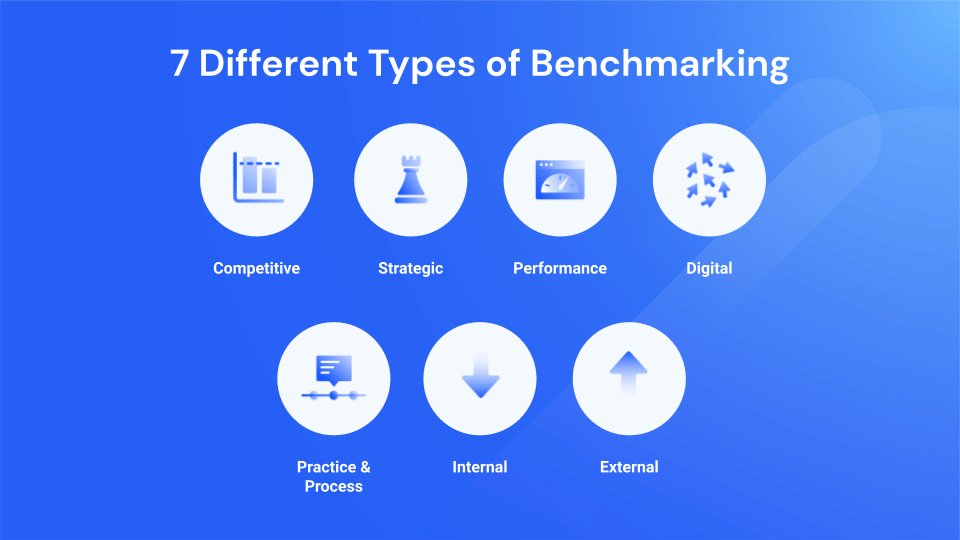
You can use different types of benchmarking to hone in on business goals.
For example, if you want to understand which types of products are most profitable for you, you’ll benchmark product lines internally against each other and also against similar lines of successful companies or your competitors’ products. The benefit is that you get a clear picture of where you stand in the market both quality-wise and price-wise, and which products you should put more promotional efforts into.
Another way to assess performance is per marketing channels. Regardless of the product line, specific channels work better with your audience than others. Benchmarking performance indicators from your different acquisition methods can provide important answers, such as which ads your users are likely to engage with or the referral websites with the best ROI.
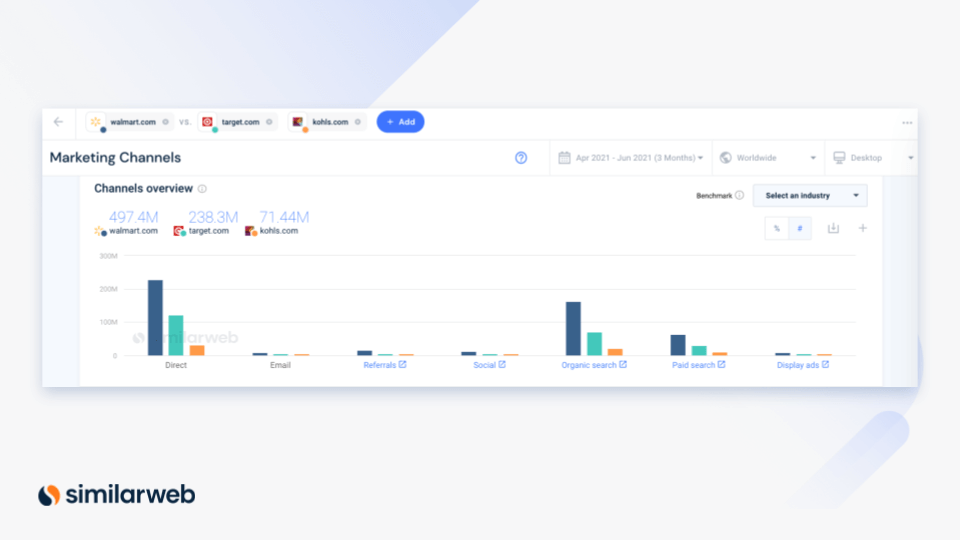
What do you need for effective benchmarking? Data, data, and more data.
You need data collection of your business, your market, and your competitors. However, if your numbers are inaccurate, incomplete, or outdated, your efforts go to waste. You can only reap the benefits of benchmarking when it’s based on accurate, real-time metrics.
And on top of that, you need a tool that takes data correlation off your back. There’s no justification to spend time analyzing Excel sheets with data extracted from your analytics tool.
Here’s where competitive intelligence comes in.
To power growth in the digital world, you need to look beyond your own data. Similarweb’s competitive benchmarking tools give you context to identify high-value opportunities, track your performance, and win your market.
You have the option to benchmark and analyze specific data sets across your industry. Alternatively, you can track competitors based on area, industry, or even segment. This “apples to apples” comparison makes sure you don’t miss any changes in the competitive landscape and helps you stay ahead of potential threats.
You can conduct market research to evaluate your share and your position, and then drill down into website metrics to identify weak and strong points. You might even want to conduct a comprehensive SWOT analysis based on the data you collect. Or you may want to benchmark engagement metrics to understand how your audience interacts differently.
Your goal is to identify the best-performing businesses for which you want to do in-depth company research to understand what works for them.
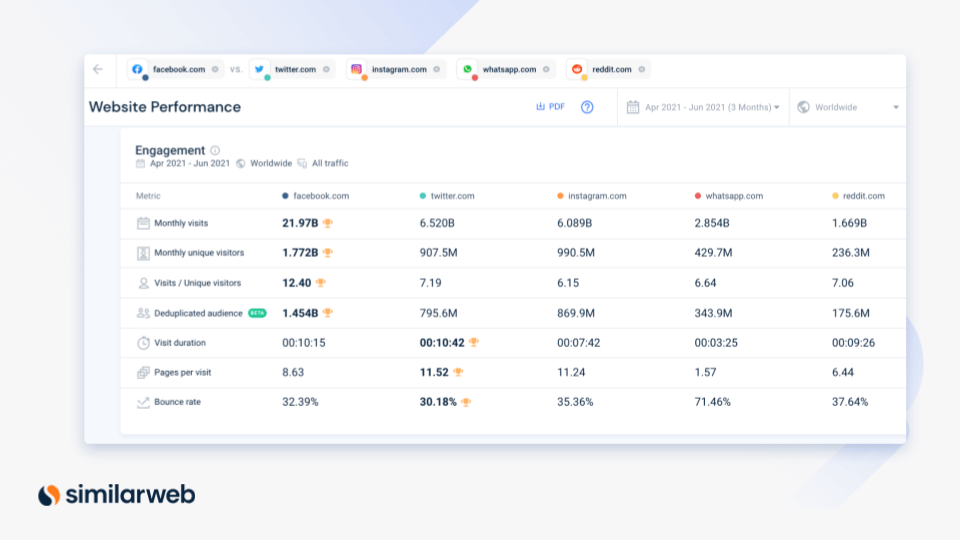
Every industry is different, and every business is unique. But the elements that make them great are often very similar. Benchmarking is a great way to get insights into what is effective and how you can use it to your advantage.
Try Similarweb Web Intelligence for free and find custom data and insights to benchmark your way to excellent business performance.
This blog post was written by Ruth M. Trucks.
What is benchmarking and why is it useful?
Benchmarking gives you an independent perspective on your progress versus other companies, helps you find areas of improvement, and develops a standardized set of processes to continue improving.
How can benchmarking improve performance?
One way benchmarking improves performance is the presence of reliable, real-time data.

by Molly Winik
Senior Content Marketing Manager
Molly has 8+ years of experience in marketing, content creation, and PR. Her work has been featured on Mention, The Times of Israel, and Culture Trip.
The Top 100 Most Visited Websites in the USA (August 2026)
Similarweb Named in Forrester's Answer Engine Optimization Technologies Landscape, Q3 2026

Anthropic IPO: What Claude's Web and App Data Show
Contact us to set up a call with a market research specialist
