The Top 100 Most Visited Websites in the World (August 2026)
by Shai Belinsky10 Min.
Sep 17, 2026
Artificial intelligence is changing how market research works. What used to be a slow, manual process is now fast, adaptive, and continuous. Today, companies can analyze behavior almost in real time, interpret unstructured feedback at scale, and generate strategic insights whenever they need them.
AI has evolved from basic automation to a layered ecosystem combining machine learning (ML), generative AI (GenAI), and agentic AI. As the technology has advanced, researchers’ roles have shifted from managing data to making strategic decisions.
Early AI applications focused on structured data tasks such as cleaning survey responses or modeling churn with ML. This improved accuracy and scale but remained mostly reactive, limited to predefined inputs and outcomes.
Generative AI took things a step further. It can interpret qualitative data such as open-ended survey responses while understanding context and following complex instructions. It can also generate hypotheses and support creative thinking when interpreting results.
For example, a GenAI chatbot could review 1,000 survey responses, analyze sentiment, and rank how strongly each response supports a particular opinion.
Agentic AI pushes this even further. It acts autonomously across different systems and continuously monitors data streams from CRM tools, social media, or third-party reports. It can interpret signals and trigger actions on its own. For instance, it might detect a drop in customer sentiment in a region and automatically generate a report with updated product or pricing recommendations.
The evolution from rule-based automation to autonomous, insight-generating AI makes AI not just a research tool but an active partner in shaping market direction.
AI, particularly generative and agentic systems, delivers measurable advantages across the market research lifecycle. These benefits span efficiency, depth of insight, and strategic responsiveness.
AI in market research has evolved through three major phases: traditional machine learning, generative AI, and agentic AI. Each phase has expanded how researchers collect, interpret, and act on data.
Traditional machine learning (ML) has been part of market research for more than two decades. It focuses on identifying statistical patterns in both structured and unstructured data, enabling researchers to process large datasets far more efficiently than manual or rules-based methods.
Common applications include:
Traditional ML remains widely used across organizations of all sizes. It is affordable, proven, and reliable for focused use cases where statistical confidence and repeatability matter most.
Generative AI is rapidly reshaping market research by making it more creative, agile, and predictive. It is being rapidly adopted; according to a recent study, 62% of market researchers now use GenAI tools, up 23% from the previous year. Here are a few ways generative AI is revolutionizing the field:
Agentic AI represents a major shift in how organizations extract value from market research. Unlike traditional or even GenAI tools, which still require manual queries and human-led synthesis, agentic AI systems autonomously connect, interpret, and generate strategic insights from both structured and unstructured research sources.
Here are a few ways agentic AI supports market research functions:
AI simplifies data collection by pulling information from multiple sources such as surveys, CRM systems, social media, review sites, and third-party databases. It automates tasks like scraping competitor websites, capturing customer feedback, and combining structured and unstructured data into one unified dataset. This reduces manual work and ensures a steady stream of fresh, relevant information for analysis.
AI can interpret both structured and unstructured data. It helps analyze open-ended survey responses, interviews, and social media posts to identify themes, emotions, and intent. For quantitative data, machine learning models detect patterns, segment audiences, and uncover correlations between variables. Generative AI adds another layer by performing context-aware analysis based on natural language instructions, offering richer and more flexible insights.
AI tools continuously monitor the digital landscape, scanning news outlets, press releases, social media, and review platforms. They detect changes in competitor activity, pricing, messaging, or consumer sentiment, providing early signals of market shifts. This enables organizations to adjust strategies proactively instead of relying on manual monitoring.
Machine learning models trained on historical data can forecast future outcomes such as product demand, customer churn, or pricing impact. Generative and agentic AI can also simulate different market scenarios and generate forward-looking insights as conditions evolve. This helps businesses anticipate change and plan strategically rather than react to it.
AI enables highly detailed segmentation based on real-time behavior, preferences, and engagement. Clustering and classification models uncover new or evolving customer groups that might not appear in traditional analyses. These insights support more targeted marketing, customized product development, and stronger customer experiences.
Start by identifying what you want your research to achieve, such as finding new growth opportunities, understanding customer challenges, or testing pricing strategies. Having clear objectives helps you choose the right data sources, methods, and AI tools to get meaningful answers.
Not all AI tools are built for the same purpose. Traditional machine learning models are ideal for predictive analytics and quantitative insights, while generative AI can assist with text analysis, survey creation, and social listening. When choosing a platform, consider how easily it integrates with your current systems, how user-friendly it is, and how transparent its outputs are.
AI can take the heavy lifting out of data gathering. Set up automated pipelines to pull information from surveys, CRM systems, online reviews, social media, and competitor reports. Include preprocessing steps like removing duplicates, tagging sentiment, and extracting entities to turn raw data into a clean, structured dataset that is ready for analysis.
Machine learning and NLP can reveal patterns and insights that might otherwise go unnoticed, such as emerging market trends or subtle shifts in customer sentiment. AI-powered visualization tools can then help you communicate those insights clearly to decision-makers.
AI can process huge amounts of data, but it still needs human oversight. Before acting on AI-driven insights, have experts review them to ensure they make sense within the business context. They can identify any overfitting, irrelevant correlations, or misinterpretations that AI might produce. This step builds confidence in your results and ensures decisions are both data-informed and grounded in experience.
Finally, connect your insights to business strategy. For example, use customer segmentation data to refine your messaging, or leverage trend forecasts to explore new markets. AI can also help you model different strategic outcomes so teams across marketing, product, and pricing can act on the findings effectively.
As market research evolves toward automation and real-time intelligence, Similarweb stands out for embedding AI directly into the data discovery process. From context-rich data delivery to autonomous trend detection, Similarweb’s AI-powered capabilities help businesses move faster from questions to actionable insights. Two standout innovations illustrate this shift:
Similarweb’s MCP server is designed to make AI systems truly intelligent by providing context-rich access to trusted digital market data. Unlike traditional APIs that only deliver raw data, MCP helps AI agents understand what data is available and how to use it effectively.
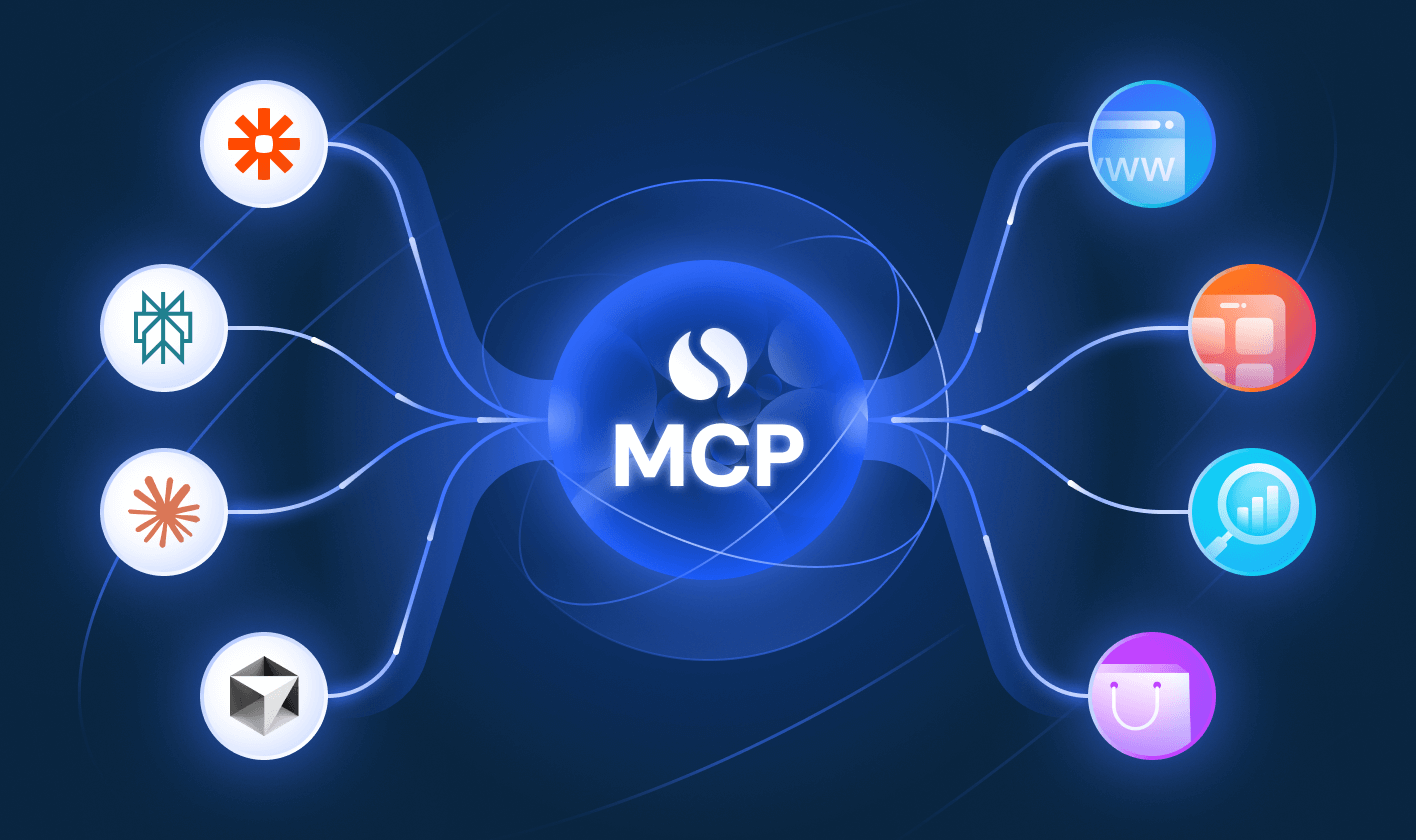
Through MCP, companies can build content-focused AI agents that:
By pairing Similarweb’s MCP with general-purpose AI platforms like Claude, Cursor, and more, teams can move from manual data collection to autonomous, insight-driven workflows for SEO, content, and market research.
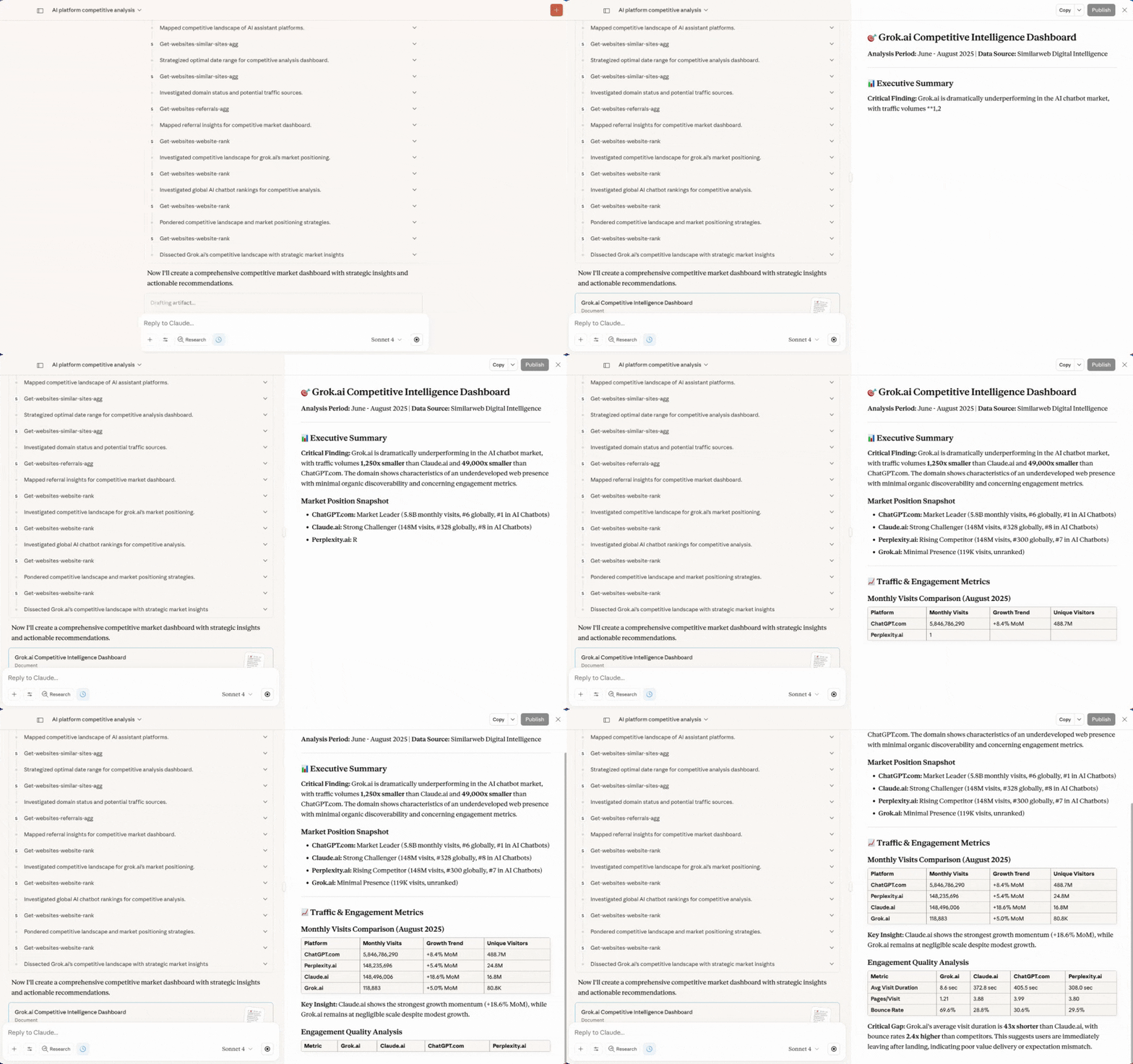
MCP’s natural language integration allows users to ask questions in plain English and receive structured, contextualized insights, making AI agents more adaptive, trustworthy, and productive across business functions.
The AI Trend Analyzer Agent is Similarweb’s always-on digital researcher, analyzing real-time search data to reveal not only what’s trending, but why.
By combining Similarweb’s keyword and search demand data with real-time web signals, the AI Trend Analyzer detects sudden demand spikes, clusters related keywords, and correlates them with relevant events, campaigns, or news stories.
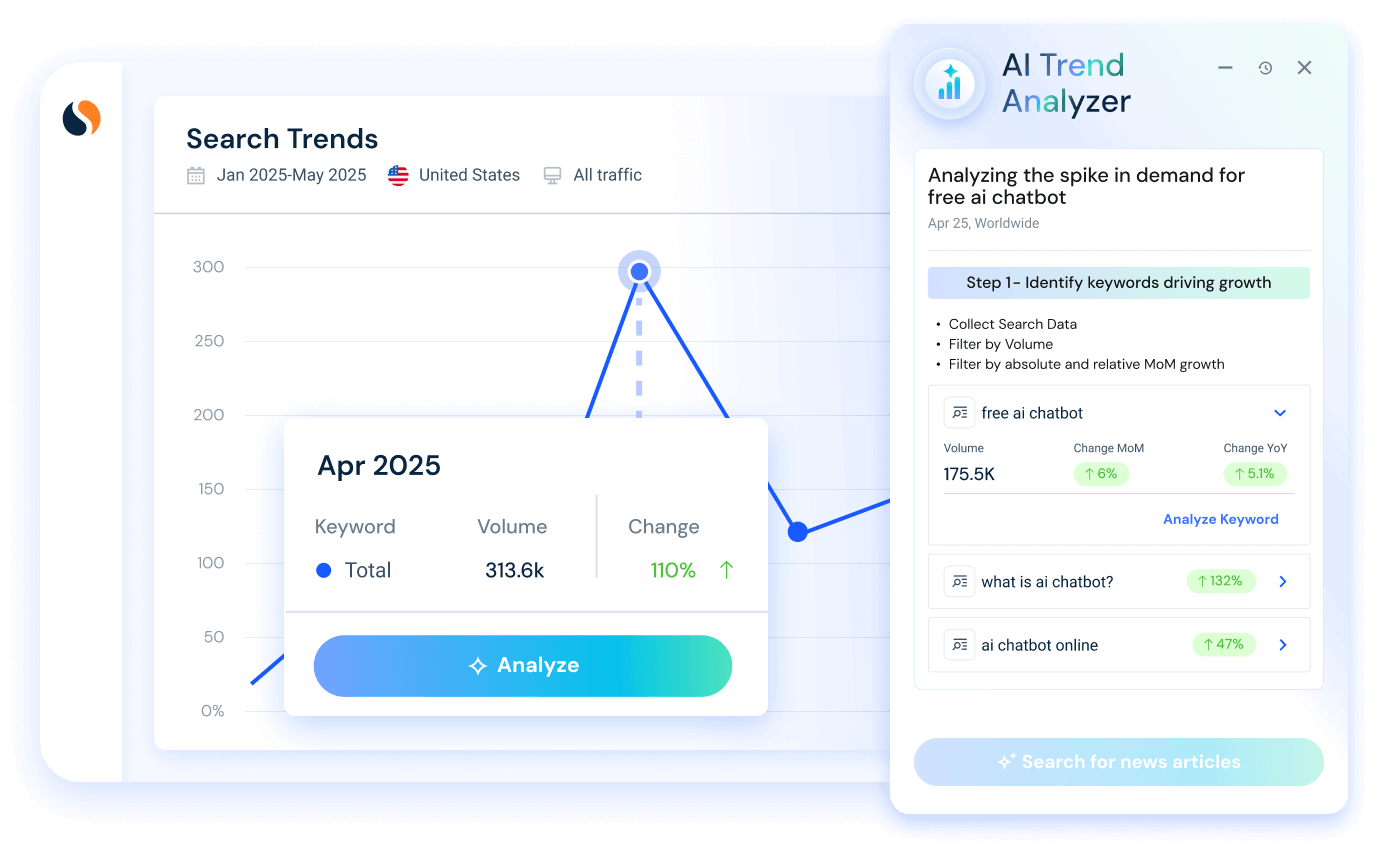
This agent helps Insights, Marketing, and SEO teams:
See how it works:
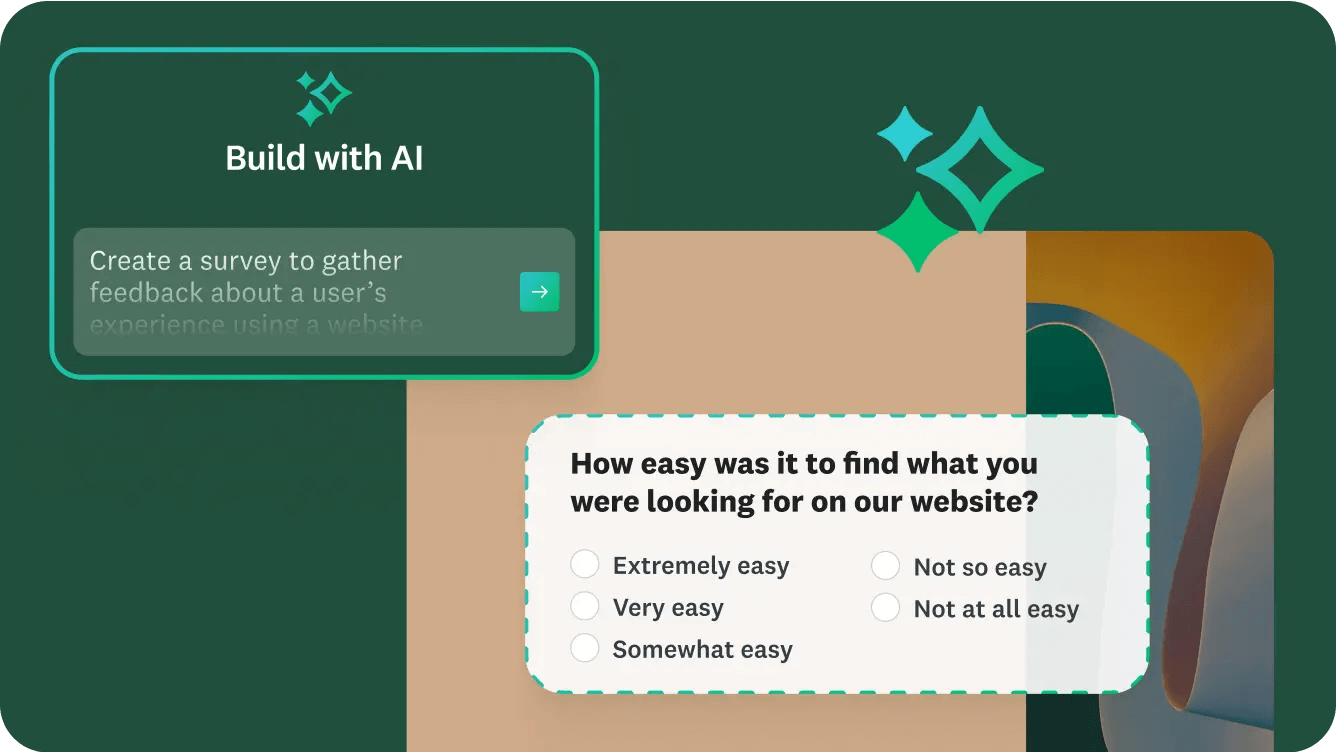
SurveyMonkey is an AI-powered survey platform that helps organizations build, distribute, and analyze surveys with greater speed and precision. Trained on billions of responses and over 25 years of proprietary data, its AI is purpose-built for survey design and analysis, making it a strong tool for modern market research. The platform simplifies the entire survey lifecycle, from creation to insight generation, using intelligent automation and real-time guidance.
Key features include:
Quantilope is a consumer intelligence platform that uses AI to make advanced market research faster, smarter, and more accessible. For nearly a decade, it has helped organizations bring the consumer voice into strategic decision-making by combining automation with sophisticated research methods.
At the center of Quantilope’s AI capabilities is Quinn, an AI co-pilot that’s fully integrated into the platform. Quinn supports researchers at every stage of a project, from survey design to data analysis and reporting. You can chat with Quinn just like you would with a teammate and ask for help building surveys, analyzing results, or creating charts and reports.
Key AI features include:
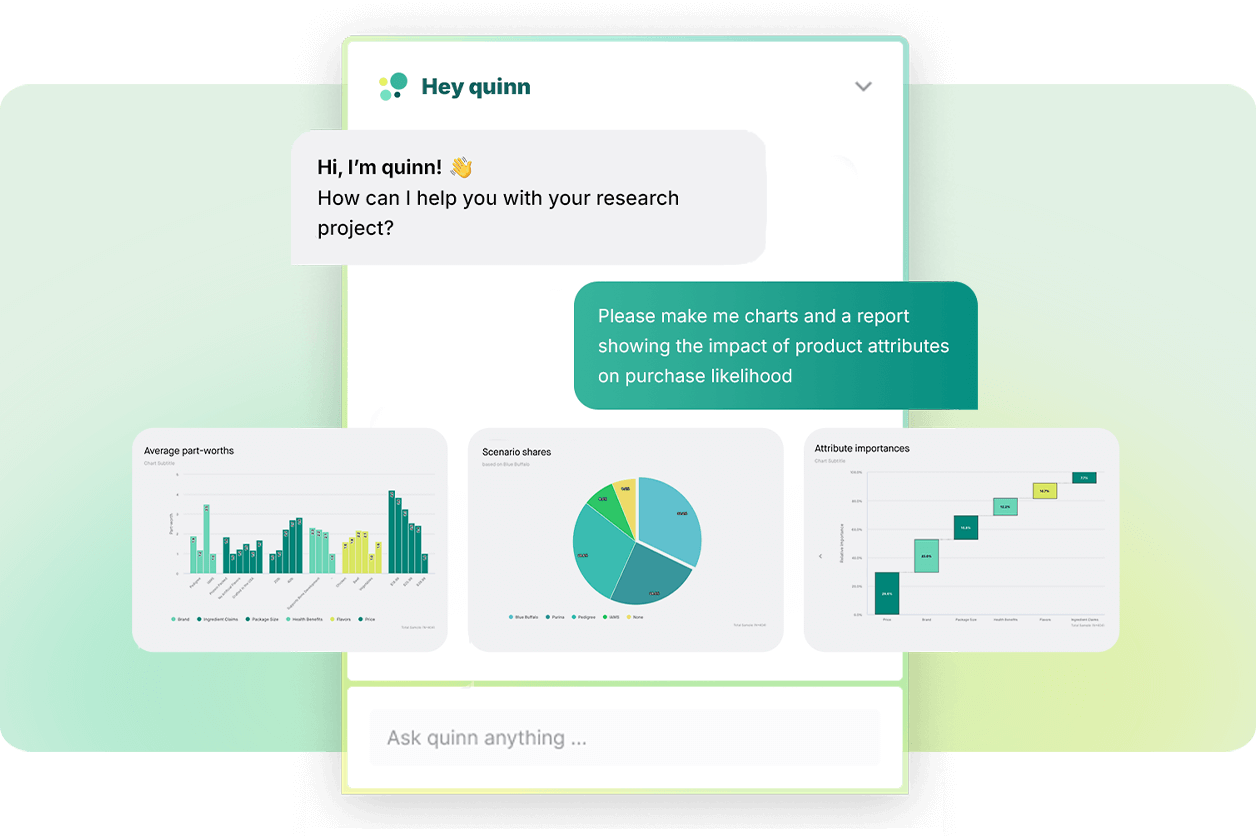
By embedding Quinn directly into its platform, Quantilope turns the entire research process into a simple conversation, helping teams focus less on setup and more on understanding what really matters.
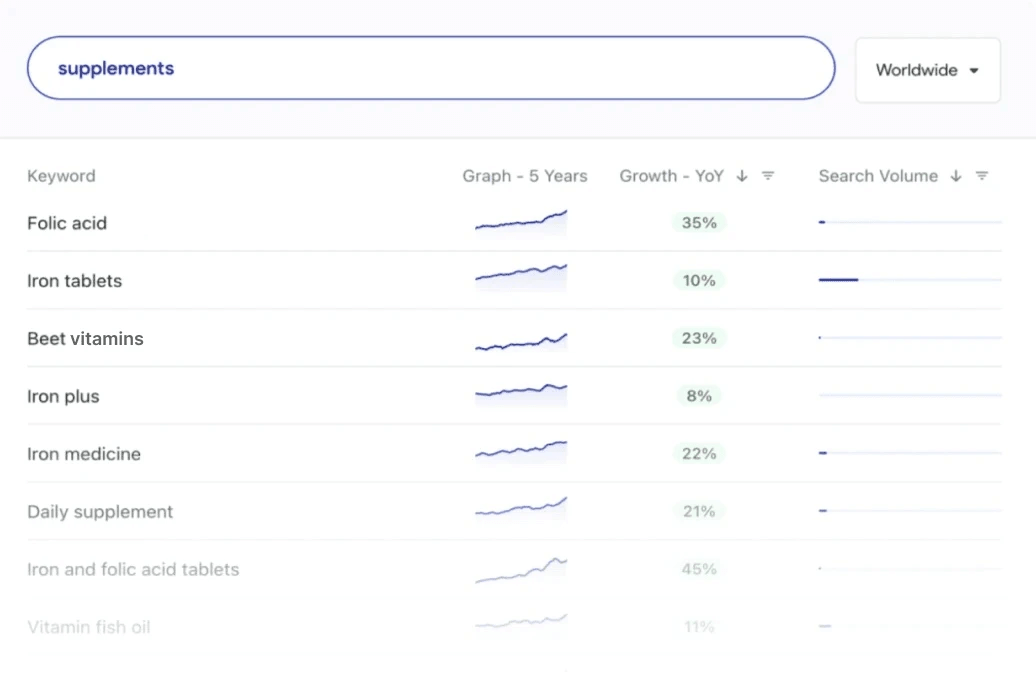
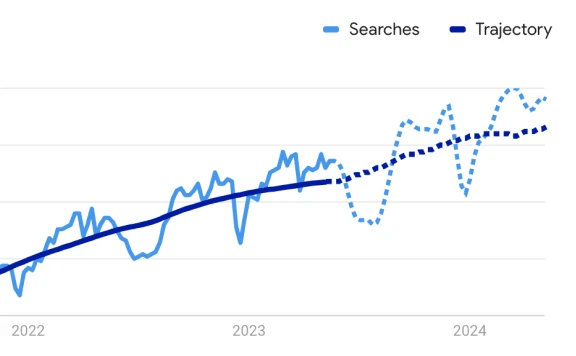
Glimpse is a trends discovery platform that uses search data to identify emerging consumer behaviors before they hit the mainstream. By analyzing hundreds of millions of online behavior signals, it surfaces high-potential trends with strong growth potential.
Key features include:
AI is no longer just a trend in market research: It’s a fundamental shift in how insights are discovered, analyzed, and acted upon. From speeding up survey creation to detecting early market signals, AI helps researchers move faster and go deeper, uncovering insights that were once hidden in noise or overlooked due to time constraints.
As AI capabilities continue to evolve, tools like Similarweb are expanding what’s possible, from analyzing billions of data points to enabling agentic AI workflows that provide tangible competitive insights. These technologies are making market research more continuous, connected, and collaborative across teams.
But even with advanced automation, the role of human judgment remains critical. The most effective use of AI in market research comes from combining its speed and scale with human intuition and business context, turning raw data into a meaningful, actionable strategy.
How is AI changing market research?
AI is making market research faster, more accurate, and more scalable. It automates tasks like data collection, trend analysis, and sentiment detection, allowing teams to generate insights in hours instead of weeks.
What are the benefits of using AI in market research?
AI enhances market research by speeding up analysis, reducing costs, improving prediction accuracy, and uncovering deeper insights from large and complex datasets. It helps organizations act on data more confidently and quickly.
What types of AI are used in market research?
Market researchers use traditional machine learning for tasks like segmentation and forecasting, while generative AI helps with content creation, synthetic data generation, and rapid analysis. Agentic AI is emerging for real-time decision support and strategic intelligence.
Can AI replace human researchers?
No. AI supports but doesn’t replace human expertise. While AI handles data-heavy tasks, human researchers are still essential for interpreting results, making strategic decisions, and ensuring insights are relevant and trustworthy.
What are some examples of AI tools used in market research?
Popular tools include SimilarWeb for competitive and digital behavior analysis, SurveyMonkey for AI-enhanced surveys, Quantilope for automated research workflows, and Glimpse for early trend detection. General AI models like ChatGPT are also used for synthesizing insights and drafting content.

by Roie Gortler
Senior Product Marketing Manager
With 15+ years in product marketing, strategy, branding, and PR, Roie has driven growth at top agencies and tech firms through product launches and go-to-market strategies.
Contact us to set up a call with a market research specialist